
Blog
Is CNC only for wood?

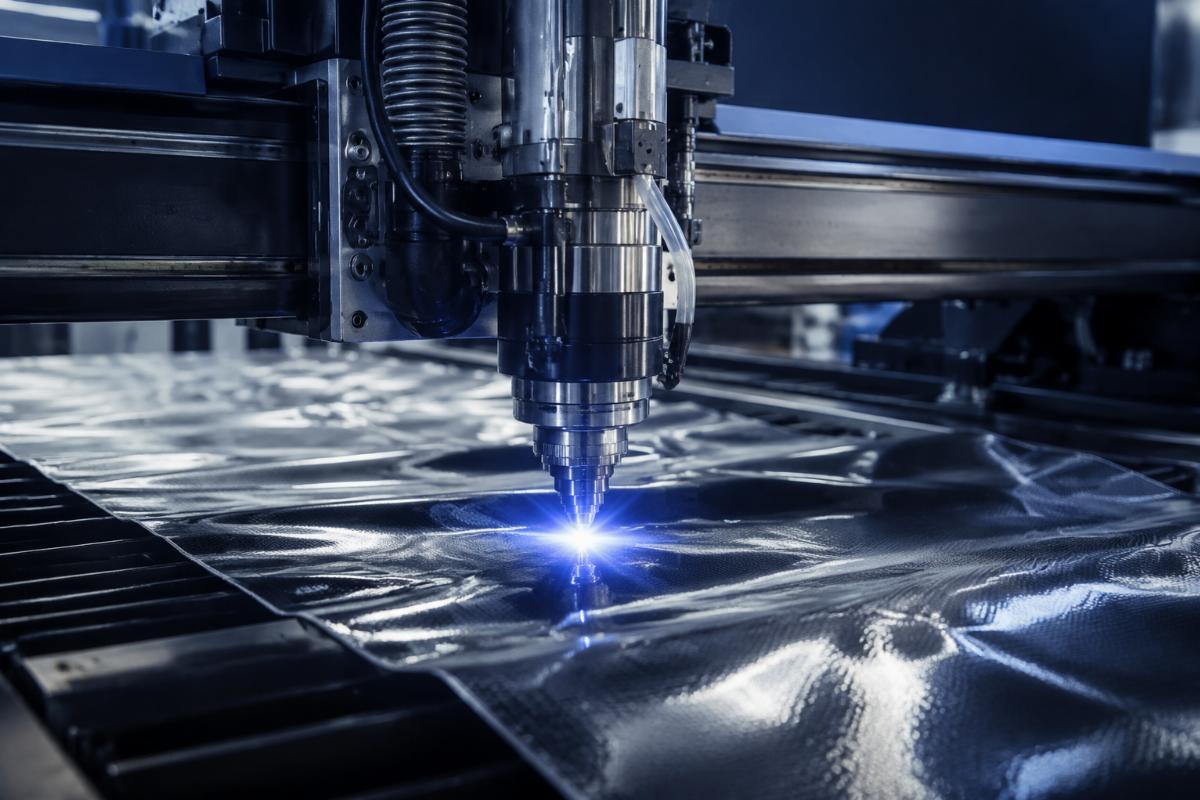
Is CNC only for wood?
When buyers search for CNC machines, they often see wood routers in the results and assume CNC means woodworking only. This confusion costs them time evaluating the wrong equipment. I talk to customers every week who ask about spindle power for cutting leather because they think all CNC machines work the same way. They don't.
CNC is not limited to wood. It's a control system that drives different cutting tools across many materials. The real question isn't whether CNC can cut your material. The question is which CNC machine type and toolhead configuration fits your material, thickness, precision needs, and production volume.
Most buyers don't realize they're asking the wrong questions. When you understand what CNC actually controls and how different toolheads handle different materials, you stop wasting time on wood router specifications and start evaluating the right equipment for your production line.
Why do buyers think CNC means wood routers?
Hobbyist marketing dominates the search results. When you type "CNC machine" into Google, you see wood routers, engraving machines, and DIY projects. These machines use spinning tools called spindles. They carve wood, plastic, and soft metals. The videos show people making signs, furniture parts, and decorative items.
Buyers assume all CNC machines work this way because that's what they see. But spindle-based routers represent only one category of CNC equipment. CNC is a control system, not a specific tool. It can drive knives, lasers, waterjets, and plasma cutters. Each toolhead works differently and handles different materials.
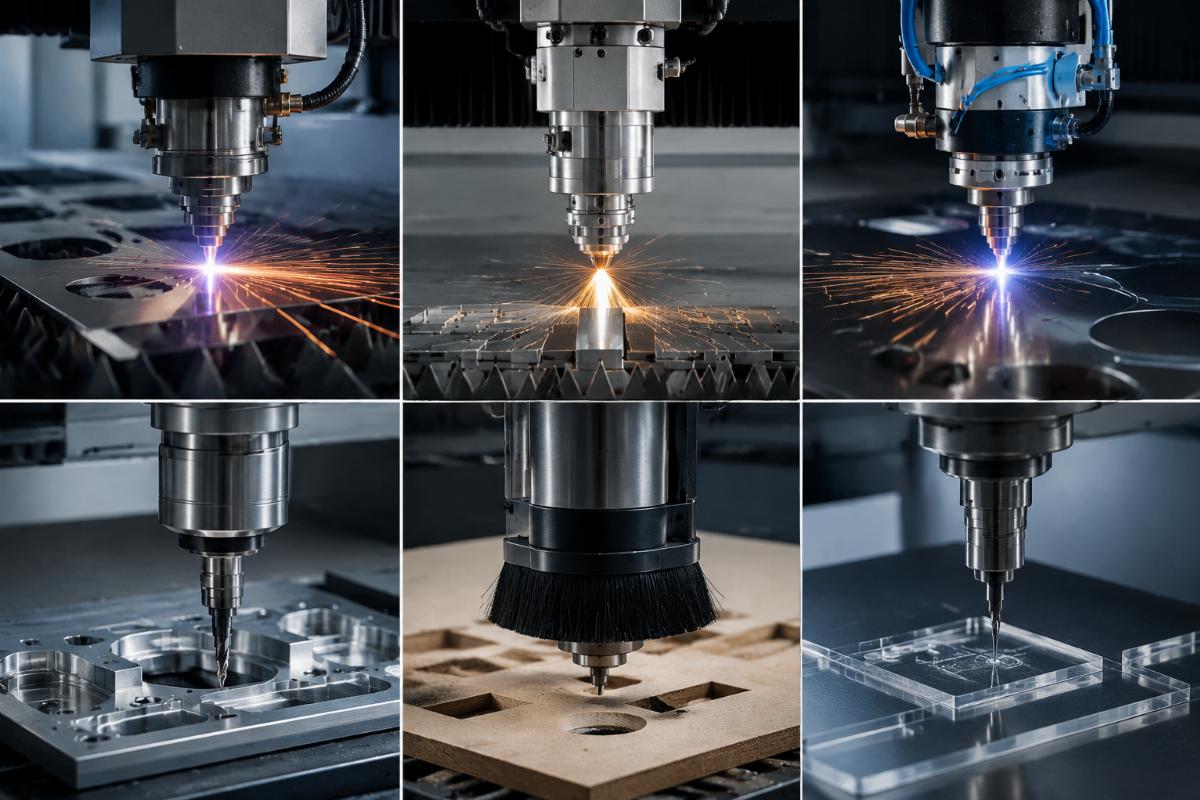
We receive inquiries every month from packaging companies asking about spindle RPM for cutting corrugated board. Automotive suppliers ask about dust collection systems for fabric. Leather goods manufacturers want to know which router bit cuts hide best. These questions reveal a fundamental misunderstanding: they're evaluating wood routing specifications when they need knife cutting systems.
The confusion happens because consumer CNC content focuses on one application. Manufacturers who cut flexible materials need completely different machines, but they don't find this information until they contact suppliers directly. By then, they've already spent weeks researching the wrong equipment category.
How do hobbyist machines differ from industrial flexible material cutters?
Wood routers use spinning tools that remove material through friction and heat. The tool rotates at thousands of RPM and carves into the surface. This works for rigid materials that resist the spinning force. It doesn't work for fabric, leather, foam, or thin films.
Flexible material cutters use stationary or oscillating blades that slice through the material without spinning. The blade moves up and down rapidly while the cutting head follows the programmed path. No heat builds up. The material doesn't fray or melt. The cutting force stays low enough that thin materials don't shift or tear.
| Feature | Wood Router (Spindle) | Flexible Material Cutter (Knife) |
|---|---|---|
| Tool motion | Rotary spinning | Vertical oscillation |
| Cutting method | Material removal | Material separation |
| Heat generation | High | Minimal |
| Material hold-down | Clamps or fixture | Vacuum table |
| Edge quality | Smooth but burned | Clean without heat damage |
| Material thickness range | 3mm to 50mm+ | 0.1mm to 25mm |
| Tool replacement frequency | Every 8-40 hours | Every 100-500 hours |
I've seen buyers order wood routers for cutting automotive headliners because they thought CNC meant one machine type. The router burned the fabric edges, created dust contamination, and couldn't handle the material's flexibility. They needed a CNC knife cutter with vacuum hold-down and an oscillating blade. The machine type matters more than the CNC label.
What makes buyers ask about the wrong specifications?
Buyers ask about spindle power because wood router content emphasizes horsepower and RPM. They ask about dust collection because woodworking generates chips and sawdust. They ask about tool bits because routers use interchangeable cutting bits. None of these specifications apply to knife cutting systems.
For flexible materials, you need to ask about blade pressure control, material hold-down strength, cutting speed, and blade oscillation frequency. These specifications determine whether the machine can cut your material without shifting, fraying, or tearing. A 3-kilowatt spindle means nothing if you're cutting leather. You need a blade that can pierce the hide without dragging it across the table.
What materials do CNC machines actually cut beyond wood?
CNC machines cut hundreds of flexible materials in industrial production. We deploy knife cutting systems for packaging manufacturers, automotive interior suppliers, leather goods factories, advertising material processors, and gasket manufacturers. None of these customers cut wood. They all use CNC control systems.
CNC knife cutters handle fabrics, leather, foam, rubber, felt, corrugated board, cardboard, vinyl, mesh, composites, technical textiles, and thin plastics. CNC laser cutters handle acrylic, thin wood veneer, paper, cardboard, and some fabrics. CNC waterjet systems cut thicker rubber, gasket materials, and composites. The toolhead determines material compatibility, not the CNC system.
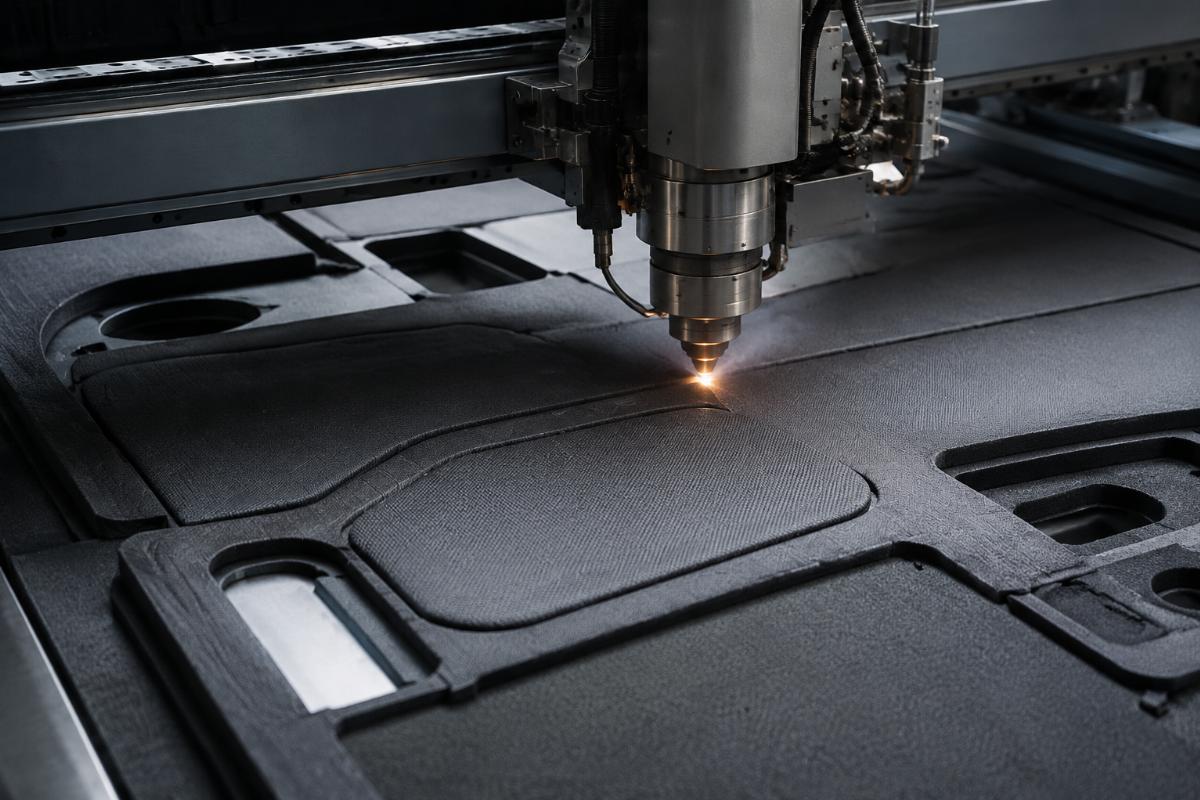
I worked with a packaging company last year that was cutting corrugated board with manual die cutters. They wanted to eliminate die costs and reduce setup time. They searched for CNC machines and found wood routers. They contacted us asking about spindle torque for cardboard. We explained that spinning tools tear corrugated board because the material has no rigidity. They needed a CNC knife cutter with a drag knife or oscillating knife.
After we installed the knife cutting system, their production changed completely. They could cut custom packaging shapes without dies. Setup time dropped from two hours to fifteen minutes. Material waste decreased by thirty percent because the software optimized nesting layouts. The CNC system gave them the flexibility they needed, but only because we matched the toolhead to their material.
How do automotive suppliers use CNC for non-wood materials?
Automotive interior manufacturers cut fabric, foam, leather, vinyl, and composite materials for seats, door panels, headliners, and trunk liners. These materials range from thin technical fabrics to layered foam composites. Spinning tools would destroy them.
CNC knife cutting systems handle these materials with multiple blade types. Oscillating knives cut through thick foam and layered fabrics. Drag knives cut thin vinyl and technical textiles. Creasing wheels score materials that need folding. All of these tools mount on the same CNC machine, and the control system switches between them based on the programmed cutting file.
We installed a knife cutting system for an automotive trim supplier in 2023. They were cutting door panel fabrics with manual templates and rotary cutters. The process wasted material because operators couldn't nest pieces efficiently. Edge quality varied between operators. Production speed couldn't keep up with order volume.
The CNC knife cutter solved all three problems. The software nested pieces automatically to minimize waste. Every cut followed the exact same path with consistent edge quality. Production speed increased by forty percent because the machine ran continuously while operators loaded and unloaded materials. The supplier recovered their equipment investment in eighteen months through material savings alone.
What applications require CNC systems without any wood involved?
| Industry | Materials | Cutting Tool Type | Typical Production Volume |
|---|---|---|---|
| Packaging | Corrugated board, cardboard, honeycomb | Drag knife, oscillating knife | 500-5000 pieces/day |
| Automotive interiors | Fabric, foam, leather, vinyl, composites | Oscillating knife, creasing wheel | 200-2000 pieces/day |
| Leather goods | Full-grain leather, suede, synthetic leather | Oscillating knife, drag knife | 100-1000 pieces/day |
| Advertising materials | Vinyl, mesh, banner fabric, corrugated plastic | Drag knife, oscillating knife | 50-500 pieces/day |
| Gasket manufacturing | Rubber, cork, fiber composites, PTFE | Oscillating knife, tangential knife | 100-2000 pieces/day |
| Technical textiles | Carbon fiber prepreg, fiberglass, aramid fabrics | Oscillating knife, ultrasonic knife | 50-500 pieces/day |
Each application requires different blade configurations and material handling systems. Packaging materials need conveyor feed systems for continuous production. Leather requires vacuum tables strong enough to hold irregular hide shapes. Technical textiles need specialized blades that don't fray advanced fibers. The CNC system coordinates all of this, but the toolhead and material handling determine whether the machine works for your application.
How do you choose the right CNC machine for your material?
The wrong question is "Can CNC cut my material?" The right question is "What CNC configuration handles my material's properties, thickness range, and production requirements?" Material properties determine everything else about machine selection.
Start by identifying your material's characteristics: Is it rigid or flexible? Does it fray easily? Does it compress under pressure? What's the typical thickness range? Does it come in sheets or rolls? Does heat damage the edges? Answering these questions tells you which toolhead and material handling system you need.
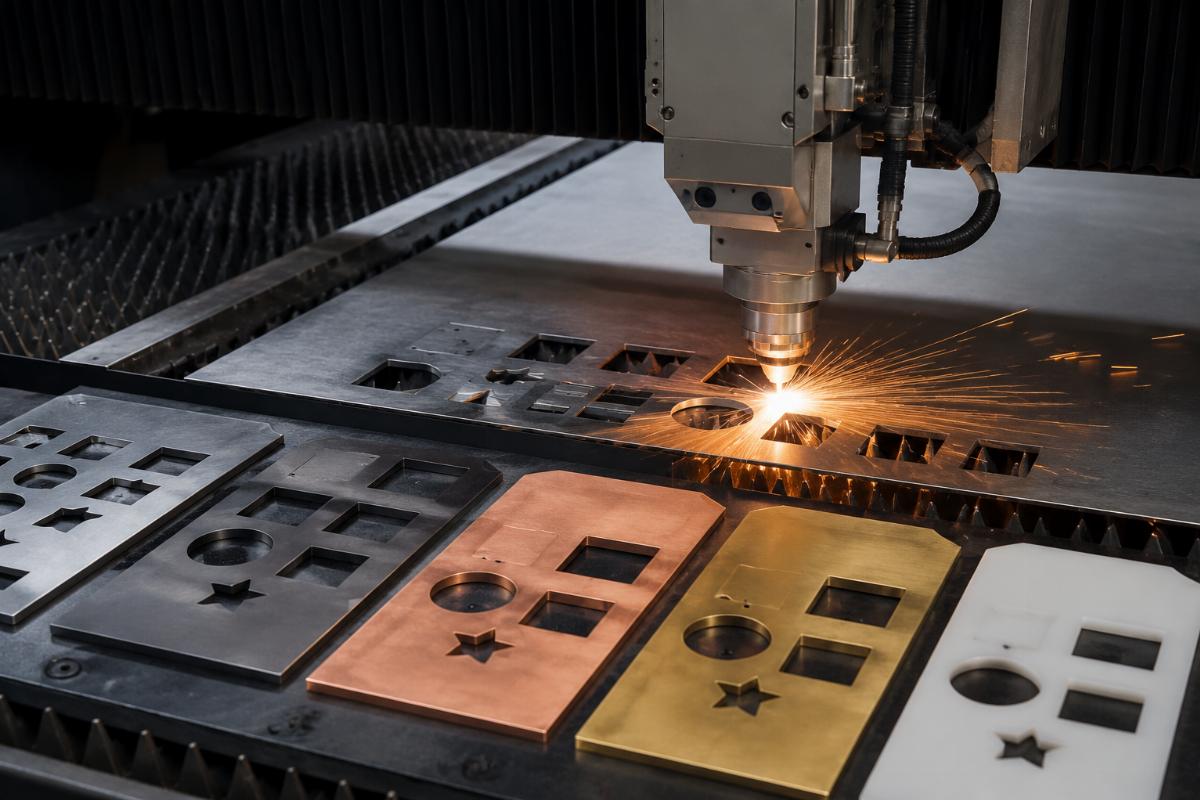
I guide buyers through this selection process every week. We start with sample cutting tests because material behavior varies even within the same category. Two different leather suppliers produce hides with different temper and thickness consistency. What cuts one leather perfectly might tear or drag the other. Testing eliminates guesswork.
A leather goods manufacturer contacted us about cutting handbag components. They assumed they needed a laser cutter because they saw laser cutting videos online. We tested their leather samples with both laser and knife cutting. The laser created a hard, dark edge that they couldn't finish properly. The knife produced a clean cut that matched their hand-cutting quality. They ordered a CNC knife system instead of the laser they originally wanted.
What material properties determine toolhead selection?
Material thickness determines blade depth and cutting force requirements. Thin materials under 1mm need shallow blade penetration and low cutting pressure. Thick materials over 10mm need deep blade engagement and higher pressure. The machine must adjust blade depth precisely to avoid cutting into the table surface while ensuring complete material separation.
Material flexibility affects hold-down requirements. Rigid materials like corrugated plastic stay flat with minimal vacuum pressure. Flexible fabrics need strong vacuum across the entire cutting area to prevent shifting. Stretchy materials like jersey knit need even distribution of hold-down force to avoid distortion.
Edge sensitivity determines whether heat-based or mechanical cutting works better. Materials that melt, burn, or discolor under heat need knife cutting. Materials that fray or have loose weave structures might need ultrasonic cutting to seal edges. Materials with clean, stable edges can use either method depending on precision and speed requirements.
| Material Property | Toolhead Recommendation | Reason |
|---|---|---|
| Flexible, under 3mm, non-fraying | Drag knife | Low force, high speed, clean edges |
| Flexible, 3-15mm, layered | Oscillating knife | Penetrates thick materials without compression |
| Heat-sensitive synthetic fabrics | Oscillating knife | No heat damage, no edge melting |
| Technical textiles, carbon fiber | Ultrasonic knife | Seals cut edges, prevents fraying |
| Thin films under 0.5mm | Tangential knife | Precise corners, minimal material deflection |
| Rigid sheets, corrugated plastic | Drag knife or oscillating knife | Handles rigid structure without slipping |
How do production requirements affect machine configuration?
Production volume determines whether you need manual feed, semi-automatic feed, or fully automatic feed systems. Low-volume custom work suits manual sheet loading. Medium-volume batch production benefits from automatic sheet loading with manual material positioning. High-volume repetitive cutting requires conveyor systems or roll feed for continuous operation.
Precision requirements determine the machine's mechanical accuracy and control system resolution. Advertising graphics need accuracy within 0.5mm for proper assembly. Automotive interior components need accuracy within 0.2mm to fit mounting points correctly. Gaskets for industrial sealing applications need accuracy within 0.1mm to maintain seal integrity.
Material size affects the cutting area and table size you need. Small leather goods fit on 1200mm x 1200mm tables. Large automotive headliners require 2000mm x 3000mm cutting areas. Roll-fed materials like fabric or vinyl need tables with material handling systems that maintain tension and alignment across the entire width.
We worked with a gasket manufacturer cutting rubber sheets for industrial equipment. They were using manual die cutting with custom dies for each gasket shape. Die costs limited them to high-volume production runs. They couldn't accept small custom orders profitably.
They needed a CNC knife system that could cut any gasket shape without dies. We configured a machine with an oscillating knife for thick rubber materials, a large enough cutting area for their biggest gaskets, and vacuum hold-down strong enough to prevent rubber from lifting during cutting. The machine paid for itself in eight months through accepting custom orders that were previously unprofitable.
What mistakes do buyers make when evaluating CNC machines?
Buyers compare machines based on price and cutting area without understanding toolhead differences. They see two machines with similar cutting areas and similar prices. One uses a spindle and cuts wood. The other uses knives and cuts flexible materials. They assume the machines are equivalent because the specifications look similar.
The biggest mistake is selecting machines based on wood router specifications when you need flexible material cutting capabilities. Spindle power, RPM, and dust collection don't matter for knife cutting. Blade pressure control, vacuum power, and cutting speed determine whether the machine handles your material successfully.
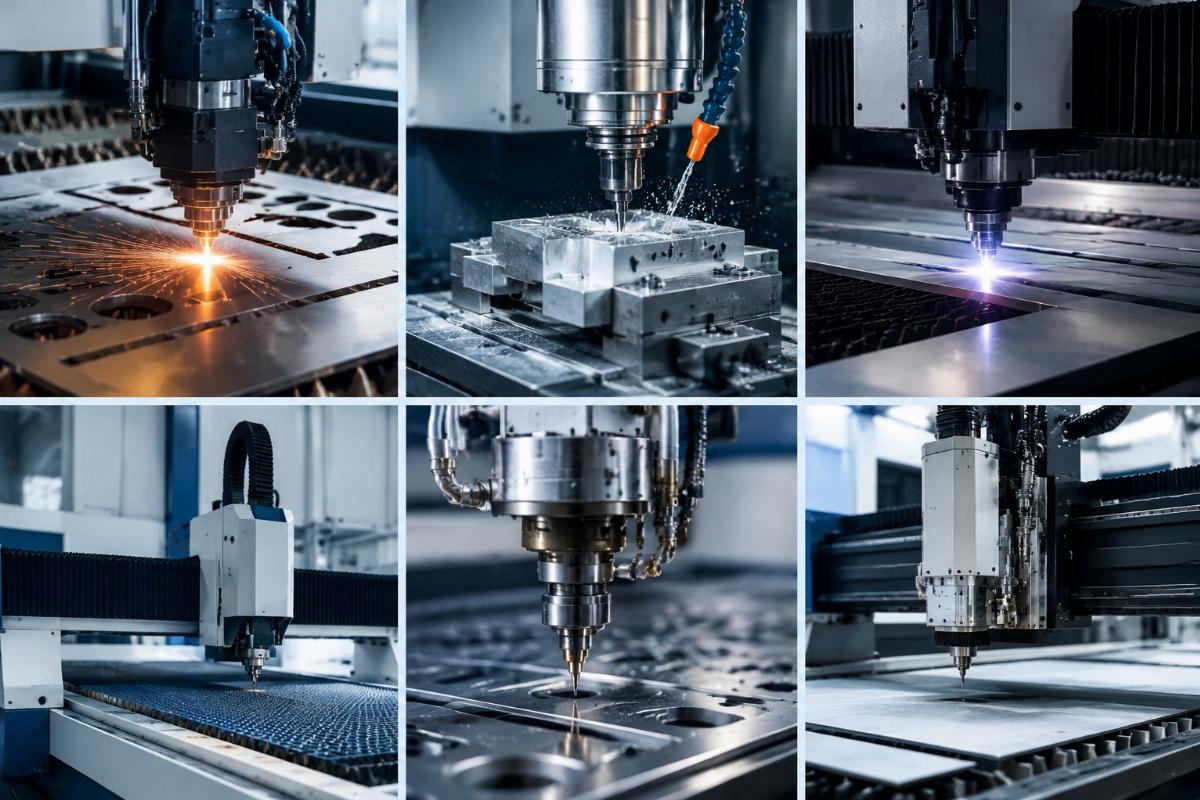
I talk to buyers who eliminated the right machine from consideration because they focused on the wrong specifications. They compared machines by price per square meter of cutting area. They didn't ask about blade types, material hold-down systems, or software capabilities. They ordered the least expensive machine and discovered it couldn't cut their material properly.
A furniture manufacturer contacted us after buying a CNC router for cutting upholstery fabric. They assumed fabric cutting was simpler than wood routing, so any CNC machine would work. The router's spinning tool snagged the fabric, pulled threads, and created frayed edges. The vacuum table couldn't hold the flexible material in place. They needed to replace the machine with a knife cutting system designed for fabric.
Why do buyers confuse cutting area size with capability?
Cutting area determines the maximum part size you can produce. A 2000mm x 3000mm cutting area handles parts up to those dimensions. This specification matters regardless of the toolhead type. But buyers assume that two machines with the same cutting area have the same capabilities.
A wood router with a 2000mm x 3000mm cutting area can carve rigid materials within that space. A knife cutter with the same cutting area can cut flexible materials within that space. The machines serve completely different applications even though the cutting area matches.
I've seen buyers compare machines by dividing price by cutting area to calculate cost per square meter. This comparison ignores toolhead type, material compatibility, speed, precision, and software capabilities. A cheap machine that can't cut your material has infinite cost per useful square meter.
What happens when buyers prioritize price over configuration?
Low-priced machines often compromise on components that determine long-term reliability and cutting quality. Weak vacuum systems can't hold materials flat. Low-quality motion systems lose accuracy after months of production. Basic software limits your ability to optimize material usage and production efficiency.
We installed knife cutting systems for a leather goods factory that previously bought low-cost machines based on price alone. Their first machine failed after six months because the vacuum pump couldn't maintain pressure. Their second machine couldn't cut precise curves because the motion system had too much backlash. Their third machine wasted material because the nesting software couldn't optimize layouts.
When they finally contacted us, they had spent more money on failed machines than our system cost. We configured a machine with proper vacuum capacity, accurate motion control, and professional nesting software. The machine has run reliably for three years with normal maintenance. They calculate that proper material nesting alone saves enough material to pay for the price difference compared to their cheaper machines.
How does Realtop configure CNC systems for flexible materials?
We don't sell generic CNC machines. We configure cutting systems based on your specific materials, production requirements, and quality standards. This means asking questions about your materials before recommending equipment configurations.
Every flexible material behaves differently under cutting pressure. We need to test your actual production materials to verify that the machine configuration handles your material properties correctly. Sample cutting eliminates guessing and prevents expensive mistakes.
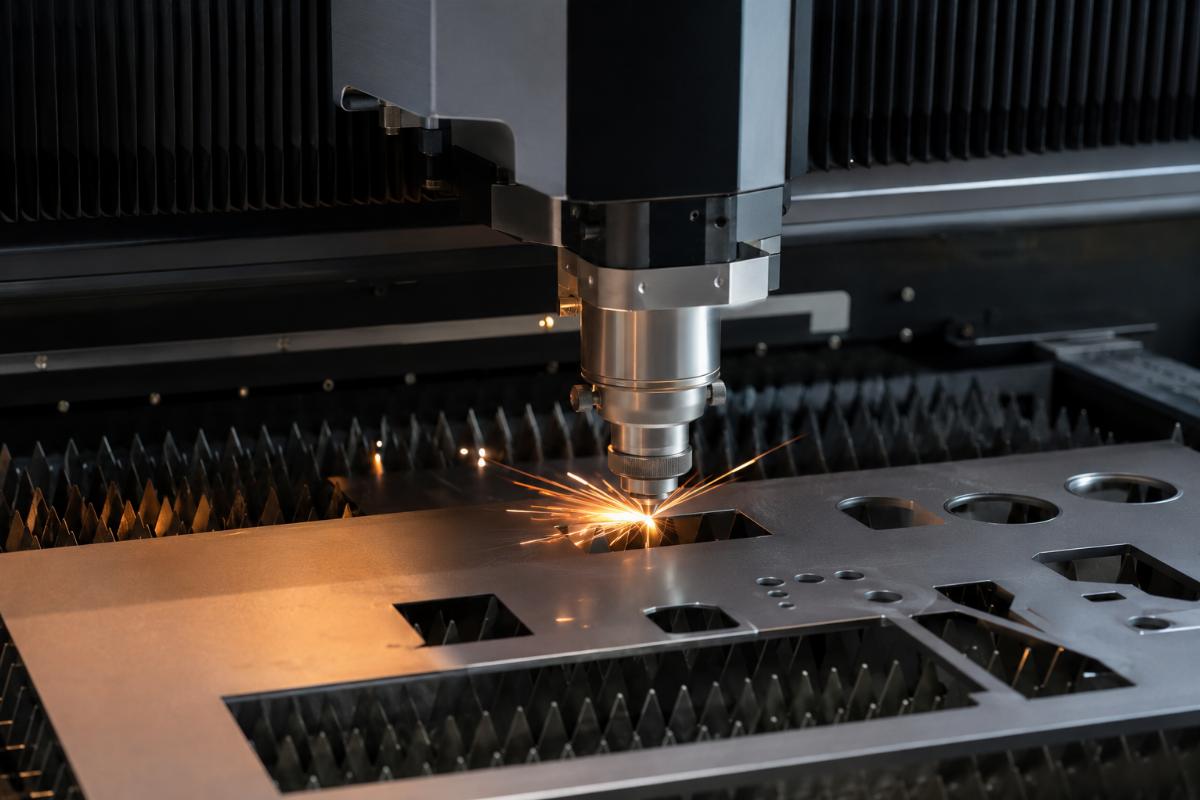
Our configuration process starts with understanding your production process. What materials do you cut now? What quality problems do you experience? What production volume do you need? What part sizes do you produce? What accuracy requirements do you have? These questions determine the machine configuration you need.
After we understand your requirements, we test your materials on our demonstration systems. We try different blade types, cutting speeds, and material hold-down settings. We measure edge quality, cutting accuracy, and production speed. We verify that the configuration meets your requirements before finalizing the machine specification.
What blade configurations handle different flexible materials?
Oscillating knives work for most flexible materials from 0.5mm to 25mm thick. The blade moves up and down at frequencies from 1000 to 7000 strokes per minute while moving forward through the material. This slicing action separates material