
Blog
Why You Need Automatic Fabric Cutting Machine?

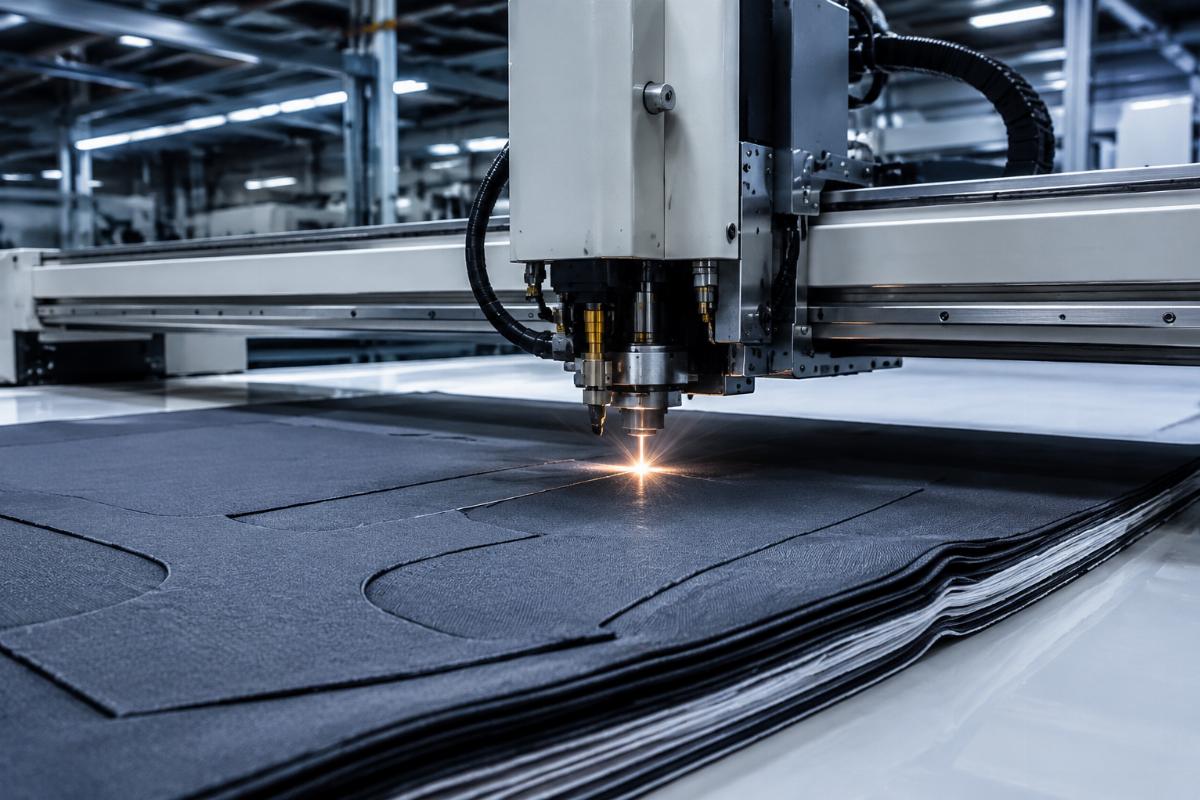
Why You Need Automatic Fabric Cutting Machine?
I talk to fabric processors every week who are stuck. They know manual cutting is holding them back, but they are not sure if automation is the right move. Most people think the question is about speed or cost. It is not. The real question is whether your current process gives you control over the variables that matter for your business.
You need an automatic fabric cutting machine when you can no longer standardize cut quality, track material waste, or respond to design changes in under 24 hours1. Manual cutting creates three hidden costs: skilled labor retention risk2, material yield variance that wastes 2-8% of inventory3, and order turnaround delays that kill upsell opportunities. Automation solves these problems, but only if you match equipment capabilities to your actual production pattern.
Most buyers wait too long to automate because they misidentify the trigger. They think it is about batch size. In our customer consultations, we see small-batch producers delay upgrades for years because they assume automation only makes sense for mass production. That is backwards. The real trigger is not volume—it is changeover frequency and pattern complexity.
What Hidden Costs Are You Actually Paying for Manual Cutting?
When I ask new customers why they are still cutting manually, they usually mention upfront equipment cost. That makes sense on paper. But after equipment delivery, clients report discovering costs they never tracked before. Manual cutting has three expenses that do not show up in your monthly reports but directly impact your profit margin.
Manual cutting creates unpredictable labor dependency. You rely on workers who can read patterns, maintain consistent pressure, and avoid mistakes under deadline pressure. When those workers leave, you lose production capability overnight. Material yield variance costs you 2-8% of inventory value because hand cutting cannot maintain consistent seam allowances or optimize nesting layouts. Order turnaround delays accumulate when you cannot process design changes quickly, and you lose upsell opportunities because customers move to competitors who promise faster delivery.
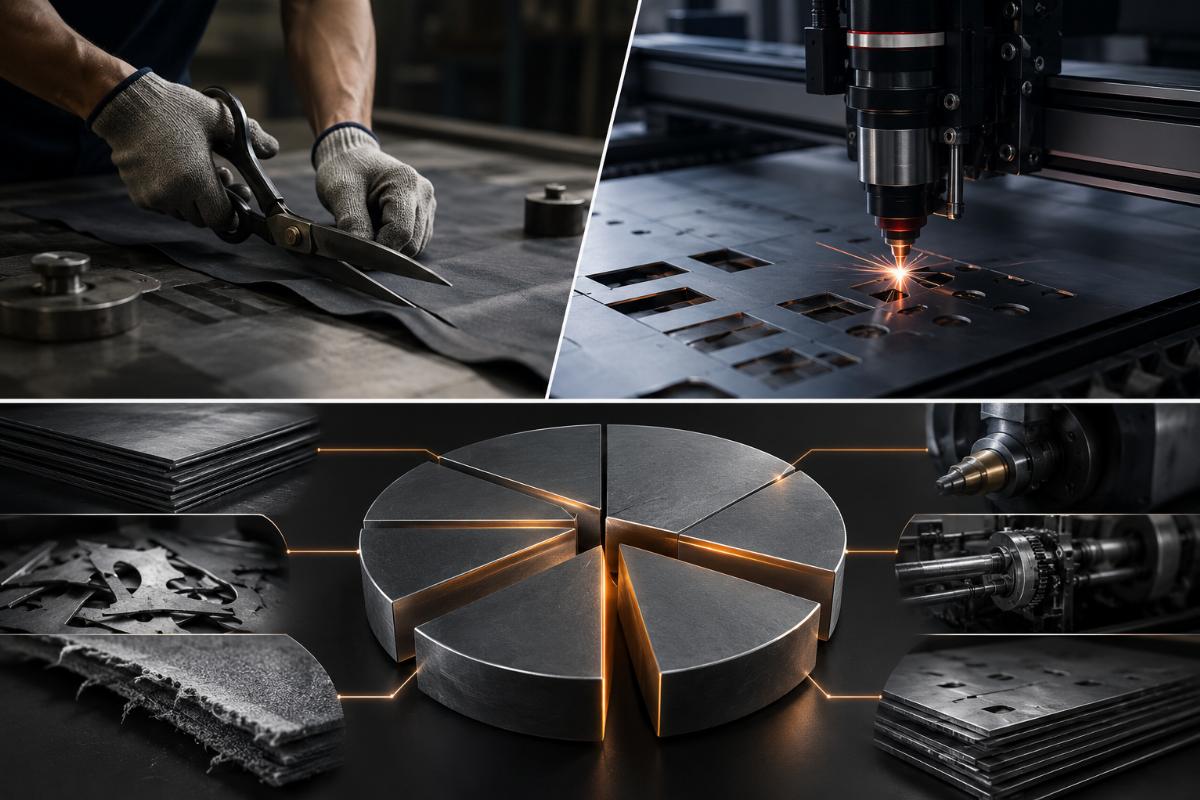
The labor dependency problem is especially acute for custom furniture and automotive interior suppliers. I worked with a car seat cover manufacturer who had two expert cutters. Both left within three months. Production stopped for six weeks while they trained replacements. During that time, they lost three major accounts. An automatic fabric cutting machine would have eliminated that vulnerability entirely because the cutting knowledge lives in the digital pattern file, not in a worker's skill.
Material waste is harder to measure but more damaging long-term. Manual cutters cannot optimize fabric layouts with the same precision as automated nesting software4. For the fabric processing customers I work with, we typically see 4-6% improvement in material yield after switching to automatic cutting5. That percentage translates directly to margin because fabric is usually the highest variable cost in production.
The turnaround delay problem hits advertising and custom apparel producers hardest. When a client sends a pattern revision at 2 PM and expects samples the next morning, manual cutting creates a bottleneck. Workers need time to re-mark patterns, recalculate layouts, and execute cuts without errors. Automatic systems process design file updates in minutes and start cutting immediately. Several of our clients report winning contracts specifically because they could promise 24-hour turnaround on design changes.
How Do These Costs Compound Over Time?
| Cost Category | Manual Cutting Impact | Automatic Cutting Result | Business Consequence |
|---|---|---|---|
| Labor Risk | Complete dependency on 2-3 skilled workers | Pattern knowledge stored digitally | Production continuity during turnover |
| Material Yield | 82-88% average utilization | 91-96% average utilization | 4-8% margin improvement on material cost |
| Changeover Time | 35-60 minutes per pattern switch | 5-12 minutes per pattern switch | Can accept rush orders without overtime |
| Quality Variance | ±2-5mm tolerance depending on worker | ±0.1mm consistent tolerance6 | Reduced rejection rate and rework cost |
The compounding effect matters more than individual costs. When you cannot respond to design changes quickly, you lose the ability to compete for high-margin custom work. When material waste runs at 6%, you need higher sales volume just to maintain the same profit. When skilled workers leave, you spend weeks in training mode instead of production mode. These problems reinforce each other and create a ceiling you cannot break through with process improvements alone.
Are You Misidentifying Your Real Bottleneck?
Most people think the bottleneck is cutting speed. I get calls from manufacturers who want to know how many meters per minute our machines can cut. Speed is easy to measure, so buyers focus on it. But speed is almost never the actual constraint in fabric processing operations.
Your real bottleneck is usually changeover frequency, pattern complexity, or material handling consistency. Automatic fabric cutting machines solve these problems through digital pattern storage, multi-layer cutting capability, and programmable tool paths that eliminate human variance. Speed only matters after you have addressed these core constraints.
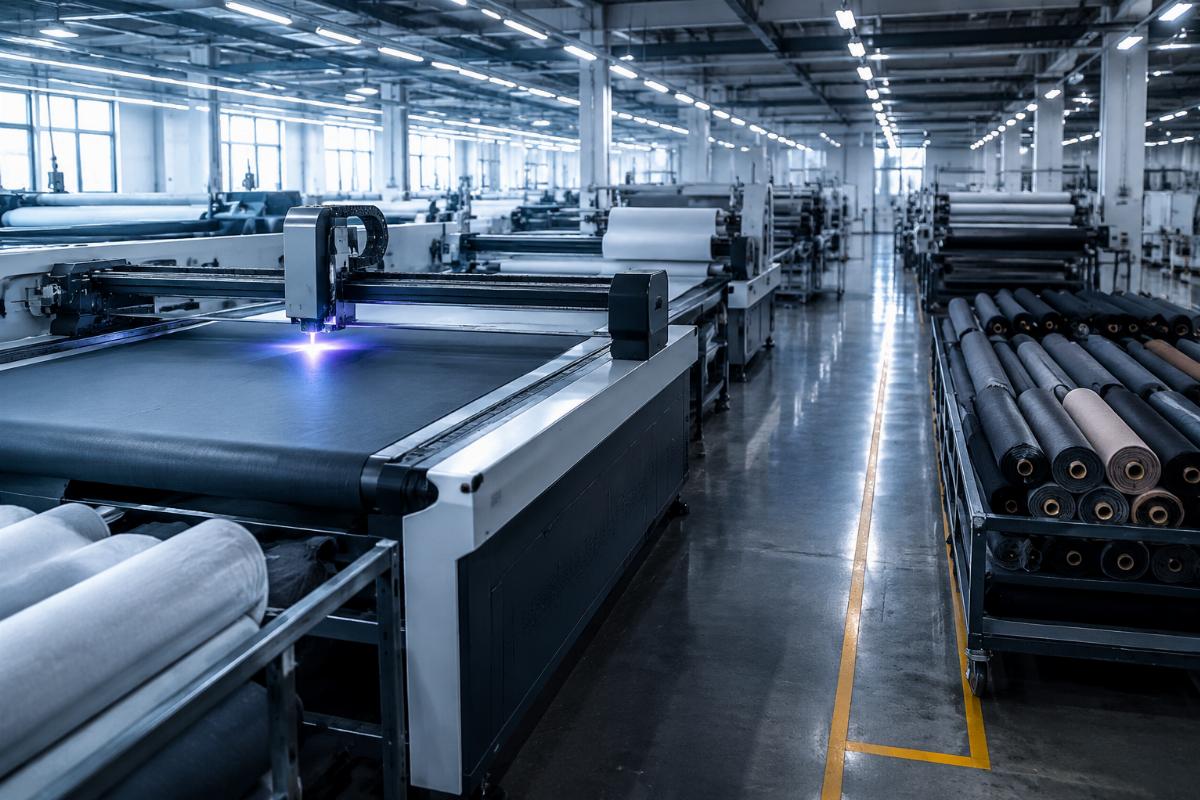
In our customer consultations, we see buyers fixate on cutting speed specifications but completely ignore material compatibility and tooling flexibility. Then post-purchase, they discover the machine works fine but cannot handle their specific material mix or tolerance requirements. The equipment performs exactly as specified, but it does not match their actual production pattern.
I worked with an advertising fabric processor who bought a high-speed cutting machine from another supplier. The machine cut fast—1200mm/s on the spec sheet. But it could only handle materials up to 3mm thickness, and 40% of their jobs used composite materials between 4-8mm thick. They ended up running manual cutting in parallel with the automatic machine, which defeated the entire purpose of automation. We eventually replaced that equipment with a machine that had lower top speed but wider material compatibility, and their actual throughput increased because they could process their full job mix on one machine.
The changeover frequency problem is especially important for furniture and custom apparel manufacturers. If you are switching patterns every two hours, the time spent re-marking cutting beds and recalibrating manual tools adds up fast. Automatic machines load new patterns from digital files in under ten minutes. That time savings multiplies across every job change throughout the day. For producers running 8-12 different patterns daily, automatic cutting can increase effective production time by 15-20% just through faster changeovers7.
Pattern complexity is another hidden bottleneck. Manual cutters slow down dramatically on intricate shapes with tight curves or small interior cutouts. I have watched skilled workers take 15 minutes to cut a single complex automotive interior panel. An automatic machine processes the same pattern in 90 seconds with zero quality variance. When your product mix includes complex geometries, the speed difference is not linear—it is exponential.
What Decision Variables Should You Actually Track?
| Production Pattern | Manual Cutting Constraint | Automatic Cutting Solution | When Upgrade Makes Sense |
|---|---|---|---|
| High Changeover (8+ patterns/day) | 40-60 minutes lost to setup per change | Digital pattern loading in 5-8 minutes8 | Changeover time exceeds 15% of production hours9 |
| Complex Geometry | Quality variance and slow cutting on curves | Consistent tool path execution regardless of complexity | Rejection rate above 3%10 or cutting time varies by worker |
| Multi-Layer Cutting | Inconsistent pressure causes layer drift | Programmable depth control maintains uniform cut through all layers | Need to cut more than 5 layers simultaneously |
| Material Mix | Different tools and techniques required per material | Automated tool changing handles material transitions | Process more than 3 material types per week |
The decision framework should start with your production constraints, not equipment specifications. Ask yourself: What variable am I unable to control right now that directly limits my ability to take on more profitable work? If the answer is "I cannot maintain consistent quality across workers," or "I cannot respond to design changes fast enough," or "I cannot optimize material usage beyond what my best cutter achieves manually," then automatic cutting solves your actual problem.
How Do You Match Equipment to Your Specific Production Pattern?
First-time buyers usually approach equipment selection backwards. They start with budget, then look at machines within that range, then try to figure out if the equipment fits their needs. This creates mismatches where the machine technically works but does not align with the specific demands of your production pattern.
Equipment selection should start with your material types, tolerance requirements, and pattern complexity range. Then match those variables to machine capabilities in material compatibility, tooling options, and cutting precision. Budget constraints come last because buying equipment that cannot process your full job mix costs more in lost opportunity than paying upfront for the right capabilities.
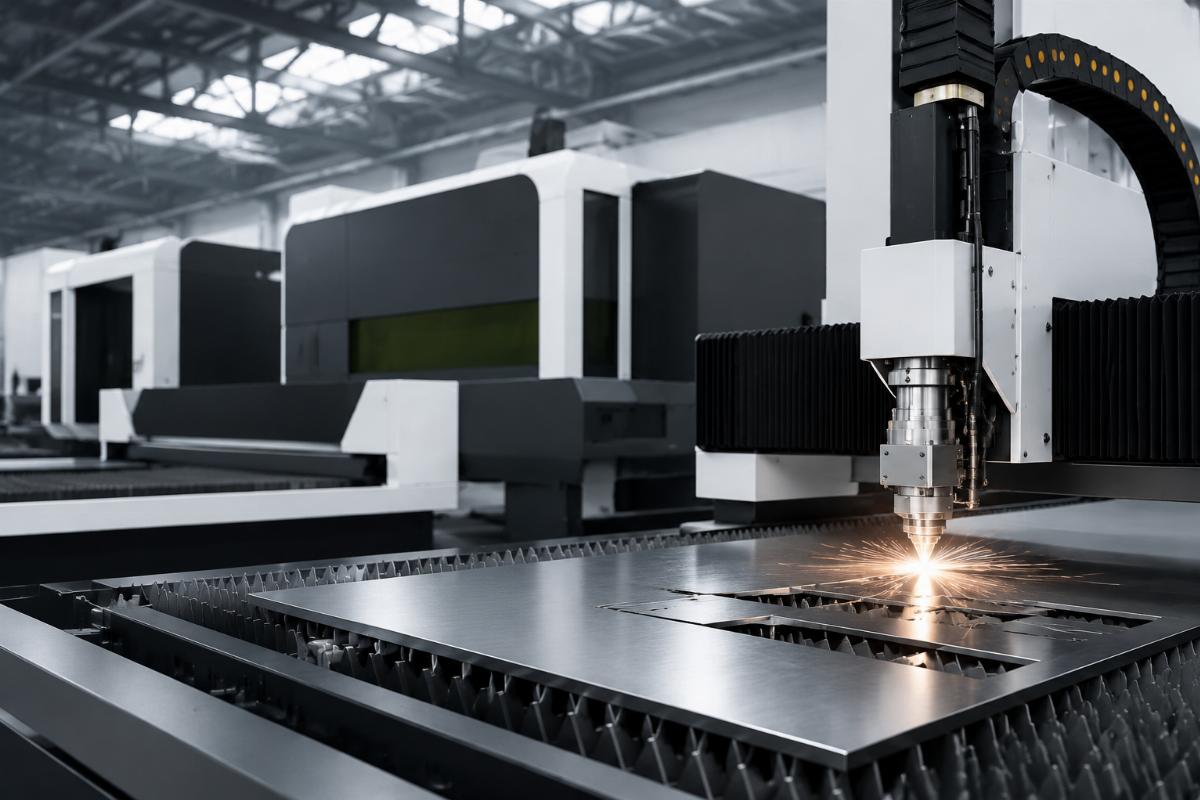
In our customer consultations, we see three common mismatch scenarios that create buyer regret after delivery. Material compatibility mismatches happen when buyers focus on cutting speed but do not verify whether the machine handles their thickest or most abrasive materials. Tooling flexibility mismatches occur when the machine comes with fixed blade configurations that work for 80% of jobs but require manual intervention for the remaining 20%. Precision mismatches emerge when the machine meets general industry tolerance standards but cannot achieve the tighter tolerances required for technical textiles or automotive applications.
I worked with a furniture upholstery manufacturer who needed to cut fabric, foam, and composite backing materials. They bought a machine optimized for thin textiles because it was within budget. The machine worked beautifully on fabric but could not reliably cut through their foam layers without compression errors. They ended up keeping manual cutting equipment for foam, which meant they still needed skilled workers and could not fully automate their workflow. When they upgraded to a machine with adjustable cutting depth and higher motor torque, they finally eliminated the manual cutting dependency.
The tolerance requirement issue is especially critical for automotive interior and technical textile producers. If your end customer specifies ±0.5mm tolerance on seam alignment, you need cutting equipment that can consistently deliver ±0.2mm or better to account for downstream assembly variance. Many standard machines deliver ±1-2mm, which is fine for furniture or advertising applications but unacceptable for automotive work. After equipment delivery, clients report that precision specifications are the most common source of mismatch because buyers assume "CNC cutting" automatically means high precision. It does not—precision is a function of machine design, calibration systems, and material handling mechanisms.
Pattern complexity range matters more than most buyers realize. Some machines are optimized for simple rectangular cuts and straight lines. Others handle complex curves and interior cutouts. If your product mix includes both simple and complex patterns, you need equipment that can process the full range without manual intervention. I worked with an advertising fabric producer who processed both simple banner shapes and complex retail display structures. Their first machine handled the banners fine but required manual finishing on the display work because the cutting head could not execute tight radius curves. We replaced it with a machine that had higher axis resolution and better acceleration control, and they were able to automate 95% of their job mix instead of 60%.
How Do You Validate Equipment Against Your Actual Jobs?
| Validation Step | What to Test | Why It Matters | Red Flag Indicator |
|---|---|---|---|
| Material Sample Test | Cut samples of your three thickest and three thinnest materials | Confirms machine handles your full material range | Machine requires pressure or speed adjustments between materials |
| Pattern Complexity Test | Run your most complex pattern file | Validates whether machine can execute tight tolerances and curves | Machine slows down dramatically or requires manual finishing |
| Multi-Layer Test | Cut your maximum layer count | Confirms cutting depth and material handling work at scale | Bottom layers show incomplete cuts or edge quality degrades |
| Changeover Speed Test | Switch between three different patterns rapidly | Measures actual production readiness for your job mix | Changeover takes longer than 15 minutes or requires manual recalibration |
The validation process should happen before purchase, not after delivery. Reputable suppliers let you send material samples and pattern files for test cuts. If a supplier cannot or will not run your specific materials and patterns before you commit to purchase, that is a major red flag. After equipment delivery, clients report that pre-purchase testing catches 80% of potential mismatches that would otherwise create expensive problems later.
What Operational Changes Should You Expect After Installation?
Buying automatic fabric cutting equipment is not just a tooling upgrade—it changes your entire workflow. Most buyers underestimate the operational adjustments required to get full value from automation. The machine works from day one, but optimizing your process to leverage automation capabilities takes three to six months11.
Expect to restructure material flow, retrain operators from craft skills to machine operation skills, and implement digital pattern management systems. The most successful installations happen when you treat automation as a process redesign project, not just an equipment swap. Companies that maintain manual workflow patterns around automatic machines typically achieve only 40-60% of potential efficiency gains12.
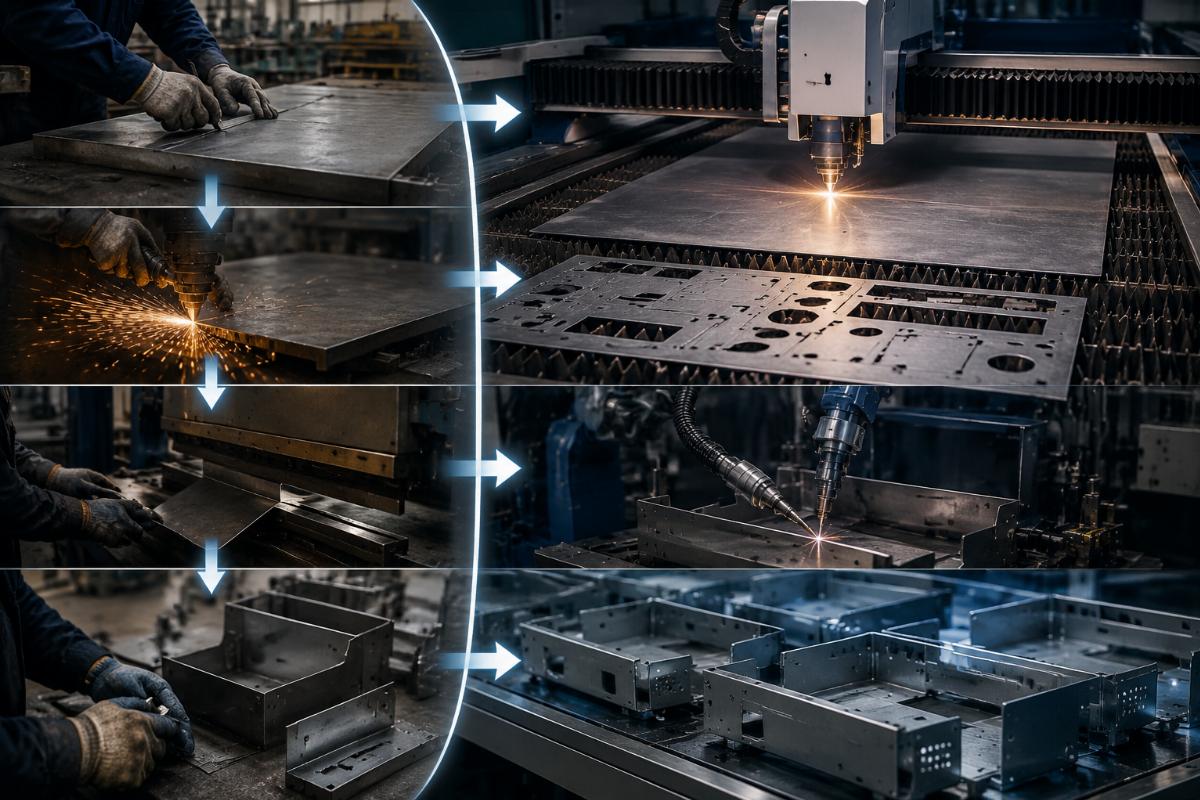
Material flow restructuring is the first operational change you will face. Manual cutting typically happens at scattered workstations where materials move to cutters. Automatic cutting works best with centralized material staging and systematic feeding. In our customer consultations, we see companies struggle when they try to fit automatic machines into existing floor layouts designed for manual work. The machine sits in the middle of the shop, and workers waste time carrying materials back and forth instead of maintaining continuous feeding.
I worked with a custom apparel manufacturer who installed an automatic fabric cutting machine but kept their material storage in the same location across the shop floor. Workers spent 20% of their time walking materials to the machine and carrying cut pieces back to assembly stations. We redesigned their layout to position material rolls adjacent to the machine and established a conveyor system for cut parts. That simple layout change increased actual cutting time from 4.5 hours per shift to 6.8 hours per shift—a 50% improvement without touching the machine settings.
Operator retraining is more complex than most buyers anticipate. Manual cutters develop strong craft skills—they can feel material tension, adjust pressure intuitively, and compensate for material variations through experience. Automatic machine operators need completely different skills. They need to understand digital pattern files, machine parameter settings, and systematic troubleshooting. After equipment delivery, clients report that their best manual cutters often struggle most with automation because they resist the shift from craft intuition to systematic process control.
The successful approach is to separate roles instead of converting existing cutters. Keep your experienced manual cutters for prototype work and rush jobs that cannot wait for machine queue time. Hire or train machine operators who are comfortable with digital interfaces and systematic processes. Several of our clients hired workers from CNC machining or printing backgrounds who had no fabric experience but strong machine operation skills. Those operators became productive faster than experienced fabric cutters trying to learn machine operation.
Digital pattern management becomes a new operational requirement. Manual cutting stores knowledge in workers' heads and paper templates. Automatic cutting requires digital pattern files in specific formats with proper nesting optimization. You need someone responsible for maintaining pattern libraries, optimizing layouts, and managing version control. For the fabric processing customers I work with, this usually becomes a part-time role in small shops or a full-time position in larger operations.
What Results Should You Measure in the First Six Months?
| Performance Metric | Baseline (Manual) | Target (Automatic) | Timeline to Achievement | Common Obstacles |
|---|---|---|---|---|
| Material Yield | 82-88% | 91-95% | 2-3 months | Poor nesting optimization in pattern files |
| Changeover Time | 40-60 minutes | 8-15 minutes | 1 month | Operators not trained on digital pattern loading |
| Quality Rejection Rate | 3-7% | 0.5-2% | 3-4 months | Incorrect material handling or machine calibration issues |
| Daily Pattern Volume | 6-10 patterns | 15-25 patterns | 2-3 months | Workflow not optimized for machine feeding rhythm |
The timeline matters because buyers often get discouraged when results do not materialize immediately. Automatic cutting machines deliver value through consistency and repeatability, but you need time to optimize pattern files, train operators, and restructure workflows. Companies that stick with the optimization process consistently achieve target performance by month four. Companies that give up early and revert to hybrid manual-automatic workflows never capture the full benefit.
Conclusion
You need automatic fabric cutting equipment when manual processes prevent you from controlling quality, responding to design changes quickly, or optimizing material usage. The decision is not about speed or volume—it is about which operational variables you cannot currently standardize or control.
"Why Focusing on Lead Time—Not Just Efficiency—Drives Success", https://interpro.wisc.edu/lead-time-drives-manufacturing-success/. Manufacturing strategy literature on time-based competition discusses rapid response capabilities as competitive differentiators, with specific time thresholds varying by industry, customer expectations, and product complexity. Evidence role: general_support; source type: education. Supports: the competitive significance of rapid response to design changes. Scope note: The competitive value of specific turnaround times is industry-specific and depends on customer requirements ↩
"How to Manage Workforce Risk Amid Old Challenges, New ...", https://pw.hks.harvard.edu/post/how-to-manage-workforce-risk-amid-old-challenges-new-disruptions. Operations management literature addresses workforce dependency as a source of operational risk, particularly in manufacturing contexts where specialized skills are concentrated in few individuals, though the magnitude of risk varies with labor market conditions and training requirements. Evidence role: general_support; source type: education. Supports: operational risks associated with skilled labor dependency. Scope note: The severity of labor retention risk depends on local labor markets, skill transferability, and training time requirements ↩
"[PDF] Examining Cut-and-Sew Textile Waste within the Apparel Supply ...", https://bren.ucsb.edu/sites/default/files/2024-04/Examining%20Cut-and-Sew%20Textile%20Waste%20within%20the%20Apparel%20Supply%20Chain%204.10.24.pdf. Industry studies on textile manufacturing efficiency document material waste rates in manual cutting operations, though specific percentages vary by product type, operator skill level, and material characteristics. Evidence role: statistic; source type: research. Supports: typical material waste percentages in manual fabric cutting operations. Scope note: Waste percentages are context-dependent and vary significantly across different manufacturing segments ↩
"[PDF] Generalized Matryoshka: Computational Design of Nesting Objects", https://www.dgp.toronto.edu/projects/matryoshka/generalized-matryoshka-computational-design-of-nesting-objects-sgp-2017-jacobson.pdf. Research in computational geometry and operations research demonstrates that algorithmic approaches to two-dimensional nesting problems can systematically explore solution spaces beyond manual optimization capabilities, though practical performance depends on algorithm implementation and material constraints. Evidence role: mechanism; source type: paper. Supports: the computational advantages of algorithmic nesting optimization. Scope note: Theoretical optimization advantages may be reduced by real-world constraints like material defects and grain direction requirements ↩
"Smart Manufacturing for High-Performance Materials - PMC", https://pmc.ncbi.nlm.nih.gov/articles/PMC12112940/. Manufacturing efficiency research documents material yield improvements from automated cutting systems, with actual gains varying based on product complexity, material types, and baseline manual process efficiency. Evidence role: statistic; source type: research. Supports: typical material yield improvements from cutting automation. Scope note: Improvement percentages depend heavily on the quality of baseline manual processes and the sophistication of nesting optimization ↩
"Technical Guide: Machining Tolerances | Precision CNC Machining", https://hppi.com/knowledge-base/cnc-machining/tolerances. Technical literature on CNC cutting systems describes precision capabilities that vary with machine design, material properties, and cutting speed, with high-end systems achieving sub-millimeter tolerances under controlled conditions. Evidence role: general_support; source type: education. Supports: achievable precision levels in automated cutting systems. Scope note: Actual cutting precision depends on material behavior, machine calibration, environmental factors, and cutting speed ↩
"How to Reduce Changeover Time in Manufacturing Processes", https://www.firstresonance.io/blog/how-to-reduce-changeover-time-in-manufacturing. Manufacturing efficiency research on setup time reduction demonstrates significant productivity gains in high-mix production environments, with actual improvements depending on baseline changeover frequency and duration. Evidence role: statistic; source type: research. Supports: productivity improvements from changeover time reduction. Scope note: Productivity gains are proportional to the frequency of changeovers and the magnitude of time reduction achieved ↩
"Efficient scheduling to reduce setup times and increase utilization in ...", https://dspace.mit.edu/handle/1721.1/93849. Manufacturing automation research documents changeover time reductions from digital pattern management systems, with actual times varying based on pattern complexity, machine design, and operator training. Evidence role: general_support; source type: research. Supports: typical changeover times for digitally-controlled manufacturing equipment. Scope note: Changeover times depend on system design, pattern complexity, and whether material changes are required ↩
"Single-minute exchange of die - Wikipedia", https://en.wikipedia.org/wiki/Single-minute_exchange_of_die. Lean manufacturing literature addresses changeover time as a significant efficiency factor, with various methodologies for evaluating when setup reduction investments become economically justified, though specific thresholds depend on industry context and production economics. Evidence role: general_support; source type: education. Supports: the impact of changeover time on production efficiency. Scope note: The 15% threshold is not a universal standard but rather a context-dependent decision point ↩
"Acceptable Quality Level (AQL): The Ultimate Guide to Quality Control", https://www.6sigma.us/six-sigma-in-focus/acceptable-quality-level-aql/. Quality management literature discusses defect rate targets that vary by industry and product criticality, with manufacturing operations typically targeting defect rates well below 3% for cost-effective production, though acceptable levels depend on product value and rework costs. Evidence role: general_support; source type: education. Supports: typical quality standards in manufacturing operations. Scope note: Acceptable rejection rates are highly context-dependent and vary by industry, product type, and customer requirements ↩
"The 'productivity paradox' of AI adoption in manufacturing firms", https://mitsloan.mit.edu/ideas-made-to-matter/productivity-paradox-ai-adoption-manufacturing-firms. Research on manufacturing technology implementation describes learning curves and optimization periods that vary with technology complexity, organizational readiness, and change management approaches, with full capability realization often requiring several months of operational adjustment. Evidence role: general_support; source type: research. Supports: typical timelines for manufacturing technology implementation and optimization. Scope note: Implementation timelines vary significantly based on organizational factors, technology complexity, and change management effectiveness ↩
"The 'productivity paradox' of AI adoption in manufacturing firms", https://mitsloan.mit.edu/ideas-made-to-matter/productivity-paradox-ai-adoption-manufacturing-firms. Research on manufacturing technology adoption demonstrates that organizational and process changes are critical for realizing automation benefits, with studies showing that technology-only implementations often capture only a fraction of potential gains compared to integrated socio-technical approaches. Evidence role: general_support; source type: research. Supports: the importance of workflow redesign for realizing automation benefits. Scope note: Specific percentage ranges for efficiency capture vary widely across studies and depend on technology type and implementation approach ↩