
Blog
What’s the critical value of suction hole density on the cutting table for preventing small cut pieces from shifting?

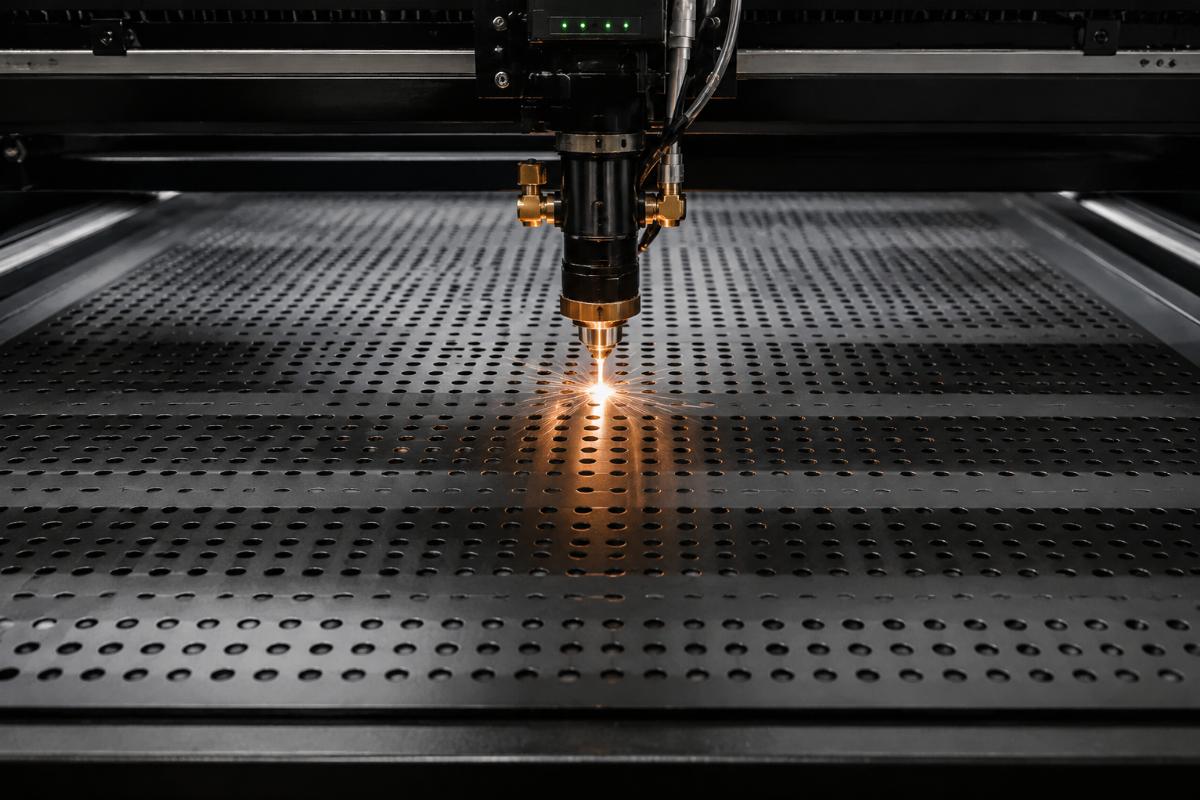
What's the critical value of suction hole density on the cutting table for preventing small cut pieces from shifting?
After handling dozens of cutting table complaints, I've noticed one pattern keeps repeating: customers buy machines with impressive-sounding suction hole counts, then discover their small cut pieces still shift during operations. The problem isn't the machine itself but a misunderstood relationship between hole density and holding force.
The critical value isn't a fixed number but a threshold where adding more suction holes actually reduces per-hole vacuum force below what's needed to hold your specific material, making hole density alone a poor predictor of real-world performance without matching it to material properties and fan capacity.
I spent three years handling after-sales cases where this mismatch caused production delays. Most buyers assumed denser hole patterns automatically meant better holding, not realizing they were dividing fixed airflow across more openings and weakening individual hole strength below the threshold their thin materials required.
Why do automotive interior and packaging manufacturers report shifting problems most frequently?
Automotive interior suppliers and packaging producers contact us about small-piece shifting more than any other customer group. Their complaints sound similar: parts move during contour cutting, nested layouts fail mid-job, and operators spend extra time repositioning pieces manually.
These manufacturers produce many irregular small pieces in tight nesting patterns where edge-to-edge suction coverage matters more than total hole count, and gaps between holes allow flexible materials to lift and shift even when the table generates strong overall vacuum.
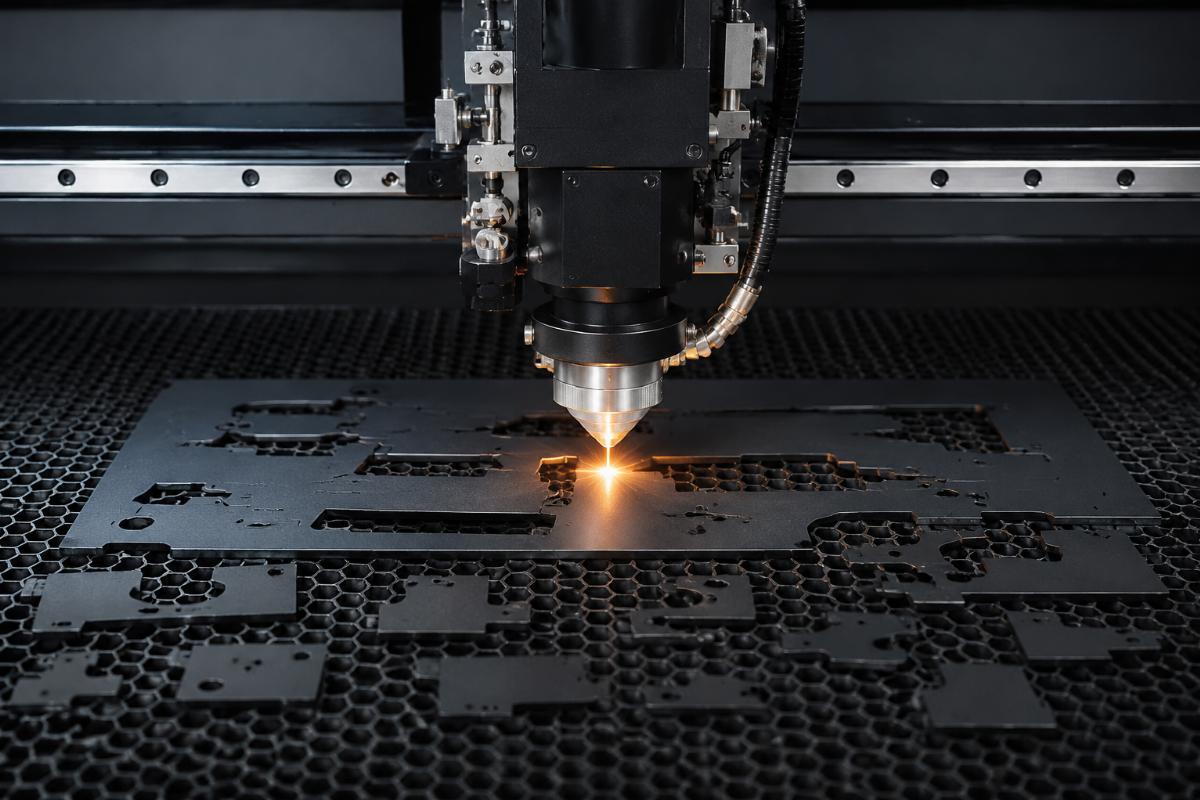
The problem stems from their cutting strategies. Automotive interior parts like headliner sections or door panel inserts often include curved edges and small connecting tabs that create dozens of offcuts per sheet. Packaging manufacturers running nested dielines face similar challenges, especially with folding carton layouts that leave narrow strips between parts. When these small pieces don't sit directly over a suction hole, the distance to the nearest hole determines whether ambient air breaks the vacuum seal.
One packaging customer I worked with was cutting 0.8mm corrugated board in dense nesting patterns. Their table had suction holes spaced 50mm apart in a grid, which seemed adequate on paper. During cutting, small rectangular offcuts measuring 40mm × 60mm would shift by 2-3mm between the cutting head's passes, causing the second pass to miss registration marks. The issue wasn't weak total suction; their vacuum pump generated plenty of negative pressure. The problem appeared because these small rectangles often landed between grid intersections, with their corners 35mm away from the nearest hole. At that distance, the thin, semi-permeable corrugated material couldn't maintain enough vacuum differential to overcome the lateral forces from the cutting head's movement.
How does part size interact with hole spacing?
| Part Size Range | Recommended Maximum Hole Spacing | Reasoning |
|---|---|---|
| Under 50mm × 50mm | 25-30mm center-to-center | Ensures at least one hole falls under the part's center area |
| 50-150mm per side | 40-50mm center-to-center | Provides multiple contact points without over-distributing airflow |
| Over 150mm per side | 50-80mm center-to-center | Larger parts bridge hole gaps better, excessive holes waste vacuum capacity |
I've seen manufacturers waste money installing tables with 25mm hole spacing when their smallest parts measure 200mm on each side. That ultra-dense pattern looked impressive in the sales demo but divided their vacuum system's airflow so thoroughly that even large parts showed weaker holding than a properly spaced 60mm grid would have provided. The key isn't maximizing hole count but matching hole spacing to your actual part size distribution, with particular attention to the smallest pieces you'll cut regularly.
Does adding more holes always improve small-piece stability?
Many equipment buyers assume suction performance scales linearly with hole count. Sales materials reinforce this belief by highlighting tables with thousands of holes as premium options. I've reviewed purchase requests where customers specified minimum hole counts without considering their vacuum pump capacity or material properties.
Beyond a critical density threshold, adding more suction holes reduces the vacuum force available at each individual opening because fixed airflow divides across more paths, and this per-hole force reduction can drop below the minimum needed to hold thin or breathable materials against cutting forces.

The physics works like a river splitting into multiple streams. Your vacuum pump generates a certain volume of airflow measured in cubic meters per minute. When that airflow enters a cutting table's plenum chamber, it distributes across all open suction holes. Double the hole count without increasing pump capacity, and each hole receives roughly half the airflow it had before. Reduced airflow per hole means lower suction force at each point.
I documented a case with a fabric cutting customer who upgraded from a table with 400 holes to one with 1200 holes, keeping the same 5.5kW vacuum pump. They expected better holding on their lightweight polyester knit fabrics. Instead, their quality control logs showed an increase in small-piece shifting errors. When we measured vacuum pressure at individual holes during operation, the original 400-hole table generated approximately 65 mbar at each active hole, while the new 1200-hole table only achieved 28 mbar per hole. Their thin knit fabrics needed at least 40 mbar of localized suction to overcome their tendency to curl at cut edges, so the "upgrade" actually reduced performance by spreading the available vacuum too thin.
What determines the force threshold for holding different materials?
The minimum suction force needed to prevent shifting depends on several material properties working together:
Material thickness affects how much surface area contacts the table. Thicker materials create more friction surface and require higher absolute force to move, but they also resist flexing that would break vacuum contact.
Breathability determines how fast air leaks through the material itself. Highly breathable fabrics like mesh or knit textiles lose vacuum through the material between holes, requiring higher constant airflow to maintain pressure differential. Non-breathable materials like coated vinyl or plastic films hold vacuum better but may need stronger initial grab force because they create less friction.
Stiffness changes how materials respond to gaps between holes. Rigid materials like 3mm gasket rubber bridge longer distances between holes without sagging, while flexible materials like thin leather conform to the table surface and lose contact in areas without direct hole coverage.
In cases I've handled with leather goods manufacturers, their 1.2mm garment-grade leather shifted on tables where 2mm upholstery vinyl stayed perfectly stable, even though both materials had similar breathability. The difference came down to stiffness: the upholstery vinyl's higher rigidity let it span 60mm between holes without drooping, while the softer garment leather needed holes every 40mm to prevent sagging between contact points.
How do material properties change the effective suction threshold?
Thin and breathable materials behave fundamentally differently under vacuum than thick, airtight ones. I've seen customers specify cutting tables based on equipment they used for thick materials, then struggle when they start processing thinner products on the same machine.
Thin, breathable materials lose vacuum faster through the material itself rather than around its edges, requiring different hole spacing strategies than thick, airtight materials that hold vacuum primarily at their perimeter and can bridge larger gaps between holes.

When you place an airtight material like PVC-coated banner vinyl on a vacuum table, air can only enter the system around the material's edges. Once the material makes contact with the table surface, it forms an effective seal. Adding more holes in the middle of large pieces doesn't improve holding because no air flows through those center holes anyway; the material blocks them. For these materials, hole density matters most at part edges and between nested pieces where air can infiltrate.
Breathable materials work completely differently. Technical textiles, non-woven fabrics, knitted goods, and porous foams allow air to pass directly through their structure. Place a breathable material over a suction hole and air continuously flows through the material into the vacuum system. This creates several challenges that change the critical hole density threshold.
A furniture manufacturer I worked with cut both leather and fabric for sofa production on the same table. Their 2mm leather pieces stayed stable with holes spaced 70mm apart because leather's tight fiber structure made it essentially airtight. When they switched to cutting loosely-woven upholstery fabric of similar thickness, small pieces started shifting even though the material properties seemed comparable. The fabric's open weave allowed so much air penetration that vacuum pressure dropped significantly across the material surface between holes. They needed to reduce effective hole spacing to 45mm for fabric by blocking unused zones of their segmented vacuum table, concentrating airflow in the active cutting area.
Does material thickness require proportionally tighter hole spacing?
| Material Thickness | Breathability | Typical Problem | Spacing Adjustment |
|---|---|---|---|
| Under 1mm | High (technical fabrics) | Vacuum loss through material | Reduce spacing 30-40% below standard |
| Under 1mm | Low (thin films) | Edge lifting between holes | Slight spacing reduction (10-20%) |
| 1-3mm | High (foams, fleece) | Inconsistent pressure zones | Moderate spacing reduction (20-30%) |
| 1-3mm | Low (leather, vinyl) | Usually stable | Standard spacing works well |
| Over 3mm | Any | Bridge gaps easily | Can increase spacing 20-40% above standard |
I've noticed a counterintuitive pattern in customer complaints: thinner materials often need tighter hole spacing than thicker ones, which contradicts the assumption that heavier materials demand more holding force. A 0.5mm technical textile that lets air pass through its weave requires closer holes than a 5mm rubber sheet, even though the rubber weighs significantly more per square meter. The difference comes from how vacuum force actually holds materials in place through pressure differential rather than simple mechanical grip.
What happens when you change hole density without rebalancing fan capacity?
Equipment specifications typically list suction hole count, hole diameter, and vacuum pump power as separate parameters. Buyers often focus on one specification without recognizing these elements form an interdependent system where changing any single variable affects overall performance.
Effective suction systems match hole density, hole diameter, and fan capacity together; changing one parameter without rebalancing the others creates performance gaps where the table either wastes energy generating unused vacuum capacity or fails to provide adequate holding force across all holes.
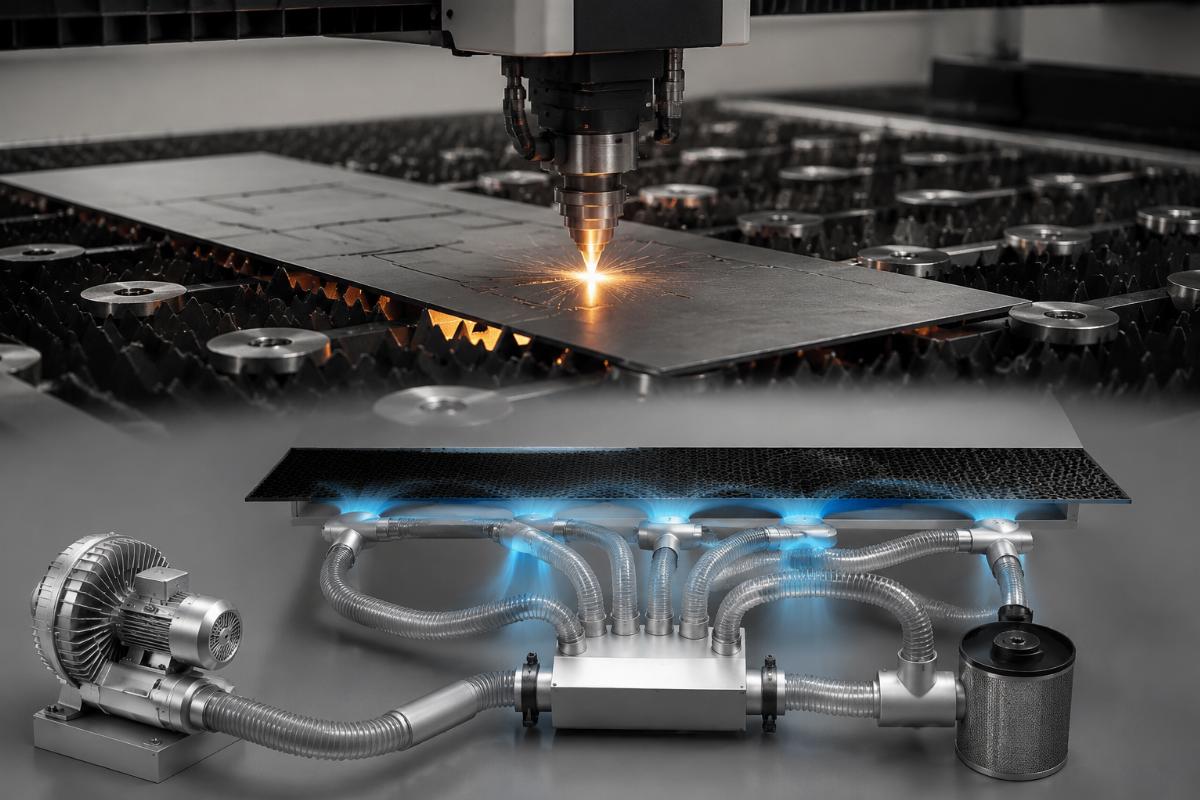
I reviewed a purchase decision where a customer specified a cutting table with 50% more suction holes than their current machine to solve small-piece shifting problems. Their vendor delivered exactly what they ordered: same size table, same vacuum pump model, but 800 holes instead of 500. The first production run revealed the mismatch immediately. The vacuum pump's 7.5kW motor couldn't maintain adequate negative pressure across 800 openings, so per-hole suction dropped below useful levels. They essentially paid for a table with 300 holes that didn't contribute meaningful holding force.
The relationship between these parameters follows basic fluid dynamics principles, though you don't need equations to understand the practical implications. Your vacuum pump must move enough air volume to replace what escapes through all active suction holes plus what leaks through breathable materials. As hole count increases, required airflow volume increases proportionally. Pump capacity that works perfectly for 400 holes will fall short for 800 holes unless you upgrade to a higher-capacity pump or reduce the number of simultaneously active holes through zone control.
How do vacuum zones prevent performance compromises?
Modern cutting tables often divide their suction surface into controllable zones, typically 4-8 independent sections that can activate or deactivate based on material placement. This lets you concentrate full vacuum capacity in the zones where material actually sits, rather than wasting airflow on empty table areas.
A composite materials manufacturer I worked with was cutting carbon fiber prepreg sheets that covered roughly 40% of their table surface during typical jobs. Their original single-zone system pulled vacuum across the entire table, distributing their 5.5kW pump's output across 600 holes even though material only covered 250 of them. After retrofitting a 4-zone controller, they could activate only the zones under their material, effectively tripling the vacuum force available per active hole. Their small offcut shifting problems disappeared without changing hole count, pump capacity, or material handling procedures.
Zone control also helps when cutting different materials on the same table. You can activate fewer zones for breathable fabrics that lose vacuum quickly, concentrating airflow where needed, then activate more zones for airtight materials that hold vacuum efficiently across larger areas.
How should buyers translate vendor specifications into real-world performance expectations?
Equipment sales literature presents specifications in ways that make direct performance comparisons difficult. Vendors highlight their strengths while using measurement conditions that favor their design choices. I've seen buyers struggle to determine whether Table A with 1000 holes and a 5.5kW pump will outperform Table B with 600 holes and a 7.5kW pump for their specific materials.
Focus your vendor evaluation on system-level performance under your actual cutting conditions rather than individual component specifications; request demonstration cuts using your materials, your typical part sizes, and your nesting densities to reveal whether their hole density and vacuum capacity balance works for your production requirements.

When I help customers evaluate equipment options, I recommend creating a test scenario that represents their most challenging cutting conditions, usually involving their thinnest material and smallest part sizes in tight nesting layouts. Send material samples to vendors and request video documentation of cuts that include those small parts, paying particular attention to whether pieces shift during cutting or after initial separation from the parent sheet.
Ask vendors to explain their hole spacing rationale for your specific materials. If they respond with a single "optimal" spacing number without asking about your material properties, part sizes, or nesting strategies, that indicates they're applying a generic design rather than matching system parameters to application requirements. Legitimate technical responses should acknowledge trade-offs and ask clarifying questions about your production mix.
What test observations indicate vacuum system mismatches?
| Observation During Demo | Likely Cause | What to Ask Vendor |
|---|---|---|
| Small parts shift during cutting passes | Hole spacing too wide for part size | "What's your smallest reliably-held part size with this spacing?" |
| Strong hold initially but gradual weakening | Breathable material overwhelming pump capacity | "What's your vacuum recovery time after cutting high-permeability materials?" |
| Better hold in some table areas than others | Uneven vacuum distribution or zone imbalance | "How do you verify consistent pressure across all holes?" |
| Vendor hesitant to cut your smallest parts | System not designed for that part range | "What's the practical lower limit for part sizes on this table?" |
One packaging customer shared their vendor evaluation experience with me after making their purchase decision. Three vendors competed for their business, all offering tables with similar hole counts around 800. During demonstrations, two vendors cut their sample packaging board using standard rectangular test parts sized around 200mm × 300mm, showing excellent holding and clean cuts. The third vendor insisted on cutting their actual production dielines, which included small hang-tag pieces measuring 35mm × 50mm in the nesting layout. That demonstration revealed small-part shifting problems with hole spacing that worked fine for larger pieces. The customer chose the third vendor specifically because their demo exposed a real limitation, then worked together to adjust hole spacing in critical zones before delivery.
What variables should buyers match to their material mix when specifying hole density?
Generic recommendations for hole spacing work adequately for mid-range materials in typical size ranges, but fall short at the extremes of your production mix. I've found customers get better outcomes when they analyze their material portfolio's edge cases rather than optimizing for average conditions.
Analyze your thinnest material, smallest part size, and tightest nesting density as a combined worst-case scenario; the hole density and vacuum capacity needed to handle that extreme case reliably will work adequately for your easier cutting jobs, while systems optimized for typical conditions often fail when production requirements push toward those extremes.

Start by identifying which materials and part sizes cause problems on your current equipment or in manual cutting operations. If your production includes everything from 3mm gasket rubber to 0.5mm technical textiles, the thin textile defines your hole density requirements because it loses vacuum faster and holds less securely than the rubber. If you cut both 500mm panels and 30mm small components, the small components determine your maximum acceptable hole spacing.
A sealing products manufacturer I worked with initially specified their table requirements based on their highest-volume product: 2mm nitrile rubber gaskets in sizes ranging from 100-300mm. After installation, they discovered their occasional small O-ring cutting jobs failed completely because 60mm hole spacing that worked perfectly for gaskets left 25mm O-rings sitting in gaps between holes with no direct suction contact. They ended up retrofitting an auxiliary vacuum zone with 25mm hole spacing in one corner of the table specifically for small-part work.
Should you specify hole density by grid spacing or holes per area?
Vendors describe hole density in different ways that make direct comparisons difficult. Some specify center-to-center grid spacing like "50mm × 50mm pattern," while others cite holes per square meter like "400 holes/m²." A few use hole count for the entire table without reference to table size, which provides almost no useful information.
I recommend requesting center-to-center spacing in millimeters because it directly relates to part size analysis. If your smallest part measures 40mm × 40mm, you need holes spaced no more than about