




Fast Delivery
Quick, reliable shipping to any location.

Free & easy returns
Return this item by mail or in store within 90 days for a full refund.
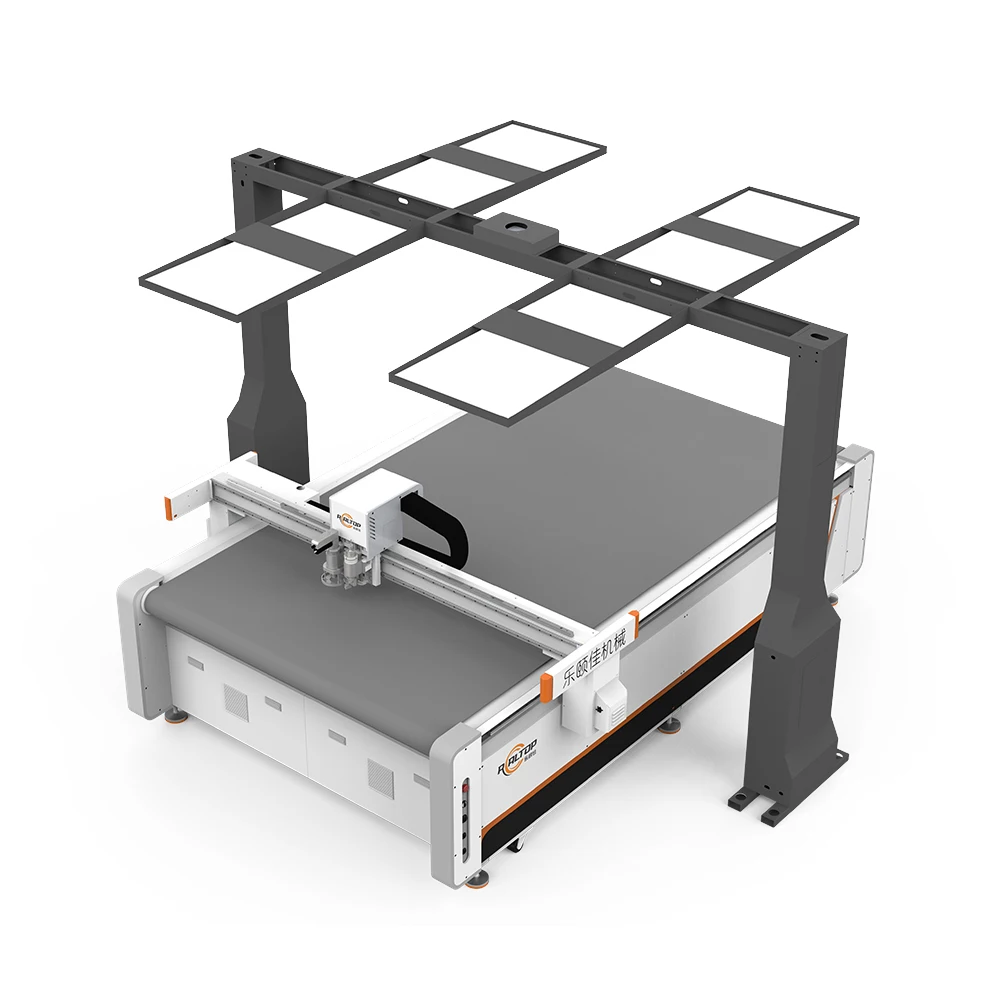
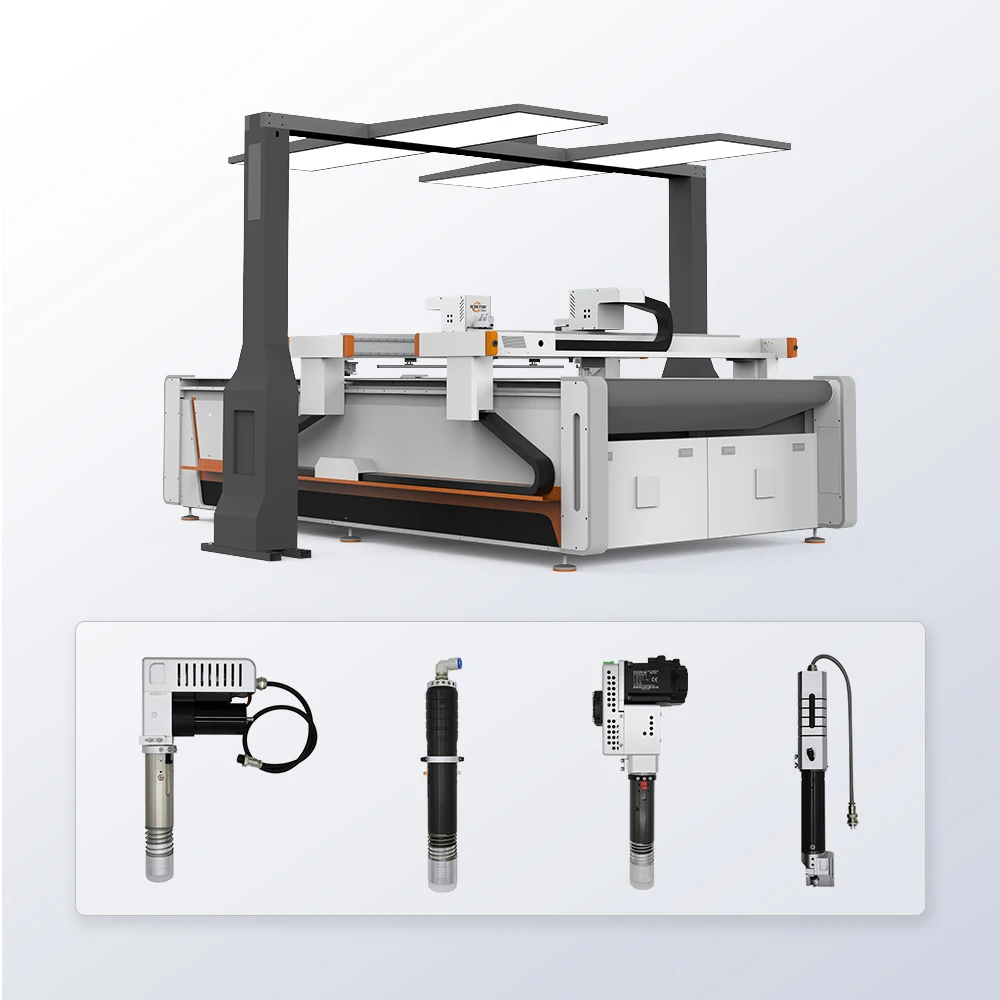
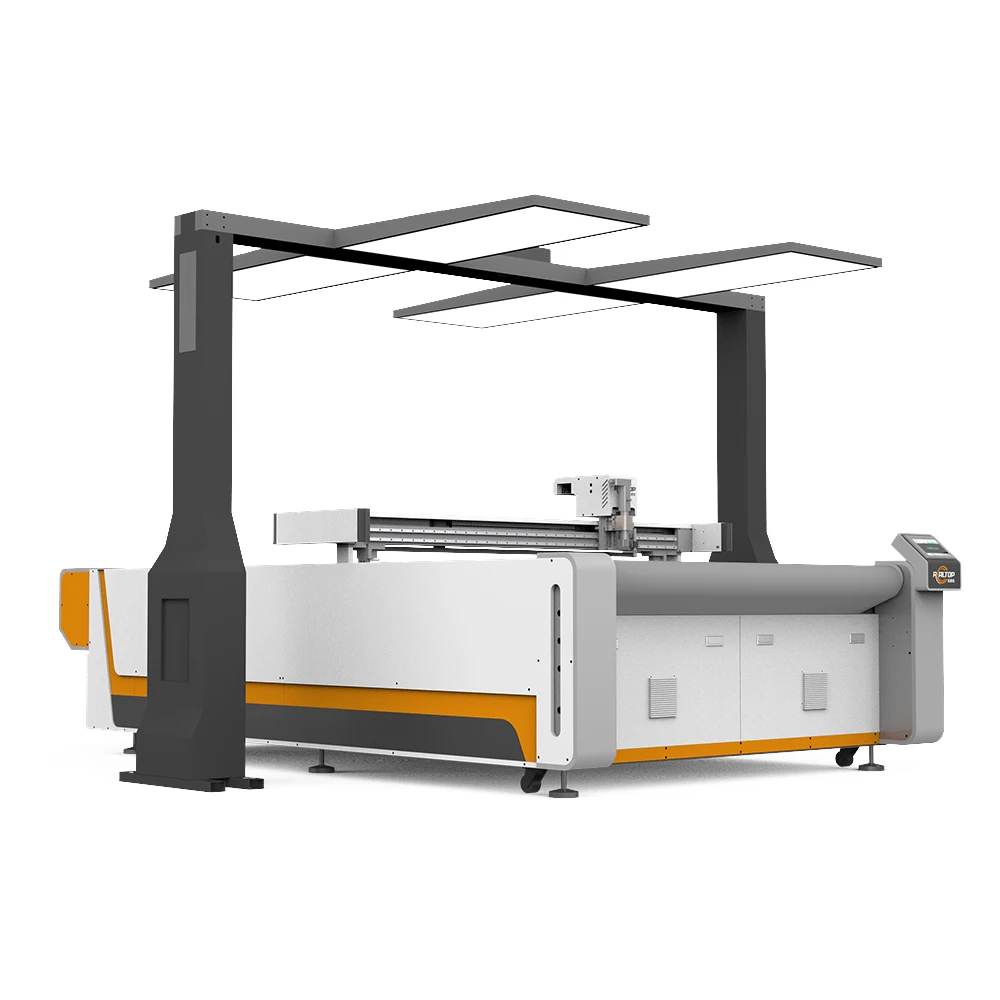
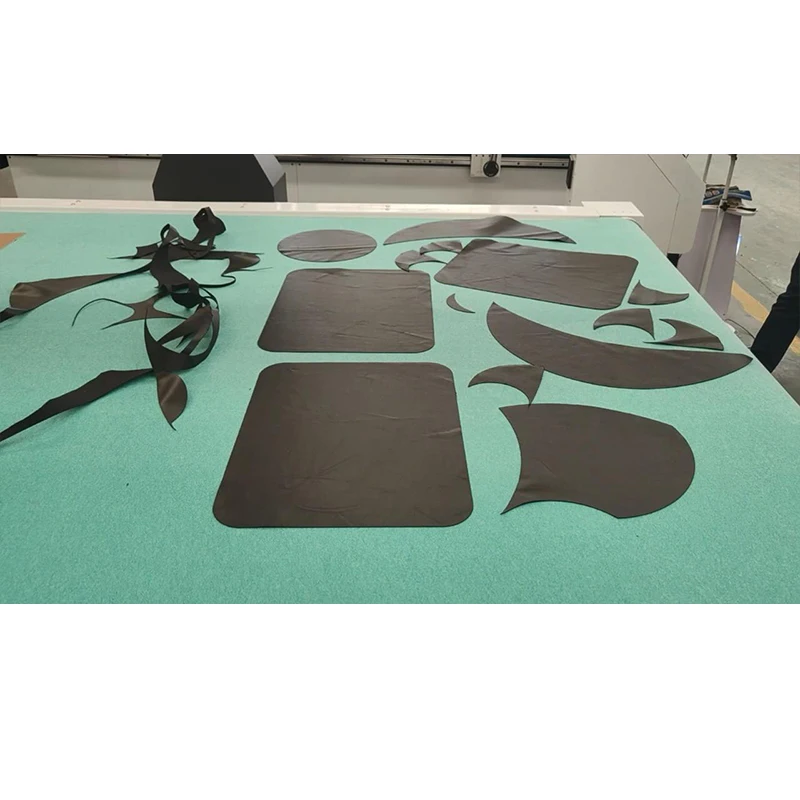
Seven Tool Heads, One Table — Every oscillating knife, driven rotary, and creasing configuration is tested against the buyer’s own leather hide before a specification sheet is signed.
Technical Specifications
| Parameter | Value |
|---|---|
| Product Type | CNC Oscillating Knife Cutting Machine |
| Working Area | 1600×2500 mm |
| Tool Head Options | Oscillating knife, Driven rotary knife, Creasing wheel, Kiss cutting tool, Pneumatic knife, Milling tool, V groove knife |
| Cutting Speed | 0–2000 mm/s |
| Cutting Thickness | ≤ 30 mm (basis to be confirmed by material type and density) |
| Cutting Accuracy | ±0.1 mm |
| Vacuum Pump Power | 9 kW |
| Vacuum Table Type | Aluminum bellows vacuum table |
| Control System | PLC control panel |
| Servo Motor Brands Available | Panasonic, Delta, Dorna |
| Voltage Options | 110V, 220V, 380V |
| Language Options | English, Russian, Italian, Chinese (special languages customizable) |
| File Format Compatibility | PLT, DXF, AI, PDF |
| Software | Dedicated packaging box structure design software included |
| Safety Devices | Infrared sensor device, emergency stop device |
| Overall Dimensions (L×W×H) | 3300×2100×1350 mm |
| Certification | CE |
Application Suitability
| Application | Material or Output |
|---|---|
| Footwear and leather goods | Shoe uppers, handbag panels, belt blanks from full-grain and split leather hides |
| Automotive seat covers and interiors | Automotive-grade leather and synthetic upholstery cut to contour patterns |
| Sofa and upholstered furniture | Large-format upholstery panels from thick leather and bonded leather rolls |
| Packaging and carton sample making | Foam boards, corrugated sheets, adhesive stickers, and PVC panels |
| Advertising and signage | Vinyl films, printed boards, and acrylic display panels |
| Flexible industrial materials | EPE foam, insulating gaskets, and composite layers |
Why Material Thickness Should Dictate the Entire Machine Configuration
A working area alone never guarantees a clean leather cut — tool head, blade stroke, and vacuum hold-down must be matched to the exact hide weight and composite structure before the order is placed.
I have watched buyers specify a flatbed cutter purely on table size, only to discover during commissioning that their 20 mm bonded leather with foam backing produced ragged edges because the oscillating knife stroke was insufficient for the density. That kind of mismatch rarely surfaces in a brochure. It surfaces on the factory floor, two weeks into production, when rejected panels start piling up [NEED_CITE: flatbed cutter configuration matching to composite leather materials]. The CNC oscillating knife cutting machine manufacturer must confirm achievable cutting depth on the buyer’s actual material stack — not a generic lab sample — before the configuration is locked in.
Matching the Tool Head to the Leather Type
Seven interchangeable tool heads are available on this platform, and each serves a distinct leather processing task. An oscillating knife handles dense full-grain hides with a clean vertical cut, while a driven rotary knife is better suited to softer, thinner splits where drag would distort the grain surface. For crease lines on leather-backed packaging or automotive panels, the creasing wheel scores without cutting through. Selecting the wrong head is the single most common reason buyers see crushed edges on foam-backed composites or frayed margins on suede.
Contour Recognition for Hide Nesting Efficiency
Leather hides are irregular by nature — scar marks, stretch zones, and uneven thickness mean that nesting software must adapt to each piece. The CCD camera positioning system reads printed registration marks on pre-marked hides or synthetic sheets, allowing the software to rotate and shift pattern pieces to maximize yield from each skin. When a footwear manufacturer switches from standard rectangular blanks to contoured shoe upper panels, contour recognition becomes the difference between acceptable hide waste and margin-eroding scrap rates [NEED_CITE: CCD contour recognition for irregular leather hide nesting].
What the Spec Sheet Numbers Actually Mean on the Cutting Table
The ±0.1 mm cutting accuracy figure matters most when automotive seat cover panels must align with stitch holes punched in a separate operation — even a half-millimeter drift accumulates across a multi-panel assembly. The 0–2000 mm/s speed range is a servo-limited envelope; actual travel speed depends on leather thickness and corner geometry, since the PLC controller decelerates through tight radii to prevent blade deflection. The 9 kW vacuum pump powers the aluminum bellows table, and the flatness of that table surface directly determines whether thin leather lifts during high-speed straight cuts. A warped or poorly zoned vacuum surface will let small pattern pieces drift, producing miscut panels that only get caught at the stitching station downstream.
The Cost of Skipping the Sample Cut Step
When a buyer approves a configuration without running their own leather through the machine, three problems typically emerge after installation. First, foam-backed automotive leather may separate at the adhesive layer because the blade frequency was too aggressive. Second, the vacuum zoning may be too coarse for small pattern pieces, letting edges lift mid-cut. Third, the nesting software may not accept the buyer’s existing DXF or AI files without manual re-drawing, adding hours to each production setup [NEED_CITE: CNC cutting software file format compatibility in leather manufacturing]. Every one of these issues is preventable with a sample cutting report on the buyer’s actual material.
Why Source This Platform From the Builder
In-house design and production cover both knife and laser cutting, so the cutting method is matched to the material rather than forced into a single technology. Tool head and table configurations are specified per material type and daily volume, not sold as a fixed package. CCD camera positioning is integrated and tested with printed marks at production speed before dispatch. Software compatibility with the buyer’s existing PLT, DXF, AI, or PDF workflow is confirmed before the order is finalized. Voltage, plug type, and control language are customized and documented — 110V, 220V, or 380V with English, Russian, Italian, Chinese, or a specified language on the PLC panel. Sample cutting on the buyer’s own leather or composite material is standard procedure before commitment.
Documentation & Verification
- Machine specification sheet listing the exact tool head and table configuration matched to your leather type
- Electrical schematic confirming voltage, frequency, and plug type for your target market
- Sample cutting report produced on your own leather hide showing edge quality and achievable thickness
- Software license and file format compatibility note confirming your PLT, DXF, AI, and PDF workflow
- Factory test record documenting cutting accuracy and vacuum hold-down performance before dispatch
- Operation and maintenance manual with spare parts list in your chosen control language
Installation, Commissioning & Support
- Foundation leveling required across the 3300×2100 mm footprint to maintain aluminum bellows table flatness
- Dedicated circuit matching confirmed voltage (110V, 220V, or 380V) and the 9 kW vacuum pump draw
- Assembly of frame and gantry on-site with servo motor calibration for ±0.1 mm cutting accuracy
- First-run parameter tuning of oscillating knife frequency and cutting speed on your leather stock
- Operator training covering PLC panel functions, tool head changes, and CCD camera mark registration
- Spare blade and creasing wheel inventory matched to your daily cutting volume and material mix
Before You Request a Quote
Send a sample of the leather or composite material you actually cut in production — including any foam backing or adhesive layers — along with your typical sheet dimensions and daily panel volume. Specify your facility voltage and frequency so the electrical package is built correctly from the start. If your nesting workflow relies on specific DXF or AI file structures, share a sample file so software compatibility is verified before the CNC oscillating knife cutting machine manufacturer finalizes your configuration.
Frequently Asked Questions
Q: How do I decide between oscillating knife and laser cutting for my leather products?
A: Oscillating knife produces a clean mechanical cut without heat, which prevents edge discoloration and odor on natural leather hides. Laser cutting seals synthetic edges but can scorch genuine leather. The choice depends on whether your material is natural hide, bonded leather, or synthetic — sample cutting on both platforms against your actual material gives a definitive answer.
Q: What working area do I need for full leather hides?
A: The 1600×2500 mm table accommodates most standard full-grain and split hides laid flat. If your hides are unusually large or you plan to nest multiple hides simultaneously for high-volume production, a larger format table may be necessary. Confirm your average hide dimensions before locking the configuration.
Q: Will the vacuum table hold small leather pattern pieces securely?
A: The aluminum bellows vacuum table provides full-surface adsorption, but hold-down adequacy for small pieces depends on vacuum zoning. If your nesting layout produces many small components, confirm that the table zone configuration matches your typical pattern geometry to prevent lift during high-speed cutting passes.
Q: What print quality is needed for reliable CCD contour recognition?
A: The CCD camera reads printed registration marks to position contoured cuts on pre-printed leather or synthetic sheets. Mark contrast, size, and spacing must meet minimum thresholds for reliable tracking at production speed. Share a sample of your printed material so recognition performance is verified before shipment.
Q: How are voltage and language confirmed before the machine ships?
A: Voltage (110V, 220V, or 380V), plug type, and PLC control language (English, Russian, Italian, Chinese, or a custom language) are documented on the electrical schematic and confirmed with the buyer before production begins. This prevents rewiring costs and communication barriers during commissioning at your facility.
Seven Tool Heads, One Table — Every oscillating knife, driven rotary, and creasing configuration is tested against the buyer’s own leather hide before a specification sheet is signed.
Technical Specifications
| Parameter | Value |
|---|---|
| Product Type | CNC Oscillating Knife Cutting Machine |
| Working Area | 1600×2500 mm |
| Tool Head Options | Oscillating knife, Driven rotary knife, Creasing wheel, Kiss cutting tool, Pneumatic knife, Milling tool, V groove knife |
| Cutting Speed | 0–2000 mm/s |
| Cutting Thickness | ≤ 30 mm (basis to be confirmed by material type and density) |
| Cutting Accuracy | ±0.1 mm |
| Vacuum Pump Power | 9 kW |
| Vacuum Table Type | Aluminum bellows vacuum table |
| Control System | PLC control panel |
| Servo Motor Brands Available | Panasonic, Delta, Dorna |
| Voltage Options | 110V, 220V, 380V |
| Language Options | English, Russian, Italian, Chinese (special languages customizable) |
| File Format Compatibility | PLT, DXF, AI, PDF |
| Software | Dedicated packaging box structure design software included |
| Safety Devices | Infrared sensor device, emergency stop device |
| Overall Dimensions (L×W×H) | 3300×2100×1350 mm |
| Certification | CE |
Application Suitability
| Application | Material or Output |
|---|---|
| Footwear and leather goods | Shoe uppers, handbag panels, belt blanks from full-grain and split leather hides |
| Automotive seat covers and interiors | Automotive-grade leather and synthetic upholstery cut to contour patterns |
| Sofa and upholstered furniture | Large-format upholstery panels from thick leather and bonded leather rolls |
| Packaging and carton sample making | Foam boards, corrugated sheets, adhesive stickers, and PVC panels |
| Advertising and signage | Vinyl films, printed boards, and acrylic display panels |
| Flexible industrial materials | EPE foam, insulating gaskets, and composite layers |
Why Material Thickness Should Dictate the Entire Machine Configuration
A working area alone never guarantees a clean leather cut — tool head, blade stroke, and vacuum hold-down must be matched to the exact hide weight and composite structure before the order is placed.
I have watched buyers specify a flatbed cutter purely on table size, only to discover during commissioning that their 20 mm bonded leather with foam backing produced ragged edges because the oscillating knife stroke was insufficient for the density. That kind of mismatch rarely surfaces in a brochure. It surfaces on the factory floor, two weeks into production, when rejected panels start piling up [NEED_CITE: flatbed cutter configuration matching to composite leather materials]. The CNC oscillating knife cutting machine manufacturer must confirm achievable cutting depth on the buyer’s actual material stack — not a generic lab sample — before the configuration is locked in.
Matching the Tool Head to the Leather Type
Seven interchangeable tool heads are available on this platform, and each serves a distinct leather processing task. An oscillating knife handles dense full-grain hides with a clean vertical cut, while a driven rotary knife is better suited to softer, thinner splits where drag would distort the grain surface. For crease lines on leather-backed packaging or automotive panels, the creasing wheel scores without cutting through. Selecting the wrong head is the single most common reason buyers see crushed edges on foam-backed composites or frayed margins on suede.
Contour Recognition for Hide Nesting Efficiency
Leather hides are irregular by nature — scar marks, stretch zones, and uneven thickness mean that nesting software must adapt to each piece. The CCD camera positioning system reads printed registration marks on pre-marked hides or synthetic sheets, allowing the software to rotate and shift pattern pieces to maximize yield from each skin. When a footwear manufacturer switches from standard rectangular blanks to contoured shoe upper panels, contour recognition becomes the difference between acceptable hide waste and margin-eroding scrap rates [NEED_CITE: CCD contour recognition for irregular leather hide nesting].
What the Spec Sheet Numbers Actually Mean on the Cutting Table
The ±0.1 mm cutting accuracy figure matters most when automotive seat cover panels must align with stitch holes punched in a separate operation — even a half-millimeter drift accumulates across a multi-panel assembly. The 0–2000 mm/s speed range is a servo-limited envelope; actual travel speed depends on leather thickness and corner geometry, since the PLC controller decelerates through tight radii to prevent blade deflection. The 9 kW vacuum pump powers the aluminum bellows table, and the flatness of that table surface directly determines whether thin leather lifts during high-speed straight cuts. A warped or poorly zoned vacuum surface will let small pattern pieces drift, producing miscut panels that only get caught at the stitching station downstream.
The Cost of Skipping the Sample Cut Step
When a buyer approves a configuration without running their own leather through the machine, three problems typically emerge after installation. First, foam-backed automotive leather may separate at the adhesive layer because the blade frequency was too aggressive. Second, the vacuum zoning may be too coarse for small pattern pieces, letting edges lift mid-cut. Third, the nesting software may not accept the buyer’s existing DXF or AI files without manual re-drawing, adding hours to each production setup [NEED_CITE: CNC cutting software file format compatibility in leather manufacturing]. Every one of these issues is preventable with a sample cutting report on the buyer’s actual material.
Why Source This Platform From the Builder
In-house design and production cover both knife and laser cutting, so the cutting method is matched to the material rather than forced into a single technology. Tool head and table configurations are specified per material type and daily volume, not sold as a fixed package. CCD camera positioning is integrated and tested with printed marks at production speed before dispatch. Software compatibility with the buyer’s existing PLT, DXF, AI, or PDF workflow is confirmed before the order is finalized. Voltage, plug type, and control language are customized and documented — 110V, 220V, or 380V with English, Russian, Italian, Chinese, or a specified language on the PLC panel. Sample cutting on the buyer’s own leather or composite material is standard procedure before commitment.
Documentation & Verification
- Machine specification sheet listing the exact tool head and table configuration matched to your leather type
- Electrical schematic confirming voltage, frequency, and plug type for your target market
- Sample cutting report produced on your own leather hide showing edge quality and achievable thickness
- Software license and file format compatibility note confirming your PLT, DXF, AI, and PDF workflow
- Factory test record documenting cutting accuracy and vacuum hold-down performance before dispatch
- Operation and maintenance manual with spare parts list in your chosen control language
Installation, Commissioning & Support
- Foundation leveling required across the 3300×2100 mm footprint to maintain aluminum bellows table flatness
- Dedicated circuit matching confirmed voltage (110V, 220V, or 380V) and the 9 kW vacuum pump draw
- Assembly of frame and gantry on-site with servo motor calibration for ±0.1 mm cutting accuracy
- First-run parameter tuning of oscillating knife frequency and cutting speed on your leather stock
- Operator training covering PLC panel functions, tool head changes, and CCD camera mark registration
- Spare blade and creasing wheel inventory matched to your daily cutting volume and material mix
Before You Request a Quote
Send a sample of the leather or composite material you actually cut in production — including any foam backing or adhesive layers — along with your typical sheet dimensions and daily panel volume. Specify your facility voltage and frequency so the electrical package is built correctly from the start. If your nesting workflow relies on specific DXF or AI file structures, share a sample file so software compatibility is verified before the CNC oscillating knife cutting machine manufacturer finalizes your configuration.
Frequently Asked Questions
Q: How do I decide between oscillating knife and laser cutting for my leather products?
A: Oscillating knife produces a clean mechanical cut without heat, which prevents edge discoloration and odor on natural leather hides. Laser cutting seals synthetic edges but can scorch genuine leather. The choice depends on whether your material is natural hide, bonded leather, or synthetic — sample cutting on both platforms against your actual material gives a definitive answer.
Q: What working area do I need for full leather hides?
A: The 1600×2500 mm table accommodates most standard full-grain and split hides laid flat. If your hides are unusually large or you plan to nest multiple hides simultaneously for high-volume production, a larger format table may be necessary. Confirm your average hide dimensions before locking the configuration.
Q: Will the vacuum table hold small leather pattern pieces securely?
A: The aluminum bellows vacuum table provides full-surface adsorption, but hold-down adequacy for small pieces depends on vacuum zoning. If your nesting layout produces many small components, confirm that the table zone configuration matches your typical pattern geometry to prevent lift during high-speed cutting passes.
Q: What print quality is needed for reliable CCD contour recognition?
A: The CCD camera reads printed registration marks to position contoured cuts on pre-printed leather or synthetic sheets. Mark contrast, size, and spacing must meet minimum thresholds for reliable tracking at production speed. Share a sample of your printed material so recognition performance is verified before shipment.
Q: How are voltage and language confirmed before the machine ships?
A: Voltage (110V, 220V, or 380V), plug type, and PLC control language (English, Russian, Italian, Chinese, or a custom language) are documented on the electrical schematic and confirmed with the buyer before production begins. This prevents rewiring costs and communication barriers during commissioning at your facility.










商品评价
There are no reviews yet.