



Fast Delivery
Quick, reliable shipping to any location.

Free & easy returns
Return this item by mail or in store within 90 days for a full refund.
Material-Matched Configuration — Every oscillating knife head, vacuum zone and servo package is specified against your actual leather stock rather than a generic working area assumption.
Technical Specifications
| Parameter | Value |
|---|---|
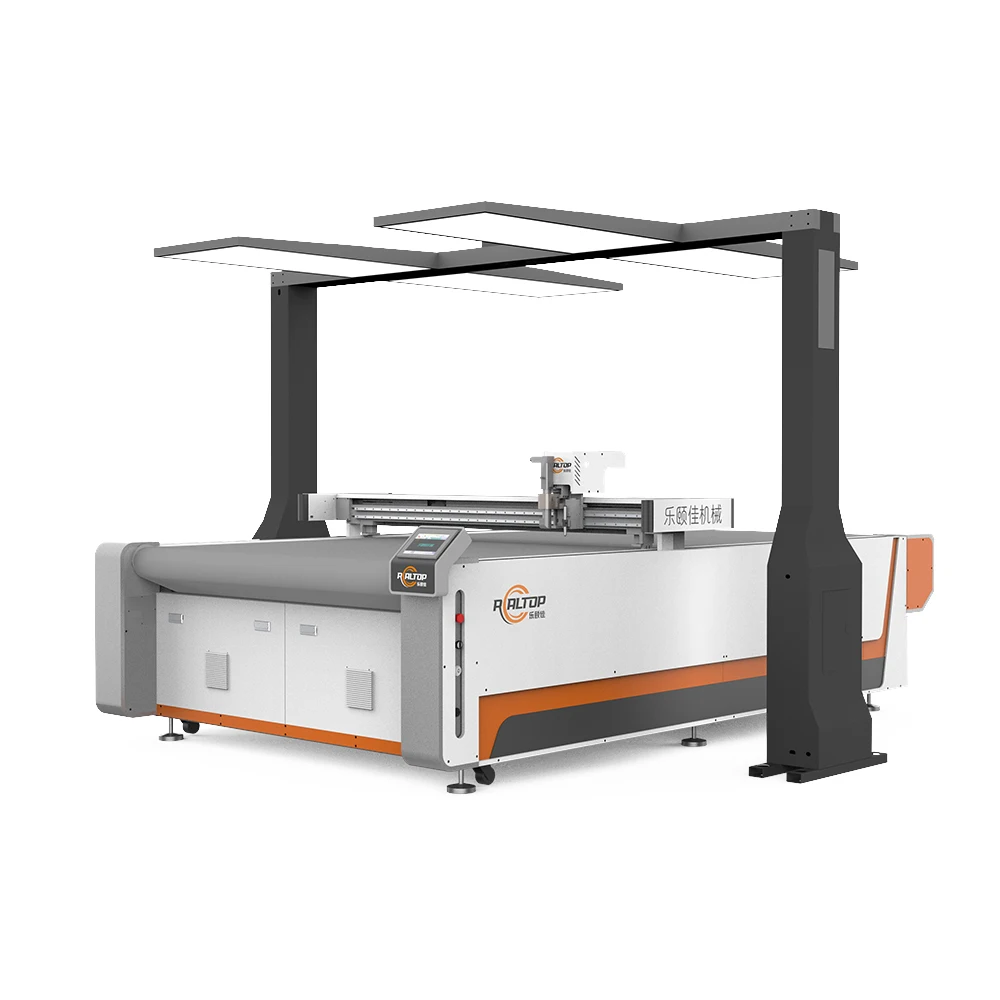
| Product Type | CNC Oscillating Knife Cutting Machine |
| Working Area | 1600 × 2500 mm |
| Cutting Speed | 0–2000 mm/s |
| Cutting Thickness | ≤ 30 mm (basis not stated in source — confirm material type and density) |
| Cutting Accuracy | ±0.1 mm |
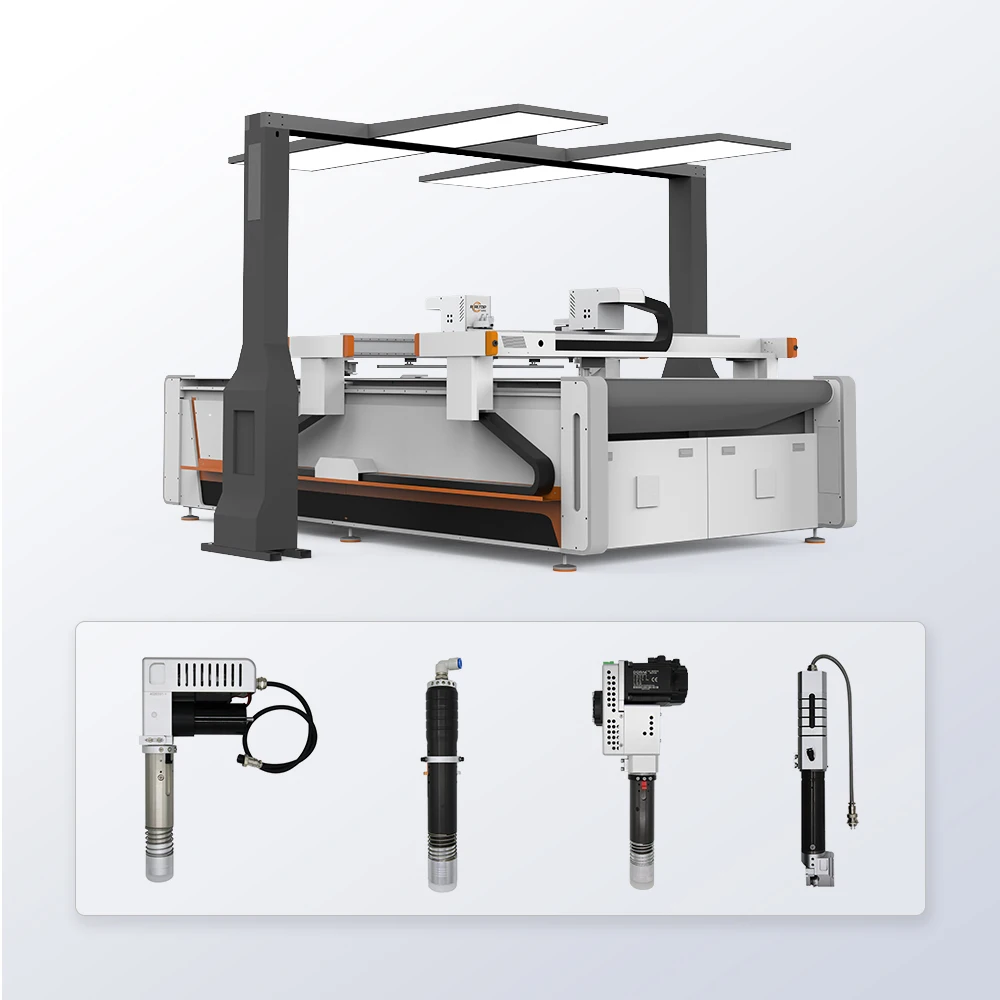
| Tool Head Options | Oscillating knife, Driven rotary knife, Creasing wheel, Kiss cutting tool, Pneumatic knife, Milling tool, V-groove knife |
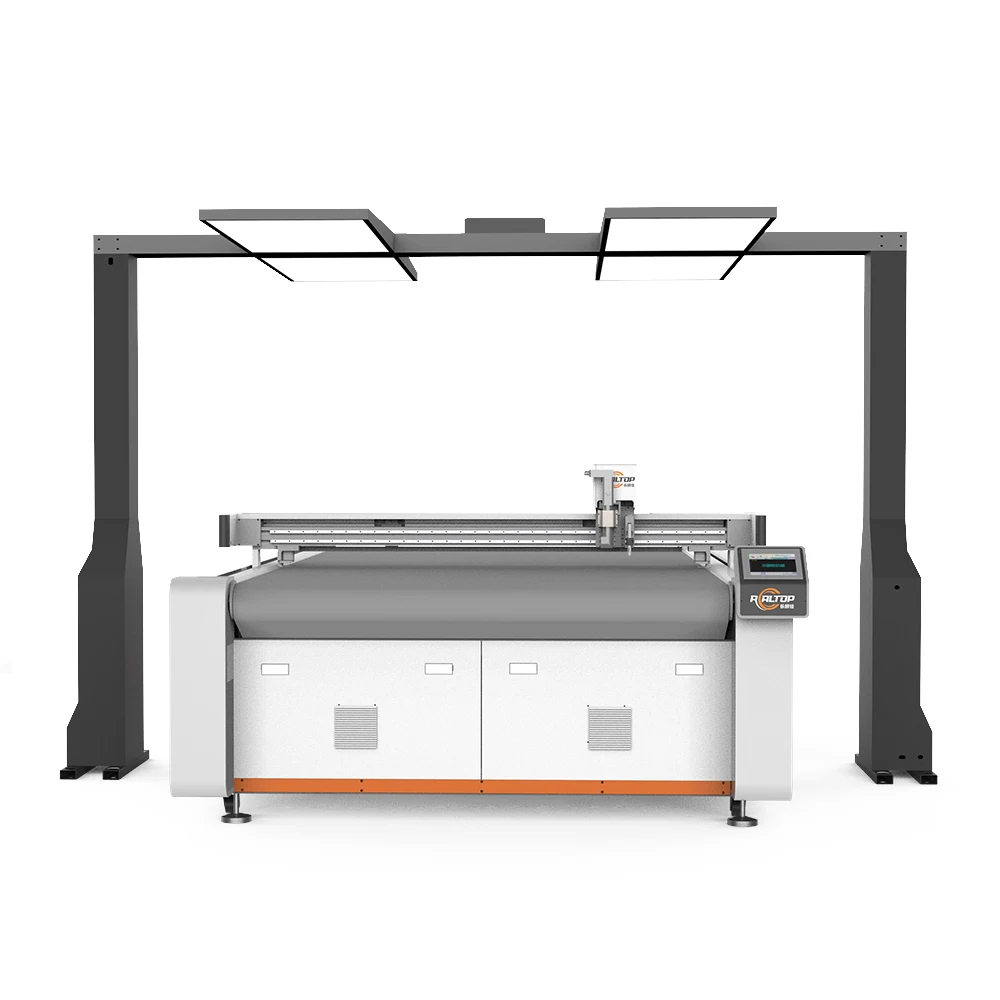
| Vacuum Table | Aluminum bellows vacuum table with zoning capability |
| Vacuum Pump | 9 kW |
| Servo Motor Options | Panasonic, Delta, or Dorna |
| Control System | PLC control panel |
| Supported File Formats | PLT, DXF, AI, PDF |
| Voltage Options | 110V, 220V, 380V |
| Safety Devices | Infrared sensor device, emergency stop |
| Machine Dimensions | 3300 × 2100 × 1350 mm |
| Language Options | English, Russian, Italian, Chinese (customizable) |
| Standards | CE |
Application Suitability
| Application | Material or Output |
|---|---|
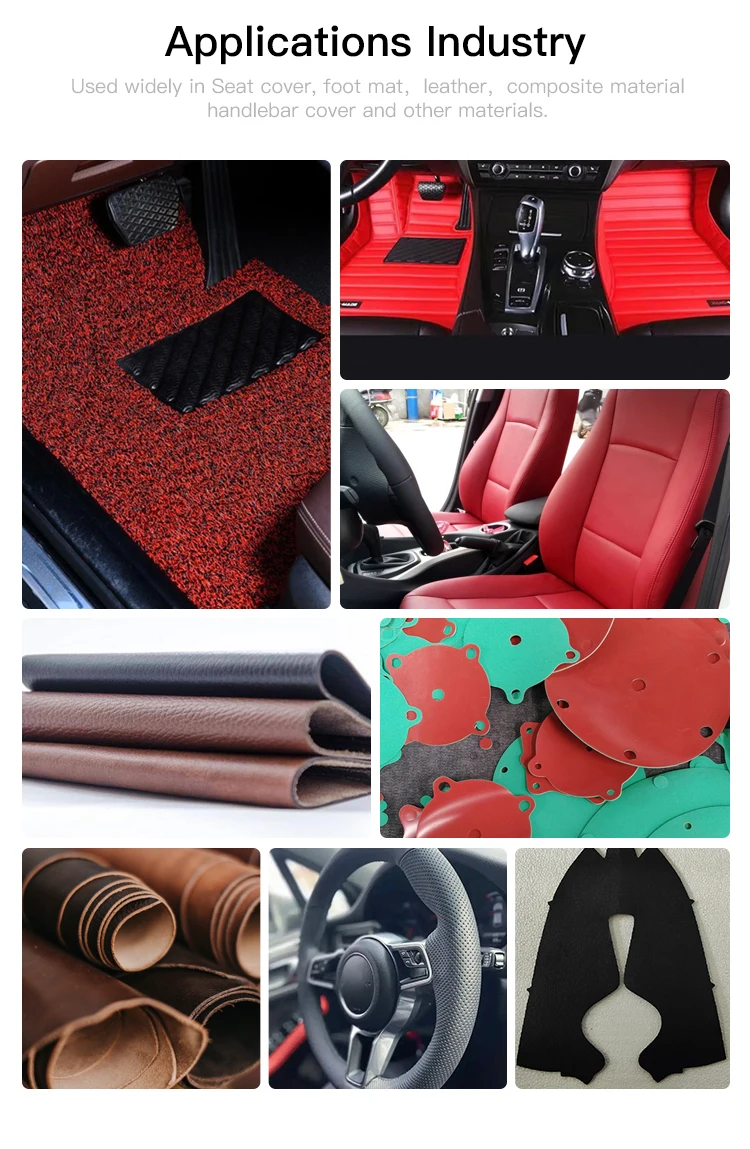
| Shoe upper cutting | Genuine leather, split leather, PU and PVC synthetic uppers |
| Leather goods production | Cowhide, sheepskin and bonded leather for bags, belts and wallets |
| Garment and apparel cutting | Textile layers, woven and knitted fabrics for fashion and workwear |
| Automotive seat cover cutting | Automotive upholstery leather, synthetic suede and laminated fabrics |
| Sofa and soft furnishing fabrication | Heavy upholstery textiles, velvet, microfiber and coated fabrics |
| Packaging sample making | Foam board, carton, corrugated board, adhesive film and PVC sheet |
What Happens When Working Area Is the Only Spec You Check
A machine selected on bed size alone will fail the moment material thickness, grain direction or zoning requirements enter the picture.
I watched a buyer source a flatbed cutter purely because the 1600 × 2500 mm envelope matched his hide dimensions. The machine arrived, and his full-grain cowhide — far denser than the PU sample used during negotiation — crushed under the standard oscillating knife, leaving ragged edges across dozens of shoe upper panels. This CNC Oscillating Knife Cutting Machine full catalogue is structured so that each configuration point is validated against the buyer’s real stock before a purchase order is issued [NEED_CITE: industrial leather cutting specification protocols]. Cutting thickness, tool head type and vacuum zoning must all be confirmed per material, because a generic area spec tells you nothing about how the machine handles the fibre density of a 3 mm chrome-tanned hide versus a 1.2 mm corrected grain.
Surveying the Range Before Committing to a Cutting Method
The purpose of a full-catalogue approach is to help buyers evaluate knife cutting against laser alternatives before production tooling is locked in. For leather goods and footwear manufacturers, the CNC Oscillating Knife Cutting Machine full catalogue positions oscillating and driven rotary knife methods alongside CO2 and fiber laser options, making it straightforward to compare edge sealing behaviour, kerf width and throughput on genuine leather versus synthetic substitutes. A buyer processing chrome-tanned cowhide for shoe uppers will typically need the mechanical shearing action of an oscillating knife to avoid the heat-affected zone that laser produces on natural fibres.
Tool Head Breadth and Material Spread
Seven interchangeable tool heads — oscillating knife, driven rotary, creasing wheel, kiss cutting, pneumatic knife, milling and V-groove — mean a single platform covers everything from thin garment textile to dense foam gaskets. Within the full catalogue, this breadth lets a production facility standardise on one machine family while varying the cutting head per job [NEED_CITE: CNC knife tooling selection guidelines for mixed-material workshops]. A leather workshop cutting 2 mm garment splits in the morning and 8 mm sole leather in the afternoon simply swaps the oscillating knife for the pneumatic knife, recalibrates depth on the PLC panel, and continues without moving material to a second station.
Reading the Specs That Actually Matter on the Shop Floor
The 9 kW vacuum pump paired with an aluminum bellows table addresses one of the most common failures in leather cutting: small pattern pieces lifting during high-speed knife passes. When cutting nested shoe upper components, the vacuum zoning must hold pieces as small as a tongue or strap anchor against the upward drag of the oscillating blade at speeds approaching 2000 mm/s. The ±0.1 mm accuracy figure is meaningful only when the servo system — selectable from Panasonic, Delta or Dorna — maintains positional repeatability across a fully loaded 1600 × 2500 mm hide. Multi-brand servo availability also matters for aftermarket support; a workshop in Eastern Europe may specify Delta for local service network coverage, while a buyer in Southeast Asia may prefer Panasonic for the same reason. The CCD camera contour recognition option, where configured, allows the system to locate printed registration marks on pre-printed leather or patterned textile rolls, aligning cuts to the print rather than forcing the operator to manually orient each hide against a physical stop.
The Hidden Cost of Specifying the Wrong Tool Head
A buyer who accepts a drag knife on a machine sold for leather work will discover crushed edges on full-grain hides within the first production shift. The drag knife relies on material drag rather than active oscillation, and on dense leather it tears the grain surface rather than shearing cleanly through the fibre structure. I have seen entire batches of automotive seat cover panels rejected because the edge profile showed micro-tears that propagated during stitching [NEED_CITE: leather cutting edge quality standards in automotive upholstery]. The vacuum table zoning compounds this — if zones are too large, small pieces drift during the cut, and the ±0.1 mm accuracy specification becomes irrelevant because the material itself is moving. These failures are rarely caught during sample cutting if the supplier tests only on the buyer’s thinnest stock.
Why the Full-Catalogue Approach Reduces Procurement Risk
Realtop’s in-house design covers both knife and laser technologies, so a buyer can match the cutting method to the material rather than forcing one method across every substrate. The tool head and table configuration is specified per material and production volume, meaning the 1625 platform is not sold as a fixed package but built around the buyer’s actual stock profile. CCD camera positioning is available for printed contour work on patterned leather and textile rolls. Software compatibility — covering PLT, DXF, AI and PDF — is confirmed against the buyer’s existing nesting workflow before an order is placed. Voltage, control language and plug type are documented and locked before the machine enters assembly, eliminating the shipment-surprise failures that plague cross-border equipment purchases [NEED_CITE: international machinery voltage and frequency compatibility standards]. Sample cutting on the buyer’s own material is conducted before any commercial commitment, producing a physical reference that both parties sign off.
Documentation & Verification
- Machine specification sheet listing all seven tool heads and cutting thickness per material
- Sample cutting report produced on buyer’s own leather hide before commitment
- Electrical schematic with voltage, plug type and frequency confirmed per destination market
- Tool head and vacuum table zoning configuration list matched to buyer’s material profile
- Software licence and file format compatibility note for PLT, DXF, AI and PDF workflows
- Factory test record documenting accuracy verification across full 1600 × 2500 mm travel
Installation, Commissioning & Support
- Floor space allocation for 3300 × 2100 × 1350 mm footprint plus material staging clearance
- Dedicated electrical circuit matching confirmed 110V, 220V or 380V supply before machine arrival
- Aluminum bellows vacuum table levelling and zone calibration during on-site commissioning
- PLC control panel language set to operator preference from English, Russian, Italian or Chinese options
- Oscillating knife depth calibration across buyer’s specified leather thickness range during first run
- Spare parts list covering knife blades, vacuum seals and servo-specific consumables by motor brand
What to Prepare Before Requesting a Quotation
Send the material type, maximum thickness and typical hide or roll dimensions you process daily. Specify your local voltage, frequency and plug standard, along with the preferred control panel language for your operators. If you run a nesting software platform, share the file formats it exports so compatibility can be confirmed against the PLC system before the machine is built.
Frequently Asked Questions
Q: How do I choose between knife cutting and laser for genuine leather?
A: Genuine leather responds poorly to laser because the heat-affected zone discolours the grain and weakens the fibre structure along cut edges. Oscillating knife cutting produces a clean mechanical shear with no thermal damage, preserving edge integrity for downstream stitching. Laser is better suited to synthetic textiles where edge sealing is beneficial. The full catalogue positions both methods so you can evaluate on your actual stock before committing.
Q: Which tool head should I specify for my leather thickness range?
A: The oscillating knife handles most garment and upholstery leather up to moderate thickness. For denser sole leather or stacked hides, the pneumatic knife provides additional downward force. The driven rotary knife suits continuous roll cutting of thinner synthetics. Configuration is confirmed during sample cutting on your own material, not assumed from a catalogue table.
Q: Why must voltage and control language be confirmed before shipment?
A: Industrial voltage standards vary significantly between export markets, and a mismatched motor winding can destroy servo drives on first power-up. Control panel language must match your operators to prevent setting errors during production. Both parameters are documented and locked before assembly begins, not adjusted after arrival.
Q: When is CCD camera contour recognition necessary?
A: CCD contour recognition is required when cutting pre-printed leather or patterned textile rolls where the cut path must align to printed registration marks. Without it, operators manually orient each piece, introducing alignment drift. The system locates marks at production speed and adjusts the cut path accordingly, supporting PLT, DXF, AI and PDF file inputs.
Q: Where does this machine sit within the full cutting equipment range?
A: This 1600 × 2500 mm single-head platform sits in the mid-to-large format segment of the knife cutting family. Smaller compact beds serve sample-making workshops, while multi-head and conveyor-fed systems address high-volume roll-to-roll fabric production. The catalogue structure lets you compare throughput and configuration options across the range before selecting the correct platform for your daily volume.
Material-Matched Configuration — Every oscillating knife head, vacuum zone and servo package is specified against your actual leather stock rather than a generic working area assumption.
Technical Specifications
| Parameter | Value |
|---|---|
| Product Type | CNC Oscillating Knife Cutting Machine |
| Working Area | 1600 × 2500 mm |
| Cutting Speed | 0–2000 mm/s |
| Cutting Thickness | ≤ 30 mm (basis not stated in source — confirm material type and density) |
| Cutting Accuracy | ±0.1 mm |
| Tool Head Options | Oscillating knife, Driven rotary knife, Creasing wheel, Kiss cutting tool, Pneumatic knife, Milling tool, V-groove knife |
| Vacuum Table | Aluminum bellows vacuum table with zoning capability |
| Vacuum Pump | 9 kW |
| Servo Motor Options | Panasonic, Delta, or Dorna |
| Control System | PLC control panel |
| Supported File Formats | PLT, DXF, AI, PDF |
| Voltage Options | 110V, 220V, 380V |
| Safety Devices | Infrared sensor device, emergency stop |
| Machine Dimensions | 3300 × 2100 × 1350 mm |
| Language Options | English, Russian, Italian, Chinese (customizable) |
| Standards | CE |
Application Suitability
| Application | Material or Output |
|---|---|
| Shoe upper cutting | Genuine leather, split leather, PU and PVC synthetic uppers |
| Leather goods production | Cowhide, sheepskin and bonded leather for bags, belts and wallets |
| Garment and apparel cutting | Textile layers, woven and knitted fabrics for fashion and workwear |
| Automotive seat cover cutting | Automotive upholstery leather, synthetic suede and laminated fabrics |
| Sofa and soft furnishing fabrication | Heavy upholstery textiles, velvet, microfiber and coated fabrics |
| Packaging sample making | Foam board, carton, corrugated board, adhesive film and PVC sheet |
What Happens When Working Area Is the Only Spec You Check
A machine selected on bed size alone will fail the moment material thickness, grain direction or zoning requirements enter the picture.
I watched a buyer source a flatbed cutter purely because the 1600 × 2500 mm envelope matched his hide dimensions. The machine arrived, and his full-grain cowhide — far denser than the PU sample used during negotiation — crushed under the standard oscillating knife, leaving ragged edges across dozens of shoe upper panels. This CNC Oscillating Knife Cutting Machine full catalogue is structured so that each configuration point is validated against the buyer’s real stock before a purchase order is issued [NEED_CITE: industrial leather cutting specification protocols]. Cutting thickness, tool head type and vacuum zoning must all be confirmed per material, because a generic area spec tells you nothing about how the machine handles the fibre density of a 3 mm chrome-tanned hide versus a 1.2 mm corrected grain.
Surveying the Range Before Committing to a Cutting Method
The purpose of a full-catalogue approach is to help buyers evaluate knife cutting against laser alternatives before production tooling is locked in. For leather goods and footwear manufacturers, the CNC Oscillating Knife Cutting Machine full catalogue positions oscillating and driven rotary knife methods alongside CO2 and fiber laser options, making it straightforward to compare edge sealing behaviour, kerf width and throughput on genuine leather versus synthetic substitutes. A buyer processing chrome-tanned cowhide for shoe uppers will typically need the mechanical shearing action of an oscillating knife to avoid the heat-affected zone that laser produces on natural fibres.
Tool Head Breadth and Material Spread
Seven interchangeable tool heads — oscillating knife, driven rotary, creasing wheel, kiss cutting, pneumatic knife, milling and V-groove — mean a single platform covers everything from thin garment textile to dense foam gaskets. Within the full catalogue, this breadth lets a production facility standardise on one machine family while varying the cutting head per job [NEED_CITE: CNC knife tooling selection guidelines for mixed-material workshops]. A leather workshop cutting 2 mm garment splits in the morning and 8 mm sole leather in the afternoon simply swaps the oscillating knife for the pneumatic knife, recalibrates depth on the PLC panel, and continues without moving material to a second station.
Reading the Specs That Actually Matter on the Shop Floor
The 9 kW vacuum pump paired with an aluminum bellows table addresses one of the most common failures in leather cutting: small pattern pieces lifting during high-speed knife passes. When cutting nested shoe upper components, the vacuum zoning must hold pieces as small as a tongue or strap anchor against the upward drag of the oscillating blade at speeds approaching 2000 mm/s. The ±0.1 mm accuracy figure is meaningful only when the servo system — selectable from Panasonic, Delta or Dorna — maintains positional repeatability across a fully loaded 1600 × 2500 mm hide. Multi-brand servo availability also matters for aftermarket support; a workshop in Eastern Europe may specify Delta for local service network coverage, while a buyer in Southeast Asia may prefer Panasonic for the same reason. The CCD camera contour recognition option, where configured, allows the system to locate printed registration marks on pre-printed leather or patterned textile rolls, aligning cuts to the print rather than forcing the operator to manually orient each hide against a physical stop.
The Hidden Cost of Specifying the Wrong Tool Head
A buyer who accepts a drag knife on a machine sold for leather work will discover crushed edges on full-grain hides within the first production shift. The drag knife relies on material drag rather than active oscillation, and on dense leather it tears the grain surface rather than shearing cleanly through the fibre structure. I have seen entire batches of automotive seat cover panels rejected because the edge profile showed micro-tears that propagated during stitching [NEED_CITE: leather cutting edge quality standards in automotive upholstery]. The vacuum table zoning compounds this — if zones are too large, small pieces drift during the cut, and the ±0.1 mm accuracy specification becomes irrelevant because the material itself is moving. These failures are rarely caught during sample cutting if the supplier tests only on the buyer’s thinnest stock.
Why the Full-Catalogue Approach Reduces Procurement Risk
Realtop’s in-house design covers both knife and laser technologies, so a buyer can match the cutting method to the material rather than forcing one method across every substrate. The tool head and table configuration is specified per material and production volume, meaning the 1625 platform is not sold as a fixed package but built around the buyer’s actual stock profile. CCD camera positioning is available for printed contour work on patterned leather and textile rolls. Software compatibility — covering PLT, DXF, AI and PDF — is confirmed against the buyer’s existing nesting workflow before an order is placed. Voltage, control language and plug type are documented and locked before the machine enters assembly, eliminating the shipment-surprise failures that plague cross-border equipment purchases [NEED_CITE: international machinery voltage and frequency compatibility standards]. Sample cutting on the buyer’s own material is conducted before any commercial commitment, producing a physical reference that both parties sign off.
Documentation & Verification
- Machine specification sheet listing all seven tool heads and cutting thickness per material
- Sample cutting report produced on buyer’s own leather hide before commitment
- Electrical schematic with voltage, plug type and frequency confirmed per destination market
- Tool head and vacuum table zoning configuration list matched to buyer’s material profile
- Software licence and file format compatibility note for PLT, DXF, AI and PDF workflows
- Factory test record documenting accuracy verification across full 1600 × 2500 mm travel
Installation, Commissioning & Support
- Floor space allocation for 3300 × 2100 × 1350 mm footprint plus material staging clearance
- Dedicated electrical circuit matching confirmed 110V, 220V or 380V supply before machine arrival
- Aluminum bellows vacuum table levelling and zone calibration during on-site commissioning
- PLC control panel language set to operator preference from English, Russian, Italian or Chinese options
- Oscillating knife depth calibration across buyer’s specified leather thickness range during first run
- Spare parts list covering knife blades, vacuum seals and servo-specific consumables by motor brand
What to Prepare Before Requesting a Quotation
Send the material type, maximum thickness and typical hide or roll dimensions you process daily. Specify your local voltage, frequency and plug standard, along with the preferred control panel language for your operators. If you run a nesting software platform, share the file formats it exports so compatibility can be confirmed against the PLC system before the machine is built.
Frequently Asked Questions
Q: How do I choose between knife cutting and laser for genuine leather?
A: Genuine leather responds poorly to laser because the heat-affected zone discolours the grain and weakens the fibre structure along cut edges. Oscillating knife cutting produces a clean mechanical shear with no thermal damage, preserving edge integrity for downstream stitching. Laser is better suited to synthetic textiles where edge sealing is beneficial. The full catalogue positions both methods so you can evaluate on your actual stock before committing.
Q: Which tool head should I specify for my leather thickness range?
A: The oscillating knife handles most garment and upholstery leather up to moderate thickness. For denser sole leather or stacked hides, the pneumatic knife provides additional downward force. The driven rotary knife suits continuous roll cutting of thinner synthetics. Configuration is confirmed during sample cutting on your own material, not assumed from a catalogue table.
Q: Why must voltage and control language be confirmed before shipment?
A: Industrial voltage standards vary significantly between export markets, and a mismatched motor winding can destroy servo drives on first power-up. Control panel language must match your operators to prevent setting errors during production. Both parameters are documented and locked before assembly begins, not adjusted after arrival.
Q: When is CCD camera contour recognition necessary?
A: CCD contour recognition is required when cutting pre-printed leather or patterned textile rolls where the cut path must align to printed registration marks. Without it, operators manually orient each piece, introducing alignment drift. The system locates marks at production speed and adjusts the cut path accordingly, supporting PLT, DXF, AI and PDF file inputs.
Q: Where does this machine sit within the full cutting equipment range?
A: This 1600 × 2500 mm single-head platform sits in the mid-to-large format segment of the knife cutting family. Smaller compact beds serve sample-making workshops, while multi-head and conveyor-fed systems address high-volume roll-to-roll fabric production. The catalogue structure lets you compare throughput and configuration options across the range before selecting the correct platform for your daily volume.










商品评价
There are no reviews yet.