
Blog
How wholesalers test fabric cutting machine adaptability to elastic materials?

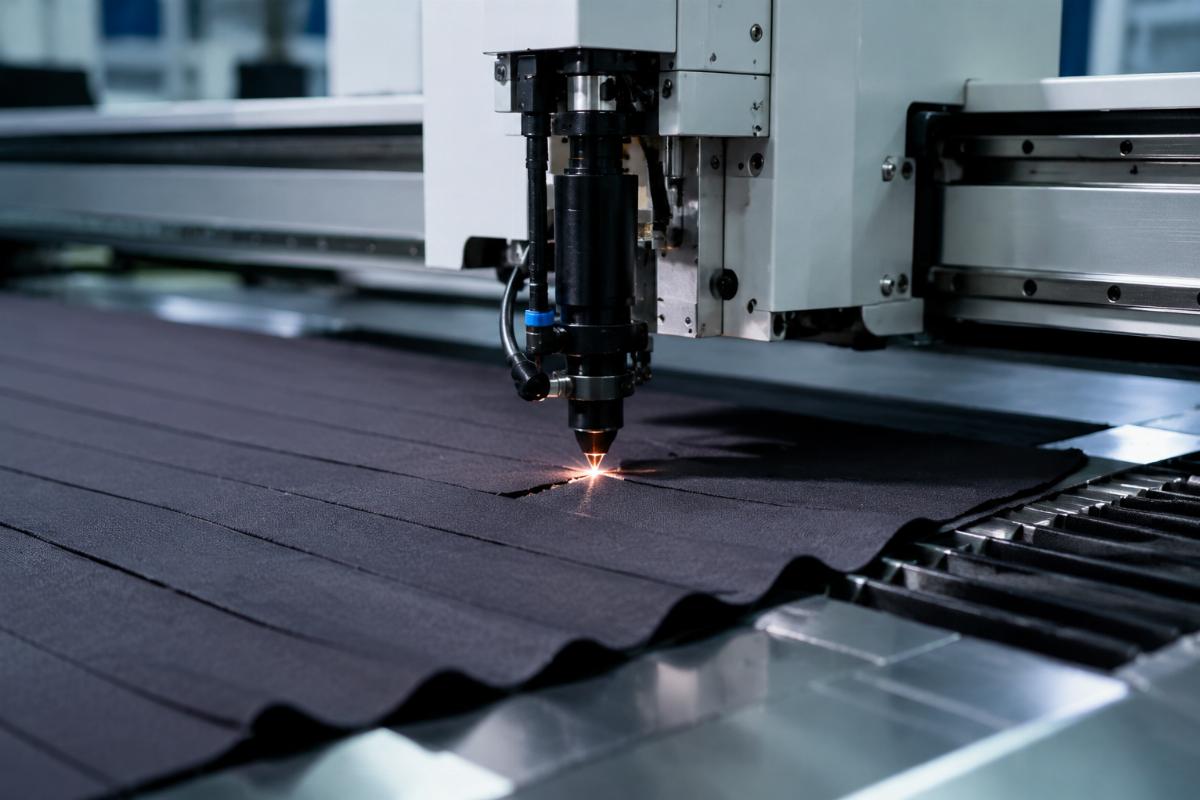
How wholesalers test fabric cutting machine adaptability to elastic materials?
Wholesalers who buy fabric cutting machines face a frightening risk: they don't know if their future customers will return the equipment. Elastic materials behave unpredictably1, and one failed cut at a customer's facility means angry phone calls and refund demands.
Wholesalers test fabric cutting machine adaptability to elastic materials by validating cross-scenario compatibility with material samples that represent variable combinations most likely to expose equipment weaknesses. The goal is not proving technical specs but predicting customer return probability before resale.
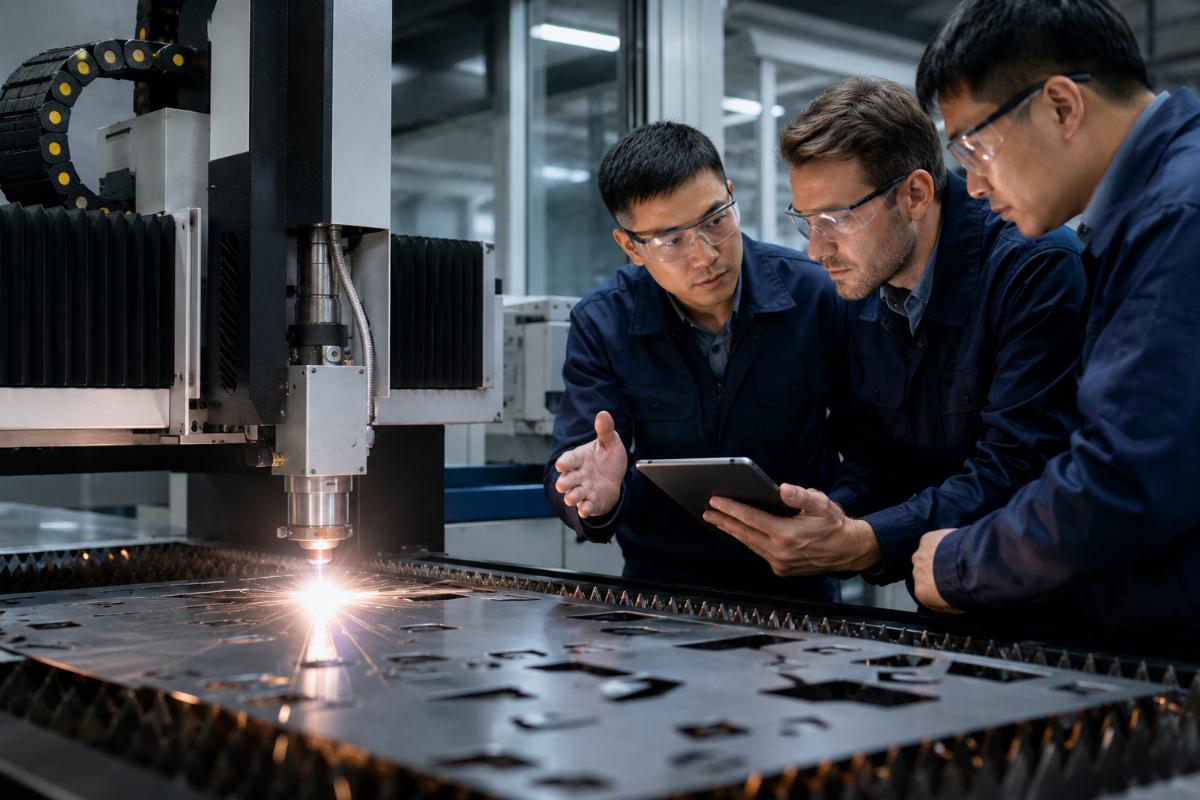
I have observed wholesalers during pre-purchase testing sessions at our factory, and their concerns always center on one question: will my customers send this machine back? They operate under time and resource constraints that laboratory researchers never face, and their testing must deliver fast verification instead of complete documentation.
Why do wholesalers test elastic materials differently than manufacturers test them?
Wholesalers face a core information gap that manufacturers never experience. They don't know which elastic material variables matter most to their future customers.
Wholesalers test elastic materials differently because they must predict customer satisfaction across unknown application scenarios, while manufacturers only validate equipment performance against known specifications. This forces wholesalers to prioritize cross-scenario compatibility over laboratory perfection.
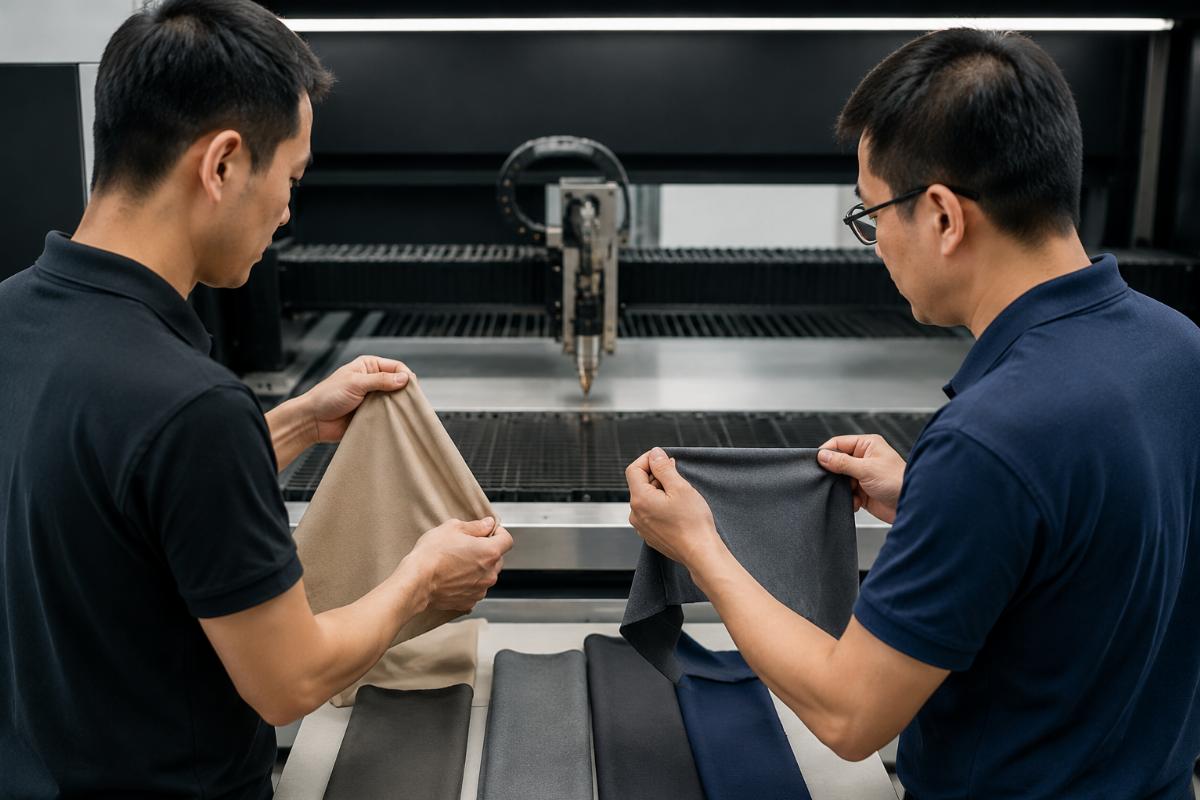
Manufacturers provide ideal sample materials during equipment demonstrations. These samples showcase the machine's best performance, but actual customer materials vary dramatically in thickness, elasticity coefficient2, and surface friction. I have watched wholesalers bring their own material samples to our testing sessions because they learned this lesson through expensive returns.
The decision logic wholesalers use differs completely from technical validation. They ask: will customers in garment manufacturing accept this cutting quality? Will automotive interior suppliers complain about edge fraying? Will this machine handle the elasticity range their buyers actually work with? These commercial concerns drive testing priorities, not material science theory.
In distributor testing scenarios we supported, wholesalers typically allocate 2-3 hours for validation3. This time constraint forces them to focus on material variable combinations that most reliably expose equipment weaknesses, not comprehensive parameter mapping. They need to identify deal-breaker flaws before signing purchase orders.
What material variables create the highest customer return risk?
Not all elastic material variables matter equally for predicting customer dissatisfaction. Through our work designing validation workflows for distributors, we identified three critical variable combinations:
| Variable Combination | Why It Exposes Weaknesses | Customer Return Trigger |
|---|---|---|
| High elasticity + smooth surface | Material slips during positioning | Dimensional accuracy complaints |
| Thick material + high rebound | Blade pressure calibration errors | Incomplete cuts or material damage |
| Thin material + high stretch | Gripper force insufficient | Wrinkles and distortion in cut pieces |
Wholesalers who test only material thickness miss the interaction effects. A 3mm thick elastic fabric with low surface friction cuts differently than 3mm material with silicone coating. The surface texture variable changes gripper engagement completely, but many wholesalers discover this only after customer returns.
We provide material sample sets with parameter tables during distributor testing. Each sample represents a specific variable combination that commonly appears in downstream manufacturing. This approach helps wholesalers verify compatibility faster than testing random materials without understanding which parameters they are validating.
Which equipment behaviors predict customer returns most reliably?
Wholesalers must translate equipment behaviors during testing into customer satisfaction predictions. This requires understanding which machine responses indicate future problems.
Equipment behaviors that predict customer returns include gripper slippage during material positioning, inconsistent blade pressure causing cut quality variation, and positioning drift across repeated cuts. These behaviors signal that downstream customers will waste materials and lose production time.
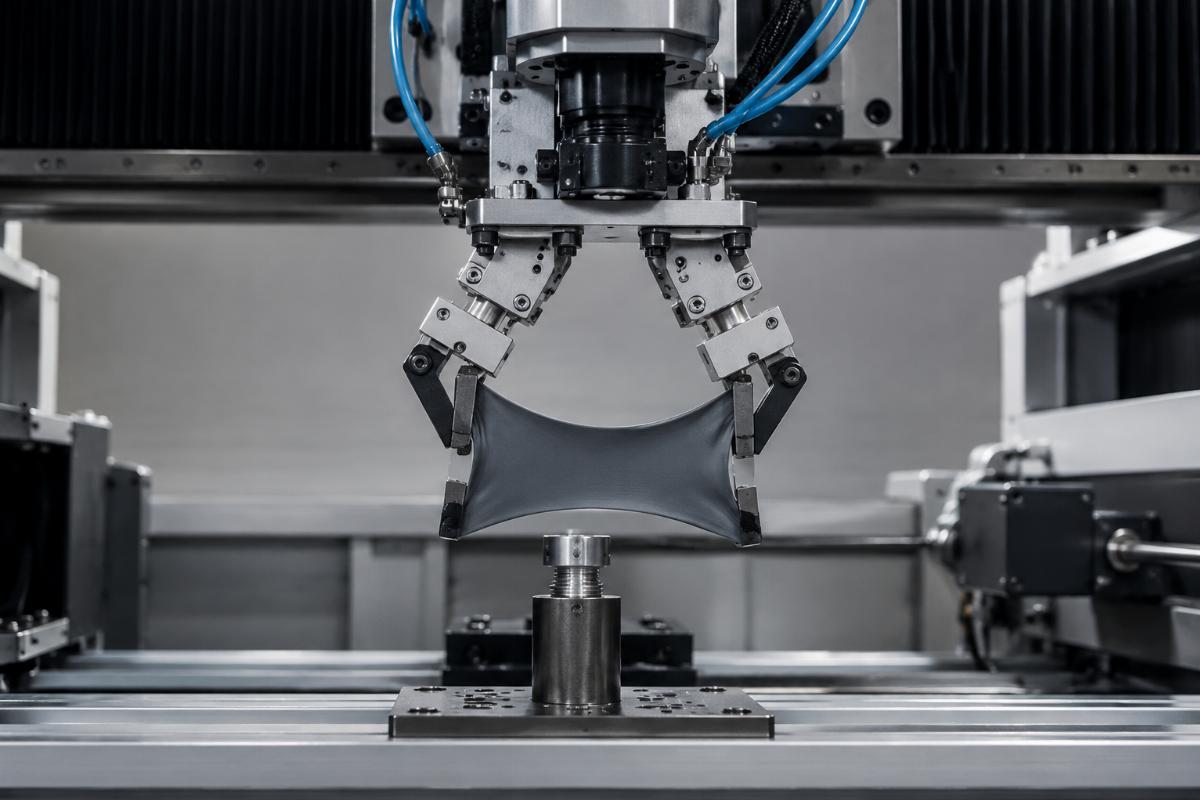
Gripper slippage appears first with high-elasticity smooth materials. I have observed wholesalers test this by running 10 consecutive cuts and measuring dimensional consistency. If piece dimensions vary more than 2mm across cuts4, they know customers will complain. The specific tolerance threshold depends on their target customer industries, but the testing logic remains consistent.
Blade pressure miscalibration creates two failure modes that wholesalers must distinguish. Excessive pressure damages material surfaces, leaving compression marks or cutting through stabilizer layers5. Insufficient pressure produces incomplete cuts with connected fibers that customers must manually separate. Both problems generate return requests, but they require opposite machine adjustments.
During our supported testing sessions, wholesalers verify blade pressure compatibility by cutting the same elastic material at three different thickness settings. If the machine cannot automatically adjust pressure to maintain consistent cut quality, they know their customers will struggle with material changeovers.
How do wholesalers verify multi-material compatibility under time constraints?
Time pressure forces wholesalers to develop efficient testing sequences. They cannot validate every material their customers might use, so they focus on boundary conditions.
We recommend testing material pairs that represent opposite ends of critical parameter ranges:
| Material Pair | Parameter Range Validated | Equipment Stress Test |
|---|---|---|
| Thin jersey + thick neoprene | Thickness adaptability (0.5mm to 5mm) | Automatic pressure adjustment |
| Low-stretch canvas + high-stretch spandex | Elasticity response (5% to 300% elongation6) | Gripper force modulation |
| Smooth synthetic + textured fleece | Surface friction variation | Positioning stability |
This paired testing approach emerged from wholesaler feedback after return incidents. They discovered that machines performing well with medium-parameter materials still failed with boundary cases. Testing only middle-range samples created a false confidence that collapsed when customers used extreme materials.
Wholesalers also verify material changeover speed because their customers rarely cut single materials all day. In testing scenarios we observed, distributors measure setup time between different elastic materials. If adjusting from thin elastic to thick neoprene requires more than 10 minutes of machine recalibration7, they anticipate customer frustration.
What testing workflow reduces return risk most effectively?
Through our work with distributors, we developed a validation workflow that balances thoroughness with time constraints. This workflow prioritizes the equipment behaviors and material variables that correlate most strongly with customer returns.
The most effective testing workflow validates gripper performance first, blade pressure adaptability second, and positioning accuracy third, using material samples that represent variable combination extremes rather than testing many similar materials.
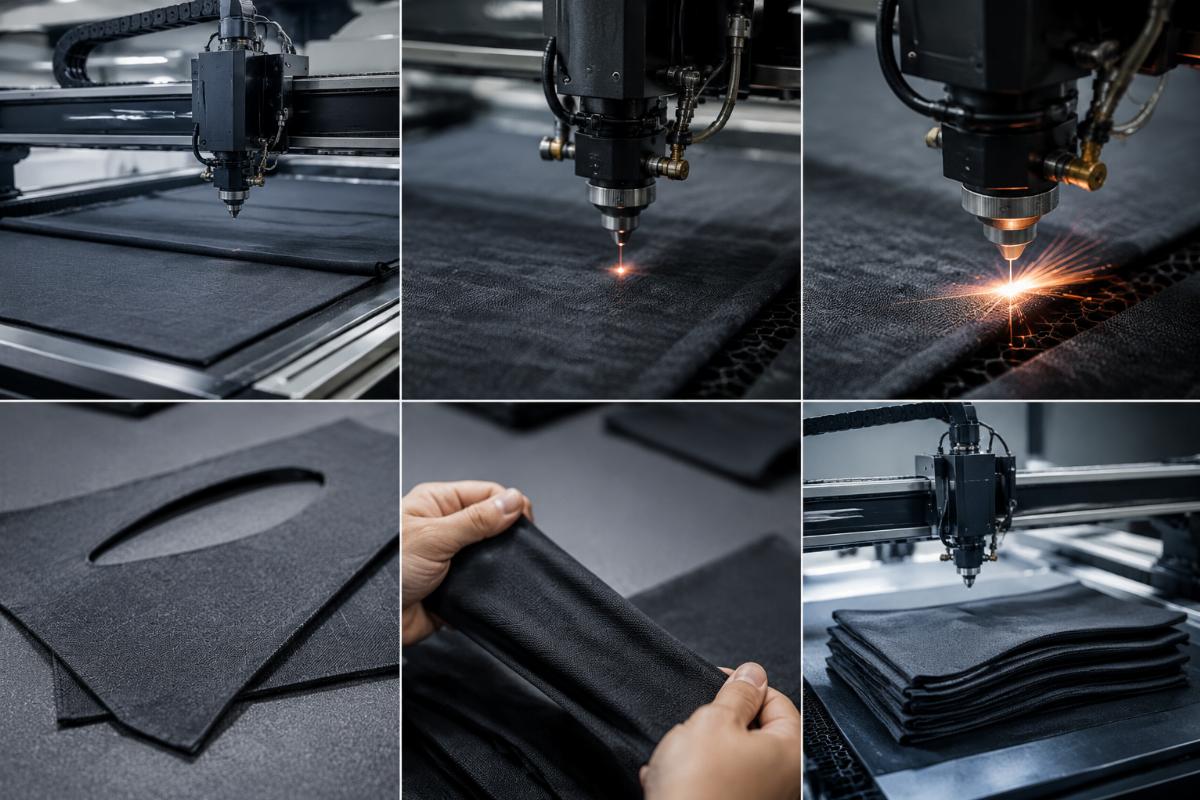
Wholesalers should start with gripper performance because it affects all subsequent cutting operations. We suggest testing with the smoothest, most elastic material they expect their customers to use. If grippers cannot secure this material during rapid direction changes, the machine will fail with similar materials.
The test involves programming a cut path with sharp corners and acceleration changes. Run this path five times consecutively and measure whether material position shifts between cuts. Any visible slippage indicates that customers cutting similar materials will experience positioning errors.
Blade pressure adaptability testing follows gripper validation. Use the thickest elastic material expected in customer applications and verify whether the machine can achieve complete cuts without surface damage. Then switch to the thinnest material and confirm the blade does not over-penetrate or leave compression marks.
We provide blade pressure recommendation charts for different material types, but wholesalers must verify these recommendations match their specific machine unit. Manufacturing tolerances mean individual machines may require different settings8 even within the same model line.
How should wholesalers document test results for future reference?
Wholesalers need documentation that helps them answer customer questions months after purchase. Simple pass/fail records don't capture enough information.
In validation workflows we design for distributors, we include result documentation templates with three sections:
Material compatibility matrix: This section records which specific materials were tested and at what machine settings. Include material thickness, elasticity coefficient if known, and surface texture description. Note the blade pressure setting, cutting speed, and gripper force used for successful cuts.
Observed failure modes: Document any materials that caused problems, even if you decided to proceed with purchase. Future customers may ask about specific materials, and you need records of testing outcomes. Describe the failure behavior precisely: did material slip, did cuts remain incomplete, did surface damage occur?
Setting adjustment procedures: Record the steps required to switch between different elastic material types. Future customers will ask how difficult material changeovers are, and you need documented evidence from your testing.
We encourage wholesalers to photograph cut samples from their tests. Visual records help answer customer questions about edge quality and prove you validated specific materials before resale. These photos also protect you if customers claim the machine never performed adequately with elastic materials.
What support should wholesalers expect from manufacturers?
Wholesalers cannot become materials science experts, so they depend on manufacturers for testing guidance. The quality of manufacturer support directly affects return risk.
Wholesalers should expect manufacturers to provide elastic material sample sets with parameter documentation, recommended testing sequences for multi-material validation, and technical support to interpret test results within commercial decision frameworks.
At our factory, we maintain a material sample library specifically for distributor testing. Each sample includes a parameter card listing thickness, elasticity coefficient, surface friction category9, and common application industries. This information helps wholesalers understand which of their future customers might use similar materials.
We also explain which material variable combinations most reliably expose gripper slippage, blade pressure miscalibration, or positioning drift. This knowledge transfer helps wholesalers focus limited testing time on high-risk scenarios rather than testing many similar materials that provide redundant information.
Some manufacturers only demonstrate their equipment with ideal materials. This approach leaves wholesalers unprepared for customer questions about compatibility with challenging elastics. When evaluating equipment suppliers, wholesalers should specifically request testing with difficult materials that stress equipment capabilities10.
In scenarios where wholesalers plan to resell to specific industries, we adjust our testing recommendations. A distributor targeting automotive interior manufacturers needs to validate thick, highly elastic materials with smooth surfaces. A distributor serving garment makers needs to verify performance with thin, stretchy fabrics. The testing priorities change based on downstream customer profiles.
How do successful wholesalers handle edge cases their testing missed?
Even thorough testing cannot cover every material combination customers might use. Successful wholesalers prepare contingency responses for compatibility questions about untested materials.
We recommend wholesalers establish material parameter boundaries based on their testing. If you validated materials from 0.5mm to 5mm thickness and 10% to 250% elasticity, you can confidently tell customers the machine handles materials within these ranges. For materials outside tested parameters, offer to arrange additional validation before customer purchase.
This approach protects wholesalers from return risk while maintaining customer trust. Customers appreciate honest boundary communication more than discovering compatibility problems after purchase. In our experience supporting distributors, those who clearly define tested material ranges experience fewer return disputes than those who claim universal compatibility.
Wholesalers should also maintain relationships with manufacturer technical support teams. When customers ask about untested material compatibility, you need rapid access to technical guidance. We provide our distributors with direct contact to our applications engineers specifically for these situations.
Conclusion
Wholesalers test fabric cutting machine adaptability to elastic materials by validating the equipment behaviors and material variable combinations most likely to predict customer returns, using time-efficient workflows that prioritize cross-scenario compatibility over comprehensive technical documentation.
"Viscoelastic Behaviour of Flexible Thermoplastic Polyurethane ...", https://pmc.ncbi.nlm.nih.gov/articles/PMC8309542/. Elastic materials exhibit complex viscoelastic behavior during cutting operations due to time-dependent deformation, recovery characteristics, and variable stress-strain responses that depend on material composition and processing conditions. Evidence role: mechanism; source type: paper. Supports: the mechanical behavior characteristics of elastic materials during cutting or deformation. Scope note: This supports the general mechanical complexity of elastic materials but does not specifically address unpredictability in commercial cutting contexts ↩
"Elasticity coefficient - Wikipedia", https://en.wikipedia.org/wiki/Elasticity_coefficient. The elastic modulus (or coefficient of elasticity) quantifies a material's resistance to elastic deformation, typically measured as the ratio of stress to strain in the linear elastic region, and varies significantly across textile materials based on fiber composition and construction. Evidence role: definition; source type: encyclopedia. Supports: the definition and measurement of elastic properties in materials. ↩
"Manufacturers: Pre-Purchase Guide for Equipment | NIST", https://www.nist.gov/blogs/manufacturing-innovation-blog/manufacturers-pre-purchase-guide-equipment. Business-to-business equipment evaluation processes are commonly constrained by operational time pressures, with pre-purchase testing periods varying based on equipment complexity, purchase value, and distributor resources. Evidence role: general_support; source type: other. Supports: typical time constraints in B2B equipment evaluation processes. Scope note: General business practice literature may not provide the specific 2-3 hour timeframe claimed for fabric cutting machine validation ↩
"INTERNATIONAL TOLERANCES FOR CLOTHING", https://d33yj9nw58rehz.cloudfront.net/Downloads/DownloadManager/International%20Tolerances%20on%20Clothing.pdf. Dimensional tolerances in garment and textile manufacturing vary by application and product type, with precision requirements typically ranging from sub-millimeter for technical textiles to several millimeters for less critical applications. Evidence role: general_support; source type: other. Supports: dimensional tolerance requirements in textile and garment manufacturing. Scope note: Industry standards provide context for tolerance requirements but may not specifically validate 2mm as a universal threshold for customer satisfaction ↩
"Effect of laundering on visible damage to apparel fabric caused by ...", https://pubmed.ncbi.nlm.nih.gov/24314531/. Excessive cutting force in textile processing can produce multiple damage modes including permanent compression deformation of the material structure, penetration through backing or stabilizer layers, and localized crushing of fibers at cut edges. Evidence role: mechanism; source type: other. Supports: damage mechanisms resulting from excessive cutting force in textile processing. Scope note: This describes general cutting damage mechanisms but may not specifically document the exact failure patterns described in wholesale equipment contexts ↩
"Impact of the Elastane Percentage on the Elastic Properties of ... - PMC", https://pmc.ncbi.nlm.nih.gov/articles/PMC9570736/. Commercial elastic textiles exhibit widely varying elongation properties, from minimally elastic woven fabrics with elongation under 10% to highly elastic knits and elastane-blended materials capable of 200-400% elongation, depending on fiber content and construction method. Evidence role: statistic; source type: other. Supports: the range of elongation properties found in commercial elastic textile materials. ↩
"Single-minute exchange of die - Wikipedia", https://en.wikipedia.org/wiki/Single-minute_exchange_of_die. Manufacturing efficiency principles emphasize minimizing changeover and setup times, with methodologies like Single-Minute Exchange of Die (SMED) targeting setup reductions to single-digit minutes to improve production flexibility and reduce downtime costs. Evidence role: general_support; source type: other. Supports: the importance of minimizing changeover time in manufacturing operations. Scope note: This supports the general principle that shorter changeover times improve operational efficiency but does not specifically validate 10 minutes as a satisfaction threshold ↩
"[PDF] Defining, Measuring, and Controlling Quality in Manufacturing", https://ocw.mit.edu/courses/2-008-design-and-manufacturing-ii-spring-2025/mit2_008_s25_lec11.pdf. Manufacturing processes inherently produce unit-to-unit variation within specified tolerances, resulting in performance differences between nominally identical machines that may require individual calibration or parameter adjustment to achieve consistent output. Evidence role: general_support; source type: other. Supports: the impact of manufacturing tolerances on equipment performance variation. ↩
"[PDF] Surface Friction Characteristics of Woven Fabrics with ...", https://jtatm.textiles.ncsu.edu/index.php/JTATM/article/download/7307/4087. Surface friction in textiles is quantified through coefficient of friction measurements, which characterize the resistance to relative motion between surfaces and vary based on fiber type, surface finish, fabric construction, and testing conditions. Evidence role: definition; source type: paper. Supports: the measurement and characterization of surface friction in textile materials. ↩
"2025 Supervisory Stress Test Methodology", https://www.federalreserve.gov/publications/2025-june-supervisory-stress-test-methodology-introduction.htm. Equipment validation methodologies commonly employ boundary condition testing and worst-case scenarios to assess performance limits, as testing at operational extremes more effectively reveals potential failure modes than testing under nominal conditions. Evidence role: general_support; source type: other. Supports: the use of boundary condition and stress testing in equipment validation. ↩