






Fast Delivery
Quick, reliable shipping to any location.

Free & easy returns
Return this item by mail or in store within 90 days for a full refund.
Precision Material Matching — every oscillating knife configuration is validated against buyer-supplied surgical drape and nonwoven samples before the production order is released.
Technical Specifications
| Parameter | Value |
|---|---|
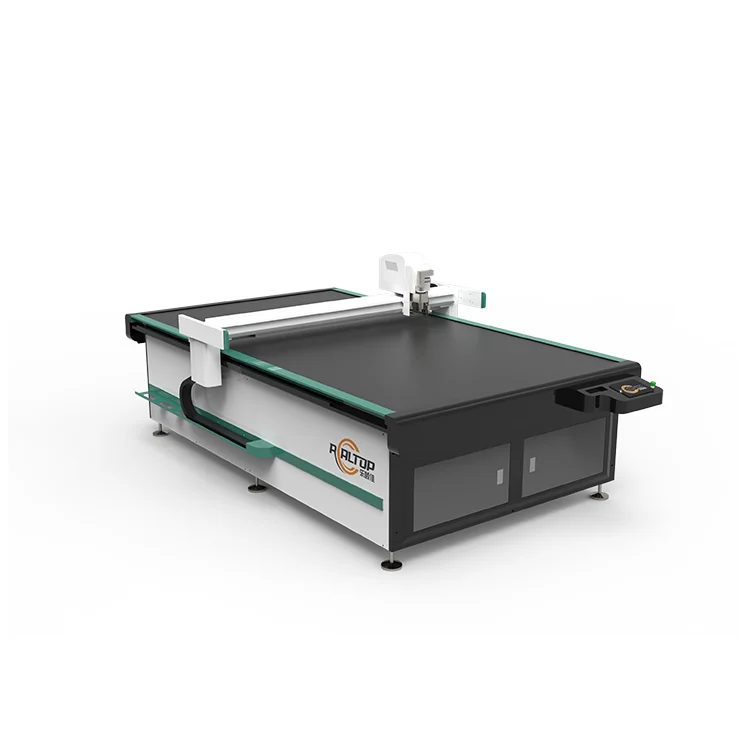
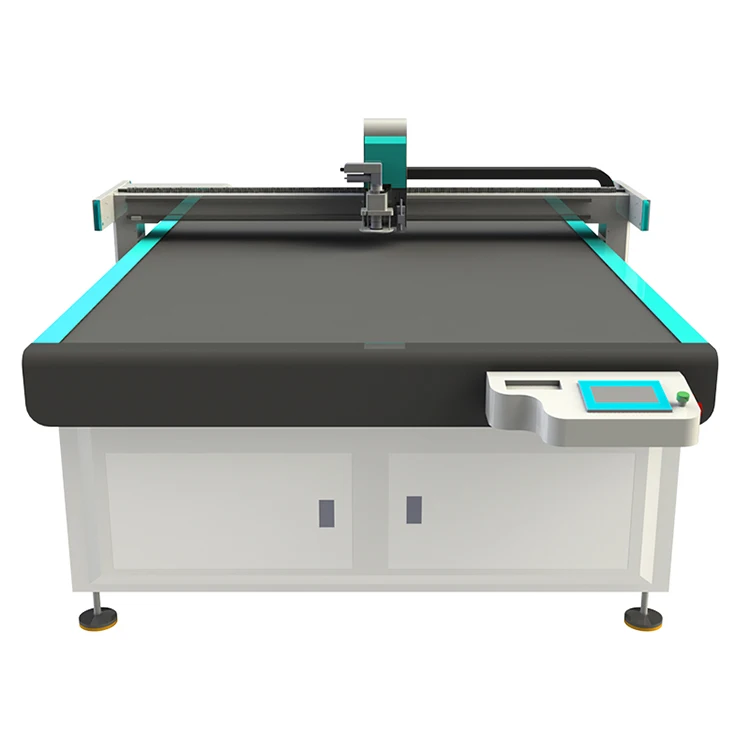
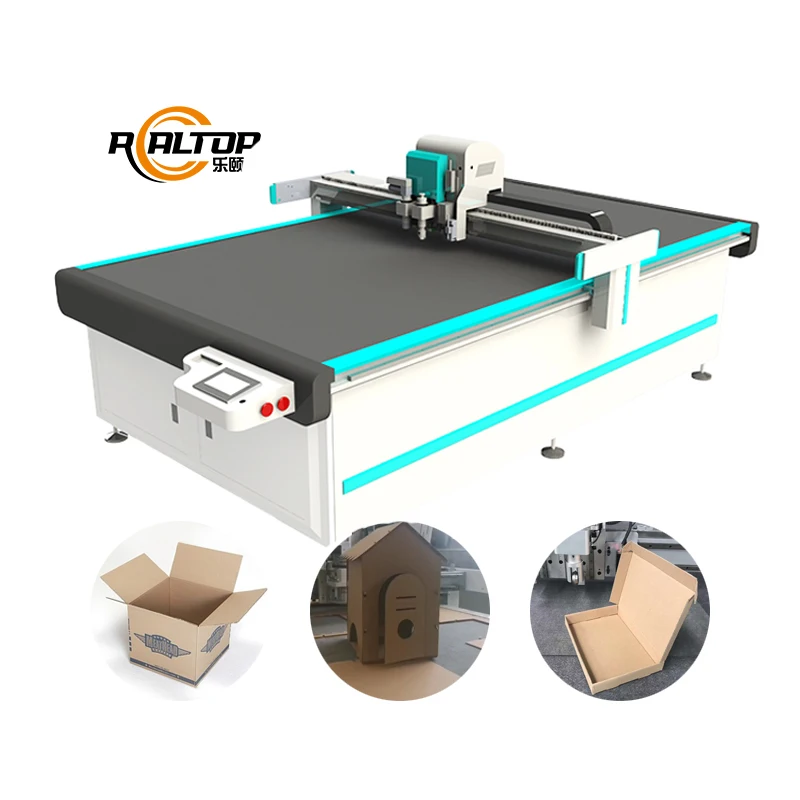
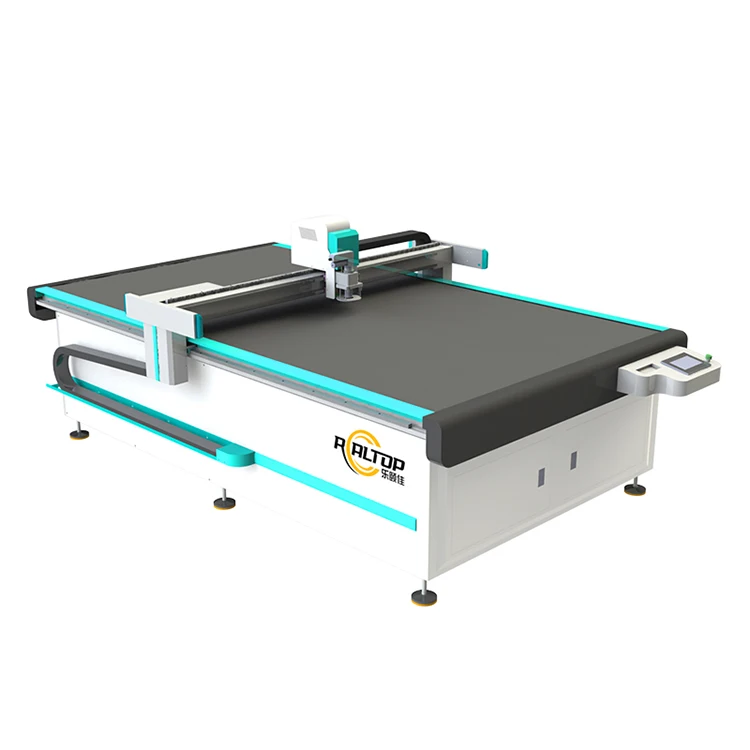
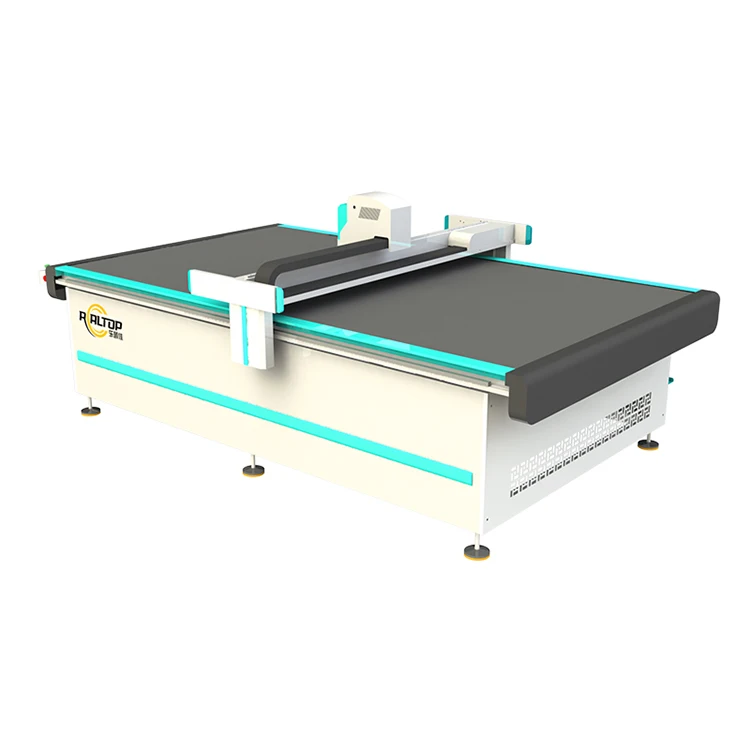
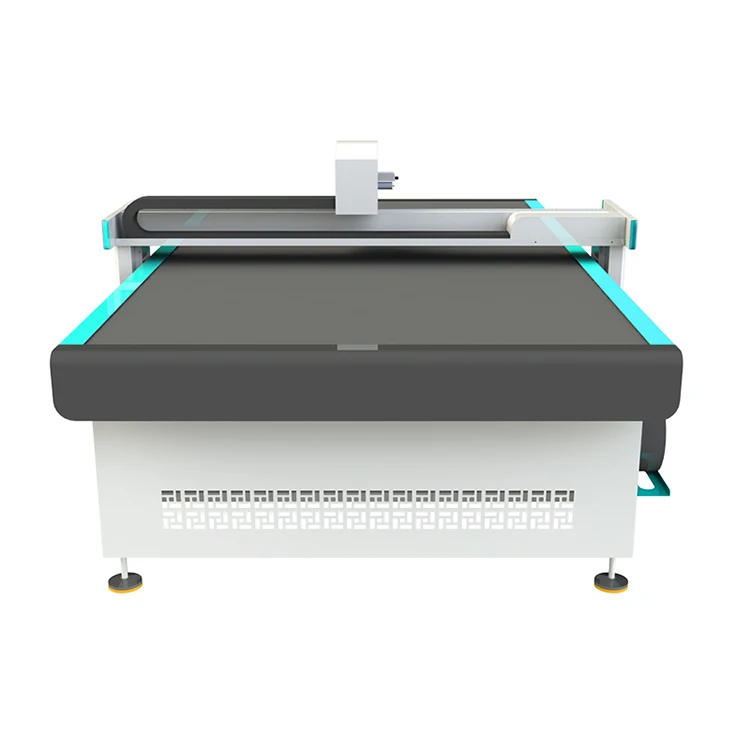
| Product Type | CNC Oscillating Knife Cutting Machine |
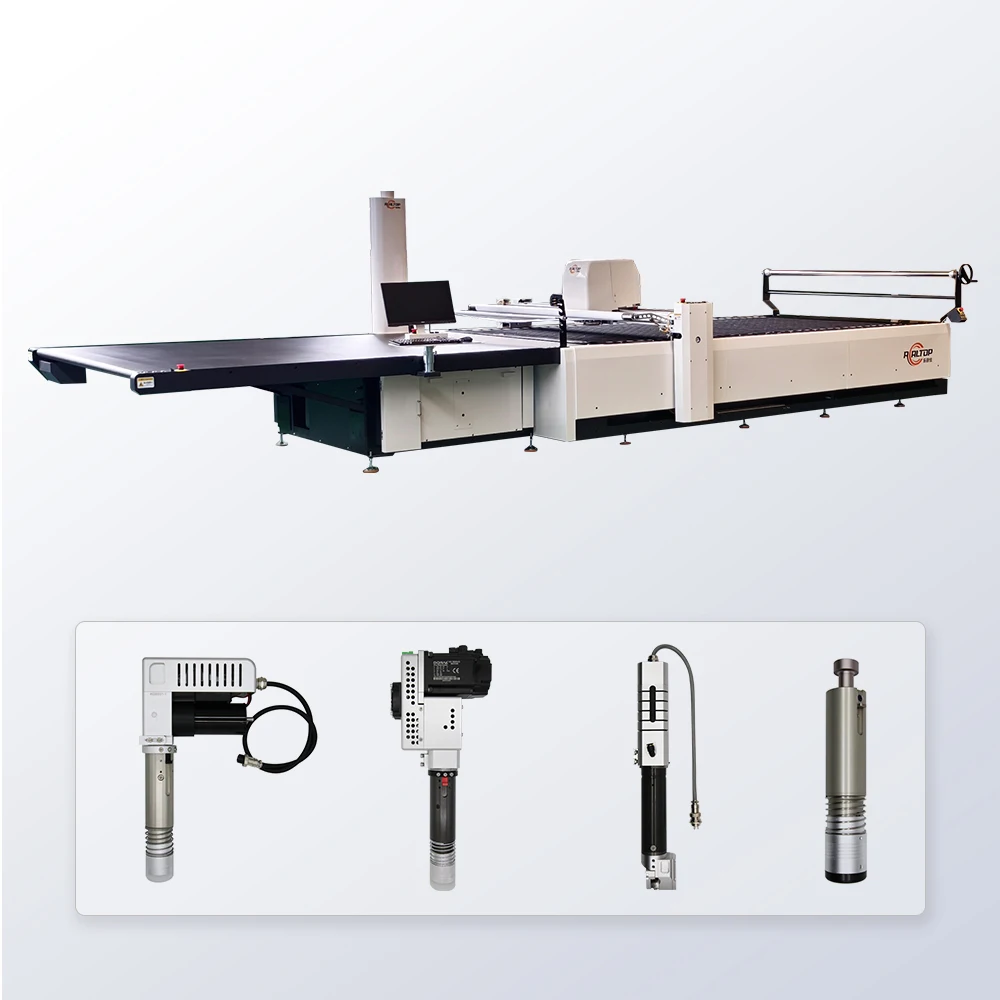
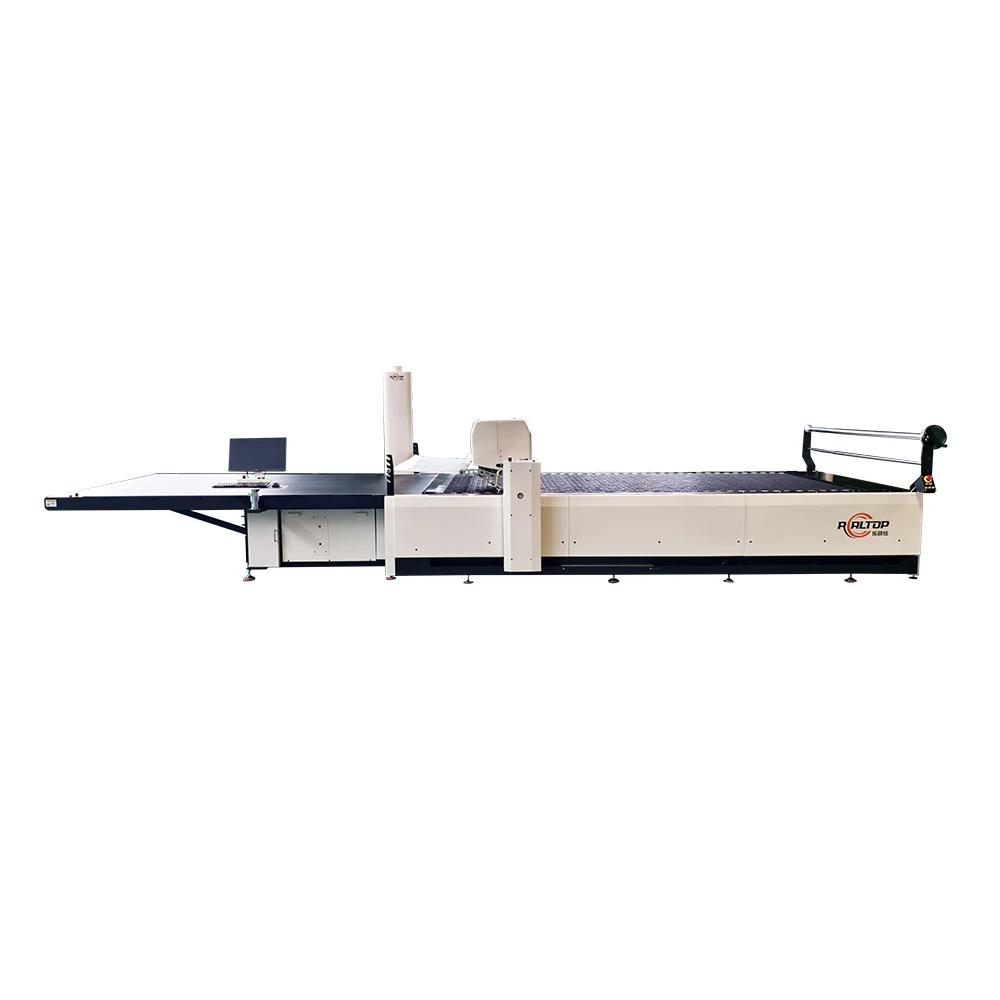
| Working Area | 1700×2000mm / 1900×2000mm / 2300×3300mm options |
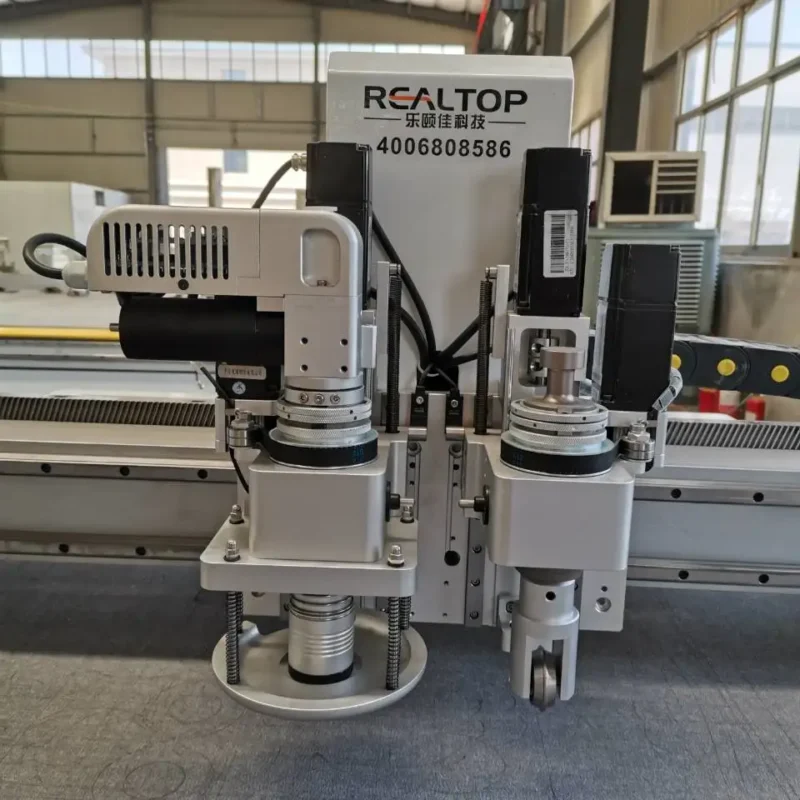
| Tool Head | Interchangeable oscillating knife |
| Max Operating Speed | 80 m/min |
| Average Cutting Speed | 12 m/min (basis not stated in source — confirm material, thickness and layer count) |
| Cutting Thickness | Up to 70 mm after vacuum adsorption |
| Vacuum Table | Aluminum bellows vacuum table |
| Vacuum Pump | Custom high-efficiency, aerospace-grade aluminum casting |
| Air Flow Volume | 160 L/min |
| Blade Grinding | Double rotary sharpener |
| Control System | PLC control panel |
| Servo Motors | Panasonic / Delta / Dorna options |
| Voltage & Frequency | 380V / 50Hz |
| Max Power | 26 kW |
| Positioning Accuracy | ±0.1 mm (source value — verify against manufacturer catalog) |
| Software Compatibility | DXF / PLT / AI / PDF import |
| Language Options | English, Russian, Italian, Chinese; special languages customizable |
| Standards | CE |
Application Suitability
| Application | Material or Output |
|---|---|
| Disposable surgical drapes and gowns | SMS nonwoven, spunbond, coated medical fabrics |
| Disposable clothing and protective wear | Polypropylene nonwoven, microporous film laminates |
| Apparel manufacturing | Suits, knitwear, lace, complex woven and knitted fabrics |
| Home textiles | Sofa fabrics, curtains, rugs, plush materials |
| Flexible material conversion | Knits, wovens, plush from 0.1 mm to 70 mm thickness |
Why "Up to 70 mm" Does Not Tell the Whole Story
A CNC oscillating knife cutting machine for sale that quotes maximum thickness alone leaves out the vacuum adsorption pressure, blade oscillation frequency, and tool head configuration that actually determine whether your surgical drape material cuts clean or frays at the edge.
Clean edges on coated nonwoven require matching vacuum zoning, blade angle, and oscillation frequency to the specific fabric weight and coating type — not just a thickness number.
I once worked with a buyer producing disposable surgical drapes who selected a working area based on roll width, only to discover the standard vacuum zoning could not hold the thin SMS nonwoven flat during high-speed cuts. The material lifted at the edges, producing ragged contours that failed hospital procurement inspection. After reconfiguring the vacuum zones and lowering the feed rate, the line ran within tolerance, but two weeks of production were lost. That scenario repeats across nonwoven conversion [NEED_CITE: vacuum adsorption requirements for thin nonwoven materials].
Matching Oscillation Frequency to Nonwoven Density
Surgical drapes span a wide range of nonwoven constructions — spunbond, meltblown, SMS composites, and coated barrier fabrics. Each responds differently to blade oscillation. Higher oscillation frequencies slice through multi-layer SMS cleanly without dragging the inner meltblown film, while lower frequencies work better on single-layer spunbond where excessive vibration can distort the web. The interchangeable oscillating knife tool head on this CNC oscillating knife cutting machine for sale allows the operator to swap blade profiles and adjust stroke parameters, keeping edge quality consistent across different drape SKUs.
Vacuum Zoning Strategy for Thin Flexible Materials
Holding a 40 GSM nonwoven flat across a 2300×3300mm table demands more than a single vacuum channel. The aluminum bellows vacuum table divides the surface into independently controlled zones, so only the active cutting area draws suction. This approach prevents thin surgical drape material from collapsing into unused channels and maintains surface flatness where the blade actually engages. Without proper zoning, even a powerful vacuum pump cannot compensate for air leakage across an oversized open table [NEED_CITE: vacuum table zoning principles for flexible material cutting].
What the Specification Numbers Actually Mean on the Floor
The 160 L/min air flow volume paired with the aerospace-grade aluminum casting vacuum pump generates sufficient suction for multi-layer nonwoven stacks, but the practical cutting depth depends on material compressibility. A 70 mm stack of loosely woven gauze compresses differently under vacuum than a dense SMS composite, so the rated thickness is a starting point rather than a guarantee. The PLC control panel lets the operator store separate recipes for each material — recording blade pressure, oscillation speed, and feed rate — so repeat orders of the same surgical drape run identically without manual recalibration. Servo motor selection across Panasonic, Delta, and Dorna options lets buyers align motion components with their local service availability and spare parts supply chain.
The Hidden Cost of Skipping the Sample Cut
When buyers approve a CNC oscillating knife cutting machine for sale based on a brochure specification alone, the first production run often reveals issues that a sample test would have caught. Coated surgical drape fabrics can melt at the blade contact point if oscillation frequency is too high, leaving a sealed edge that compromises drape flexibility. Conversely, insufficient blade pressure on multi-layer absorbent pads leaves uncut fibers that unravel during sterilization. These defects do not appear in a single-layer demo cut on standard cotton [NEED_CITE: edge quality defects in coated nonwoven cutting].
Why This Range Supports Nonwoven Conversion
In-house design across knife and laser cutting means you are not forced into one method for materials that may benefit from another. The tool head and table configuration is specified against your actual drape fabric weight and coating chemistry rather than a generic fabric category. CCD camera positioning is available when printed registration marks on the drape need contour-following cuts. Software compatibility is confirmed against your existing DXF or PLT pattern files before the order goes to production. Sample cutting runs on your own nonwoven material lock in the parameter set before the machine leaves the factory [NEED_CITE: sample cutting validation process for nonwoven materials].
Documentation & Verification
- Machine specification sheet listing confirmed working area, tool head and vacuum zone layout for your drape material
- Sample cutting report on your own surgical drape nonwoven with edge quality photographs
- Electrical schematic with voltage, frequency and plug type confirmed for your facility
- Software licence and DXF / PLT / AI file format compatibility note signed before dispatch
- Factory test record showing positioning accuracy measured on your material thickness range
Installation, Commissioning & Support
- Floor space plan reflecting chosen 1700×2000mm to 2300×3300mm working area with operator clearance zones
- Dedicated 380V / 50Hz circuit rated for 26 kW peak draw with correct breaker sizing
- Machine arrives partially assembled; table and gantry require on-site alignment and leveling
- First-run parameter tuning with your surgical drape material to set blade pressure and oscillation recipe
- Operator training on PLC panel including recipe storage, blade change and double rotary sharpener use
- Spare blade and oscillation mechanism wear parts list provided for local procurement planning
Request a Material-Matched Configuration
Send us your surgical drape material type, fabric weight in GSM, coating specification, maximum sheet or roll width, and target daily output in finished pieces. Include your facility voltage and frequency so the electrical package is configured before assembly begins. If you have existing nesting software or pattern files in DXF or PLT format, share a sample so we can verify import compatibility and run a trial cut on your actual material before confirming the order.
Frequently Asked Questions
Q: How do I choose between oscillating knife and laser for surgical drape nonwoven?
A: Oscillating knife cutting suits SMS and coated nonwoven where a sealed laser edge would stiffen the drape or compromise breathability. Laser may be preferred for synthetic barrier films requiring fused edges to prevent fraying. Submit your exact material for a sample cut on both methods so edge quality and flexibility can be compared side by side before selecting a machine.
Q: Which working area size fits disposable clothing production?
A: The 1700×2000mm table handles standard nonwoven roll widths for smaller drape formats, while the 2300×3300mm accommodates wide surgical sheet layouts and full garment markers. Choice depends on your widest material dimension and nesting strategy. Larger tables require proportionally more vacuum capacity to maintain suction across the active zone.
Q: How is the tool head selected for different nonwoven thicknesses?
A: Thin spunbond below 2 mm typically uses a fine oscillating blade with high frequency and low stroke. Thicker absorbent pad stacks up to 70 mm require a heavier blade with increased stroke length and reduced feed speed. The interchangeable head system lets one machine cover the full range without permanent modification to the gantry.
Q: What voltage and control language options are available?
A: Standard configuration is 380V / 50Hz with English, Russian, Italian or Chinese interface. Other voltages and frequencies are configurable for markets running 220V / 60Hz or 415V / 50Hz supplies. Special control languages can be programmed during production when confirmed at order stage, ensuring the PLC panel matches your operator requirements on arrival.
Q: How does the full catalogue help me compare machine families?
A: The lyjcut.com catalogue maps every oscillating knife and laser model by material type, cutting depth and production volume so you can survey options before narrowing to one method. Rather than specifying a machine on working area alone, you can cross-reference which configuration matches your nonwoven weight and daily drape output, reducing the risk of mis-specification.
Precision Material Matching — every oscillating knife configuration is validated against buyer-supplied surgical drape and nonwoven samples before the production order is released.
Technical Specifications
| Parameter | Value |
|---|---|
| Product Type | CNC Oscillating Knife Cutting Machine |
| Working Area | 1700×2000mm / 1900×2000mm / 2300×3300mm options |
| Tool Head | Interchangeable oscillating knife |
| Max Operating Speed | 80 m/min |
| Average Cutting Speed | 12 m/min (basis not stated in source — confirm material, thickness and layer count) |
| Cutting Thickness | Up to 70 mm after vacuum adsorption |
| Vacuum Table | Aluminum bellows vacuum table |
| Vacuum Pump | Custom high-efficiency, aerospace-grade aluminum casting |
| Air Flow Volume | 160 L/min |
| Blade Grinding | Double rotary sharpener |
| Control System | PLC control panel |
| Servo Motors | Panasonic / Delta / Dorna options |
| Voltage & Frequency | 380V / 50Hz |
| Max Power | 26 kW |
| Positioning Accuracy | ±0.1 mm (source value — verify against manufacturer catalog) |
| Software Compatibility | DXF / PLT / AI / PDF import |
| Language Options | English, Russian, Italian, Chinese; special languages customizable |
| Standards | CE |
Application Suitability
| Application | Material or Output |
|---|---|
| Disposable surgical drapes and gowns | SMS nonwoven, spunbond, coated medical fabrics |
| Disposable clothing and protective wear | Polypropylene nonwoven, microporous film laminates |
| Apparel manufacturing | Suits, knitwear, lace, complex woven and knitted fabrics |
| Home textiles | Sofa fabrics, curtains, rugs, plush materials |
| Flexible material conversion | Knits, wovens, plush from 0.1 mm to 70 mm thickness |
Why "Up to 70 mm" Does Not Tell the Whole Story
A CNC oscillating knife cutting machine for sale that quotes maximum thickness alone leaves out the vacuum adsorption pressure, blade oscillation frequency, and tool head configuration that actually determine whether your surgical drape material cuts clean or frays at the edge.
Clean edges on coated nonwoven require matching vacuum zoning, blade angle, and oscillation frequency to the specific fabric weight and coating type — not just a thickness number.
I once worked with a buyer producing disposable surgical drapes who selected a working area based on roll width, only to discover the standard vacuum zoning could not hold the thin SMS nonwoven flat during high-speed cuts. The material lifted at the edges, producing ragged contours that failed hospital procurement inspection. After reconfiguring the vacuum zones and lowering the feed rate, the line ran within tolerance, but two weeks of production were lost. That scenario repeats across nonwoven conversion [NEED_CITE: vacuum adsorption requirements for thin nonwoven materials].
Matching Oscillation Frequency to Nonwoven Density
Surgical drapes span a wide range of nonwoven constructions — spunbond, meltblown, SMS composites, and coated barrier fabrics. Each responds differently to blade oscillation. Higher oscillation frequencies slice through multi-layer SMS cleanly without dragging the inner meltblown film, while lower frequencies work better on single-layer spunbond where excessive vibration can distort the web. The interchangeable oscillating knife tool head on this CNC oscillating knife cutting machine for sale allows the operator to swap blade profiles and adjust stroke parameters, keeping edge quality consistent across different drape SKUs.
Vacuum Zoning Strategy for Thin Flexible Materials
Holding a 40 GSM nonwoven flat across a 2300×3300mm table demands more than a single vacuum channel. The aluminum bellows vacuum table divides the surface into independently controlled zones, so only the active cutting area draws suction. This approach prevents thin surgical drape material from collapsing into unused channels and maintains surface flatness where the blade actually engages. Without proper zoning, even a powerful vacuum pump cannot compensate for air leakage across an oversized open table [NEED_CITE: vacuum table zoning principles for flexible material cutting].
What the Specification Numbers Actually Mean on the Floor
The 160 L/min air flow volume paired with the aerospace-grade aluminum casting vacuum pump generates sufficient suction for multi-layer nonwoven stacks, but the practical cutting depth depends on material compressibility. A 70 mm stack of loosely woven gauze compresses differently under vacuum than a dense SMS composite, so the rated thickness is a starting point rather than a guarantee. The PLC control panel lets the operator store separate recipes for each material — recording blade pressure, oscillation speed, and feed rate — so repeat orders of the same surgical drape run identically without manual recalibration. Servo motor selection across Panasonic, Delta, and Dorna options lets buyers align motion components with their local service availability and spare parts supply chain.
The Hidden Cost of Skipping the Sample Cut
When buyers approve a CNC oscillating knife cutting machine for sale based on a brochure specification alone, the first production run often reveals issues that a sample test would have caught. Coated surgical drape fabrics can melt at the blade contact point if oscillation frequency is too high, leaving a sealed edge that compromises drape flexibility. Conversely, insufficient blade pressure on multi-layer absorbent pads leaves uncut fibers that unravel during sterilization. These defects do not appear in a single-layer demo cut on standard cotton [NEED_CITE: edge quality defects in coated nonwoven cutting].
Why This Range Supports Nonwoven Conversion
In-house design across knife and laser cutting means you are not forced into one method for materials that may benefit from another. The tool head and table configuration is specified against your actual drape fabric weight and coating chemistry rather than a generic fabric category. CCD camera positioning is available when printed registration marks on the drape need contour-following cuts. Software compatibility is confirmed against your existing DXF or PLT pattern files before the order goes to production. Sample cutting runs on your own nonwoven material lock in the parameter set before the machine leaves the factory [NEED_CITE: sample cutting validation process for nonwoven materials].
Documentation & Verification
- Machine specification sheet listing confirmed working area, tool head and vacuum zone layout for your drape material
- Sample cutting report on your own surgical drape nonwoven with edge quality photographs
- Electrical schematic with voltage, frequency and plug type confirmed for your facility
- Software licence and DXF / PLT / AI file format compatibility note signed before dispatch
- Factory test record showing positioning accuracy measured on your material thickness range
Installation, Commissioning & Support
- Floor space plan reflecting chosen 1700×2000mm to 2300×3300mm working area with operator clearance zones
- Dedicated 380V / 50Hz circuit rated for 26 kW peak draw with correct breaker sizing
- Machine arrives partially assembled; table and gantry require on-site alignment and leveling
- First-run parameter tuning with your surgical drape material to set blade pressure and oscillation recipe
- Operator training on PLC panel including recipe storage, blade change and double rotary sharpener use
- Spare blade and oscillation mechanism wear parts list provided for local procurement planning
Request a Material-Matched Configuration
Send us your surgical drape material type, fabric weight in GSM, coating specification, maximum sheet or roll width, and target daily output in finished pieces. Include your facility voltage and frequency so the electrical package is configured before assembly begins. If you have existing nesting software or pattern files in DXF or PLT format, share a sample so we can verify import compatibility and run a trial cut on your actual material before confirming the order.
Frequently Asked Questions
Q: How do I choose between oscillating knife and laser for surgical drape nonwoven?
A: Oscillating knife cutting suits SMS and coated nonwoven where a sealed laser edge would stiffen the drape or compromise breathability. Laser may be preferred for synthetic barrier films requiring fused edges to prevent fraying. Submit your exact material for a sample cut on both methods so edge quality and flexibility can be compared side by side before selecting a machine.
Q: Which working area size fits disposable clothing production?
A: The 1700×2000mm table handles standard nonwoven roll widths for smaller drape formats, while the 2300×3300mm accommodates wide surgical sheet layouts and full garment markers. Choice depends on your widest material dimension and nesting strategy. Larger tables require proportionally more vacuum capacity to maintain suction across the active zone.
Q: How is the tool head selected for different nonwoven thicknesses?
A: Thin spunbond below 2 mm typically uses a fine oscillating blade with high frequency and low stroke. Thicker absorbent pad stacks up to 70 mm require a heavier blade with increased stroke length and reduced feed speed. The interchangeable head system lets one machine cover the full range without permanent modification to the gantry.
Q: What voltage and control language options are available?
A: Standard configuration is 380V / 50Hz with English, Russian, Italian or Chinese interface. Other voltages and frequencies are configurable for markets running 220V / 60Hz or 415V / 50Hz supplies. Special control languages can be programmed during production when confirmed at order stage, ensuring the PLC panel matches your operator requirements on arrival.
Q: How does the full catalogue help me compare machine families?
A: The lyjcut.com catalogue maps every oscillating knife and laser model by material type, cutting depth and production volume so you can survey options before narrowing to one method. Rather than specifying a machine on working area alone, you can cross-reference which configuration matches your nonwoven weight and daily drape output, reducing the risk of mis-specification.
商品评价
There are no reviews yet.