



Fast Delivery
Quick, reliable shipping to any location.

Free & easy returns
Return this item by mail or in store within 90 days for a full refund.
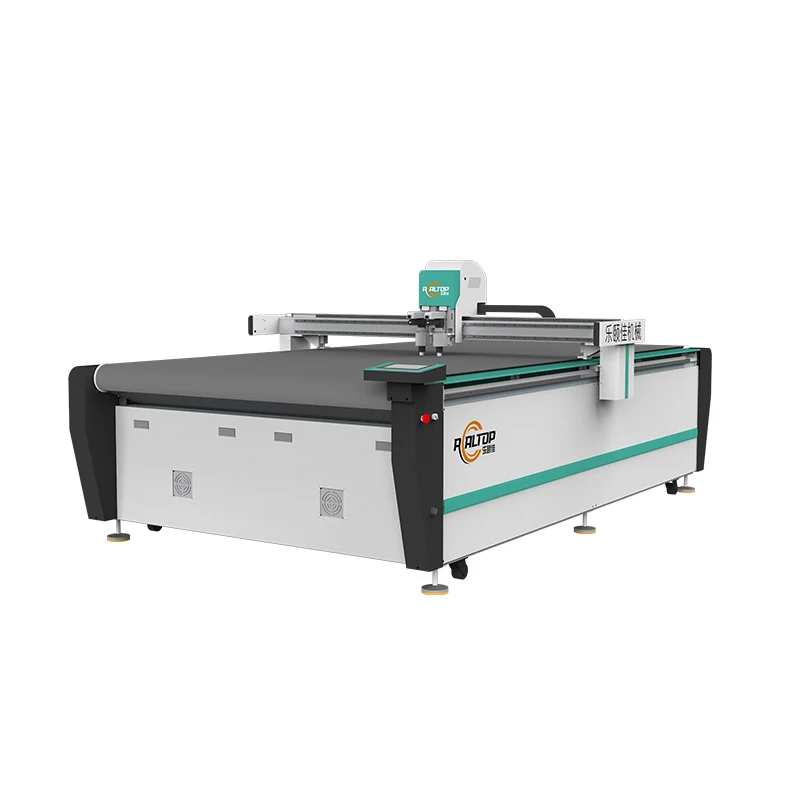
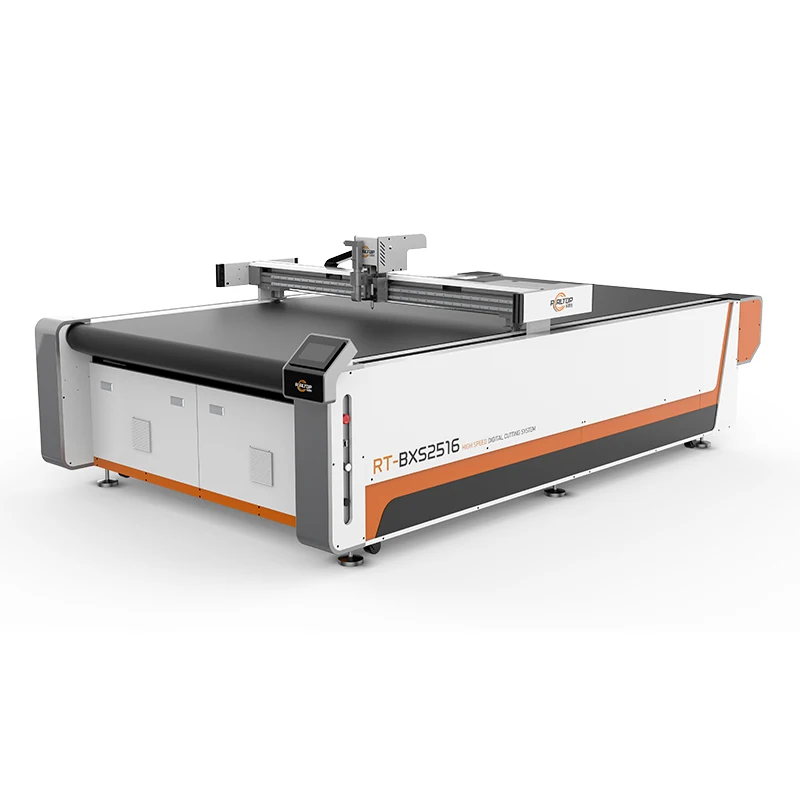
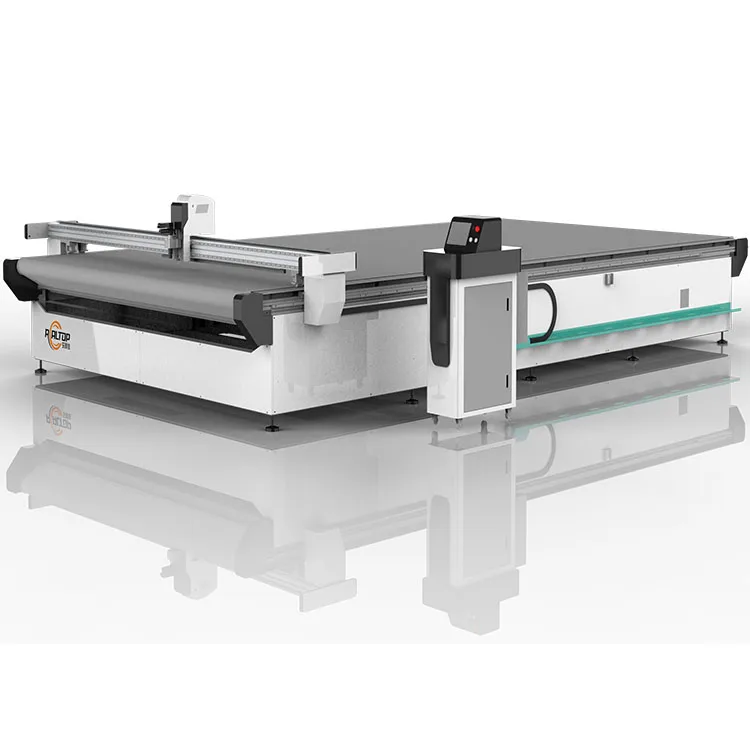
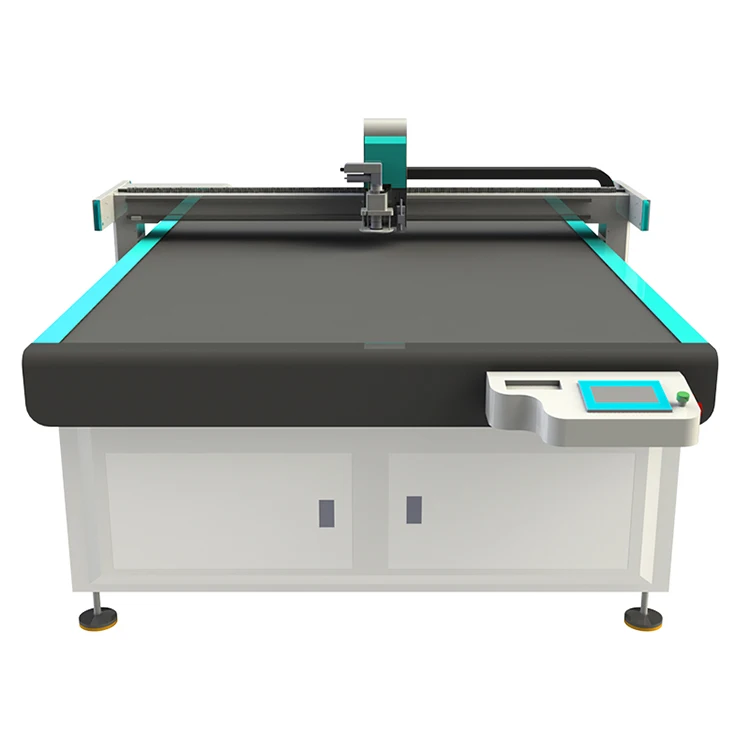
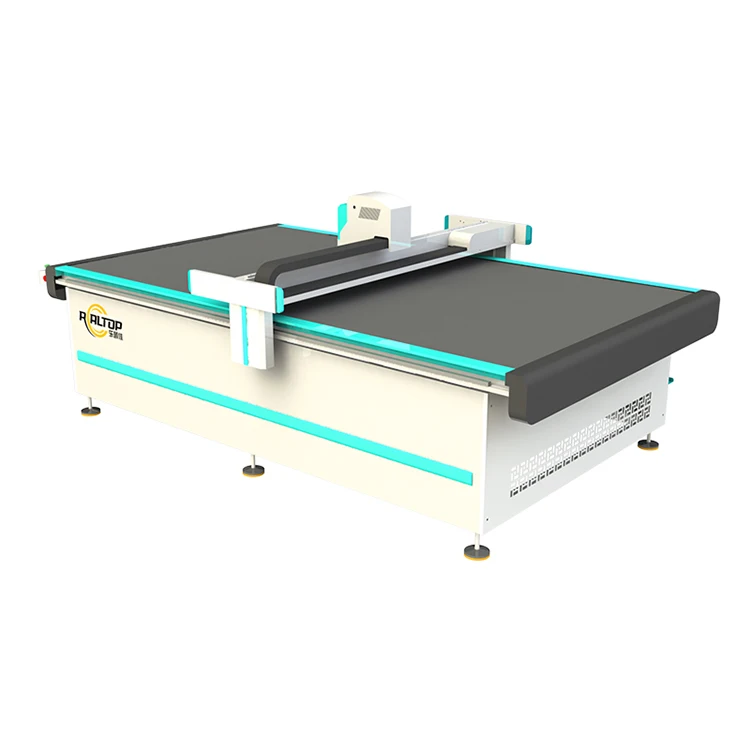
Configurable cutting platform — tool heads and table formats specified per material thickness and daily volume before order confirmation.
Technical Specifications
| Parameter | Value |
|---|---|
| Product Type | CNC Oscillating Knife Cutting Machine |
| Model | RT-D2516 / RT-S2516 |
| Working Area | 1600 × 2500 mm |
| Machine Size | 3450 × 2300 × 1250 mm |
| Rated Power | 9 kW |
| Voltage | 380V ±10% |
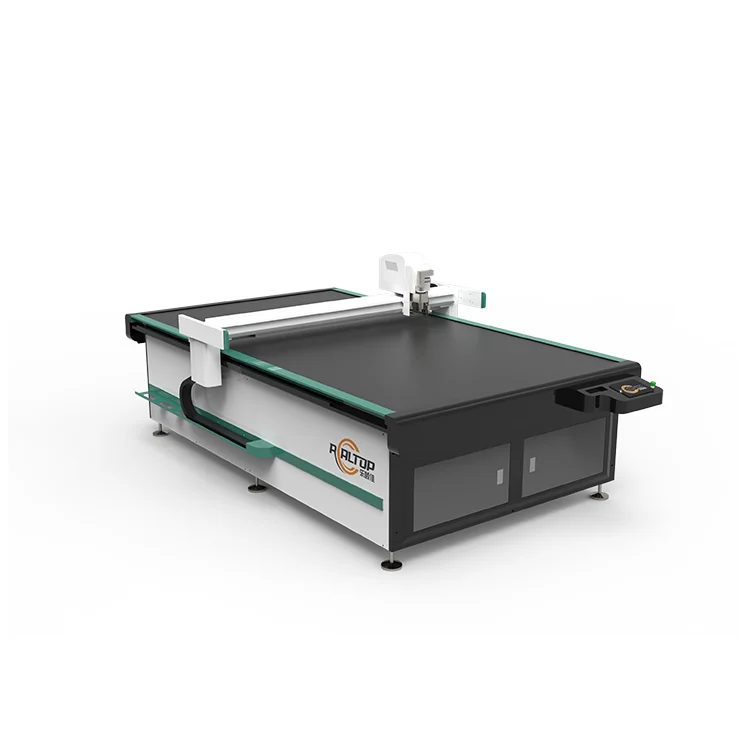
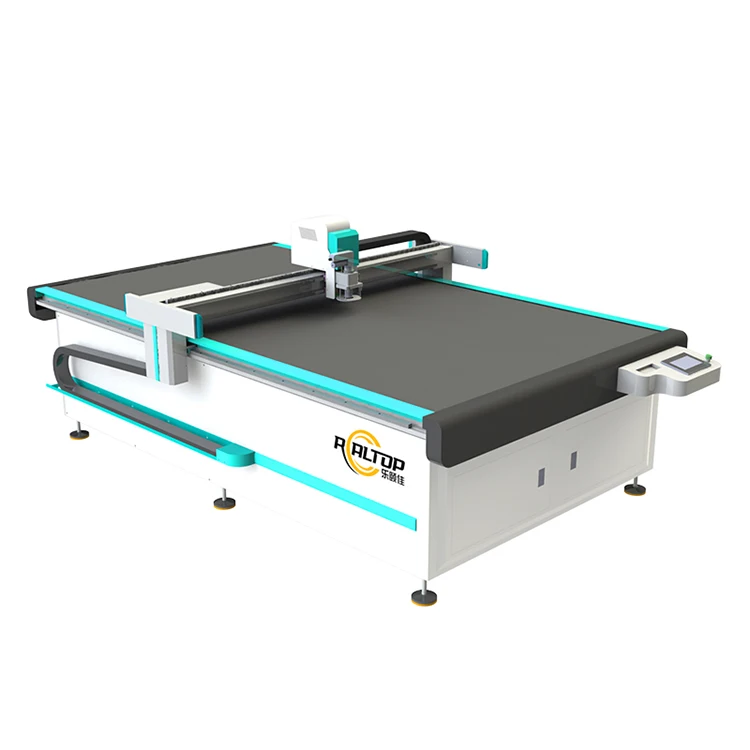
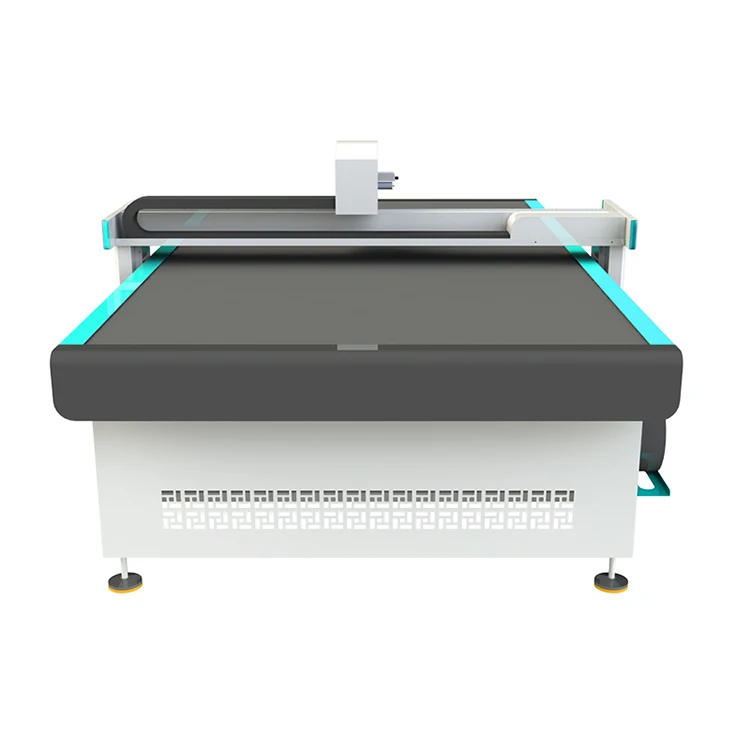
| Table Type | Flat working table or auto feeding table |
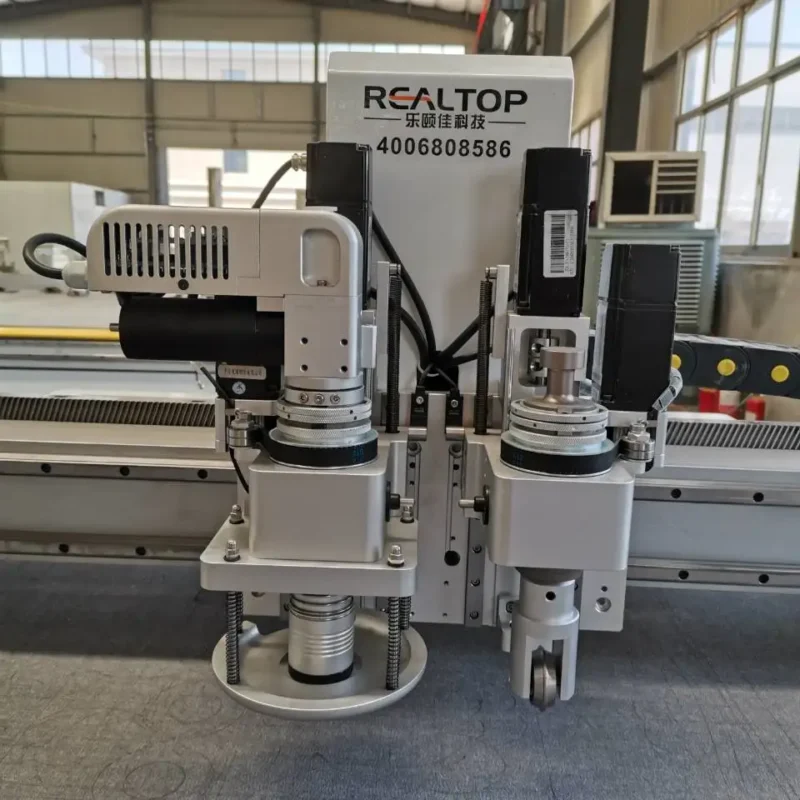
| Tool Head Options | Swiss imported knife (vibration full/half cutting, cursor location); oscillating knife, pneumatic knife, high-power vibrating knife, circular knife, V-cutting knife, drag knife, creasing wheel, dotted line knife, punching, brush |
| Translational Velocity | 800–2000 mm/s |
| Cutting Speed | 200–800 mm/s |
| Cutting Thickness | Up to 100 mm (varies by material) |
| Repeatability | ≤0.1 mm |
| Transmission System | Imported digital servo motor, linear guide, synchronous belt, ball screw |
| Servo Motor Option | Delta or Panasonic (IP67 waterproof, vibration suppression) |
| Instruction System | HP-GL compatible format |
| Software File Formats | PLT, DXF, AI, and other formats; auto nesting/typesetting |
| Vacuum Table | Magnesium-aluminum alloy, PVDF powder spraying, anodic oxidation, hard oxidation |
| Vacuum Pump | 7.5 kW, integrated aviation aluminum shell with built-in silencer sponge |
| CCD / Visual Positioning | Small CCD camera mark point positioning, panoramic camera recognition positioning, projection positioning |
| Safety Devices | Infrared induction blocking, anti-collision sensors on both sides of beam, emergency stop button |
| Control Panel | Touch screen with multiple language support (English, Russian, Italian, Chinese; special languages customizable) |
| Conveyor Belt | Germany imported (per configuration list) |
| Linear Guide | Taiwan Hiwin rail |
| Standards | CE |
Application Suitability
| Application | Material or Output |
|---|---|
| Garment and footwear production | Clothing cloth, shoe material, leather, non-woven fabric, multi-layer fabric cutting |
| Luggage and bag manufacturing | PU, EVA, synthetic leather, textile composites |
| Automotive interior fabrication | Sponge, XPE, foam board, composite materials, gasket material |
| Carpet and floor mat processing | Carpet, PVC, soft glass, rubber |
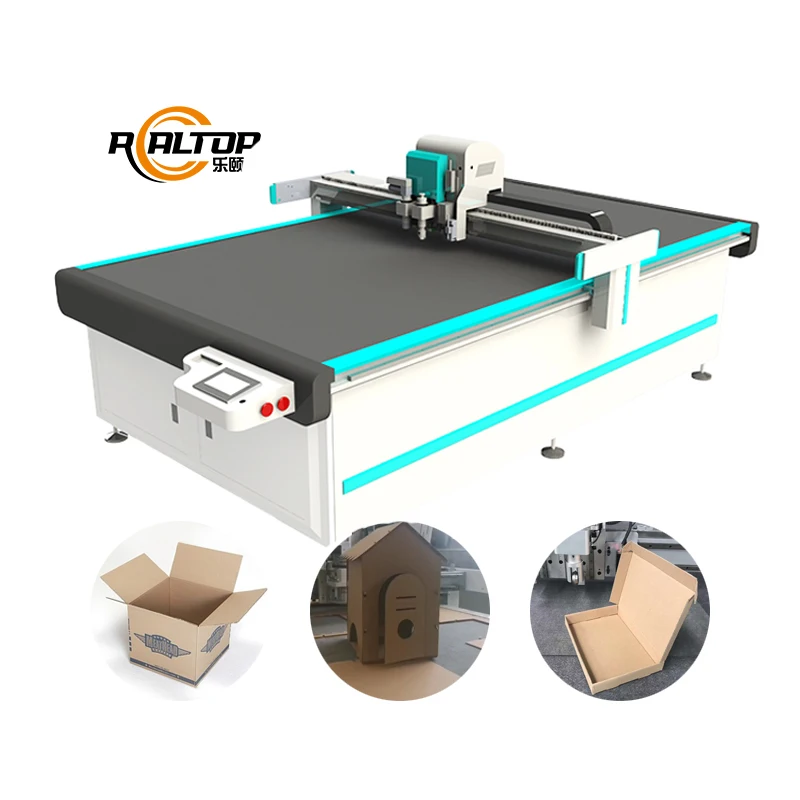
| Packaging and carton prototyping | Corrugated cardboard, sticker, film |
| Graphic advertising and printing | PVC board, vinyl, sticker contour cutting |
| Sealing and industrial gasket fabrication | PTFE, ETFE, fiberglass, rubber, silicone |
| Sports and outdoor product manufacturing | Carbon fiber, composite materials, XPE, EVA |
Why Working Area Alone Fails Material Selection on a CNC Oscillating Knife Cutting Machine
Cutting method and tool head must be matched to material composition and thickness before working area is finalized.
I have seen buyers focus entirely on table size, order a machine, and then discover the standard vibrating knife cannot get through a dense felt or a multi-layer carbon fiber layup. The blade deflects, the edge frays, and the production supervisor blames the operator. The real problem is that a working area tells you nothing about how the machine handles a specific material stack [NEED_CITE: industrial cutting method selection by material density and thickness].
When a canvas customer came to our Jinan workshop with a heavily coated fabric, the standard blade dulled within two days of continuous running. We switched the tool head to a high-power vibrating knife with an auto-sharpening module, and the line ran through the week without a blade change. That is the difference a configuration decision makes before the machine leaves the factory.
Matching Knife Technology to Fabric and Felt Production
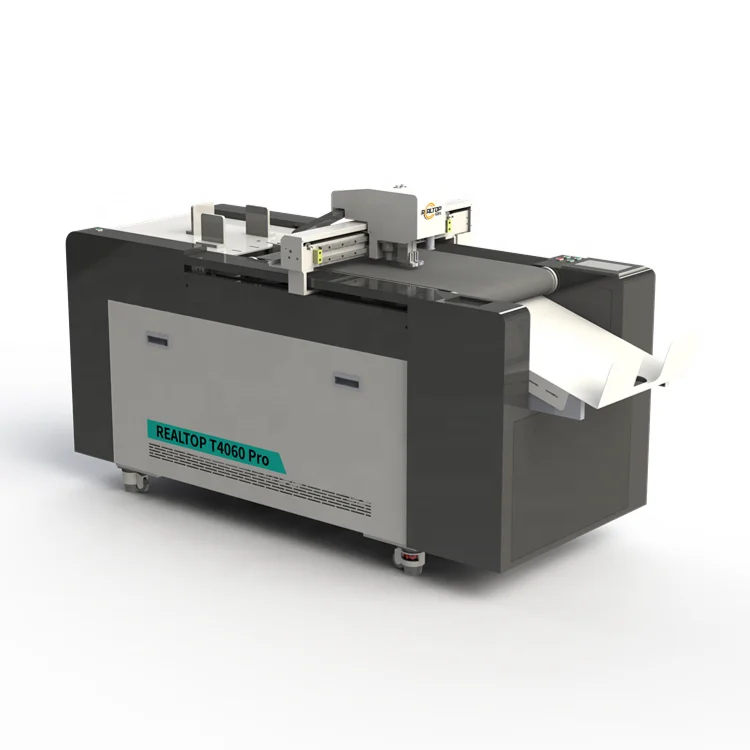
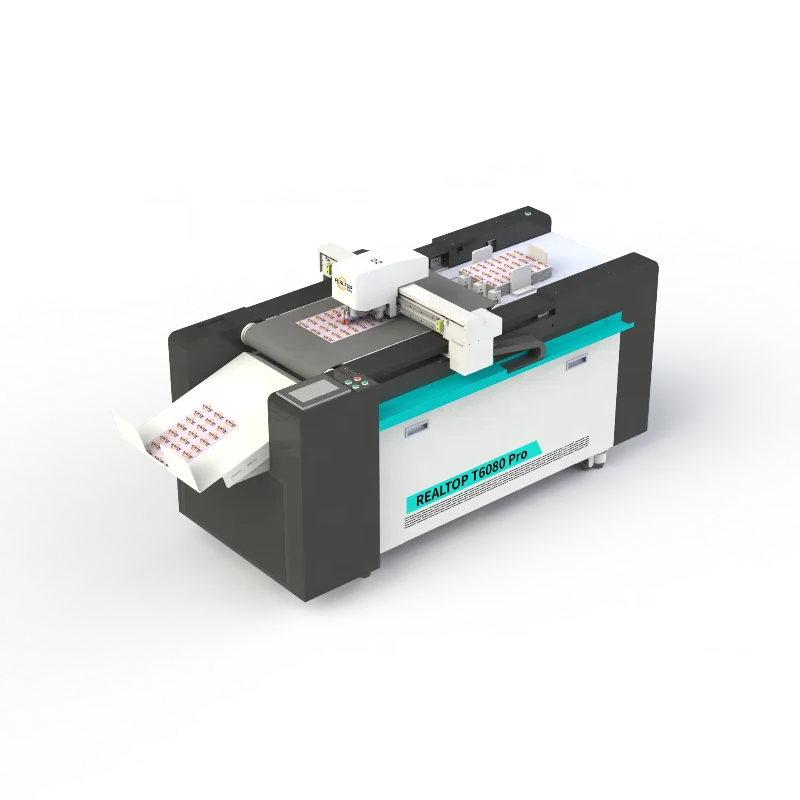
The CNC oscillating knife cutting machine full catalogue available from Realtop covers flat-table and auto-feeding formats, each suited to different daily volumes. Flat tables handle short-run prototyping and thick single-ply materials like carpet or gasket sheets. Auto-feeding tables pair with a Germany-imported conveyor belt for roll-fed textiles where continuous cutting through garment cloth or non-woven fabric keeps material moving without manual repositioning.
Tool head selection sits at the center of every fabric cutting decision. The Swiss imported knife handles precision full and half cutting for leather and technical textiles, while the circular knife slices through multi-layer woven fabric where edge fusion is not acceptable. Pneumatic knife options suit thicker foam and sponge stacks common in automotive interior work.
Contour Cutting and Zoned Vacuum for Printed Contours
Printed fabric for signage, footwear uppers, and garment panels requires the camera to track register marks at full production speed. The system supports a small CCD camera for mark-point positioning, a panoramic camera for large-format recognition, and projection positioning for manual alignment checks. Without this verification step, a buyer relying on a promised CCD system may find contour accuracy degrades once the line runs at normal throughput [NEED_CITE: vision system accuracy under continuous production conditions].
The magnesium-aluminum alloy vacuum table uses PVDF powder spraying and anodic oxidation for a flat, corrosion-resistant surface. A 7.5 kW vacuum pump with an integrated aviation aluminum shell and built-in silencer sponge holds down both large panels and small nested parts. Zoned suction prevents small pattern pieces from lifting during high-speed cutting, which is a common failure point on tables designed only for full-sheet coverage.
How Core Parameters Translate to Production Reality
Translational velocity of 800–2000 mm/s and cutting speed of 200–800 mm/s define how fast the head moves between cuts and how fast it actually penetrates the material. The gap between these two values matters: a machine that moves quickly but cuts slowly will spend most of its time traversing rather than producing. The imported digital servo motors, paired with Taiwan Hiwin linear guides and ball screws, maintain ≤0.1 mm repeatability across the full 1600 × 2500 mm working area, which is necessary when nesting dozens of shoe uppers or gasket profiles from a single sheet.
The 9 kW rated power and 380V ±10% electrical requirement determine whether the local workshop supply can support continuous operation. Servo motor options from Delta or Panasonic carry IP67 waterproof ratings and vibration suppression, reducing the chance of drive faults in workshops where coolant, dust, or humidity are present. File format compatibility with PLT, DXF, and AI through an HP-GL compatible instruction system means the nesting software can import the buyer’s existing design files without format conversion [NEED_CITE: HP-GL compatibility in modern CNC cutting software workflows].
The Cost of Skipping Material Trials Before Purchase
When a buyer orders based on specifications alone, without a cutting trial on their own material, the consequences show up within the first production week. A felt producer may find the standard oscillating knife crushes rather than slices the fibers, leaving a compressed edge that fails downstream sewing or bonding. A gasket fabricator cutting PTFE sheets may discover the vacuum zones cannot hold small flange profiles in place, causing the knife to drag the part across the table.
These problems are not machine defects. They are configuration mismatches that could have been caught by a sample cutting report on the buyer’s actual material before the order was confirmed. The cost of correcting them after shipment includes blade inventory, tool head swaps, production downtime, and operator retraining.
Why This CNC Oscillating Knife Cutting Machine Range Stands Up to Verification
In-house design and production cover both knife and laser cutting technologies, so a buyer comparing methods can test both on the same material and select based on edge quality rather than assumption. The tool head and table configuration are specified per material type and production volume, not sold as a single default package.
CCD camera positioning systems are validated on printed samples at production speed before the machine is finalized. Software compatibility is confirmed with the buyer’s file formats and nesting workflow before the order is placed. Voltage, plug standard, and control language are locked in during specification review, so the machine arrives ready for the local electrical supply and operator language. Sample cutting on the buyer’s own material is conducted and documented before any commitment is made.
Documentation & Verification
- Machine specification sheet listing configured tool heads and table type matched to your material stack
- Electrical schematic confirming 380V ±10% or customized voltage and plug standard for your market
- Factory test record including cutting samples on your fabric, felt, or composite material before dispatch
- Software licence with file format compatibility note covering PLT, DXF, AI, and HP-GL workflows
- Spare parts list specifying blade types, knife modules, and vacuum pump consumables
- Packing photographs documenting machine condition prior to crating
Installation, Commissioning & Support
- Foundation must support 3450 × 2300 mm footprint with level tolerance for the 1600 × 2500 mm table flatness
- Dedicated 380V ±10% circuit required for 9 kW main system and 7.5 kW vacuum pump combined load
- Machine ships as a single assembly; beam and gantry require alignment check after placement
- First-run commissioning includes vacuum zone mapping and servo motor IP67 seal verification
- Touch screen configured to operator language (English, Russian, Italian, Chinese, or custom) before training
- Blade and knife module spare stock specified per your material type at time of order
Before Requesting a Quotation
To match the right configuration to your production line, share the material type and maximum thickness you cut daily, the largest single panel dimension you nest, and whether your workflow is roll-fed or sheet-fed. Specify your local voltage and frequency standard, the control language your operators require, and whether your existing design files use PLT, DXF, or AI formats. If your material contains coating, adhesive, or composite layers, provide a sample for a cutting trial before the configuration is finalized.
Frequently Asked Questions
Q: How do I choose between knife and laser cutting for my fabric or felt?
A: Knife cutting suits multi-layer woven textiles and materials where edge fusion is unacceptable, such as garment cloth or carpet. Laser sealing works on synthetics where a fused edge prevents fraying. The decision depends on your material composition and the downstream process that receives the cut part. Sample trials on your actual material resolve the question before commitment.
Q: Which tool head matches my material thickness and composition?
A: Coated or adhesive-heavy fabrics require a high-power vibrating knife with auto-sharpening. Standard oscillating knives handle single-ply leather and textile. Circular knives cut multi-layer stacks. The correct head is determined by a cutting trial on your specific material, not by thickness alone.
Q: Does the CCD camera track printed marks reliably at production speed?
A: The system offers small CCD mark-point positioning and panoramic camera recognition. Reliability at full cutting speed depends on mark size, contrast, and print consistency. This must be validated on your printed material during the sample cutting stage, not assumed from specification sheets.
Q: What table format fits my daily production volume?
A: Flat working tables suit short-run prototyping and thick single-ply materials. Auto-feeding tables with the Germany-imported conveyor belt handle continuous roll-fed textile cutting where throughput depends on uninterrupted material flow. Your daily sheet count and material format determine the choice.
Configurable cutting platform — tool heads and table formats specified per material thickness and daily volume before order confirmation.
Technical Specifications
| Parameter | Value |
|---|---|
| Product Type | CNC Oscillating Knife Cutting Machine |
| Model | RT-D2516 / RT-S2516 |
| Working Area | 1600 × 2500 mm |
| Machine Size | 3450 × 2300 × 1250 mm |
| Rated Power | 9 kW |
| Voltage | 380V ±10% |
| Table Type | Flat working table or auto feeding table |
| Tool Head Options | Swiss imported knife (vibration full/half cutting, cursor location); oscillating knife, pneumatic knife, high-power vibrating knife, circular knife, V-cutting knife, drag knife, creasing wheel, dotted line knife, punching, brush |
| Translational Velocity | 800–2000 mm/s |
| Cutting Speed | 200–800 mm/s |
| Cutting Thickness | Up to 100 mm (varies by material) |
| Repeatability | ≤0.1 mm |
| Transmission System | Imported digital servo motor, linear guide, synchronous belt, ball screw |
| Servo Motor Option | Delta or Panasonic (IP67 waterproof, vibration suppression) |
| Instruction System | HP-GL compatible format |
| Software File Formats | PLT, DXF, AI, and other formats; auto nesting/typesetting |
| Vacuum Table | Magnesium-aluminum alloy, PVDF powder spraying, anodic oxidation, hard oxidation |
| Vacuum Pump | 7.5 kW, integrated aviation aluminum shell with built-in silencer sponge |
| CCD / Visual Positioning | Small CCD camera mark point positioning, panoramic camera recognition positioning, projection positioning |
| Safety Devices | Infrared induction blocking, anti-collision sensors on both sides of beam, emergency stop button |
| Control Panel | Touch screen with multiple language support (English, Russian, Italian, Chinese; special languages customizable) |
| Conveyor Belt | Germany imported (per configuration list) |
| Linear Guide | Taiwan Hiwin rail |
| Standards | CE |
Application Suitability
| Application | Material or Output |
|---|---|
| Garment and footwear production | Clothing cloth, shoe material, leather, non-woven fabric, multi-layer fabric cutting |
| Luggage and bag manufacturing | PU, EVA, synthetic leather, textile composites |
| Automotive interior fabrication | Sponge, XPE, foam board, composite materials, gasket material |
| Carpet and floor mat processing | Carpet, PVC, soft glass, rubber |
| Packaging and carton prototyping | Corrugated cardboard, sticker, film |
| Graphic advertising and printing | PVC board, vinyl, sticker contour cutting |
| Sealing and industrial gasket fabrication | PTFE, ETFE, fiberglass, rubber, silicone |
| Sports and outdoor product manufacturing | Carbon fiber, composite materials, XPE, EVA |
Why Working Area Alone Fails Material Selection on a CNC Oscillating Knife Cutting Machine
Cutting method and tool head must be matched to material composition and thickness before working area is finalized.
I have seen buyers focus entirely on table size, order a machine, and then discover the standard vibrating knife cannot get through a dense felt or a multi-layer carbon fiber layup. The blade deflects, the edge frays, and the production supervisor blames the operator. The real problem is that a working area tells you nothing about how the machine handles a specific material stack [NEED_CITE: industrial cutting method selection by material density and thickness].
When a canvas customer came to our Jinan workshop with a heavily coated fabric, the standard blade dulled within two days of continuous running. We switched the tool head to a high-power vibrating knife with an auto-sharpening module, and the line ran through the week without a blade change. That is the difference a configuration decision makes before the machine leaves the factory.
Matching Knife Technology to Fabric and Felt Production
The CNC oscillating knife cutting machine full catalogue available from Realtop covers flat-table and auto-feeding formats, each suited to different daily volumes. Flat tables handle short-run prototyping and thick single-ply materials like carpet or gasket sheets. Auto-feeding tables pair with a Germany-imported conveyor belt for roll-fed textiles where continuous cutting through garment cloth or non-woven fabric keeps material moving without manual repositioning.
Tool head selection sits at the center of every fabric cutting decision. The Swiss imported knife handles precision full and half cutting for leather and technical textiles, while the circular knife slices through multi-layer woven fabric where edge fusion is not acceptable. Pneumatic knife options suit thicker foam and sponge stacks common in automotive interior work.
Contour Cutting and Zoned Vacuum for Printed Contours
Printed fabric for signage, footwear uppers, and garment panels requires the camera to track register marks at full production speed. The system supports a small CCD camera for mark-point positioning, a panoramic camera for large-format recognition, and projection positioning for manual alignment checks. Without this verification step, a buyer relying on a promised CCD system may find contour accuracy degrades once the line runs at normal throughput [NEED_CITE: vision system accuracy under continuous production conditions].
The magnesium-aluminum alloy vacuum table uses PVDF powder spraying and anodic oxidation for a flat, corrosion-resistant surface. A 7.5 kW vacuum pump with an integrated aviation aluminum shell and built-in silencer sponge holds down both large panels and small nested parts. Zoned suction prevents small pattern pieces from lifting during high-speed cutting, which is a common failure point on tables designed only for full-sheet coverage.
How Core Parameters Translate to Production Reality
Translational velocity of 800–2000 mm/s and cutting speed of 200–800 mm/s define how fast the head moves between cuts and how fast it actually penetrates the material. The gap between these two values matters: a machine that moves quickly but cuts slowly will spend most of its time traversing rather than producing. The imported digital servo motors, paired with Taiwan Hiwin linear guides and ball screws, maintain ≤0.1 mm repeatability across the full 1600 × 2500 mm working area, which is necessary when nesting dozens of shoe uppers or gasket profiles from a single sheet.
The 9 kW rated power and 380V ±10% electrical requirement determine whether the local workshop supply can support continuous operation. Servo motor options from Delta or Panasonic carry IP67 waterproof ratings and vibration suppression, reducing the chance of drive faults in workshops where coolant, dust, or humidity are present. File format compatibility with PLT, DXF, and AI through an HP-GL compatible instruction system means the nesting software can import the buyer’s existing design files without format conversion [NEED_CITE: HP-GL compatibility in modern CNC cutting software workflows].
The Cost of Skipping Material Trials Before Purchase
When a buyer orders based on specifications alone, without a cutting trial on their own material, the consequences show up within the first production week. A felt producer may find the standard oscillating knife crushes rather than slices the fibers, leaving a compressed edge that fails downstream sewing or bonding. A gasket fabricator cutting PTFE sheets may discover the vacuum zones cannot hold small flange profiles in place, causing the knife to drag the part across the table.
These problems are not machine defects. They are configuration mismatches that could have been caught by a sample cutting report on the buyer’s actual material before the order was confirmed. The cost of correcting them after shipment includes blade inventory, tool head swaps, production downtime, and operator retraining.
Why This CNC Oscillating Knife Cutting Machine Range Stands Up to Verification
In-house design and production cover both knife and laser cutting technologies, so a buyer comparing methods can test both on the same material and select based on edge quality rather than assumption. The tool head and table configuration are specified per material type and production volume, not sold as a single default package.
CCD camera positioning systems are validated on printed samples at production speed before the machine is finalized. Software compatibility is confirmed with the buyer’s file formats and nesting workflow before the order is placed. Voltage, plug standard, and control language are locked in during specification review, so the machine arrives ready for the local electrical supply and operator language. Sample cutting on the buyer’s own material is conducted and documented before any commitment is made.
Documentation & Verification
- Machine specification sheet listing configured tool heads and table type matched to your material stack
- Electrical schematic confirming 380V ±10% or customized voltage and plug standard for your market
- Factory test record including cutting samples on your fabric, felt, or composite material before dispatch
- Software licence with file format compatibility note covering PLT, DXF, AI, and HP-GL workflows
- Spare parts list specifying blade types, knife modules, and vacuum pump consumables
- Packing photographs documenting machine condition prior to crating
Installation, Commissioning & Support
- Foundation must support 3450 × 2300 mm footprint with level tolerance for the 1600 × 2500 mm table flatness
- Dedicated 380V ±10% circuit required for 9 kW main system and 7.5 kW vacuum pump combined load
- Machine ships as a single assembly; beam and gantry require alignment check after placement
- First-run commissioning includes vacuum zone mapping and servo motor IP67 seal verification
- Touch screen configured to operator language (English, Russian, Italian, Chinese, or custom) before training
- Blade and knife module spare stock specified per your material type at time of order
Before Requesting a Quotation
To match the right configuration to your production line, share the material type and maximum thickness you cut daily, the largest single panel dimension you nest, and whether your workflow is roll-fed or sheet-fed. Specify your local voltage and frequency standard, the control language your operators require, and whether your existing design files use PLT, DXF, or AI formats. If your material contains coating, adhesive, or composite layers, provide a sample for a cutting trial before the configuration is finalized.
Frequently Asked Questions
Q: How do I choose between knife and laser cutting for my fabric or felt?
A: Knife cutting suits multi-layer woven textiles and materials where edge fusion is unacceptable, such as garment cloth or carpet. Laser sealing works on synthetics where a fused edge prevents fraying. The decision depends on your material composition and the downstream process that receives the cut part. Sample trials on your actual material resolve the question before commitment.
Q: Which tool head matches my material thickness and composition?
A: Coated or adhesive-heavy fabrics require a high-power vibrating knife with auto-sharpening. Standard oscillating knives handle single-ply leather and textile. Circular knives cut multi-layer stacks. The correct head is determined by a cutting trial on your specific material, not by thickness alone.
Q: Does the CCD camera track printed marks reliably at production speed?
A: The system offers small CCD mark-point positioning and panoramic camera recognition. Reliability at full cutting speed depends on mark size, contrast, and print consistency. This must be validated on your printed material during the sample cutting stage, not assumed from specification sheets.
Q: What table format fits my daily production volume?
A: Flat working tables suit short-run prototyping and thick single-ply materials. Auto-feeding tables with the Germany-imported conveyor belt handle continuous roll-fed textile cutting where throughput depends on uninterrupted material flow. Your daily sheet count and material format determine the choice.
商品评价
There are no reviews yet.