

Fast Delivery
Quick, reliable shipping to any location.

Free & easy returns
Return this item by mail or in store within 90 days for a full refund.
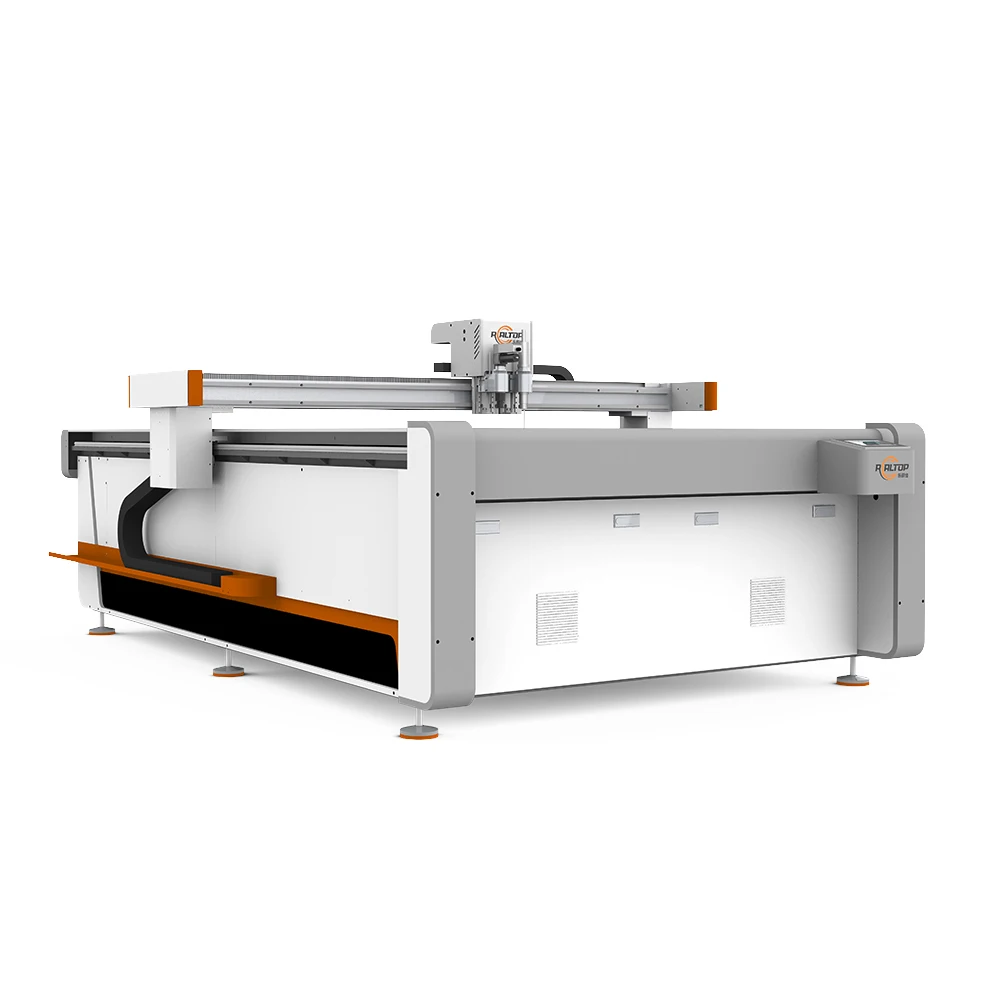
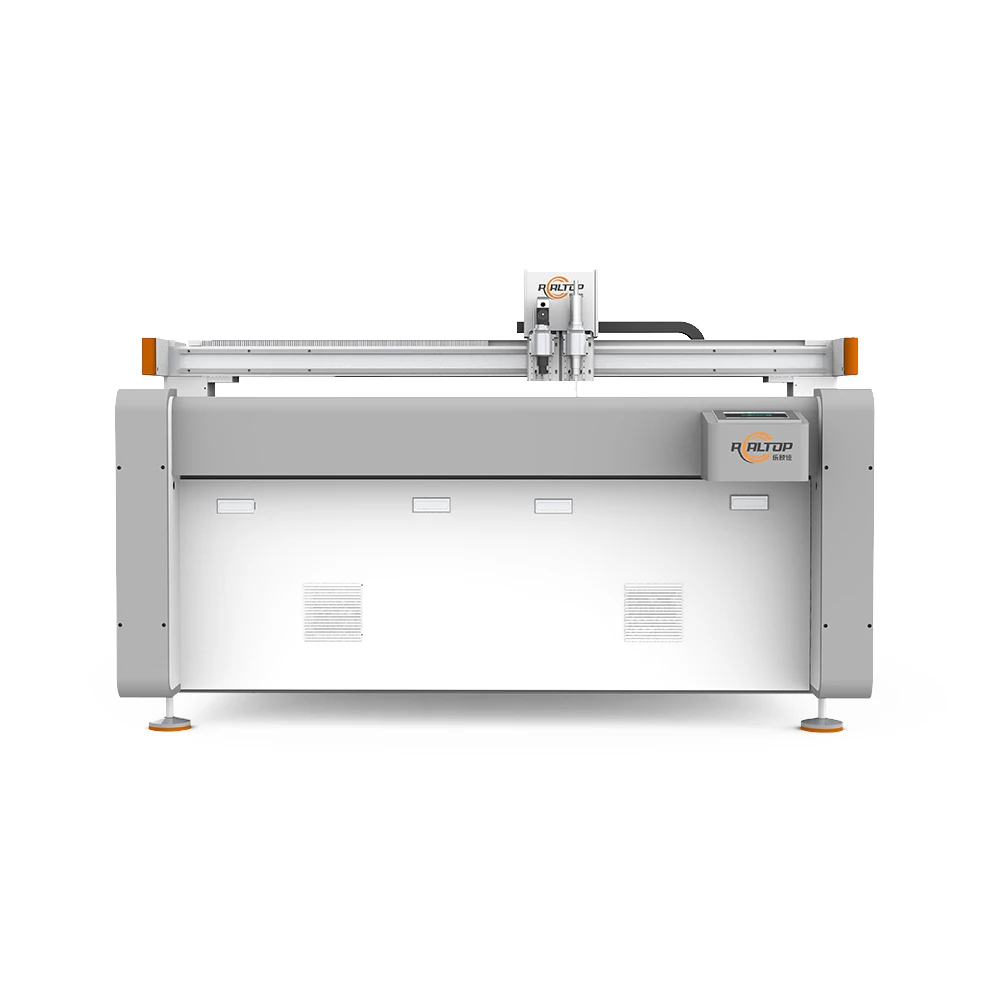
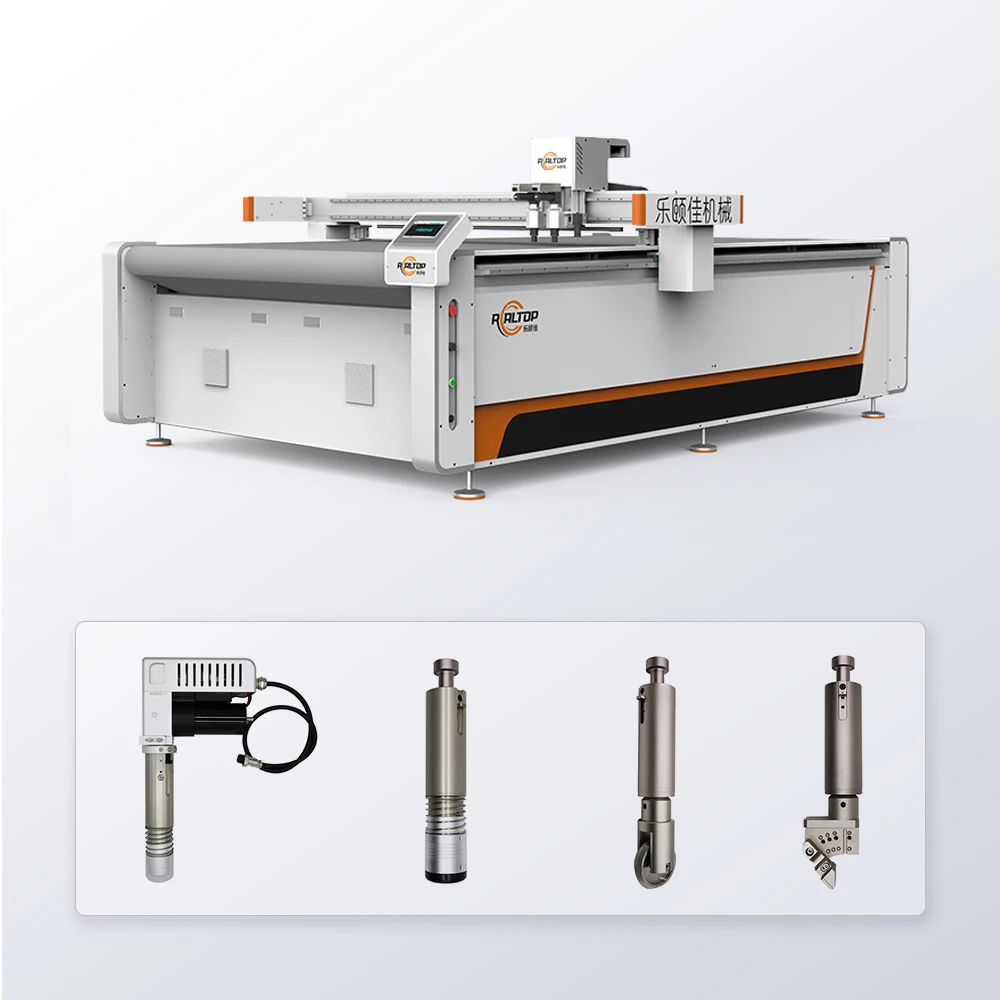
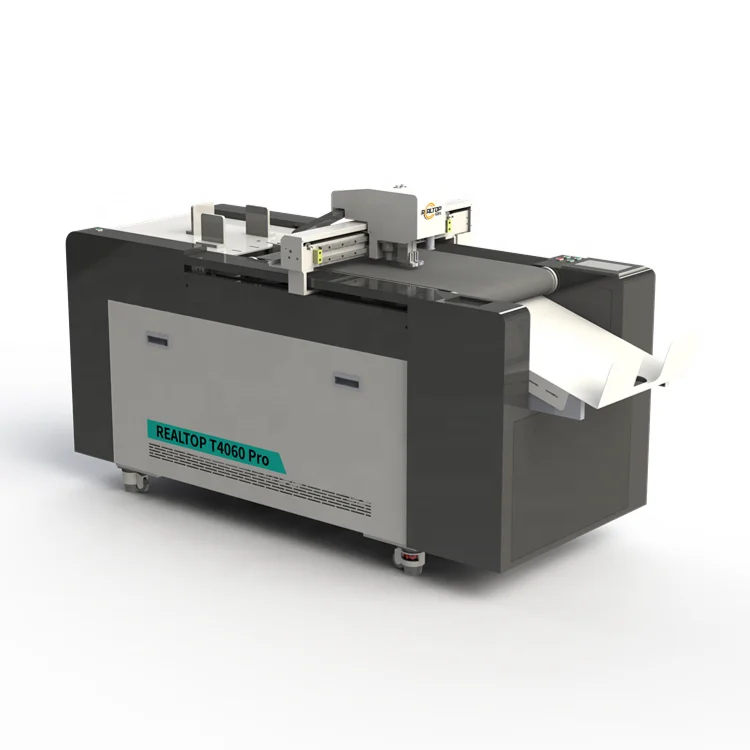
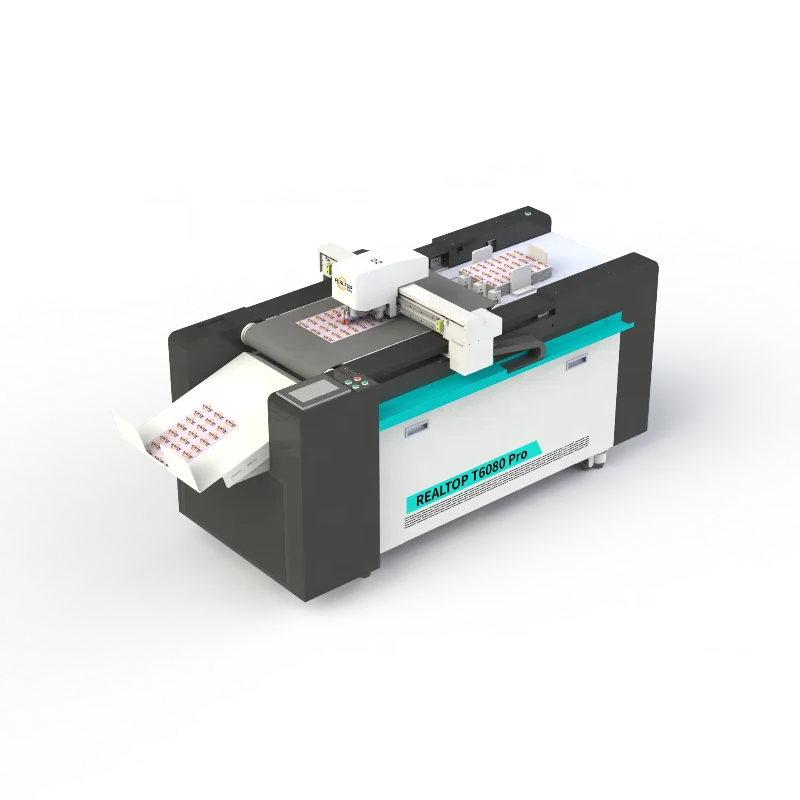
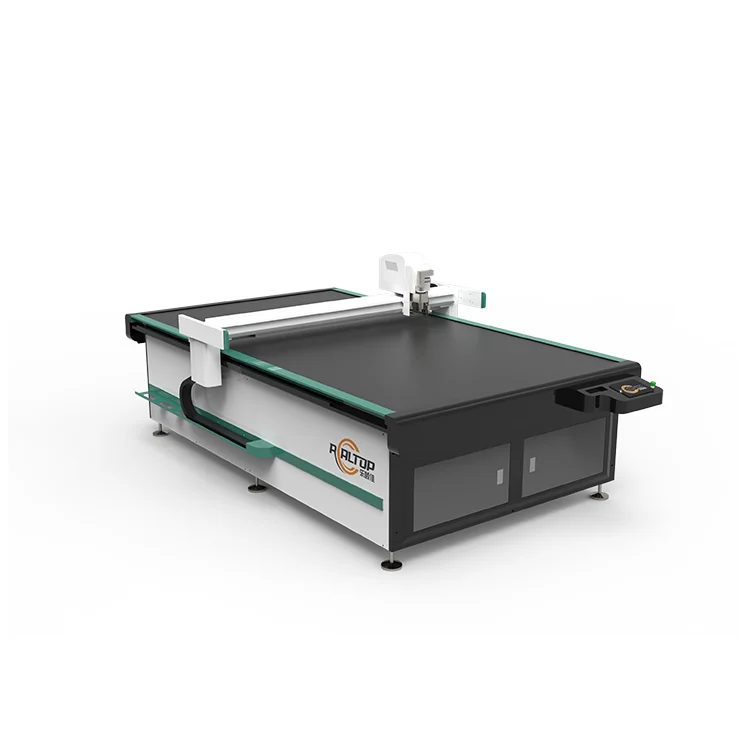
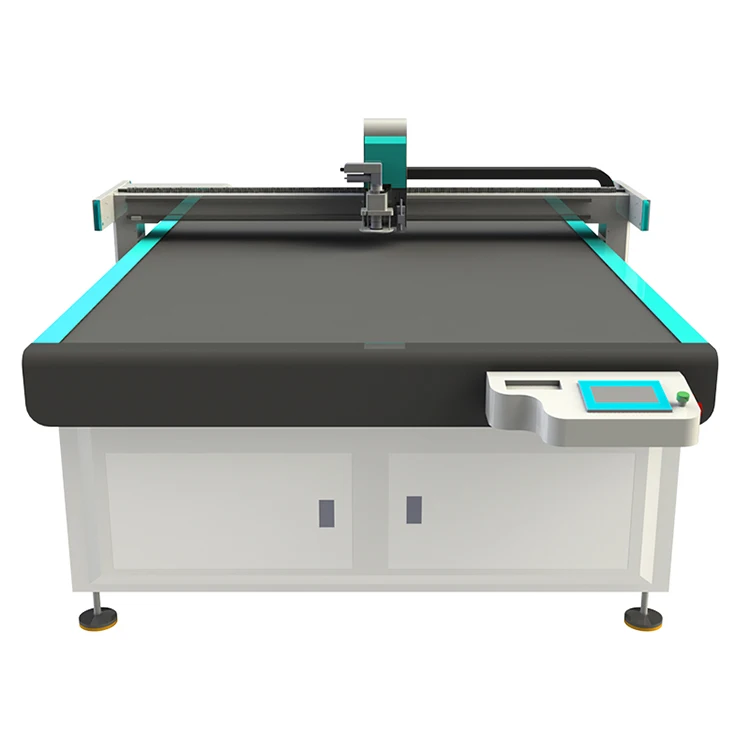
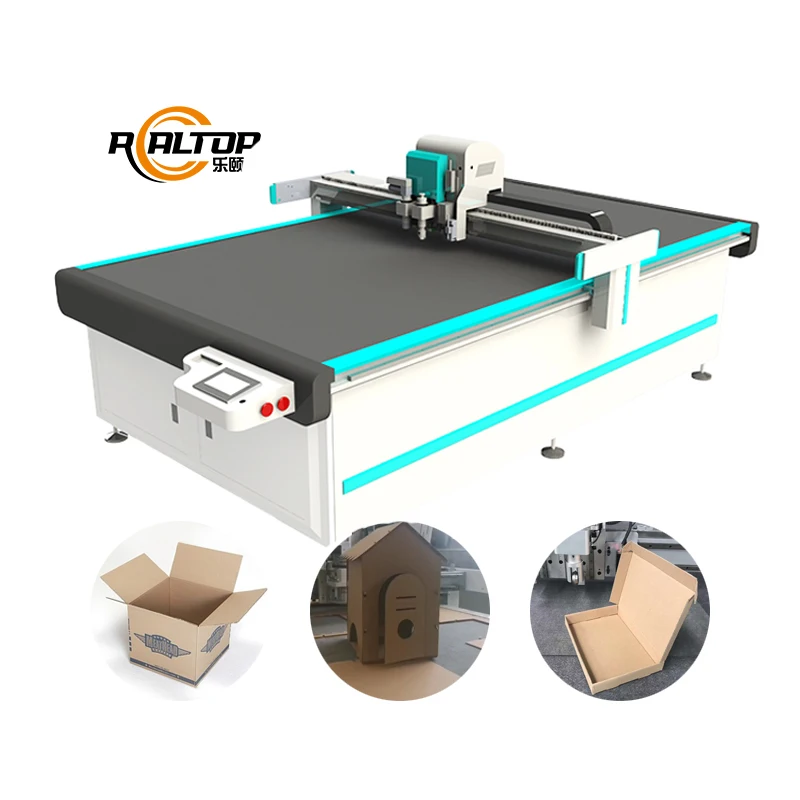
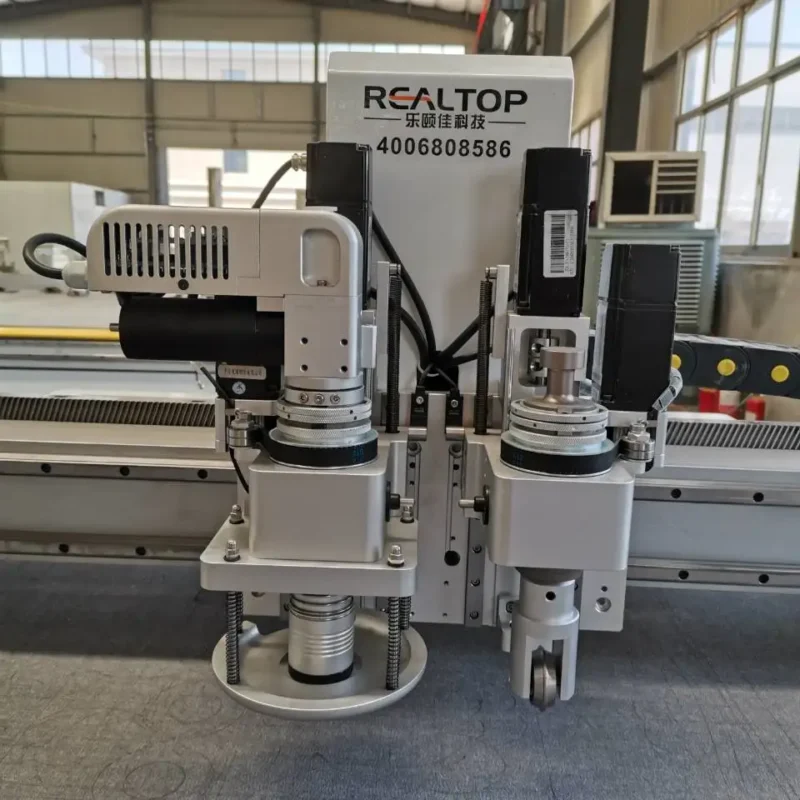
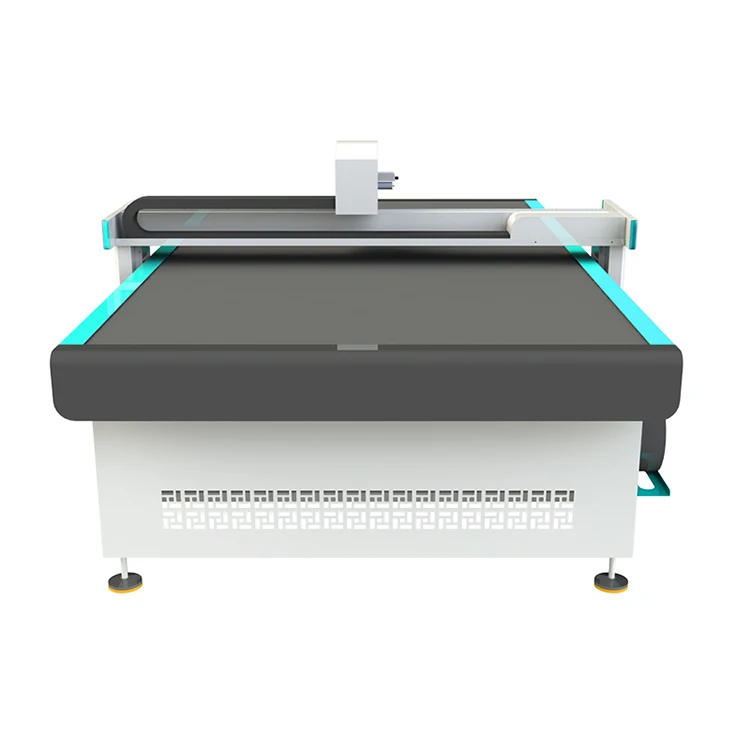
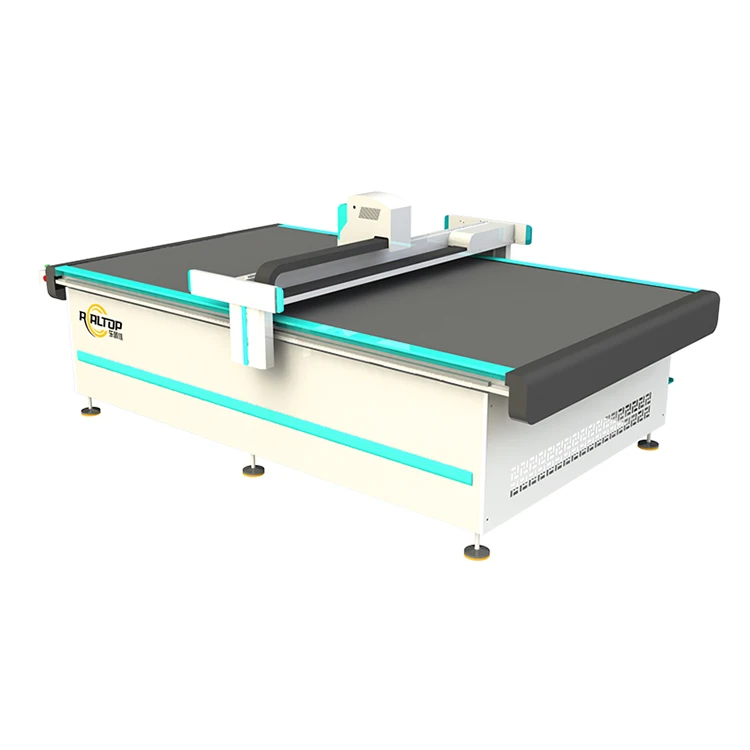
Material-Specific Tooling Match — A single oscillating knife cannot cleanly process high-density greyboard and corrugated flute in the same shift, so this flatbed digital cutting table offers seven interchangeable tool heads configured per substrate rather than forcing one blade through every packaging sample.
Technical Specifications
| Parameter | Value |
|---|---|
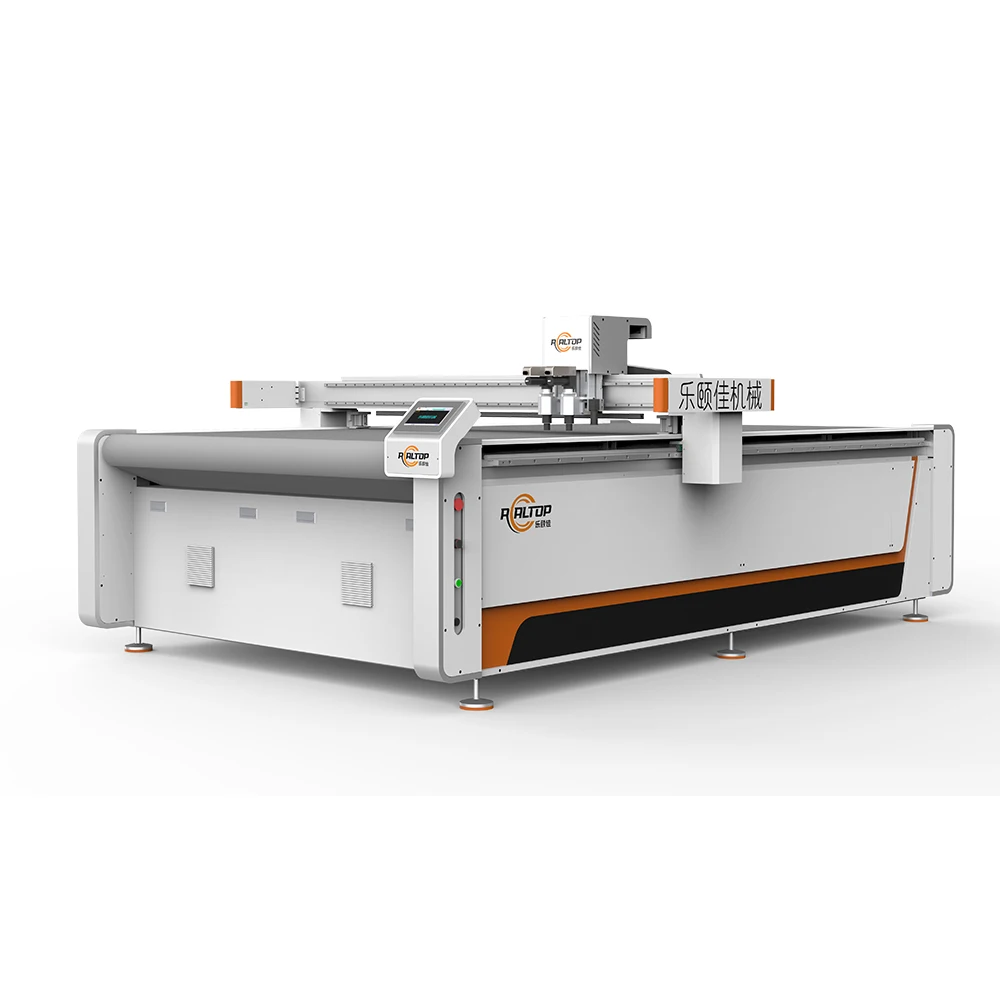
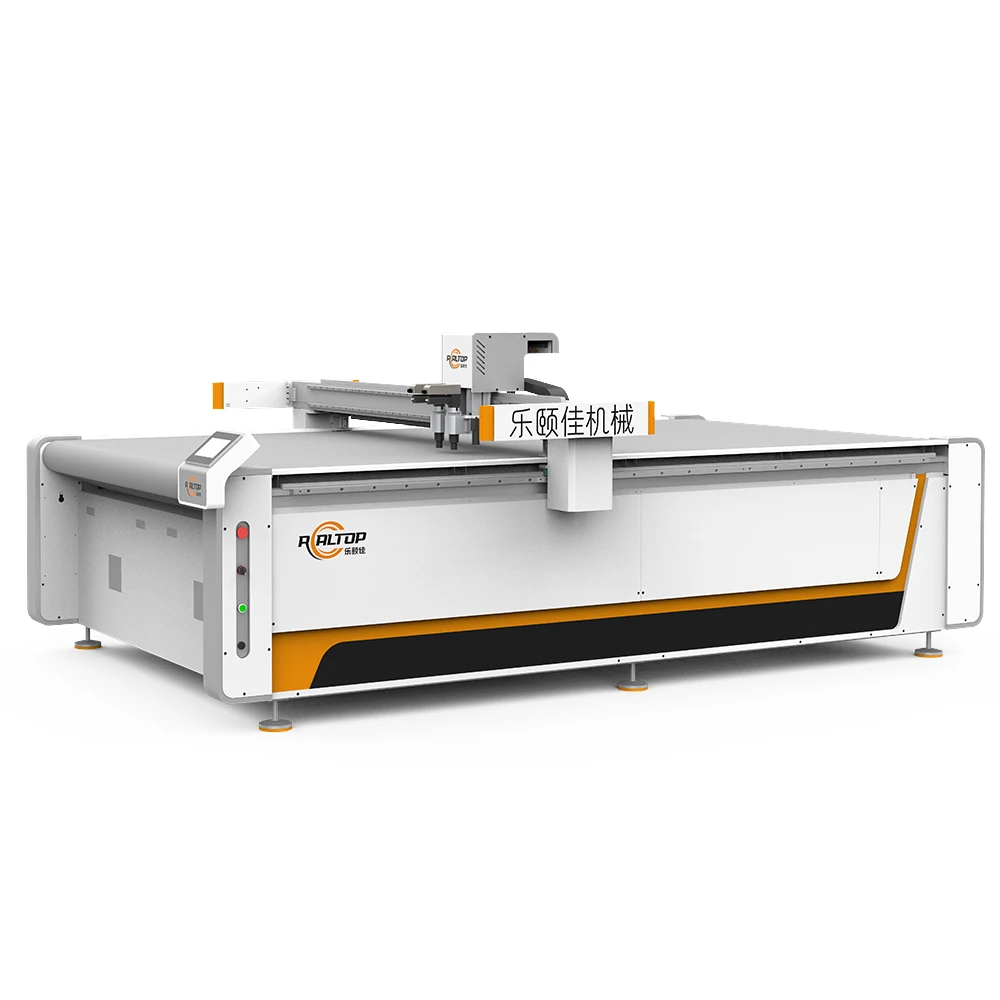
| Product Type | CNC Oscillating Knife Cutting Table |
| Working Area | 1600 × 2500 mm |
| Tool Head Options | Oscillating knife, Driven rotary knife, Creasing wheel, Kiss cutting tool, Pneumatic knife, Milling tool, V groove knife |
| Cutting Speed | 0–1500 mm/s |
| Cutting Thickness | Up to 40 mm (basis to be confirmed by material density and tool selection) |
| Positioning Accuracy | ±0.1 mm |
| Vacuum Table | Aluminum bellows vacuum table |
| Vacuum Pump Power | 9 kW |
| Servo Motor Options | Panasonic, Delta, Dorna |
| Control System | PLC control panel |
| Language Options | English, Russian, Italian, Chinese (custom languages available) |
| Voltage Options | 110V, 220V, 380V |
| File Formats | PLT, DXF, AI, PDF |
| Safety Devices | Infrared sensor device and emergency stop device |
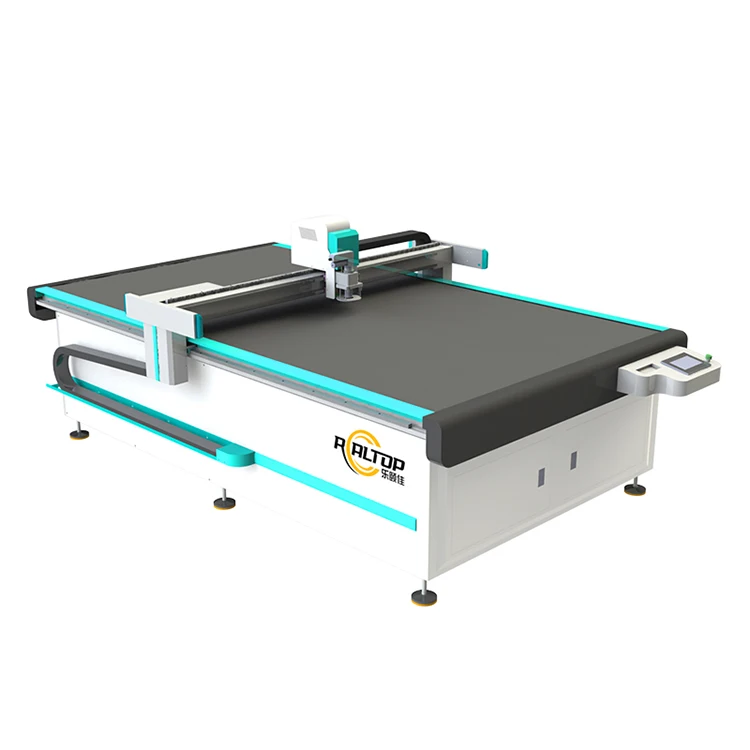
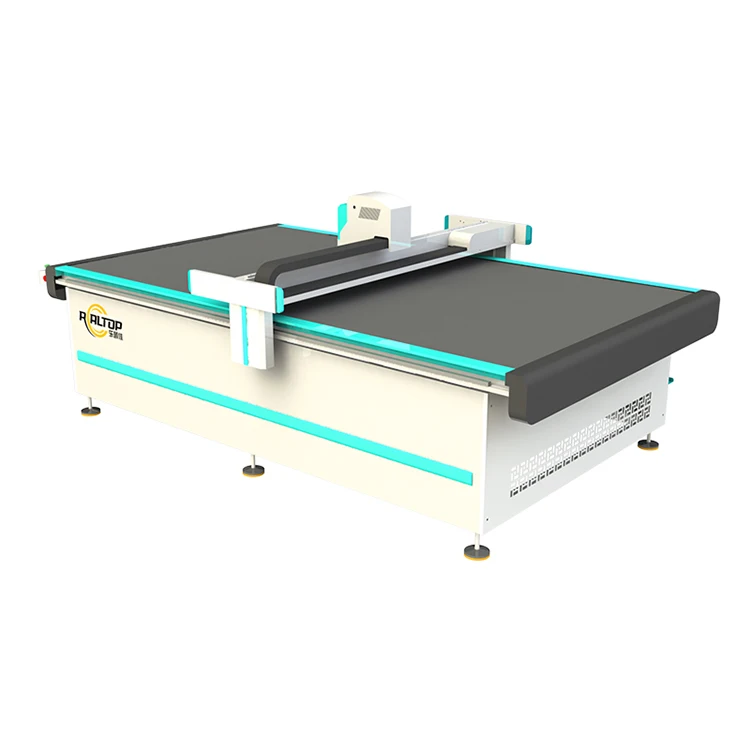
| Machine Dimensions (L×W×H) | 3300 × 2100 × 1350 mm |
| Certification | CE |
Application Suitability
| Application | Material or Output |
|---|---|
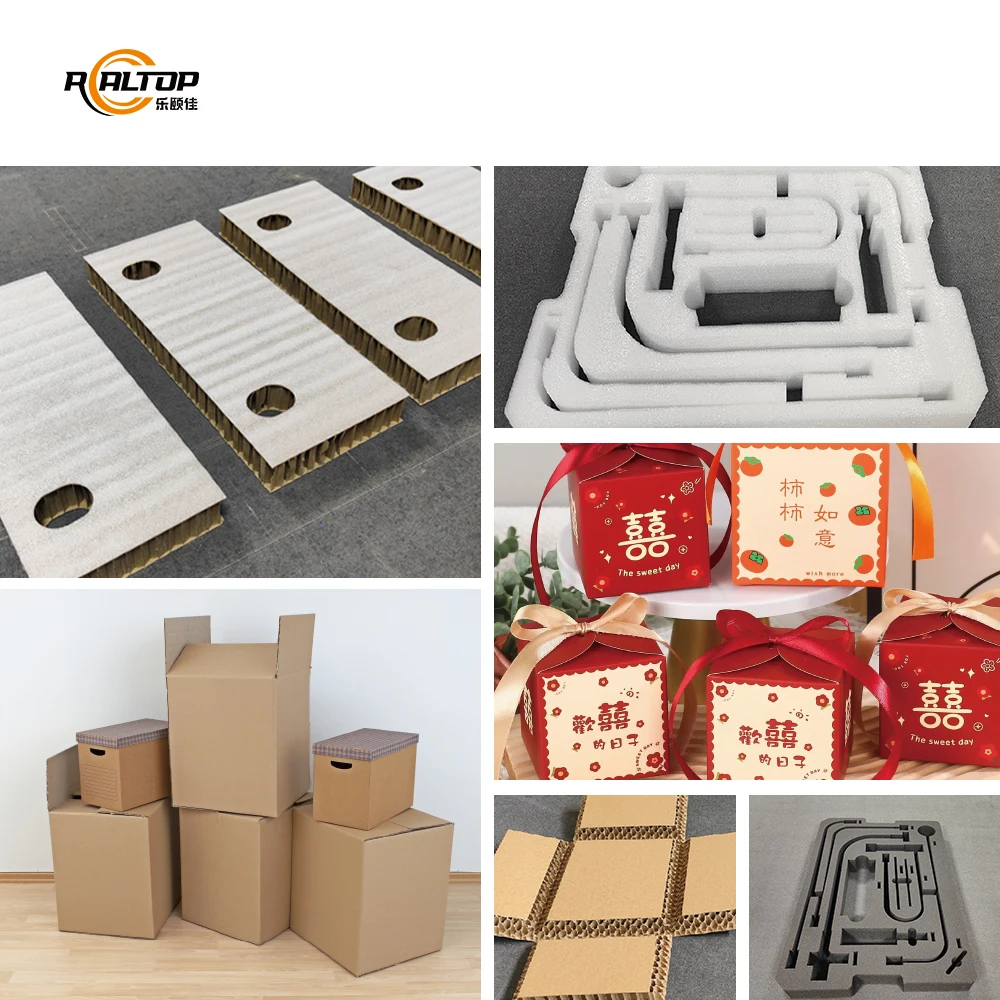
| Carton and packaging sample making | Corrugated board, greyboard, folding carton stock, honeycomb paper |
| Advertising and signage production | PVC foam board, vinyl, acrylic sheet, self-adhesive film |
| Automotive interior component cutting | Non-woven fabric, PU foam, synthetic leather, carpet |
| Footwear and luggage pattern cutting | Genuine leather, PU leather, textile uppers, insole board |
| Furniture and home décor | Fabric, felt, cork, flexible composite panels |
| Gasket and seal fabrication | Rubber sheet, non-asbestos fiber, PTFE, cork-rubber composites |
Why Working Area Alone Is the Wrong Starting Point
Buyers often specify a flatbed digital cutting table by bed size first and discover later that the standard oscillating knife cannot hold a clean edge on 2 mm greyboard or crushes E-flute corrugated at production speed. The cutting method must be matched to the material before the working area is finalized.
A 1600 × 2500 mm bed is generous enough for most carton sample runs and short-run packaging prototypes, yet the real variable is what sits above that bed. [NEED_CITE: tool head selection criteria for digital flatbed cutting machines] The driven rotary knife handles continuous contours on textiles, while the creasing wheel scores folding carton without cutting through — two entirely different mechanical actions that a generic oscillating head cannot replicate. Choosing the CNC oscillating knife cutting table manufacturer comes down to whether the supplier can specify the correct tool head for your exact substrate stack before the machine ships.
Mapping Tool Heads to Packaging Substrates
The oscillating knife cuts rigid and semi-rigid boards up to 40 mm thick with a rapid vertical vibration that separates fibers cleanly, making it suitable for greyboard and dense corrugated. The V groove knife removes a narrow channel from folding carton, producing a sharp 90-degree fold line for luxury rigid boxes. When a packaging sample requires both cut and crease on a single sheet, the machine switches between the oscillating knife and the creasing wheel within the same program cycle — eliminating the need for a separate creasing press.
Vacuum Zoning and Small-Part Stability
Cutting small carton inserts or intricate window patches creates a lifting problem: once the blade penetrates, the vacuum loses grip on the freed piece. The aluminum bellows vacuum table distributes suction across zones, holding the surrounding sheet while the cut part remains in place. This zoning approach is critical when running nested packaging layouts where dozens of small components sit side by side on one corrugated sheet. [NEED_CITE: vacuum hold-down requirements for small-part digital cutting]
How Core Parameters Translate to Packaging Output
The ±0.1 mm positioning accuracy keeps registration tight when cutting kiss-cut labels or scoring fold lines that must align with pre-printed graphics on carton stock. Servo motor choice — Panasonic, Delta, or Dorna — affects acceleration behavior on dense toolpaths with frequent direction changes typical of packaging sample geometry. The 9 kW vacuum pump must run on a dedicated circuit; undersizing the breaker causes intermittent suction drops that shift thin vinyl or tracing paper mid-cut. File format support across PLT, DXF, AI, and PDF means most packaging CAD outputs import directly, though verifying nesting software compatibility before order avoids workflow disruption.
The Hidden Cost of a Misconfigured Machine
Ordering the lowest-configuration oscillating knife and then running high-density greyboard eight hours a day accelerates blade wear and stresses the Z-axis carriage beyond its design envelope. [NEED_CITE: premature tool wear causes in CNC digital cutting] When voltage is quoted at a single figure without confirming continuous versus peak draw, the vacuum pump and servo drives may trip breakers under load in facilities with fluctuating supply. A machine shipped with English-only controls to a Russian-speaking production floor sits idle until the language file is updated — a delay that compounds when the sample report was never tested on the buyer’s actual board stock.
Why Source This Range Here
In-house design covers both knife and laser cutting technologies, allowing a buyer to compare edge sealing on synthetic packaging film versus mechanical cutting on greyboard without being steered toward one method. Every tool head and table configuration is specified against the buyer’s material sample before the order is confirmed, so the packing list reflects actual production needs rather than a generic default. The sample cutting report documents real cut depth, edge quality, and cycle time on the buyer’s own substrate — not a lab-standard test piece. Voltage, plug type, and control language are locked in before production starts, matching the destination facility’s electrical standard. Factory test records are reviewed before the machine leaves the assembly floor.
Documentation & Verification
- Machine specification sheet detailing every selected tool head and its substrate range
- Electrical schematic confirming voltage, phase, and breaker rating for your facility
- Sample cutting report generated on your own packaging board stock
- Tool head and table configuration list with material thickness guidelines
- Software licence and file format compatibility note for your CAD workflow
- Factory test record with positional accuracy verification before dispatch
Installation, Commissioning & Support
- Confirm floor space for the 3300 × 2100 mm footprint plus operator clearance on all sides
- Provide a dedicated 380V or 220V circuit rated for the 9 kW vacuum pump draw
- Machine ships as a single assembly; verify workshop door width exceeds 2100 mm
- First-run calibration covers vacuum zoning adjustment and tool offset for each head
- Operator training includes tool change procedure and blade replacement intervals
- Spare blade and oscillating knife consumables list included with initial shipment
- Quarterly linear guide lubrication and vacuum filter cleaning schedule documented
Preparing Your Inquiry
To narrow the right configuration from the full catalogue, share your primary packaging materials, typical board thickness range, and the sheet dimensions you run most often. Specify the local voltage and frequency at your facility, the preferred control language, and whether your existing nesting software exports PLT, DXF, AI, or PDF. If your production involves printed carton requiring contour tracking or mixed crease-and-cut layouts, mention that so the correct tool head combination is quoted from the start.
Frequently Asked Questions
Q: How do I choose between the oscillating knife and the driven rotary knife for my packaging materials?
A: The oscillating knife handles rigid and semi-rigid substrates like greyboard and corrugated by vibrating vertically through the material. The driven rotary knife follows continuous contours on flexible materials such as fabric or thin vinyl. Your primary material stack determines which head is specified as the default, with the other available as a secondary tool for mixed-material sample runs.
Q: What working area options are available beyond the standard 1600 × 2500 mm bed?
A: The flatbed range extends from compact formats for prototype-only shops to large-format beds for high-volume packaging and signage production. Selecting the correct size depends on your largest sheet stock and whether you run nested layouts. A bed too small forces manual repositioning; a bed too large wastes vacuum energy on unused zones.
Q: How does vacuum table zoning affect cutting small packaging components?
A: Small carton inserts and intricate window patches can lift off the table once the blade cuts through, because suction escapes around the freed piece. Zoned vacuum areas isolate suction to the region surrounding each cut, keeping the main sheet stable. Configuration depends on the smallest part dimension in your typical nesting layout.
Q: What is the process for confirming software and file format compatibility before ordering?
A: Share the file formats your design team exports — PLT, DXF, AI, or PDF — along with any nesting software currently in use. The control system is tested against these files before shipment, and a compatibility note is included in the documentation. This prevents workflow disruption when the machine arrives on your production floor.
Q: What OEM customization options are available for distributors importing this range?
A: Control panel language, voltage, plug configuration, and branding on the machine frame and software interface can all be customized per market. Distributors typically start with a sample cutting test on locally sourced materials to validate tool head selection, then lock specifications before the first production batch is scheduled.
Material-Specific Tooling Match — A single oscillating knife cannot cleanly process high-density greyboard and corrugated flute in the same shift, so this flatbed digital cutting table offers seven interchangeable tool heads configured per substrate rather than forcing one blade through every packaging sample.
Technical Specifications
| Parameter | Value |
|---|---|
| Product Type | CNC Oscillating Knife Cutting Table |
| Working Area | 1600 × 2500 mm |
| Tool Head Options | Oscillating knife, Driven rotary knife, Creasing wheel, Kiss cutting tool, Pneumatic knife, Milling tool, V groove knife |
| Cutting Speed | 0–1500 mm/s |
| Cutting Thickness | Up to 40 mm (basis to be confirmed by material density and tool selection) |
| Positioning Accuracy | ±0.1 mm |
| Vacuum Table | Aluminum bellows vacuum table |
| Vacuum Pump Power | 9 kW |
| Servo Motor Options | Panasonic, Delta, Dorna |
| Control System | PLC control panel |
| Language Options | English, Russian, Italian, Chinese (custom languages available) |
| Voltage Options | 110V, 220V, 380V |
| File Formats | PLT, DXF, AI, PDF |
| Safety Devices | Infrared sensor device and emergency stop device |
| Machine Dimensions (L×W×H) | 3300 × 2100 × 1350 mm |
| Certification | CE |
Application Suitability
| Application | Material or Output |
|---|---|
| Carton and packaging sample making | Corrugated board, greyboard, folding carton stock, honeycomb paper |
| Advertising and signage production | PVC foam board, vinyl, acrylic sheet, self-adhesive film |
| Automotive interior component cutting | Non-woven fabric, PU foam, synthetic leather, carpet |
| Footwear and luggage pattern cutting | Genuine leather, PU leather, textile uppers, insole board |
| Furniture and home décor | Fabric, felt, cork, flexible composite panels |
| Gasket and seal fabrication | Rubber sheet, non-asbestos fiber, PTFE, cork-rubber composites |
Why Working Area Alone Is the Wrong Starting Point
Buyers often specify a flatbed digital cutting table by bed size first and discover later that the standard oscillating knife cannot hold a clean edge on 2 mm greyboard or crushes E-flute corrugated at production speed. The cutting method must be matched to the material before the working area is finalized.
A 1600 × 2500 mm bed is generous enough for most carton sample runs and short-run packaging prototypes, yet the real variable is what sits above that bed. [NEED_CITE: tool head selection criteria for digital flatbed cutting machines] The driven rotary knife handles continuous contours on textiles, while the creasing wheel scores folding carton without cutting through — two entirely different mechanical actions that a generic oscillating head cannot replicate. Choosing the CNC oscillating knife cutting table manufacturer comes down to whether the supplier can specify the correct tool head for your exact substrate stack before the machine ships.
Mapping Tool Heads to Packaging Substrates
The oscillating knife cuts rigid and semi-rigid boards up to 40 mm thick with a rapid vertical vibration that separates fibers cleanly, making it suitable for greyboard and dense corrugated. The V groove knife removes a narrow channel from folding carton, producing a sharp 90-degree fold line for luxury rigid boxes. When a packaging sample requires both cut and crease on a single sheet, the machine switches between the oscillating knife and the creasing wheel within the same program cycle — eliminating the need for a separate creasing press.
Vacuum Zoning and Small-Part Stability
Cutting small carton inserts or intricate window patches creates a lifting problem: once the blade penetrates, the vacuum loses grip on the freed piece. The aluminum bellows vacuum table distributes suction across zones, holding the surrounding sheet while the cut part remains in place. This zoning approach is critical when running nested packaging layouts where dozens of small components sit side by side on one corrugated sheet. [NEED_CITE: vacuum hold-down requirements for small-part digital cutting]
How Core Parameters Translate to Packaging Output
The ±0.1 mm positioning accuracy keeps registration tight when cutting kiss-cut labels or scoring fold lines that must align with pre-printed graphics on carton stock. Servo motor choice — Panasonic, Delta, or Dorna — affects acceleration behavior on dense toolpaths with frequent direction changes typical of packaging sample geometry. The 9 kW vacuum pump must run on a dedicated circuit; undersizing the breaker causes intermittent suction drops that shift thin vinyl or tracing paper mid-cut. File format support across PLT, DXF, AI, and PDF means most packaging CAD outputs import directly, though verifying nesting software compatibility before order avoids workflow disruption.
The Hidden Cost of a Misconfigured Machine
Ordering the lowest-configuration oscillating knife and then running high-density greyboard eight hours a day accelerates blade wear and stresses the Z-axis carriage beyond its design envelope. [NEED_CITE: premature tool wear causes in CNC digital cutting] When voltage is quoted at a single figure without confirming continuous versus peak draw, the vacuum pump and servo drives may trip breakers under load in facilities with fluctuating supply. A machine shipped with English-only controls to a Russian-speaking production floor sits idle until the language file is updated — a delay that compounds when the sample report was never tested on the buyer’s actual board stock.
Why Source This Range Here
In-house design covers both knife and laser cutting technologies, allowing a buyer to compare edge sealing on synthetic packaging film versus mechanical cutting on greyboard without being steered toward one method. Every tool head and table configuration is specified against the buyer’s material sample before the order is confirmed, so the packing list reflects actual production needs rather than a generic default. The sample cutting report documents real cut depth, edge quality, and cycle time on the buyer’s own substrate — not a lab-standard test piece. Voltage, plug type, and control language are locked in before production starts, matching the destination facility’s electrical standard. Factory test records are reviewed before the machine leaves the assembly floor.
Documentation & Verification
- Machine specification sheet detailing every selected tool head and its substrate range
- Electrical schematic confirming voltage, phase, and breaker rating for your facility
- Sample cutting report generated on your own packaging board stock
- Tool head and table configuration list with material thickness guidelines
- Software licence and file format compatibility note for your CAD workflow
- Factory test record with positional accuracy verification before dispatch
Installation, Commissioning & Support
- Confirm floor space for the 3300 × 2100 mm footprint plus operator clearance on all sides
- Provide a dedicated 380V or 220V circuit rated for the 9 kW vacuum pump draw
- Machine ships as a single assembly; verify workshop door width exceeds 2100 mm
- First-run calibration covers vacuum zoning adjustment and tool offset for each head
- Operator training includes tool change procedure and blade replacement intervals
- Spare blade and oscillating knife consumables list included with initial shipment
- Quarterly linear guide lubrication and vacuum filter cleaning schedule documented
Preparing Your Inquiry
To narrow the right configuration from the full catalogue, share your primary packaging materials, typical board thickness range, and the sheet dimensions you run most often. Specify the local voltage and frequency at your facility, the preferred control language, and whether your existing nesting software exports PLT, DXF, AI, or PDF. If your production involves printed carton requiring contour tracking or mixed crease-and-cut layouts, mention that so the correct tool head combination is quoted from the start.
Frequently Asked Questions
Q: How do I choose between the oscillating knife and the driven rotary knife for my packaging materials?
A: The oscillating knife handles rigid and semi-rigid substrates like greyboard and corrugated by vibrating vertically through the material. The driven rotary knife follows continuous contours on flexible materials such as fabric or thin vinyl. Your primary material stack determines which head is specified as the default, with the other available as a secondary tool for mixed-material sample runs.
Q: What working area options are available beyond the standard 1600 × 2500 mm bed?
A: The flatbed range extends from compact formats for prototype-only shops to large-format beds for high-volume packaging and signage production. Selecting the correct size depends on your largest sheet stock and whether you run nested layouts. A bed too small forces manual repositioning; a bed too large wastes vacuum energy on unused zones.
Q: How does vacuum table zoning affect cutting small packaging components?
A: Small carton inserts and intricate window patches can lift off the table once the blade cuts through, because suction escapes around the freed piece. Zoned vacuum areas isolate suction to the region surrounding each cut, keeping the main sheet stable. Configuration depends on the smallest part dimension in your typical nesting layout.
Q: What is the process for confirming software and file format compatibility before ordering?
A: Share the file formats your design team exports — PLT, DXF, AI, or PDF — along with any nesting software currently in use. The control system is tested against these files before shipment, and a compatibility note is included in the documentation. This prevents workflow disruption when the machine arrives on your production floor.
Q: What OEM customization options are available for distributors importing this range?
A: Control panel language, voltage, plug configuration, and branding on the machine frame and software interface can all be customized per market. Distributors typically start with a sample cutting test on locally sourced materials to validate tool head selection, then lock specifications before the first production batch is scheduled.
商品评价
There are no reviews yet.