



Fast Delivery
Quick, reliable shipping to any location.

Free & easy returns
Return this item by mail or in store within 90 days for a full refund.
Cold-cutting configurations per material — we validate each tool head and vacuum zoning setup against your specific composite stock before quoting, eliminating the guesswork around edge quality and material lift.
Technical Specifications
| Parameter | Value |
|---|---|
| Model | 1625 |
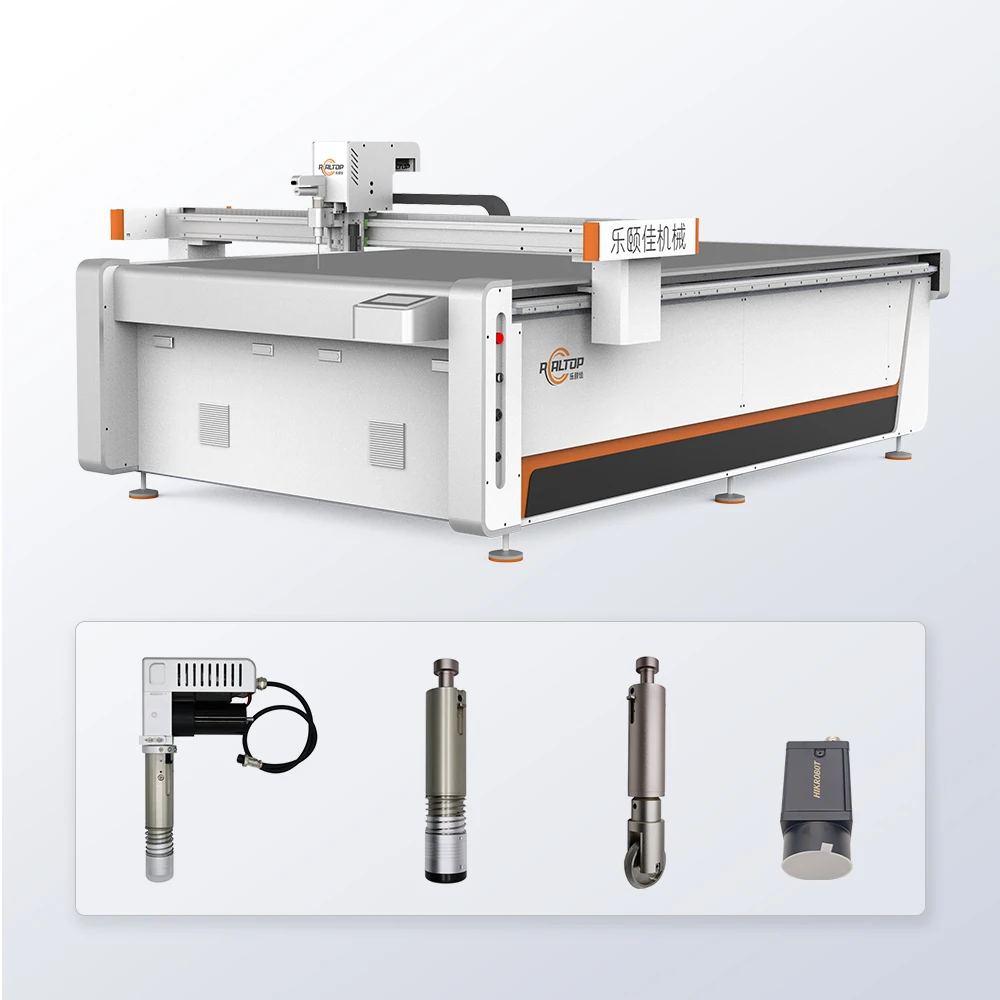
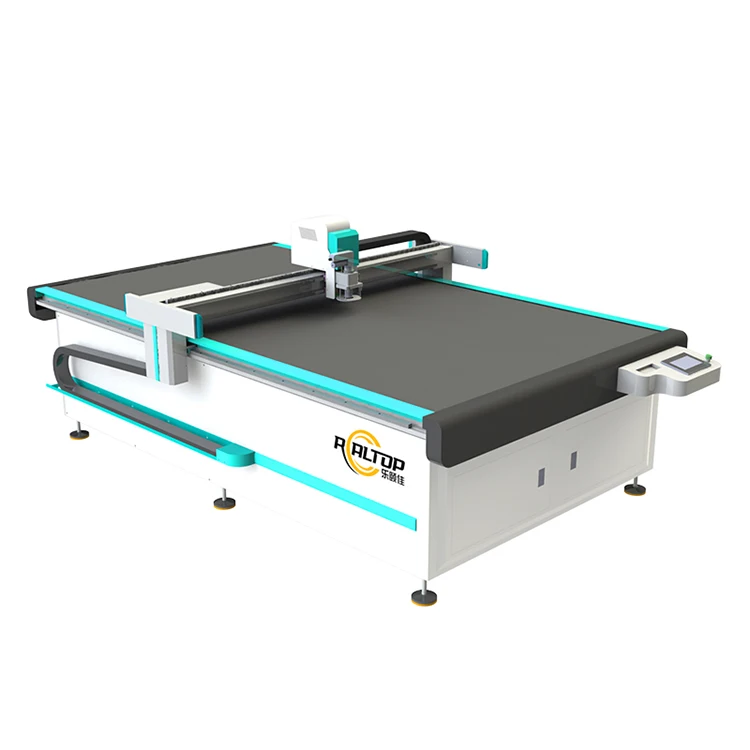
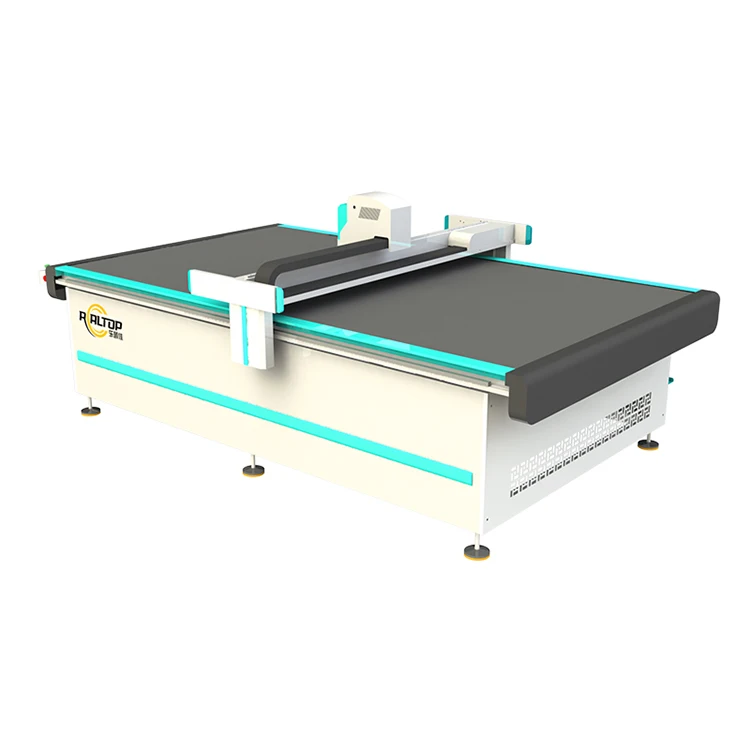
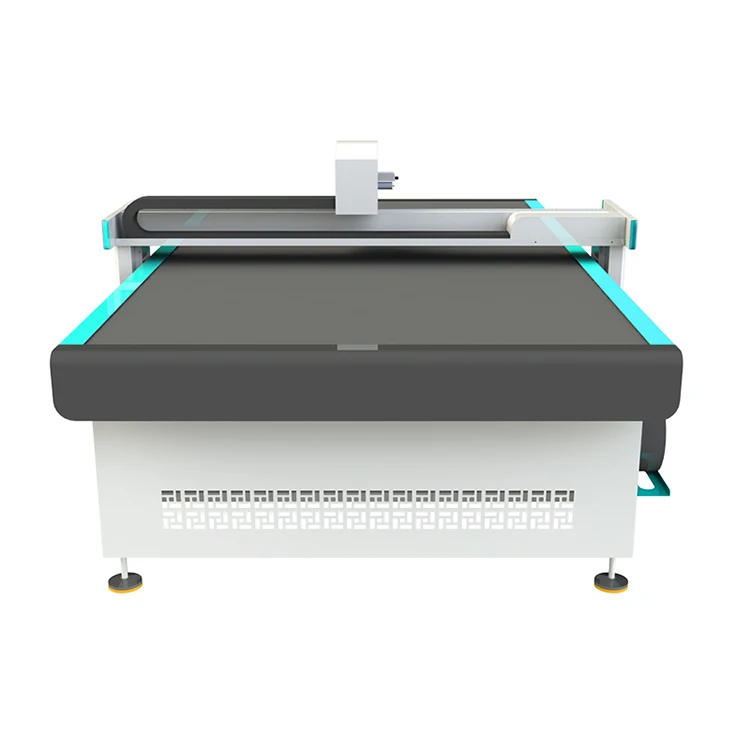
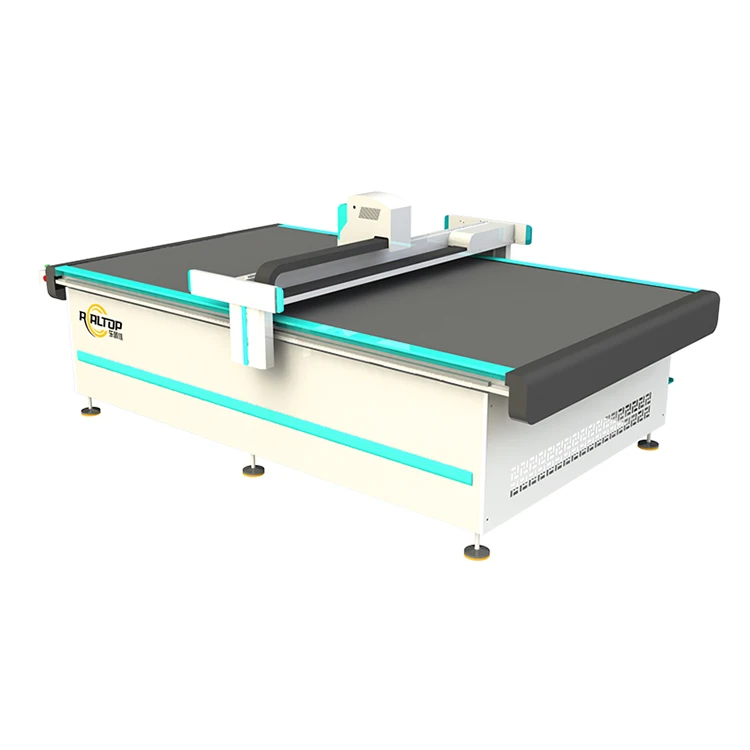
| Product Type | CNC Oscillating Knife Cutting Machine |
| Working Area | 1600 × 2500 mm |
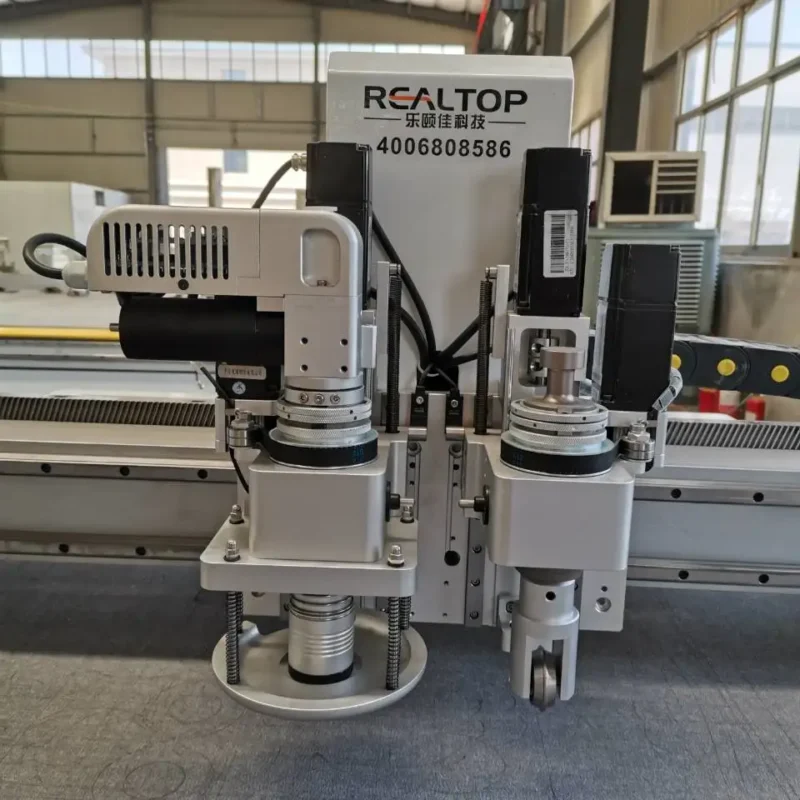
| Tool Head Options | Oscillating knife, Driven rotary knife, Creasing wheel, Kiss cutting tool, Pneumatic knife, Milling tool, V groove knife |
| Cutting Speed | 0–2000 mm/s |
| Cutting Thickness | ≤ 30 mm (basis to be confirmed) |
| Cutting Accuracy | ±0.1 mm |
| Vacuum Pump | 9 kW |
| Vacuum Table | Aluminum bellows vacuum table |
| Frame | Heavy-duty frame with precision-ground surface |
| Servo Motors | Panasonic, Delta, or Dorna |
| Control System | PLC control panel |
| Voltage Options | 110V, 220V, 380V |
| Supported File Formats | PLT, DXF, AI, PDF |
| Display Languages | English, Russian, Italian, Chinese (customizable) |
| Safety Devices | Infrared sensor device and emergency stop device |
| Machine Size | 3300 × 2100 × 1350 mm |
| Standards | CE |
Application Suitability
| Application | Material or Output |
|---|---|
| Aerospace gaskets and interior trim | Carbon fiber prepreg, aramid honeycomb, thermal and acoustic insulation pads |
| Automotive interiors and lightweight panels | Headliners, floor carpets, seat foam, sound and thermal insulation materials |
| Wind energy components | Infusion mesh for turbine blades, core material preforms, carbon spar caps |
| Sporting goods and leisure equipment | Bicycle frame prepreg, helmet liners, surfboard components, kayak panels |
What Buyers Overlook When Sourcing a CNC Oscillating Knife Cutting Machine Manufacturer
The cutting thickness limit on the spec sheet tells you almost nothing about how the machine handles your actual composite layup. A 30 mm figure derived from soft acoustic foam behaves entirely differently from the same head trying to push through a dense carbon fiber board, and assuming one number covers all materials is a frequent source of failed installations [NEED_CITE: composite material density variance and cutting resistance]. Many purchasers focus on working area size and never confirm whether the vacuum zoning, tool head stroke, and oscillation frequency are matched to the stiffness and thickness of their specific stock. The result is material lift on small aerospace gaskets, frayed edges on fiberglass cloth, or tool heads wearing out far earlier than the maintenance schedule suggests.
Knife Versus Knife: Matching the Tool Head to the Composite
Choosing between an oscillating knife, a driven rotary knife, and a pneumatic knife is not a matter of preference but of material structure. The oscillating knife cuts through layered fabrics and honeycomb cores with a reciprocating stroke that prevents delamination. The driven rotary knife suits continuous long cuts in flexible mats and foams where the oscillating stroke would leave a stepped edge. Getting this wrong on a CNC Oscillating Knife Cutting Machine means either ragged edges that require secondary trimming or crushed material that fails downstream assembly checks.
Vacuum Zoning and the Small-Part Problem
The aluminum bellows vacuum table on the 1625 provides broad surface adsorption, but large-format tables introduce a specific challenge for small aerospace seals and automotive gaskets. When a part is smaller than a single vacuum zone, surrounding suction can lift the freshly cut piece off the table mid-cycle. Zone isolation and independent valve control allow the operator to activate only the zones directly under the workpiece, a detail worth confirming during sample cutting rather than discovering at production ramp-up [NEED_CITE: vacuum table zoning practices for small composite parts].
Reading the Specs Against Real Production Conditions
The Panasonic, Delta, or Dorna servo motor options each carry different torque profiles that affect how the head handles dense prepregs versus soft ceramic fiber blankets at the 0–2000 mm/s speed range. The 9 kW vacuum pump rating indicates the total adsorption capacity, but actual holding force depends on material porosity — an open-weave fiberglass cloth leaks more air than a sealed carbon fiber sheet, meaning less effective clamping on porous materials. The ±0.1 mm cutting accuracy figure is achievable when the material sits flat; warped or curled composite sheets require either pre-flattening or adjusted nesting tolerances to maintain that precision across the 1600 × 2500 mm working area.
The Hidden Cost of Skipping Material-Specific Configuration
I once watched a carbon fiber cloth order lose half its daily output because the machine was set up with a standard fiberglass oscillating knife — the abrasive fibers chewed through the blade edge within hours, forcing constant stops for replacement. Another buyer ordered a full-format table without confirming vacuum zoning and then spent weeks fighting material lift on gaskets no larger than a palm [NEED_CITE: tool wear rates on abrasive composite fibers versus standard textiles]. These are not warranty claims; they are specification mismatches that surface only after the machine is running in your shop.
Why Source This Machine Here
The design team covers both knife and laser cutting technologies under one roof, so the cutting method is matched to the composite rather than forced into whichever method a single-technology shop sells. Every tool head and table configuration is specified per material and production volume, not pulled from a default catalog line. Sample cutting on your own composite stock is completed before you commit, producing a cutting report that documents edge quality, blade wear rate, and achievable speed on your actual material. Voltage, plug type, control language, and file format compatibility are confirmed at the order stage, not discovered at delivery. The software is checked against your existing nesting workflow and DXF or PLT files before the machine leaves the factory.
Documentation & Verification
- Machine specification sheet detailing all tool head options and table configuration selected for your material
- Electrical schematic and voltage confirmation matching your facility’s power supply and plug type
- Sample cutting report generated on your specific composite stock documenting edge quality and speed
- Tool head and table configuration list tailored to your material type and daily production volume
- Software license and file format compatibility note confirming PLT, DXF, AI, and PDF support
- Factory test record showing machine performance on your specified working parameters before dispatch
Installation, Commissioning & Support
- Heavy-duty frame requires a level floor capable of supporting the 3300 × 2100 × 1350 mm footprint and dynamic loads
- Dedicated electrical circuit matching confirmed voltage (110V, 220V, or 380V) with appropriate breaker sizing for the 9 kW pump
- Machine ships partially disassembled; frame and table sections require on-site alignment and leveling
- Initial parameter setting includes vacuum zone mapping and tool head calibration for your specific composite material
- Operator training covers PLC control panel navigation, tool head changeover, and nesting file import procedures
- Spare parts list provided with recommended blade stock and wear items based on your material abrasiveness
What to Include in Your Inquiry
Send us the exact composite material you are cutting, including fiber type, resin system if applicable, sheet dimensions, and stacking configuration if multi-layer. Specify your facility voltage and frequency, the control language your operators require, and the file formats your current nesting software exports. If you need sample cutting on your own material to validate edge quality and cycle times before committing, include a material sample or detailed technical data sheet with your inquiry.
Frequently Asked Questions
Q: How do I determine which tool head is correct for my composite material?
A: The choice depends on material structure and density. Oscillating knives handle layered fabrics and honeycomb cores without delamination, driven rotary knives suit flexible foams and mats, and pneumatic knives address thicker rigid boards. We run sample cuts on your actual material to confirm the tool head before finalizing the configuration.
Q: Does the software work with my existing DXF nesting files?
A: The control system accepts PLT, DXF, AI, and PDF formats. We verify file format compatibility and nesting workflow integration with your existing software during the order confirmation stage, so there are no surprises when production begins on the 1625.
Q: Can vacuum table zones be adjusted for small aerospace gaskets?
A: Yes. The aluminum bellows vacuum table supports zone isolation, allowing activation of only the zones beneath your workpiece. This prevents small, lightweight composite parts from lifting off the table surface during cutting.
Q: What voltage and control language options are available?
A: The machine supports 110V, 220V, and 380V configurations. The PLC control panel display is available in English, Russian, Italian, and Chinese, with additional languages customizable based on your operator requirements and export market standards [NEED_CITE: voltage and frequency standards by export market].
Q: How is cutting thickness determined for different composite types?
A: The ≤ 30 mm specification is a baseline that varies significantly with material density and fiber composition. A rigid carbon fiber board and a soft acoustic foam panel behave very differently under the same oscillating knife. We confirm the practical cutting depth for your specific material through sample testing before quoting.
Cold-cutting configurations per material — we validate each tool head and vacuum zoning setup against your specific composite stock before quoting, eliminating the guesswork around edge quality and material lift.
Technical Specifications
| Parameter | Value |
|---|---|
| Model | 1625 |
| Product Type | CNC Oscillating Knife Cutting Machine |
| Working Area | 1600 × 2500 mm |
| Tool Head Options | Oscillating knife, Driven rotary knife, Creasing wheel, Kiss cutting tool, Pneumatic knife, Milling tool, V groove knife |
| Cutting Speed | 0–2000 mm/s |
| Cutting Thickness | ≤ 30 mm (basis to be confirmed) |
| Cutting Accuracy | ±0.1 mm |
| Vacuum Pump | 9 kW |
| Vacuum Table | Aluminum bellows vacuum table |
| Frame | Heavy-duty frame with precision-ground surface |
| Servo Motors | Panasonic, Delta, or Dorna |
| Control System | PLC control panel |
| Voltage Options | 110V, 220V, 380V |
| Supported File Formats | PLT, DXF, AI, PDF |
| Display Languages | English, Russian, Italian, Chinese (customizable) |
| Safety Devices | Infrared sensor device and emergency stop device |
| Machine Size | 3300 × 2100 × 1350 mm |
| Standards | CE |
Application Suitability
| Application | Material or Output |
|---|---|
| Aerospace gaskets and interior trim | Carbon fiber prepreg, aramid honeycomb, thermal and acoustic insulation pads |
| Automotive interiors and lightweight panels | Headliners, floor carpets, seat foam, sound and thermal insulation materials |
| Wind energy components | Infusion mesh for turbine blades, core material preforms, carbon spar caps |
| Sporting goods and leisure equipment | Bicycle frame prepreg, helmet liners, surfboard components, kayak panels |
What Buyers Overlook When Sourcing a CNC Oscillating Knife Cutting Machine Manufacturer
The cutting thickness limit on the spec sheet tells you almost nothing about how the machine handles your actual composite layup. A 30 mm figure derived from soft acoustic foam behaves entirely differently from the same head trying to push through a dense carbon fiber board, and assuming one number covers all materials is a frequent source of failed installations [NEED_CITE: composite material density variance and cutting resistance]. Many purchasers focus on working area size and never confirm whether the vacuum zoning, tool head stroke, and oscillation frequency are matched to the stiffness and thickness of their specific stock. The result is material lift on small aerospace gaskets, frayed edges on fiberglass cloth, or tool heads wearing out far earlier than the maintenance schedule suggests.
Knife Versus Knife: Matching the Tool Head to the Composite
Choosing between an oscillating knife, a driven rotary knife, and a pneumatic knife is not a matter of preference but of material structure. The oscillating knife cuts through layered fabrics and honeycomb cores with a reciprocating stroke that prevents delamination. The driven rotary knife suits continuous long cuts in flexible mats and foams where the oscillating stroke would leave a stepped edge. Getting this wrong on a CNC Oscillating Knife Cutting Machine means either ragged edges that require secondary trimming or crushed material that fails downstream assembly checks.
Vacuum Zoning and the Small-Part Problem
The aluminum bellows vacuum table on the 1625 provides broad surface adsorption, but large-format tables introduce a specific challenge for small aerospace seals and automotive gaskets. When a part is smaller than a single vacuum zone, surrounding suction can lift the freshly cut piece off the table mid-cycle. Zone isolation and independent valve control allow the operator to activate only the zones directly under the workpiece, a detail worth confirming during sample cutting rather than discovering at production ramp-up [NEED_CITE: vacuum table zoning practices for small composite parts].
Reading the Specs Against Real Production Conditions
The Panasonic, Delta, or Dorna servo motor options each carry different torque profiles that affect how the head handles dense prepregs versus soft ceramic fiber blankets at the 0–2000 mm/s speed range. The 9 kW vacuum pump rating indicates the total adsorption capacity, but actual holding force depends on material porosity — an open-weave fiberglass cloth leaks more air than a sealed carbon fiber sheet, meaning less effective clamping on porous materials. The ±0.1 mm cutting accuracy figure is achievable when the material sits flat; warped or curled composite sheets require either pre-flattening or adjusted nesting tolerances to maintain that precision across the 1600 × 2500 mm working area.
The Hidden Cost of Skipping Material-Specific Configuration
I once watched a carbon fiber cloth order lose half its daily output because the machine was set up with a standard fiberglass oscillating knife — the abrasive fibers chewed through the blade edge within hours, forcing constant stops for replacement. Another buyer ordered a full-format table without confirming vacuum zoning and then spent weeks fighting material lift on gaskets no larger than a palm [NEED_CITE: tool wear rates on abrasive composite fibers versus standard textiles]. These are not warranty claims; they are specification mismatches that surface only after the machine is running in your shop.
Why Source This Machine Here
The design team covers both knife and laser cutting technologies under one roof, so the cutting method is matched to the composite rather than forced into whichever method a single-technology shop sells. Every tool head and table configuration is specified per material and production volume, not pulled from a default catalog line. Sample cutting on your own composite stock is completed before you commit, producing a cutting report that documents edge quality, blade wear rate, and achievable speed on your actual material. Voltage, plug type, control language, and file format compatibility are confirmed at the order stage, not discovered at delivery. The software is checked against your existing nesting workflow and DXF or PLT files before the machine leaves the factory.
Documentation & Verification
- Machine specification sheet detailing all tool head options and table configuration selected for your material
- Electrical schematic and voltage confirmation matching your facility’s power supply and plug type
- Sample cutting report generated on your specific composite stock documenting edge quality and speed
- Tool head and table configuration list tailored to your material type and daily production volume
- Software license and file format compatibility note confirming PLT, DXF, AI, and PDF support
- Factory test record showing machine performance on your specified working parameters before dispatch
Installation, Commissioning & Support
- Heavy-duty frame requires a level floor capable of supporting the 3300 × 2100 × 1350 mm footprint and dynamic loads
- Dedicated electrical circuit matching confirmed voltage (110V, 220V, or 380V) with appropriate breaker sizing for the 9 kW pump
- Machine ships partially disassembled; frame and table sections require on-site alignment and leveling
- Initial parameter setting includes vacuum zone mapping and tool head calibration for your specific composite material
- Operator training covers PLC control panel navigation, tool head changeover, and nesting file import procedures
- Spare parts list provided with recommended blade stock and wear items based on your material abrasiveness
What to Include in Your Inquiry
Send us the exact composite material you are cutting, including fiber type, resin system if applicable, sheet dimensions, and stacking configuration if multi-layer. Specify your facility voltage and frequency, the control language your operators require, and the file formats your current nesting software exports. If you need sample cutting on your own material to validate edge quality and cycle times before committing, include a material sample or detailed technical data sheet with your inquiry.
Frequently Asked Questions
Q: How do I determine which tool head is correct for my composite material?
A: The choice depends on material structure and density. Oscillating knives handle layered fabrics and honeycomb cores without delamination, driven rotary knives suit flexible foams and mats, and pneumatic knives address thicker rigid boards. We run sample cuts on your actual material to confirm the tool head before finalizing the configuration.
Q: Does the software work with my existing DXF nesting files?
A: The control system accepts PLT, DXF, AI, and PDF formats. We verify file format compatibility and nesting workflow integration with your existing software during the order confirmation stage, so there are no surprises when production begins on the 1625.
Q: Can vacuum table zones be adjusted for small aerospace gaskets?
A: Yes. The aluminum bellows vacuum table supports zone isolation, allowing activation of only the zones beneath your workpiece. This prevents small, lightweight composite parts from lifting off the table surface during cutting.
Q: What voltage and control language options are available?
A: The machine supports 110V, 220V, and 380V configurations. The PLC control panel display is available in English, Russian, Italian, and Chinese, with additional languages customizable based on your operator requirements and export market standards [NEED_CITE: voltage and frequency standards by export market].
Q: How is cutting thickness determined for different composite types?
A: The ≤ 30 mm specification is a baseline that varies significantly with material density and fiber composition. A rigid carbon fiber board and a soft acoustic foam panel behave very differently under the same oscillating knife. We confirm the practical cutting depth for your specific material through sample testing before quoting.
商品评价
There are no reviews yet.