

Fast Delivery
Quick, reliable shipping to any location.

Free & easy returns
Return this item by mail or in store within 90 days for a full refund.
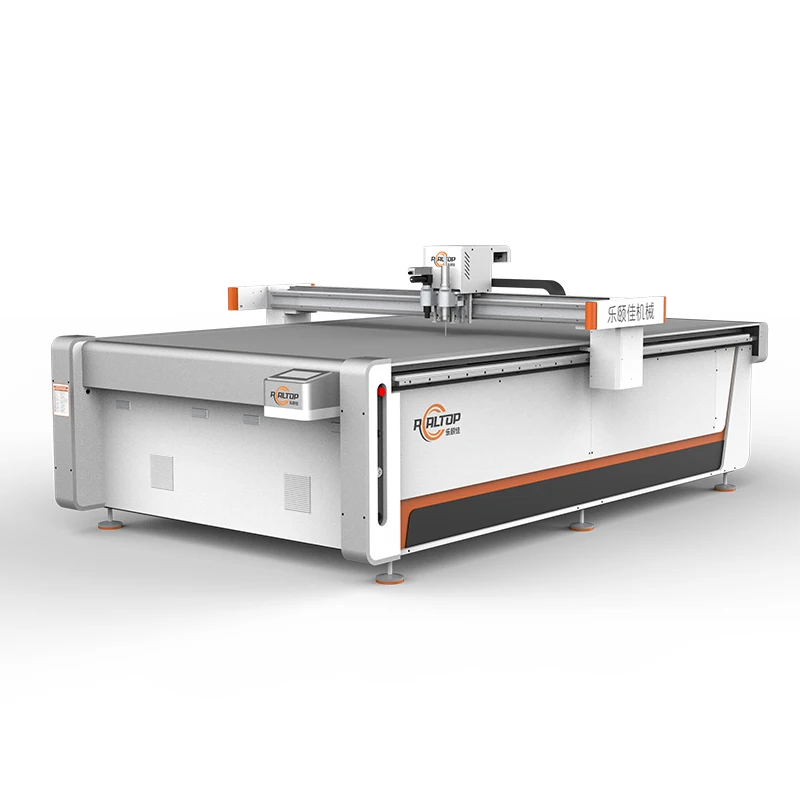
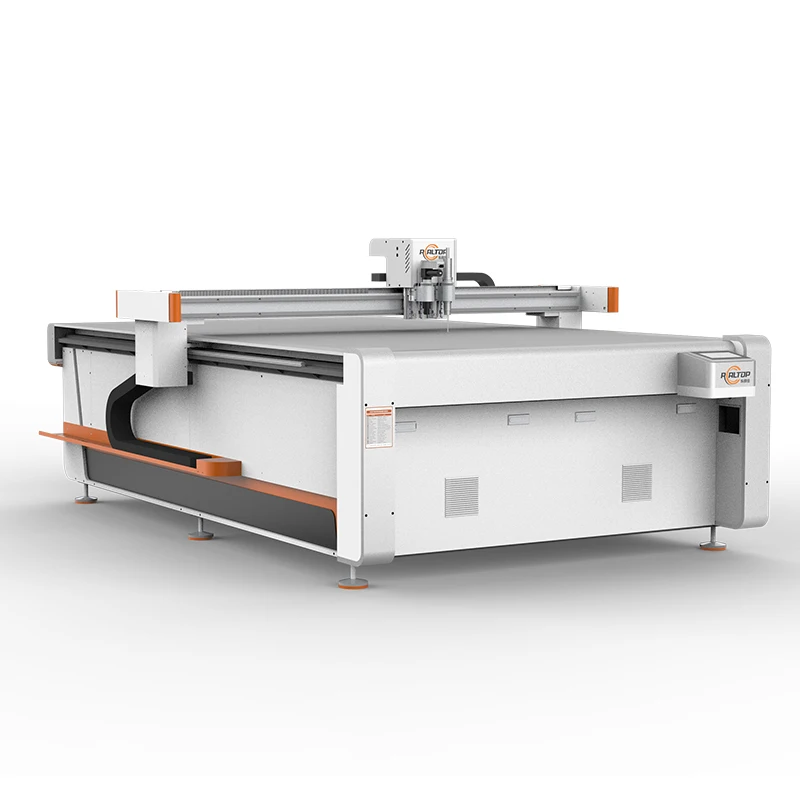
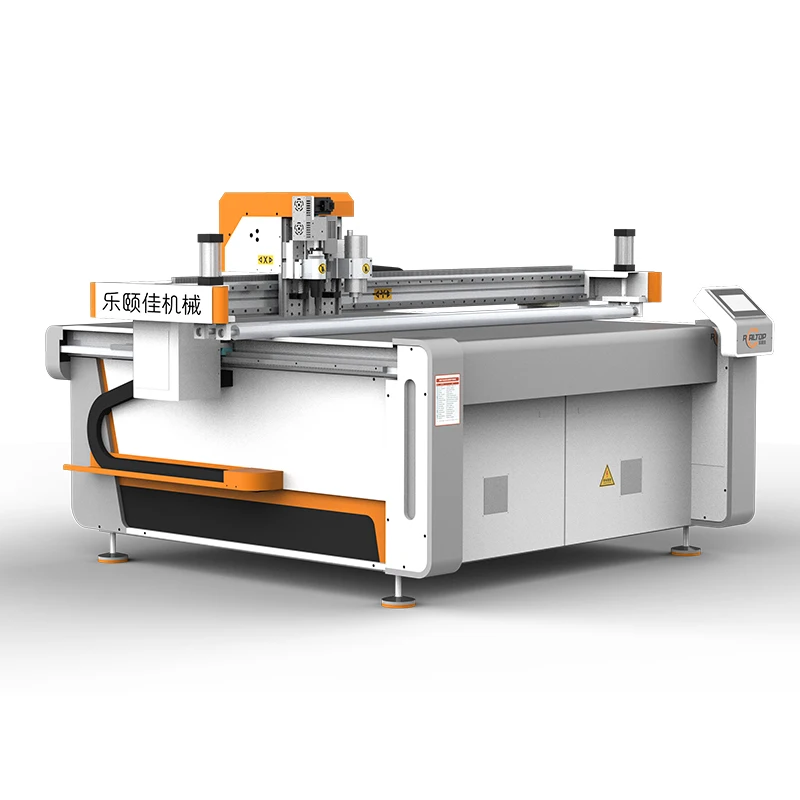
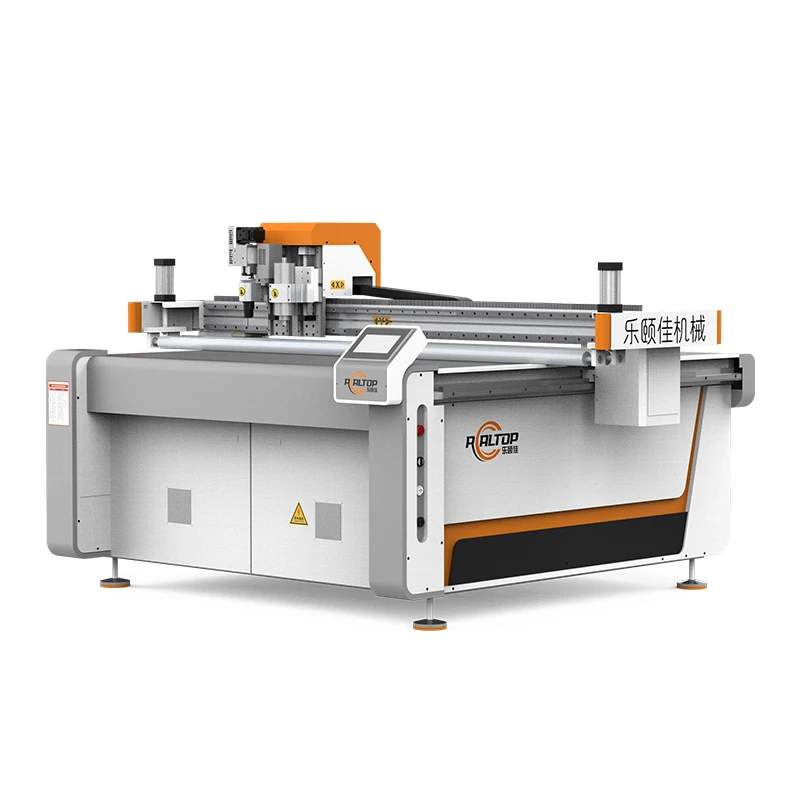
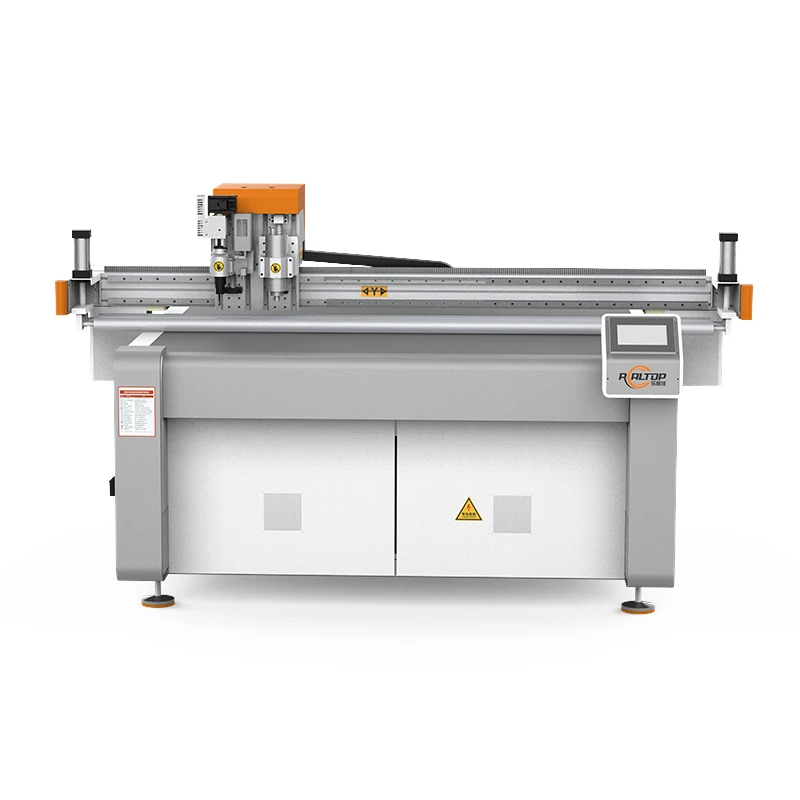
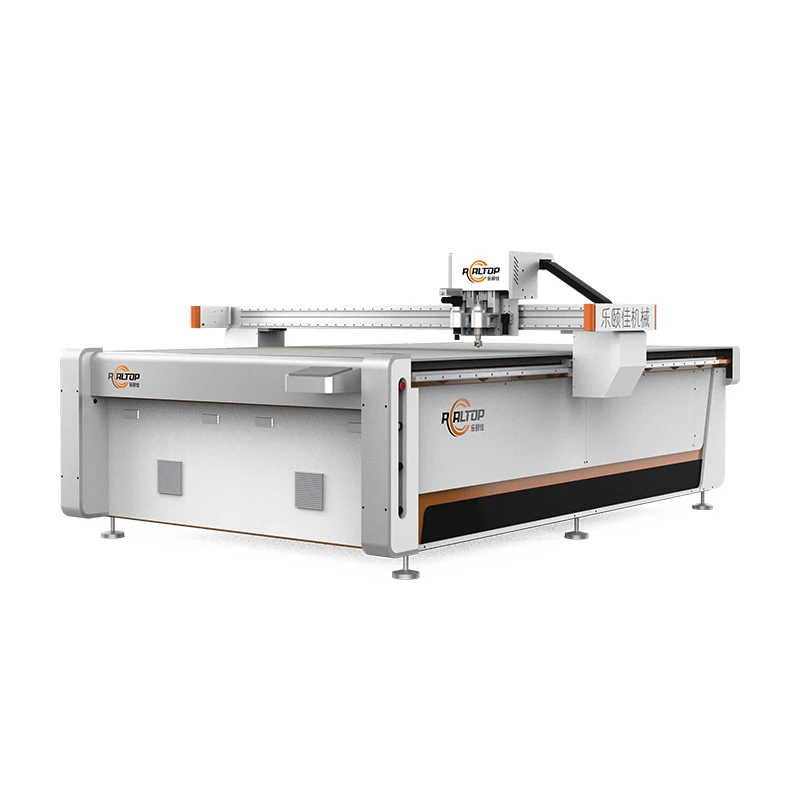
Complete Tool Range Comparison — The RT-D2516/RT-S2516 serves as the mid-format benchmark in a catalogue where buyers can evaluate oscillating knife, drag knife and creasing wheel options against their specific board grades and daily sample volumes before committing.
Technical Specifications
| Parameter | Value |
|---|---|
| Model | RT-D2516 / RT-S2516 |
| Product Type | CNC Digital Flatbed Cutting Machine with V-Grooving |
| Working Area | 1600 × 2500 mm |
| Overall Dimensions | 3450 × 2300 × 1250 mm |
| Rated Power | 9 kW |
| Voltage | 380V ± 10% (frequency to be confirmed for destination market) |
| Control System | CNC |
| Table Type | Aluminum alloy honeycomb vacuum adsorption platform |
| Vacuum Pump | 7.5 kW |
| Transmission | Imported straight-line square guide, rack and synchronous belt |
| Servo Motor | Taiwan Delta |
| Linear Rail | Taiwan Hiwin |
| Translational Velocity | 800 – 2000 mm/s |
| Cutting Speed | 200 – 800 mm/s (varies by material) |
| Repeated Accuracy | ≤ 0.1 mm |
| Tool Head | Swiss imported oscillating knife — full cut, half cut, cursor location |
| Auto Feeding | Germany imported conveyor belt |
| Instruction Format | HP-GL compatible |
| Software | Professional carton nesting software (included) |
| Safety Device | Infrared sensors and emergency stop |
| Certification | CE (model-specific applicability to be verified) |
Application Suitability
| Application | Material or Output |
|---|---|
| Packaging carton sample making | Kraft paper, corrugated cardboard, gift box board |
| Sticker and label contour cutting | Self-adhesive vinyl, printed label stock |
| Billboard and signage board cutting | Foam board, PVC sheet, lightweight display board |
| Business card and tag production | Coated card stock, laminated paper |
| Flexible material cutting | Leather, PVC, soft glass, rubber, sponge composite |
Why Material Thickness Matters More Than Working Area When Choosing a CNC Digital Cutting Machine for Sale
A 1600 × 2500 mm table is meaningless if the tool head cannot handle your board weight.
Buyers often filter machines by bed size first, then discover on delivery that the standard oscillating knife struggles with double-wall corrugated or coated kraft stock above a certain grammage. I have walked into workshops where the machine sat idle because the creasing wheel crushed the flute structure on heavier boards, forcing the operator to hand-score every fold line. That kind of mismatch is not visible on a spec sheet. It only surfaces when you run your actual material. [NEED_CITE: common material thickness and tool head mismatch in packaging sample making]
Matching the Knife Profile to Your Board Grade
The Swiss imported oscillating knife on the RT-D2516/RT-S2516 delivers vibration full cutting and half cutting, which suits medium-density corrugated and kraft paper up to a practical thickness range. For buyers evaluating a packaging carton CNC cutter across the full catalogue, the next step is confirming whether your typical board stock — single-face, double-wall, or coated gift-box grade — falls within the knife’s effective stroke. Heavier coated boards demand more down-force and a different blade geometry to avoid ragged scores. This is exactly where a sample run on your own stock separates a confident purchase from a costly guess.
Vacuum Zoning and Small-Part Stability
A 7.5 kW vacuum pump moving air through an aluminum honeycomb platform provides strong holding force across the full bed. However, when you nest small sticker contours or business card blanks, the outer zones can lose suction if the table is not partitioned correctly. [NEED_CITE: vacuum table zoning requirements for small-format flatbed cutting] Before you compare models, ask how many independent vacuum zones the configuration includes and whether each zone can be switched off when only a portion of the bed is in use.
Reading the Drive and Motion Specs
Taiwan Delta servo motors paired with Hiwin linear rails give the RT-D2516/RT-S2516 a repeated accuracy of ≤ 0.1 mm. In carton sample making, that tolerance keeps crease lines aligned with cut contours so the finished box folds square. Rack-and-pinion transmission on the long axis prevents the belt stretch that shows up on machines running continuous 2500 mm strokes day after day. Translational velocity between 800 and 2000 mm/s keeps non-cutting moves fast, while cutting speed from 200 to 800 mm/s is adjusted downward for denser boards to preserve edge quality.
The Cost of Skipping a Configuration Check
Choosing a flatbed based on price and bed size alone, without confirming tool head type and vacuum zone count, leads to production problems that appear on the first day. Coated kraft boards tear instead of scoring cleanly when the wrong creasing wheel is fitted. Small sticker sheets lift off the table mid-cut if the vacuum zones cannot be isolated. Software that does not import the buyer’s existing DXF or PLT nesting files forces a manual re-draw of every job. [NEED_CITE: buyer pain points in CNC flatbed procurement for packaging]
Why Sourcing This Range Here Makes Sense
Realtop designs and produces both knife and laser cutting systems in-house, so you can compare the RT-D2516/RT-S2516 against other models in the catalogue without dealing with separate suppliers. Tool head and table configuration are specified per material rather than sold as a fixed package. CCD camera positioning is available on models where printed contour work is required, and the nesting software is confirmed for file-format compatibility before the order is placed. Voltage, plug type and control language are locked in to match the destination market, and sample cutting on your own material is offered before any commitment.
Documentation & Verification
- Machine specification sheet confirming working area, tool head selection and vacuum zone count
- Electrical schematic with voltage and frequency matched to your destination market
- Sample cutting report run on your own board grade and thickness
- Software licence and file format compatibility note for your existing CAD workflow
- Factory test record documenting repeatability and edge quality before dispatch
Installation, Commissioning & Support
- Floor space of at least 4000 × 3000 mm to accommodate the 3450 × 2300 mm footprint plus material staging
- Dedicated 380V ± 10% circuit with capacity for the 9 kW rated load plus 7.5 kW vacuum pump
- Machine ships fully assembled; verify doorway and ceiling clearance at your facility
- First-run parameter tuning on your board stock to set cutting speed and knife oscillation depth
- Operator training on nesting software, tool head changes and vacuum zone switching
- Spare blade and conveyor belt wear parts list provided at delivery
What We Need From You to Move Forward
To recommend the right configuration from the catalogue, share your typical board material, maximum thickness and the largest sheet size you process. Let us know your local voltage and frequency standard so the electrical package matches before shipment. If you run an existing nesting workflow, send a sample file so we can confirm import compatibility before the order.
Frequently Asked Questions
Q: How do I decide which working area and tool head fit my packaging output?
A: Start with your largest sheet dimension and daily sample volume. The 1600 × 2500 mm bed handles most standard carton blanks. Tool head choice depends on board grade — oscillating knife for corrugated and kraft, drag knife for thin sticker stock, creasing wheel for fold lines. We confirm the combination through a sample cut on your material.
Q: What voltage and frequency options can be configured for my market?
A: The standard supply is 380V ± 10%, but frequency must be confirmed as 50 Hz or 60 Hz depending on your destination country. We verify the motor, vacuum pump and control transformer ratings against your local grid standard before the machine enters production.
Q: Can the nesting software import my current DXF and PLT design files?
A: The included carton nesting software supports HP-GL compatible formats. Before you place an order, we request a sample file from your existing workflow to confirm import, layer recognition and tool-path assignment so there are no surprises at commissioning.
Q: What sample cutting can I request before committing to an order?
A: Send us your actual board stock — including coated kraft, corrugated or sticker material — and we run cutting, creasing and contour tests. The sample report documents edge quality, crease integrity and dimensional accuracy so you can evaluate results before signing off.
Q: What is the difference between oscillating knife, drag knife and creasing wheel across the range?
A: Oscillating knife handles thicker corrugated and foam by vibrating through the material. Drag knife suits thin vinyl and sticker films with a pulled blade. Creasing wheel scores fold lines without cutting through. Each tool head is selected based on your material mix and can be combined on certain models.
Complete Tool Range Comparison — The RT-D2516/RT-S2516 serves as the mid-format benchmark in a catalogue where buyers can evaluate oscillating knife, drag knife and creasing wheel options against their specific board grades and daily sample volumes before committing.
Technical Specifications
| Parameter | Value |
|---|---|
| Model | RT-D2516 / RT-S2516 |
| Product Type | CNC Digital Flatbed Cutting Machine with V-Grooving |
| Working Area | 1600 × 2500 mm |
| Overall Dimensions | 3450 × 2300 × 1250 mm |
| Rated Power | 9 kW |
| Voltage | 380V ± 10% (frequency to be confirmed for destination market) |
| Control System | CNC |
| Table Type | Aluminum alloy honeycomb vacuum adsorption platform |
| Vacuum Pump | 7.5 kW |
| Transmission | Imported straight-line square guide, rack and synchronous belt |
| Servo Motor | Taiwan Delta |
| Linear Rail | Taiwan Hiwin |
| Translational Velocity | 800 – 2000 mm/s |
| Cutting Speed | 200 – 800 mm/s (varies by material) |
| Repeated Accuracy | ≤ 0.1 mm |
| Tool Head | Swiss imported oscillating knife — full cut, half cut, cursor location |
| Auto Feeding | Germany imported conveyor belt |
| Instruction Format | HP-GL compatible |
| Software | Professional carton nesting software (included) |
| Safety Device | Infrared sensors and emergency stop |
| Certification | CE (model-specific applicability to be verified) |
Application Suitability
| Application | Material or Output |
|---|---|
| Packaging carton sample making | Kraft paper, corrugated cardboard, gift box board |
| Sticker and label contour cutting | Self-adhesive vinyl, printed label stock |
| Billboard and signage board cutting | Foam board, PVC sheet, lightweight display board |
| Business card and tag production | Coated card stock, laminated paper |
| Flexible material cutting | Leather, PVC, soft glass, rubber, sponge composite |
Why Material Thickness Matters More Than Working Area When Choosing a CNC Digital Cutting Machine for Sale
A 1600 × 2500 mm table is meaningless if the tool head cannot handle your board weight.
Buyers often filter machines by bed size first, then discover on delivery that the standard oscillating knife struggles with double-wall corrugated or coated kraft stock above a certain grammage. I have walked into workshops where the machine sat idle because the creasing wheel crushed the flute structure on heavier boards, forcing the operator to hand-score every fold line. That kind of mismatch is not visible on a spec sheet. It only surfaces when you run your actual material. [NEED_CITE: common material thickness and tool head mismatch in packaging sample making]
Matching the Knife Profile to Your Board Grade
The Swiss imported oscillating knife on the RT-D2516/RT-S2516 delivers vibration full cutting and half cutting, which suits medium-density corrugated and kraft paper up to a practical thickness range. For buyers evaluating a packaging carton CNC cutter across the full catalogue, the next step is confirming whether your typical board stock — single-face, double-wall, or coated gift-box grade — falls within the knife’s effective stroke. Heavier coated boards demand more down-force and a different blade geometry to avoid ragged scores. This is exactly where a sample run on your own stock separates a confident purchase from a costly guess.
Vacuum Zoning and Small-Part Stability
A 7.5 kW vacuum pump moving air through an aluminum honeycomb platform provides strong holding force across the full bed. However, when you nest small sticker contours or business card blanks, the outer zones can lose suction if the table is not partitioned correctly. [NEED_CITE: vacuum table zoning requirements for small-format flatbed cutting] Before you compare models, ask how many independent vacuum zones the configuration includes and whether each zone can be switched off when only a portion of the bed is in use.
Reading the Drive and Motion Specs
Taiwan Delta servo motors paired with Hiwin linear rails give the RT-D2516/RT-S2516 a repeated accuracy of ≤ 0.1 mm. In carton sample making, that tolerance keeps crease lines aligned with cut contours so the finished box folds square. Rack-and-pinion transmission on the long axis prevents the belt stretch that shows up on machines running continuous 2500 mm strokes day after day. Translational velocity between 800 and 2000 mm/s keeps non-cutting moves fast, while cutting speed from 200 to 800 mm/s is adjusted downward for denser boards to preserve edge quality.
The Cost of Skipping a Configuration Check
Choosing a flatbed based on price and bed size alone, without confirming tool head type and vacuum zone count, leads to production problems that appear on the first day. Coated kraft boards tear instead of scoring cleanly when the wrong creasing wheel is fitted. Small sticker sheets lift off the table mid-cut if the vacuum zones cannot be isolated. Software that does not import the buyer’s existing DXF or PLT nesting files forces a manual re-draw of every job. [NEED_CITE: buyer pain points in CNC flatbed procurement for packaging]
Why Sourcing This Range Here Makes Sense
Realtop designs and produces both knife and laser cutting systems in-house, so you can compare the RT-D2516/RT-S2516 against other models in the catalogue without dealing with separate suppliers. Tool head and table configuration are specified per material rather than sold as a fixed package. CCD camera positioning is available on models where printed contour work is required, and the nesting software is confirmed for file-format compatibility before the order is placed. Voltage, plug type and control language are locked in to match the destination market, and sample cutting on your own material is offered before any commitment.
Documentation & Verification
- Machine specification sheet confirming working area, tool head selection and vacuum zone count
- Electrical schematic with voltage and frequency matched to your destination market
- Sample cutting report run on your own board grade and thickness
- Software licence and file format compatibility note for your existing CAD workflow
- Factory test record documenting repeatability and edge quality before dispatch
Installation, Commissioning & Support
- Floor space of at least 4000 × 3000 mm to accommodate the 3450 × 2300 mm footprint plus material staging
- Dedicated 380V ± 10% circuit with capacity for the 9 kW rated load plus 7.5 kW vacuum pump
- Machine ships fully assembled; verify doorway and ceiling clearance at your facility
- First-run parameter tuning on your board stock to set cutting speed and knife oscillation depth
- Operator training on nesting software, tool head changes and vacuum zone switching
- Spare blade and conveyor belt wear parts list provided at delivery
What We Need From You to Move Forward
To recommend the right configuration from the catalogue, share your typical board material, maximum thickness and the largest sheet size you process. Let us know your local voltage and frequency standard so the electrical package matches before shipment. If you run an existing nesting workflow, send a sample file so we can confirm import compatibility before the order.
Frequently Asked Questions
Q: How do I decide which working area and tool head fit my packaging output?
A: Start with your largest sheet dimension and daily sample volume. The 1600 × 2500 mm bed handles most standard carton blanks. Tool head choice depends on board grade — oscillating knife for corrugated and kraft, drag knife for thin sticker stock, creasing wheel for fold lines. We confirm the combination through a sample cut on your material.
Q: What voltage and frequency options can be configured for my market?
A: The standard supply is 380V ± 10%, but frequency must be confirmed as 50 Hz or 60 Hz depending on your destination country. We verify the motor, vacuum pump and control transformer ratings against your local grid standard before the machine enters production.
Q: Can the nesting software import my current DXF and PLT design files?
A: The included carton nesting software supports HP-GL compatible formats. Before you place an order, we request a sample file from your existing workflow to confirm import, layer recognition and tool-path assignment so there are no surprises at commissioning.
Q: What sample cutting can I request before committing to an order?
A: Send us your actual board stock — including coated kraft, corrugated or sticker material — and we run cutting, creasing and contour tests. The sample report documents edge quality, crease integrity and dimensional accuracy so you can evaluate results before signing off.
Q: What is the difference between oscillating knife, drag knife and creasing wheel across the range?
A: Oscillating knife handles thicker corrugated and foam by vibrating through the material. Drag knife suits thin vinyl and sticker films with a pulled blade. Creasing wheel scores fold lines without cutting through. Each tool head is selected based on your material mix and can be combined on certain models.










商品评价
There are no reviews yet.