


Fast Delivery
Quick, reliable shipping to any location.

Free & easy returns
Return this item by mail or in store within 90 days for a full refund.
Sample Cutting Before Specification — every tool head and table zone is validated against your actual corrugated grade before the build sheet is locked, matching cutting method to material rather than forcing one approach.
Technical Specifications
| Parameter | Value |
|---|---|
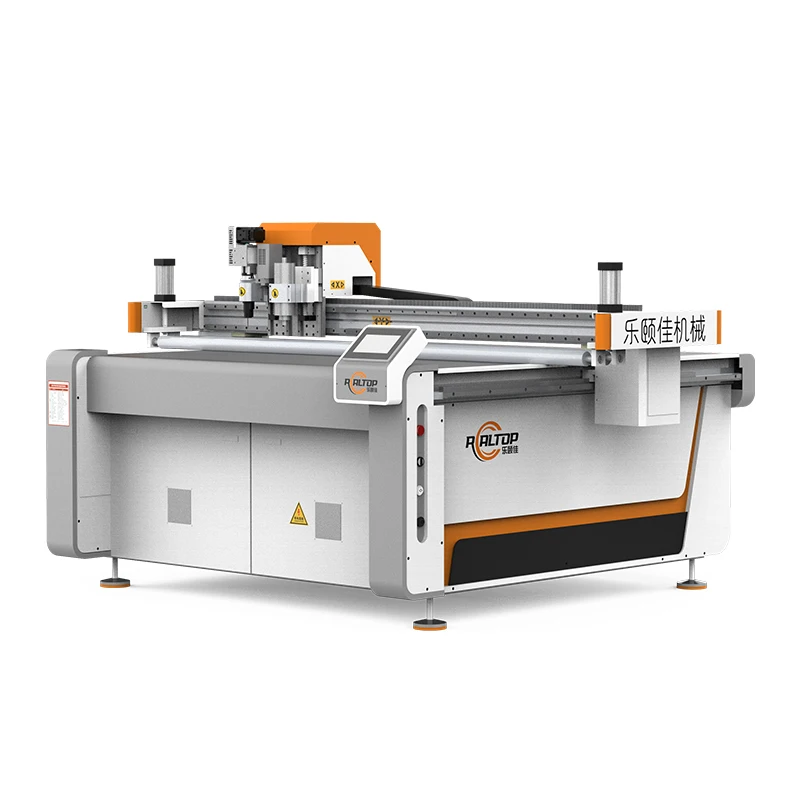
| Model | RT-D2516/RT-S2516 |
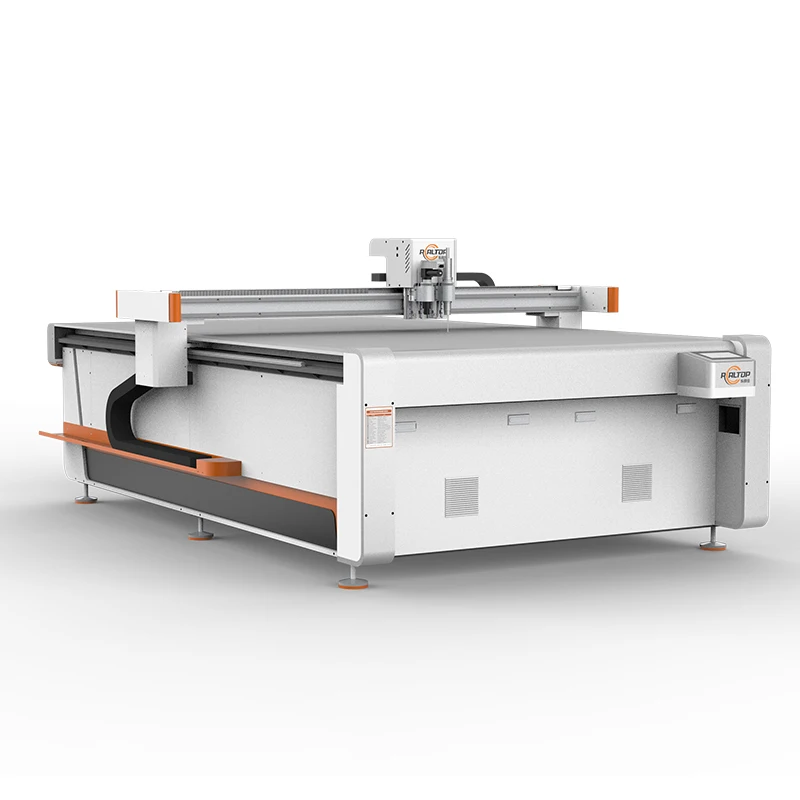
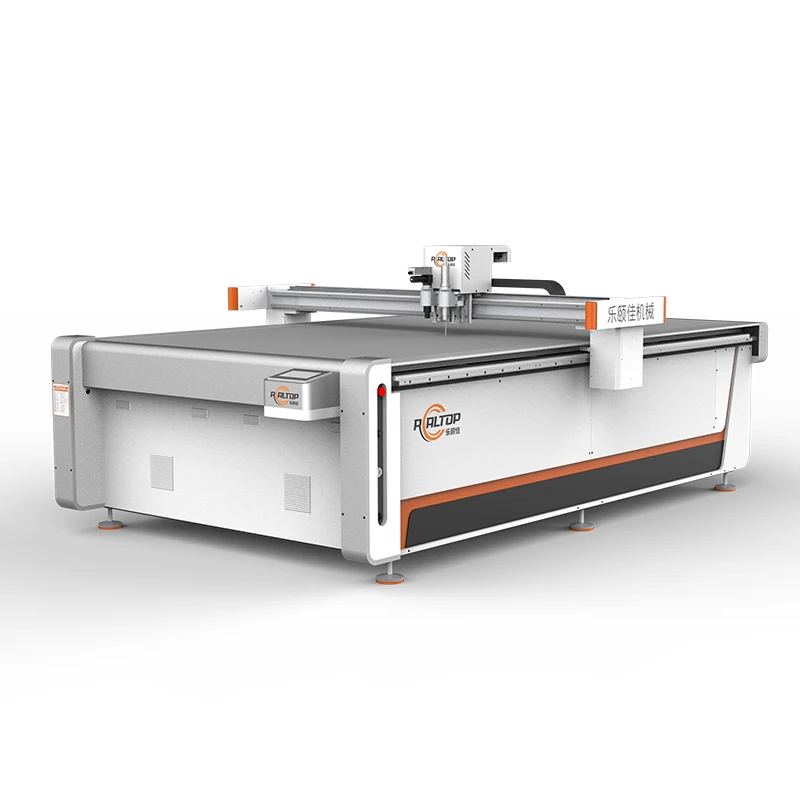
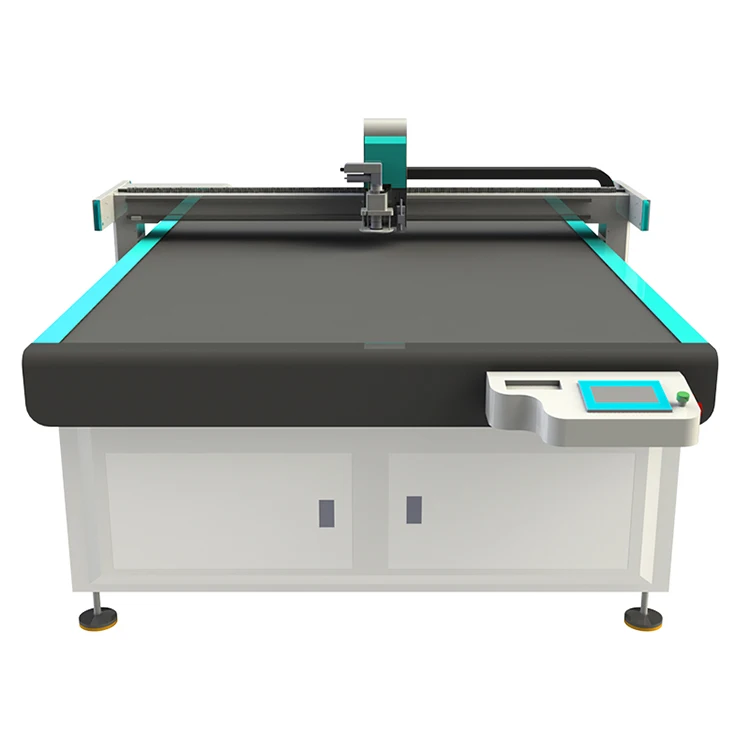
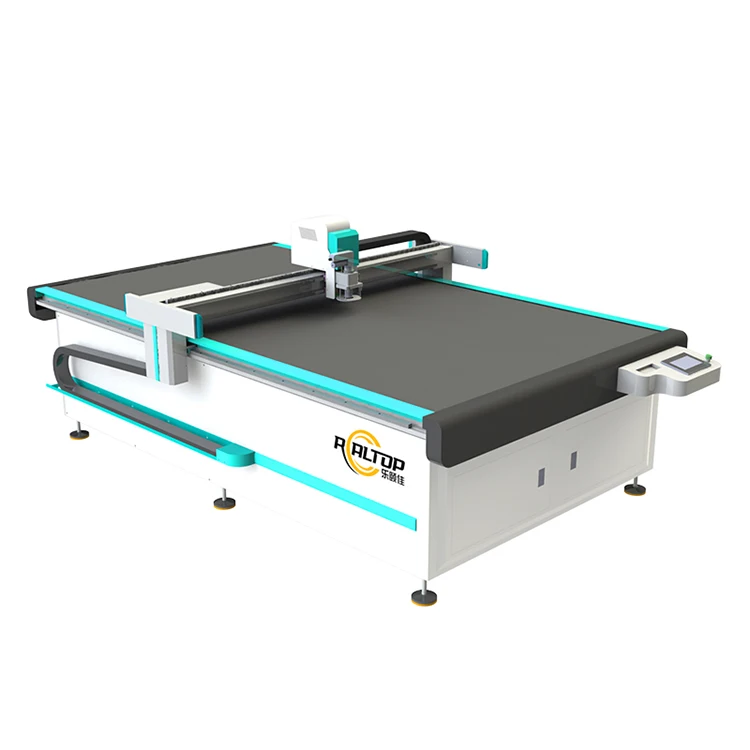
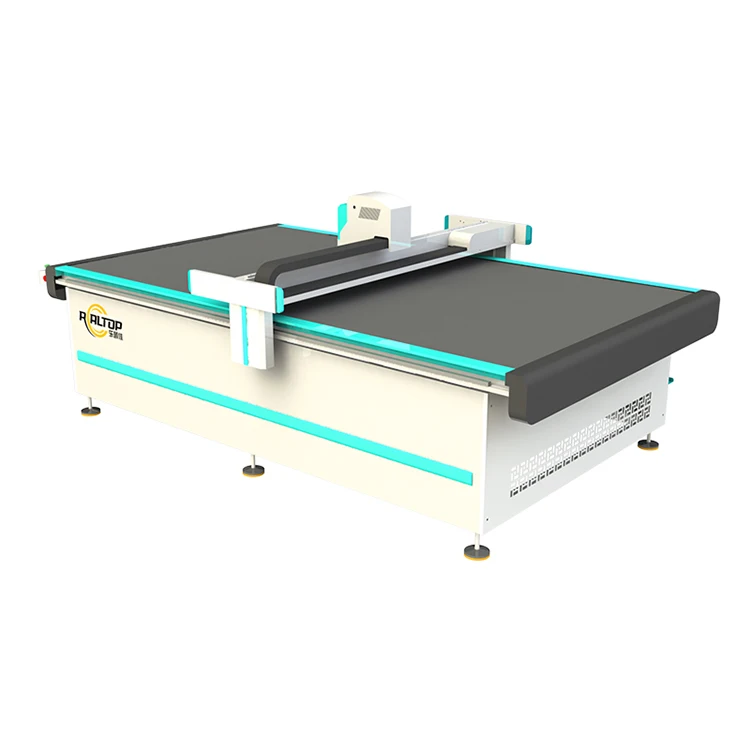
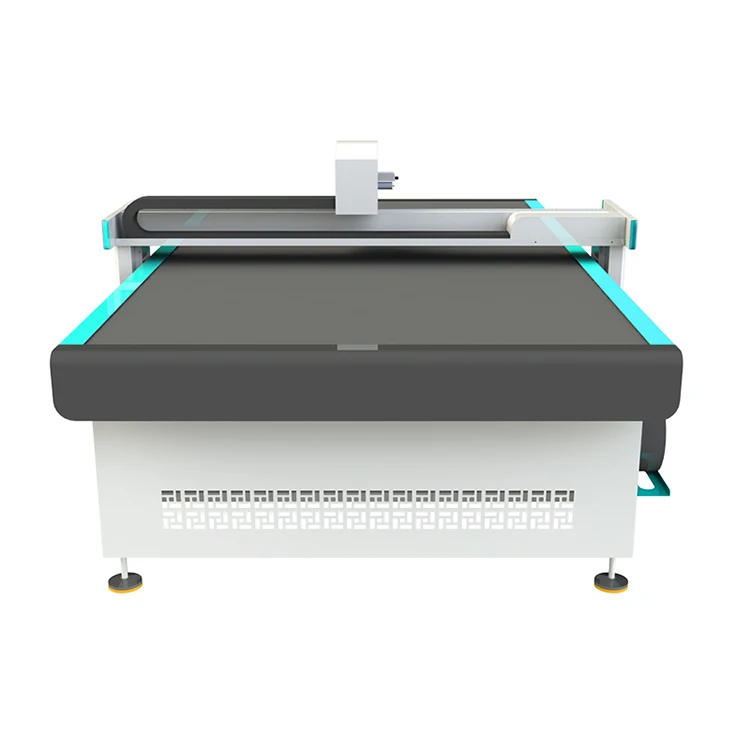
| Product Type | CNC Oscillating Knife Cutting Machine |
| Working Area | 1600 × 2500 mm |
| Machine Size | 3450 × 2300 × 1250 mm |
| Rated Power | 9 kW |
| Voltage | 380V ± 10% (50Hz/60Hz to confirm) |
| Translational Velocity | 800 – 2000 mm/s |
| Cutting Thickness | Up to 100 mm (varies by material density) |
| Repeated Accuracy | ≤ 0.1 mm |
| Vacuum Pump | 7.5 kW |
| Transmission System | Digital servo motor, linear guide, synchronous belt, ball screw |
| Rail | Taiwan Hiwin |
| Servo Motor Options | Delta (China) or Panasonic (Japan) |
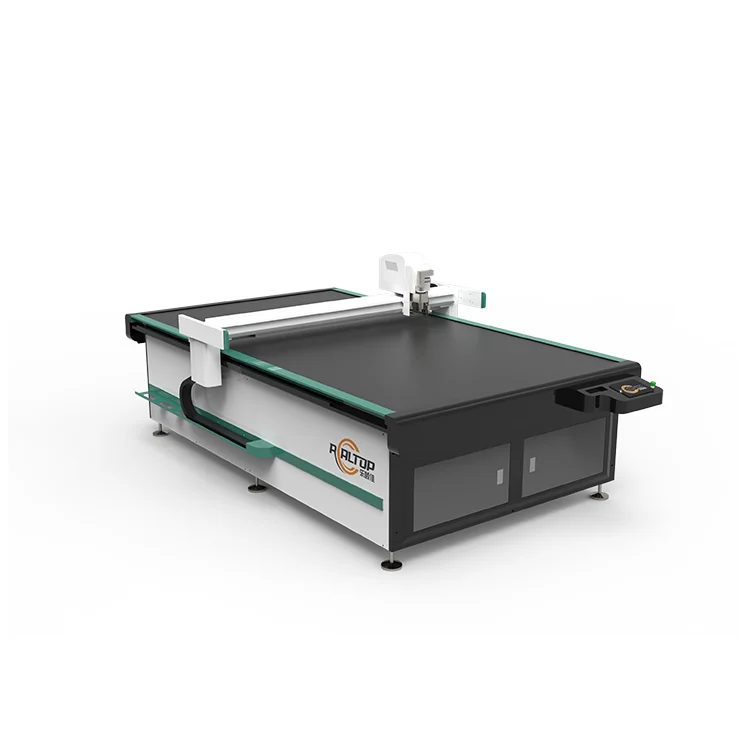
| Vacuum Table | Magnesium-aluminum alloy, PVDF powder spraying, integrated aviation aluminum shell |
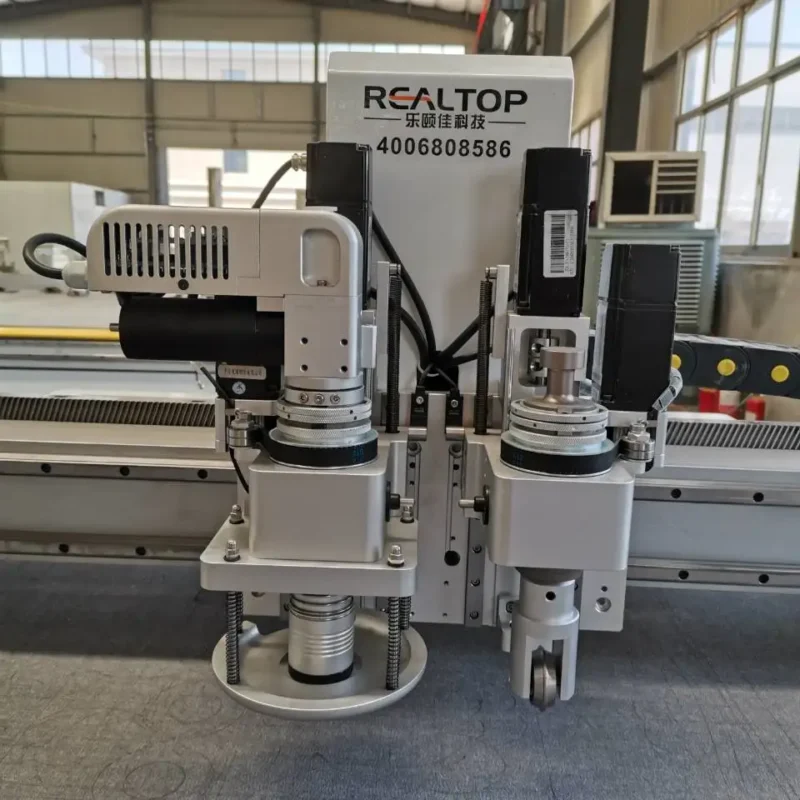
| Multifunctional Head Options | Oscillating knife, pneumatic knife, high-power vibrating knife, circular knife, V-cutting knife, drag knife, creasing wheel, dotted line knife, punching, brush |
| CCD / Visual Positioning | Small CCD mark point, panoramic camera recognition, projection positioning |
| Control Panel | Touch screen, multiple languages |
| Software Formats | PLT, DXF, AI; auto typesetting |
| Safety Devices | Infrared sensors, beam anti-collision, emergency stop with in-situ resume |
Application Suitability
| Application | Material or Output |
|---|---|
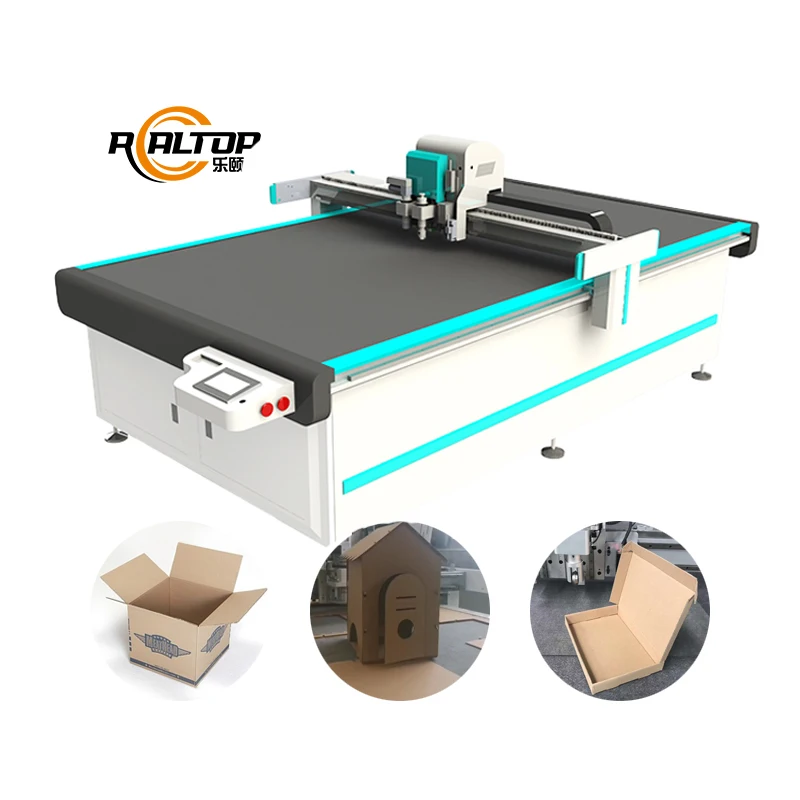
| Packaging Sample Making | Corrugated cardboard (single, double, triple wall), greyboard, folding carton board |
| Carton Prototyping | V-grooving, creasing, perforating on kraft and coated board |
| Advertising and Signage | PVC sheet, foam board, vinyl, acrylic-adjacent soft substrates |
| Graphic Printing Finishing | Sticker contour cutting, film, PP/PE sheet |
| Composite Gasket Production | Rubber, PTFE, ETFE, non-woven fabric, silicone |
| Soft Furnishing and Automotive Interior | Leather, PU, EVA, XPE, carpet, sponge composite |
Why the Tool Head Decision Comes Before the Working Area
A machine specified on working area alone, then found unable to handle the material thickness — this is where packaging sample shops lose weeks of production time.
Match the tool head and cutting method to your actual board grade before confirming the table size.
I once saw a packaging facility order a flatbed cutter based purely on the 1600×2500 footprint, only to discover the oscillating knife could not push through their triple-wall corrugated at production speed. The motor stalled, the blade dragged, and the edge on the crease line came out crushed rather than folded. A CNC oscillating knife cutting machine manufacturer should ask for your material samples before quoting, because board density and flute profile change the tooling requirement entirely [NEED_CITE: tool head selection criteria for corrugated board grades].
Comparing Knife and Laser for Packaging Substrates
When buyers survey the full REALTOP cutting range, the first split is between oscillating knife and laser. For corrugated cardboard, greyboard and folding carton stock, knife cutting produces a clean mechanical edge with no thermal discoloration. The RT-D2516/RT-S2516 carries oscillating, drag, V-cutting and creasing tools on one head, so a single machine handles the full carton sample workflow from outline cut through fold-line crease.
Laser cutting, covered on rttcuter.com, suits acrylic, wood and textile processing where edge sealing on synthetics is required. For packaging sample makers running paper-based substrates, the knife path avoids the burn marks and ventilation infrastructure that a CO2 laser demands.
Vacuum Table Zoning and Small-Part Stability
Corrugated and honeycomb board tend to lift at the edges during high-speed traversal, especially when the vacuum zone is oversized for the sheet. The magnesium-aluminum alloy table on the RT-D2516/RT-S2516 uses zoned adsorption so that a small carton blank in one corner holds flat without the full 1600×2500 area pulling air. The PVDF powder-sprayed surface resists corrosion from humidity common in Southeast Asian workshops [NEED_CITE: vacuum table zoning standards for flatbed digital cutters].
The integrated aviation aluminum shell houses a silencer sponge, reducing pump noise during long sample runs. For buyers evaluating this as a CNC oscillating knife cutting machine manufacturer option, confirming the zone count and pump capacity against your smallest and thickest sheet prevents the lift-and-drag problem that ruins edge accuracy.
Reading the Specs That Affect Daily Output
The 9 kW rated power covers the servo drive, vacuum pump and control system together. A 7.5 kW vacuum pump provides the suction baseline; if your board is double-wall or heavier, confirm that the pump curve sustains pressure across the zones you use most. The digital servo motor paired with Taiwan Hiwin linear rails delivers the ≤ 0.1 mm repeated accuracy needed for registration marks on printed carton samples.
Translational velocity of 800–2000 mm/s defines head travel speed, not cutting speed — actual throughput depends on the number of tool changes per sheet and the complexity of the crease pattern. The Delta or Panasonic servo options let buyers match their preferred maintenance supply chain. CCD camera and panoramic camera positioning options track printed registration marks so contour cuts align with pre-printed graphics, a requirement for short-run packaging samples where print-to-cut registration cannot drift.
What Happens When Configuration Is Skipped
Choosing a drag knife for thick honeycomb board produces ragged edges and crushed core material. Running a single-zone vacuum table with small carton blanks causes the sheet to shift mid-cut, destroying registration. Skipping the CCD option and relying on manual alignment slows sample turnaround and increases waste on printed stock [NEED_CITE: common flatbed cutting defects from configuration mismatch].
Software incompatibility surfaces late: if your existing nesting workflow exports in a format the machine cannot import, operators spend hours re-drawing files. These are not machine failures — they are specification gaps that a proper sample cutting report would have caught before the order was placed.
What REALTOP Brings to This Decision
In-house design covers both knife and laser technologies, so the cutting method matches the material rather than forcing one method across all substrates. The RT-D2516/RT-S2516 configuration is specified per your board grade, flute profile and daily sample volume. CCD camera positioning is confirmed against your printed mark size and color before the order. Software compatibility with PLT, DXF and AI file formats is verified against your nesting workflow. Sample cutting on your own corrugated material happens before commitment, not after delivery.
Documentation & Verification
- Machine specification sheet confirming working area, tool head list and vacuum zone count
- Tool head and table configuration list matched to your corrugated board grade
- Sample cutting report on your packaging material with edge and crease photographs
- Software licence and file format compatibility note for PLT, DXF, AI workflows
- Electrical schematic with voltage and frequency confirmed for your local grid
- Packing photographs showing beam, table and control cabinet condition before crate closure
Installation, Commissioning & Support
- Floor space allocation for 3450 × 2300 mm footprint plus operator clearance on three sides
- Dedicated 380V ± 10% circuit with capacity for 9 kW continuous draw and 7.5 kW vacuum pump startup surge
- Table leveling and belt tension check on site after unpacking the Hiwin rail assembly
- First-run parameter setting: servo tuning, vacuum zone mapping and tool offset calibration
- Operator training on touch screen control in English, Russian, Italian or Chinese with custom language option
- Spare parts list covering oscillating knife blades, creasing wheels and CCD camera lens covers
What to Include in Your Inquiry
Share your corrugated board grade, flute profile and maximum sheet thickness so the tool head selection is accurate. Confirm your local voltage and frequency, and whether your nesting software exports in PLT, DXF or AI. Let us know your daily sample volume to determine whether the flat table or auto-feeding conveyor configuration suits your workflow. Send a material sample and a printed sheet if you need CCD contour verification before the build begins.
Frequently Asked Questions
Q: Knife versus laser — which method fits my packaging material?
A: For corrugated cardboard, greyboard and folding carton stock, oscillating knife cutting produces a clean edge with no thermal effect. Laser cutting suits acrylic and textile substrates where edge sealing matters. The RT-D2516/RT-S2516 handles the full carton sample workflow with knife, V-cut and creasing tools on one head.
Q: How do I match tool head type to board grade?
A: Oscillating knife suits single and double-wall corrugated. V-cutting knife handles thick greyboard for rigid box grooving. Creasing wheel scores fold lines without cutting through. Drag knife works for thin sticker and film. Sample cutting on your actual board confirms the right combination.
Q: Flat table or auto-feeding — which suits my sample volume?
A: Flat table fits low-to-medium daily sample counts where operators load sheets manually. Auto-feeding conveyor suits higher-volume production where continuous sheet feeding reduces idle time. Your daily output target determines the configuration.
Q: Can the CCD camera track my printed registration marks at speed?
A: Small CCD mark point positioning and panoramic camera recognition are both available. Confirm your mark size, color and contrast before order so the camera specification matches your printed stock. Verification on your actual printed sheet happens before the machine ships.
Q: Where does this model sit in the REALTOP range?
A: The RT-D2516/RT-S2516 covers the mid-format packaging and signage segment. Larger-format and multi-layer systems handle higher-volume fabric production. Laser machines on the REALTOP range serve acrylic, wood and sheet metal processing. Each method is matched to material type.
Sample Cutting Before Specification — every tool head and table zone is validated against your actual corrugated grade before the build sheet is locked, matching cutting method to material rather than forcing one approach.
Technical Specifications
| Parameter | Value |
|---|---|
| Model | RT-D2516/RT-S2516 |
| Product Type | CNC Oscillating Knife Cutting Machine |
| Working Area | 1600 × 2500 mm |
| Machine Size | 3450 × 2300 × 1250 mm |
| Rated Power | 9 kW |
| Voltage | 380V ± 10% (50Hz/60Hz to confirm) |
| Translational Velocity | 800 – 2000 mm/s |
| Cutting Thickness | Up to 100 mm (varies by material density) |
| Repeated Accuracy | ≤ 0.1 mm |
| Vacuum Pump | 7.5 kW |
| Transmission System | Digital servo motor, linear guide, synchronous belt, ball screw |
| Rail | Taiwan Hiwin |
| Servo Motor Options | Delta (China) or Panasonic (Japan) |
| Vacuum Table | Magnesium-aluminum alloy, PVDF powder spraying, integrated aviation aluminum shell |
| Multifunctional Head Options | Oscillating knife, pneumatic knife, high-power vibrating knife, circular knife, V-cutting knife, drag knife, creasing wheel, dotted line knife, punching, brush |
| CCD / Visual Positioning | Small CCD mark point, panoramic camera recognition, projection positioning |
| Control Panel | Touch screen, multiple languages |
| Software Formats | PLT, DXF, AI; auto typesetting |
| Safety Devices | Infrared sensors, beam anti-collision, emergency stop with in-situ resume |
Application Suitability
| Application | Material or Output |
|---|---|
| Packaging Sample Making | Corrugated cardboard (single, double, triple wall), greyboard, folding carton board |
| Carton Prototyping | V-grooving, creasing, perforating on kraft and coated board |
| Advertising and Signage | PVC sheet, foam board, vinyl, acrylic-adjacent soft substrates |
| Graphic Printing Finishing | Sticker contour cutting, film, PP/PE sheet |
| Composite Gasket Production | Rubber, PTFE, ETFE, non-woven fabric, silicone |
| Soft Furnishing and Automotive Interior | Leather, PU, EVA, XPE, carpet, sponge composite |
Why the Tool Head Decision Comes Before the Working Area
A machine specified on working area alone, then found unable to handle the material thickness — this is where packaging sample shops lose weeks of production time.
Match the tool head and cutting method to your actual board grade before confirming the table size.
I once saw a packaging facility order a flatbed cutter based purely on the 1600×2500 footprint, only to discover the oscillating knife could not push through their triple-wall corrugated at production speed. The motor stalled, the blade dragged, and the edge on the crease line came out crushed rather than folded. A CNC oscillating knife cutting machine manufacturer should ask for your material samples before quoting, because board density and flute profile change the tooling requirement entirely [NEED_CITE: tool head selection criteria for corrugated board grades].
Comparing Knife and Laser for Packaging Substrates
When buyers survey the full REALTOP cutting range, the first split is between oscillating knife and laser. For corrugated cardboard, greyboard and folding carton stock, knife cutting produces a clean mechanical edge with no thermal discoloration. The RT-D2516/RT-S2516 carries oscillating, drag, V-cutting and creasing tools on one head, so a single machine handles the full carton sample workflow from outline cut through fold-line crease.
Laser cutting, covered on rttcuter.com, suits acrylic, wood and textile processing where edge sealing on synthetics is required. For packaging sample makers running paper-based substrates, the knife path avoids the burn marks and ventilation infrastructure that a CO2 laser demands.
Vacuum Table Zoning and Small-Part Stability
Corrugated and honeycomb board tend to lift at the edges during high-speed traversal, especially when the vacuum zone is oversized for the sheet. The magnesium-aluminum alloy table on the RT-D2516/RT-S2516 uses zoned adsorption so that a small carton blank in one corner holds flat without the full 1600×2500 area pulling air. The PVDF powder-sprayed surface resists corrosion from humidity common in Southeast Asian workshops [NEED_CITE: vacuum table zoning standards for flatbed digital cutters].
The integrated aviation aluminum shell houses a silencer sponge, reducing pump noise during long sample runs. For buyers evaluating this as a CNC oscillating knife cutting machine manufacturer option, confirming the zone count and pump capacity against your smallest and thickest sheet prevents the lift-and-drag problem that ruins edge accuracy.
Reading the Specs That Affect Daily Output
The 9 kW rated power covers the servo drive, vacuum pump and control system together. A 7.5 kW vacuum pump provides the suction baseline; if your board is double-wall or heavier, confirm that the pump curve sustains pressure across the zones you use most. The digital servo motor paired with Taiwan Hiwin linear rails delivers the ≤ 0.1 mm repeated accuracy needed for registration marks on printed carton samples.
Translational velocity of 800–2000 mm/s defines head travel speed, not cutting speed — actual throughput depends on the number of tool changes per sheet and the complexity of the crease pattern. The Delta or Panasonic servo options let buyers match their preferred maintenance supply chain. CCD camera and panoramic camera positioning options track printed registration marks so contour cuts align with pre-printed graphics, a requirement for short-run packaging samples where print-to-cut registration cannot drift.
What Happens When Configuration Is Skipped
Choosing a drag knife for thick honeycomb board produces ragged edges and crushed core material. Running a single-zone vacuum table with small carton blanks causes the sheet to shift mid-cut, destroying registration. Skipping the CCD option and relying on manual alignment slows sample turnaround and increases waste on printed stock [NEED_CITE: common flatbed cutting defects from configuration mismatch].
Software incompatibility surfaces late: if your existing nesting workflow exports in a format the machine cannot import, operators spend hours re-drawing files. These are not machine failures — they are specification gaps that a proper sample cutting report would have caught before the order was placed.
What REALTOP Brings to This Decision
In-house design covers both knife and laser technologies, so the cutting method matches the material rather than forcing one method across all substrates. The RT-D2516/RT-S2516 configuration is specified per your board grade, flute profile and daily sample volume. CCD camera positioning is confirmed against your printed mark size and color before the order. Software compatibility with PLT, DXF and AI file formats is verified against your nesting workflow. Sample cutting on your own corrugated material happens before commitment, not after delivery.
Documentation & Verification
- Machine specification sheet confirming working area, tool head list and vacuum zone count
- Tool head and table configuration list matched to your corrugated board grade
- Sample cutting report on your packaging material with edge and crease photographs
- Software licence and file format compatibility note for PLT, DXF, AI workflows
- Electrical schematic with voltage and frequency confirmed for your local grid
- Packing photographs showing beam, table and control cabinet condition before crate closure
Installation, Commissioning & Support
- Floor space allocation for 3450 × 2300 mm footprint plus operator clearance on three sides
- Dedicated 380V ± 10% circuit with capacity for 9 kW continuous draw and 7.5 kW vacuum pump startup surge
- Table leveling and belt tension check on site after unpacking the Hiwin rail assembly
- First-run parameter setting: servo tuning, vacuum zone mapping and tool offset calibration
- Operator training on touch screen control in English, Russian, Italian or Chinese with custom language option
- Spare parts list covering oscillating knife blades, creasing wheels and CCD camera lens covers
What to Include in Your Inquiry
Share your corrugated board grade, flute profile and maximum sheet thickness so the tool head selection is accurate. Confirm your local voltage and frequency, and whether your nesting software exports in PLT, DXF or AI. Let us know your daily sample volume to determine whether the flat table or auto-feeding conveyor configuration suits your workflow. Send a material sample and a printed sheet if you need CCD contour verification before the build begins.
Frequently Asked Questions
Q: Knife versus laser — which method fits my packaging material?
A: For corrugated cardboard, greyboard and folding carton stock, oscillating knife cutting produces a clean edge with no thermal effect. Laser cutting suits acrylic and textile substrates where edge sealing matters. The RT-D2516/RT-S2516 handles the full carton sample workflow with knife, V-cut and creasing tools on one head.
Q: How do I match tool head type to board grade?
A: Oscillating knife suits single and double-wall corrugated. V-cutting knife handles thick greyboard for rigid box grooving. Creasing wheel scores fold lines without cutting through. Drag knife works for thin sticker and film. Sample cutting on your actual board confirms the right combination.
Q: Flat table or auto-feeding — which suits my sample volume?
A: Flat table fits low-to-medium daily sample counts where operators load sheets manually. Auto-feeding conveyor suits higher-volume production where continuous sheet feeding reduces idle time. Your daily output target determines the configuration.
Q: Can the CCD camera track my printed registration marks at speed?
A: Small CCD mark point positioning and panoramic camera recognition are both available. Confirm your mark size, color and contrast before order so the camera specification matches your printed stock. Verification on your actual printed sheet happens before the machine ships.
Q: Where does this model sit in the REALTOP range?
A: The RT-D2516/RT-S2516 covers the mid-format packaging and signage segment. Larger-format and multi-layer systems handle higher-volume fabric production. Laser machines on the REALTOP range serve acrylic, wood and sheet metal processing. Each method is matched to material type.
商品评价
There are no reviews yet.