

Fast Delivery
Quick, reliable shipping to any location.

Free & easy returns
Return this item by mail or in store within 90 days for a full refund.
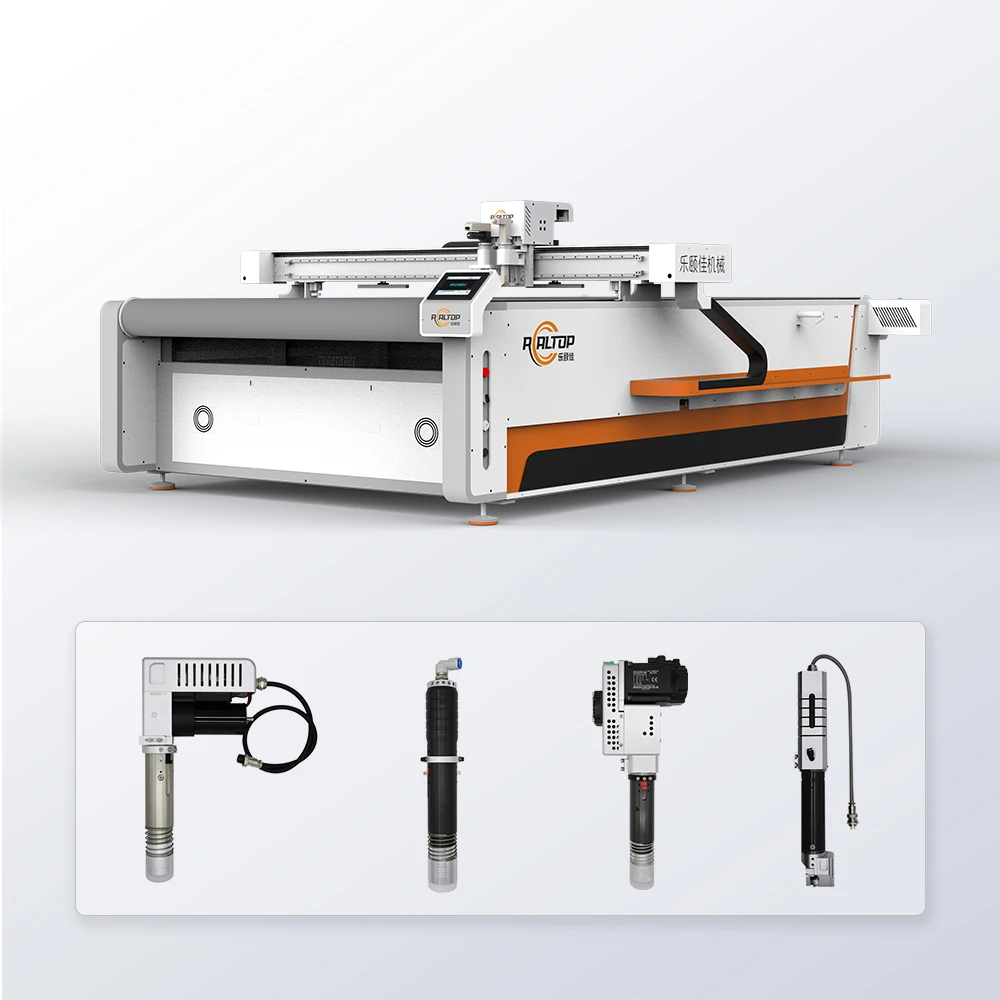
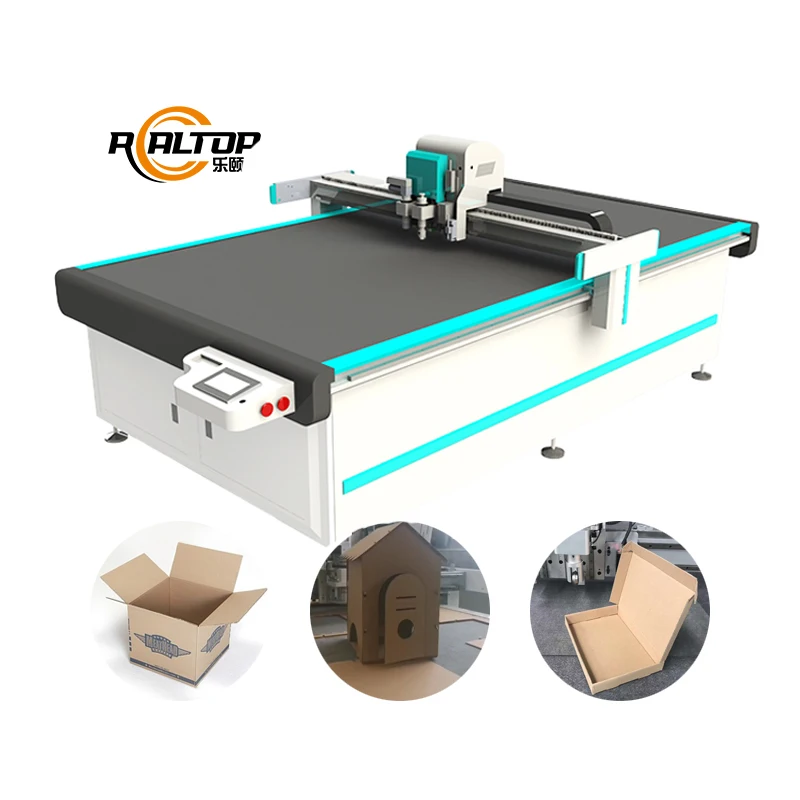
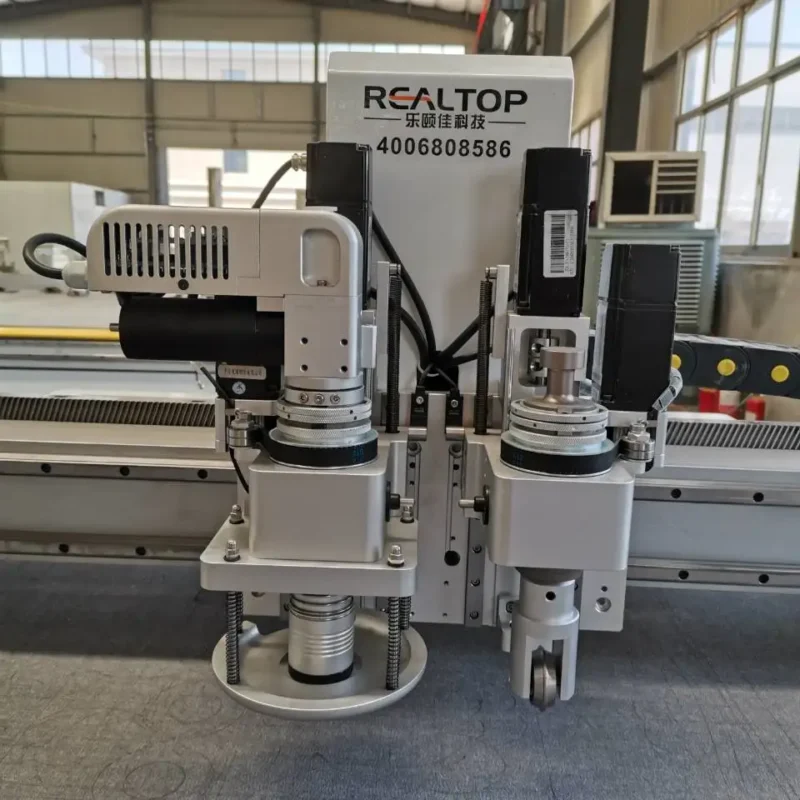
Configurable Knife Systems — We test every fabric on our own cutting tables before recommending a tool head, matching the blade to your material rather than selling a single machine for every job.
Technical Specifications
| Parameter | Value |
|---|---|
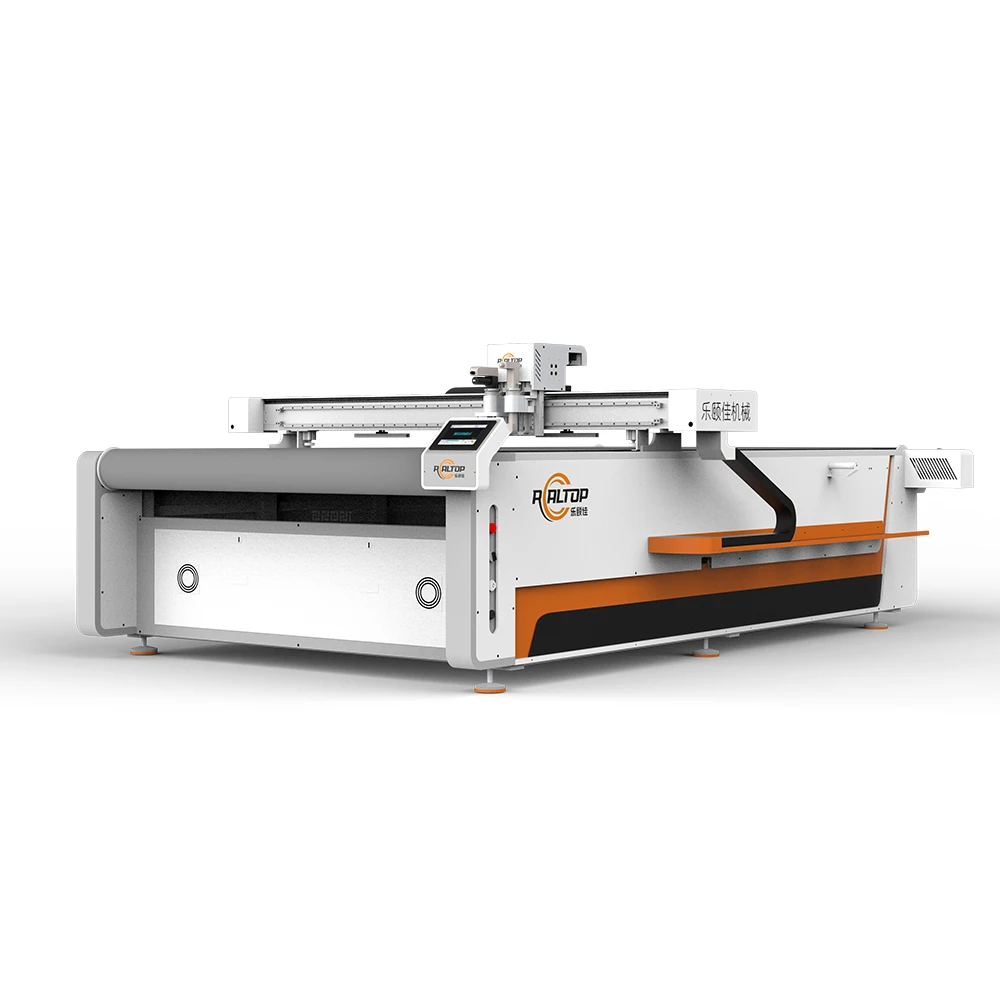
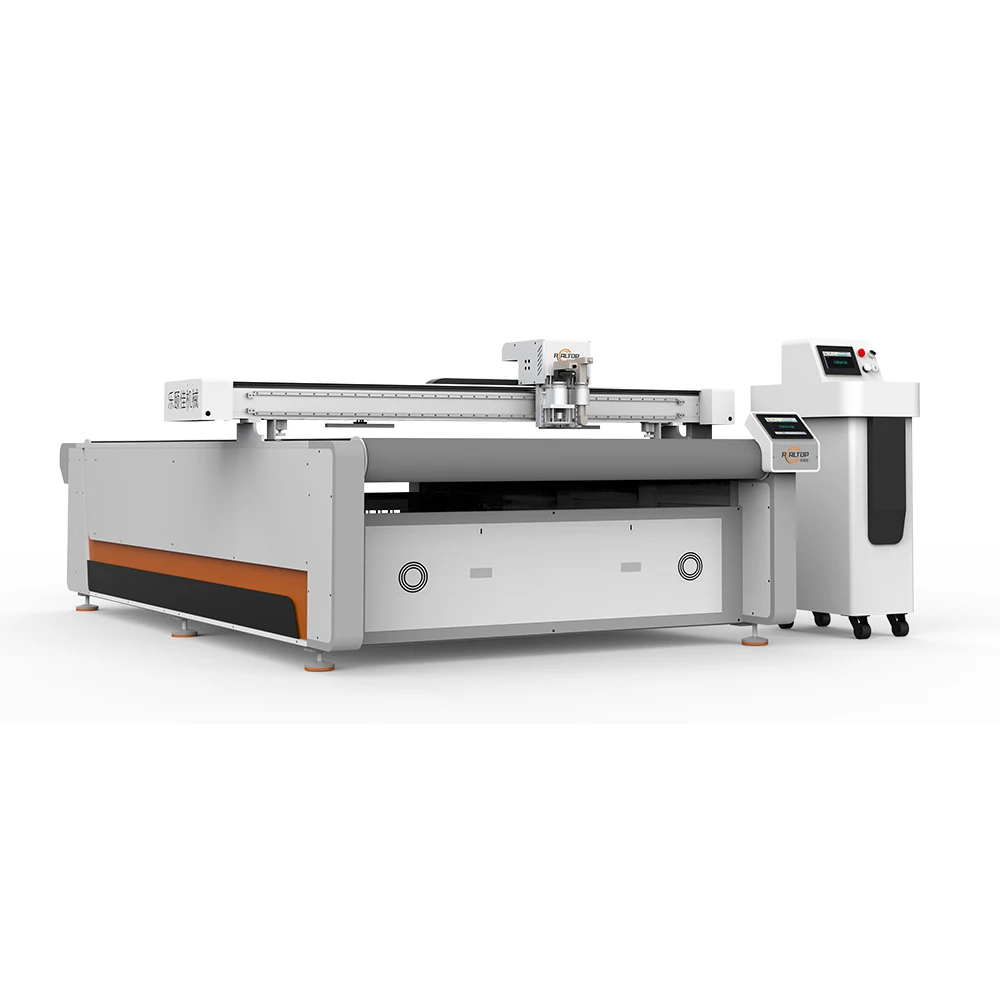
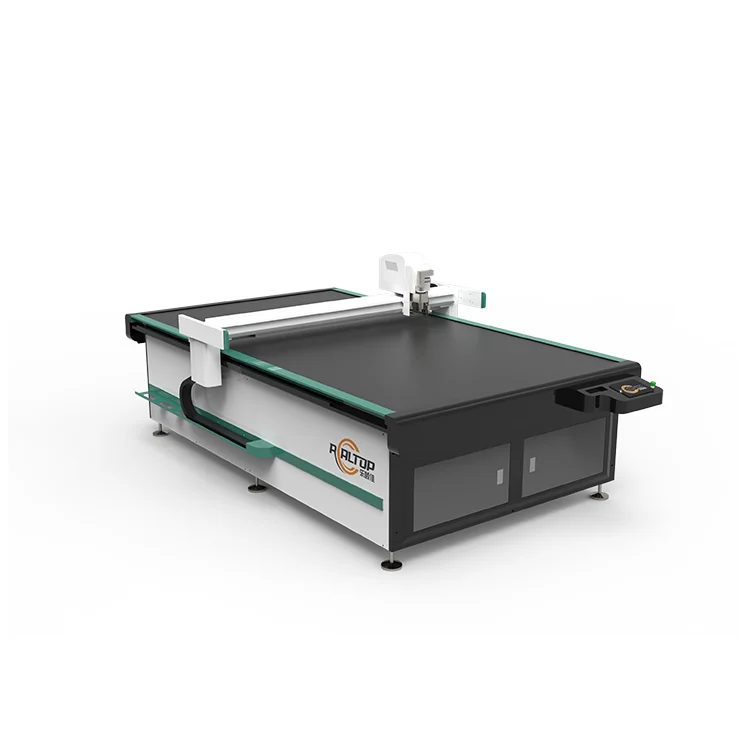
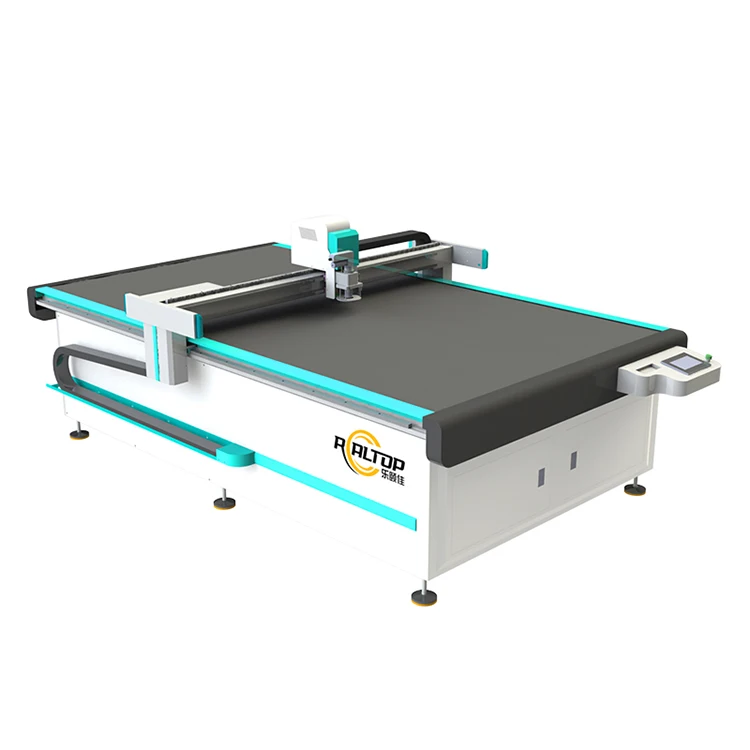
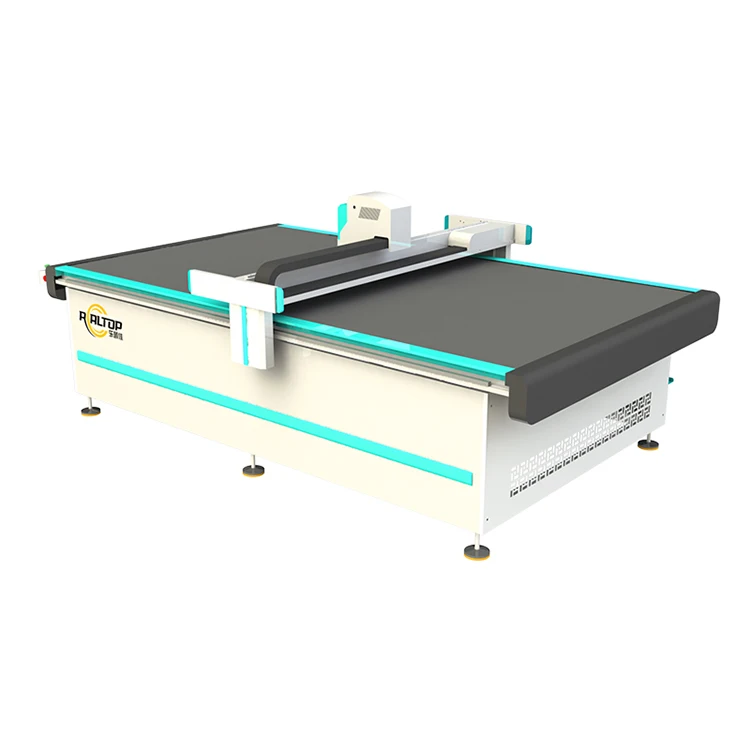
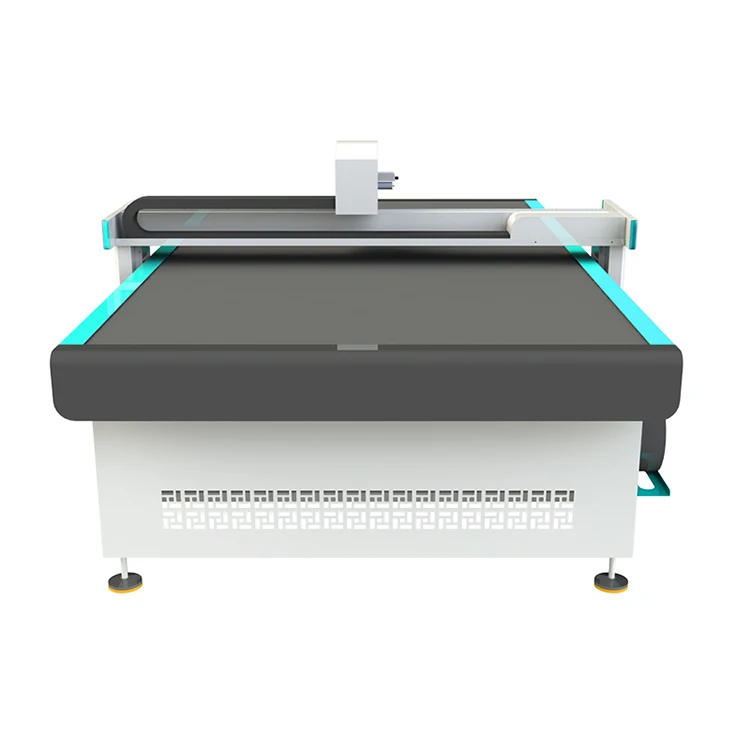
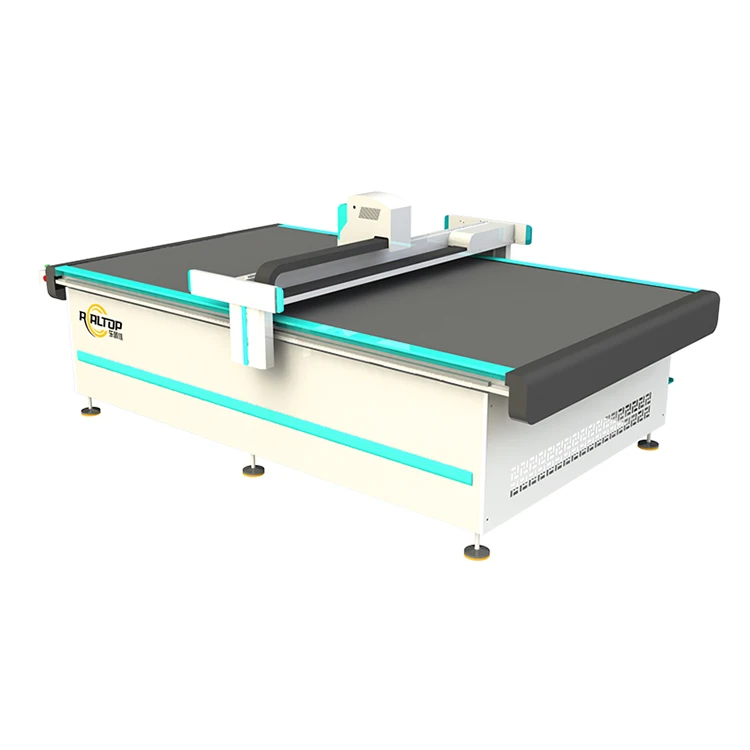
| Product Type | CNC Oscillating Knife Cutting Machine |
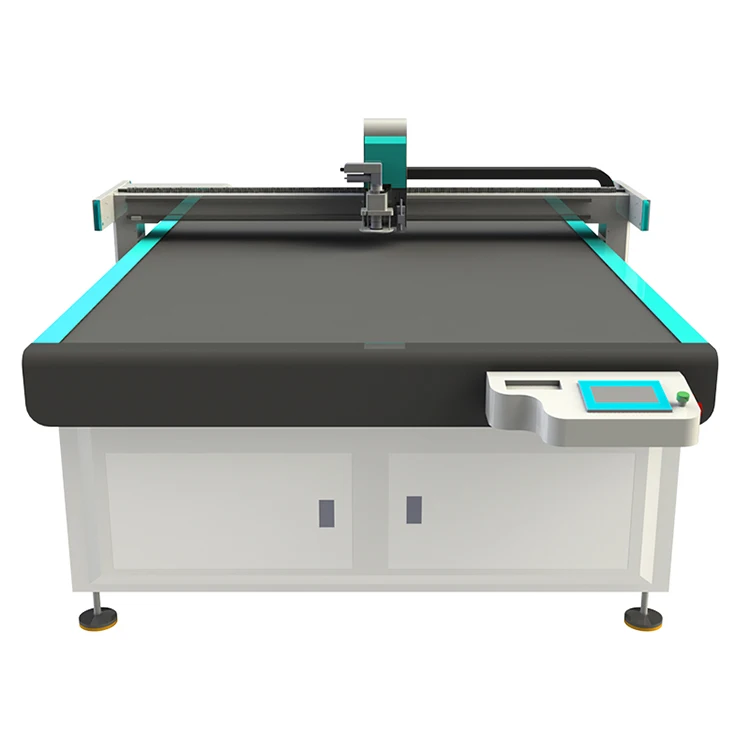
| Working Area | 1600×2500 mm |
| Tool Head Options | Oscillating knife, Driven rotary knife, Creasing wheel, Kiss cutting tool, Pneumatic knife, Milling tool, V groove knife |
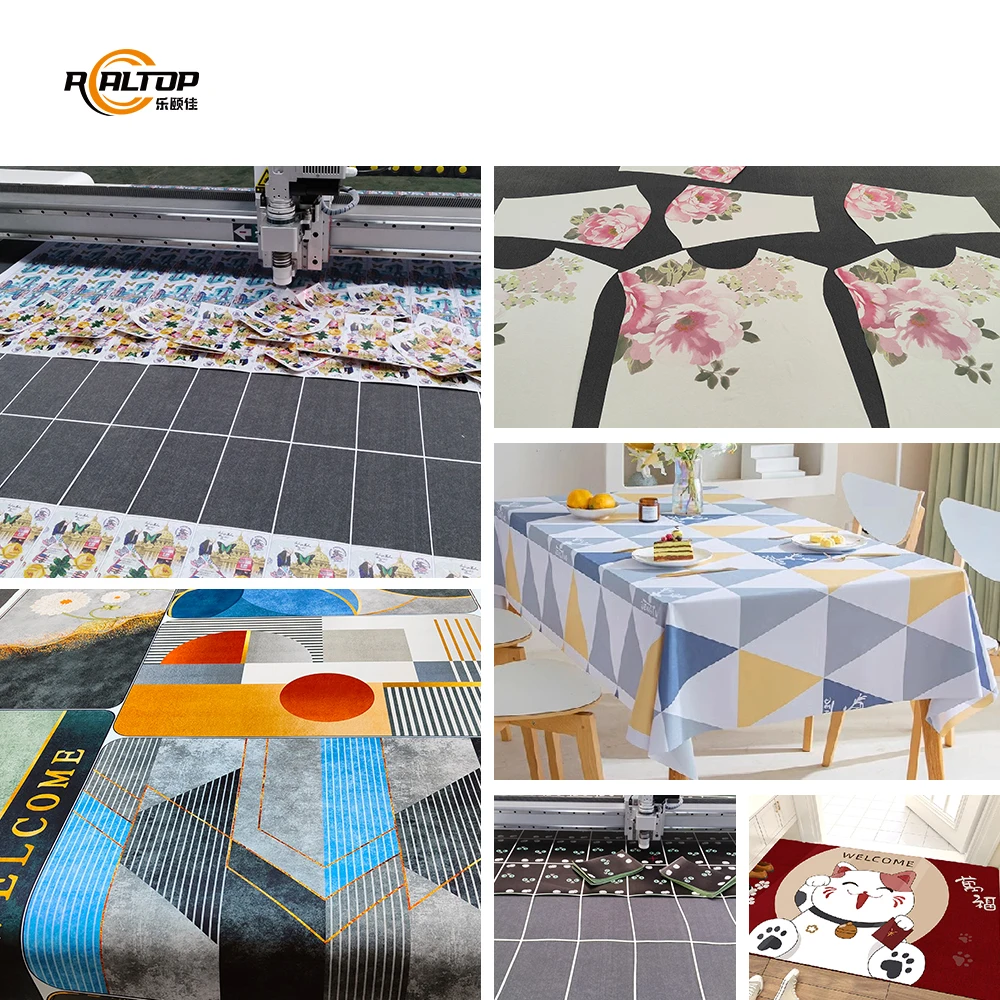
| Applicable Materials | Fabric, Cardboard, Carton, Mats, PVC, EVA, Leather, Acrylic, Foam, PTFE, Rubber |
| Cutting Speed | 0–2000 mm/s |
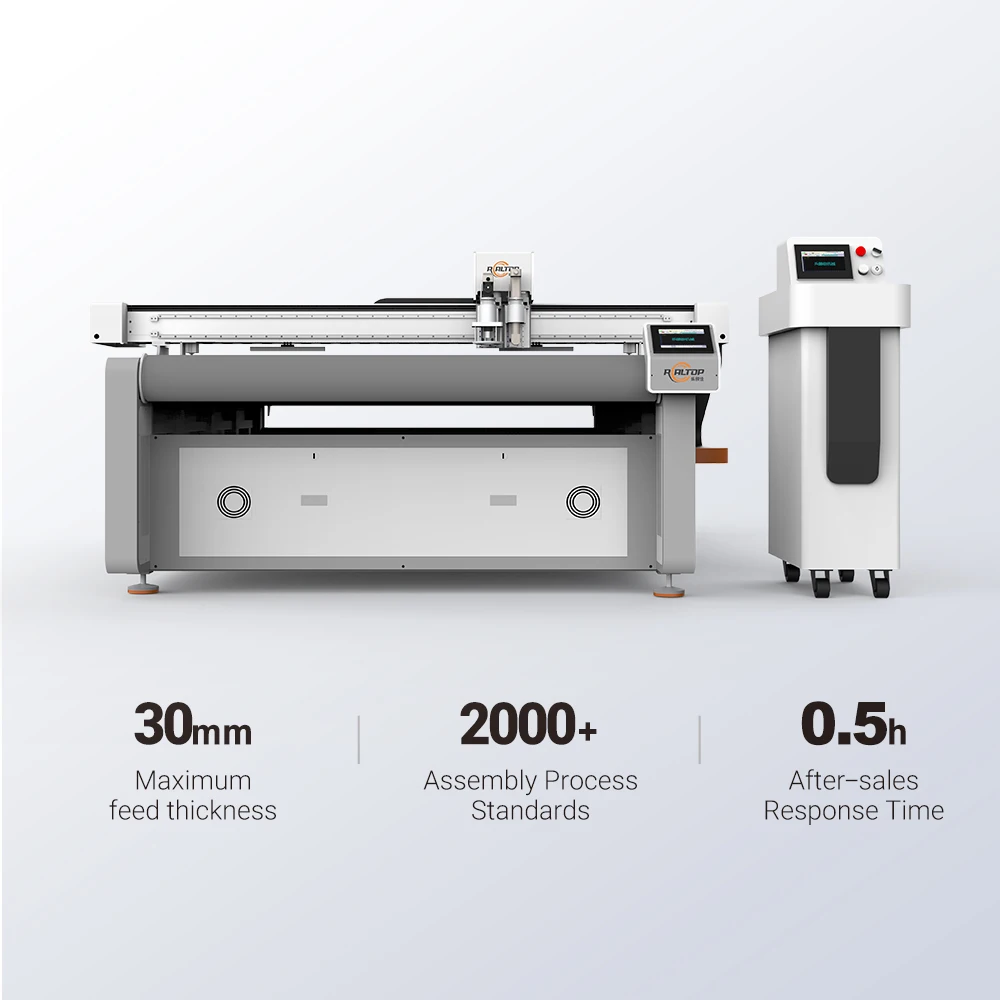
| Cutting Thickness | ≤ 30 mm (basis not stated in source — confirm block format / material / thickness) |
| Cutting Accuracy | ±0.1 mm |
| Vacuum Pump | 9 kW |
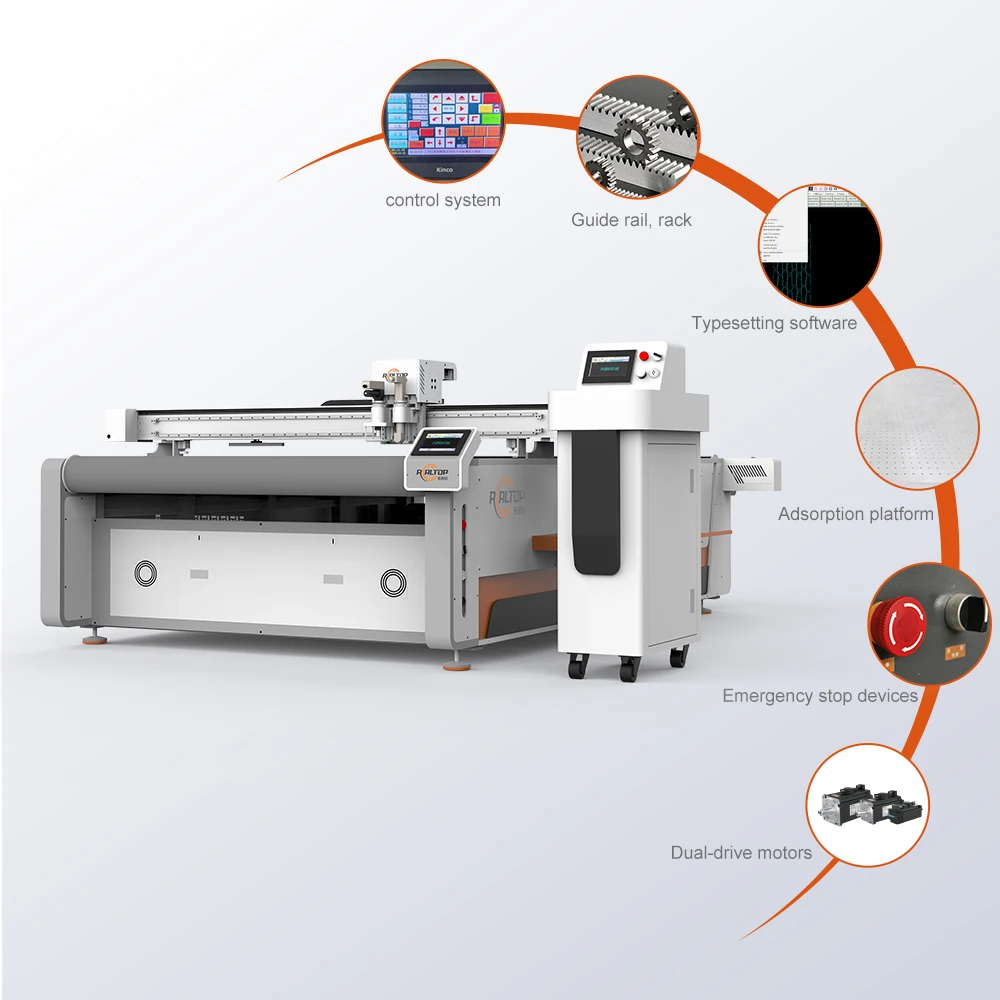
| Vacuum Table | Aluminum bellows vacuum table |
| Control System | PLC control panel |
| Servo Motor Options | Panasonic, Delta, Dorna |
| Profile Formats | PLT, DXF, AI, PDF |
| Voltage Options | 110V, 220V, 380V |
| Safety Devices | Infrared sensor device and emergency stop device |
| Machine Size | 3300×2100×1350 mm |
| Software Language Options | English, Russian, Italian, Chinese (customizable) |
| Standards | CE |
Application Suitability
| Application | Material or Output |
|---|---|
| Apparel manufacturing | Suits, knitwear, lace, multi-layer woven and knitted fabrics |
| Automotive interiors | Seat fabrics, carpets, PVC mats, headliner textiles |
| Home textiles | Sofa fabrics, curtains, rugs, upholstery composites |
| Composite material processing | Carbon fiber prepreg, aramid, technical textiles |
| Footwear production | Leather, synthetic uppers, insole board, foam padding |
| Packaging sample making | Cardboard, corrugated carton, folding carton prototypes |
Why Specifying Only Working Area Leaves You With a Machine That Cannot Cut Your Fabric
A cutting table sized by dimensions alone will fail the moment material thickness, ply count, and weave density enter the equation.
I remember a project in the Middle East where the buyer ordered a machine based purely on the 1600×2500 mm bed size. Their sample test used a single ply of standard polyester and the cuts came out clean. When the machine arrived at their factory and they loaded multi-layer coated waterproof fabric, the blade deflected, the vacuum could not hold the stack flat, and an entire roll was scrapped before we got the tool head reconfigured. That Cloth CNC Cutting Machine manufacturer experience changed how I approach every inquiry: the working area is just the starting point, not the specification [NEED_CITE: material thickness and ply count variables in digital knife cutting].
Matching the Knife to the Fabric Rather Than Forcing One Blade
An oscillating knife handles dense woven textiles and multi-layer stacks where a drag knife would fold or fray the edges. A driven rotary knife suits continuous cuts on knitted fabrics and technical textiles where edge sealing matters. The system here supports interchangeable heads, so a garment manufacturer cutting suit panels from wool can switch to kiss cutting for appliqué work on the same table. This flexibility means a Cloth CNC Cutting Machine manufacturer can configure the machine around your actual production mix instead of asking you to adapt your workflow to a fixed tool.
Holding the Material Flat Across the Entire Cutting Bed
The aluminum bellows vacuum table with a 9 kW pump provides full-surface adsorption across the 1600×2500 mm working area. When cutting multiple plies of lightweight knit or slippery synthetic fabric, uneven hold-down causes shifting that ruins nesting yield. The vacuum zoning on this table is designed to keep even small pattern pieces locked in place during high-speed oscillating cuts, reducing the material lift that produces miscut panels [NEED_CITE: vacuum adsorption requirements for multi-ply textile cutting].
Understanding What the Specifications Mean for Your Production Floor
The ±0.1 mm cutting accuracy is achieved through servo-driven motion, with options from Panasonic, Delta, or Dorna depending on your preference and service network availability. In garment manufacturing, that tolerance level means pattern pieces for structured suits and tailored knitwear stay within grading tolerances across long production runs. The 0–2000 mm/s cutting speed range allows operators to slow down for intricate curves on lace or accelerate through straight runs on heavy canvas. Profile format compatibility with PLT, DXF, AI, and PDF means most existing pattern libraries can be imported without re-digitizing, which matters when a factory is migrating from manual cutting or an older CNC system.
The Hidden Cost of Choosing the Wrong Configuration
When a buyer selects a single knife type without considering their full material range, the result is either ragged edges on coated fabrics or crushed foam on automotive headliners. A machine running at full speed on thick composite material without adequate vacuum zoning will produce lifted edges that the CCD cannot track, and entire nests get scrapped. I have seen workshops try to compensate by adding weight on top of the fabric stack, which introduces its own distortion and defeats the purpose of automated cutting [NEED_CITE: fabric distortion causes in automated knife cutting operations].
Why Buyers Source This Equipment From Our Production Line
Our in-house design team covers both oscillating knife and rotary knife technologies within the same machine platform, so you are not locked into a single cutting method. Each Cloth CNC Cutting Machine manufacturer configuration is specified against the buyer’s material samples and daily volume rather than pulled from a standard catalog. We run sample cuts on your actual fabric before the order is confirmed, documenting blade type, speed, and vacuum settings. The PLC control panel ships with your chosen display language, and voltage is matched to your facility before the machine leaves our factory. The servo motor brand is your choice, selected based on the service infrastructure in your region.
Documentation & Verification
- Sample cutting report on your fabric type with blade, speed, and vacuum settings recorded
- Tool head and vacuum table configuration list matched to your material stack
- Software licence and file format compatibility confirmation for PLT, DXF, AI, PDF workflows
- Electrical schematic with voltage and frequency confirmed for your facility
- Factory test record on your actual material before dispatch
- CE declaration with machinery directive compliance documentation
Installation, Commissioning & Support
- Foundation requires level floor with clearance for 3300×2100×1350 mm machine footprint and material feed space
- Dedicated power circuit matching confirmed voltage option at 110V, 220V, or 380V with proper grounding
- Machine ships in modular sections for container loading with on-site assembly by technician
- First-run calibration includes vacuum zone mapping and servo tuning for your specified fabric types
- Operator training covers tool head changeover, nesting software import, and PLC panel navigation
- Spare parts list includes oscillating blades, rotary knife assemblies, and vacuum table seals
- Maintenance schedule addresses aluminum bellows inspection and vacuum pump filter replacement intervals
What We Need to Recommend the Right Configuration
Before quoting, we need to know the specific fabrics you cut, including weave type, coating, ply count, and sheet or roll dimensions. Your daily cutting volume and nesting workflow determine which tool heads and software modules make sense. Tell us your facility voltage and frequency, preferred control language, and whether you need sample cutting on your own material before commitment.
Frequently Asked Questions
Q: How do I choose between oscillating knife and driven rotary knife for my fabric?
A: Oscillating knives cut dense woven textiles and multi-layer stacks where edge deflection is a concern. Driven rotary knives suit continuous cuts on knitted fabrics and coated materials where clean sealed edges matter. We test both methods on your actual fabric samples and document which produces acceptable edge quality at production speed before recommending a tool head configuration.
Q: What voltage and control language options are available?
A: The machine is configurable at 110V, 220V, or 380V depending on your facility supply. The PLC control panel supports English, Russian, Italian, and Chinese as standard options, with additional languages available on request. Voltage and language are confirmed before production so the machine arrives ready to operate without electrical modification or interface confusion.
Q: How does the vacuum table handle small pattern pieces without lift?
A: The aluminum bellows vacuum table with the 9 kW pump provides zoned adsorption across the 1600×2500 mm surface. Small pieces that would lift during high-speed cutting on a single-zone table stay locked because the vacuum distribution covers the full bed area. We configure zone settings based on your typical nesting layout during the sample cutting phase.
Q: Can I test cut my own material before placing an order?
A: Yes. Send us your actual fabric including the specific coating, ply count, and backing if applicable. We run cutting tests using different tool heads and speeds, then provide a sample cutting report documenting blade type, cutting parameters, edge quality results, and recommended configuration so you know exactly what the machine will produce in your workshop.
Q: What file formats does the software accept from my existing pattern system?
A: The control software imports PLT, DXF, AI, and PDF files directly. If your current CAD system exports in one of these formats, pattern libraries can be transferred without re-digitizing. We confirm file compatibility during the pre-order phase by processing your actual production files and verifying nesting behavior before the machine ships.
Configurable Knife Systems — We test every fabric on our own cutting tables before recommending a tool head, matching the blade to your material rather than selling a single machine for every job.
Technical Specifications
| Parameter | Value |
|---|---|
| Product Type | CNC Oscillating Knife Cutting Machine |
| Working Area | 1600×2500 mm |
| Tool Head Options | Oscillating knife, Driven rotary knife, Creasing wheel, Kiss cutting tool, Pneumatic knife, Milling tool, V groove knife |
| Applicable Materials | Fabric, Cardboard, Carton, Mats, PVC, EVA, Leather, Acrylic, Foam, PTFE, Rubber |
| Cutting Speed | 0–2000 mm/s |
| Cutting Thickness | ≤ 30 mm (basis not stated in source — confirm block format / material / thickness) |
| Cutting Accuracy | ±0.1 mm |
| Vacuum Pump | 9 kW |
| Vacuum Table | Aluminum bellows vacuum table |
| Control System | PLC control panel |
| Servo Motor Options | Panasonic, Delta, Dorna |
| Profile Formats | PLT, DXF, AI, PDF |
| Voltage Options | 110V, 220V, 380V |
| Safety Devices | Infrared sensor device and emergency stop device |
| Machine Size | 3300×2100×1350 mm |
| Software Language Options | English, Russian, Italian, Chinese (customizable) |
| Standards | CE |
Application Suitability
| Application | Material or Output |
|---|---|
| Apparel manufacturing | Suits, knitwear, lace, multi-layer woven and knitted fabrics |
| Automotive interiors | Seat fabrics, carpets, PVC mats, headliner textiles |
| Home textiles | Sofa fabrics, curtains, rugs, upholstery composites |
| Composite material processing | Carbon fiber prepreg, aramid, technical textiles |
| Footwear production | Leather, synthetic uppers, insole board, foam padding |
| Packaging sample making | Cardboard, corrugated carton, folding carton prototypes |
Why Specifying Only Working Area Leaves You With a Machine That Cannot Cut Your Fabric
A cutting table sized by dimensions alone will fail the moment material thickness, ply count, and weave density enter the equation.
I remember a project in the Middle East where the buyer ordered a machine based purely on the 1600×2500 mm bed size. Their sample test used a single ply of standard polyester and the cuts came out clean. When the machine arrived at their factory and they loaded multi-layer coated waterproof fabric, the blade deflected, the vacuum could not hold the stack flat, and an entire roll was scrapped before we got the tool head reconfigured. That Cloth CNC Cutting Machine manufacturer experience changed how I approach every inquiry: the working area is just the starting point, not the specification [NEED_CITE: material thickness and ply count variables in digital knife cutting].
Matching the Knife to the Fabric Rather Than Forcing One Blade
An oscillating knife handles dense woven textiles and multi-layer stacks where a drag knife would fold or fray the edges. A driven rotary knife suits continuous cuts on knitted fabrics and technical textiles where edge sealing matters. The system here supports interchangeable heads, so a garment manufacturer cutting suit panels from wool can switch to kiss cutting for appliqué work on the same table. This flexibility means a Cloth CNC Cutting Machine manufacturer can configure the machine around your actual production mix instead of asking you to adapt your workflow to a fixed tool.
Holding the Material Flat Across the Entire Cutting Bed
The aluminum bellows vacuum table with a 9 kW pump provides full-surface adsorption across the 1600×2500 mm working area. When cutting multiple plies of lightweight knit or slippery synthetic fabric, uneven hold-down causes shifting that ruins nesting yield. The vacuum zoning on this table is designed to keep even small pattern pieces locked in place during high-speed oscillating cuts, reducing the material lift that produces miscut panels [NEED_CITE: vacuum adsorption requirements for multi-ply textile cutting].
Understanding What the Specifications Mean for Your Production Floor
The ±0.1 mm cutting accuracy is achieved through servo-driven motion, with options from Panasonic, Delta, or Dorna depending on your preference and service network availability. In garment manufacturing, that tolerance level means pattern pieces for structured suits and tailored knitwear stay within grading tolerances across long production runs. The 0–2000 mm/s cutting speed range allows operators to slow down for intricate curves on lace or accelerate through straight runs on heavy canvas. Profile format compatibility with PLT, DXF, AI, and PDF means most existing pattern libraries can be imported without re-digitizing, which matters when a factory is migrating from manual cutting or an older CNC system.
The Hidden Cost of Choosing the Wrong Configuration
When a buyer selects a single knife type without considering their full material range, the result is either ragged edges on coated fabrics or crushed foam on automotive headliners. A machine running at full speed on thick composite material without adequate vacuum zoning will produce lifted edges that the CCD cannot track, and entire nests get scrapped. I have seen workshops try to compensate by adding weight on top of the fabric stack, which introduces its own distortion and defeats the purpose of automated cutting [NEED_CITE: fabric distortion causes in automated knife cutting operations].
Why Buyers Source This Equipment From Our Production Line
Our in-house design team covers both oscillating knife and rotary knife technologies within the same machine platform, so you are not locked into a single cutting method. Each Cloth CNC Cutting Machine manufacturer configuration is specified against the buyer’s material samples and daily volume rather than pulled from a standard catalog. We run sample cuts on your actual fabric before the order is confirmed, documenting blade type, speed, and vacuum settings. The PLC control panel ships with your chosen display language, and voltage is matched to your facility before the machine leaves our factory. The servo motor brand is your choice, selected based on the service infrastructure in your region.
Documentation & Verification
- Sample cutting report on your fabric type with blade, speed, and vacuum settings recorded
- Tool head and vacuum table configuration list matched to your material stack
- Software licence and file format compatibility confirmation for PLT, DXF, AI, PDF workflows
- Electrical schematic with voltage and frequency confirmed for your facility
- Factory test record on your actual material before dispatch
- CE declaration with machinery directive compliance documentation
Installation, Commissioning & Support
- Foundation requires level floor with clearance for 3300×2100×1350 mm machine footprint and material feed space
- Dedicated power circuit matching confirmed voltage option at 110V, 220V, or 380V with proper grounding
- Machine ships in modular sections for container loading with on-site assembly by technician
- First-run calibration includes vacuum zone mapping and servo tuning for your specified fabric types
- Operator training covers tool head changeover, nesting software import, and PLC panel navigation
- Spare parts list includes oscillating blades, rotary knife assemblies, and vacuum table seals
- Maintenance schedule addresses aluminum bellows inspection and vacuum pump filter replacement intervals
What We Need to Recommend the Right Configuration
Before quoting, we need to know the specific fabrics you cut, including weave type, coating, ply count, and sheet or roll dimensions. Your daily cutting volume and nesting workflow determine which tool heads and software modules make sense. Tell us your facility voltage and frequency, preferred control language, and whether you need sample cutting on your own material before commitment.
Frequently Asked Questions
Q: How do I choose between oscillating knife and driven rotary knife for my fabric?
A: Oscillating knives cut dense woven textiles and multi-layer stacks where edge deflection is a concern. Driven rotary knives suit continuous cuts on knitted fabrics and coated materials where clean sealed edges matter. We test both methods on your actual fabric samples and document which produces acceptable edge quality at production speed before recommending a tool head configuration.
Q: What voltage and control language options are available?
A: The machine is configurable at 110V, 220V, or 380V depending on your facility supply. The PLC control panel supports English, Russian, Italian, and Chinese as standard options, with additional languages available on request. Voltage and language are confirmed before production so the machine arrives ready to operate without electrical modification or interface confusion.
Q: How does the vacuum table handle small pattern pieces without lift?
A: The aluminum bellows vacuum table with the 9 kW pump provides zoned adsorption across the 1600×2500 mm surface. Small pieces that would lift during high-speed cutting on a single-zone table stay locked because the vacuum distribution covers the full bed area. We configure zone settings based on your typical nesting layout during the sample cutting phase.
Q: Can I test cut my own material before placing an order?
A: Yes. Send us your actual fabric including the specific coating, ply count, and backing if applicable. We run cutting tests using different tool heads and speeds, then provide a sample cutting report documenting blade type, cutting parameters, edge quality results, and recommended configuration so you know exactly what the machine will produce in your workshop.
Q: What file formats does the software accept from my existing pattern system?
A: The control software imports PLT, DXF, AI, and PDF files directly. If your current CAD system exports in one of these formats, pattern libraries can be transferred without re-digitizing. We confirm file compatibility during the pre-order phase by processing your actual production files and verifying nesting behavior before the machine ships.
商品评价
There are no reviews yet.