


Fast Delivery
Quick, reliable shipping to any location.

Free & easy returns
Return this item by mail or in store within 90 days for a full refund.
Complete Cutting Range — REALTOP builds both knife and laser platforms in-house, letting you select the RT-D2516/RT-S2516 oscillating knife configuration matched to your specific flexible material rather than forcing a single cutting method.
Technical Specifications
| Parameter | Value |
|---|---|
| Model | RT-D2516/RT-S2516 |
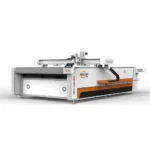
| Product Type | CNC Oscillating Knife Cutting Machine |
| Working Area | 1600 × 2500 mm |
| Machine Size | 3450 × 2300 × 1250 mm |
| Rated Power | 9 kW |
| Table Type | Flat magnesium-aluminum alloy vacuum adsorption table |
| Vacuum Pump | 7.5 kW |
| Translational Velocity | 800–1200 mm/s |
| Cutting Thickness | 20–80 mm (varies by material) (basis to be confirmed) |
| Repeated Accuracy | ≤ 0.1 mm |
| Transmission System | Digital servo motor, linear guide, synchronous belt, ball screw |
| Servo Motor | Delta |
| Linear Rail | Taiwan Hiwin |
| Conveyor Belt | Germany imported (auto feeding) |
| Multifunctional Head | Swiss imported knife with vibration full cutting, half cutting, cursor location |
| Tool Head Options | Oscillating knife, pneumatic knife, high-power vibrating knife, circular knife, V-cutting knife, drag knife, creasing wheel, dotted line knife, punching, brush |
| Visual Positioning | Small CCD camera mark point positioning, panoramic camera recognition, projection positioning |
| Instruction System | HP-GL compatible format |
| Voltage | 380V ± 10% |
| Safety Device | Infrared sensors |
| Language Options | English, Russian, Italian, Chinese (special languages customizable) |
Application Suitability
| Application | Material or Output |
|---|---|
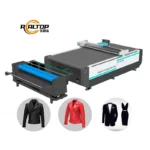
| Garment and footwear cutting | Clothing cloth, shoe material, non-woven fabric, PU, EVA |
| Automotive interior trimming | Sponge composite leather, carpet, floor mat material |
| Soft home furnishings | Textile, fabric, leather, sponge, XPE |
| Sealing and gasket production | PTFE, ETFE, rubber, gasket material |
| Packaging and sample making | Corrugated cardboard, plastic box, sticker, film |
| Graphic advertising and printing | PVC, soft glass, silicon, PP, PE |
| Sports and outdoor products | Composite materials, foam board, fiberglass |
Why Working Area Alone Is Not Enough for a CNC Oscillating Knife Cutting Machine Manufacturer
A 1600 × 2500 mm table tells you the sheet size it holds, not whether it can actually cut your material cleanly at production speed.
I have watched buyers sign off on a flatbed cutter because the bed dimensions matched their nesting layout, only to discover on day one that the vacuum zoning could not hold small pattern pieces down, or the specified tool head crushed the foam instead of slicing it. The RT-D2516/RT-S2516 addresses this with configurable vacuum adsorption and a full tool head ecosystem, but those choices must be locked in before the machine is built. Specifying a cutter on footprint alone is the fastest way to end up with a machine that fits the floor but fails the material [NEED_CITE: common mis-specification causes in digital cutting procurement].
Matching the Knife Type to Your Material Stack
A CNC oscillating knife cutting machine manufacturer must offer more than a single blade. The RT-D2516/RT-S2516 supports oscillating, pneumatic, drag, circular, and V-cutting knife heads alongside creasing wheels and punching tools. An oscillating head handles dense foam and composites by vibrating through the stock, while a drag knife suits thinner vinyl and sticker films. Choosing the wrong head produces ragged edges or delaminated layers, so the tool configuration must reflect the actual material stack on your production floor.
Visual Positioning for Printed Contour Work
When cutting printed textiles or pre-printed packaging samples, the knife must track registration marks across the full sheet. This platform offers small CCD mark point positioning, panoramic camera recognition, and projection positioning. Panoramic recognition suits large-format printed fabric where marks may shift during feeding, while projection positioning helps operators align irregular pieces before the cut cycle starts [NEED_CITE: CCD contour recognition accuracy standards in digital cutting].
What the Core Specifications Mean on the Shop Floor
The Delta servo motors paired with Taiwan Hiwin linear rails deliver repeated accuracy of ≤ 0.1 mm, which matters when cutting multi-layer fabric stacks where cumulative drift ruins an entire nest. The 7.5 kW vacuum pump paired with the magnesium-aluminum alloy table provides the suction needed to hold flexible materials flat; weak vacuum on porous textiles causes fabric lift mid-cut and destroys edge quality. Translational velocity of 800–1200 mm/s governs how fast the head moves between cuts, though actual cutting speed depends on material density and thickness. The 9 kW rated power covers the servo drives, vacuum pump, and control system together. HP-GL instruction format compatibility ensures your existing nesting software can output tool paths without a translator layer.
The Hidden Cost of Wrong Configuration Choices
Buyers who skip sample testing often find that the vacuum zoning cannot grip small gasket pieces, letting them lift and shift under the knife head at full speed. A machine ordered without confirming voltage and control language arrives with a 380V supply the local panel cannot support, or an interface the operators cannot read. Software file format incompatibility surfaces only when the first production job is queued and the nesting output refuses to load. Each of these failures is preventable but expensive once the machine is on the floor [NEED_CITE: post-delivery configuration disputes in CNC equipment imports].
Why Source This Cutter from REALTOP
REALTOP designs and manufactures both knife and laser cutting platforms in-house, so the RT-D2516/RT-S2516 is specified by material behavior rather than by which machine happens to be available. Tool head and table configuration are confirmed against your actual material samples before the order is finalized. CCD camera positioning options are validated at production speed, not just during a slow demonstration. Software compatibility with your existing HP-GL workflow is confirmed before shipment. Voltage, plug type, and control panel language are customized to your facility. Sample cutting on your own material roll is performed and documented before commitment.
Documentation & Verification
- Machine specification sheet listing confirmed tool head and vacuum table zoning for your material
- Electrical schematic and voltage confirmation matched to your local supply standard
- Sample cutting report produced on your actual fabric, leather, or composite roll
- Factory test record documenting repeated accuracy and cutting quality before dispatch
- Software licence and HP-GL file format compatibility note for your nesting workflow
- Spare parts list covering blades, vacuum cups, and wearable transmission components
Installation, Commissioning & Support
- Requires a leveled floor area exceeding 3450 × 2300 mm with clearance for auto-feeding conveyor
- Dedicated 380V ± 10% circuit with appropriate breaker sizing for the 9 kW rated load
- Machine ships partially assembled; vacuum table and gantry require on-site alignment
- First-run parameter tuning covers vacuum zoning, knife oscillation frequency, and servo calibration
- Operator training includes HP-GL file import, nesting layout, and tool head changeover procedures
- Spare blades, vacuum seals, and belt segments included for initial production runs
What to Provide with Your Inquiry
To recommend the correct RT-D2516/RT-S2516 configuration, we need your material type, thickness range, and maximum sheet or roll dimensions. Specify your local voltage and frequency, preferred control language, and whether your nesting software outputs HP-GL. If your production includes printed contour work, indicate the mark type and spacing so the correct CCD or panoramic positioning option is selected. Sending a sample roll of your actual production material allows us to run a documented cutting test before any commitment is made.
Frequently Asked Questions
Q: How do I choose between an oscillating knife and a laser for my material?
A: Oscillating knives cut flexible and composite materials without burning or sealing edges, which is critical for fabrics that will be sewn after cutting. Lasers suit acrylic, wood, and materials requiring sealed edges. The RT-D2516/RT-S2516 is a knife platform; if your material requires laser processing, a different machine family applies.
Q: What distinguishes the RT-D series from the RT-S series?
A: The RT-D and RT-S designations reflect different configuration tiers within the same 2516 working area platform. Specific differences in tool head configuration, feeding system, and automation level should be confirmed based on your material and production volume requirements.
Q: How does CCD camera positioning handle printed contour cutting at speed?
A: The small CCD camera tracks printed registration marks on the material surface, adjusting the cutting path in real time. Panoramic camera recognition covers larger formats where mark positions may shift during feeding. Production speed capability depends on mark contrast, size, and spacing on your specific printed material.
Q: What vacuum table zoning is needed for cutting small gasket or pattern pieces?
A: Small parts require finer vacuum zoning to maintain adequate suction across limited surface areas. The magnesium-aluminum alloy table on the RT-D2516/RT-S2516 supports configurable zoning. The correct zone layout depends on the smallest piece dimensions in your nesting layout.
Q: Which file formats work with the nesting workflow?
A: The instruction system accepts HP-GL compatible format. Confirm your nesting software can export in this format before order placement. Additional file format support should be verified during the pre-order software compatibility check.










商品评价
There are no reviews yet.