





Fast Delivery
Quick, reliable shipping to any location.

Free & easy returns
Return this item by mail or in store within 90 days for a full refund.
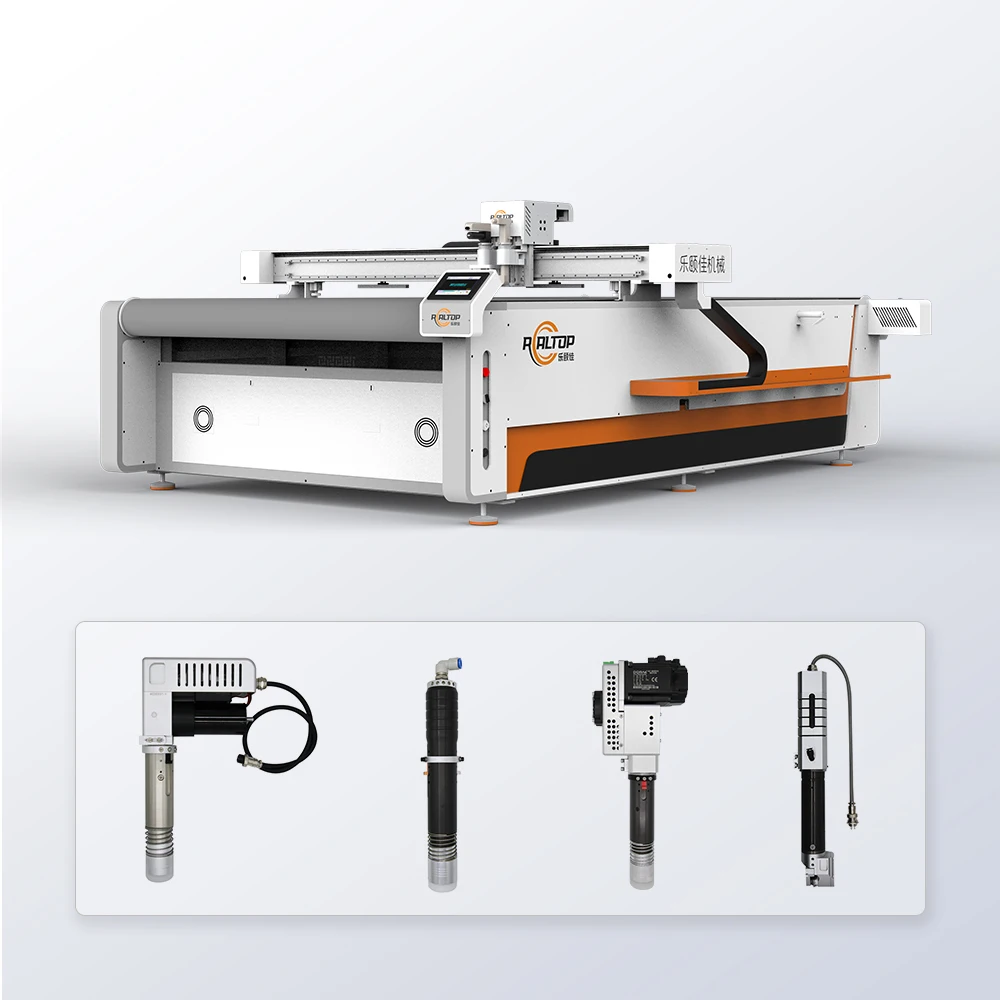
Tool head configured per material — a Swiss imported oscillating knife, pneumatic knife, circular knife, and creasing wheel on one multifunctional head, so a single platform covers cutting, milling, punching, and marking across fabric, leather, foam, and composite sheets.
Technical Specifications
| Parameter | Value |
|---|---|
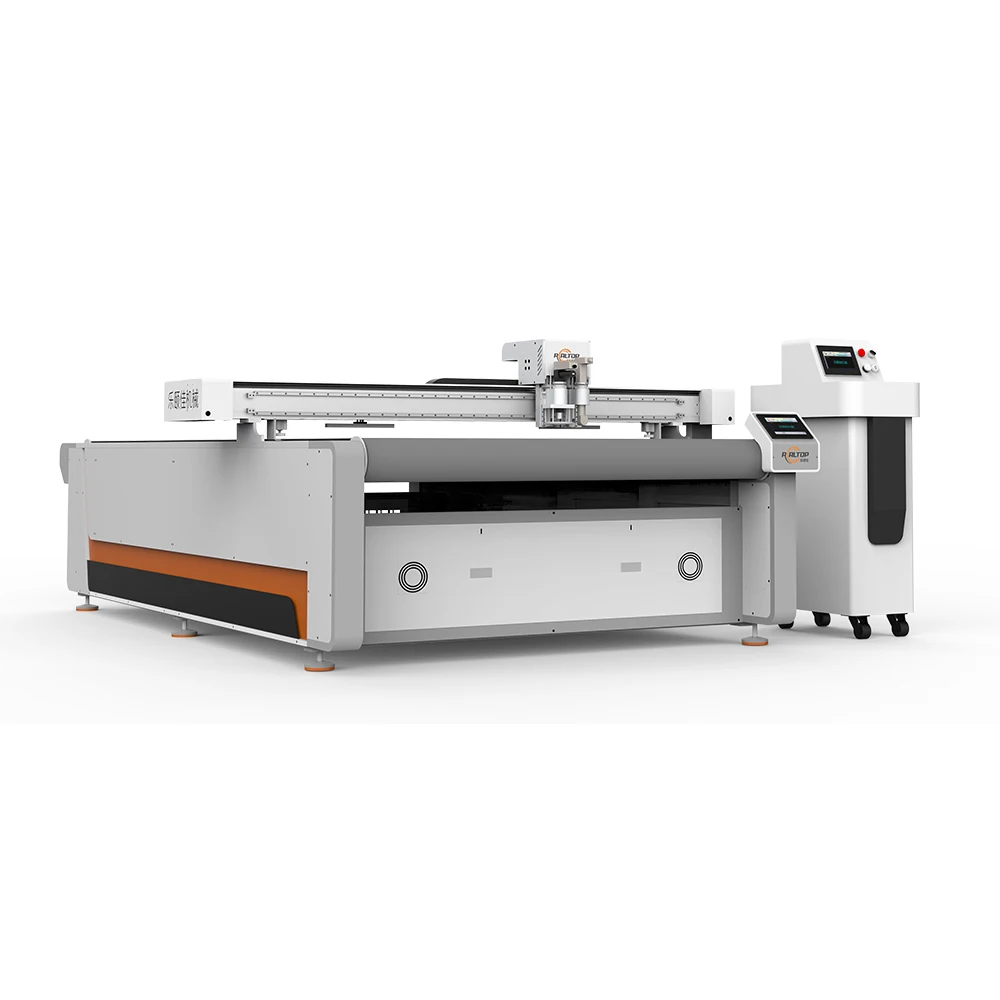
| Product Type | CNC Oscillating Knife Cutting Machine with Auto Feeding |
| Model | RT-D2516/RT-S2516 |
| Working Area | 1600×2500 mm |
| Machine Size | 3450×2300×1250 mm |
| Rated Power | 9 kW |
| Voltage | 380V ±10% |
| Table Type | Flat working table / Auto feeding table (conveyor) |
| Translational Velocity | 800–2000 mm/s |
| Cutting Speed | 200–800 mm/s (basis to be confirmed) |
| Cutting Thickness | ≤100 mm (varies by material) |
| Repeated Accuracy | ≤0.1 mm |
| Multifunctional Head | Swiss imported knife with vibration full/half cutting, cursor location; supports pneumatic knife, high-power vibrating knife, circular knife, V-cutting knife, drag knife, creasing wheel, dotted line knife, punching, brush |
| Positioning System | Small CCD camera mark point positioning / panoramic camera recognition / projection positioning |
| Transmission System | Digital servo motor, linear guide, synchronous belt, ball screw (Taiwan Hiwin rail) |
| Servo Motor Option | Delta (China) or Panasonic (Japan) |
| Vacuum Table | Magnesium-aluminum alloy with fluorocarbon PVDF powder spraying, anodic oxidation, hard oxidation |
| Vacuum Pump | 7.5 kW, integrated aviation aluminum shell with built-in silencer sponge |
| Control Panel | Touch screen, multiple language support |
| Software | Auto typesetting/nesting; supports PLT, DXF, AI formats; HP-GL compatible instruction system |
| Safety Device | Infrared induction blocking, anti-collision sensors on both beam sides, emergency stop button |
| Language Options | English, Russian, Italian, Chinese (special languages customizable) |
| Certification | CE |
Application Suitability
| Application | Material or Output |
|---|---|
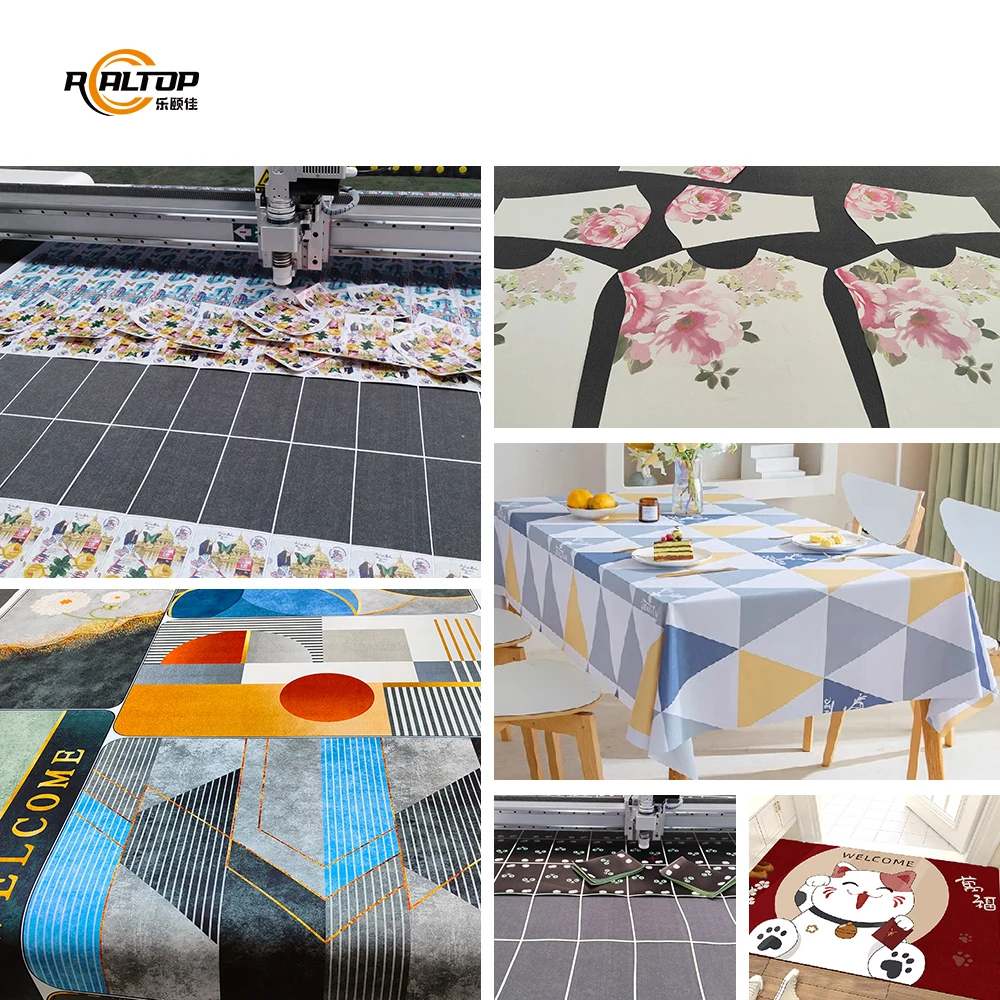
| Garment and footwear production | Clothing cloth, shoe material, leather, non-woven fabric |
| Soft home furnishings | Carpet, textile, sponge, PU, EVA |
| Automotive interiors | Leather, composite materials, gasket material |
| Packaging and carton sample making | Corrugated cardboard, cardboard, plastic box, sticker, film |
| Advertising and signage | PVC, foam board, sticker, vinyl |
| Sports and outdoor products | XPE, EVA, composite materials |
| Sealing pads and gaskets | Rubber, PTFE, ETFE, fiberglass |
What a Working Area Figure Alone Cannot Tell You About Material Compatibility
The cutting method must match the material, not the other way around.
A buyer specifies a 1600×2500 mm bed and assumes the machine handles their 8 mm foam gasket stock. The machine arrives, the oscillating knife engages, and the edge comes out crushed rather than sheared — the tool head was wrong for the density. I have watched fabricators spend entire commissioning weeks swapping blades and adjusting stroke frequency because the initial inquiry never mentioned material composition. A CNC cutting machine manufacturer worth engaging will ask for your material type, thickness, and daily volume before proposing a configuration. [NEED_CITE: matching oscillating knife stroke frequency to foam density and composite layup]
The RT-D2516/RT-S2516 platform addresses this by offering a multifunctional head that accepts oscillating, pneumatic, circular, drag, and V-cutting knives alongside a creasing wheel and punching tool. The selection happens before the order, based on sample cutting runs on the buyer’s own material — not on generic swatch books.
Knife Versus Laser: Where Each Method Belongs
This catalogue exists so a buyer can survey the complete knife cutting range before deciding whether a blade or a beam suits their production. Oscillating knives shear through woven textiles, non-wovens, and layered foam without melting synthetic fibers — an outcome a CO2 laser would produce on the same fabric. Drag knives score sticker and vinyl contours where a full through-cut is unnecessary. The RT-D2516/RT-S2516 gives a single platform access to every blade variant, letting the CNC cutting machine manufacturer match the tool to the stock rather than forcing one method across incompatible materials.
Auto Feeding and Flat Table: Two Workflows on One Chassis
Roll-fed fabric and sheet-fed corrugated board demand fundamentally different material handling. The auto feeding conveyor pulls continuous textile rolls across the cutting zone while the 7.5 kW vacuum pump holds the web flat against the magnesium-aluminum alloy platen. For single-sheet work — leather hides, gasket blanks, packaging samples — the flat working table provides the same vacuum hold-down without the conveyor mechanism. Switching between configurations is a build decision made at order, not a field retrofit. [NEED_CITE: vacuum hold-down requirements for continuous roll versus single-sheet cutting workflows]
Reading the Specs That Actually Govern Cut Quality
Cutting speed of 200–800 mm/s means little without knowing the material and layer count; a single ply of polyester lining fabric permits the upper range, while 20 mm EVA foam forces a slower pass. Repeated accuracy of ≤0.1 mm governs how well nested pattern pieces align across a full bed — critical when garment panels must match at the seam. The Taiwan Hiwin linear guide and ball screw transmission maintain that tolerance across the full 2500 mm stroke, whereas a belt-only drive on a table this size introduces positional drift at the far end of travel. The CCD camera options — mark point, panoramic, or projection — solve a different problem entirely: aligning cuts to pre-printed graphics on signage and textile panels where contour position varies sheet to sheet.
What Happens When the Wrong Tool Head Ships
A drag knife slicing through 15 mm foam produces ragged edges and crushed cells because the blade drags rather than oscillates. A circular knife on woven leather generates frayed margins at curve transitions. These failures surface during the first production run, not during the factory test — because the factory test used the supplier’s stock material, not yours. The cost is not just scrap; it is delayed shipment to the buyer’s own customer and a second round of tool head procurement while the machine sits idle. [NEED_CITE: tool head selection errors and their downstream cost in flexible material cutting]
Why Source This CNC Knife Cutting Machine for Sale Through the Builder
In-house design covers both knife and laser technology on the same engineering team, so a buyer comparing methods gets a single technical conversation rather than conflicting quotes from two vendors. Tool head and table configuration are specified per material and production volume before the order is placed. CCD camera positioning is confirmed against the buyer’s actual printed marks, not demonstrated on a generic test chart. Software compatibility — PLT, DXF, AI file import and nesting workflow — is verified before shipment. Voltage, plug type, and control language are locked in during the specification stage, so the 380V ±10% supply and chosen language arrive correct for the destination facility.
Documentation & Verification
- Machine specification sheet listing the exact tool head and table configuration matched to your material
- Electrical schematic confirming 380V ±10% wiring and plug standard for your facility
- Sample cutting report produced on your own fabric, leather, or foam stock before order commitment
- Software licence and file format compatibility note covering PLT, DXF, and AI import paths
- Factory test record documenting repeated accuracy across the full 1600×2500 mm working area
- Operation and maintenance manual in the chosen control language with spare parts list included
Installation, Commissioning & Support
- The 3450×2300×1250 mm footprint requires clear floor space with level concrete and anchor points
- A dedicated 380V ±10% circuit must be installed before the 9 kW rated power draw is connected
- Machine arrives fully assembled; positioning, leveling, and vacuum hose connection are the primary site tasks
- First-run commissioning includes setting oscillating knife stroke frequency and vacuum zone mapping for your material
- Operator training covers touch screen navigation, nesting software workflow, and tool head changeover procedure
- Spare parts list identifies wear items — oscillating knife blades, vacuum seals, guide rail wipers — for local stocking
What to Include in Your Inquiry
Share the material type, thickness range, and maximum sheet or roll width you plan to process. State the daily cutting volume and whether your workflow runs roll-fed or sheet-fed stock. Confirm the local voltage and frequency standard, the control language your operators require, and whether your existing design files are in PLT, DXF, or AI format — this determines the software configuration before production begins.
Frequently Asked Questions
Q: How do I choose between oscillating knife, drag knife, circular knife, and pneumatic knife for my material?
A: Oscillating knives shear through thick foam, layered fabric, and composites with a vibrating vertical stroke. Drag knives score thin vinyl and sticker materials without through-cutting. Circular knives slice continuous straight lines in textile rolls. Pneumatic knives drive through dense rubber and gasket stock where oscillating stroke alone lacks downward force. The correct choice depends on material density, thickness, and cut geometry.
Q: Flat working table or auto feeding conveyor — which fits my operation?
A: Auto feeding suits roll-fed textile and non-woven production where continuous material advances across the cutting zone between each nested layout. Flat table serves single-sheet materials like leather hides, corrugated board, and foam blanks loaded one at a time. Some buyers run both workflows and specify the conveyor with a removable flat overlay.
Q: What does the CCD camera actually solve for printed contour cutting?
A: Mark point positioning reads fiducial marks placed at known intervals on printed sheets, aligning each cut path to the graphic. Panoramic recognition scans the entire sheet surface to detect contour edges without dedicated marks. Projection positioning overlays the cut path visually on the material for manual verification. The right option depends on whether your print workflow includes registration marks.
Q: How is voltage, plug, and control language confirmed before shipment?
A: During specification, the buyer states the facility voltage, frequency, plug type, and preferred control language. The electrical schematic is updated and shared for approval. The touch screen interface is loaded with the selected language — English, Russian, Italian, Chinese, or a custom option — and verified during factory testing before crating.
Q: Will the nesting software accept my existing design files?
A: The software imports PLT, DXF, and AI formats and uses an HP-GL compatible instruction set. Before order commitment, a sample file from the buyer’s design workflow is imported, nested, and cut on the buyer’s material to confirm compatibility and material yield.










商品评价
There are no reviews yet.