

Fast Delivery
Quick, reliable shipping to any location.

Free & easy returns
Return this item by mail or in store within 90 days for a full refund.
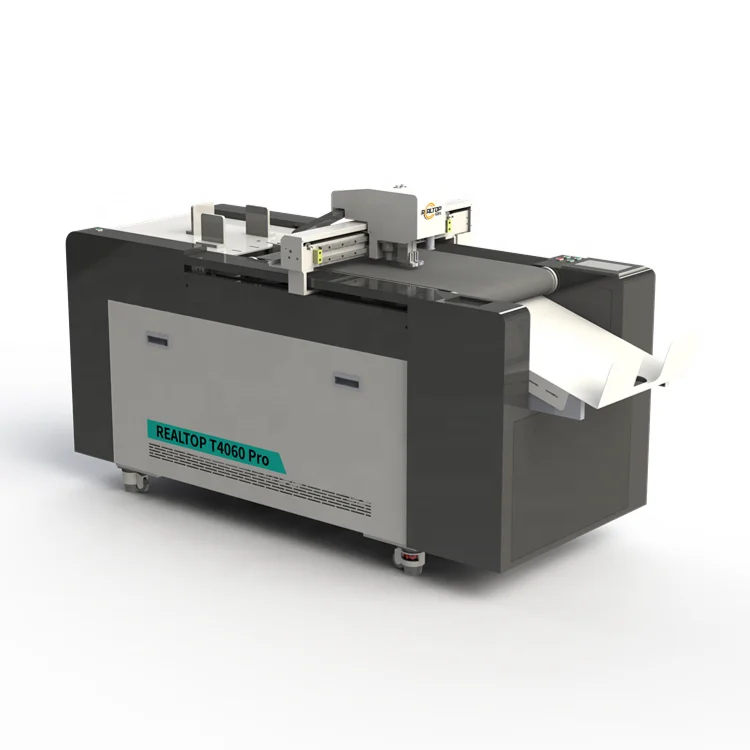
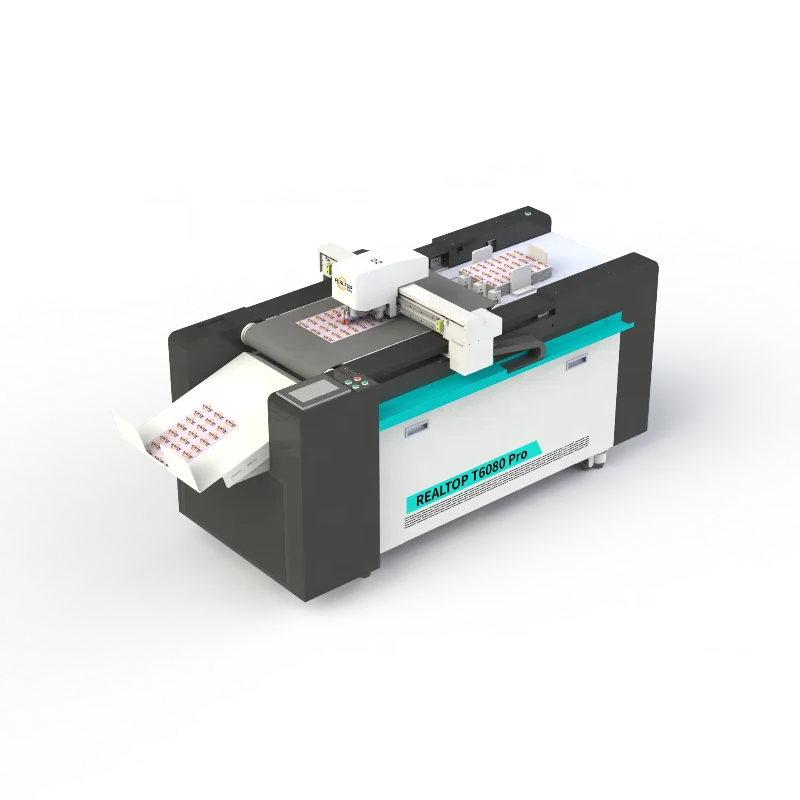
Precision Tooling Match — every oscillating knife, drag knife, and creasing wheel option is specified against the buyer’s actual material thickness and daily volume before a CNC oscillating knife cutting machine full catalogue order is confirmed.
Technical Specifications
| Parameter | Value |
|---|---|
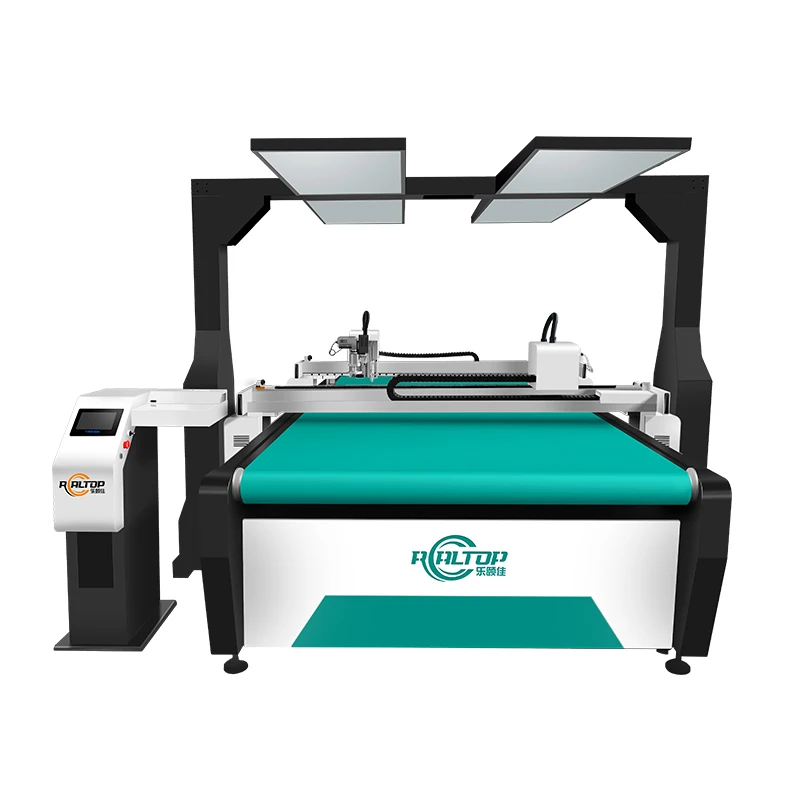
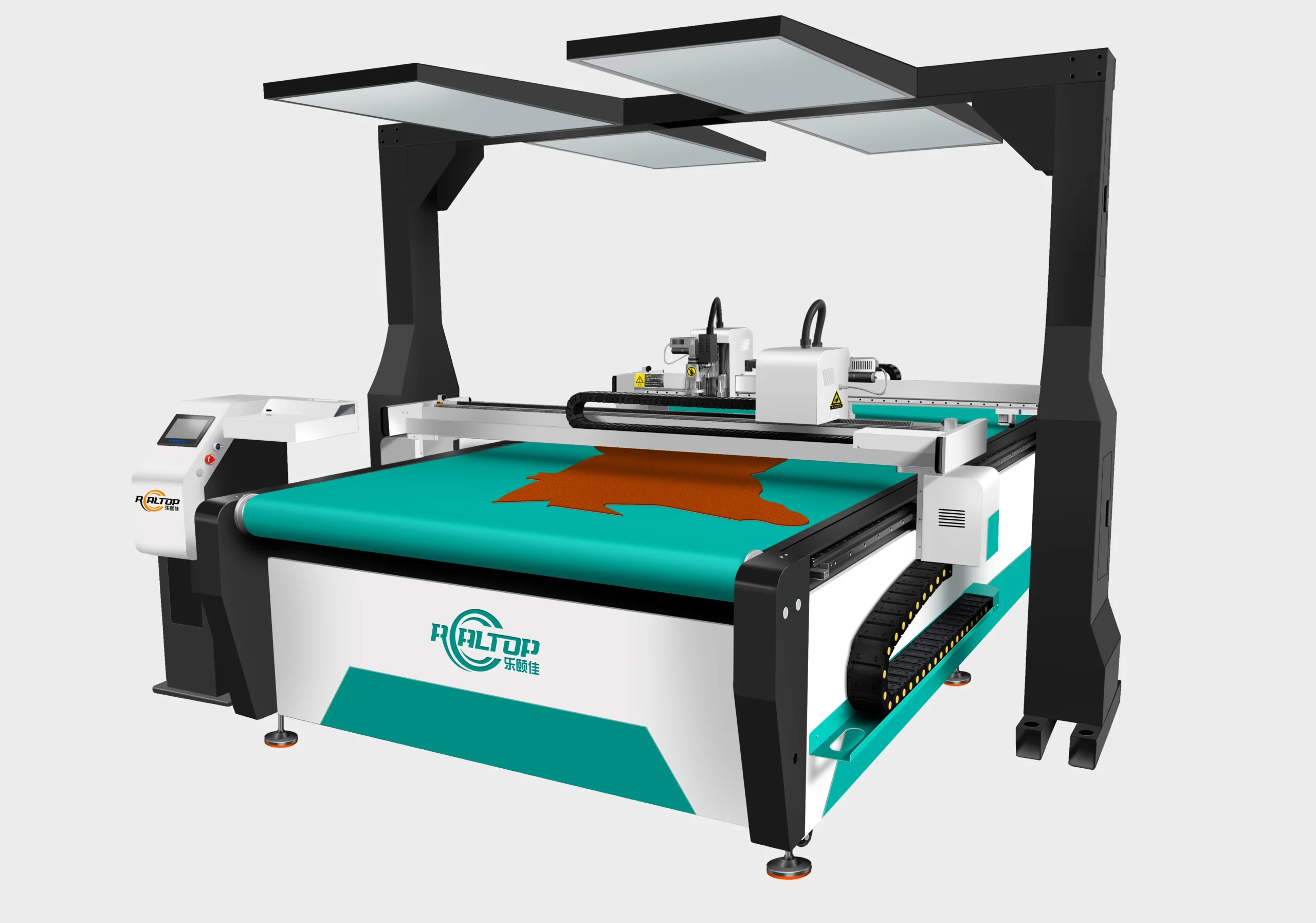
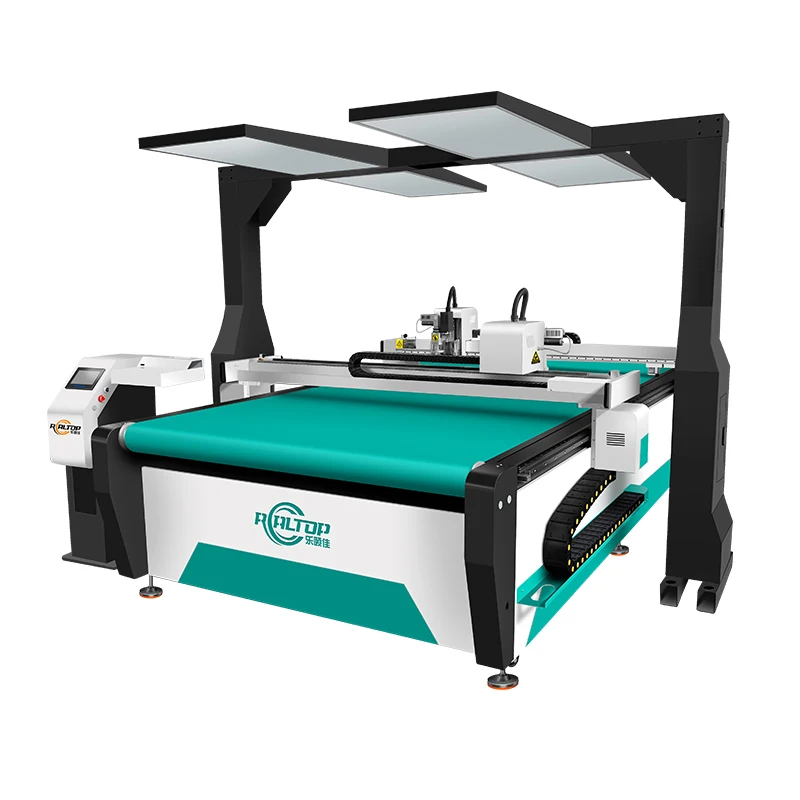
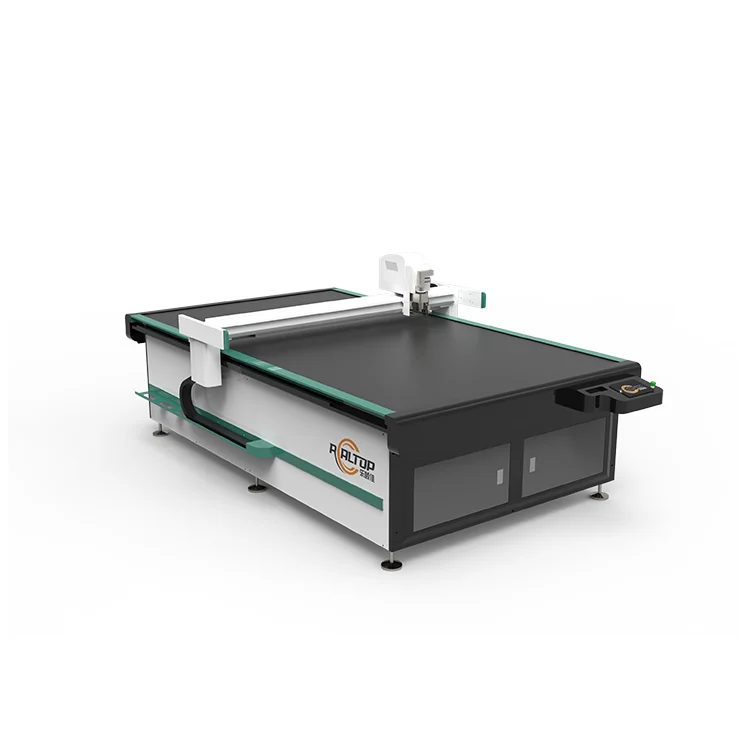
| Model | Realtop-1625 (RT-D2516 / RT-S2516) |
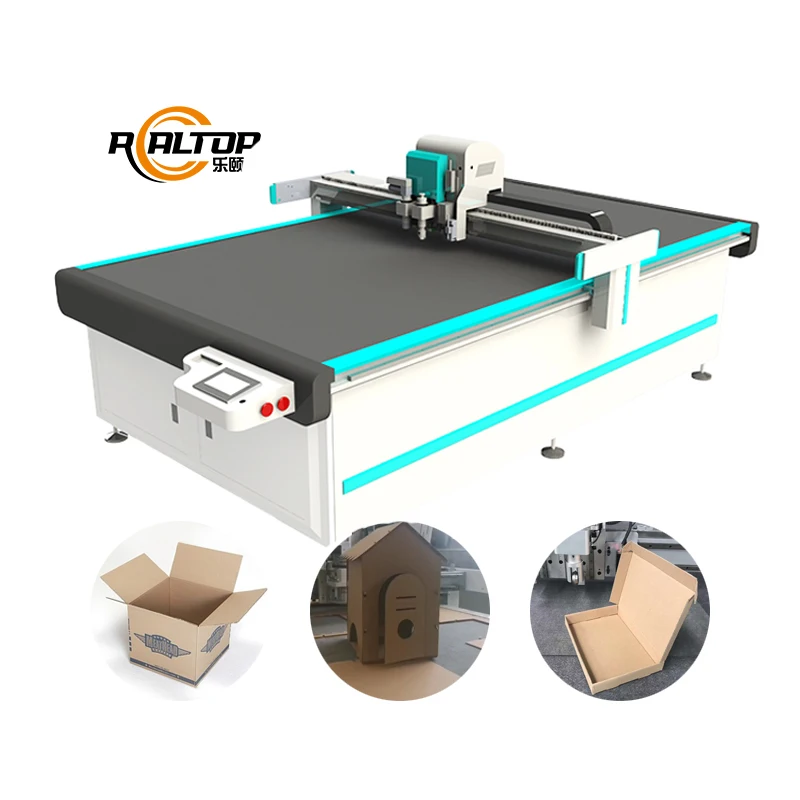
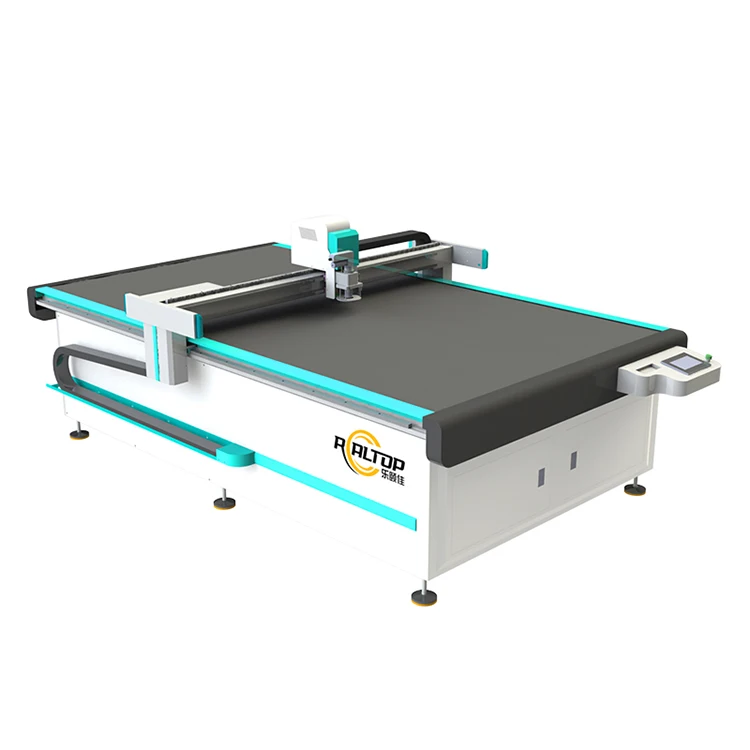
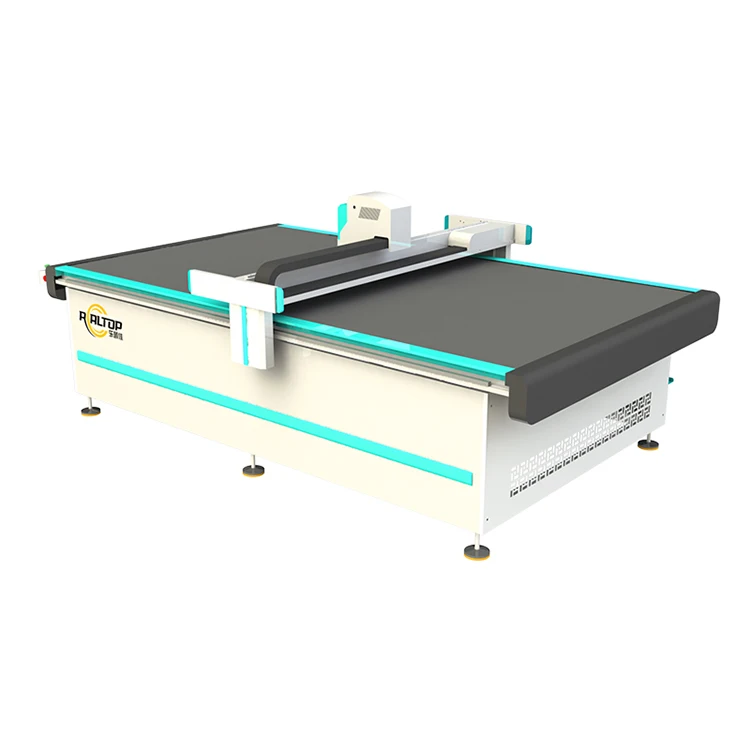
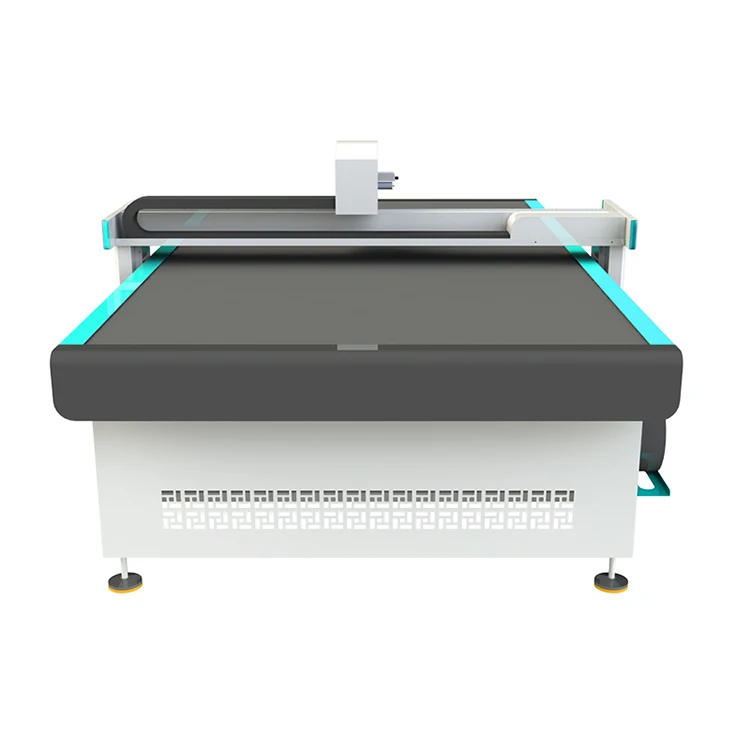
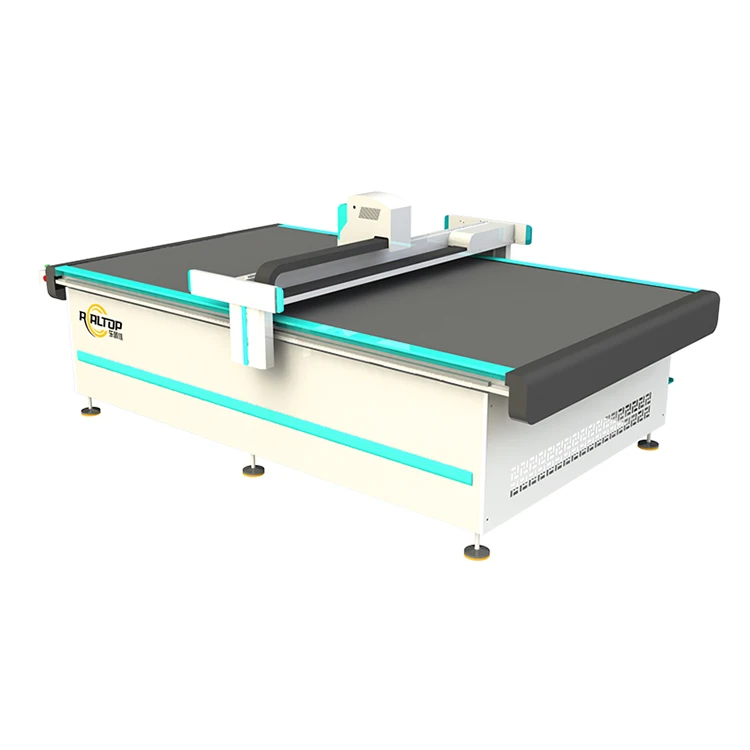
| Product Type | CNC Oscillating Knife Cutting Machine |
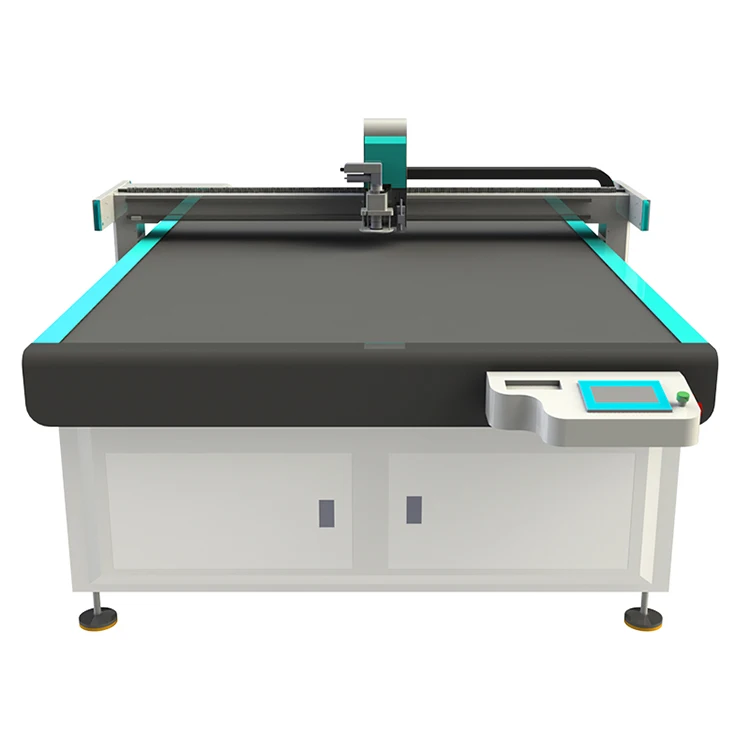
| Working Area | 1600 × 2500 mm |
| Machine Dimensions | 3450 × 2300 × 1250 mm |
| Rated Power | 9 kW |
| Voltage | 380V ±10% (frequency to be confirmed per destination market) |
| Vacuum Pump | 7.5 kW |
| Vacuum Table | Flat working table with vacuum adsorption and zoning |
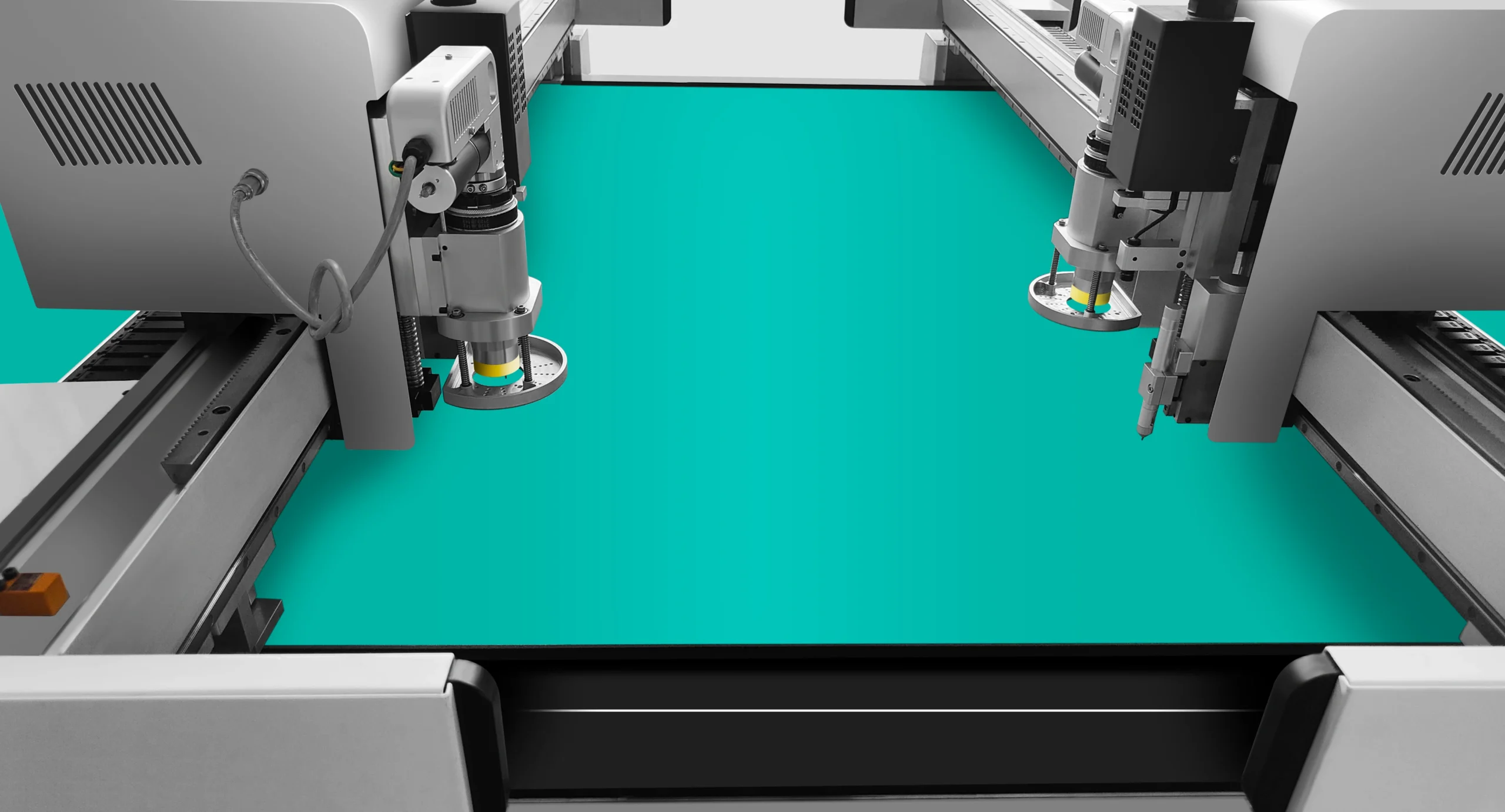
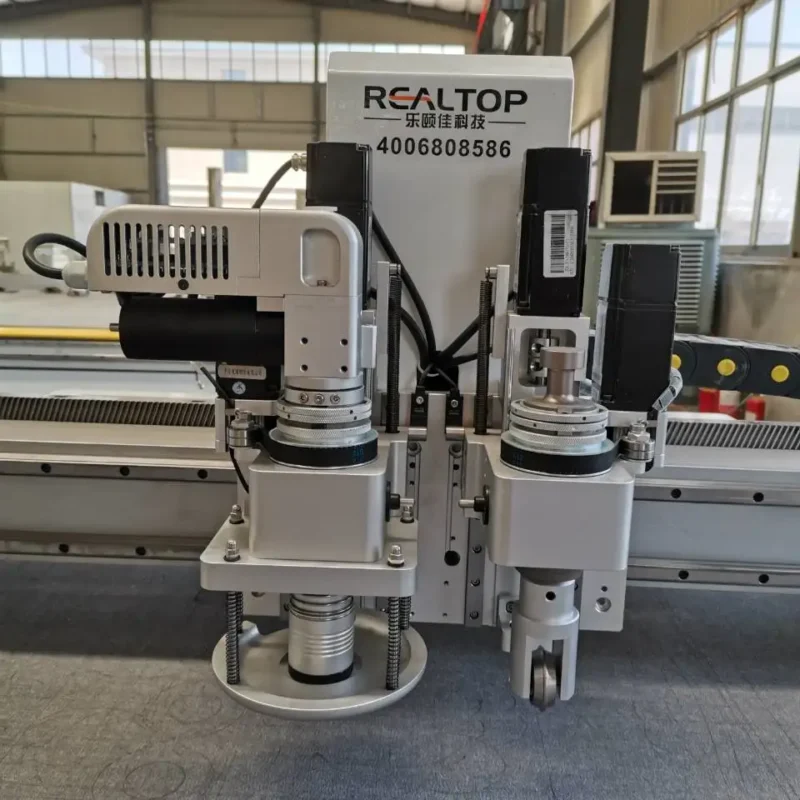
| Tool Head Options | Oscillating knife, pneumatic knife, high-power vibrating knife, circular knife, V-cutting knife, drag knife, creasing wheel, dotted line knife, punching, brush |
| Vision System | Small CCD camera mark point positioning, panoramic camera recognition positioning, projection positioning (optional) |
| Cutting Thickness | 20–80 mm (varies by material — confirm material type and density before quoting) |
| Translational Velocity | 800–1200 mm/s |
| Repeatability | ≤0.1 mm |
| Transmission System | Digital servo motor with linear guide, synchronous belt, and ball screw |
| Linear Guide | Taiwan Hiwin rail |
| Servo Motor | Taiwan Delta |
| Conveyor Belt | Germany imported |
| Felt Belt | Wear-resistant anti-pull composite fiber felt (tension strength increased by 35% — source claim, verify against manufacturer catalog) |
| Frame | Hard steel frame structure |
| Safety Device | Infrared sensors |
| Instruction System | HP-GL compatible format |
| Control Software | Realtop self-developed software; pattern cutting design software for carton, automotive foot pads, seat covers, garment fabric |
| Language Options | English, Russian, Italian, Chinese; special languages customizable |
| Feeding System | Automatic pulling and receiving |
| Cutting Method | Blade physical cutting (no laser, no burnt edge, no air pollution) |
| Warranty | 1 year (free parts; buyer pays shipping; on-site engineer available with buyer covering travel and accommodation) |
| Assembly State | Fully assembled (source value — verify against manufacturer catalog) |
| Certification | 5 patents technology certification (specific standards such as CE not stated in source — confirm) |
Application Suitability
| Application | Material or Output |
|---|---|
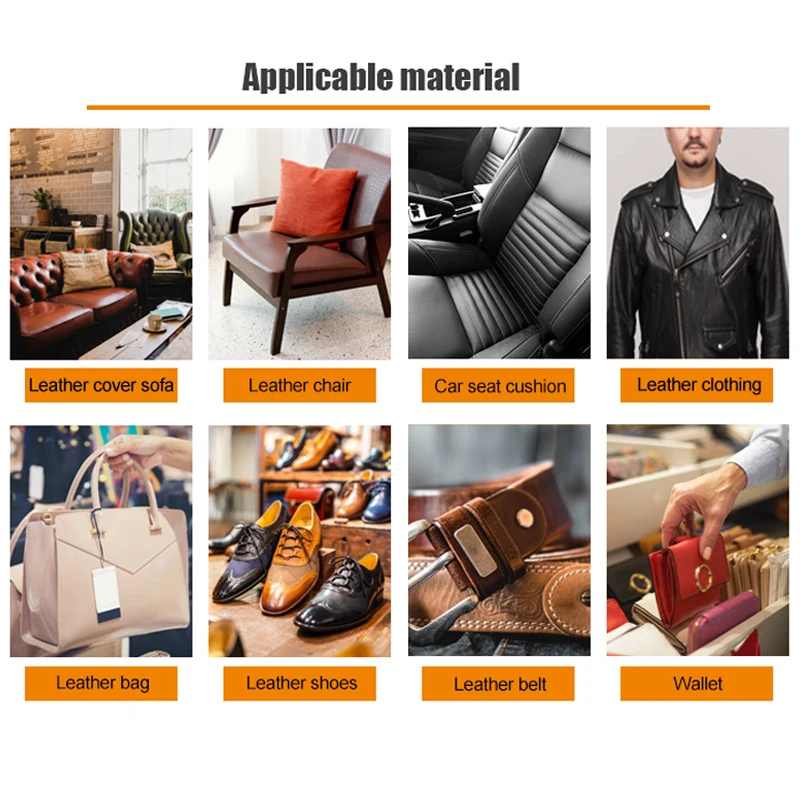
| Automotive interior trimming | PU leather, genuine leather, and composite layered fabrics for seat covers and floor mats |
| Footwear and luggage production | Shoe material, luggage material, and non-woven fabric in multi-ply nesting layouts |
| Gasket and seal fabrication | Rubber, PTFE, ETFE, and fiberglass sheets cut to precise contour profiles |
| Packaging and carton sample making | Corrugated cardboard, cardboard, and plastic box materials scored and cut with creasing wheel |
| Signage and graphic production | Sticker, film, PVC, and vinyl sheets cut using CCD contour recognition |
| Soft furnishing and carpet cutting | Carpet, sponge, PU, EVA, XPE, and foam board in large-format single-pass layouts |
Why Material Thickness Changes the Machine You Actually Need
A working area measurement alone tells you nothing about whether the knife head can hold an edge through a full shift on your production material.
When I was commissioning a leather cutting line in Dubai, the sample approval ran on 1.5mm PU and the machine performed well. The buyer’s real production ran 3.5mm thick牛皮with a composite backing layer. The oscillating knife head that handled the sample could not sustain the load on the thicker stock and the blade edge deteriorated within three days, stopping the entire downstream line. That outcome is not a machine defect — it is a specification gap. Buyers sourcing from a CNC oscillating knife cutting machine full catalogue need to match tool head load capacity and vacuum hold-down force to the actual material stack, not the sample coupon [NEED_CITE: material density and compressibility effects on oscillating knife load].
Matching the Tool Head to the Material Stack
The Realtop-1625 offers ten distinct tool head options, and the correct selection depends on what you are actually cutting day after day. An oscillating knife handles dense foam and composite leather where a drag knife would crush the surface, while a creasing wheel paired with a drag knife gives packaging sample makers clean score lines on corrugated board without cutting through. The CNC oscillating knife cutting machine full catalogue approach means the buyer selects the tool configuration matched to their material rather than adapting production to whatever head happens to be installed.
Vacuum Zoning and Small-Part Hold-Down
A 7.5 kW vacuum pump on a 1600 × 2500 mm table provides strong hold-down for large sheets, but small nested parts in gasket or sticker production can lift at the edges if the vacuum zoning is not configured for the cutting layout. The flat working table with vacuum adsorption is designed to address this, yet the zoning pattern must be confirmed against the buyer’s typical nest file before the machine ships. Production speed on a CNC oscillating knife cutting machine full catalogue system drops noticeably when operators have to pause and reposition parts that have shifted during cutting [NEED_CITE: vacuum table zoning best practices for small-part nesting].
Reading the Specs That Actually Affect Output
The Taiwan Hiwin linear guides and Delta servo motors deliver repeatability within ≤0.1 mm, which matters when cutting interlocking gasket profiles or nested garment patterns where cumulative drift across a long cut path ruins the entire sheet yield. Translational velocity of 800–1200 mm/s sets the upper limit for straight-line travel, but real cutting speed depends on the corner density of the pattern and the material resistance against the blade. The hard steel frame structure resists deflection under the lateral force of a high-power vibrating knife cutting through dense rubber, keeping the cut edge perpendicular rather than angled. HP-GL instruction format compatibility means the machine accepts files from most nesting software packages already in use at the buyer’s facility, avoiding a forced software switch that disrupts existing workflow. The automatic pulling and receiving feeding system supports continuous roll-fed material, reducing the manual handling between sheets that otherwise limits throughput on a CNC oscillating knife cutting machine full catalogue installation.
The Cost of Skipping Configuration Verification
Choosing a machine based on table size and price alone creates downstream costs that are never reflected in the quotation. A wrong tool head produces ragged edges on leather or crushed cell structure on foam, forcing secondary trimming that adds labor and scrap. Insufficient vacuum zoning causes small parts to shift mid-cut, turning a high-yield nest into a partial sheet with material waste. A vision system promised for printed contour work but not calibrated to the buyer’s print registration marks forces operators back to manual alignment, erasing the speed advantage of CCD positioning entirely. Voltage and plug mismatches discovered at arrival add weeks of delay for transformer sourcing before the machine can power on [NEED_CITE: electrical compatibility delays in international machinery procurement].
Why This Supplier Approach Works for Production Buyers
The design team covers both knife and laser cutting technologies under one roof, so a buyer can match the cutting method to the material rather than forcing one technology across incompatible substrates. Tool head and table configurations are specified per material type and production volume before the order is placed. CCD camera positioning options are verified against the buyer’s printed contour files, not just demonstrated on a standard test chart. Software compatibility with the buyer’s existing file format and nesting workflow is confirmed in writing before production begins. Sample cutting runs on the buyer’s own material provide a physical reference for edge quality, cutting depth, and cycle time before any commitment is made.
Documentation & Verification
- Machine specification sheet confirming working area, tool head list, and voltage for your facility
- Electrical schematic with voltage and frequency match confirmed before dispatch
- Tool head and vacuum table configuration list matched to your material type and thickness
- Sample cutting report produced on your actual material stock with edge quality photos
- Software licence documentation and file format compatibility note for your nesting workflow
- Operation and maintenance manual in your selected control language
Installation, Commissioning & Support
- Confirm 380V ±10% supply with dedicated circuit for the combined 9 kW machine and 7.5 kW vacuum pump
- Fully assembled delivery requires clear floor space of at least 3450 × 2300 mm plus operator access clearance
- First-power commissioning includes servo calibration and vacuum zoning setup for your primary material
- Operator training covers tool head changeover, CCD mark registration, and nesting file import procedures
- Spare parts list identifies wear items including felt belt, knife blades, and vacuum seals specific to your configuration
- Annual maintenance schedule covers linear guide lubrication and synchronous belt tension checks on Hiwin rails
Before You Request a Quotation
Tell us the material type, thickness, and sheet or roll dimensions you run most often. Share your daily volume target and the nesting software you currently use so we can confirm HP-GL file compatibility and CCD contour file registration. Specify your local voltage, frequency, and plug standard along with your preferred control language to ensure the electrical and interface configuration is correct before the machine leaves the factory.
Frequently Asked Questions
Q: How do I choose between oscillating knife, drag knife, and other tool heads for my material?
A: The selection depends on material density, thickness, and edge quality requirement. Oscillating knives suit dense foam, leather, and composites where a clean perpendicular cut is needed. Drag knives work on thinner vinyl and sticker films. Creasing wheels score carton without cutting through. We recommend sending your production material for a sample cutting test so the correct head is confirmed before the order.
Q: What working area sizes are available across the full catalogue range?
A: The range spans compact sample-making tables to large-format conveyor-fed systems. The Realtop-1625 provides a 1600 × 2500 mm working area, which covers most standard sheet sizes for leather, fabric, and gasket production. Other sizes in the catalogue address both smaller packaging prototyping needs and wider roll-fed textile cutting requirements.
Q: Does CCD contour recognition track printed marks reliably at production speed?
A: The panoramic camera recognition and small CCD mark point positioning systems are both available. Reliability at production speed depends on print mark contrast, size, and spacing on your specific material. We test the vision system against your actual printed sheets before shipment to confirm tracking accuracy at your target cutting velocity.
Q: How are voltage, plug type, and control language confirmed before shipment?
A: Your local voltage, frequency, and plug standard are recorded during the specification confirmation stage. The control software language is set to your preference from the available options including English, Russian, Italian, and Chinese, with special languages configurable. All electrical and interface details appear on the specification sheet you approve before production.
Q: Can I see sample cutting results on my own material before placing an order?
A: Yes. Send your production material and the cutting file you plan to use. We run the sample on a configured machine with the tool head matched to your material, then provide a cutting report showing edge quality, dimensional accuracy, and any configuration adjustments needed before your machine enters production.
Precision Tooling Match — every oscillating knife, drag knife, and creasing wheel option is specified against the buyer’s actual material thickness and daily volume before a CNC oscillating knife cutting machine full catalogue order is confirmed.
Technical Specifications
| Parameter | Value |
|---|---|
| Model | Realtop-1625 (RT-D2516 / RT-S2516) |
| Product Type | CNC Oscillating Knife Cutting Machine |
| Working Area | 1600 × 2500 mm |
| Machine Dimensions | 3450 × 2300 × 1250 mm |
| Rated Power | 9 kW |
| Voltage | 380V ±10% (frequency to be confirmed per destination market) |
| Vacuum Pump | 7.5 kW |
| Vacuum Table | Flat working table with vacuum adsorption and zoning |
| Tool Head Options | Oscillating knife, pneumatic knife, high-power vibrating knife, circular knife, V-cutting knife, drag knife, creasing wheel, dotted line knife, punching, brush |
| Vision System | Small CCD camera mark point positioning, panoramic camera recognition positioning, projection positioning (optional) |
| Cutting Thickness | 20–80 mm (varies by material — confirm material type and density before quoting) |
| Translational Velocity | 800–1200 mm/s |
| Repeatability | ≤0.1 mm |
| Transmission System | Digital servo motor with linear guide, synchronous belt, and ball screw |
| Linear Guide | Taiwan Hiwin rail |
| Servo Motor | Taiwan Delta |
| Conveyor Belt | Germany imported |
| Felt Belt | Wear-resistant anti-pull composite fiber felt (tension strength increased by 35% — source claim, verify against manufacturer catalog) |
| Frame | Hard steel frame structure |
| Safety Device | Infrared sensors |
| Instruction System | HP-GL compatible format |
| Control Software | Realtop self-developed software; pattern cutting design software for carton, automotive foot pads, seat covers, garment fabric |
| Language Options | English, Russian, Italian, Chinese; special languages customizable |
| Feeding System | Automatic pulling and receiving |
| Cutting Method | Blade physical cutting (no laser, no burnt edge, no air pollution) |
| Warranty | 1 year (free parts; buyer pays shipping; on-site engineer available with buyer covering travel and accommodation) |
| Assembly State | Fully assembled (source value — verify against manufacturer catalog) |
| Certification | 5 patents technology certification (specific standards such as CE not stated in source — confirm) |
Application Suitability
| Application | Material or Output |
|---|---|
| Automotive interior trimming | PU leather, genuine leather, and composite layered fabrics for seat covers and floor mats |
| Footwear and luggage production | Shoe material, luggage material, and non-woven fabric in multi-ply nesting layouts |
| Gasket and seal fabrication | Rubber, PTFE, ETFE, and fiberglass sheets cut to precise contour profiles |
| Packaging and carton sample making | Corrugated cardboard, cardboard, and plastic box materials scored and cut with creasing wheel |
| Signage and graphic production | Sticker, film, PVC, and vinyl sheets cut using CCD contour recognition |
| Soft furnishing and carpet cutting | Carpet, sponge, PU, EVA, XPE, and foam board in large-format single-pass layouts |
Why Material Thickness Changes the Machine You Actually Need
A working area measurement alone tells you nothing about whether the knife head can hold an edge through a full shift on your production material.
When I was commissioning a leather cutting line in Dubai, the sample approval ran on 1.5mm PU and the machine performed well. The buyer’s real production ran 3.5mm thick牛皮with a composite backing layer. The oscillating knife head that handled the sample could not sustain the load on the thicker stock and the blade edge deteriorated within three days, stopping the entire downstream line. That outcome is not a machine defect — it is a specification gap. Buyers sourcing from a CNC oscillating knife cutting machine full catalogue need to match tool head load capacity and vacuum hold-down force to the actual material stack, not the sample coupon [NEED_CITE: material density and compressibility effects on oscillating knife load].
Matching the Tool Head to the Material Stack
The Realtop-1625 offers ten distinct tool head options, and the correct selection depends on what you are actually cutting day after day. An oscillating knife handles dense foam and composite leather where a drag knife would crush the surface, while a creasing wheel paired with a drag knife gives packaging sample makers clean score lines on corrugated board without cutting through. The CNC oscillating knife cutting machine full catalogue approach means the buyer selects the tool configuration matched to their material rather than adapting production to whatever head happens to be installed.
Vacuum Zoning and Small-Part Hold-Down
A 7.5 kW vacuum pump on a 1600 × 2500 mm table provides strong hold-down for large sheets, but small nested parts in gasket or sticker production can lift at the edges if the vacuum zoning is not configured for the cutting layout. The flat working table with vacuum adsorption is designed to address this, yet the zoning pattern must be confirmed against the buyer’s typical nest file before the machine ships. Production speed on a CNC oscillating knife cutting machine full catalogue system drops noticeably when operators have to pause and reposition parts that have shifted during cutting [NEED_CITE: vacuum table zoning best practices for small-part nesting].
Reading the Specs That Actually Affect Output
The Taiwan Hiwin linear guides and Delta servo motors deliver repeatability within ≤0.1 mm, which matters when cutting interlocking gasket profiles or nested garment patterns where cumulative drift across a long cut path ruins the entire sheet yield. Translational velocity of 800–1200 mm/s sets the upper limit for straight-line travel, but real cutting speed depends on the corner density of the pattern and the material resistance against the blade. The hard steel frame structure resists deflection under the lateral force of a high-power vibrating knife cutting through dense rubber, keeping the cut edge perpendicular rather than angled. HP-GL instruction format compatibility means the machine accepts files from most nesting software packages already in use at the buyer’s facility, avoiding a forced software switch that disrupts existing workflow. The automatic pulling and receiving feeding system supports continuous roll-fed material, reducing the manual handling between sheets that otherwise limits throughput on a CNC oscillating knife cutting machine full catalogue installation.
The Cost of Skipping Configuration Verification
Choosing a machine based on table size and price alone creates downstream costs that are never reflected in the quotation. A wrong tool head produces ragged edges on leather or crushed cell structure on foam, forcing secondary trimming that adds labor and scrap. Insufficient vacuum zoning causes small parts to shift mid-cut, turning a high-yield nest into a partial sheet with material waste. A vision system promised for printed contour work but not calibrated to the buyer’s print registration marks forces operators back to manual alignment, erasing the speed advantage of CCD positioning entirely. Voltage and plug mismatches discovered at arrival add weeks of delay for transformer sourcing before the machine can power on [NEED_CITE: electrical compatibility delays in international machinery procurement].
Why This Supplier Approach Works for Production Buyers
The design team covers both knife and laser cutting technologies under one roof, so a buyer can match the cutting method to the material rather than forcing one technology across incompatible substrates. Tool head and table configurations are specified per material type and production volume before the order is placed. CCD camera positioning options are verified against the buyer’s printed contour files, not just demonstrated on a standard test chart. Software compatibility with the buyer’s existing file format and nesting workflow is confirmed in writing before production begins. Sample cutting runs on the buyer’s own material provide a physical reference for edge quality, cutting depth, and cycle time before any commitment is made.
Documentation & Verification
- Machine specification sheet confirming working area, tool head list, and voltage for your facility
- Electrical schematic with voltage and frequency match confirmed before dispatch
- Tool head and vacuum table configuration list matched to your material type and thickness
- Sample cutting report produced on your actual material stock with edge quality photos
- Software licence documentation and file format compatibility note for your nesting workflow
- Operation and maintenance manual in your selected control language
Installation, Commissioning & Support
- Confirm 380V ±10% supply with dedicated circuit for the combined 9 kW machine and 7.5 kW vacuum pump
- Fully assembled delivery requires clear floor space of at least 3450 × 2300 mm plus operator access clearance
- First-power commissioning includes servo calibration and vacuum zoning setup for your primary material
- Operator training covers tool head changeover, CCD mark registration, and nesting file import procedures
- Spare parts list identifies wear items including felt belt, knife blades, and vacuum seals specific to your configuration
- Annual maintenance schedule covers linear guide lubrication and synchronous belt tension checks on Hiwin rails
Before You Request a Quotation
Tell us the material type, thickness, and sheet or roll dimensions you run most often. Share your daily volume target and the nesting software you currently use so we can confirm HP-GL file compatibility and CCD contour file registration. Specify your local voltage, frequency, and plug standard along with your preferred control language to ensure the electrical and interface configuration is correct before the machine leaves the factory.
Frequently Asked Questions
Q: How do I choose between oscillating knife, drag knife, and other tool heads for my material?
A: The selection depends on material density, thickness, and edge quality requirement. Oscillating knives suit dense foam, leather, and composites where a clean perpendicular cut is needed. Drag knives work on thinner vinyl and sticker films. Creasing wheels score carton without cutting through. We recommend sending your production material for a sample cutting test so the correct head is confirmed before the order.
Q: What working area sizes are available across the full catalogue range?
A: The range spans compact sample-making tables to large-format conveyor-fed systems. The Realtop-1625 provides a 1600 × 2500 mm working area, which covers most standard sheet sizes for leather, fabric, and gasket production. Other sizes in the catalogue address both smaller packaging prototyping needs and wider roll-fed textile cutting requirements.
Q: Does CCD contour recognition track printed marks reliably at production speed?
A: The panoramic camera recognition and small CCD mark point positioning systems are both available. Reliability at production speed depends on print mark contrast, size, and spacing on your specific material. We test the vision system against your actual printed sheets before shipment to confirm tracking accuracy at your target cutting velocity.
Q: How are voltage, plug type, and control language confirmed before shipment?
A: Your local voltage, frequency, and plug standard are recorded during the specification confirmation stage. The control software language is set to your preference from the available options including English, Russian, Italian, and Chinese, with special languages configurable. All electrical and interface details appear on the specification sheet you approve before production.
Q: Can I see sample cutting results on my own material before placing an order?
A: Yes. Send your production material and the cutting file you plan to use. We run the sample on a configured machine with the tool head matched to your material, then provide a cutting report showing edge quality, dimensional accuracy, and any configuration adjustments needed before your machine enters production.
商品评价
There are no reviews yet.