

Fast Delivery
Quick, reliable shipping to any location.

Free & easy returns
Return this item by mail or in store within 90 days for a full refund.
Complete range overview — One manufacturer producing both oscillating knife and laser systems, so packaging buyers select the cutting method that matches their actual board flute, thickness, and daily volume rather than forcing a single technology.
Technical Specifications
| Parameter | Value |
|---|---|
| Model | 1625 |
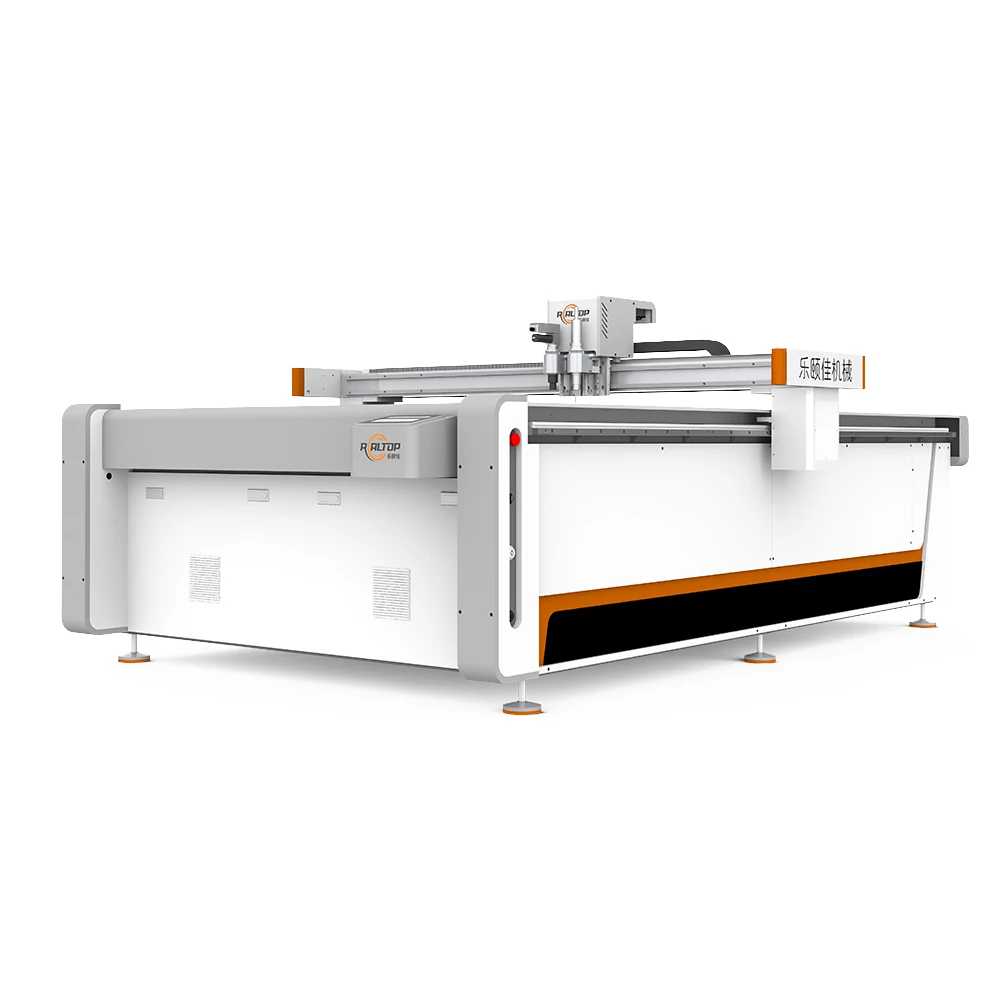
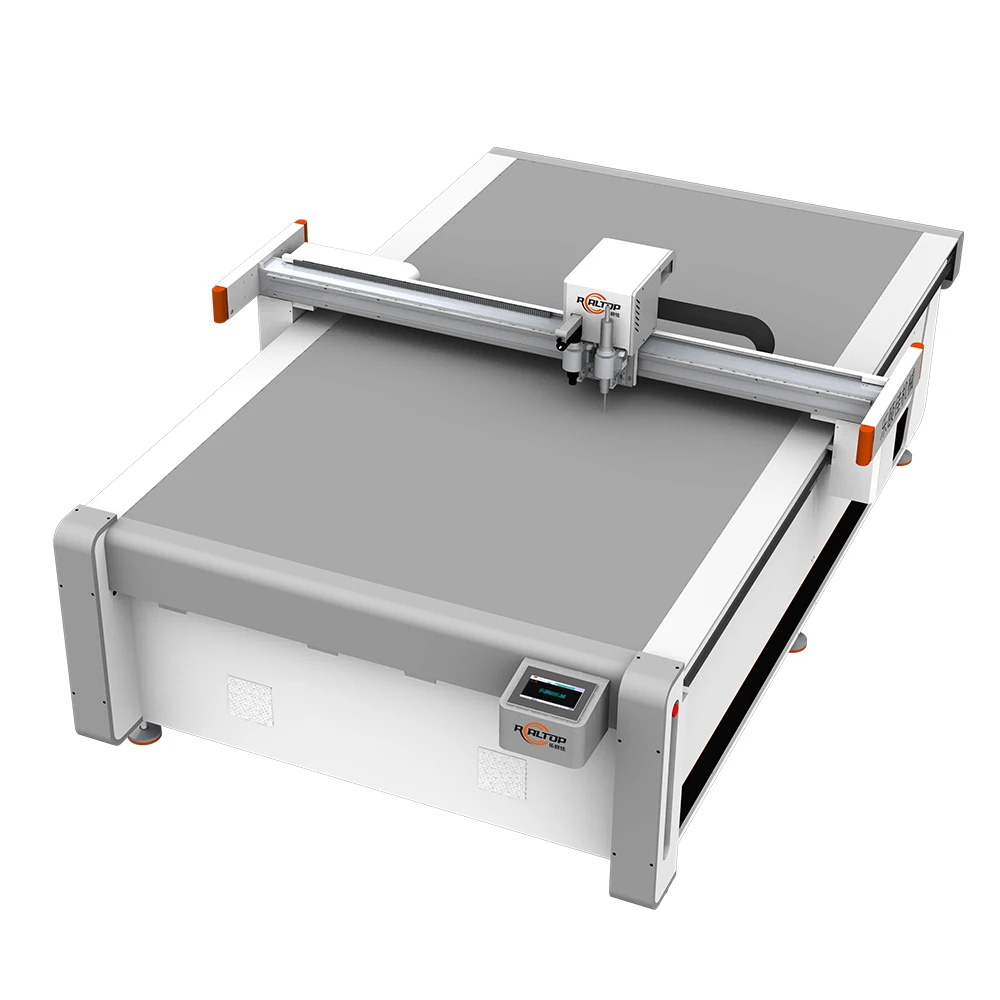
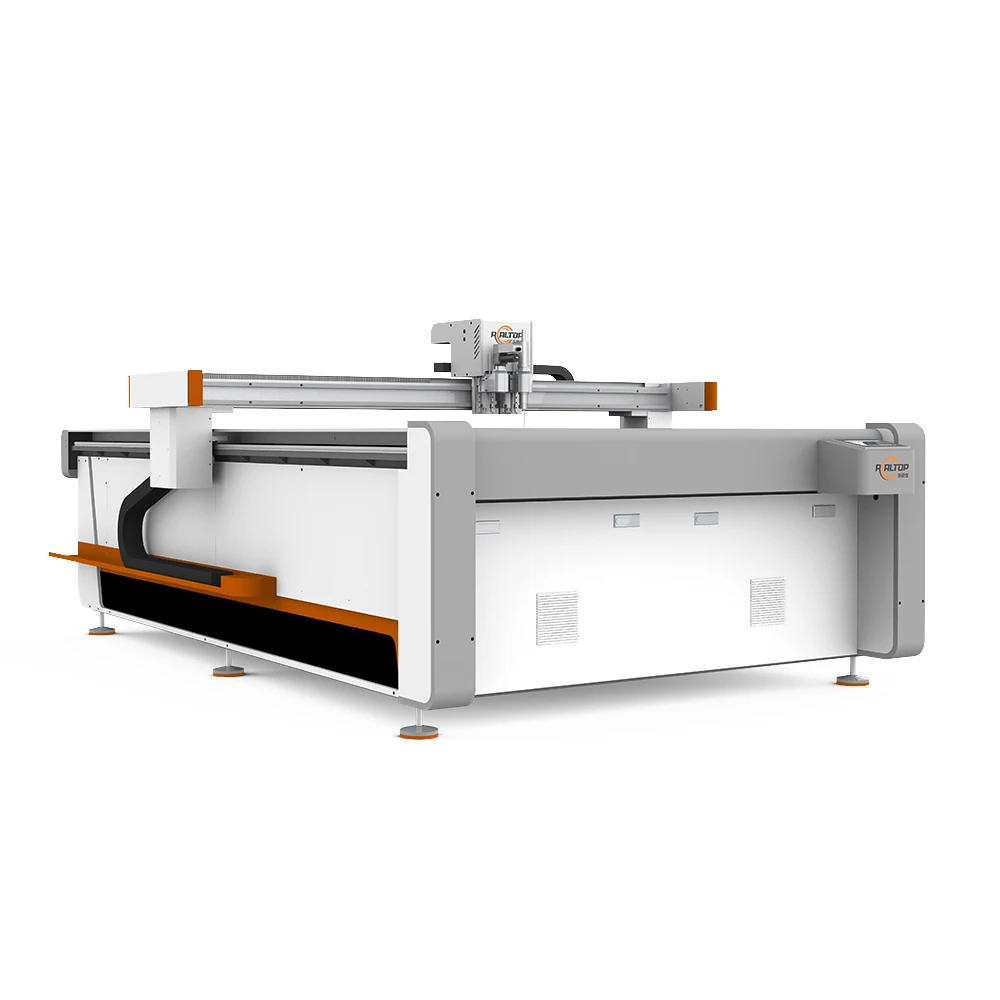
| Product Type | CNC Oscillating Knife Cutting Machine |
| Working Area | 1600 × 2500 mm |
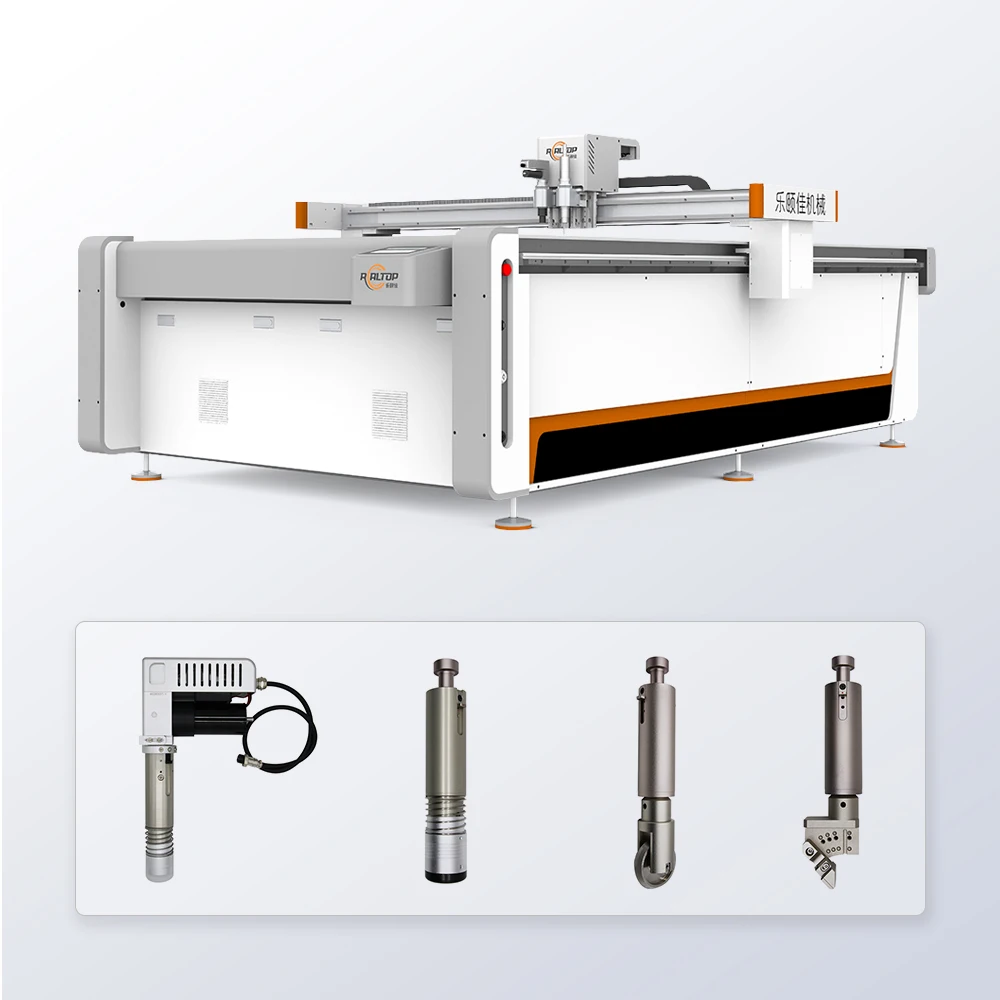
| Tool Head Options | Oscillating knife, Driven rotary knife, Creasing wheel, Kiss cutting tool, Pneumatic knife, Milling tool, V groove knife |
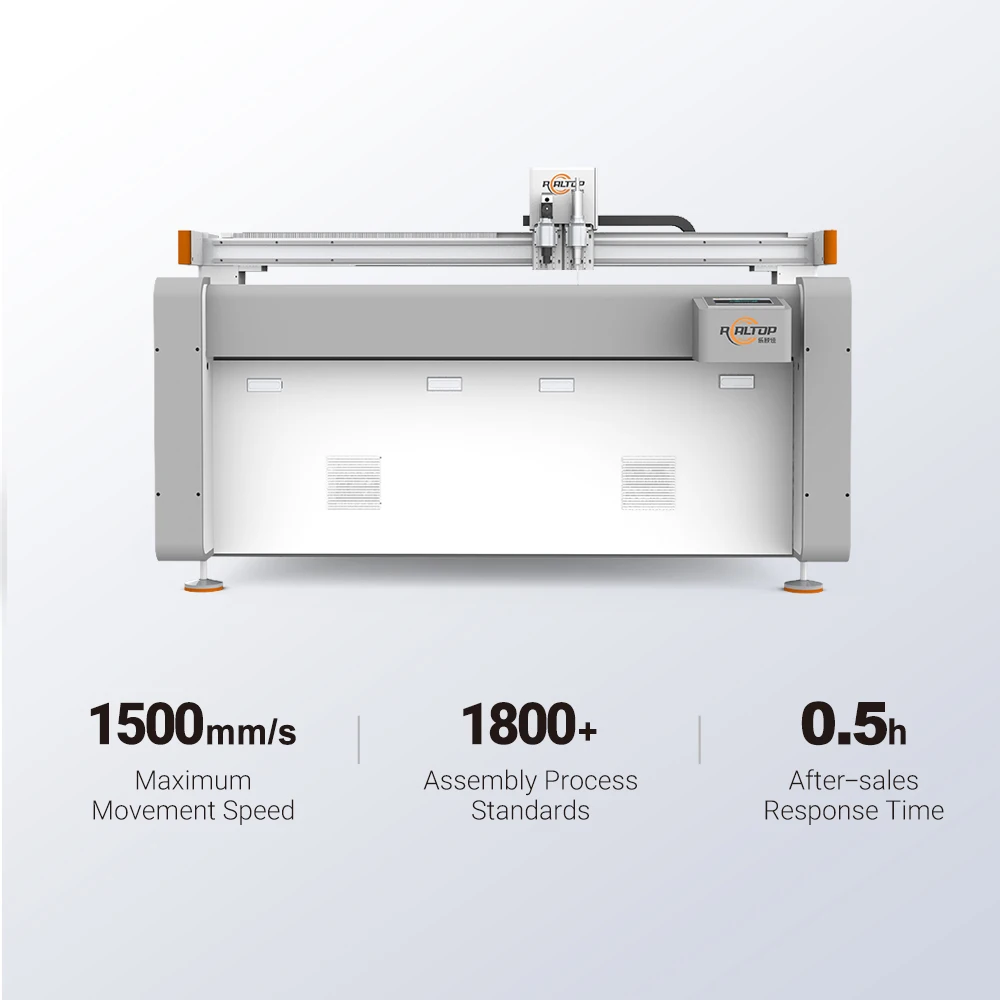
| Cutting Speed | 0 – 1500 mm/s |
| Cutting Thickness | ≤ 40 mm (basis to be confirmed) |
| Positioning Accuracy | ± 0.1 mm |
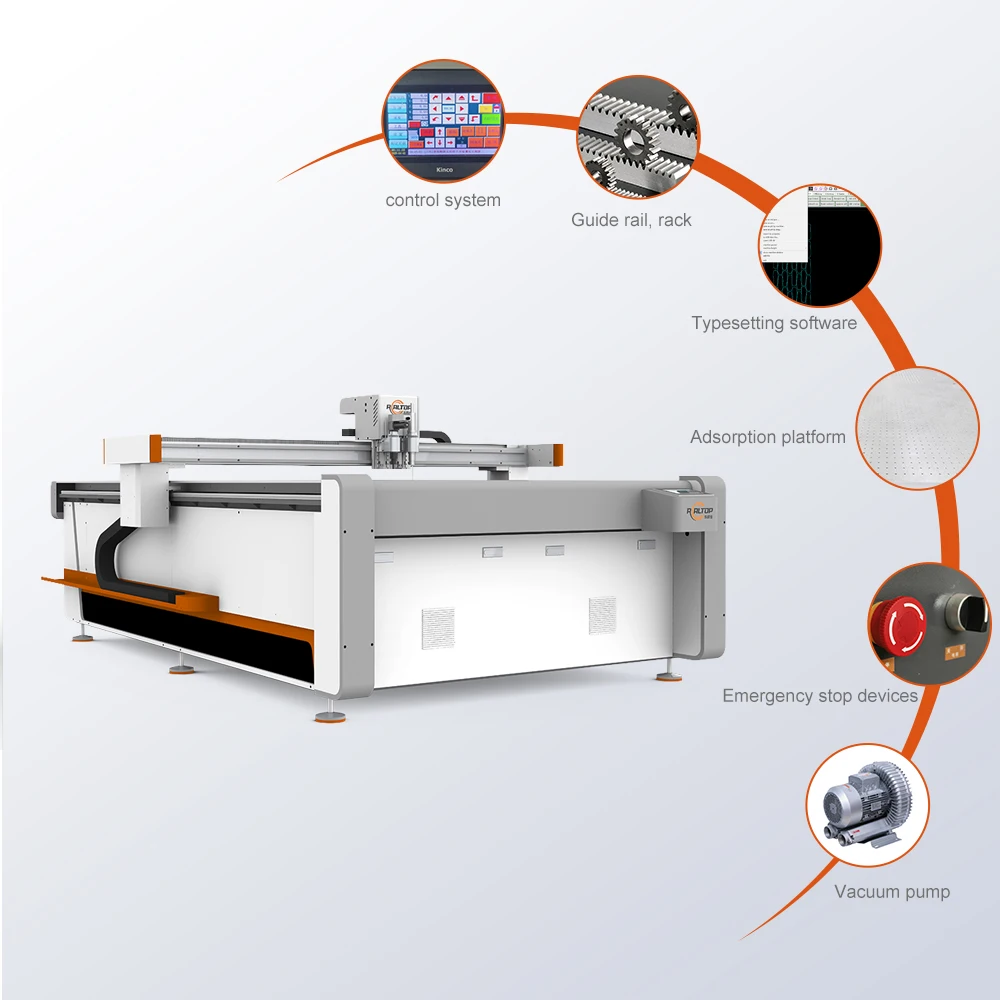
| Vacuum Pump | 9 kW |
| Vacuum Table | Aluminum bellows vacuum table |
| Control System | PLC control panel |
| Servo Drive Options | Panasonic, Delta, Dorna |
| Voltage Options | 110V, 220V, 380V (frequency not specified in source) |
| Software & File Formats | PLT, DXF, AI, PDF; dedicated packaging box structure design software included |
| Language Options | English, Russian, Italian, Chinese; special languages customizable |
| Safety Device | Infrared sensor device and emergency stop device |
| Overall Dimensions | 3300 × 2100 × 1350 mm |
Application Suitability
| Application | Material or Output |
|---|---|
| Carton and packaging sample making | Corrugated cardboard (E-flute, B-flute, BC-flute), greyboard, cardstock, art paper |
| Short-run retail packaging | Specialty paper, folding carton stock, adhesive-backed board |
| Protective packaging inserts | EVA, EPE, PU foam, rubber mats, composite sheets |
| Industrial packaging components | Thin plastic sheets (PVC, PET), velvet and fleece fabric, non-woven fabric |
| Decorative and specialty packaging | Leather, synthetic leather, composite and adhesive-backed materials |
Why Board Flute and Weight Matter More Than the Working Area Alone
Matching the tool head to the flute type and board density determines whether the machine cuts cleanly or crushes the material at production speed.
Many buyers specify a packaging CNC cutting machine based on table size and assume it will handle their corrugated stock without further verification. The reality is that E-flute, B-flute, and BC-flute boards behave differently under the same oscillating knife blade, and greyboard with high recycled fiber content can be significantly harder than expected [NEED_CITE: material hardness variation in recycled fiber board]. I have watched a machine produce perfect samples on virgin cardstock and then struggle badly on the buyer’s actual production material because nobody tested the real board beforehand. A CNC oscillating knife cutting machine manufacturer should always request your physical material before confirming the configuration.
Knife Versus Laser: Picking the Right Process for Packaging
Packaging buyers often assume that a single cutting method covers every board weight and flute type they will encounter. The choice between oscillating knife and laser depends on whether the material needs mechanical force or thermal sealing. Corrugated cardboard and greyboard cut cleanly with oscillating and driven rotary knives, while certain thin plastic films and adhesive-backed synthetics may benefit from laser edge sealing. Having both technologies available from one source means the decision follows the material rather than the buyer being locked into one process.
How Crease Lines and Fold Geometry Drive Tool Head Selection
A carton sample is only as good as its fold quality, and fold quality depends on the crease line being matched to the board caliper. The creasing wheel option on this system handles standard fold lines on cardstock and light corrugated, while the V groove knife produces deeper channel cuts for heavy greyboard structures. When a packaging structure requires both full through-cuts and partial-depth kiss cuts on the same sheet, the multi-tool configuration allows the machine to switch between heads without manual intervention, keeping the sheet registered throughout the cycle [NEED_CITE: tool head changeover methods in flatbed digital cutting].
Reading the Specs That Actually Affect Packaging Output
The 1500 mm/s maximum cutting speed is the head travel limit on straight paths; real throughput on corrugated board depends on contour complexity and the number of tool changes per sheet. The 9 kW vacuum pump generates the hold-down force across the aluminum bellows table surface, which matters when cutting small carton components that tend to lift under knife pressure. The PLC control panel with multilingual support means operators in different export markets can run the interface in their own language without relying on translation overlays. File format support for PLT, DXF, AI, and PDF, combined with dedicated packaging box structure design software, means buyers can import existing die-line libraries rather than redrawing every structure from scratch. The servo drive selection — available from Panasonic, Delta, or Dorna — determines long-term positional repeatability and spare parts availability in the buyer’s local market.
What Happens When the Wrong Tool Head Meets Your Material
Choosing an oscillating knife for dense recycled greyboard without testing first can produce ragged edges and excessive blade wear, sometimes within the first production day. Using a standard creasing wheel on double-wall corrugated without adjusting pressure can crush the flute instead of scoring it, resulting in weak fold lines that fail during assembly. A vacuum table without sufficient zoning for small packaging inserts allows pieces to shift mid-cut, wasting entire sheets [NEED_CITE: vacuum hold-down requirements for small-part digital cutting]. These are not machine defects; they are configuration mismatches that surface only when the buyer’s actual material hits the table.
Why Sourcing Knife and Laser From One Manufacturer Matters
Both cutting technologies are designed and built under one roof, so a packaging buyer evaluating whether to cut corrugated by knife or thin film by laser gets a recommendation based on the material, not on which machine needs to move off the showroom floor. Every tool head and table configuration is specified against the buyer’s actual board stock and daily volume. The dedicated packaging structure design software is verified for file compatibility before the order is confirmed, not after the machine arrives. Voltage, plug type, and control language are locked in during the quotation stage so the machine matches the target workshop’s electrical infrastructure. Every unit is factory-tested on the buyer’s own material before packing, producing a cutting report that documents edge quality, crease depth, and dimensional accuracy.
Documentation & Verification
- Machine specification sheet listing every tool head and table option included in your order
- Electrical schematic with confirmed voltage and frequency for your local grid standard
- Tool head and table configuration list matched to your specific board flute and thickness range
- Sample cutting report produced on your own corrugated or greyboard stock before dispatch
- Software licence and file format compatibility note covering your existing nesting and structure design workflow
- CE declaration covering machinery directive requirements where applicable to the destination market
Installation, Commissioning & Support
- Floor space allocation for the 3300 × 2100 × 1350 mm overall footprint plus operator access clearance
- Dedicated electrical circuit sized for the 9 kW vacuum pump and PLC control system combined load
- Delivery in modular sections with table bed, gantry, and control cabinet reassembled on your workshop floor
- First-run parameter tuning on your actual corrugated and greyboard stock to establish baseline cutting speeds
- Operator training on the PLC control panel in your selected language covering tool head changeover and file import
- Spare blade and creasing wheel kit supplied with recommended replacement intervals for your material mix
What We Need From You to Quote Correctly
Send physical samples of every board type you plan to cut — corrugated flute designation, greyboard thickness, and any specialty stock — along with your typical sheet size and daily volume target. Confirm the voltage and frequency at your facility so the electrical system is built to match before assembly begins. If you already run packaging structure design software, share a sample file so we verify format compatibility and nesting workflow before the order is placed.
Frequently Asked Questions
Q: How do I decide between knife and laser cutting for my packaging materials?
A: Knife cutting suits corrugated cardboard, greyboard, foam inserts, and thick materials that need mechanical force and clean crease lines. Laser cutting works well for thin plastic films, textiles, and materials that benefit from thermal edge sealing. The decision depends on your specific board weight, flute type, and whether the structure requires creasing. We test both methods on your material samples before recommending a configuration.
Q: Will the software work with my existing packaging design files?
A: The system imports PLT, DXF, AI, and PDF formats and includes dedicated packaging box structure design software. Before the order is confirmed, we request a sample file from your current workflow and verify that die-lines, crease layers, and nesting layouts import correctly without manual redrawing. This compatibility check is documented in the software licence note shipped with the machine.
Q: How are voltage and control language handled for export orders?
A: Voltage is configurable across 110V, 220V, and 380V options, and frequency must be confirmed to match your local grid. Control language defaults include English, Russian, Italian, and Chinese, with additional languages customizable on request. Both specifications are locked in during the quotation stage and verified on the electrical schematic before production begins.
Q: What testing is done before the machine ships?
A: Every 1625 unit is factory-tested using the buyer’s own board samples. The test covers cutting edge quality on your corrugated flute type, crease line depth and consistency, kiss-cut accuracy, and dimensional repeatability across the full working area. A sample cutting report documents all results and ships with the machine.
Complete range overview — One manufacturer producing both oscillating knife and laser systems, so packaging buyers select the cutting method that matches their actual board flute, thickness, and daily volume rather than forcing a single technology.
Technical Specifications
| Parameter | Value |
|---|---|
| Model | 1625 |
| Product Type | CNC Oscillating Knife Cutting Machine |
| Working Area | 1600 × 2500 mm |
| Tool Head Options | Oscillating knife, Driven rotary knife, Creasing wheel, Kiss cutting tool, Pneumatic knife, Milling tool, V groove knife |
| Cutting Speed | 0 – 1500 mm/s |
| Cutting Thickness | ≤ 40 mm (basis to be confirmed) |
| Positioning Accuracy | ± 0.1 mm |
| Vacuum Pump | 9 kW |
| Vacuum Table | Aluminum bellows vacuum table |
| Control System | PLC control panel |
| Servo Drive Options | Panasonic, Delta, Dorna |
| Voltage Options | 110V, 220V, 380V (frequency not specified in source) |
| Software & File Formats | PLT, DXF, AI, PDF; dedicated packaging box structure design software included |
| Language Options | English, Russian, Italian, Chinese; special languages customizable |
| Safety Device | Infrared sensor device and emergency stop device |
| Overall Dimensions | 3300 × 2100 × 1350 mm |
Application Suitability
| Application | Material or Output |
|---|---|
| Carton and packaging sample making | Corrugated cardboard (E-flute, B-flute, BC-flute), greyboard, cardstock, art paper |
| Short-run retail packaging | Specialty paper, folding carton stock, adhesive-backed board |
| Protective packaging inserts | EVA, EPE, PU foam, rubber mats, composite sheets |
| Industrial packaging components | Thin plastic sheets (PVC, PET), velvet and fleece fabric, non-woven fabric |
| Decorative and specialty packaging | Leather, synthetic leather, composite and adhesive-backed materials |
Why Board Flute and Weight Matter More Than the Working Area Alone
Matching the tool head to the flute type and board density determines whether the machine cuts cleanly or crushes the material at production speed.
Many buyers specify a packaging CNC cutting machine based on table size and assume it will handle their corrugated stock without further verification. The reality is that E-flute, B-flute, and BC-flute boards behave differently under the same oscillating knife blade, and greyboard with high recycled fiber content can be significantly harder than expected [NEED_CITE: material hardness variation in recycled fiber board]. I have watched a machine produce perfect samples on virgin cardstock and then struggle badly on the buyer’s actual production material because nobody tested the real board beforehand. A CNC oscillating knife cutting machine manufacturer should always request your physical material before confirming the configuration.
Knife Versus Laser: Picking the Right Process for Packaging
Packaging buyers often assume that a single cutting method covers every board weight and flute type they will encounter. The choice between oscillating knife and laser depends on whether the material needs mechanical force or thermal sealing. Corrugated cardboard and greyboard cut cleanly with oscillating and driven rotary knives, while certain thin plastic films and adhesive-backed synthetics may benefit from laser edge sealing. Having both technologies available from one source means the decision follows the material rather than the buyer being locked into one process.
How Crease Lines and Fold Geometry Drive Tool Head Selection
A carton sample is only as good as its fold quality, and fold quality depends on the crease line being matched to the board caliper. The creasing wheel option on this system handles standard fold lines on cardstock and light corrugated, while the V groove knife produces deeper channel cuts for heavy greyboard structures. When a packaging structure requires both full through-cuts and partial-depth kiss cuts on the same sheet, the multi-tool configuration allows the machine to switch between heads without manual intervention, keeping the sheet registered throughout the cycle [NEED_CITE: tool head changeover methods in flatbed digital cutting].
Reading the Specs That Actually Affect Packaging Output
The 1500 mm/s maximum cutting speed is the head travel limit on straight paths; real throughput on corrugated board depends on contour complexity and the number of tool changes per sheet. The 9 kW vacuum pump generates the hold-down force across the aluminum bellows table surface, which matters when cutting small carton components that tend to lift under knife pressure. The PLC control panel with multilingual support means operators in different export markets can run the interface in their own language without relying on translation overlays. File format support for PLT, DXF, AI, and PDF, combined with dedicated packaging box structure design software, means buyers can import existing die-line libraries rather than redrawing every structure from scratch. The servo drive selection — available from Panasonic, Delta, or Dorna — determines long-term positional repeatability and spare parts availability in the buyer’s local market.
What Happens When the Wrong Tool Head Meets Your Material
Choosing an oscillating knife for dense recycled greyboard without testing first can produce ragged edges and excessive blade wear, sometimes within the first production day. Using a standard creasing wheel on double-wall corrugated without adjusting pressure can crush the flute instead of scoring it, resulting in weak fold lines that fail during assembly. A vacuum table without sufficient zoning for small packaging inserts allows pieces to shift mid-cut, wasting entire sheets [NEED_CITE: vacuum hold-down requirements for small-part digital cutting]. These are not machine defects; they are configuration mismatches that surface only when the buyer’s actual material hits the table.
Why Sourcing Knife and Laser From One Manufacturer Matters
Both cutting technologies are designed and built under one roof, so a packaging buyer evaluating whether to cut corrugated by knife or thin film by laser gets a recommendation based on the material, not on which machine needs to move off the showroom floor. Every tool head and table configuration is specified against the buyer’s actual board stock and daily volume. The dedicated packaging structure design software is verified for file compatibility before the order is confirmed, not after the machine arrives. Voltage, plug type, and control language are locked in during the quotation stage so the machine matches the target workshop’s electrical infrastructure. Every unit is factory-tested on the buyer’s own material before packing, producing a cutting report that documents edge quality, crease depth, and dimensional accuracy.
Documentation & Verification
- Machine specification sheet listing every tool head and table option included in your order
- Electrical schematic with confirmed voltage and frequency for your local grid standard
- Tool head and table configuration list matched to your specific board flute and thickness range
- Sample cutting report produced on your own corrugated or greyboard stock before dispatch
- Software licence and file format compatibility note covering your existing nesting and structure design workflow
- CE declaration covering machinery directive requirements where applicable to the destination market
Installation, Commissioning & Support
- Floor space allocation for the 3300 × 2100 × 1350 mm overall footprint plus operator access clearance
- Dedicated electrical circuit sized for the 9 kW vacuum pump and PLC control system combined load
- Delivery in modular sections with table bed, gantry, and control cabinet reassembled on your workshop floor
- First-run parameter tuning on your actual corrugated and greyboard stock to establish baseline cutting speeds
- Operator training on the PLC control panel in your selected language covering tool head changeover and file import
- Spare blade and creasing wheel kit supplied with recommended replacement intervals for your material mix
What We Need From You to Quote Correctly
Send physical samples of every board type you plan to cut — corrugated flute designation, greyboard thickness, and any specialty stock — along with your typical sheet size and daily volume target. Confirm the voltage and frequency at your facility so the electrical system is built to match before assembly begins. If you already run packaging structure design software, share a sample file so we verify format compatibility and nesting workflow before the order is placed.
Frequently Asked Questions
Q: How do I decide between knife and laser cutting for my packaging materials?
A: Knife cutting suits corrugated cardboard, greyboard, foam inserts, and thick materials that need mechanical force and clean crease lines. Laser cutting works well for thin plastic films, textiles, and materials that benefit from thermal edge sealing. The decision depends on your specific board weight, flute type, and whether the structure requires creasing. We test both methods on your material samples before recommending a configuration.
Q: Will the software work with my existing packaging design files?
A: The system imports PLT, DXF, AI, and PDF formats and includes dedicated packaging box structure design software. Before the order is confirmed, we request a sample file from your current workflow and verify that die-lines, crease layers, and nesting layouts import correctly without manual redrawing. This compatibility check is documented in the software licence note shipped with the machine.
Q: How are voltage and control language handled for export orders?
A: Voltage is configurable across 110V, 220V, and 380V options, and frequency must be confirmed to match your local grid. Control language defaults include English, Russian, Italian, and Chinese, with additional languages customizable on request. Both specifications are locked in during the quotation stage and verified on the electrical schematic before production begins.
Q: What testing is done before the machine ships?
A: Every 1625 unit is factory-tested using the buyer’s own board samples. The test covers cutting edge quality on your corrugated flute type, crease line depth and consistency, kiss-cut accuracy, and dimensional repeatability across the full working area. A sample cutting report documents all results and ships with the machine.










商品评价
There are no reviews yet.