


Fast Delivery
Quick, reliable shipping to any location.

Free & easy returns
Return this item by mail or in store within 90 days for a full refund.
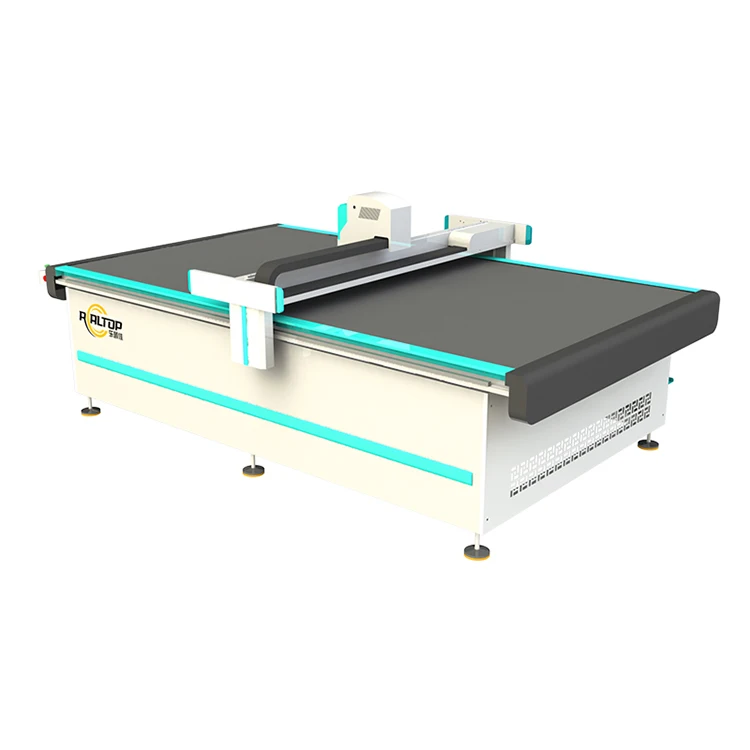
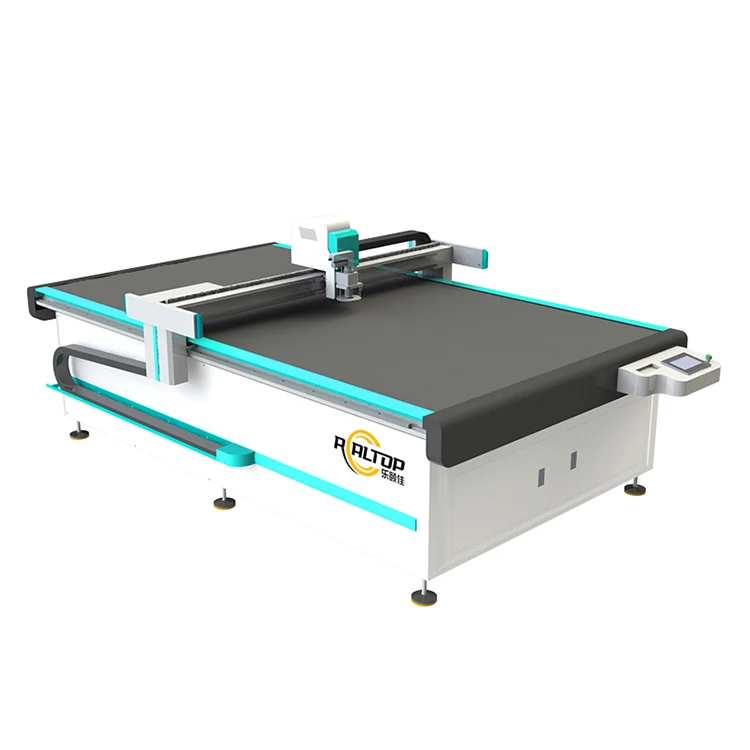
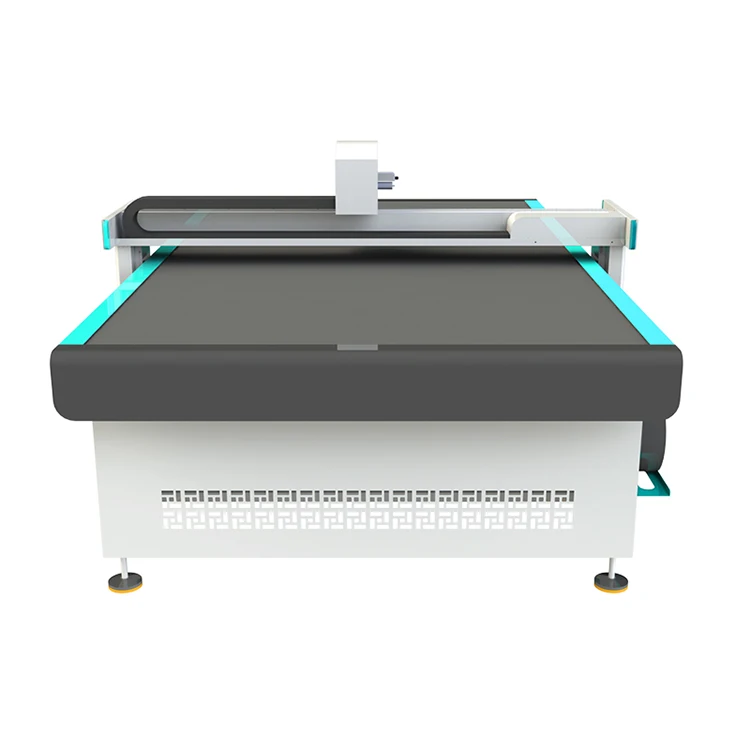
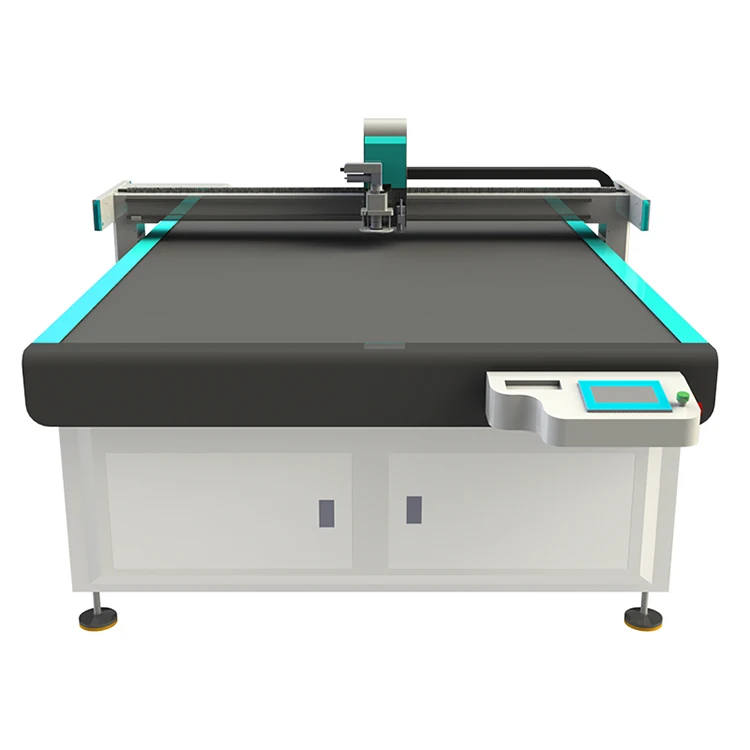
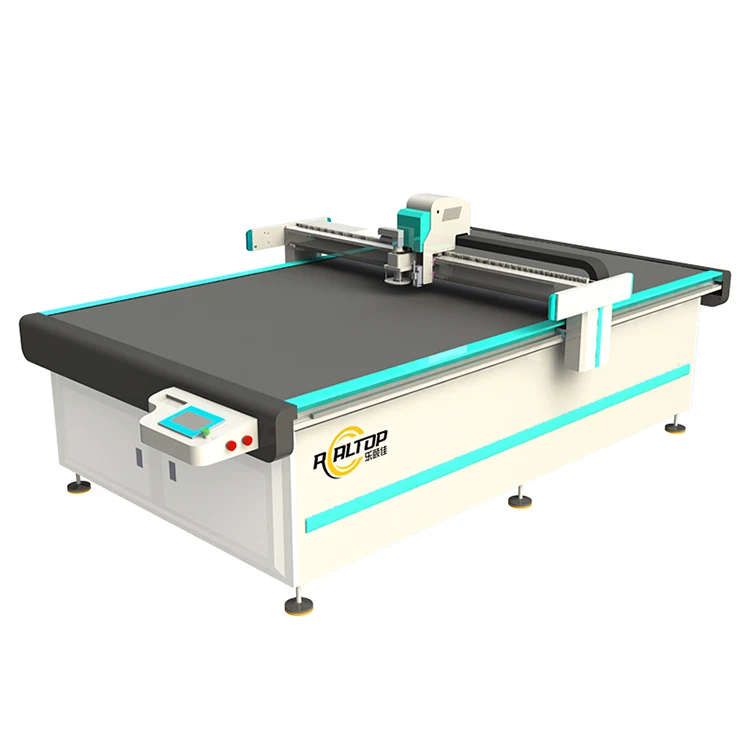
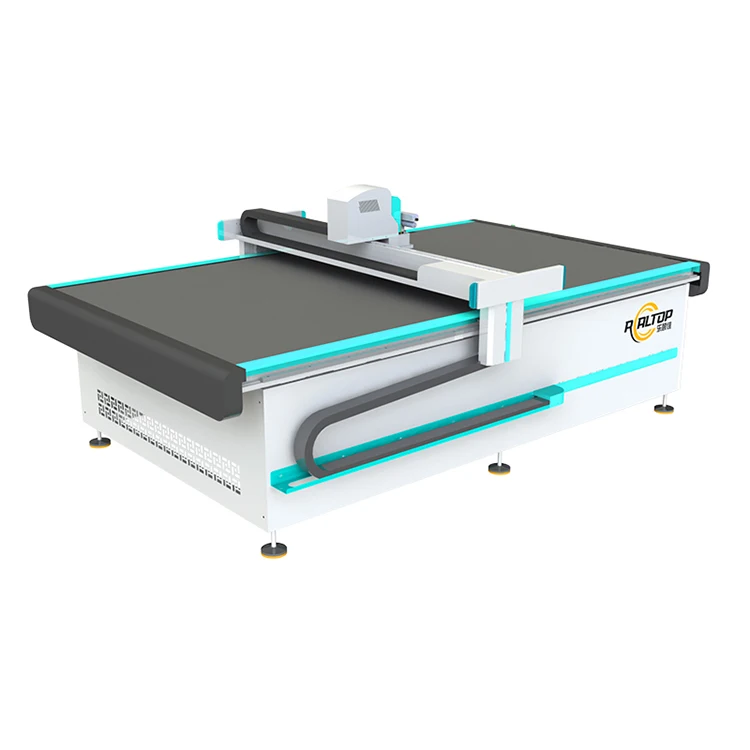
In-house dual-process engineering — one factory covering both knife and laser cutting means the RT-D2516/RT-S2516 is specified by material behaviour, not forced into a single-method catalogue slot.
Technical Specifications
| Parameter | Value |
|---|---|
| Model | RT-D2516 / RT-S2516 |
| Product Type | CNC Oscillating Knife Cutting Machine |
| Working Area | 1600 × 2500 mm |
| Machine Size (Overall Dimensions) | 3450 × 2300 × 1250 mm |
| Rated Power | 9 kW |
| Table Type | Flat working table with conveyor belt and vacuum hold-down |
| Tool Head | Multifunctional head with Swiss imported oscillating knife (vibration full cutting, vibration half cutting, cursor location) |
| Safety Device | Infrared sensors |
| Translational Velocity | 800–1200 mm/s |
| Cutting Speed | 200–800 mm/s (basis not stated in source — confirm material / thickness) |
| Cutting Materials | Leather, flexible clothing materials, sponge composite leather, PVC, soft glass, silicon, rubber |
| Repeated Accuracy | ≤0.1 mm |
| Transmission System | Digital servo motor, linear guide, synchronous belt, ball screw |
| Servo Motor | Japanese Yaskawa |
| Linear Guide | Taiwan Hiwin rail |
| Vacuum Pump | 7.5 kW |
| Control / Instruction Format | HP-GL compatible |
| Voltage | 380V ±10% (frequency not stated in source — confirm 50/60 Hz) |
| Feeding | Auto feeding with Germany imported conveyor belt |
| Warranty | 12 months for whole machine |
Application Suitability
| Application | Material or Output |
|---|---|
| Fabric sofa and upholstery production | Multi-ply textiles, sponge composite leather, flexible clothing materials |
| Non-woven bag and flexible packaging | Non-woven fabric sheets, PVC, soft glass |
| Footwear and leather goods | Leather uppers, linings, insole materials, rubber sheets |
| Technical textile and gasket cutting | Silicon sheets, rubber compounds, soft composite panels |
Why the Wrong Tool Head Ruins Perfectly Good Material
Edge quality is decided before the blade touches the sheet — it is decided when the tool head is matched to material density and thickness.
I spent three days on a non-woven bag producer’s floor last year because their previous machine left ragged, frayed edges on every cut piece. The machine itself was fine; the oscillating frequency and blade profile had been chosen for a completely different material class. An entire batch of finished bags was rejected by their buyer. When you survey a full equipment range, the temptation is to pick a model based on table size and assume the tooling will sort itself out. That assumption is where the waste begins [NEED_CITE: oscillating knife frequency and blade geometry selection for non-woven and woven textiles].
Where This Model Sits in a Dual-Method Catalogue
A complete cutting equipment range typically splits into knife-based and laser-based platforms, each serving different material families. The RT-D2516/RT-S2516 occupies the soft-material, heat-sensitive side of that split. Fabrics, leather, sponge composites and non-woven sheets deform or melt under laser thermal energy, making a CNC oscillating knife cutting machine full catalogue entry like this one the default choice for producers who cannot tolerate burned edges or sealed margins on breathable textiles.
Conveyor Feeding Changes the Production Rhythm
Static-table machines require an operator to lift, align and clamp each sheet before cutting begins. This model integrates a German-imported conveyor belt with auto-feeding, meaning one sheet flows into position while the previous one is being cut. For non-woven bag producers running long rolls or repetitive nesting layouts, that continuous material flow removes the dead time between cuts and keeps the vacuum table occupied at capacity rather than waiting on manual loading cycles [NEED_CITE: continuous conveyor feeding versus static table loading in textile cutting operations].
Reading the Specs That Actually Matter on the Floor
The 7.5 kW vacuum pump paired with a flat conveyor table is not just a holding specification — it determines whether small nested parts stay flat or lift into the blade path during high-speed contour cuts. A weaker pump or poorly zoned table will let lightweight non-woven material flutter, and the resulting mis-cut wastes both material and cycle time. The Yaskawa servo motors driving the Hiwin linear guides give translational speeds up to 1200 mm/s between cuts, but actual cutting speed depends on the material’s resistance to the oscillating blade. The ≤0.1 mm repeated accuracy figure matters most when you are cutting interlocking pattern pieces for sofa upholstery, where even a small drift across a long nesting layout accumulates into visible seam misalignment on the assembled product. HP-GL compatible control format means the machine accepts nesting files from common industry CAD packages without requiring a proprietary software layer, which matters when your design team already has established workflows.
What Happens When Vacuum Zoning Is Ignored
A buyer once specified a large-format cutting table for small leather components — shoe uppers and strap pieces — without confirming how the vacuum zones were configured. The pump was powerful enough, but the zones were designed for full-sheet holding. Small parts sitting over inactive zones had no suction beneath them and lifted during directional changes, producing torn edges and forcing the operator to re-cut. The machine was not defective; it was simply configured for a different production profile [NEED_CITE: vacuum table zone sizing and small-part hold-down in digital flatbed cutting].
Why Source From a Builder That Makes Both Methods
REALTOP designs and produces both knife and laser platforms in-house, which means a buyer comparing options across the range is not being pushed toward whichever method a single-technology factory happens to offer. Tool head and table configuration are specified per material and production volume rather than pulled from a default menu. CCD camera positioning is available for printed contour work where the cut path must follow a registered print mark. Voltage, plug type, HMI language and software interface are confirmed against the destination market before the machine enters production. Sample cutting on the buyer’s own material is run and documented before any commitment is made, so edge quality and cycle time are verified on the actual fabric or composite you will be processing.
Documentation & Verification
- Machine specification sheet listing confirmed tool head, vacuum zone layout and conveyor configuration
- Electrical schematic with voltage, frequency and plug type verified against destination market
- Sample cutting report on buyer-supplied non-woven or leather material showing edge finish and cycle data
- Factory test record documenting repeated accuracy and servo response before crating
- Software licence and file format compatibility note confirming HP-GL import and nesting workflow
- Spare parts list with Swiss oscillating knife blades and wear components itemized by part number
Installation, Commissioning & Support
- Floor space of approximately 3450 × 2300 mm with clearance on the feed side for roll or sheet loading
- Dedicated 380V ±10% circuit rated for at least 9 kW machine load plus 7.5 kW vacuum pump startup surge
- Machine ships assembled; verify door and aisle dimensions at destination for the 2300 mm width
- First-power commissioning includes vacuum zone mapping to your typical nesting layout and blade-depth calibration
- Operator training covers oscillating knife blade changes, conveyor belt tensioning and HP-GL file loading
- Wear parts include Swiss oscillating blades and conveyor belt sections with reorder part numbers provided
What to Include With Your Enquiry
Send the exact material type, thickness range and roll or sheet dimensions you plan to process. Include your typical daily cutting volume and the nesting layout you currently use, or a sample file in your preferred format. Confirm the voltage, frequency and control language required at your facility so the electrical and software configuration can be locked in before production starts.
Frequently Asked Questions
Q: Where does this oscillating knife model sit versus the laser models in the full REALTOP catalogue?
A: The RT-D2516/RT-S2516 handles heat-sensitive soft materials — fabric, leather, non-woven, sponge composites — where a laser would melt or seal edges. Laser models in the same catalogue serve acrylic, wood and sheet metal. The dual-method production line means you choose the cutting method that suits your material rather than being limited to a single technology.
Q: Which tool head is recommended for my material thickness and edge-quality requirement?
A: The Swiss imported oscillating knife head supports full cutting, half cutting and cursor location. Blade profile, oscillation frequency and cutting depth are specified after reviewing your material sample. A half-cut setting scores kiss-cut patterns on laminated sheets, while full cutting handles through-cut contours on multi-ply textiles.
Q: What file formats and nesting workflows are supported by the control software?
A: The control system accepts HP-GL compatible instruction format, which covers output from most mainstream CAD and nesting packages. Before order confirmation, we verify that your existing file export format imports correctly and that nesting parameters translate without manual re-entry on the machine console.
Q: How are voltage, frequency and control language customized for my country?
A: The standard electrical specification is 380V ±10%, with frequency and plug type confirmed against your local supply before production. HMI and software language options are set during the specification confirmation stage so operators see their working language on delivery.










商品评价
There are no reviews yet.