


Fast Delivery
Quick, reliable shipping to any location.

Free & easy returns
Return this item by mail or in store within 90 days for a full refund.
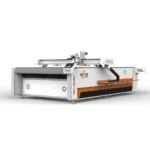
Configured Per Material — Realtop specifies the 1625 oscillating knife cutting table with tool head, vacuum zoning and CCD camera matched to your exact leather, fabric or composite stock, verified by sample cutting before order confirmation.
Technical Specifications
| Parameter | Value |
|---|---|
| Model | 1625 (Standard) |
| Product Type | CNC Oscillating Knife Cutting Machine with Auto Feeding and CCD Camera |
| Working Area | 1600×2500 mm |
| Available Tool Heads | Oscillating knife, Driven rotary knife, Creasing wheel, Kiss cutting tool, Pneumatic knife, Milling tool, V-groove knife |
| Cutting Speed | 0–2000 mm/s |
| Maximum Cutting Thickness | ≤ 30 mm |
| Cutting Accuracy | ±0.1 mm |
| Vacuum Pump Power | 9 kW |
| Vacuum Table Type | Aluminum bellows vacuum table |
| Auto Feeding System | Included |
| CCD Camera | Included for printed contour recognition |
| Voltage Options | 110V / 220V / 380V |
| Control System | PLC control panel with optional display languages |
| Servo Drive Options | Panasonic, Delta, Dorna |
| Supported File Formats | PLT, DXF, AI, PDF |
| Machine Dimensions | 3300×2100×1350 mm |
| Safety Devices | Infrared sensor device and emergency stop device |
| Software Languages | English, Russian, Italian, Chinese (custom languages available) |
| Compliance | CE declaration |
Application Suitability
| Application | Material or Output |
|---|---|
| Footwear upper cutting | Genuine leather, synthetic leather, suede with CCD grain recognition |
| Automotive seat covers and interiors | Leather, fabric, foam composites, insulating materials |
| Sofa and soft furniture upholstery | Thick upholstery fabric, bonded leather, multi-layer textile rolls |
| Bag and leather goods production | Full-grain leather, PU, PVC with contour and pattern alignment |
| Car mat and gasket fabrication | EVA, rubber, foam boards, composite sheets |
| Packaging and carton sample making | Cardboard, corrugated carton with creasing and kiss cutting |
| Signage and vehicle wraps | PVC sheets, vinyl, acrylic panels, adhesive stickers |
What "Just Specify the Working Area" Gets Wrong with a CNC Oscillating Knife Cutting Machine
Buying a cutting table on bed size alone is the most common reason leather and fabric producers see machines fail at the first production run.
I have watched oscillating knife machines arrive at workshops in Latin America only to stall on the first hide because the tool head could not handle variable thickness across a single piece of genuine leather. The knife snaps, the edge tears, and the factory waits weeks for replacement blades shipped from overseas. A 1600×2500 mm working area means nothing when the vacuum zoning cannot hold small pattern pieces flat, or when the CCD camera cannot track printed registration marks at production speed [NEED_CITE: field failure patterns in digital cutting equipment across Latin American manufacturing]. The CNC oscillating knife cutting machine manufacturer should be asking what you cut before they quote you a bed size.
Multi-Tool Head Platform Across Material Types
The 1625 platform carries up to seven tool options on a single gantry: oscillating knife for straight and contour cuts through leather and foam, driven rotary knife for woven textiles, creasing wheel for carton and packaging board, kiss cutting tool for adhesive layers, pneumatic knife for dense rubber, milling tool for rigid composites, and V-groove knife for folding box structures. Rather than forcing every material through one blade type, the tool head assignment is confirmed against your actual stock during the sample cutting stage.
CCD Camera Contour Recognition for Printed and Natural Materials
Genuine leather grain is never uniform, and printed textile rolls shift registration from batch to batch. The overhead CCD camera reads printed marks and natural contours, adjusting the cutting path in real time. This matters when shoe upper patterns must align to hide boundaries or when vehicle wrap graphics need to follow print edges without manual repositioning. The camera system is integrated into the machine frame rather than added as an aftermarket bracket, maintaining positional accuracy across the full 1600×2500 mm working area.
What the Specification Sheet Numbers Actually Mean for Production
The ±0.1 mm cutting accuracy figure holds significance when nesting shoe upper patterns where a half-millimeter drift wastes leather across hundreds of pieces per shift. The 9 kW vacuum pump paired with the aluminum bellows table provides full-surface adsorption — small cut parts like gaskets or bag hardware templates stay pinned to the bed instead of lifting into the knife path. Cutting speed reaches up to 2000 mm/s on thin vinyl and stickers, though dense leather and multi-layer foam stacks require slower traversal to maintain edge quality [NEED_CITE: relationship between cutting speed, material density and edge finish in oscillating knife systems]. The aluminum bellows construction keeps the table flat under continuous vacuum load, which matters when cutting tolerance stacks across a full hide.
The Hidden Cost of Skipping Material-Matched Configuration
When a distributor ships a generic oscillating knife head for a buyer cutting 8 mm EVA foam for automotive interiors, the compressed foam springs back and the edge collapses. The buyer then spends months sourcing a pneumatic knife attachment that should have been specified at order. I have seen packaging sample makers receive machines without a creasing wheel, forcing them to fold carton prototypes by hand [NEED_CITE: tooling mismatch consequences in digital flatbed cutting procurement]. Small-part lift from inadequate vacuum zoning ruins nesting yield on gasket and sticker jobs, and the buyer blames the machine rather than the table specification.
Why Source This CNC Oscillating Knife Cutting Machine from Realtop
Realtop operates an in-house design and production facility covering both knife and laser cutting technologies, so the 1625 can be specified as a pure knife platform or combined with laser modules if your material mix demands it. Every machine ships with a sample cutting report produced on the buyer’s own material — confirming tool head choice, cutting speed and edge quality before the order is finalized. Voltage, plug type and control panel language are verified against the destination market’s electrical standards, eliminating the transformer surprises that plague cross-border equipment purchases [NEED_CITE: voltage and frequency standards by export market]. The CCD camera, vacuum table zoning and auto-feeding configuration are documented in a written specification list, not left to verbal agreement.
Documentation & Verification
- Machine specification sheet listing every configured tool head, vacuum zone and CCD parameter
- Sample cutting report on buyer’s leather, fabric or composite material before order commitment
- Electrical schematic with voltage and plug type confirmed for destination market
- Software licence and file format compatibility note for PLT, DXF, AI and PDF workflows
- Factory test record documenting cutting accuracy and vacuum holding performance
- Operation and maintenance manual with spare parts list in agreed control language
Installation, Commissioning & Support
- 3300×2100×1350 mm footprint requires level concrete floor with clearance for auto-feeding roll entry
- 9 kW vacuum pump and servo drives require dedicated circuit matching confirmed 110V, 220V or 380V supply
- PLC control panel language and servo drive brand set per buyer preference before dispatch
- First-run commissioning includes vacuum zone calibration and CCD camera registration on buyer’s stock
- Oscillating knife blades, rotary knife discs and creasing wheels included as initial spare parts kit
- Preventive maintenance schedule aligned to daily production volume and material abrasiveness
Before You Request a Quote
Send the material type, typical thickness range and maximum sheet or roll width you process daily. Specify your local voltage and frequency standard, preferred control panel language, and whether your nesting workflow currently uses PLT, DXF, AI or PDF files. If you work with printed or grained materials, confirm whether CCD contour recognition is required for your cutting patterns so the correct camera and software module is included in the configuration.
Frequently Asked Questions
Q: How do I choose the right tool head for my leather thickness and composite material stack?
A: The tool head selection depends on material density, thickness and whether you need clean-edge cutting or creasing. Genuine leather up to 30 mm typically uses the oscillating knife, while bonded composites may require the pneumatic knife. Realtop runs a sample cut on your actual material to confirm the correct tool before the machine is built.
Q: What cutting speed can I expect on my specific material?
A: Cutting speed varies with material type, thickness and layer count — thin vinyl runs near the 2000 mm/s maximum while dense leather requires slower traversal. A sample cutting report on your own stock provides realistic speed and edge quality data before you commit to the order.
Q: Which voltage and control language will be configured before shipment?
A: The 1625 supports 110V, 220V and 380V configurations. Voltage, plug type and control panel language are confirmed in writing against your local electrical standard before production begins, preventing transformer or rewiring requirements upon arrival.
Q: Can the CCD camera reliably track printed marks at production speed?
A: The integrated CCD camera reads printed registration marks and natural leather contours across the full working area. Reliability depends on mark contrast, print quality and material reflectivity — all verified during the sample cutting stage on your actual printed rolls or hides.
Q: What documentation is provided before I commit to the order?
A: You receive a sample cutting report on your material, a tool head and table configuration list, electrical schematic with voltage confirmation, and a file format compatibility note. These documents confirm the machine matches your production requirements before the build begins.










商品评价
There are no reviews yet.