

Fast Delivery
Quick, reliable shipping to any location.

Free & easy returns
Return this item by mail or in store within 90 days for a full refund.
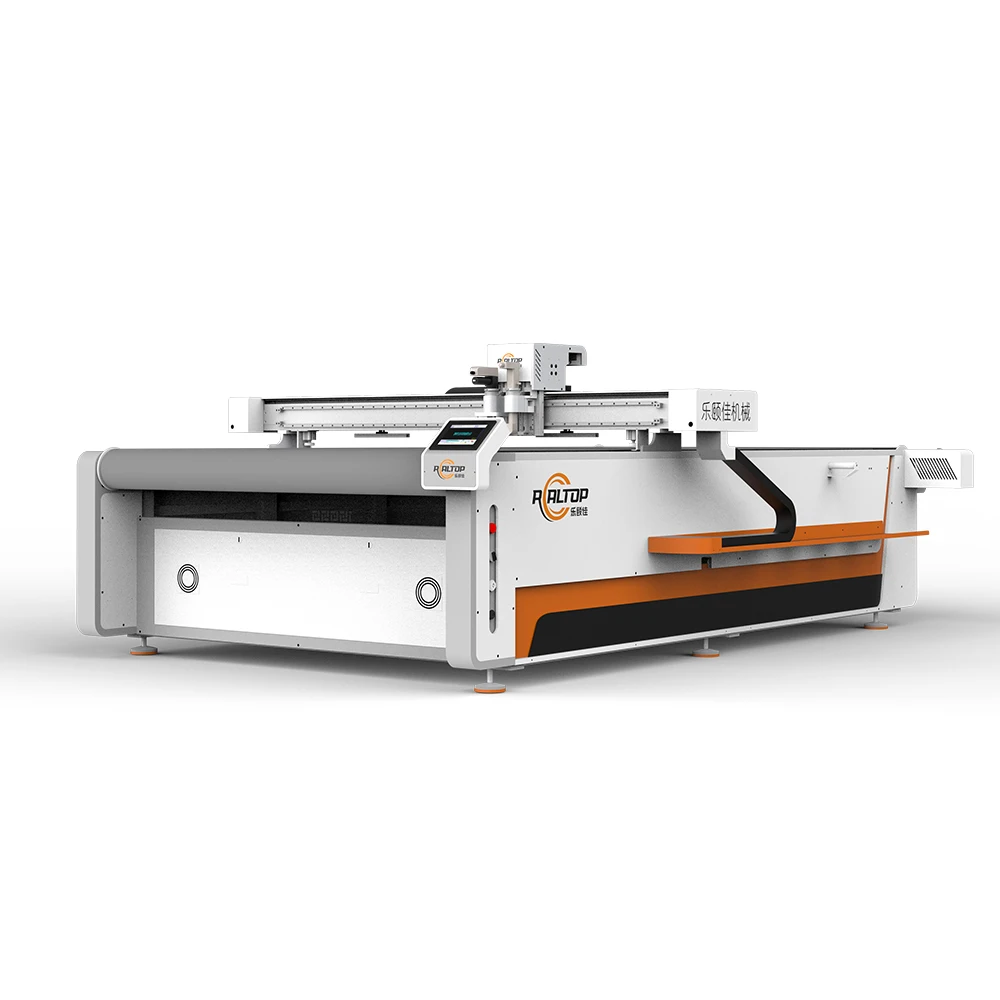
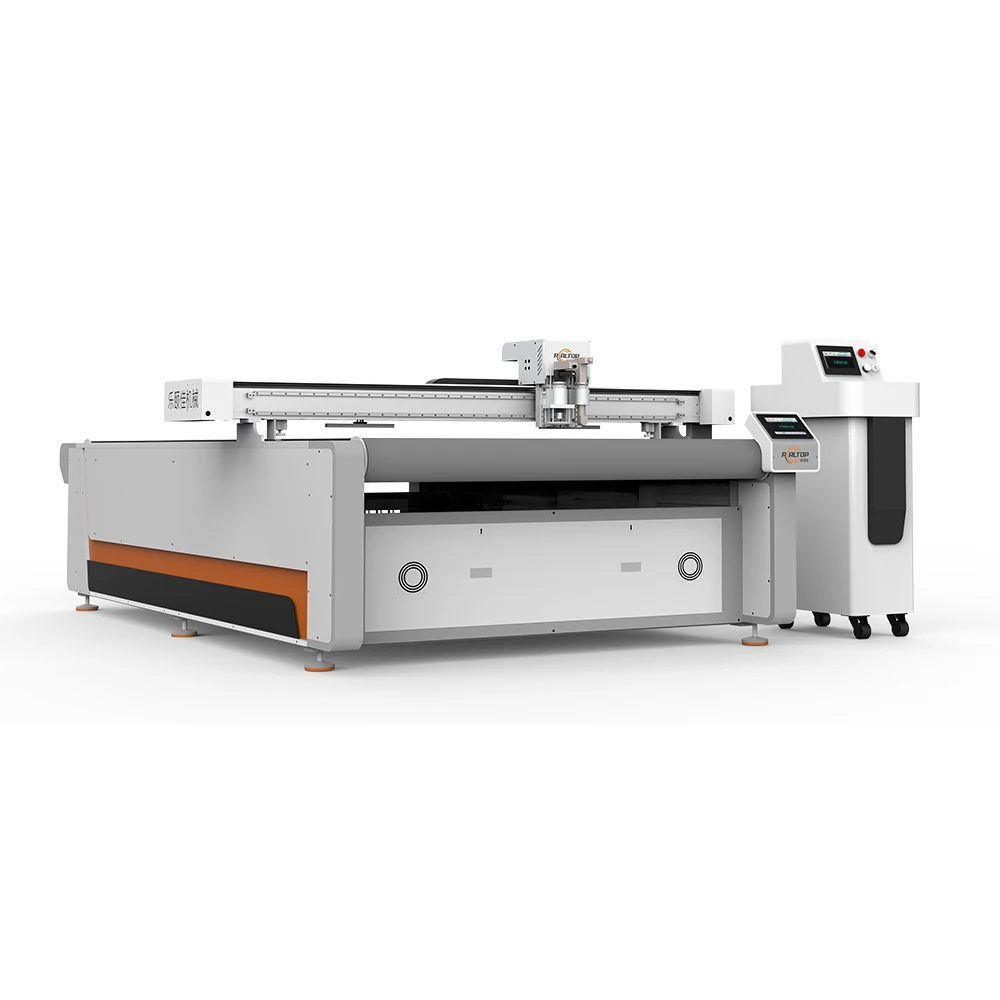
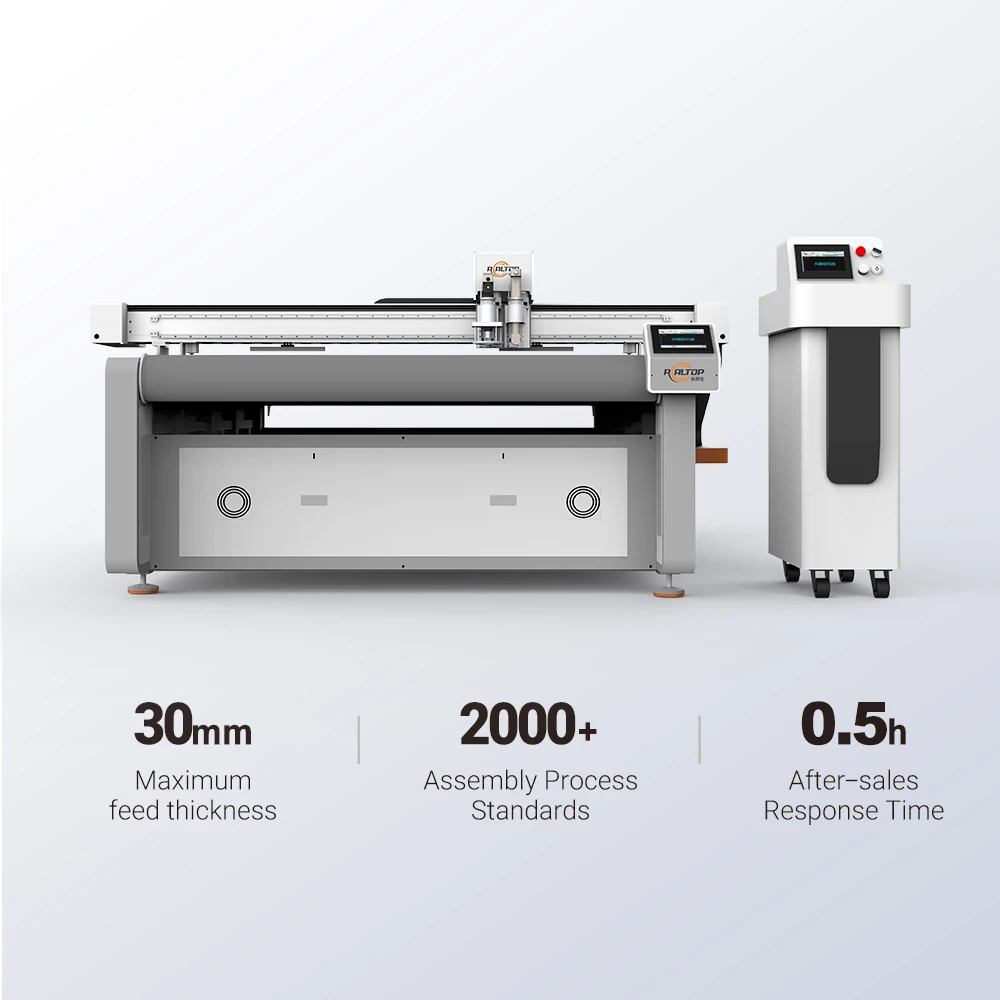
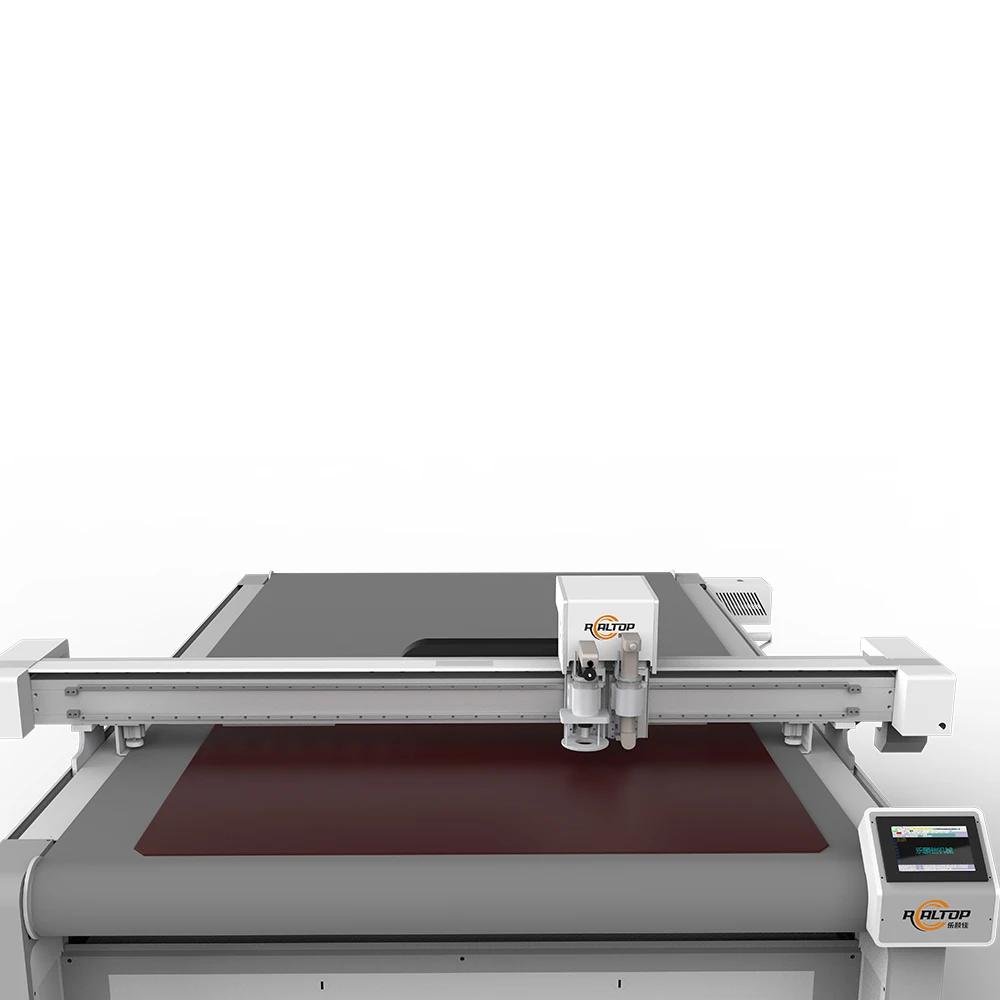
Configurable Tool Systems — Every tool head, from oscillating knife to creasing wheel, is specified against the buyer’s actual leather stock before quotation.
Technical Specifications
| Parameter | Value |
|---|---|
| Product Type | CNC Oscillating Knife Cutting Machine |
| Working Area | 1600 * 2500 mm |
| Tool Head Compatibility | Oscillating knife, Driven rotary knife, Creasing wheel, Kiss cutting tool, Pneumatic knife, Milling tool, V-groove knife |
| Cutting Speed Range | 0–2000 mm/s |
| Positioning Accuracy | ±0.1 mm |
| Repeat Positioning Accuracy | ±0.1 mm |
| Cutting Thickness Capacity | ≤ 30 mm (basis not stated in source) |
| Vacuum Pump Power | 9 kW |
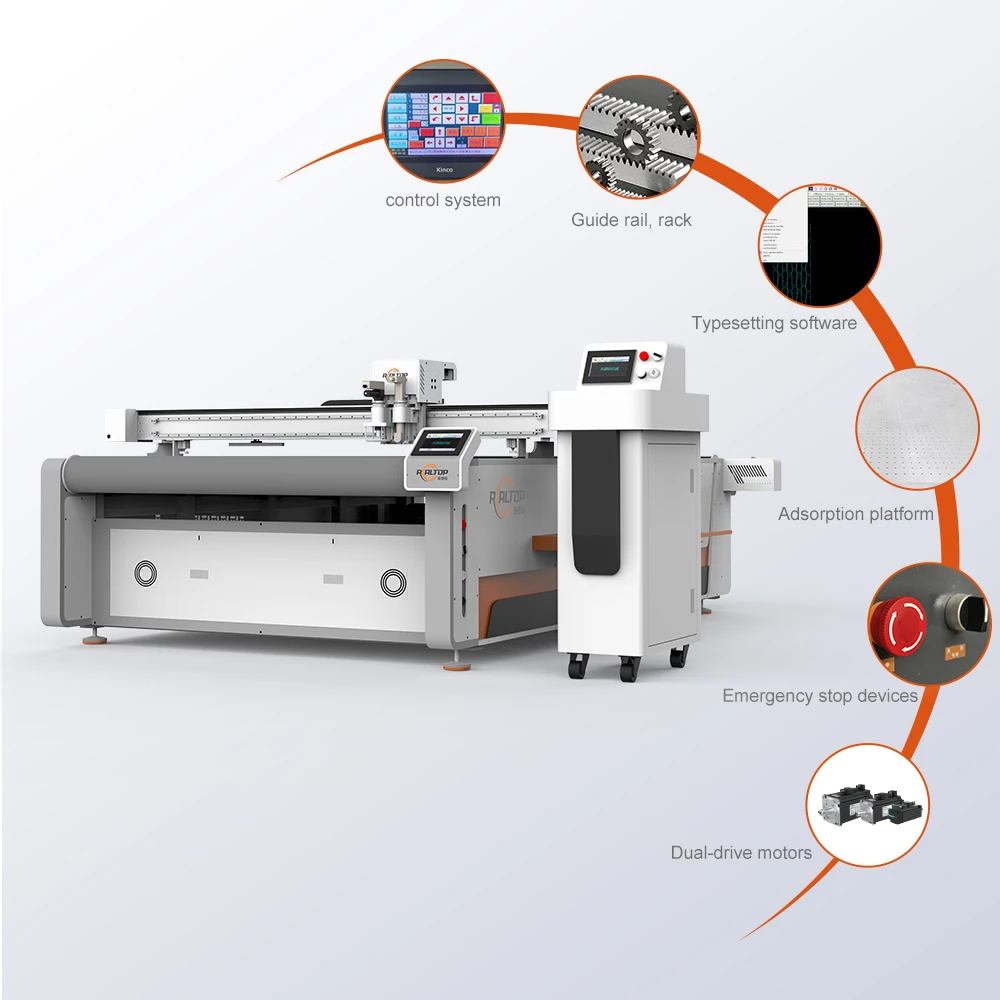
| Vacuum Table Construction | Aluminum bellows vacuum table |
| Frame Construction | Heavy-duty frame with precision-ground surface |
| Control System | PLC control panel with optional display languages |
| File Format Compatibility | PLT, DXF, AI, PDF |
| Software Integration | Intelligent nesting system; dedicated packaging box structure design software |
| Servo Drive Options | Panasonic, Delta, Dorna (source value — verify against manufacturer catalog) |
| Voltage Options | 110V, 220V, 380V |
| Machine Dimensions (L×W×H) | 3300 × 2100 × 1350 mm |
| Safety Devices | Infrared sensor device, emergency stop |
Application Suitability
| Application | Material or Output |
|---|---|
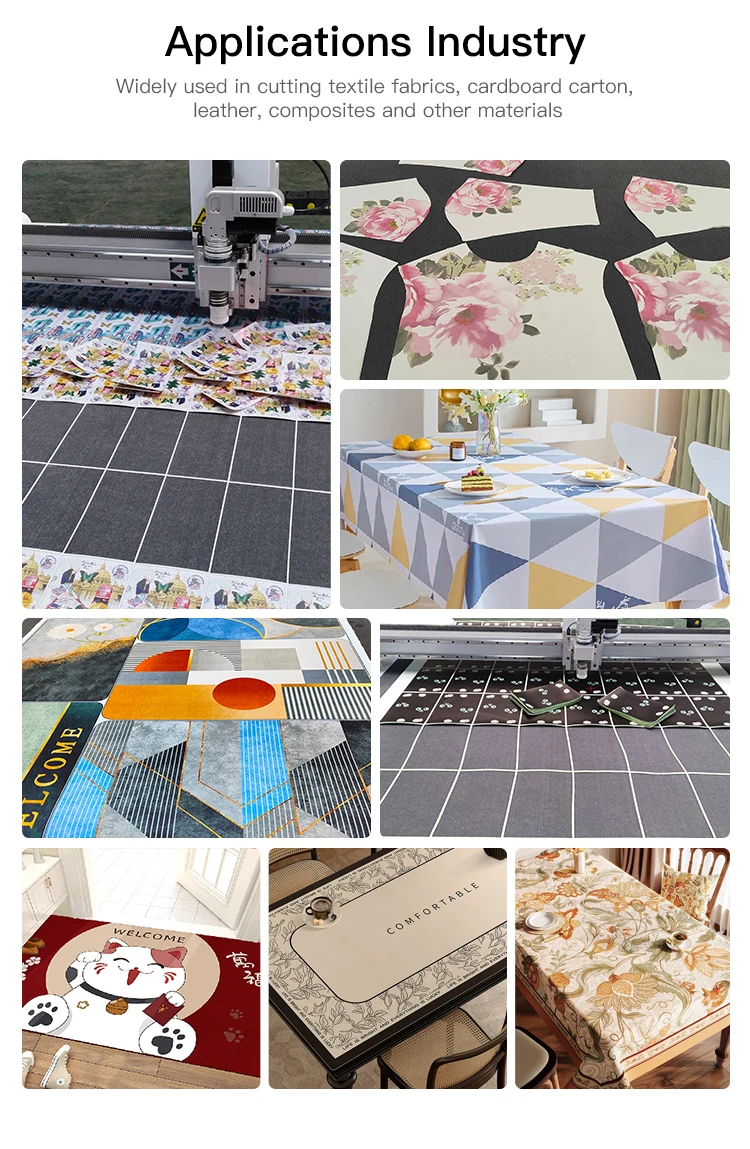
| Footwear and Leather Goods Manufacturing | Full-grain leather, split leather, PU and PVC synthetic hides for shoe uppers, bags, and belts |
| Automotive Interior Component Production | Automotive upholstery leather, seat covers, steering wheel wraps, and interior trim panels |
| Apparel and Outerwear Production | Garment-weight leathers, suede, and composite textiles for jackets and accessories |
| Upholstery and Furniture Fabrication | Heavyweight upholstery hides, sofa leather panels, and decorative leather inlays |
Why the Right CNC Oscillating Knife Cutting Machine Manufacturer Starts with Your Material
The leather you sample is rarely the leather you run in production.
I recall a footwear project in Southeast Asia where the buyer sent a standard, smooth PU sample. The configuration we quoted sliced it cleanly. Weeks later, their production line switched to a thick, regenerated leather with a woven fabric backing. The knife couldn’t penetrate the dense base layer, leaving ragged fibers and crushed edges across thousands of pieces. The entire first batch had to be re-cut. A responsible CNC oscillating knife cutting machine manufacturer must demand production-grade material for testing before any configuration is finalized. This prevents costly line stoppages and ensures the tool head matches the density and structure of what you actually process [NEED_CITE: importance of material sampling in digital cutting procurement].
Navigating the Range of Knife and Digital Cutting Systems
Buyers surveying the market often encounter machines that are either too generalized or narrowly focused on one material class. The full catalogue approach to CNC flatbed cutting systems ensures that the machine’s kinematics, vacuum hold-down, and tooling are matched to the specific production volume and material variability of the workshop. This is critical when a facility processes both rigid boards and flexible hides, as the requirements for table flatness and cutting force differ significantly.
Matching the Method to the Material
In flexible material processing, forcing a single cutting method across all applications often leads to compromised edge quality or restricted material options. Having access to a comprehensive range of tool heads allows a production manager to specify an oscillating knife for thick, dense leathers, a rotary knife for high-speed textile cutting, or a kiss-cutting tool for adhesive-backed synthetics. This flexibility, available from a comprehensive supplier, means the cutting technology adapts to the material, rather than the production team having to accept material limitations to suit the machine.
The Engineering Behind the Cut: Speed, Vacuum, and Precision
The specified cutting speed range of 0–2000 mm/s is a maximum kinematic limit; the actual operational speed for leather is dictated by material density, thickness, and the chosen tool geometry. Cutting thick hides too aggressively can cause the material to shift or the knife to deflect. This is where the 9 kW vacuum pump and aluminum bellows table become essential. The high-power vacuum creates a secure, full-surface hold, while the aluminum construction ensures the table remains perfectly flat under the cutting load. Combined with a ±0.1 mm positioning and repeat accuracy, this setup allows for tight nesting of patterns, reducing waste on expensive leather hides. The PLC control system processes standard industry files (DXF, PLT, AI), and the intelligent nesting software helps optimize material yield, which is a primary cost driver in leather goods manufacturing [NEED_CITE: impact of nesting software on material yield in leather cutting].
The Cost of Overlooking Vacuum Zoning and Tool Selection
Specifying a machine solely on its working area is a common oversight. A large table with insufficient vacuum zoning can fail to hold small leather components securely during the final cuts, causing lift and producing unusable parts. Similarly, selecting an incorrect tool head—like using a standard drag knife on dense, multi-layered composite leather—results in crushed edges and frayed backing materials. These issues are often only discovered during full-scale production runs, leading to significant material waste and missed delivery schedules [NEED_CITE: consequences of incorrect vacuum zoning in CNC cutting applications].
Why Source from a Complete Range Supplier
Sourcing from a facility that designs and builds both knife and laser cutting systems provides an inherent advantage in method selection. Instead of being sold a single technology for all tasks, buyers receive an objective assessment of whether an oscillating knife, a rotary blade, or a CO2 laser is the most appropriate tool for their specific leather or synthetic material. This ensures the chosen CNC oscillating knife cutting machine manufacturer is providing a solution based on the material’s physical properties—such as edge sealing requirements or the need to avoid thermal damage—rather than a limited product catalog. Furthermore, confirming voltage, plug type, and control language before shipment ensures the machine integrates smoothly into the local workshop environment upon arrival.
Documentation & Verification
- Factory test record using the buyer’s specific leather grade and thickness
- Electrical schematic detailing the 9 kW vacuum pump circuit and safety sensors
- Tool head configuration list matching the chosen knife to the target material
- Software license and file format note confirming DXF/AI workflow integration
- CE declaration of conformity for applicable machinery directives
Installation, Commissioning & Support
- Heavy-duty frame installation on a leveled concrete floor within a 3300 × 2100 mm footprint
- Dedicated power circuit for the 110V/220V/380V system and the 9 kW vacuum pump
- Vacuum table calibration to ensure full-surface adsorption across the 1600 × 2500 mm area
- PLC control panel setup, including language selection and servo drive parameter tuning
- Initial cutting tests on production leather to verify ±0.1 mm positioning accuracy
- Provision of wearing parts, including spare oscillating knife blades and vacuum table seals
Initiating the Technical Dialogue
To determine the correct configuration for your production, please provide samples of the actual leather types, including any composite backings, along with the maximum thickness and typical daily cutting volume. Specify the required working area relative to your hide sizes and confirm your facility’s voltage and frequency. This information allows for a sample cutting report on your material, ensuring the tooling and vacuum setup are correctly dimensioned before the order is confirmed.
Frequently Asked Questions
Q: How do I choose between an oscillating knife and a rotary knife for my leather products?
A: The choice depends on material density and thickness. Oscillating knives are suited for thick, dense, or multi-layered leathers where a vertical cutting action is needed to prevent compression. Rotary knives are generally preferred for high-speed cutting of thinner, continuous textile or synthetic rolls. The correct selection is finalized through sample testing on your specific material.
Q: Can the machine handle thick leather without crushing the edges?
A: Yes, when configured correctly. The heavy-duty frame and aluminum bellows vacuum table provide the stability required. The oscillating knife action cuts through dense materials up to 30 mm (basis not stated in source) cleanly. The critical step is testing your specific leather to determine the optimal blade angle and oscillation frequency to maintain edge integrity.
Q: Does the software work with my existing design files for nesting?
A: The system includes intelligent nesting software and supports standard formats including PLT, DXF, AI, and PDF. This allows for direct import from most CAD systems. We confirm file format compatibility and workflow integration before finalizing the order to ensure it aligns with your current production planning process.
Q: What voltage and control language options are available?
A: The machines are configurable for 110V, 220V, and 380V electrical systems to match local grid standards. The PLC control panel can be supplied with optional display languages. These specifications are confirmed and documented prior to shipment to ensure the machine is ready for installation in your facility.
Configurable Tool Systems — Every tool head, from oscillating knife to creasing wheel, is specified against the buyer’s actual leather stock before quotation.
Technical Specifications
| Parameter | Value |
|---|---|
| Product Type | CNC Oscillating Knife Cutting Machine |
| Working Area | 1600 * 2500 mm |
| Tool Head Compatibility | Oscillating knife, Driven rotary knife, Creasing wheel, Kiss cutting tool, Pneumatic knife, Milling tool, V-groove knife |
| Cutting Speed Range | 0–2000 mm/s |
| Positioning Accuracy | ±0.1 mm |
| Repeat Positioning Accuracy | ±0.1 mm |
| Cutting Thickness Capacity | ≤ 30 mm (basis not stated in source) |
| Vacuum Pump Power | 9 kW |
| Vacuum Table Construction | Aluminum bellows vacuum table |
| Frame Construction | Heavy-duty frame with precision-ground surface |
| Control System | PLC control panel with optional display languages |
| File Format Compatibility | PLT, DXF, AI, PDF |
| Software Integration | Intelligent nesting system; dedicated packaging box structure design software |
| Servo Drive Options | Panasonic, Delta, Dorna (source value — verify against manufacturer catalog) |
| Voltage Options | 110V, 220V, 380V |
| Machine Dimensions (L×W×H) | 3300 × 2100 × 1350 mm |
| Safety Devices | Infrared sensor device, emergency stop |
Application Suitability
| Application | Material or Output |
|---|---|
| Footwear and Leather Goods Manufacturing | Full-grain leather, split leather, PU and PVC synthetic hides for shoe uppers, bags, and belts |
| Automotive Interior Component Production | Automotive upholstery leather, seat covers, steering wheel wraps, and interior trim panels |
| Apparel and Outerwear Production | Garment-weight leathers, suede, and composite textiles for jackets and accessories |
| Upholstery and Furniture Fabrication | Heavyweight upholstery hides, sofa leather panels, and decorative leather inlays |
Why the Right CNC Oscillating Knife Cutting Machine Manufacturer Starts with Your Material
The leather you sample is rarely the leather you run in production.
I recall a footwear project in Southeast Asia where the buyer sent a standard, smooth PU sample. The configuration we quoted sliced it cleanly. Weeks later, their production line switched to a thick, regenerated leather with a woven fabric backing. The knife couldn’t penetrate the dense base layer, leaving ragged fibers and crushed edges across thousands of pieces. The entire first batch had to be re-cut. A responsible CNC oscillating knife cutting machine manufacturer must demand production-grade material for testing before any configuration is finalized. This prevents costly line stoppages and ensures the tool head matches the density and structure of what you actually process [NEED_CITE: importance of material sampling in digital cutting procurement].
Navigating the Range of Knife and Digital Cutting Systems
Buyers surveying the market often encounter machines that are either too generalized or narrowly focused on one material class. The full catalogue approach to CNC flatbed cutting systems ensures that the machine’s kinematics, vacuum hold-down, and tooling are matched to the specific production volume and material variability of the workshop. This is critical when a facility processes both rigid boards and flexible hides, as the requirements for table flatness and cutting force differ significantly.
Matching the Method to the Material
In flexible material processing, forcing a single cutting method across all applications often leads to compromised edge quality or restricted material options. Having access to a comprehensive range of tool heads allows a production manager to specify an oscillating knife for thick, dense leathers, a rotary knife for high-speed textile cutting, or a kiss-cutting tool for adhesive-backed synthetics. This flexibility, available from a comprehensive supplier, means the cutting technology adapts to the material, rather than the production team having to accept material limitations to suit the machine.
The Engineering Behind the Cut: Speed, Vacuum, and Precision
The specified cutting speed range of 0–2000 mm/s is a maximum kinematic limit; the actual operational speed for leather is dictated by material density, thickness, and the chosen tool geometry. Cutting thick hides too aggressively can cause the material to shift or the knife to deflect. This is where the 9 kW vacuum pump and aluminum bellows table become essential. The high-power vacuum creates a secure, full-surface hold, while the aluminum construction ensures the table remains perfectly flat under the cutting load. Combined with a ±0.1 mm positioning and repeat accuracy, this setup allows for tight nesting of patterns, reducing waste on expensive leather hides. The PLC control system processes standard industry files (DXF, PLT, AI), and the intelligent nesting software helps optimize material yield, which is a primary cost driver in leather goods manufacturing [NEED_CITE: impact of nesting software on material yield in leather cutting].
The Cost of Overlooking Vacuum Zoning and Tool Selection
Specifying a machine solely on its working area is a common oversight. A large table with insufficient vacuum zoning can fail to hold small leather components securely during the final cuts, causing lift and producing unusable parts. Similarly, selecting an incorrect tool head—like using a standard drag knife on dense, multi-layered composite leather—results in crushed edges and frayed backing materials. These issues are often only discovered during full-scale production runs, leading to significant material waste and missed delivery schedules [NEED_CITE: consequences of incorrect vacuum zoning in CNC cutting applications].
Why Source from a Complete Range Supplier
Sourcing from a facility that designs and builds both knife and laser cutting systems provides an inherent advantage in method selection. Instead of being sold a single technology for all tasks, buyers receive an objective assessment of whether an oscillating knife, a rotary blade, or a CO2 laser is the most appropriate tool for their specific leather or synthetic material. This ensures the chosen CNC oscillating knife cutting machine manufacturer is providing a solution based on the material’s physical properties—such as edge sealing requirements or the need to avoid thermal damage—rather than a limited product catalog. Furthermore, confirming voltage, plug type, and control language before shipment ensures the machine integrates smoothly into the local workshop environment upon arrival.
Documentation & Verification
- Factory test record using the buyer’s specific leather grade and thickness
- Electrical schematic detailing the 9 kW vacuum pump circuit and safety sensors
- Tool head configuration list matching the chosen knife to the target material
- Software license and file format note confirming DXF/AI workflow integration
- CE declaration of conformity for applicable machinery directives
Installation, Commissioning & Support
- Heavy-duty frame installation on a leveled concrete floor within a 3300 × 2100 mm footprint
- Dedicated power circuit for the 110V/220V/380V system and the 9 kW vacuum pump
- Vacuum table calibration to ensure full-surface adsorption across the 1600 × 2500 mm area
- PLC control panel setup, including language selection and servo drive parameter tuning
- Initial cutting tests on production leather to verify ±0.1 mm positioning accuracy
- Provision of wearing parts, including spare oscillating knife blades and vacuum table seals
Initiating the Technical Dialogue
To determine the correct configuration for your production, please provide samples of the actual leather types, including any composite backings, along with the maximum thickness and typical daily cutting volume. Specify the required working area relative to your hide sizes and confirm your facility’s voltage and frequency. This information allows for a sample cutting report on your material, ensuring the tooling and vacuum setup are correctly dimensioned before the order is confirmed.
Frequently Asked Questions
Q: How do I choose between an oscillating knife and a rotary knife for my leather products?
A: The choice depends on material density and thickness. Oscillating knives are suited for thick, dense, or multi-layered leathers where a vertical cutting action is needed to prevent compression. Rotary knives are generally preferred for high-speed cutting of thinner, continuous textile or synthetic rolls. The correct selection is finalized through sample testing on your specific material.
Q: Can the machine handle thick leather without crushing the edges?
A: Yes, when configured correctly. The heavy-duty frame and aluminum bellows vacuum table provide the stability required. The oscillating knife action cuts through dense materials up to 30 mm (basis not stated in source) cleanly. The critical step is testing your specific leather to determine the optimal blade angle and oscillation frequency to maintain edge integrity.
Q: Does the software work with my existing design files for nesting?
A: The system includes intelligent nesting software and supports standard formats including PLT, DXF, AI, and PDF. This allows for direct import from most CAD systems. We confirm file format compatibility and workflow integration before finalizing the order to ensure it aligns with your current production planning process.
Q: What voltage and control language options are available?
A: The machines are configurable for 110V, 220V, and 380V electrical systems to match local grid standards. The PLC control panel can be supplied with optional display languages. These specifications are confirmed and documented prior to shipment to ensure the machine is ready for installation in your facility.










商品评价
There are no reviews yet.