

Fast Delivery
Quick, reliable shipping to any location.

Free & easy returns
Return this item by mail or in store within 90 days for a full refund.
Voltage and control language customization — confirmed on the RT-D2516/RT-S2516 specification sheet before production, avoiding on-site rewiring or interface translation delays common when defaults are assumed.
Technical Specifications
| Parameter | Value |
|---|---|
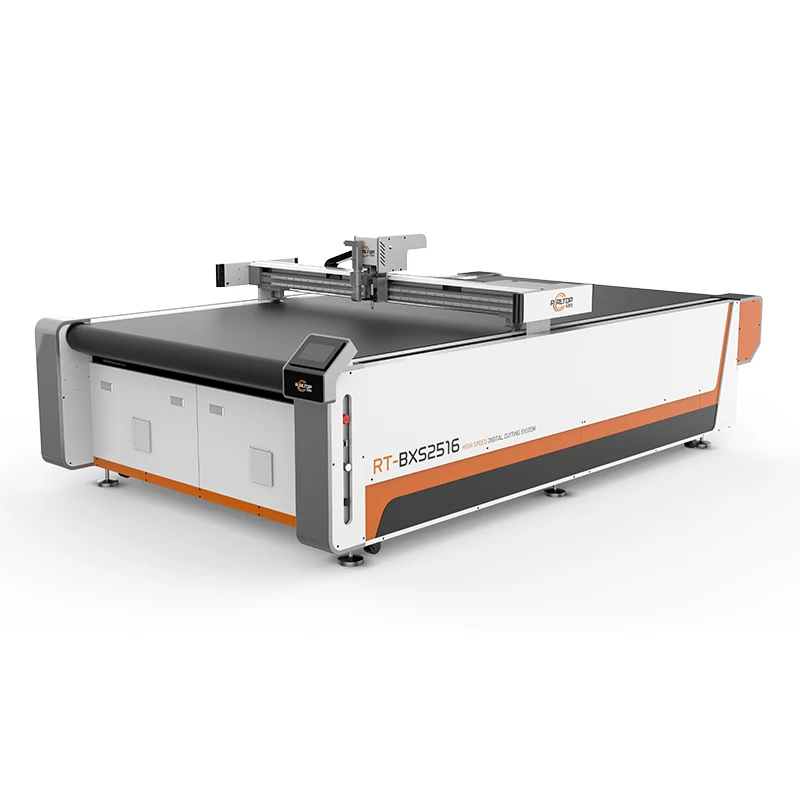
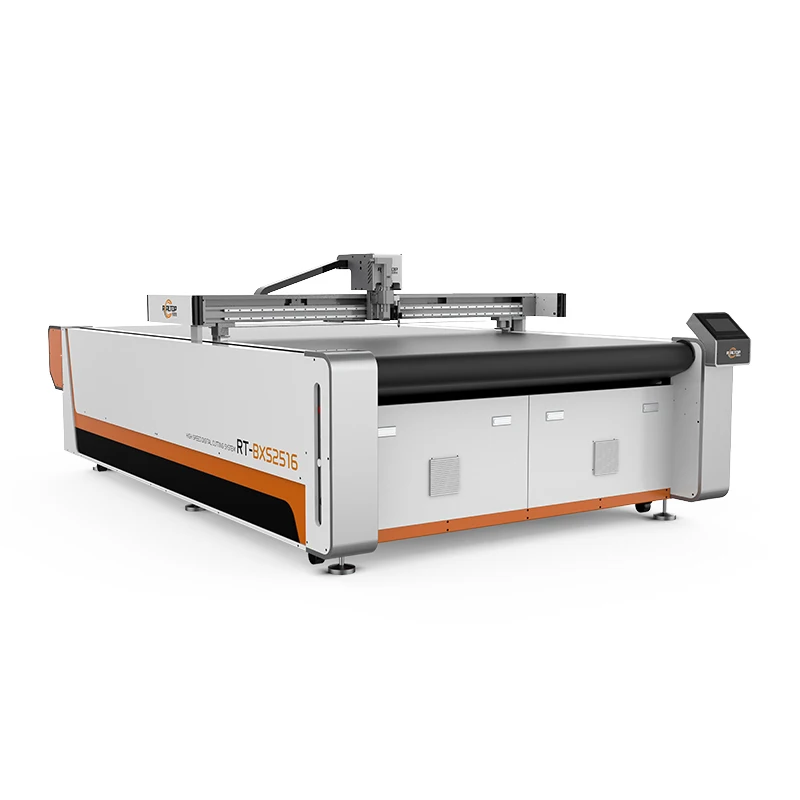
| Model | RT-D2516/RT-S2516 |
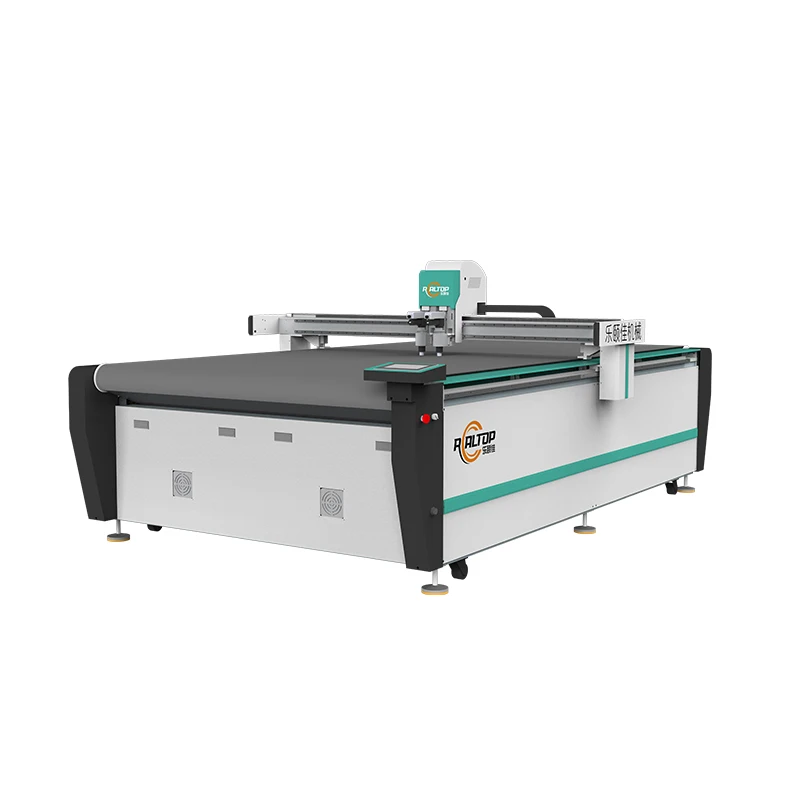
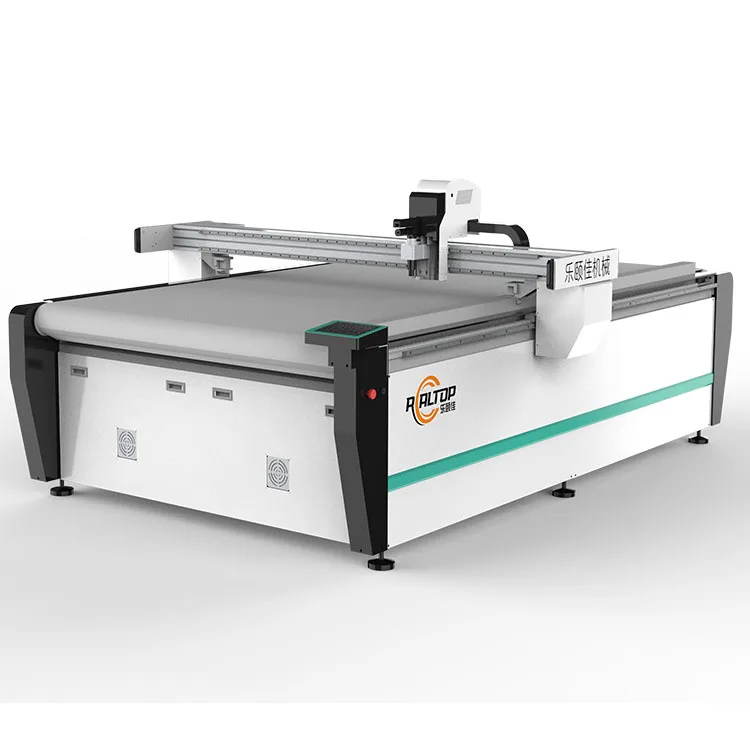
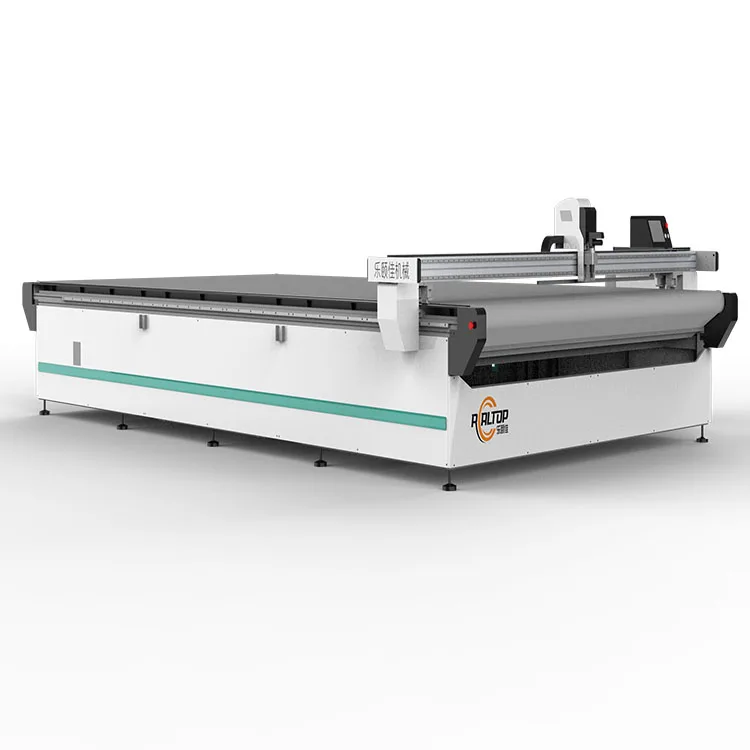
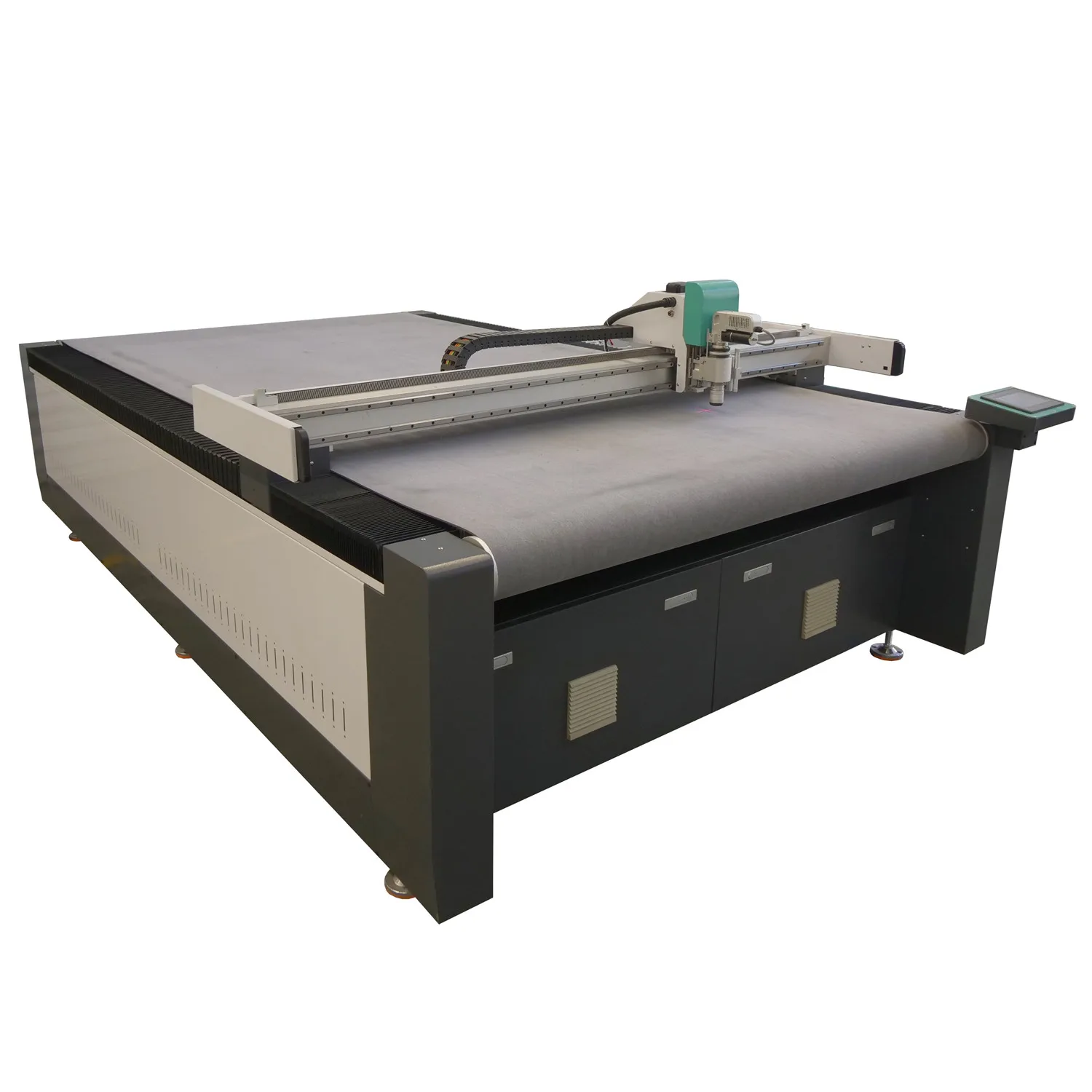
| Product Type | CNC Oscillating Knife Cutting Machine |
| Working Area | 1600 × 2500 mm |
| Machine Size | 3450 × 2300 × 1250 mm |
| Rated Power | 9 kW |
| Voltage | 380V ±10% |
| Table Type | Flatbed working table; auto feeding table available |
| Multifunctional Head | Swiss imported knife (vibration full cutting, vibration half cutting, cursor location) |
| Tool Head Options | Oscillating knife, pneumatic knife, high-power vibrating knife, circular knife, V cutting knife, drag knife, creasing wheel, dotted line knife, punching, brush |
| Visual Positioning | Small CCD camera mark point positioning, panoramic camera recognition, projection positioning |
| Translational Velocity | 800–2000 mm/s |
| Cutting Thickness | 200–800 mm/s depending on material (basis to be confirmed) |
| Repeated Accuracy | ≤0.1 mm |
| Transmission System | Digital servo motor, linear guide, synchronous belt, ball screw |
| Vacuum Table Material | Magnesium-aluminum alloy with PVDF powder spraying and hard oxidation |
| Vacuum Pump | 7.5 kW, integrated aviation aluminum shell with built-in silencer sponge |
| Control Panel | Touch screen, multiple languages supported |
| Software | Auto typesetting; supports PLT, DXF, AI formats |
| Safety Device | Infrared sensors |
Application Suitability
| Application | Material or Output |
|---|---|
| Garment and footwear production | Clothing cloth, shoe material, non-woven fabric, multi-layer textile |
| Automotive interior trimming | Leather, sponge composite leather, PU, EVA, gasket material |
| Soft home furnishings | Carpet, floor mat, curtain fabric, upholstery textile |
| Luggage and bag manufacturing | Luggage material, PVC, PP, PE, composite panels |
| Graphic advertising and printing | Sticker, film, vinyl, corrugated board for display stands |
| Sealing and insulation | PTFE, ETFE, rubber, XPE, fiberglass, composite gasket stock |
Why the Tool Head Decision Matters More Than the Working Area
When buyers focus only on table size and overlook the cutting head, a 1600 × 2500 mm bed becomes an expensive flat surface that cannot hold small fabric pieces or produce clean edges on coated composites.
Match the tool head to the material first, then size the table to your nesting layout.
I have seen workshops where the machine arrived with a single oscillating knife, only for the operator to discover that their sponge composite leather required a high-power vibrating knife to avoid crushed edges. Reworking the tool configuration after delivery means production downtime, extra shipping costs for replacement heads, and re-training operators mid-season [NEED_CITE: tool head and material compatibility standards for CNC knife cutting].
Tool Head Range Covering Fabric to Composite Gasket
This CNC cutting machine manufacturer offers eleven distinct tool head options on the same platform. A garment producer cutting woven textile can run the standard oscillating knife for speed, then swap to the drag knife for intricate pattern pieces without moving the material to a different machine. The creasing wheel and dotted line knife serve packaging sample work on corrugated board, while the punching tool handles holes for rivets or eyelets in leather goods. Each head mounts to the same multifunctional carriage, so switching between jobs takes minutes rather than requiring a second machine on the floor.
Visual Positioning That Tracks the Printed Contour
For producers cutting around pre-printed graphics on fabric or vinyl, the visual positioning system offers three tiers. The small CCD camera tracks registration marks for standard contour jobs, while the panoramic camera recognition handles large-format prints where marks are spaced beyond a single camera field. Projection positioning overlays the cut path directly onto the material surface, letting operators verify nesting placement before the knife touches the fabric. This matters when a single misaligned print on expensive automotive interior leather can waste an entire hide [NEED_CITE: visual positioning accuracy requirements for printed textile cutting].
What the Specs Mean on the Shop Floor
The 7.5 kW vacuum pump paired with the magnesium-aluminum alloy table is not just a power figure — it determines whether small garment pattern pieces stay flat during high-speed cutting. When the oscillating knife moves at up to 2000 mm/s, any lift on a lightweight polyester piece creates a ragged edge or a skipped cut. The PVDF powder spraying and hard oxidation on the table surface resist adhesive residue buildup from sticker and film materials, reducing cleaning time between jobs. The Delta servo motor and Taiwan Hiwin linear guide deliver the ≤0.1 mm repeated accuracy that nesting software relies on; if the carriage drifts over a long run, material yield drops even though every individual cut looks acceptable. The 9 kW rated power accounts for the vacuum pump, servo drives, and control system running simultaneously — undersizing the dedicated circuit to save on electrical work causes voltage sag that trips the servo mid-job.
The Hidden Cost of Skipping Material Testing
Sending a standard polyester swatch for sample testing and then running coated composite fabric in production is a pattern I encounter repeatedly. The cutting parameters — blade frequency, downward pressure, vacuum zoning — all change when the material composition shifts. Coated fabrics can delaminate if the oscillating knife frequency is too aggressive, while foam-backed materials compress under insufficient vacuum and spring back after the cut, leaving uncut fibers. Buyers who skip testing on their actual production material often discover these issues during the first week of operation, when the machine is already scheduled for delivery deadlines [NEED_CITE: material testing protocols for CNC digital cutting equipment].
Why Source This Configuration Here
The in-house design team covers both knife and laser cutting technologies, so when a material sits on the boundary between methods — like thin rubber that could be knife-cut or laser-cut — the recommendation is based on edge quality and throughput rather than pushing one technology. The tool head and table configuration list is written against your specific material type, thickness, and daily volume before the order is confirmed, not pulled from a default build sheet. Software compatibility is verified against your existing PLT, DXF, or AI files and nesting workflow during the pre-order stage. Voltage and control language are locked in on the specification sheet, so a 380V machine with Italian interface does not arrive at a 220V workshop. Sample cutting on your own material is standard before commitment, with a documented report showing edge quality and achievable cutting parameters.
Documentation & Verification
- Machine specification sheet confirming working area, tool head selection, and voltage for RT-D2516/RT-S2516
- Tool head and table configuration list matched to your material type and thickness
- Sample cutting report on your own fabric or composite material before order
- Software license and file format compatibility note for PLT, DXF, AI workflows
- Electrical schematic with voltage and circuit requirements confirmed for your facility
- Operation and maintenance manual in selected control language
Installation, Commissioning & Support
- Requires a level concrete floor accommodating 3450 × 2300 mm machine footprint plus material staging space
- Dedicated 380V ±10% circuit rated for 9 kW continuous draw with appropriate breaker sizing
- Arrives partially assembled; final rail alignment and vacuum table leveling completed on-site
- First-run calibration includes vacuum zoning test across the 1600 × 2500 mm bed with your material
- Operator training covers tool head changeover, nesting software workflow, and CCD camera calibration
- Spare parts list includes Swiss knife blades, vacuum table seals, and synchronous belt segments
What to Share Before Quoting
Send your actual material samples — not a data sheet — along with the thickest and thinnest stock you plan to run, your target daily output volume, and the file formats your design team currently uses. Confirm your workshop voltage and frequency, preferred control language, and whether your production flow benefits from the flatbed or auto feeding table configuration.
Frequently Asked Questions
Q: How do I choose between oscillating knife and laser for my fabric?
A: Knife cutting produces no burned edges and handles multi-layer textile stacks, making it suitable for garment and upholstery work where edge appearance matters. Laser seals synthetic edges to prevent fraying but cannot cut thick foam or composite stacks. We test your specific material with both methods to show edge quality and throughput before you commit to one approach.
Q: Which tool head works for small pattern pieces on lightweight cloth?
A: The oscillating knife handles most woven and knitted fabrics, but small pieces under 50 mm require strong vacuum hold-down to prevent lifting. The vacuum table zoning must be configured to concentrate suction under the nesting area. We verify hold-down performance during sample cutting using your actual fabric weight and piece geometry.
Q: Can the machine handle my existing nesting software output files?
A: The control software accepts PLT, DXF, and AI formats directly. Before the order, we run your sample files through the auto typesetting system to confirm import accuracy, nesting density, and cut path interpretation. If your current workflow uses a proprietary format, we identify the export settings needed to maintain compatibility.
Q: What voltage and language options are available before shipment?
A: The standard configuration runs on 380V ±10%, and voltage adjustments are confirmed on the specification sheet before production. The touch screen control panel supports English, Russian, Italian, and Chinese, with additional languages configurable. We document the exact voltage, plug type, and interface language on the order confirmation so the machine matches your facility on arrival.
Q: How does the CCD camera handle printed contour work at production speed?
A: The small CCD camera tracks registration marks for standard jobs, while the panoramic camera recognition system covers large-format prints with widely spaced marks. The system must be tested at your target cutting speed to confirm the camera can acquire marks without pausing the carriage. We include this verification in the factory test record before shipment.
Voltage and control language customization — confirmed on the RT-D2516/RT-S2516 specification sheet before production, avoiding on-site rewiring or interface translation delays common when defaults are assumed.
Technical Specifications
| Parameter | Value |
|---|---|
| Model | RT-D2516/RT-S2516 |
| Product Type | CNC Oscillating Knife Cutting Machine |
| Working Area | 1600 × 2500 mm |
| Machine Size | 3450 × 2300 × 1250 mm |
| Rated Power | 9 kW |
| Voltage | 380V ±10% |
| Table Type | Flatbed working table; auto feeding table available |
| Multifunctional Head | Swiss imported knife (vibration full cutting, vibration half cutting, cursor location) |
| Tool Head Options | Oscillating knife, pneumatic knife, high-power vibrating knife, circular knife, V cutting knife, drag knife, creasing wheel, dotted line knife, punching, brush |
| Visual Positioning | Small CCD camera mark point positioning, panoramic camera recognition, projection positioning |
| Translational Velocity | 800–2000 mm/s |
| Cutting Thickness | 200–800 mm/s depending on material (basis to be confirmed) |
| Repeated Accuracy | ≤0.1 mm |
| Transmission System | Digital servo motor, linear guide, synchronous belt, ball screw |
| Vacuum Table Material | Magnesium-aluminum alloy with PVDF powder spraying and hard oxidation |
| Vacuum Pump | 7.5 kW, integrated aviation aluminum shell with built-in silencer sponge |
| Control Panel | Touch screen, multiple languages supported |
| Software | Auto typesetting; supports PLT, DXF, AI formats |
| Safety Device | Infrared sensors |
Application Suitability
| Application | Material or Output |
|---|---|
| Garment and footwear production | Clothing cloth, shoe material, non-woven fabric, multi-layer textile |
| Automotive interior trimming | Leather, sponge composite leather, PU, EVA, gasket material |
| Soft home furnishings | Carpet, floor mat, curtain fabric, upholstery textile |
| Luggage and bag manufacturing | Luggage material, PVC, PP, PE, composite panels |
| Graphic advertising and printing | Sticker, film, vinyl, corrugated board for display stands |
| Sealing and insulation | PTFE, ETFE, rubber, XPE, fiberglass, composite gasket stock |
Why the Tool Head Decision Matters More Than the Working Area
When buyers focus only on table size and overlook the cutting head, a 1600 × 2500 mm bed becomes an expensive flat surface that cannot hold small fabric pieces or produce clean edges on coated composites.
Match the tool head to the material first, then size the table to your nesting layout.
I have seen workshops where the machine arrived with a single oscillating knife, only for the operator to discover that their sponge composite leather required a high-power vibrating knife to avoid crushed edges. Reworking the tool configuration after delivery means production downtime, extra shipping costs for replacement heads, and re-training operators mid-season [NEED_CITE: tool head and material compatibility standards for CNC knife cutting].
Tool Head Range Covering Fabric to Composite Gasket
This CNC cutting machine manufacturer offers eleven distinct tool head options on the same platform. A garment producer cutting woven textile can run the standard oscillating knife for speed, then swap to the drag knife for intricate pattern pieces without moving the material to a different machine. The creasing wheel and dotted line knife serve packaging sample work on corrugated board, while the punching tool handles holes for rivets or eyelets in leather goods. Each head mounts to the same multifunctional carriage, so switching between jobs takes minutes rather than requiring a second machine on the floor.
Visual Positioning That Tracks the Printed Contour
For producers cutting around pre-printed graphics on fabric or vinyl, the visual positioning system offers three tiers. The small CCD camera tracks registration marks for standard contour jobs, while the panoramic camera recognition handles large-format prints where marks are spaced beyond a single camera field. Projection positioning overlays the cut path directly onto the material surface, letting operators verify nesting placement before the knife touches the fabric. This matters when a single misaligned print on expensive automotive interior leather can waste an entire hide [NEED_CITE: visual positioning accuracy requirements for printed textile cutting].
What the Specs Mean on the Shop Floor
The 7.5 kW vacuum pump paired with the magnesium-aluminum alloy table is not just a power figure — it determines whether small garment pattern pieces stay flat during high-speed cutting. When the oscillating knife moves at up to 2000 mm/s, any lift on a lightweight polyester piece creates a ragged edge or a skipped cut. The PVDF powder spraying and hard oxidation on the table surface resist adhesive residue buildup from sticker and film materials, reducing cleaning time between jobs. The Delta servo motor and Taiwan Hiwin linear guide deliver the ≤0.1 mm repeated accuracy that nesting software relies on; if the carriage drifts over a long run, material yield drops even though every individual cut looks acceptable. The 9 kW rated power accounts for the vacuum pump, servo drives, and control system running simultaneously — undersizing the dedicated circuit to save on electrical work causes voltage sag that trips the servo mid-job.
The Hidden Cost of Skipping Material Testing
Sending a standard polyester swatch for sample testing and then running coated composite fabric in production is a pattern I encounter repeatedly. The cutting parameters — blade frequency, downward pressure, vacuum zoning — all change when the material composition shifts. Coated fabrics can delaminate if the oscillating knife frequency is too aggressive, while foam-backed materials compress under insufficient vacuum and spring back after the cut, leaving uncut fibers. Buyers who skip testing on their actual production material often discover these issues during the first week of operation, when the machine is already scheduled for delivery deadlines [NEED_CITE: material testing protocols for CNC digital cutting equipment].
Why Source This Configuration Here
The in-house design team covers both knife and laser cutting technologies, so when a material sits on the boundary between methods — like thin rubber that could be knife-cut or laser-cut — the recommendation is based on edge quality and throughput rather than pushing one technology. The tool head and table configuration list is written against your specific material type, thickness, and daily volume before the order is confirmed, not pulled from a default build sheet. Software compatibility is verified against your existing PLT, DXF, or AI files and nesting workflow during the pre-order stage. Voltage and control language are locked in on the specification sheet, so a 380V machine with Italian interface does not arrive at a 220V workshop. Sample cutting on your own material is standard before commitment, with a documented report showing edge quality and achievable cutting parameters.
Documentation & Verification
- Machine specification sheet confirming working area, tool head selection, and voltage for RT-D2516/RT-S2516
- Tool head and table configuration list matched to your material type and thickness
- Sample cutting report on your own fabric or composite material before order
- Software license and file format compatibility note for PLT, DXF, AI workflows
- Electrical schematic with voltage and circuit requirements confirmed for your facility
- Operation and maintenance manual in selected control language
Installation, Commissioning & Support
- Requires a level concrete floor accommodating 3450 × 2300 mm machine footprint plus material staging space
- Dedicated 380V ±10% circuit rated for 9 kW continuous draw with appropriate breaker sizing
- Arrives partially assembled; final rail alignment and vacuum table leveling completed on-site
- First-run calibration includes vacuum zoning test across the 1600 × 2500 mm bed with your material
- Operator training covers tool head changeover, nesting software workflow, and CCD camera calibration
- Spare parts list includes Swiss knife blades, vacuum table seals, and synchronous belt segments
What to Share Before Quoting
Send your actual material samples — not a data sheet — along with the thickest and thinnest stock you plan to run, your target daily output volume, and the file formats your design team currently uses. Confirm your workshop voltage and frequency, preferred control language, and whether your production flow benefits from the flatbed or auto feeding table configuration.
Frequently Asked Questions
Q: How do I choose between oscillating knife and laser for my fabric?
A: Knife cutting produces no burned edges and handles multi-layer textile stacks, making it suitable for garment and upholstery work where edge appearance matters. Laser seals synthetic edges to prevent fraying but cannot cut thick foam or composite stacks. We test your specific material with both methods to show edge quality and throughput before you commit to one approach.
Q: Which tool head works for small pattern pieces on lightweight cloth?
A: The oscillating knife handles most woven and knitted fabrics, but small pieces under 50 mm require strong vacuum hold-down to prevent lifting. The vacuum table zoning must be configured to concentrate suction under the nesting area. We verify hold-down performance during sample cutting using your actual fabric weight and piece geometry.
Q: Can the machine handle my existing nesting software output files?
A: The control software accepts PLT, DXF, and AI formats directly. Before the order, we run your sample files through the auto typesetting system to confirm import accuracy, nesting density, and cut path interpretation. If your current workflow uses a proprietary format, we identify the export settings needed to maintain compatibility.
Q: What voltage and language options are available before shipment?
A: The standard configuration runs on 380V ±10%, and voltage adjustments are confirmed on the specification sheet before production. The touch screen control panel supports English, Russian, Italian, and Chinese, with additional languages configurable. We document the exact voltage, plug type, and interface language on the order confirmation so the machine matches your facility on arrival.
Q: How does the CCD camera handle printed contour work at production speed?
A: The small CCD camera tracks registration marks for standard jobs, while the panoramic camera recognition system covers large-format prints with widely spaced marks. The system must be tested at your target cutting speed to confirm the camera can acquire marks without pausing the carriage. We include this verification in the factory test record before shipment.










商品评价
There are no reviews yet.