



Fast Delivery
Quick, reliable shipping to any location.

Free & easy returns
Return this item by mail or in store within 90 days for a full refund.
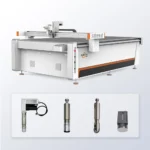
Tool-Head Matching — Oscillating knife, driven rotary knife, creasing wheel and five other tools available on the same table, so a single fabric cutting machine handles cotton, coated textiles and composites without forcing one method onto every job.
Technical Specifications
| Parameter | Value |
|---|---|
| Product Type | CNC Multi-Layer Fabric Cutting Machine |
| Model | 1625 |
| Working Area | 1600×2500 mm |
| Cutting Thickness | ≤30 mm (basis to be confirmed on actual fabric type and layer count) |
| Cutting Speed | 0–2000 mm/s |
| Cutting Accuracy | ±0.1 mm |
| Tools Available | Oscillating knife, Driven rotary knife, Creasing wheel, Kiss cutting tool, Pneumatic knife, Milling tool, V-groove knife |
| Applicable Materials | Fabric, Cardboard, Carton, Mats, PVC, EVA, Leather, Acrylic, Foam, PTFE, Rubber |
| Vacuum Pump | 9 kW |
| Vacuum Table | Aluminum bellows vacuum table |
| Machine Frame | Heavy-duty frame with precision-ground surface |
| Control System | PLC control panel |
| Voltage | 110V, 220V, 380V (frequency to be confirmed per market) |
| Profile Formats | PLT, DXF, AI, PDF |
| Safety Device | Infrared sensor device and emergency stop device |
| Machine Size | 3300×2100×1350 mm |
| Software Language | English, Russian, Italian, Chinese (custom languages available) |
| Servo Motor Options | Panasonic, Delta, Dorna |
| Certification | CE |
Application Suitability
| Application | Material or Output |
|---|---|
| Apparel manufacturing | Suits, knitwear, lace, complex patterned fabrics requiring pattern-matching layouts |
| Automotive interiors | Seat fabrics, carpets, PVC mats and coated technical textiles |
| Home textiles | Sofa fabrics, curtains, rugs and multi-layer upholstery cutting |
| Composite material processing | Carbon fiber prepreg, aramid and specialty materials |
What "Multi-Layer" Actually Means When the Fabric Bites Back
A machine rated for 30 mm on standard cotton does not automatically handle 30 mm of coated automotive fabric at production speed.
I learned this the hard way in a Turkish workshop last year. We shipped a multi-layer fabric cutting machine specified on thickness alone — 30 mm, standard cotton sample, clean edges. The buyer’s actual material was a coated automotive interior fabric, and by the third layer the blade was dragging, producing frayed edges and forcing the operator to slow down. The oscillating knife frequency that worked on cotton caused delamination on that coating. We spent a week on-site swapping tool heads and tuning oscillation parameters before the machine delivered acceptable edge quality at usable speed [NEED_CITE: blade-material interaction on coated technical textiles].
This is why the 1625 offers seven interchangeable tool heads. The oscillating knife handles standard woven fabrics at high speed. The driven rotary knife slices through knits and stretch materials without pulling. The pneumatic knife cuts through thick, dense stacks where blade resistance overwhelms a standard oscillating motor. Selecting the right tool head per material is not optional — it determines whether the cutting thickness on the spec sheet translates to your production floor.
Seven Tool Heads on One Table — Matching the Cut to the Cloth
The 1625 table accepts an oscillating knife, driven rotary knife, creasing wheel, kiss cutting tool, pneumatic knife, milling tool and V-groove knife. Each tool addresses a specific failure mode: the oscillating knife vibrates at high frequency to reduce friction on standard wovens, while the driven rotary knife actively pulls through knits without stretching the ply. The creasing wheel scores cardboard and carton packaging samples on the same machine, letting a garment factory also produce its own box prototypes. This tool-head range means a CNC fabric cutting machine manufacturer can supply one platform that covers cotton suits, stretch sportswear, PVC floor mats and aramid composites.
How Vacuum Zoning Holds Small Parts Without Lifting
The 9 kW vacuum pump feeds an aluminum bellows vacuum table. On a 1600×2500 mm surface, zoning determines whether a small collar pattern stays flat when the knife exits the cut. Without adequate zoning, the vacuum spread across the full table leaves insufficient suction under small pieces, and fabric lifts into the blade path — causing misaligned cuts and wasted layers [NEED_CITE: vacuum table zoning requirements for small-part textile cutting]. The aluminum bellows design allows the table to be divided into independently controlled zones, concentrating suction under the active cutting area. This matters for apparel manufacturers cutting collar stays, pocket flaps and cuff pieces from multi-layer lay-ups.
Reading the 1625 Specification Sheet Against Your Material
Cutting accuracy of ±0.1 mm governs how closely nested patterns can be placed, directly affecting fabric yield on expensive materials like suit wools and technical composites. Cutting speed ranges from 0 to 2000 mm/s, but the usable speed on your material depends on layer count, fabric density and the tool head selected — a 50-layer cotton lay-up runs slower than a single ply of lace. The PLC control panel drives servo motors from Panasonic, Delta or Dorna, maintaining positioning precision across the full 1600×2500 mm travel. Voltage is configurable at 110V, 220V or 380V, which must be confirmed against the buyer’s facility supply before production begins. File format compatibility with PLT, DXF, AI and PDF means the machine integrates with existing nesting software rather than forcing a workflow change.
The Hidden Cost of Skipping the Sample Cut
When a buyer specifies a CNC cutting table on working area and quoted speed alone, the first production run reveals every assumption that was never tested. Wrong tool head selection produces ragged edges that force secondary trimming, adding labor the quotation never accounted for. Insufficient vacuum zoning causes small parts to shift mid-cut, scrapping entire multi-layer lay-ups. Software that cannot import the buyer’s nesting files stalls production until a workaround is built. Every one of these failures is preventable with a sample cut on the actual material before the order is placed [NEED_CITE: sample testing protocols for industrial cutting equipment procurement].
Why Buyers Source This Range From a Single Factory
Realtop designs and builds both knife and laser cutting systems in-house, so a buyer comparing methods for a mixed material schedule gets an honest recommendation rather than being pushed toward whichever machine is in stock. Tool head and table configuration are specified per material and production volume, not quoted as a fixed bundle. CCD camera positioning is available for printed contour work, and software compatibility is confirmed before the order is placed. Voltage, plug type, control language and documentation are customised per export market, reducing the commissioning surprises that delay first production runs.
Documentation & Verification
- Machine specification sheet listing each tool head and its material application range
- Electrical schematic with voltage and frequency confirmed to your facility supply
- Sample cutting report produced on your fabric before order placement
- Factory test record documenting cutting accuracy and edge quality on your material
- Software licence with file format compatibility note for PLT, DXF, AI and PDF
Installation, Commissioning & Support
- Heavy-duty frame requires level concrete floor to support 3300×2100×1350 mm footprint
- 9 kW vacuum pump and servo motors need dedicated circuit matching your 110V, 220V or 380V supply
- Machine ships disassembled for container transport, reassembled on-site with frame alignment check
- PLC control panel calibrated with your chosen tool heads during commissioning run
- Operator training covers tool head changeover, vacuum zoning setup and file import workflow
- Spare parts list includes blades, belts and wear items matched to your selected tool configuration
What to Send With Your Inquiry
Share the specific fabric types you cut, including coating or lamination details, along with typical layer counts and daily volume targets. Confirm your facility voltage and frequency, preferred control language, and whether you need the machine to integrate with existing nesting software or CAD workflow. If your material is anything beyond standard woven cotton, send a sample roll so we can run test cuts and confirm tool head selection before quoting configuration.
Frequently Asked Questions
Q: How do I choose between oscillating knife and driven rotary knife for my fabric?
A: Woven fabrics with stable structure suit the oscillating knife, which vibrates to reduce friction. Knits, stretch fabrics and loosely woven materials need the driven rotary knife, which actively feeds through the ply without pulling. We test both on your material sample to confirm which delivers clean edges at your required speed before specifying the tool head in the order.
Q: How are working area, tool head and vacuum zoning specified together?
A: The 1600×2500 mm table is one configuration in a range of sizes. Tool heads are selected per your material schedule, and vacuum zoning is configured to match your typical part sizes so small pieces receive concentrated suction. All three are confirmed as a single configuration package before production begins.
Q: What sample cutting is done before I commit to an order?
A: We cut your actual fabric — including any coating, lamination or backing — using the recommended tool head at various layer counts and speeds. The sample cutting report documents edge quality, cutting accuracy and usable speed, so you see exactly what the machine delivers on your material before the purchase is finalised.
Q: How is voltage, language and software format confirmed for my market?
A: Voltage is set to your facility supply — 110V, 220V or 380V — and plug type matched to local standards. The PLC control panel language is configured from English, Russian, Italian, Chinese or a custom option. File format compatibility with PLT, DXF, AI and PDF is verified against your existing nesting software during the specification stage.
Q: What documentation ships with the CNC fabric cutting machine?
A: Every machine ships with a specification sheet, electrical schematic, factory test record, operation and maintenance manual, software licence, spare parts list and packing photographs. CE declaration is included where applicable. All documents reference your specific tool head and table configuration.










商品评价
There are no reviews yet.