


Fast Delivery
Quick, reliable shipping to any location.

Free & easy returns
Return this item by mail or in store within 90 days for a full refund.
Cutting Method Matched to Material — Both knife and laser systems are designed in-house, so roller blinds fabric gets the correct tool head rather than a forced compromise.
Technical Specifications
| Parameter | Value |
|---|---|
| Model | RT-D2516 / RT-S2516 |
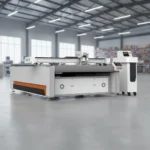
| Product Type | CNC Automatic Feeding Roller Blinds Fabric Cutting Machine |
| Working Area | 1600 × 2500 mm |
| Machine Size | 3450 × 2300 × 1250 mm |
| Rated Power | 9 kW |
| Table Options | Flatbed working table or auto-feeding conveyor table |
| Cutting Head | Swiss imported oscillating knife (vibration full cutting, half cutting, cursor location) |
| Translational Velocity | 800–2000 mm/s |
| Cutting Thickness | 200–800 mm/s (basis not stated in source — confirm material type, density, layer count) |
| Repeated Accuracy | ≤ 0.1 mm |
| Transmission System | Digital servo motor, linear guide, synchronous belt, ball screw |
| Servo Motor Options | Delta or Panasonic, IP67 waterproof, vibration suppression |
| Vacuum Table | Magnesium-aluminum alloy with fluorocarbon PVDF powder spraying and anodic oxidation |
| Vacuum Pump | 7.5 kW integrated aviation aluminum shell with built-in silencer sponge |
| Safety Devices | Infrared induction blocking, anti-collision, emergency stop |
| Instruction Format | HP-GL compatible |
| Supported File Formats | PLT, DXF, AI with auto typesetting |
| Voltage | 380V ± 10% |
| Control Panel | Touch screen with multi-language support |
Application Suitability
| Application | Material or Output |
|---|---|
| Roller blinds and window coverings | Woven and non-woven blackout fabrics, sunscreen textiles |
| Soft home furnishings | Curtain panels, upholstery textiles, cushion composites |
| Automotive interior components | Sponge composite leather, headliner fabric, door panel textiles |
| Carpet and floor mat production | Tufted carpet, woven rugs, PVC-backed matting |
| Bags, footwear and apparel | Leather, PU, flexible synthetic uppers and linings |
| Gasket and sealing pads | Rubber, PTFE, ETFE, silicone sheet |
| Graphic advertising and printing | Vinyl, sticker film, corrugated cardboard display boards |
Why the Wrong Table Configuration Ruins Fabric Edges Before You Notice
A machine specified only on working area often arrives with a vacuum table that cannot hold small roller blind panels flat, producing lifted edges and dimensional drift across the cut. Match the vacuum zoning and feeding method to your actual sheet size and fabric weight before placing the order. When the suction is spread evenly across too few zones, lightweight sunscreen fabric floats during high-speed oscillating cuts. The blade catches the lifted edge, leaving a ragged line that only shows up once dozens of panels are stacked for inspection. I learned this the hard way when a client received an auto-feeding unit that handled his sample roll perfectly but slipped on his production-weight blackout textile. The feeding rollers could not grip the heavier coated side, so every panel drifted a few millimeters off-square. Sending a roll of your actual production fabric for a cutting test eliminates this guesswork [NEED_CITE: CNC cutting vacuum hold-down requirements for thin flexible materials].
Knife Versus Laser for Window Covering Textiles
Choosing between an oscillating knife and a CO2 laser for roller blinds fabric depends on the edge finish your downstream operation requires. The Swiss imported knife on this CNC flatbed cutting systems manufacturer platform delivers a clean mechanical shear that leaves no thermal residue, which matters when the cut edge will be hemmed or welded into a cassette channel. Laser sealing works better on synthetics that fray aggressively, but the heat-affected zone can stiffen the hem line. Both technologies share the same motion platform, so a buyer evaluating fabric volume can specify the correct head without locking into a single cutting method.
How Auto-Feeding Changes the Workflow for Long Rolls
Roller blinds fabric typically arrives in rolls exceeding the 2500 mm bed length, making manual repositioning a bottleneck. The conveyor-fed variant advances the textile under the cutting head in a continuous loop, using the Germany-imported belt surface to maintain registration across nested panels. A projection positioning option overlays the cut layout onto the fabric surface, letting the operator verify alignment before the knife engages. This CCD-assisted contour recognition is valuable when the fabric carries printed patterns that must register to the blind edge [NEED_CITE: CCD camera contour tracking on printed textile at production speed].
What the Specification Sheet Actually Means for Fabric Cutting
The 1600 × 2500 mm working area accommodates most standard roller blind widths in a single pass, eliminating the splice marks that appear when a narrower table forces a two-pass cut. Repeated accuracy of ≤ 0.1 mm keeps adjacent nested panels within tolerance, so the hemming station does not have to compensate for cumulative drift. The magnesium-aluminum alloy vacuum table resists corrosion from sizing agents commonly present in coated blackout textiles, and the fluorocarbon PVDF surface prevents adhesive residue from sticking. A 7.5 kW vacuum pump with an integrated silencer sponge lowers ambient noise in the cutting bay, which matters when the machine runs alongside sewing lines where verbal communication is necessary. The digital servo motors from Delta or Panasonic carry IP67 ratings, so fabric dust and sizing powder do not degrade the encoder feedback over extended shifts.
The Hidden Cost of Skipping a Material Test Run
Specifying a cloth CNC cutting machine on working area and price alone leaves the most critical variable untested: how the actual production fabric behaves under the chosen knife amplitude and feed rate. Ragged edges on a roller blinds panel may not appear until the material is hung and backlit, at which point the entire batch is already cut. A vacuum table with insufficient zoning lets small offcut pieces lift into the knife path, causing micro-tears that propagate through subsequent panels. When the software cannot import your existing DXF nesting files, the operator redraws layouts manually, introducing spacing errors that waste fabric yield. These issues compound silently across a production run and surface only during final quality inspection [NEED_CITE: file format compatibility in CNC nesting software for textile cutting].
Why Sourcing This Machine From Jinan Makes Practical Sense
Jinan hosts the supply chain for linear guides, ball screws and servo motors that this machine depends on, reducing the lead time for replacement motion components. The thick-walled seamless steel frame undergoes high-temperature tempering and CNC machining center finishing locally, so dimensional tolerances are verified before assembly rather than after shipping. Both knife and laser cutting heads are designed and assembled in the same facility, meaning a buyer can start with an oscillating knife for roller blinds fabric and later add a CO2 head for acrylic signage without sourcing a second machine platform. Sample cutting on your own production textile is completed before the order is confirmed, with a written report documenting edge quality, dimensional accuracy and feed speed. Voltage, plug configuration and control language are locked in before the frame leaves the workshop [NEED_CITE: CE machinery directive compliance for CNC cutting equipment exports].
Documentation & Verification
- Machine specification sheet listing working area, knife amplitude and vacuum pump rating for your fabric type
- Sample cutting report on your roller blinds textile documenting edge quality and dimensional tolerance
- Electrical schematic confirming 380V ± 10% wiring, plug type and circuit breaker sizing for your facility
- Software licence and file format compatibility note covering PLT, DXF and AI import with your nesting workflow
- Factory test record with video showing auto-feeding registration across a full roll length
Installation, Commissioning & Support
- Floor must be level within 2 mm across the 3450 × 2300 mm footprint to maintain vacuum table seal integrity
- Dedicated 380V three-phase circuit with minimum 9 kW capacity and correctly sized breaker for the servo drives
- Machine ships as a single skid; the auto-feeding conveyor section is bolted on-site after positioning
- First-run commissioning includes vacuum zoning adjustment matched to your specific roller blinds fabric weight
- Operator training covers knife amplitude tuning, CCD mark recognition setup and HP-GL file import workflow
- Spare Swiss knife blades, conveyor belt segments and vacuum silencer sponge included in the initial parts kit
What to Send With Your Inquiry
Share the exact roller blinds fabric type, weight per square meter and roll width so we can recommend flatbed or auto-feeding table configuration. Confirm your workshop voltage and frequency, along with the control panel language your operators require. If you already use nesting software, send a sample DXF or PLT file so we verify import compatibility before quotation.
Frequently Asked Questions
Q: How do I decide between knife and laser cutting for my roller blinds fabric?
A: Knife cutting leaves no thermal edge, which suits fabrics that will be hemmed or welded into blind cassettes. Laser sealing is better for loosely woven synthetics that fray heavily. Both methods share the same motion platform, so you can specify the head that matches your edge-finish requirement without buying a separate machine.
Q: What tool head configuration prevents ragged edges on coated blackout textiles?
A: The Swiss imported oscillating knife with adjustable vibration amplitude handles coated blackout fabric cleanly. The half-cutting function scores crease lines without penetrating the backing layer. Matching knife frequency to fabric density during the sample test ensures smooth edges across your full material range.
Q: Can the CCD camera track printed contour marks at production speed?
A: Yes, the CCD positioning system offers small mark point recognition, panoramic recognition and projection positioning modes. For roller blinds fabric with printed registration marks, the camera locates each mark and adjusts the cut path accordingly, maintaining alignment even as the auto-feeding conveyor advances the roll continuously.
Q: Will the vacuum table hold small fabric pieces without lifting?
A: The magnesium-aluminum alloy table is divided into suction zones that can be activated independently. Small offcut panels and narrow blind strips stay flat when only the relevant zones are engaged, preventing the material lift that causes ragged edges and dimensional drift during high-speed oscillating cuts.
Q: Does the software work with my existing nesting files?
A: The system supports PLT, DXF and AI file formats through an HP-GL compatible instruction set with auto typesetting. Send a sample file from your current nesting workflow before ordering so we confirm import compatibility and verify that kerf compensation and panel spacing match your production requirements.










商品评价
There are no reviews yet.