


Fast Delivery
Quick, reliable shipping to any location.

Free & easy returns
Return this item by mail or in store within 90 days for a full refund.
Cutting Method Matched to Material — Realtop builds both oscillating knife and laser systems in-house, so your material dictates the process rather than the other way around.
Technical Specifications
| Parameter | Value |
|---|---|
| Model | RT–R2513 |
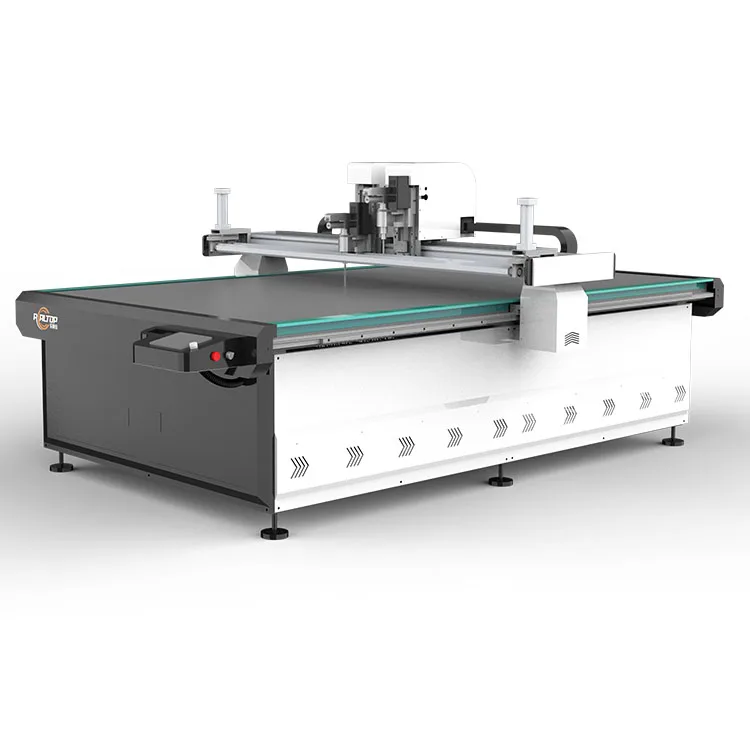
| Product Type | CNC Oscillating Knife Cutting Machine |
| Working Area | 2500 × 1300 mm |
| Machine Size | 3550 × 1910 × 1400 mm |
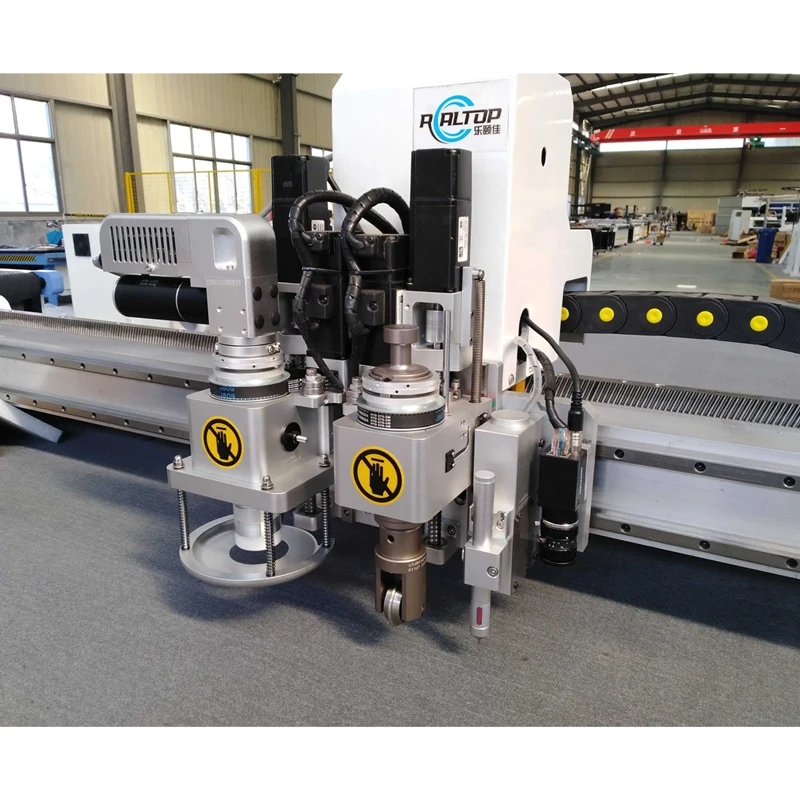
| Cutting Tools | Oscillating knife, Creasing tool, Kiss-Cut knife, Round punch |
| Cutting Thickness | ≤ 18 mm |
| Repeated Accuracy | < 0.05 mm |
| Fixing Method | Vacuum system with zoned adsorption |
| Vacuum Pump | 7.5 kW |
| Rated Power | 9 kW |
| Voltage | 380 V |
| Servo Drive | Dongling servo (source value — verify against manufacturer catalog) |
| Linear Guide | Taiwan Hiwin rail |
| Transmission | Ethernet port |
| Profile Formats | DXF, OLT, PDF, AI |
| Control Language | English, Russian, Italian, Chinese, custom available |
| Safety Devices | Infrared sensors, emergency stop |
| Blade Supply | 10 oscillating blades included |
| Warranty | 1 year (excluding felt and knife blades) |
| Delivery Time | < 30 working days |
| Assembly State | Fully assembled |
| Standards | CE declaration where applicable |
Application Suitability
| Application | Material or Output |
|---|---|
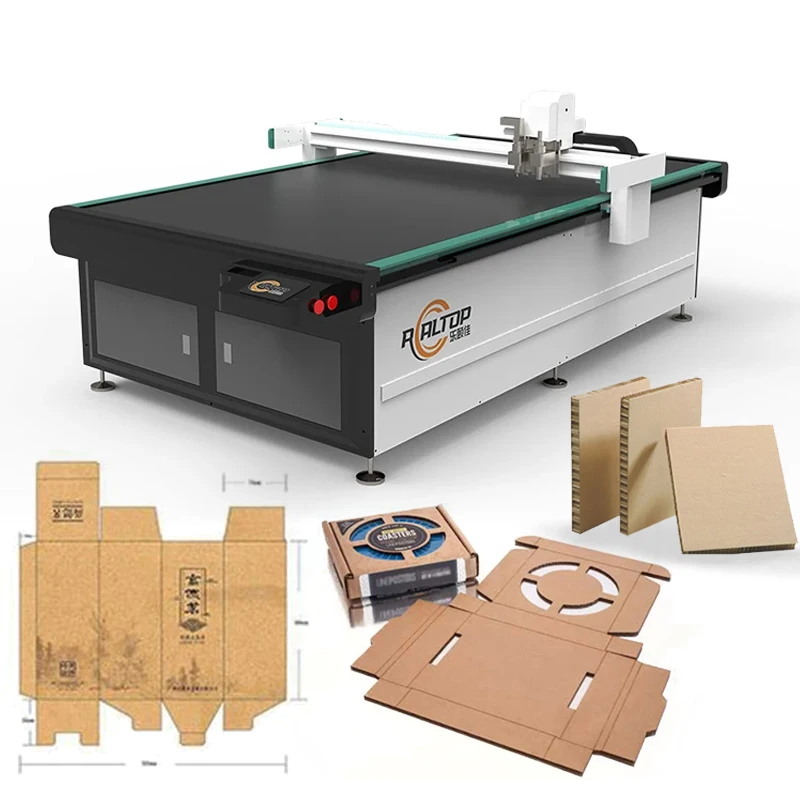
| Packaging carton sample making | Corrugated board, greyboard, folding carton stock up to 18 mm |
| Sticker and label contour cutting | Vinyl, PP paper, self-adhesive label stock |
| Cardboard and corrugated processing | Single and double-wall corrugated, solid fibreboard |
| Paper and PP paper cutting | Coated and uncoated paper, synthetic paper |
| Leather cutting for footwear and accessories | Natural and synthetic leather, PU and PVC sheets |
Why Working Area Alone Is the Wrong Starting Point for a CNC Oscillating Knife Cutting Machine Manufacturer
Material thickness and tool head selection matter far more than table dimensions when specifying your first digital cutting system.
I have watched buyers lock in a working area based on their largest sheet, only to discover the oscillating knife cannot cleanly slice through their actual material stack at production pace. The cutting depth, blade frequency, and vacuum hold-down all need to be confirmed against the real stock you plan to run. A 2500 × 1300 mm bed is pointless if 12 mm corrugated lifts at the trailing edge because the vacuum zoning was never matched to the part geometry [NEED_CITE: vacuum table zoning requirements for small-part digital cutting].
Tool Head Versatility Across Packaging and Print Finishing
This CNC oscillating knife cutting machine carries four interchangeable tools in a single work unit — oscillating knife, creasing wheel, kiss-cut blade, and round punch. A packaging sample maker can score a fold line and cut the outline in one pass without swapping machines or re-fixturing the sheet. For sticker and label producers, the kiss-cut tool slices through the face stock while leaving the liner intact, a requirement that drag knives cannot reliably meet on thin vinyl.
Vacuum Zoning and Small-Part Stability
The aluminum honeycomb table pairs with a 7.5 kW vacuum pump and zoned adsorption areas. When cutting small labels or gasket pieces, you activate only the zones beneath the material footprint, maintaining suction pressure where it matters. Without zoning, a full-table vacuum bleed drops the holding force on small parts, and the oscillating blade lifts the sheet on the return stroke — producing ragged edges or mis-cut contours that force a re-run [NEED_CITE: digital cutting vacuum zoning best practices for small parts].
Reading the Specification Sheet Beyond Table Size
The Taiwan Hiwin linear rails and Dongling servo drives target a repeated positioning accuracy of less than 0.05 mm, which matters when your kiss-cut tool must follow a printed contour within a fraction of a millimetre. The 9 kW rated power covers the oscillating head, vacuum pump, and drive system together. Ethernet transmission replaces legacy USB workflows, so a nesting file generated in your design department lands on the machine controller without format conversion errors. Accepting DXF, OLT, PDF, and AI profiles means the operator imports artwork directly from the buyer’s existing workflow rather than rebuilding vectors in a proprietary editor.
The Cost of Skipping a Material Test Run
I once set up a cutter for a client running PET light-box sheets. We dialled in PVC parameters from a previous job and the first pass left heavy burrs across every edge. Two weeks of re-tuning blade frequency and hold-down pressure followed, with production halved during that period. Buying a machine without a sample cut on your actual stock is the fastest way to repeat that story [NEED_CITE: material-specific cutting parameter validation before purchase].
Why Source From This CNC Oscillating Knife Cutting Machine Manufacturer
Realtop designs and produces both knife and laser cutting systems under one roof, so your material drives the technology choice rather than forcing every job through one process. The tool head and table configuration are specified per material type and daily volume, not quoted as a fixed package. CCD camera positioning is available for printed contour registration when your artwork demands it. Software compatibility and file format support are confirmed before the order is locked. Voltage, plug type, and control language are customised to the destination market before the machine leaves the factory. A sample cutting report on your own material ships with the quotation, so you see edge quality and cycle time before committing capital.
Documentation & Verification
- Machine specification sheet listing each tool head and table zone configuration
- Electrical schematic with voltage and frequency matched to your facility
- Sample cutting report produced on your supplied material before dispatch
- Software licence key with file format compatibility note included at delivery
- Factory test record documenting repeatability and tool change accuracy
- Spare parts list with blade and felt consumption rates noted
Installation, Commissioning & Support
- Fully assembled delivery; position the 3550 × 1910 mm frame on a level concrete floor with 1.5 m clearance on all sides
- Dedicated 380 V three-phase circuit required; confirm plug type and frequency before shipment
- First power-on includes vacuum zone mapping and oscillating knife frequency calibration for your primary material
- Operator training covers tool change procedure, file import via Ethernet, and nesting workflow setup
- Ten oscillating blades supplied; plan reorder based on material abrasiveness and shift pattern
- Warranty covers one year on mechanical and electrical components, excluding consumable felt and blades
What to Include in Your Inquiry
Send the material type, maximum sheet size, thickness range, and daily cut volume so the correct tool head and vacuum configuration can be specified. Confirm your local voltage and frequency, preferred control language, and any existing nesting or design software the machine must integrate with. If your stock is unusual or laminated, ship a sample sheet so a cutting test runs before the quotation is finalised.
Frequently Asked Questions
Q: How do I decide between an oscillating knife and a laser for my material?
A: Oscillating knives handle thicker, fibrous, and compressible materials like corrugated board, foam, and leather without melting or sealing the edge. Lasers suit thin synthetics and acrylic where a sealed edge is beneficial. Provide your material type and thickness so the correct method is recommended before you compare machine models.
Q: What should I check about working area versus my sheet size?
A: The working area must exceed your largest sheet dimension, but you also need margin for the vacuum seal at the edges and for the tool head to decelerate before the sheet boundary. Share your exact sheet sizes and part nesting layout so the bed size is matched to real production geometry.
Q: How does vacuum table zoning affect small-part cutting?
A: When cutting small labels or gaskets, full-table vacuum spreads suction too thin and parts lift during the blade return stroke. Zoned adsorption concentrates hold-down force only where material sits, keeping edges clean and contour accuracy within tolerance throughout the run.
Q: Will the machine accept files from my existing design software?
A: The controller imports DXF, OLT, PDF, and AI profiles directly. If your design team uses a different vector format or nesting platform, confirm compatibility during the inquiry stage so any required conversion workflow is validated before the machine ships.
Q: What configuration options are available across the machine family?
A: Models range from the 2500 × 1300 mm RT–R2513 shown here to larger 1600 × 2500 mm beds, with single or multi-head setups depending on throughput requirements. Tool head combinations, conveyor feed, and control language are configured per your material and production volume.
Cutting Method Matched to Material — Realtop builds both oscillating knife and laser systems in-house, so your material dictates the process rather than the other way around.
Technical Specifications
| Parameter | Value |
|---|---|
| Model | RT–R2513 |
| Product Type | CNC Oscillating Knife Cutting Machine |
| Working Area | 2500 × 1300 mm |
| Machine Size | 3550 × 1910 × 1400 mm |
| Cutting Tools | Oscillating knife, Creasing tool, Kiss-Cut knife, Round punch |
| Cutting Thickness | ≤ 18 mm |
| Repeated Accuracy | < 0.05 mm |
| Fixing Method | Vacuum system with zoned adsorption |
| Vacuum Pump | 7.5 kW |
| Rated Power | 9 kW |
| Voltage | 380 V |
| Servo Drive | Dongling servo (source value — verify against manufacturer catalog) |
| Linear Guide | Taiwan Hiwin rail |
| Transmission | Ethernet port |
| Profile Formats | DXF, OLT, PDF, AI |
| Control Language | English, Russian, Italian, Chinese, custom available |
| Safety Devices | Infrared sensors, emergency stop |
| Blade Supply | 10 oscillating blades included |
| Warranty | 1 year (excluding felt and knife blades) |
| Delivery Time | < 30 working days |
| Assembly State | Fully assembled |
| Standards | CE declaration where applicable |
Application Suitability
| Application | Material or Output |
|---|---|
| Packaging carton sample making | Corrugated board, greyboard, folding carton stock up to 18 mm |
| Sticker and label contour cutting | Vinyl, PP paper, self-adhesive label stock |
| Cardboard and corrugated processing | Single and double-wall corrugated, solid fibreboard |
| Paper and PP paper cutting | Coated and uncoated paper, synthetic paper |
| Leather cutting for footwear and accessories | Natural and synthetic leather, PU and PVC sheets |
Why Working Area Alone Is the Wrong Starting Point for a CNC Oscillating Knife Cutting Machine Manufacturer
Material thickness and tool head selection matter far more than table dimensions when specifying your first digital cutting system.
I have watched buyers lock in a working area based on their largest sheet, only to discover the oscillating knife cannot cleanly slice through their actual material stack at production pace. The cutting depth, blade frequency, and vacuum hold-down all need to be confirmed against the real stock you plan to run. A 2500 × 1300 mm bed is pointless if 12 mm corrugated lifts at the trailing edge because the vacuum zoning was never matched to the part geometry [NEED_CITE: vacuum table zoning requirements for small-part digital cutting].
Tool Head Versatility Across Packaging and Print Finishing
This CNC oscillating knife cutting machine carries four interchangeable tools in a single work unit — oscillating knife, creasing wheel, kiss-cut blade, and round punch. A packaging sample maker can score a fold line and cut the outline in one pass without swapping machines or re-fixturing the sheet. For sticker and label producers, the kiss-cut tool slices through the face stock while leaving the liner intact, a requirement that drag knives cannot reliably meet on thin vinyl.
Vacuum Zoning and Small-Part Stability
The aluminum honeycomb table pairs with a 7.5 kW vacuum pump and zoned adsorption areas. When cutting small labels or gasket pieces, you activate only the zones beneath the material footprint, maintaining suction pressure where it matters. Without zoning, a full-table vacuum bleed drops the holding force on small parts, and the oscillating blade lifts the sheet on the return stroke — producing ragged edges or mis-cut contours that force a re-run [NEED_CITE: digital cutting vacuum zoning best practices for small parts].
Reading the Specification Sheet Beyond Table Size
The Taiwan Hiwin linear rails and Dongling servo drives target a repeated positioning accuracy of less than 0.05 mm, which matters when your kiss-cut tool must follow a printed contour within a fraction of a millimetre. The 9 kW rated power covers the oscillating head, vacuum pump, and drive system together. Ethernet transmission replaces legacy USB workflows, so a nesting file generated in your design department lands on the machine controller without format conversion errors. Accepting DXF, OLT, PDF, and AI profiles means the operator imports artwork directly from the buyer’s existing workflow rather than rebuilding vectors in a proprietary editor.
The Cost of Skipping a Material Test Run
I once set up a cutter for a client running PET light-box sheets. We dialled in PVC parameters from a previous job and the first pass left heavy burrs across every edge. Two weeks of re-tuning blade frequency and hold-down pressure followed, with production halved during that period. Buying a machine without a sample cut on your actual stock is the fastest way to repeat that story [NEED_CITE: material-specific cutting parameter validation before purchase].
Why Source From This CNC Oscillating Knife Cutting Machine Manufacturer
Realtop designs and produces both knife and laser cutting systems under one roof, so your material drives the technology choice rather than forcing every job through one process. The tool head and table configuration are specified per material type and daily volume, not quoted as a fixed package. CCD camera positioning is available for printed contour registration when your artwork demands it. Software compatibility and file format support are confirmed before the order is locked. Voltage, plug type, and control language are customised to the destination market before the machine leaves the factory. A sample cutting report on your own material ships with the quotation, so you see edge quality and cycle time before committing capital.
Documentation & Verification
- Machine specification sheet listing each tool head and table zone configuration
- Electrical schematic with voltage and frequency matched to your facility
- Sample cutting report produced on your supplied material before dispatch
- Software licence key with file format compatibility note included at delivery
- Factory test record documenting repeatability and tool change accuracy
- Spare parts list with blade and felt consumption rates noted
Installation, Commissioning & Support
- Fully assembled delivery; position the 3550 × 1910 mm frame on a level concrete floor with 1.5 m clearance on all sides
- Dedicated 380 V three-phase circuit required; confirm plug type and frequency before shipment
- First power-on includes vacuum zone mapping and oscillating knife frequency calibration for your primary material
- Operator training covers tool change procedure, file import via Ethernet, and nesting workflow setup
- Ten oscillating blades supplied; plan reorder based on material abrasiveness and shift pattern
- Warranty covers one year on mechanical and electrical components, excluding consumable felt and blades
What to Include in Your Inquiry
Send the material type, maximum sheet size, thickness range, and daily cut volume so the correct tool head and vacuum configuration can be specified. Confirm your local voltage and frequency, preferred control language, and any existing nesting or design software the machine must integrate with. If your stock is unusual or laminated, ship a sample sheet so a cutting test runs before the quotation is finalised.
Frequently Asked Questions
Q: How do I decide between an oscillating knife and a laser for my material?
A: Oscillating knives handle thicker, fibrous, and compressible materials like corrugated board, foam, and leather without melting or sealing the edge. Lasers suit thin synthetics and acrylic where a sealed edge is beneficial. Provide your material type and thickness so the correct method is recommended before you compare machine models.
Q: What should I check about working area versus my sheet size?
A: The working area must exceed your largest sheet dimension, but you also need margin for the vacuum seal at the edges and for the tool head to decelerate before the sheet boundary. Share your exact sheet sizes and part nesting layout so the bed size is matched to real production geometry.
Q: How does vacuum table zoning affect small-part cutting?
A: When cutting small labels or gaskets, full-table vacuum spreads suction too thin and parts lift during the blade return stroke. Zoned adsorption concentrates hold-down force only where material sits, keeping edges clean and contour accuracy within tolerance throughout the run.
Q: Will the machine accept files from my existing design software?
A: The controller imports DXF, OLT, PDF, and AI profiles directly. If your design team uses a different vector format or nesting platform, confirm compatibility during the inquiry stage so any required conversion workflow is validated before the machine ships.
Q: What configuration options are available across the machine family?
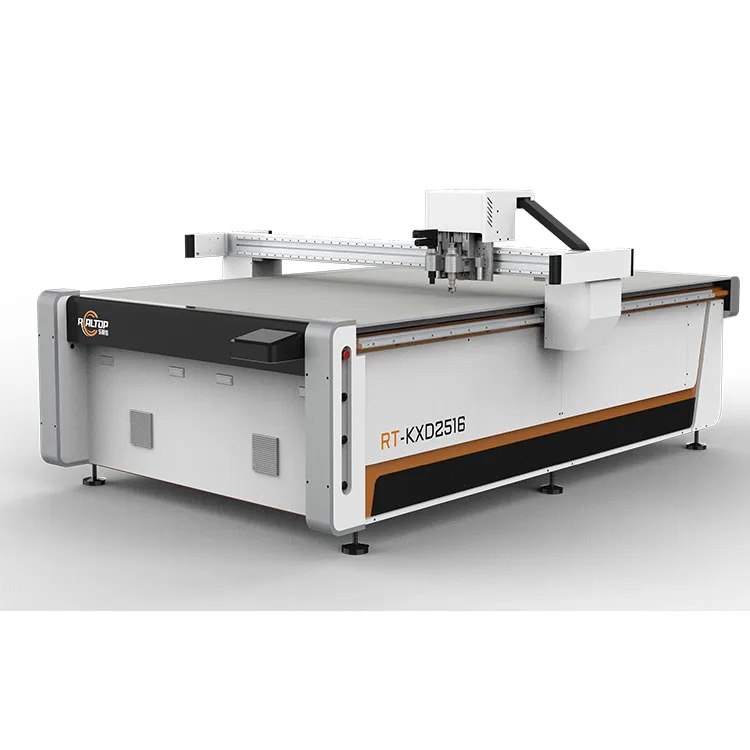
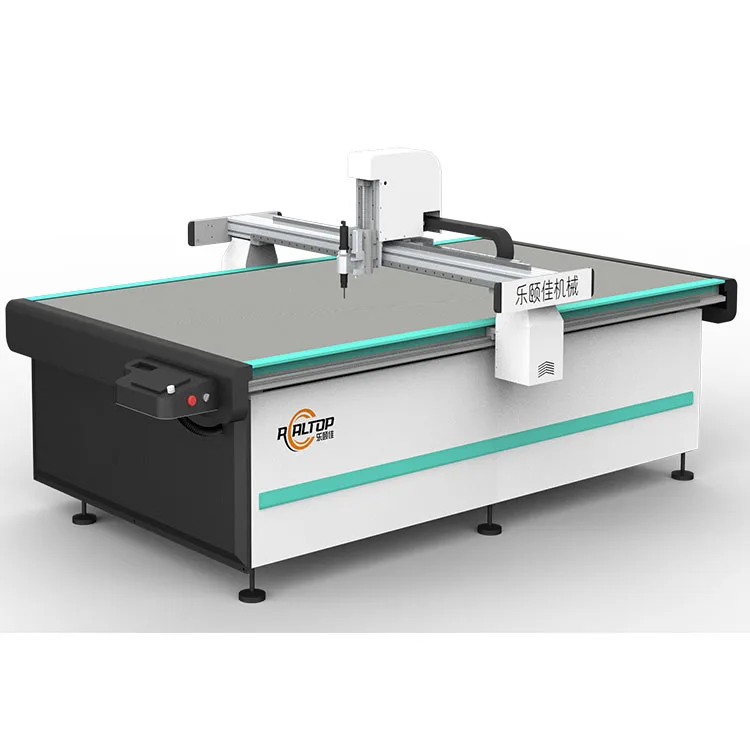
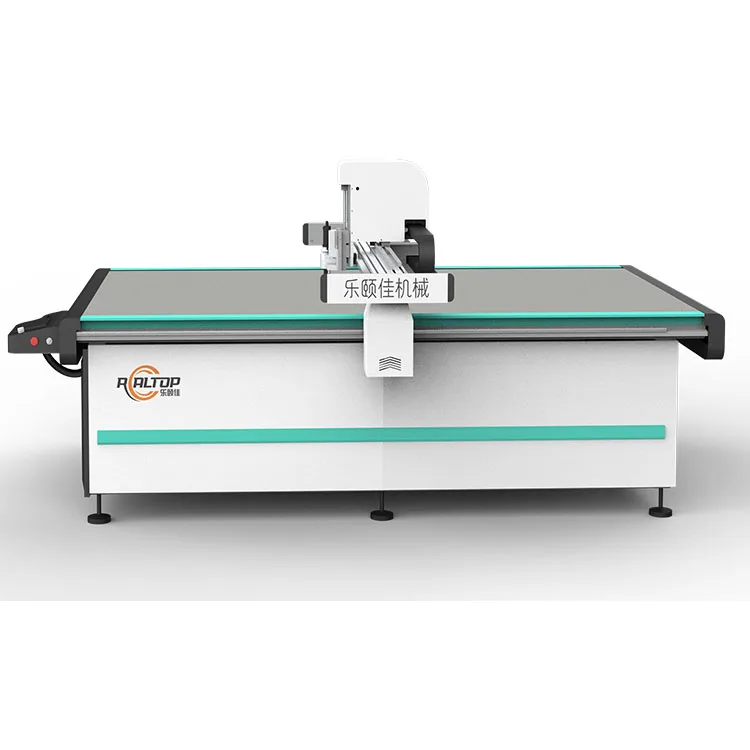
A: Models range from the 2500 × 1300 mm RT–R2513 shown here to larger 1600 × 2500 mm beds, with single or multi-head setups depending on throughput requirements. Tool head combinations, conveyor feed, and control language are configured per your material and production volume.










商品评价
There are no reviews yet.