


Fast Delivery
Quick, reliable shipping to any location.

Free & easy returns
Return this item by mail or in store within 90 days for a full refund.
Material-driven configuration — In-house engineering covers both knife and laser systems, so curtain producers match the oscillating knife method to fabric layers rather than adapting the process to a single technology.
Technical Specifications
| Parameter | Value |
|---|---|
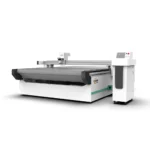
| Product Type | CNC Oscillating Knife Cutting Machine |
| Working Area | 1600 × 2500 mm |
| Tool Head Options | Oscillating knife, Driven rotary knife, Creasing wheel, Kiss cutting, Pneumatic knife, Milling, V groove |
| Cutting Speed | 0–2000 mm/s |
| Maximum Cutting Thickness | ≤ 30 mm |
| Cutting Accuracy | ±0.1 mm |
| Vacuum Pump | 9 kW |
| Multi-layer Capacity | up to 30–50 mm (basis not stated in source — confirm fabric type and density) |
| Voltage Options | 110V / 220V / 380V configurable |
| Control System | PLC control panel with multi-language interface |
| File Format Compatibility | PLT, DXF, AI, PDF |
| Safety Systems | Infrared sensor device and emergency stop |
| Machine Dimensions | 3300 × 2100 × 1350 mm |
Application Suitability
| Application | Material or Output |
|---|---|
| Curtain panel and Roman blind production | Woven polyester, linen blends, blackout fabrics, sheer voile |
| Home textile upholstery cutting | Sofa fabrics, heavy drapery cloth, velvet, jacquard weave |
| Apparel and suit tailoring | Worsted wool, knitwear panels, lace overlay |
| Automotive interior trimming | Seat cover fabrics, carpet rolls, PVC floor mats |
| Composite prepreg layup | Carbon fiber prepreg, aramid sheets, technical textiles |
What "Working Area Alone" Tells You About Fabric Cutting
A 1600 × 2500 mm table means nothing if the vacuum zoning cannot hold small curtain tie-back pieces flat during oscillating knife travel.
I have watched home textile shops buy a machine based purely on table dimensions, only to discover the vacuum zones were too large to grip narrow valance strips. Small pattern pieces lift off the bed mid-cut, producing ragged edges that ruin yards of expensive blackout fabric. The CNC oscillating knife cutting machine manufacturer you choose should confirm vacuum zoning granularity against your actual nest layout, not just quote bed size [NEED_CITE: vacuum table zoning standards for textile cutting equipment]. Curtain producers cutting dozens of small pelmet and tie-back shapes need tightly segmented zones; producers running full-width panels can work with broader zones. The distinction matters before the purchase order, not after installation.
Knife Head Selection for Curtain Fabric Types
Different curtain fabrics demand different tool head configurations. Sheer voile and lightweight polyester respond well to a standard oscillating knife, which vibrates at high frequency to slice cleanly without fraying the weave. Heavier velvet and jacquard upholstery, however, benefit from a driven rotary knife that rolls through dense pile without crushing the surface. For producers who also run corrugated pelmet boards alongside fabric, a creasing wheel and V groove tool allow the same machine to score fold lines on cardboard stiffeners. This is where sourcing from a CNC oscillating knife cutting machine manufacturer with interchangeable heads on one gantry pays dividends during mixed-material production runs.
Contour Recognition and Print-to-Cut Accuracy
Printed curtain panels with registered patterns require the blade to follow printed marks precisely. CCD camera positioning tracks fiducial marks on the fabric surface and adjusts the cutting path in real time. This matters for blackout curtains where a printed botanical motif must align across adjoining panels. Without contour recognition, operators manually shift the nest file to compensate for fabric stretch on the table, introducing cumulative drift that wastes material [NEED_CITE: CCD camera positioning accuracy in textile digital cutting systems]. When evaluating any cutting system for printed home textiles, request a sample cut on your own printed fabric roll and measure registration deviation across the full working area before committing.
Reading the Specs That Actually Affect Curtain Output
The 9 kW vacuum pump rating determines how firmly fabric is held against the aluminum bellows table surface; underpowered suction allows slippery polyester to shift during high-speed knife strokes. Cutting accuracy of ±0.1 mm is critical when nesting dozens of Roman blind segments that must assemble into a level hem line. The PLC control panel with multi-language support ensures operators in different export markets can adjust knife oscillation frequency and down-stroke pressure without translation errors. File format compatibility with PLT, DXF, AI, and PDF means your existing nesting software output feeds directly into the machine controller without intermediate conversion steps that can corrupt curve geometry.
The Cost of Skipping the Sample Cut
I recall a Zhejiang curtain factory that accepted a machine without a sample cutting test on their specific triple-weave blackout cloth. The oscillating knife blade dulled within the first shift, and the random spare parts kit contained no replacement blades. Production stopped for an entire week while spares shipped from Jinan, leaving the cutting line idle and delivery deadlines missed. Skipping a pre-order sample cut on your actual material means you discover blade wear rates, edge quality, and vacuum hold adequacy only after the machine arrives. Every fabric blend behaves differently under knife pressure, and no spec sheet substitutes for a physical test report [NEED_CITE: textile cutting blade wear rates across fabric compositions].
Why This Sourcing Route Works for Home Textile Producers
Tool head and table configuration are specified against your actual curtain fabric type and daily volume, not quoted as a generic package. Sample cutting on your own material roll produces a documented report showing edge quality, cycle time, and blade wear before you commit. Software compatibility with your existing PLT or DXF nesting files is confirmed during the order stage, preventing workflow disruption. Voltage and control language are locked in writing before shipment so the machine arrives wired for your local grid and readable by your operators. A full spare parts list, including oscillating knife blades and刀座, is verified against the bill of materials so you never face the downtime I witnessed in that Zhejiang workshop.
Documentation & Verification
- Machine specification sheet listing all configured tool heads and vacuum zone layout
- Electrical schematic with confirmed voltage and phase for your facility
- Sample cutting report generated on your curtain fabric with edge quality photographs
- Tool head and table configuration list matched to your declared material stack
- Software licence and file format compatibility note for your nesting workflow
- Packing photographs showing secured gantry and tool head crate before dispatch
Installation, Commissioning & Support
- Level foundation required across the 3300 × 2100 mm footprint to maintain ±0.1 mm cutting accuracy
- Dedicated electrical circuit matching confirmed 110V, 220V, or 380V supply with correct phase
- 9 kW vacuum pump requires separate ducting to manage airflow noise in the cutting room
- First-run parameter tuning includes knife oscillation frequency and down-stroke calibration per fabric
- Operator training covers PLC panel navigation in confirmed language and tool head changeover procedure
- Spare oscillating knife blades, driven rotary blades, and刀座 verified on-site against packing list
- Scheduled maintenance calendar for vacuum pump filter cleaning and bellows inspection
What to Include With Your Inquiry
Provide your primary curtain fabric types with weight per square meter and whether you cut single-ply or multi-layer stacks up to 50 mm. Specify your local voltage, phase, and frequency along with preferred control panel language. Confirm whether your existing nesting software outputs PLT, DXF, AI, or PDF so file compatibility is verified before quotation.
Frequently Asked Questions
Q: How do I choose the right tool head for different curtain fabrics?
A: Lightweight voile and polyester suit a standard oscillating knife, while heavy velvet and jacquard benefit from a driven rotary knife to avoid crushing the pile. If you also cut cardboard pelmet stiffeners, add a creasing wheel and V groove tool. The configuration is finalized after a sample cut on your specific fabric, confirming edge quality before the order is placed.
Q: What vacuum table zoning do I need for small curtain pattern pieces?
A: Small valance strips and tie-back shapes require tightly segmented vacuum zones to prevent fabric lift during knife travel. Large full-width panels can use broader zones. Share your typical nest layout during inquiry so the table zoning is designed around your actual piece dimensions rather than a generic zone grid.
Q: Which file formats does the cutting system accept from nesting software?
A: The PLC controller accepts PLT, DXF, AI, and PDF files directly. Software compatibility with your specific nesting platform is confirmed during the order stage, and a file transfer test is conducted before shipment. This avoids conversion errors that can distort curve geometry in complex curtain panel profiles.
Q: How are voltage and control language confirmed before the machine ships?
A: Your local voltage, phase, and frequency are documented in the specification sheet at order stage. The PLC control panel language is set to your preference from available options including English, Russian, Italian, Chinese, or a custom language. Both are verified on the electrical schematic before dispatch to prevent rewiring or reconfiguration after arrival.
Q: Can I see a sample cut on my own fabric before placing the order?
A: Yes. Send a roll of your curtain fabric to the factory for a test cut using the configured tool head and vacuum table setup. A sample cutting report is returned showing edge quality photographs, cycle time, and blade condition after the run. This allows you to evaluate real performance on your material before any purchase commitment is made.
Material-driven configuration — In-house engineering covers both knife and laser systems, so curtain producers match the oscillating knife method to fabric layers rather than adapting the process to a single technology.
Technical Specifications
| Parameter | Value |
|---|---|
| Product Type | CNC Oscillating Knife Cutting Machine |
| Working Area | 1600 × 2500 mm |
| Tool Head Options | Oscillating knife, Driven rotary knife, Creasing wheel, Kiss cutting, Pneumatic knife, Milling, V groove |
| Cutting Speed | 0–2000 mm/s |
| Maximum Cutting Thickness | ≤ 30 mm |
| Cutting Accuracy | ±0.1 mm |
| Vacuum Pump | 9 kW |
| Multi-layer Capacity | up to 30–50 mm (basis not stated in source — confirm fabric type and density) |
| Voltage Options | 110V / 220V / 380V configurable |
| Control System | PLC control panel with multi-language interface |
| File Format Compatibility | PLT, DXF, AI, PDF |
| Safety Systems | Infrared sensor device and emergency stop |
| Machine Dimensions | 3300 × 2100 × 1350 mm |
Application Suitability
| Application | Material or Output |
|---|---|
| Curtain panel and Roman blind production | Woven polyester, linen blends, blackout fabrics, sheer voile |
| Home textile upholstery cutting | Sofa fabrics, heavy drapery cloth, velvet, jacquard weave |
| Apparel and suit tailoring | Worsted wool, knitwear panels, lace overlay |
| Automotive interior trimming | Seat cover fabrics, carpet rolls, PVC floor mats |
| Composite prepreg layup | Carbon fiber prepreg, aramid sheets, technical textiles |
What "Working Area Alone" Tells You About Fabric Cutting
A 1600 × 2500 mm table means nothing if the vacuum zoning cannot hold small curtain tie-back pieces flat during oscillating knife travel.
I have watched home textile shops buy a machine based purely on table dimensions, only to discover the vacuum zones were too large to grip narrow valance strips. Small pattern pieces lift off the bed mid-cut, producing ragged edges that ruin yards of expensive blackout fabric. The CNC oscillating knife cutting machine manufacturer you choose should confirm vacuum zoning granularity against your actual nest layout, not just quote bed size [NEED_CITE: vacuum table zoning standards for textile cutting equipment]. Curtain producers cutting dozens of small pelmet and tie-back shapes need tightly segmented zones; producers running full-width panels can work with broader zones. The distinction matters before the purchase order, not after installation.
Knife Head Selection for Curtain Fabric Types
Different curtain fabrics demand different tool head configurations. Sheer voile and lightweight polyester respond well to a standard oscillating knife, which vibrates at high frequency to slice cleanly without fraying the weave. Heavier velvet and jacquard upholstery, however, benefit from a driven rotary knife that rolls through dense pile without crushing the surface. For producers who also run corrugated pelmet boards alongside fabric, a creasing wheel and V groove tool allow the same machine to score fold lines on cardboard stiffeners. This is where sourcing from a CNC oscillating knife cutting machine manufacturer with interchangeable heads on one gantry pays dividends during mixed-material production runs.
Contour Recognition and Print-to-Cut Accuracy
Printed curtain panels with registered patterns require the blade to follow printed marks precisely. CCD camera positioning tracks fiducial marks on the fabric surface and adjusts the cutting path in real time. This matters for blackout curtains where a printed botanical motif must align across adjoining panels. Without contour recognition, operators manually shift the nest file to compensate for fabric stretch on the table, introducing cumulative drift that wastes material [NEED_CITE: CCD camera positioning accuracy in textile digital cutting systems]. When evaluating any cutting system for printed home textiles, request a sample cut on your own printed fabric roll and measure registration deviation across the full working area before committing.
Reading the Specs That Actually Affect Curtain Output
The 9 kW vacuum pump rating determines how firmly fabric is held against the aluminum bellows table surface; underpowered suction allows slippery polyester to shift during high-speed knife strokes. Cutting accuracy of ±0.1 mm is critical when nesting dozens of Roman blind segments that must assemble into a level hem line. The PLC control panel with multi-language support ensures operators in different export markets can adjust knife oscillation frequency and down-stroke pressure without translation errors. File format compatibility with PLT, DXF, AI, and PDF means your existing nesting software output feeds directly into the machine controller without intermediate conversion steps that can corrupt curve geometry.
The Cost of Skipping the Sample Cut
I recall a Zhejiang curtain factory that accepted a machine without a sample cutting test on their specific triple-weave blackout cloth. The oscillating knife blade dulled within the first shift, and the random spare parts kit contained no replacement blades. Production stopped for an entire week while spares shipped from Jinan, leaving the cutting line idle and delivery deadlines missed. Skipping a pre-order sample cut on your actual material means you discover blade wear rates, edge quality, and vacuum hold adequacy only after the machine arrives. Every fabric blend behaves differently under knife pressure, and no spec sheet substitutes for a physical test report [NEED_CITE: textile cutting blade wear rates across fabric compositions].
Why This Sourcing Route Works for Home Textile Producers
Tool head and table configuration are specified against your actual curtain fabric type and daily volume, not quoted as a generic package. Sample cutting on your own material roll produces a documented report showing edge quality, cycle time, and blade wear before you commit. Software compatibility with your existing PLT or DXF nesting files is confirmed during the order stage, preventing workflow disruption. Voltage and control language are locked in writing before shipment so the machine arrives wired for your local grid and readable by your operators. A full spare parts list, including oscillating knife blades and刀座, is verified against the bill of materials so you never face the downtime I witnessed in that Zhejiang workshop.
Documentation & Verification
- Machine specification sheet listing all configured tool heads and vacuum zone layout
- Electrical schematic with confirmed voltage and phase for your facility
- Sample cutting report generated on your curtain fabric with edge quality photographs
- Tool head and table configuration list matched to your declared material stack
- Software licence and file format compatibility note for your nesting workflow
- Packing photographs showing secured gantry and tool head crate before dispatch
Installation, Commissioning & Support
- Level foundation required across the 3300 × 2100 mm footprint to maintain ±0.1 mm cutting accuracy
- Dedicated electrical circuit matching confirmed 110V, 220V, or 380V supply with correct phase
- 9 kW vacuum pump requires separate ducting to manage airflow noise in the cutting room
- First-run parameter tuning includes knife oscillation frequency and down-stroke calibration per fabric
- Operator training covers PLC panel navigation in confirmed language and tool head changeover procedure
- Spare oscillating knife blades, driven rotary blades, and刀座 verified on-site against packing list
- Scheduled maintenance calendar for vacuum pump filter cleaning and bellows inspection
What to Include With Your Inquiry
Provide your primary curtain fabric types with weight per square meter and whether you cut single-ply or multi-layer stacks up to 50 mm. Specify your local voltage, phase, and frequency along with preferred control panel language. Confirm whether your existing nesting software outputs PLT, DXF, AI, or PDF so file compatibility is verified before quotation.
Frequently Asked Questions
Q: How do I choose the right tool head for different curtain fabrics?
A: Lightweight voile and polyester suit a standard oscillating knife, while heavy velvet and jacquard benefit from a driven rotary knife to avoid crushing the pile. If you also cut cardboard pelmet stiffeners, add a creasing wheel and V groove tool. The configuration is finalized after a sample cut on your specific fabric, confirming edge quality before the order is placed.
Q: What vacuum table zoning do I need for small curtain pattern pieces?
A: Small valance strips and tie-back shapes require tightly segmented vacuum zones to prevent fabric lift during knife travel. Large full-width panels can use broader zones. Share your typical nest layout during inquiry so the table zoning is designed around your actual piece dimensions rather than a generic zone grid.
Q: Which file formats does the cutting system accept from nesting software?
A: The PLC controller accepts PLT, DXF, AI, and PDF files directly. Software compatibility with your specific nesting platform is confirmed during the order stage, and a file transfer test is conducted before shipment. This avoids conversion errors that can distort curve geometry in complex curtain panel profiles.
Q: How are voltage and control language confirmed before the machine ships?
A: Your local voltage, phase, and frequency are documented in the specification sheet at order stage. The PLC control panel language is set to your preference from available options including English, Russian, Italian, Chinese, or a custom language. Both are verified on the electrical schematic before dispatch to prevent rewiring or reconfiguration after arrival.
Q: Can I see a sample cut on my own fabric before placing the order?
A: Yes. Send a roll of your curtain fabric to the factory for a test cut using the configured tool head and vacuum table setup. A sample cutting report is returned showing edge quality photographs, cycle time, and blade condition after the run. This allows you to evaluate real performance on your material before any purchase commitment is made.










商品评价
There are no reviews yet.