

Fast Delivery
Quick, reliable shipping to any location.

Free & easy returns
Return this item by mail or in store within 90 days for a full refund.
Quenched Bed Stability — The bed frame is quenched to eliminate internal stress, maintaining dimensional accuracy across long production runs without drift.
Technical Specifications
| Parameter | Value |
|---|---|
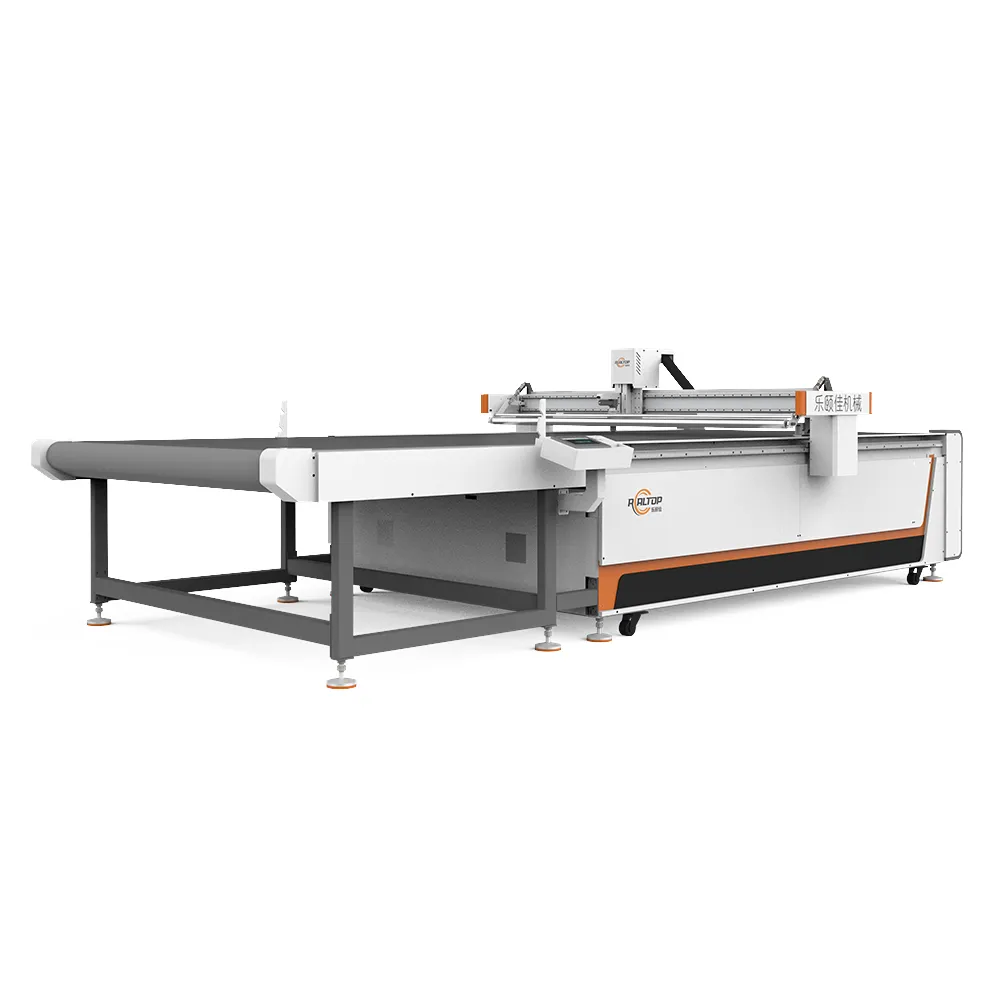
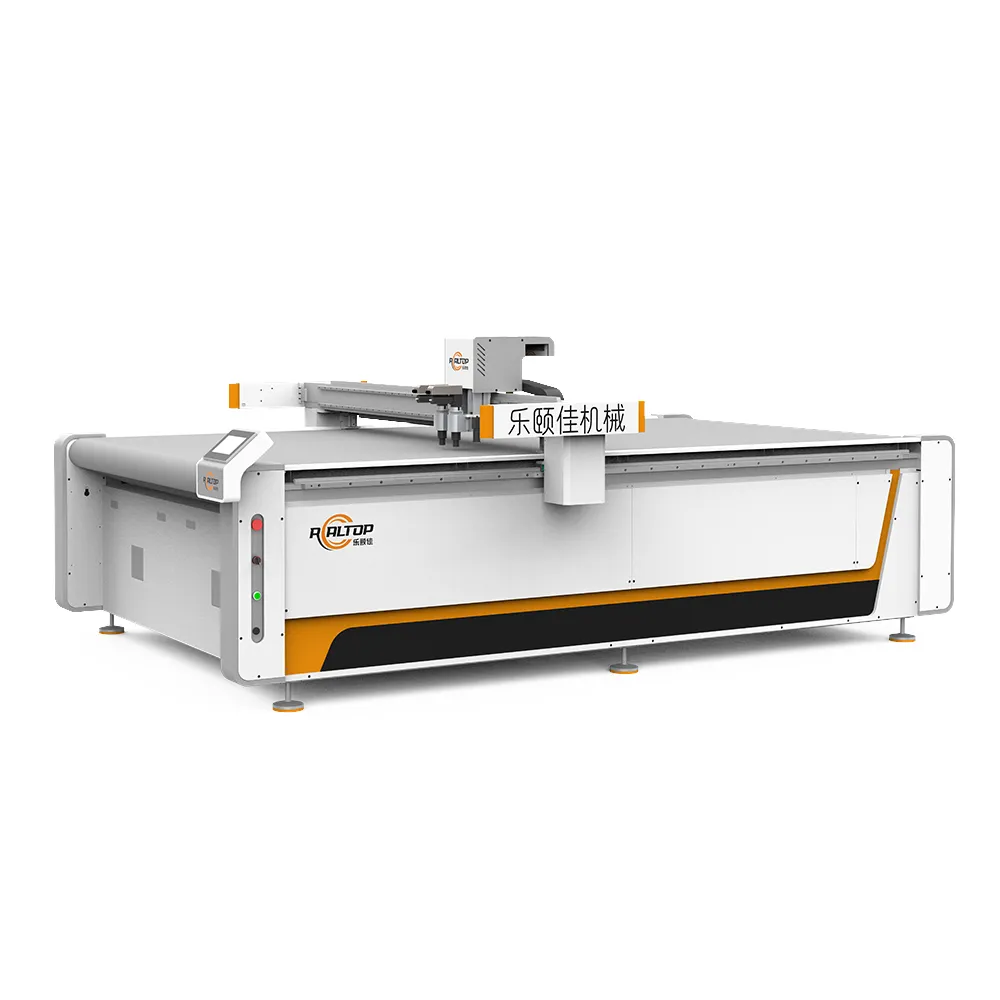
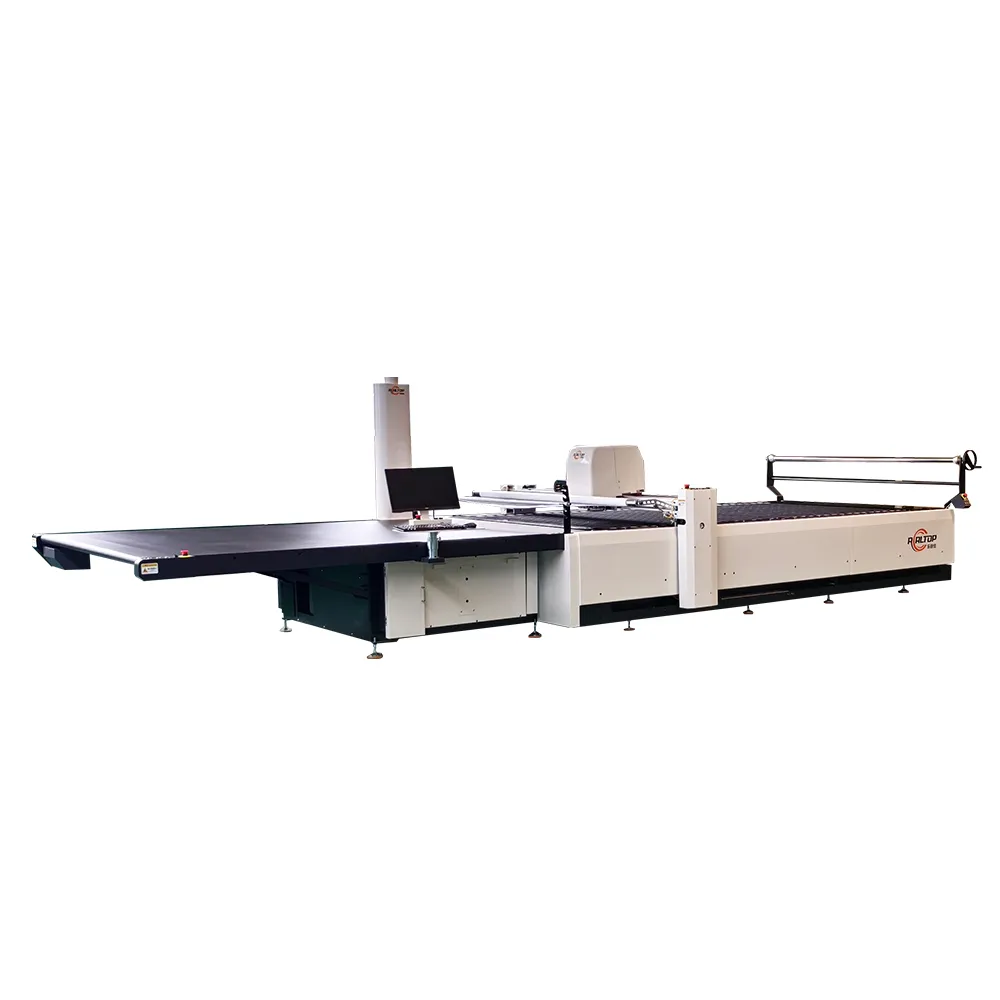
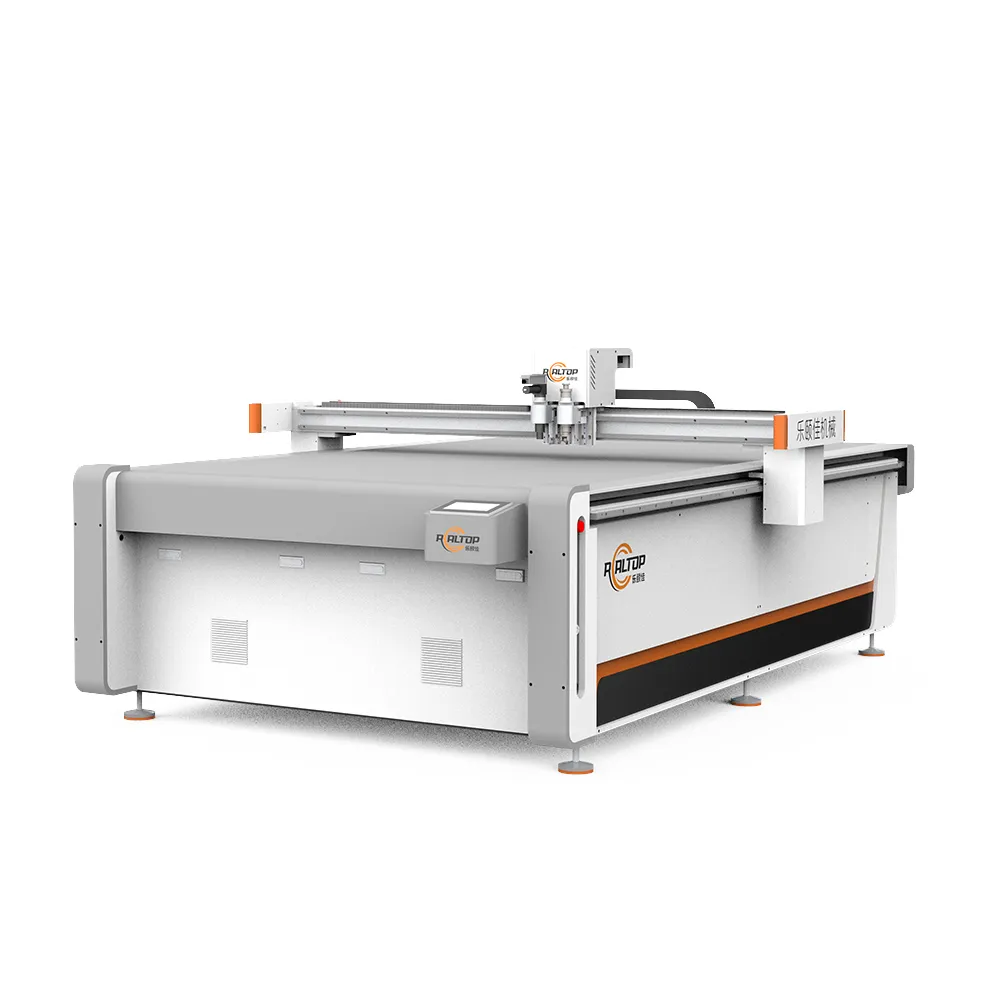
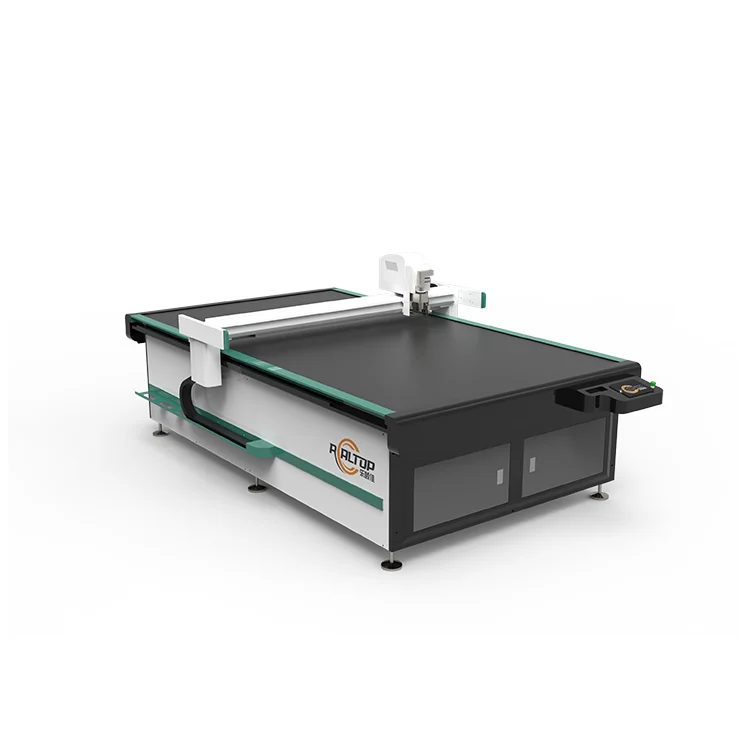
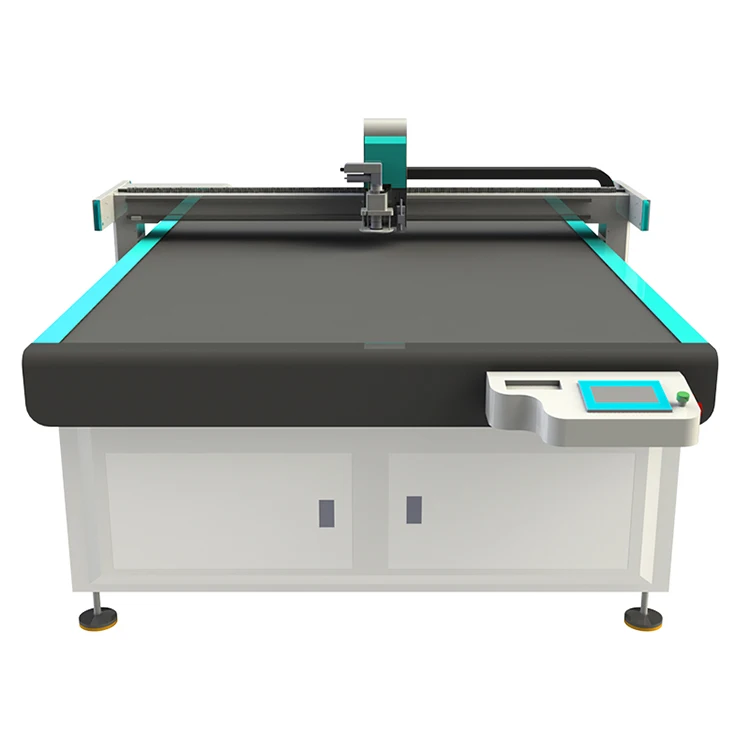
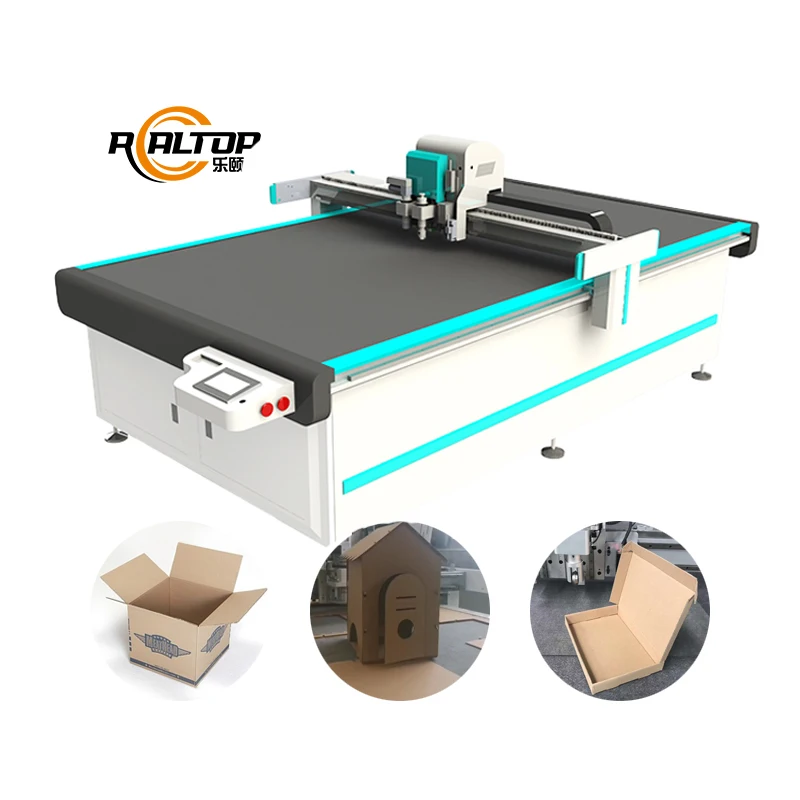
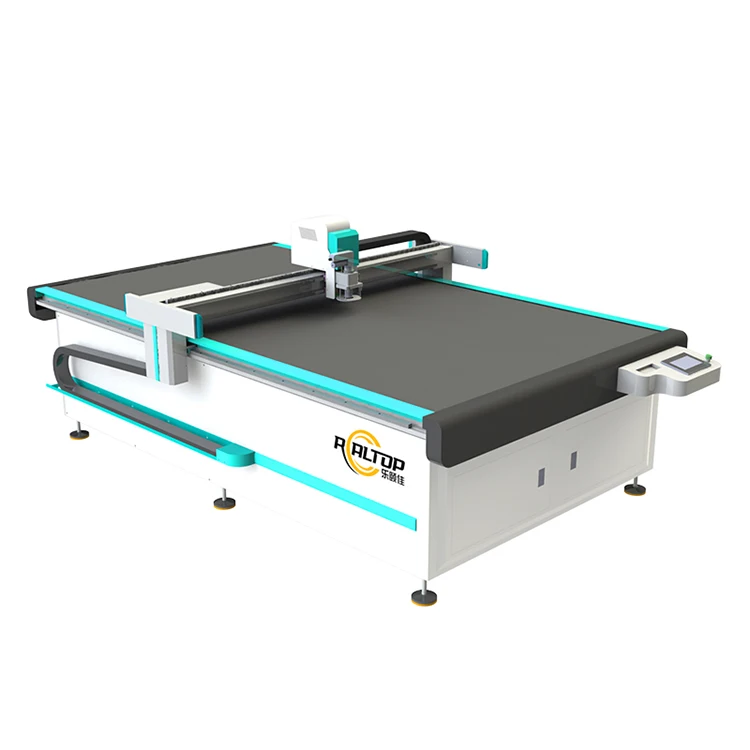
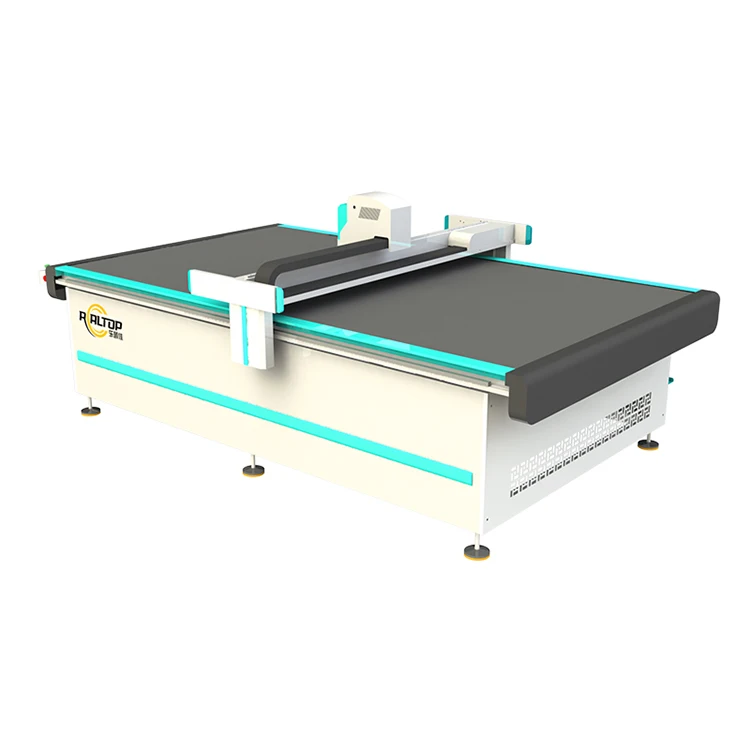
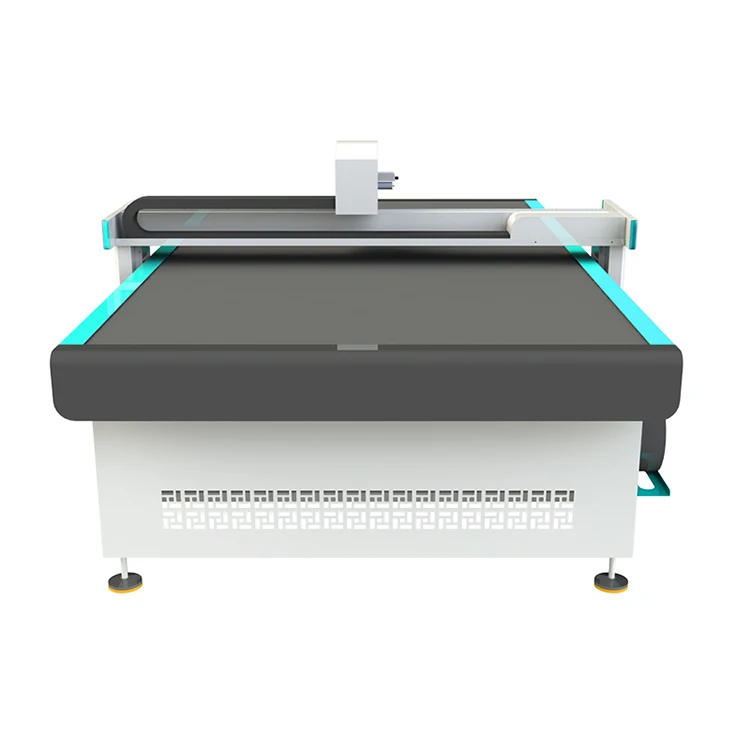
| Product Type | CNC Oscillating Knife Cutting Machine with Visual Positioning |
| Effective Cutting Area | 2500×1600mm / 2500×2200mm / 3000×2200mm |
| Maximum Speed | 2000mm/s |
| Reset Accuracy | ±0.1mm |
| Cutting Thickness | ≤40mm (basis not stated in source — confirm material type and density) |
| Table Type | Automatic feeding conveyor |
| Visual Positioning | Panoramic CCD camera for edge and template cutting |
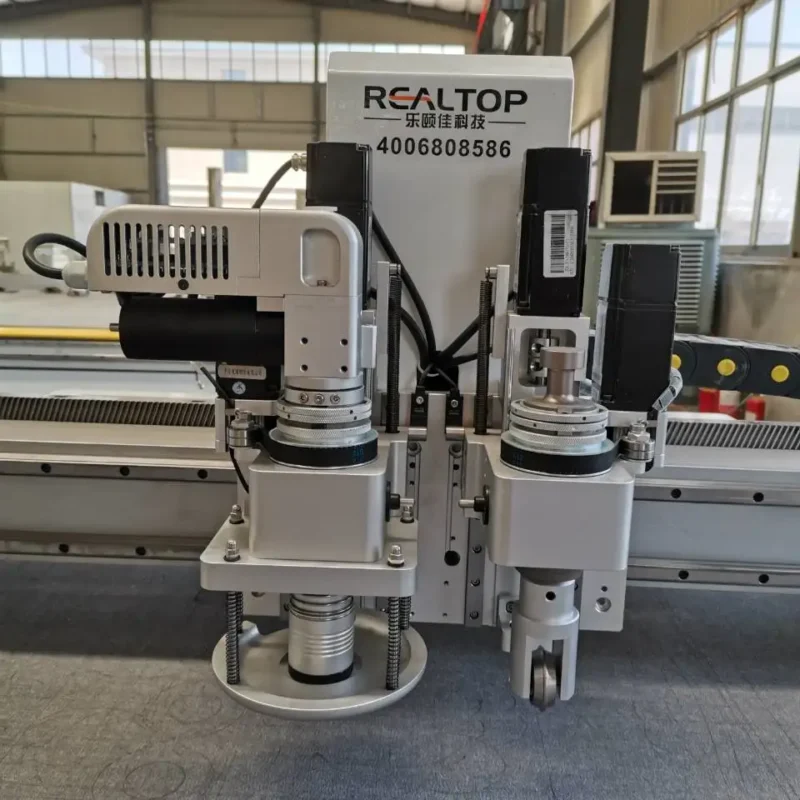
| Tool Head Options | Round knife, oscillating knife, marking pen, pneumatic knife, servo vibrating knife, circular knife |
| Data Format | dxf, plt, ai, pdf |
| Voltage | 380V / 220V |
| Control System | REALTOP customized high-speed control system |
| Safety Device | Infrared blocking stop and anti-collision protection |
| Industrial Belt | Glass fiber tension cord, high temperature and corrosion resistant |
| Wiring | Oxygen-free copper shielded wire |
Application Suitability
| Application | Material or Output |
|---|---|
| Advertising and signage production | PVC board, vinyl, printed contour materials |
| Garment and footwear manufacturing | Fabric layers, leather, synthetic uppers |
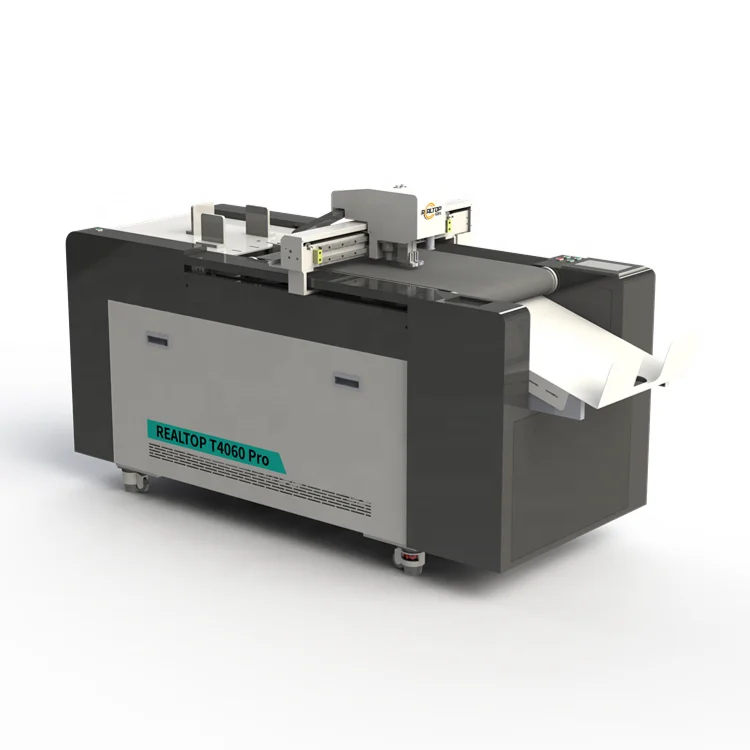
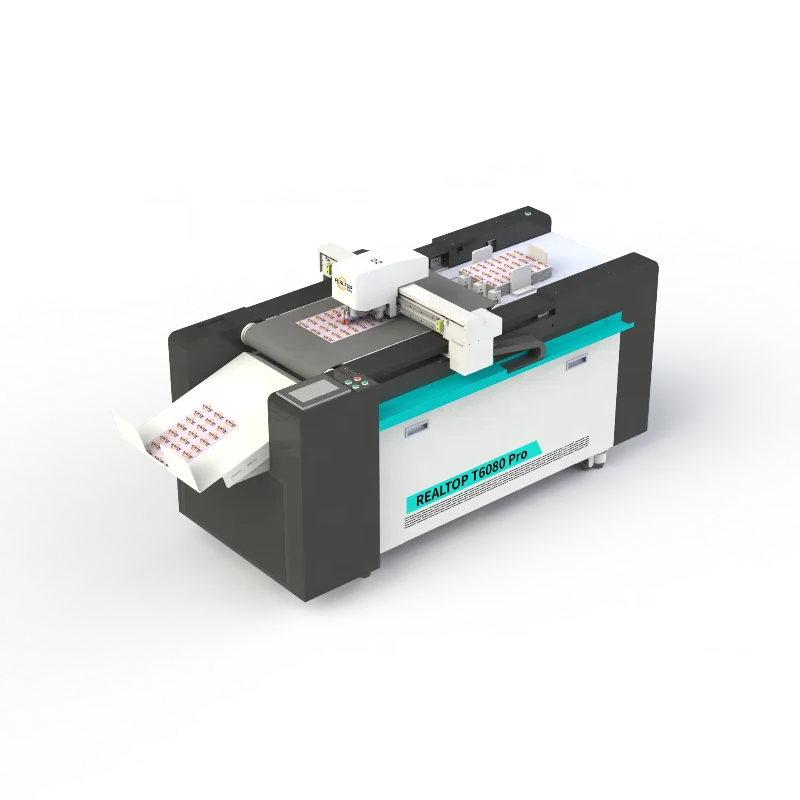
| Packaging and carton sample making | Corrugated board, cardstock, folding carton |
| Automotive interior trimming | Leather hides, synthetic leather, foam composites |
| Composite and foam fabrication | EVA foam, PE foam, gasket materials |
Why Working Area Alone Is Not Enough When Selecting a CNC Oscillating Knife Cutting Machine for Sale
A cutting table specified only by sheet size often fails the material it was bought to process.
I have walked into workshops where a large-format cutter sat idle because the vacuum zoning could not hold small nested parts down during high-speed passes. The operator showed me lifted corners and crushed foam edges — problems that have nothing to do with the table dimensions and everything to do with how the vacuum, tool head and material interact. Buyers who focus on format first tend to discover these gaps only after the machine arrives and the first real job runs [NEED_CITE: vacuum table zoning principles for CNC flatbed cutters]. A proper specification starts with the material type, thickness and daily volume, then works backward to the working area and tool head that will actually handle the job.
Panoramic CCD Positioning at Production Speed
The panoramic CCD camera on this CNC oscillating knife cutting machine for sale captures the full sheet in one pass, registering printed registration marks before the tool head begins its path. This matters when the material has already been printed or die-cut upstream and the contour must follow an existing edge. The system supports both automatic edge cutting and template-based cutting, which reduces manual alignment work on advertising boards and garment pattern pieces.
Tool Head Selection by Material Behavior
Different materials fail in different ways under a blade. Foam crushes if the oscillation frequency is too low. Leather tears if the drag angle is wrong. The available tool heads — oscillating knife, servo vibrating knife, pneumatic knife, round knife and circular knife — each address a specific failure mode. Specifying the correct head before the order prevents the ragged edges and material waste that show up in the first week of production.
Reading the Specifications That Actually Matter
The ±0.1mm reset accuracy tells you how consistently the head returns to a reference point after a tool change or sheet advance, which directly affects multi-pass jobs like creasing-then-cutting on carton samples. The 2000mm/s maximum speed is the traverse rate, not the cutting speed — cutting speed depends on material density and tool head engagement [NEED_CITE: CNC cutting speed versus traverse speed definitions]. The glass fiber tension cord on the conveyor belt resists stretching under continuous feeding cycles, which maintains registration accuracy over long runs. The quenched bed treatment removes residual stress from welding, so the frame does not warp as ambient temperature shifts across seasons.
What Happens When the Wrong Tool Head Ships
A pneumatic knife that should have been an oscillating knife means the operator spends weeks trying to dial in a clean edge on dense foam, generating scrap with every test sheet. A round knife specified for rigid board produces frayed cuts on woven fabric because it cannot handle directional changes. These mismatches are not visible in a quotation — they only appear when the first production run fails quality checks. The cost is not just wasted material; it is the lost production window while a replacement tool head is sourced and shipped [NEED_CITE: tool head material compatibility in CNC digital cutting].
Why Procurement Through This Catalogue Works
The equipment range here covers both knife and laser cutting technologies, so the cutting method is matched to the material rather than forced into one process. Tool head and table configurations are specified per material type and production volume, not left as generic options. CCD camera positioning is confirmed against the buyer’s actual printed stock before the order is finalized. Software compatibility with dxf, plt, ai and pdf files is verified during the specification stage, not discovered at commissioning. Voltage and control language customization is locked in before production begins.
Documentation & Verification
- Machine specification sheet listing each tool head option and its rated material range
- Electrical schematic confirming voltage, frequency and plug type for the destination market
- Sample cutting report produced on the buyer’s own material before order confirmation
- Software licence and file format compatibility note covering dxf, plt, ai and pdf
- Factory test record documenting accuracy and edge quality on agreed materials
- Spare parts list identifying consumable blades, belts and wiring components
Installation, Commissioning & Support
- Foundation must support the 3000×2200mm working area plus conveyor infeed and outfeed clearance
- Dedicated circuit required for 380V or 220V supply matching the confirmed electrical schematic
- Machine ships in modular sections for container loading and on-site assembly
- First-run calibration covers CCD registration, vacuum zoning and tool head offset for each head type
- Operator training covers nesting software workflow, tool change procedures and file import from dxf and ai formats
- Consumable blade stock and belt tension cord replacements included in initial spare parts package
What to Include in Your Inquiry
Send the material type, thickness range and maximum sheet size you process daily. Confirm your local voltage and frequency, and specify the control language your operators need. If your workflow relies on existing nesting software or file formats, note which ones so compatibility is checked before quotation. For printed contour work, provide sample sheets so CCD positioning can be validated on your actual registration marks.
Frequently Asked Questions
Q: How do I choose between oscillating knife, pneumatic knife and round knife for my materials?
A: Oscillating knife handles dense foam, gasket and composite materials where a clean vertical cut is needed. Pneumatic knife suits thicker, softer materials that require downward force to penetrate. Round knife works well on continuous straight cuts through fabric and thin vinyl. The correct choice depends on your specific material density and the edge quality your product requires.
Q: Which working area format should I select — 2516, 2522 or 3022?
A: Match the format to your largest common sheet size plus nesting efficiency. A 2516 handles most standard advertising boards and garment hides. The 2522 accommodates wider rolls and multi-hide nesting layouts. The 3022 is for large-format signage and bulk fabric production where longer uninterrupted cuts reduce waste. Consider your typical sheet dimensions before choosing.
Q: Does the CCD visual positioning maintain accuracy at full production speed?
A: The panoramic CCD captures registration marks across the full cutting area in a single sweep before the cutting cycle begins. Accuracy depends on print contrast and mark size on your specific material. We validate positioning performance on your sample sheets during the pre-order testing stage to confirm it meets your tolerance requirements at operational speed.
Q: What does the ≤40mm cutting thickness rating actually apply to?
A: That figure depends on material type and density. A 40mm foam block cuts differently from a 40mm rubber gasket. The rating must be confirmed against your specific material sample before the tool head and cutting parameters are finalized. We run sample cuts on your material to establish the real cutting depth capability.
Q: Should I choose conveyor automatic feeding or a static vacuum table?
A: Conveyor feeding suits high-volume production where material rolls or sheets feed continuously through the cutting zone. Static vacuum tables work for smaller batch sizes, rigid materials or jobs requiring frequent sheet changes. The decision depends on your daily volume, material format and how often your operators switch between different cutting jobs.
Quenched Bed Stability — The bed frame is quenched to eliminate internal stress, maintaining dimensional accuracy across long production runs without drift.
Technical Specifications
| Parameter | Value |
|---|---|
| Product Type | CNC Oscillating Knife Cutting Machine with Visual Positioning |
| Effective Cutting Area | 2500×1600mm / 2500×2200mm / 3000×2200mm |
| Maximum Speed | 2000mm/s |
| Reset Accuracy | ±0.1mm |
| Cutting Thickness | ≤40mm (basis not stated in source — confirm material type and density) |
| Table Type | Automatic feeding conveyor |
| Visual Positioning | Panoramic CCD camera for edge and template cutting |
| Tool Head Options | Round knife, oscillating knife, marking pen, pneumatic knife, servo vibrating knife, circular knife |
| Data Format | dxf, plt, ai, pdf |
| Voltage | 380V / 220V |
| Control System | REALTOP customized high-speed control system |
| Safety Device | Infrared blocking stop and anti-collision protection |
| Industrial Belt | Glass fiber tension cord, high temperature and corrosion resistant |
| Wiring | Oxygen-free copper shielded wire |
Application Suitability
| Application | Material or Output |
|---|---|
| Advertising and signage production | PVC board, vinyl, printed contour materials |
| Garment and footwear manufacturing | Fabric layers, leather, synthetic uppers |
| Packaging and carton sample making | Corrugated board, cardstock, folding carton |
| Automotive interior trimming | Leather hides, synthetic leather, foam composites |
| Composite and foam fabrication | EVA foam, PE foam, gasket materials |
Why Working Area Alone Is Not Enough When Selecting a CNC Oscillating Knife Cutting Machine for Sale
A cutting table specified only by sheet size often fails the material it was bought to process.
I have walked into workshops where a large-format cutter sat idle because the vacuum zoning could not hold small nested parts down during high-speed passes. The operator showed me lifted corners and crushed foam edges — problems that have nothing to do with the table dimensions and everything to do with how the vacuum, tool head and material interact. Buyers who focus on format first tend to discover these gaps only after the machine arrives and the first real job runs [NEED_CITE: vacuum table zoning principles for CNC flatbed cutters]. A proper specification starts with the material type, thickness and daily volume, then works backward to the working area and tool head that will actually handle the job.
Panoramic CCD Positioning at Production Speed
The panoramic CCD camera on this CNC oscillating knife cutting machine for sale captures the full sheet in one pass, registering printed registration marks before the tool head begins its path. This matters when the material has already been printed or die-cut upstream and the contour must follow an existing edge. The system supports both automatic edge cutting and template-based cutting, which reduces manual alignment work on advertising boards and garment pattern pieces.
Tool Head Selection by Material Behavior
Different materials fail in different ways under a blade. Foam crushes if the oscillation frequency is too low. Leather tears if the drag angle is wrong. The available tool heads — oscillating knife, servo vibrating knife, pneumatic knife, round knife and circular knife — each address a specific failure mode. Specifying the correct head before the order prevents the ragged edges and material waste that show up in the first week of production.
Reading the Specifications That Actually Matter
The ±0.1mm reset accuracy tells you how consistently the head returns to a reference point after a tool change or sheet advance, which directly affects multi-pass jobs like creasing-then-cutting on carton samples. The 2000mm/s maximum speed is the traverse rate, not the cutting speed — cutting speed depends on material density and tool head engagement [NEED_CITE: CNC cutting speed versus traverse speed definitions]. The glass fiber tension cord on the conveyor belt resists stretching under continuous feeding cycles, which maintains registration accuracy over long runs. The quenched bed treatment removes residual stress from welding, so the frame does not warp as ambient temperature shifts across seasons.
What Happens When the Wrong Tool Head Ships
A pneumatic knife that should have been an oscillating knife means the operator spends weeks trying to dial in a clean edge on dense foam, generating scrap with every test sheet. A round knife specified for rigid board produces frayed cuts on woven fabric because it cannot handle directional changes. These mismatches are not visible in a quotation — they only appear when the first production run fails quality checks. The cost is not just wasted material; it is the lost production window while a replacement tool head is sourced and shipped [NEED_CITE: tool head material compatibility in CNC digital cutting].
Why Procurement Through This Catalogue Works
The equipment range here covers both knife and laser cutting technologies, so the cutting method is matched to the material rather than forced into one process. Tool head and table configurations are specified per material type and production volume, not left as generic options. CCD camera positioning is confirmed against the buyer’s actual printed stock before the order is finalized. Software compatibility with dxf, plt, ai and pdf files is verified during the specification stage, not discovered at commissioning. Voltage and control language customization is locked in before production begins.
Documentation & Verification
- Machine specification sheet listing each tool head option and its rated material range
- Electrical schematic confirming voltage, frequency and plug type for the destination market
- Sample cutting report produced on the buyer’s own material before order confirmation
- Software licence and file format compatibility note covering dxf, plt, ai and pdf
- Factory test record documenting accuracy and edge quality on agreed materials
- Spare parts list identifying consumable blades, belts and wiring components
Installation, Commissioning & Support
- Foundation must support the 3000×2200mm working area plus conveyor infeed and outfeed clearance
- Dedicated circuit required for 380V or 220V supply matching the confirmed electrical schematic
- Machine ships in modular sections for container loading and on-site assembly
- First-run calibration covers CCD registration, vacuum zoning and tool head offset for each head type
- Operator training covers nesting software workflow, tool change procedures and file import from dxf and ai formats
- Consumable blade stock and belt tension cord replacements included in initial spare parts package
What to Include in Your Inquiry
Send the material type, thickness range and maximum sheet size you process daily. Confirm your local voltage and frequency, and specify the control language your operators need. If your workflow relies on existing nesting software or file formats, note which ones so compatibility is checked before quotation. For printed contour work, provide sample sheets so CCD positioning can be validated on your actual registration marks.
Frequently Asked Questions
Q: How do I choose between oscillating knife, pneumatic knife and round knife for my materials?
A: Oscillating knife handles dense foam, gasket and composite materials where a clean vertical cut is needed. Pneumatic knife suits thicker, softer materials that require downward force to penetrate. Round knife works well on continuous straight cuts through fabric and thin vinyl. The correct choice depends on your specific material density and the edge quality your product requires.
Q: Which working area format should I select — 2516, 2522 or 3022?
A: Match the format to your largest common sheet size plus nesting efficiency. A 2516 handles most standard advertising boards and garment hides. The 2522 accommodates wider rolls and multi-hide nesting layouts. The 3022 is for large-format signage and bulk fabric production where longer uninterrupted cuts reduce waste. Consider your typical sheet dimensions before choosing.
Q: Does the CCD visual positioning maintain accuracy at full production speed?
A: The panoramic CCD captures registration marks across the full cutting area in a single sweep before the cutting cycle begins. Accuracy depends on print contrast and mark size on your specific material. We validate positioning performance on your sample sheets during the pre-order testing stage to confirm it meets your tolerance requirements at operational speed.
Q: What does the ≤40mm cutting thickness rating actually apply to?
A: That figure depends on material type and density. A 40mm foam block cuts differently from a 40mm rubber gasket. The rating must be confirmed against your specific material sample before the tool head and cutting parameters are finalized. We run sample cuts on your material to establish the real cutting depth capability.
Q: Should I choose conveyor automatic feeding or a static vacuum table?
A: Conveyor feeding suits high-volume production where material rolls or sheets feed continuously through the cutting zone. Static vacuum tables work for smaller batch sizes, rigid materials or jobs requiring frequent sheet changes. The decision depends on your daily volume, material format and how often your operators switch between different cutting jobs.
商品评价
There are no reviews yet.