


Fast Delivery
Quick, reliable shipping to any location.

Free & easy returns
Return this item by mail or in store within 90 days for a full refund.
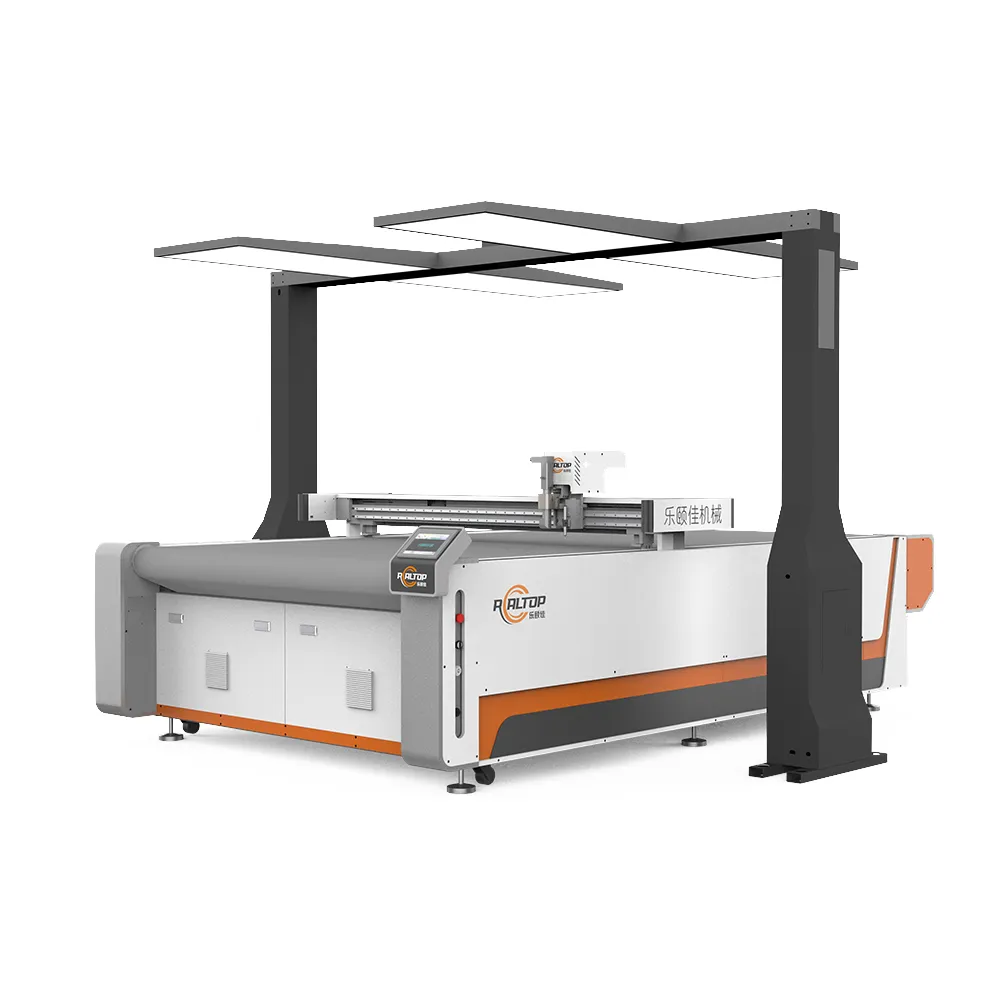
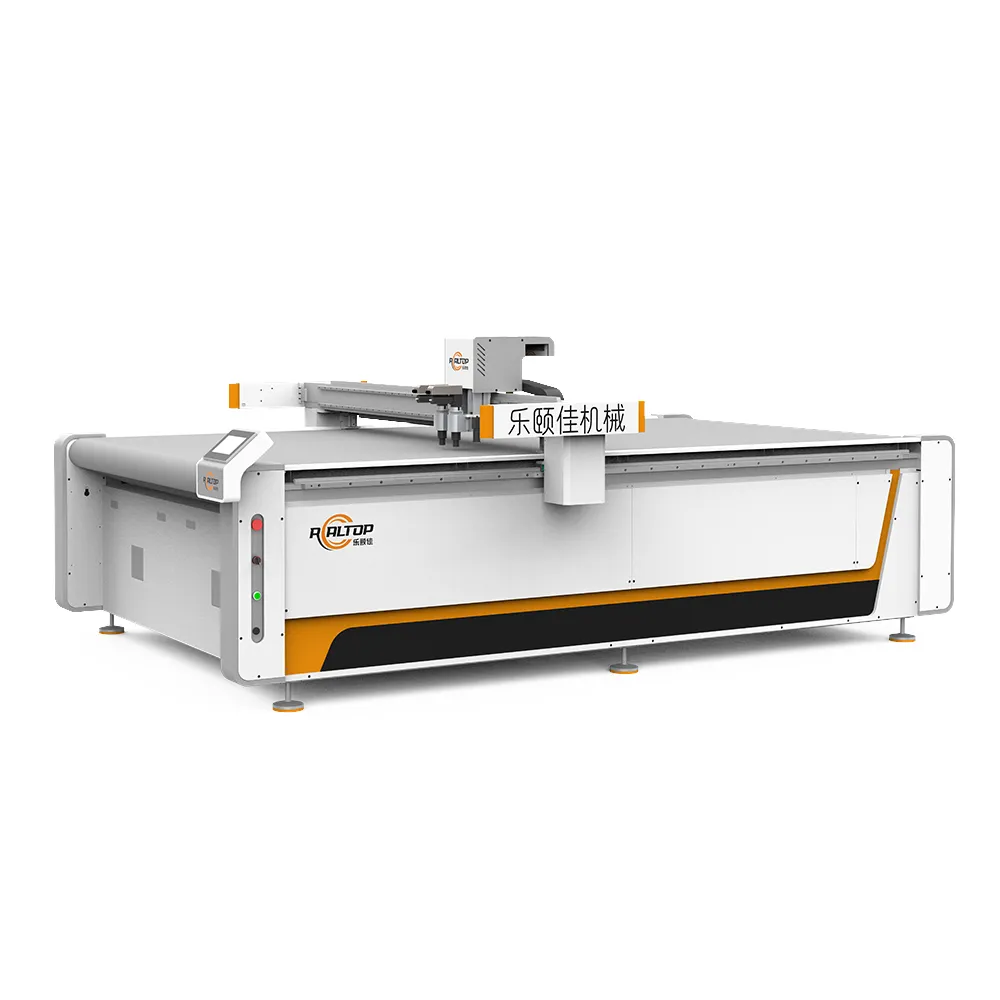
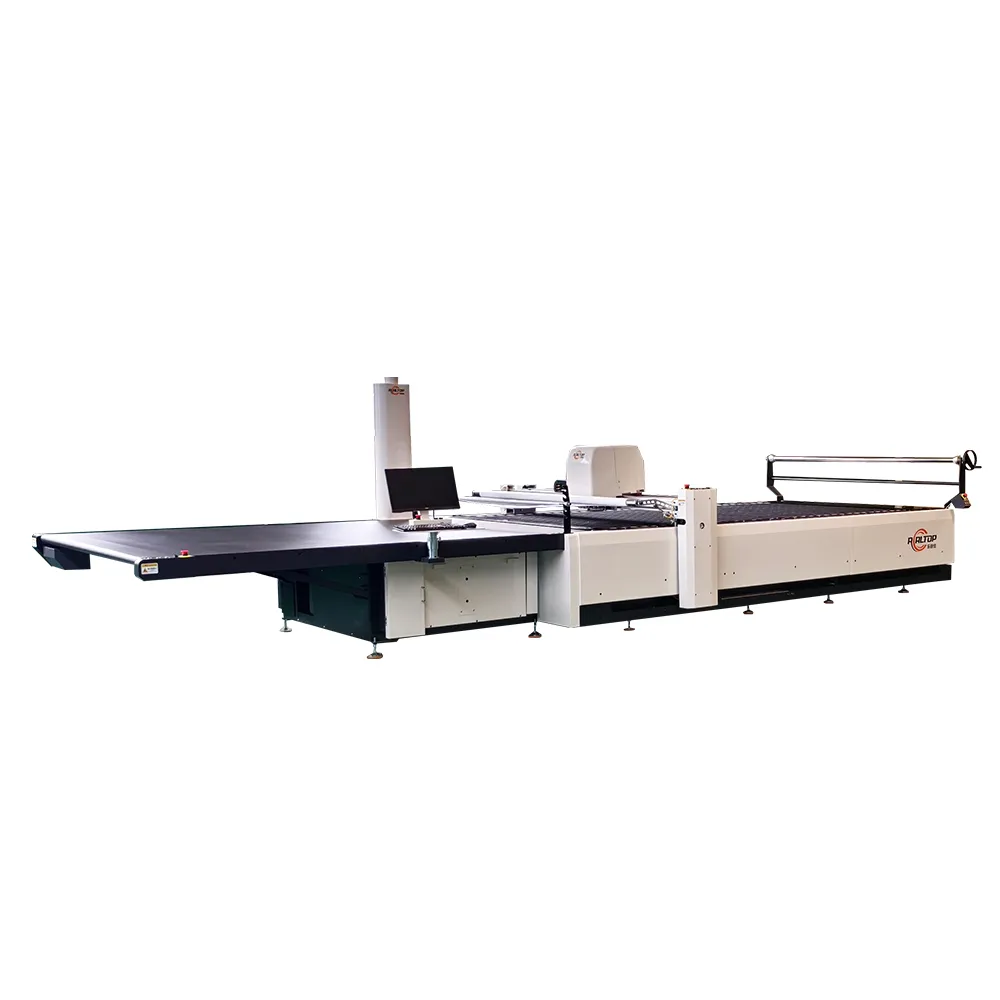
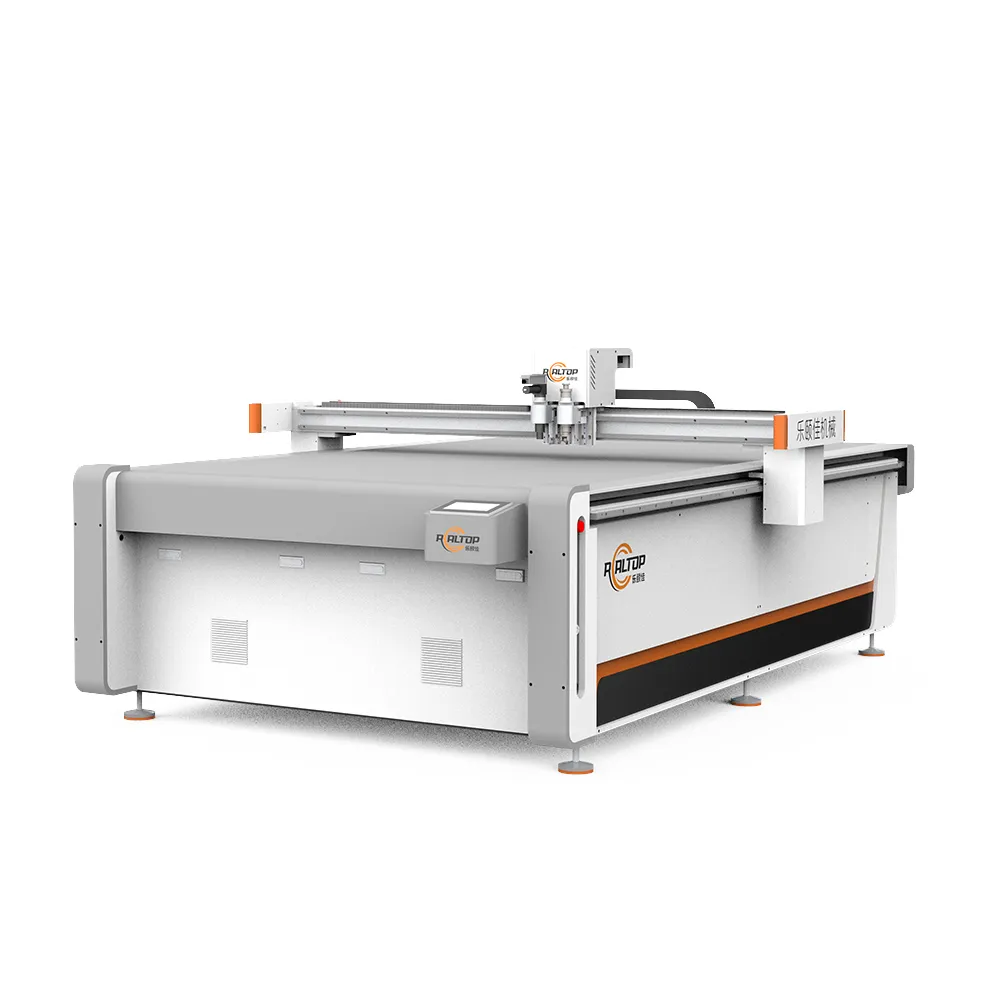
Cutting Method Matched to Material — REALTOP builds both knife and laser cutting systems in-house, so your cutting process is chosen by material behavior rather than forced into a single technology.
Technical Specifications
| Parameter | Value |
|---|---|
| Product Type | CNC Digital Flatbed Cutting Machine |
| Effective Cutting Area | 2500×1600mm / 2500×2200mm / 3000×2200mm |
| Maximum Speed | 2000 mm/s |
| Reset Accuracy | ±0.1 mm |
| Cutting Thickness | ≤40 mm (basis not stated in source — confirm material type and density) |
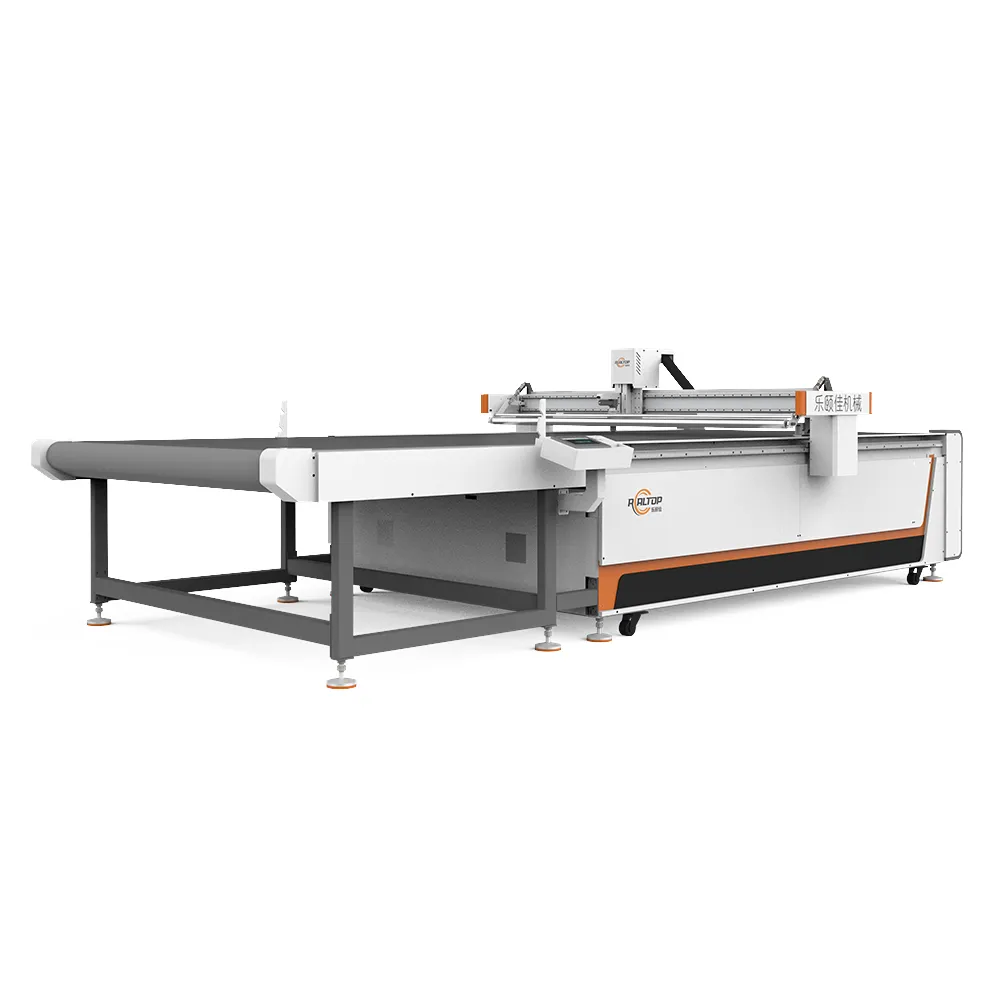
| Table Type | Automatic feeding |
| Tool Head Options | Round knife, oscillating knife, marking pen, pneumatic knife, servo vibrating knife, conventional vibrating knife |
| Data Format | dxf, plt, ai, pdf |
| Safety Device | Infrared blocking stop and anti-collision protection |
| Voltage | 380V / 220V |
| Control System | REALTOP customized high-speed control system |
| Positioning System | Panoramic visual positioning (supports automatic edge cutting and template cutting) |
| Industrial Belt | Low noise, flexible, high temperature resistant, corrosion resistant, special glass fiber tension cord |
| Wiring | Oxygen-free copper shielded wire, low resistance, high folding strength |
| Bed Construction | Quenched to eliminate internal stress, high stability, anti-deformation |
| Noise Design | Exclusive silent design |
Application Suitability
| Application | Material or Output |
|---|---|
| Advertising and signage production | Printed PVC board, vinyl, foam board, acrylic sheet with contour cutting |
| Packaging and carton sample making | Corrugated board, grey board, cardstock with creasing and cutting |
| Leather goods and footwear manufacturing | Natural leather, synthetic PU/PVC leather, composite lining materials |
| Automotive interior trimming | Leather hides, fabric laminates, foam-backed composite panels |
| Composite and foam fabrication | EVA foam, PE foam, rubber gasket sheets, thermal insulation boards |
| Textile and garment production | Woven fabric, knit fabric, non-woven material with nesting optimization |
Why Material Thickness Defines the Tool Head — Not the Working Area
A cutting table sized only by sheet dimensions often fails when material density or layered thickness exceeds what the default oscillating knife can penetrate.
I have seen buyers specify a large-format CNC flatbed digital cutting table for sale based on their biggest sheet size, only to discover on arrival that the standard oscillating knife stalls on 5 mm leather backed with high-density foam. The motor cannot push through the combined stack, edges come out ragged, and the vacuum zoning leaves small nested parts drifting mid-cut. One automotive interior supplier lost nearly a month sending the tool head back for a swap — time that could have been avoided with a sample cutting test on the actual production material [NEED_CITE: common tool head mismatch scenarios in flexible material cutting].
Matching Tool Heads to Flexible Material Behavior
Leather is not a uniform substrate. Full-grain hides vary in density across the belly and backbone zones, while bonded leather and synthetic PU respond differently to blade frequency. The oscillating knife handles most single-layer leather up to moderate thickness, but when the material includes a foam backing or a woven reinforcement layer, the servo vibrating knife delivers a cleaner shear through the composite stack. For marking stitch lines or pattern alignment on hides before cutting, the marking pen mounts alongside the blade so a single pass covers both operations. The CNC oscillating knife cutting machine manufacturer configures these heads per the buyer’s material test, not from a default catalog pick.
Panoramic Visual Positioning for Printed Contours
Advertising and signage producers print graphics onto vinyl or board and then need the cutter to trace the exact printed edge. The panoramic visual positioning system on this CNC flatbed digital cutting table captures the full sheet image and registers against printed fiducial marks before each cut path begins. This matters at production speed: if the camera cannot track slight color shifts or low-contrast marks, the blade drifts and scrap material builds up quickly. The system supports both automatic edge cutting and template-based contour work, so operators switch between free-form printed jobs and fixed die-line patterns without recalibrating [NEED_CITE: visual positioning accuracy standards for flatbed cutters].
Reading the Specifications Beyond the Brochure Numbers
The ±0.1 mm reset accuracy indicates how precisely the tool head returns to a reference point after travel, which directly affects contour fidelity on intricate advertising shapes or tight nesting layouts for leather hides. Maximum speed of 2000 mm/s describes the head travel rate on straight runs; actual cutting speed depends on material resistance and corner frequency. The quenched bed construction eliminates residual stress from welding, preventing the frame from warping over months of vibration and vacuum cycling — a detail that only shows up when repeated accuracy starts degrading on long production runs. Oxygen-free copper shielded wiring resists signal interference from the high-frequency vibration motor, maintaining clean motion control even in workshops with heavy electrical noise from neighboring equipment.
The Hidden Cost of Skipping Configuration Verification
When vacuum table zoning does not match the smallest part in your nesting layout, thin leather offcuts lift during the final passes and the blade catches the edge, ruining pieces that were already cut. Similarly, quoting laser power at peak output rather than continuous rating means the real cutting depth on acrylic or wood falls short of the sample. Buyers who skip the sample cutting report and software file format check often discover after delivery that their existing nesting files will not import, or that the control language does not match their operators’ proficiency [NEED_CITE: post-delivery configuration disputes in CNC cutting equipment].
What In-House Design and Production Actually Means
REALTOP engineers both the knife cutting head and the motion platform together, so the servo vibration frequency is tuned to the specific blade geometry rather than sourced from separate suppliers and bolted on. The automatic feeding table integrates with the conveyor belt tension system using glass fiber cords that resist stretch under continuous load. Every configuration ships with a documented tool head and table list matched to the buyer’s material, so replacement parts and future upgrades align with the original specification. Sample cutting on the buyer’s own production material happens before the order is locked, not after the machine is crated.
Documentation & Verification
- Machine specification sheet with confirmed tool head and table configuration per material type
- Electrical schematic showing voltage wiring and circuit protection layout for the ordered voltage option
- Sample cutting report on the buyer’s own leather or advertising material with measured edge quality
- Factory test record documenting positional accuracy and vacuum hold-down performance before crating
- Software licence and file format compatibility note confirming dxf, plt, ai, pdf workflow integration
- Spare parts list with part numbers for blades, belts and vacuum seals specific to the shipped configuration
Installation, Commissioning & Support
- Foundation must be level within tolerance across the 3000×2200mm maximum footprint to maintain bed flatness
- Dedicated 380V or 220V circuit required matching the confirmed voltage and plug type before shipment
- Machine ships in sectional frame for container loading and on-site reassembly with alignment verification
- First-run parameter tuning includes vacuum zone mapping and servo vibration frequency calibration per material
- Operator training covers panoramic visual positioning setup, nesting file import and tool head changeover
- Consumable blades and belt sections stocked per the shipped spare parts list for immediate replacement
What to Prepare Before Requesting a Quote
Send the actual production material — not a catalog sample — including the thickest variant you plan to run daily. Specify your target market voltage and frequency, the control language your operators read, and whether your existing nesting software exports dxf, plt, ai, or pdf files. If your workflow includes printed contour cutting, provide a sample printed sheet so the panoramic visual positioning can be tested against your actual ink density and mark placement.
Frequently Asked Questions
Q: How do I choose the right tool head for my leather thickness and backing type?
A: The tool head selection depends on whether your leather is single-layer, foam-backed, or reinforced with woven fabric. We run a sample cutting test on your actual production material to determine whether the oscillating knife, servo vibrating knife, or pneumatic knife produces the cleanest edge at your required cutting speed.
Q: What is the real cutting thickness on leather versus foam versus composite materials?
A: Cutting thickness capacity varies with material density and layer composition. The specification states up to 40 mm, but this figure must be confirmed against your specific material type and stacking arrangement. We verify actual penetration depth during the pre-order sample cutting report.
Q: Does panoramic visual positioning track printed marks reliably at full production speed?
A: The system captures the full printed sheet and registers fiducial marks before the cut path executes. Reliability depends on mark contrast, ink density and substrate color. We test positioning accuracy using your own printed samples to confirm registration holds across the entire working area.
Q: Which voltage, plug and control language options can be configured before shipment?
A: The machine supports 380V and 220V configurations. Plug type and control interface language are confirmed during the order specification stage so the machine arrives ready to connect to your workshop power supply and readable by your operators without additional modification.
Q: What documentation and test records ship with the machine?
A: Every unit ships with a specification sheet, electrical schematic, sample cutting report on your material, factory test record, operation manual, software licence note, and spare parts list. These documents reflect the exact configuration and voltage confirmed at order, not generic templates.
Cutting Method Matched to Material — REALTOP builds both knife and laser cutting systems in-house, so your cutting process is chosen by material behavior rather than forced into a single technology.
Technical Specifications
| Parameter | Value |
|---|---|
| Product Type | CNC Digital Flatbed Cutting Machine |
| Effective Cutting Area | 2500×1600mm / 2500×2200mm / 3000×2200mm |
| Maximum Speed | 2000 mm/s |
| Reset Accuracy | ±0.1 mm |
| Cutting Thickness | ≤40 mm (basis not stated in source — confirm material type and density) |
| Table Type | Automatic feeding |
| Tool Head Options | Round knife, oscillating knife, marking pen, pneumatic knife, servo vibrating knife, conventional vibrating knife |
| Data Format | dxf, plt, ai, pdf |
| Safety Device | Infrared blocking stop and anti-collision protection |
| Voltage | 380V / 220V |
| Control System | REALTOP customized high-speed control system |
| Positioning System | Panoramic visual positioning (supports automatic edge cutting and template cutting) |
| Industrial Belt | Low noise, flexible, high temperature resistant, corrosion resistant, special glass fiber tension cord |
| Wiring | Oxygen-free copper shielded wire, low resistance, high folding strength |
| Bed Construction | Quenched to eliminate internal stress, high stability, anti-deformation |
| Noise Design | Exclusive silent design |
Application Suitability
| Application | Material or Output |
|---|---|
| Advertising and signage production | Printed PVC board, vinyl, foam board, acrylic sheet with contour cutting |
| Packaging and carton sample making | Corrugated board, grey board, cardstock with creasing and cutting |
| Leather goods and footwear manufacturing | Natural leather, synthetic PU/PVC leather, composite lining materials |
| Automotive interior trimming | Leather hides, fabric laminates, foam-backed composite panels |
| Composite and foam fabrication | EVA foam, PE foam, rubber gasket sheets, thermal insulation boards |
| Textile and garment production | Woven fabric, knit fabric, non-woven material with nesting optimization |
Why Material Thickness Defines the Tool Head — Not the Working Area
A cutting table sized only by sheet dimensions often fails when material density or layered thickness exceeds what the default oscillating knife can penetrate.
I have seen buyers specify a large-format CNC flatbed digital cutting table for sale based on their biggest sheet size, only to discover on arrival that the standard oscillating knife stalls on 5 mm leather backed with high-density foam. The motor cannot push through the combined stack, edges come out ragged, and the vacuum zoning leaves small nested parts drifting mid-cut. One automotive interior supplier lost nearly a month sending the tool head back for a swap — time that could have been avoided with a sample cutting test on the actual production material [NEED_CITE: common tool head mismatch scenarios in flexible material cutting].
Matching Tool Heads to Flexible Material Behavior
Leather is not a uniform substrate. Full-grain hides vary in density across the belly and backbone zones, while bonded leather and synthetic PU respond differently to blade frequency. The oscillating knife handles most single-layer leather up to moderate thickness, but when the material includes a foam backing or a woven reinforcement layer, the servo vibrating knife delivers a cleaner shear through the composite stack. For marking stitch lines or pattern alignment on hides before cutting, the marking pen mounts alongside the blade so a single pass covers both operations. The CNC oscillating knife cutting machine manufacturer configures these heads per the buyer’s material test, not from a default catalog pick.
Panoramic Visual Positioning for Printed Contours
Advertising and signage producers print graphics onto vinyl or board and then need the cutter to trace the exact printed edge. The panoramic visual positioning system on this CNC flatbed digital cutting table captures the full sheet image and registers against printed fiducial marks before each cut path begins. This matters at production speed: if the camera cannot track slight color shifts or low-contrast marks, the blade drifts and scrap material builds up quickly. The system supports both automatic edge cutting and template-based contour work, so operators switch between free-form printed jobs and fixed die-line patterns without recalibrating [NEED_CITE: visual positioning accuracy standards for flatbed cutters].
Reading the Specifications Beyond the Brochure Numbers
The ±0.1 mm reset accuracy indicates how precisely the tool head returns to a reference point after travel, which directly affects contour fidelity on intricate advertising shapes or tight nesting layouts for leather hides. Maximum speed of 2000 mm/s describes the head travel rate on straight runs; actual cutting speed depends on material resistance and corner frequency. The quenched bed construction eliminates residual stress from welding, preventing the frame from warping over months of vibration and vacuum cycling — a detail that only shows up when repeated accuracy starts degrading on long production runs. Oxygen-free copper shielded wiring resists signal interference from the high-frequency vibration motor, maintaining clean motion control even in workshops with heavy electrical noise from neighboring equipment.
The Hidden Cost of Skipping Configuration Verification
When vacuum table zoning does not match the smallest part in your nesting layout, thin leather offcuts lift during the final passes and the blade catches the edge, ruining pieces that were already cut. Similarly, quoting laser power at peak output rather than continuous rating means the real cutting depth on acrylic or wood falls short of the sample. Buyers who skip the sample cutting report and software file format check often discover after delivery that their existing nesting files will not import, or that the control language does not match their operators’ proficiency [NEED_CITE: post-delivery configuration disputes in CNC cutting equipment].
What In-House Design and Production Actually Means
REALTOP engineers both the knife cutting head and the motion platform together, so the servo vibration frequency is tuned to the specific blade geometry rather than sourced from separate suppliers and bolted on. The automatic feeding table integrates with the conveyor belt tension system using glass fiber cords that resist stretch under continuous load. Every configuration ships with a documented tool head and table list matched to the buyer’s material, so replacement parts and future upgrades align with the original specification. Sample cutting on the buyer’s own production material happens before the order is locked, not after the machine is crated.
Documentation & Verification
- Machine specification sheet with confirmed tool head and table configuration per material type
- Electrical schematic showing voltage wiring and circuit protection layout for the ordered voltage option
- Sample cutting report on the buyer’s own leather or advertising material with measured edge quality
- Factory test record documenting positional accuracy and vacuum hold-down performance before crating
- Software licence and file format compatibility note confirming dxf, plt, ai, pdf workflow integration
- Spare parts list with part numbers for blades, belts and vacuum seals specific to the shipped configuration
Installation, Commissioning & Support
- Foundation must be level within tolerance across the 3000×2200mm maximum footprint to maintain bed flatness
- Dedicated 380V or 220V circuit required matching the confirmed voltage and plug type before shipment
- Machine ships in sectional frame for container loading and on-site reassembly with alignment verification
- First-run parameter tuning includes vacuum zone mapping and servo vibration frequency calibration per material
- Operator training covers panoramic visual positioning setup, nesting file import and tool head changeover
- Consumable blades and belt sections stocked per the shipped spare parts list for immediate replacement
What to Prepare Before Requesting a Quote
Send the actual production material — not a catalog sample — including the thickest variant you plan to run daily. Specify your target market voltage and frequency, the control language your operators read, and whether your existing nesting software exports dxf, plt, ai, or pdf files. If your workflow includes printed contour cutting, provide a sample printed sheet so the panoramic visual positioning can be tested against your actual ink density and mark placement.
Frequently Asked Questions
Q: How do I choose the right tool head for my leather thickness and backing type?
A: The tool head selection depends on whether your leather is single-layer, foam-backed, or reinforced with woven fabric. We run a sample cutting test on your actual production material to determine whether the oscillating knife, servo vibrating knife, or pneumatic knife produces the cleanest edge at your required cutting speed.
Q: What is the real cutting thickness on leather versus foam versus composite materials?
A: Cutting thickness capacity varies with material density and layer composition. The specification states up to 40 mm, but this figure must be confirmed against your specific material type and stacking arrangement. We verify actual penetration depth during the pre-order sample cutting report.
Q: Does panoramic visual positioning track printed marks reliably at full production speed?
A: The system captures the full printed sheet and registers fiducial marks before the cut path executes. Reliability depends on mark contrast, ink density and substrate color. We test positioning accuracy using your own printed samples to confirm registration holds across the entire working area.
Q: Which voltage, plug and control language options can be configured before shipment?
A: The machine supports 380V and 220V configurations. Plug type and control interface language are confirmed during the order specification stage so the machine arrives ready to connect to your workshop power supply and readable by your operators without additional modification.
Q: What documentation and test records ship with the machine?
A: Every unit ships with a specification sheet, electrical schematic, sample cutting report on your material, factory test record, operation manual, software licence note, and spare parts list. These documents reflect the exact configuration and voltage confirmed at order, not generic templates.










商品评价
There are no reviews yet.