


Fast Delivery
Quick, reliable shipping to any location.

Free & easy returns
Return this item by mail or in store within 90 days for a full refund.
Specified cutting configuration — tool heads and vacuum zones matched to each corrugated flute and sticker stock before the order is confirmed, not guessed from a brochure.
Technical Specifications
| Parameter | Value |
|---|---|
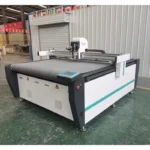
| Product Type | CNC Digital Carton Cutting Machine with Creasing Wheel |
| Model | RT-D2516/RT-S2516 |
| Working Area | 1600 × 2500 mm |
| Machine Size | 3450 × 2300 × 1250 mm |
| Rated Power | 9 kW |
| Table Type | Flat working table with aluminum alloy honeycomb structure |
| Vacuum Pump | 7.5 kW |
| Tool Head | Swiss imported knife with vibration full cutting, vibration half cutting and cursor location |
| Translational Velocity | 800–2000 mm/s |
| Cutting Speed | 200–800 mm/s (varies with material type and thickness) |
| Cutting Thickness | Up to 100 mm (depends on material density and tooling) |
| Repeated Accuracy | ≤ 0.1 mm |
| Transmission System | Digital servo motor, linear guide, synchronous belt, ball screw |
| Guide Rail | Taiwan Hiwin imported straight-line square guide |
| Servo Motor | Taiwan Delta servo motors and drivers |
| Instruction System | HP-GL compatible format |
| Voltage | 380V ± 10% (configurable for target market) |
| Safety Device | Infrared sensors, emergency stop devices |
| Feeding System | Germany imported conveyor belt, auto feeding |
| Software | Professional carton nesting software (included), multiple format file imports, customizable language |
Application Suitability
| Application | Material or Output |
|---|---|
| Express paper box packaging | Single, double and triple-wall corrugated cardboard |
| High-end gift box sample making | Grey board, art card and laminated stock |
| Snack food carton production | E-flute and B-flute corrugated with printed contour |
| Sticker and label kiss-cutting | Vinyl, PVC sticker and self-adhesive film on liner |
| Billboard and signage cutting | Foam board, honeycomb paper and lightweight composite |
| Business card and tag finishing | Cardstock, coated paper and thin plastic sheet |
Why Flute Type Must Be Decided Before the Machine Ships
A creasing wheel calibrated for E-flute will crush B-flute or leave fold lines crooked on heavier board.
Many packaging buyers specify a CNC digital carton cutting machine manufacturer based on bed size, then discover the creasing pressure is wrong for their actual flute profile. I once watched a client spend a full week adjusting fold lines after they switched from E-flute to B-flute post-delivery. The wheel pressure, depth and speed all need to match the board structure, and that conversation has to happen before the machine leaves the factory [NEED_CITE: corrugated flute profiles and creasing pressure requirements].
Matching Tool Heads to Board and Sticker Stock
The Swiss imported knife head handles vibration full cutting for through-cuts on corrugated and solid board, while half cutting scores the surface for fold lines without penetrating the liner. For sticker and vinyl jobs, the same head switches to kiss-cut mode, slicing the face stock while leaving the backing intact. This tool head flexibility means a single CNC digital carton cutting machine manufacturer can supply one platform that runs packaging samples in the morning and sticker runs in the afternoon without mechanical conversion kits.
Vacuum Hold-Down Across the Full Bed Area
The aluminum alloy honeycomb vacuum table paired with a 7.5 kW pump keeps thin cardstock and large corrugated sheets flat during high-speed cutting. Small parts like business cards and tags tend to lift at the trailing edge when vacuum zoning is too coarse, so the honeycomb structure distributes suction evenly across the 1600 × 2500 mm surface. Uniform hold-down is what keeps repeated accuracy within 0.1 mm when the machine runs at translational velocities toward the upper end of its range [NEED_CITE: vacuum table zoning effects on small-part cutting accuracy].
Reading the Specs That Actually Matter
Cutting speed is listed as 200–800 mm/s, but that range depends entirely on whether you are scoring E-flute or full-cutting 3 mm grey board — thicker, denser stock demands the lower end. The Taiwan Delta servo motors and Hiwin linear guides maintain positioning precision, yet the real-world edge quality on corrugated depends on matching oscillation frequency to flute geometry. The HP-GL compatible instruction system accepts files from most mainstream carton design packages, which eliminates a common bottleneck where operators must redraw artwork before nesting [NEED_CITE: HP-GL compatibility in packaging design workflows].
The Hidden Cost of Skipping a Sample Cut
When a buyer orders without sending actual material for a test run, the creasing wheel pressure and knife oscillation frequency are set to generic defaults. On arrival, the first sheet reveals ragged edges on coated stock or crushed flutes on double-wall board, and production stalls while the operator re-tunes every parameter. That downtime is compounded if the nesting software cannot import the buyer’s existing file format, forcing the design team to rebuild artwork from scratch.
Why Source This Machine Through Our Setup
In-house design covers both knife cutting and creasing tool heads, so the configuration is built around your board grade and daily volume rather than forced onto a standard model. Voltage and control language are confirmed against your workshop supply before the machine enters production. Every unit ships with a factory test record run on the buyer’s own material specification. Software licensing and file format compatibility are documented before payment, not discovered during installation. The auto-feeding conveyor belt option is specified based on your sheet size and run length, not added as a default upsell.
Documentation & Verification
- Machine specification sheet listing confirmed tool head and creasing wheel configuration
- Electrical schematic with voltage and frequency matched to your local supply
- Sample cutting report produced on your submitted cardboard or sticker stock
- Software licence key with accepted file formats documented before dispatch
- Operation and maintenance manual in your selected control language
- Packing photographs showing crated machine and accessory boxes
Installation, Commissioning & Support
- 3450 × 2300 mm footprint requires level concrete floor with clearance for auto-feed conveyor
- 9 kW rated power plus 7.5 kW vacuum pump need dedicated circuit with correct breaker rating
- Machine ships in single crate; table and gantry assembled on-site by technician
- First-run commissioning includes creasing pressure calibration on your board flute profile
- Operator training covers nesting software import, tool head changeover and vacuum zone setup
- Spare parts list identifies consumable knife blades, creasing wheels and conveyor belt segments
Before You Request a Quote
Send your heaviest and lightest board grades with flute type and grammage, plus any sticker or vinyl stock you plan to kiss-cut. Confirm your workshop voltage, frequency and preferred control language. Let us know if your existing design workflow uses HP-GL or another file format so we verify software compatibility before building the machine.
Frequently Asked Questions
Q: How do I confirm the cutting speed for my specific board grade?
A: Cutting speed of 200–800 mm/s varies with material density and flute profile. We run your submitted board sample on the machine and record actual throughput, edge quality and creasing accuracy in a test report. That report, not the brochure range, becomes the baseline for your production planning.
Q: Which tool head should I use for creasing versus sticker kiss-cutting?
A: The creasing wheel handles fold lines on corrugated and grey board, while the Swiss imported vibration knife performs full cuts and kiss-cuts. We specify the tool head combination based on your material list so the machine arrives configured for both tasks without aftermarket modifications.
Q: What file formats does the nesting software accept from my design team?
A: The included carton nesting software supports HP-GL compatible format and imports common vector file types. Before your order is finalized, we test your actual design files on the software to confirm compatibility and document any conversion steps your operators need to follow.
Q: Can the voltage and control interface be matched to my country’s standard?
A: The standard 380V ± 10% configuration can be adjusted for your local supply. Control language options include English, Russian, Italian and Chinese, with other languages configurable. We confirm voltage, plug type and language in writing before the machine enters the production stage.
Q: How does the vacuum table handle very small parts like business cards?
A: The aluminum alloy honeycomb structure distributes vacuum suction evenly across the full bed, and the 7.5 kW pump provides sufficient hold-down force to prevent small, lightweight pieces from lifting during high-speed cutting. We verify hold-down performance on your smallest part during the pre-shipment sample test.










商品评价
There are no reviews yet.