



Fast Delivery
Quick, reliable shipping to any location.

Free & easy returns
Return this item by mail or in store within 90 days for a full refund.
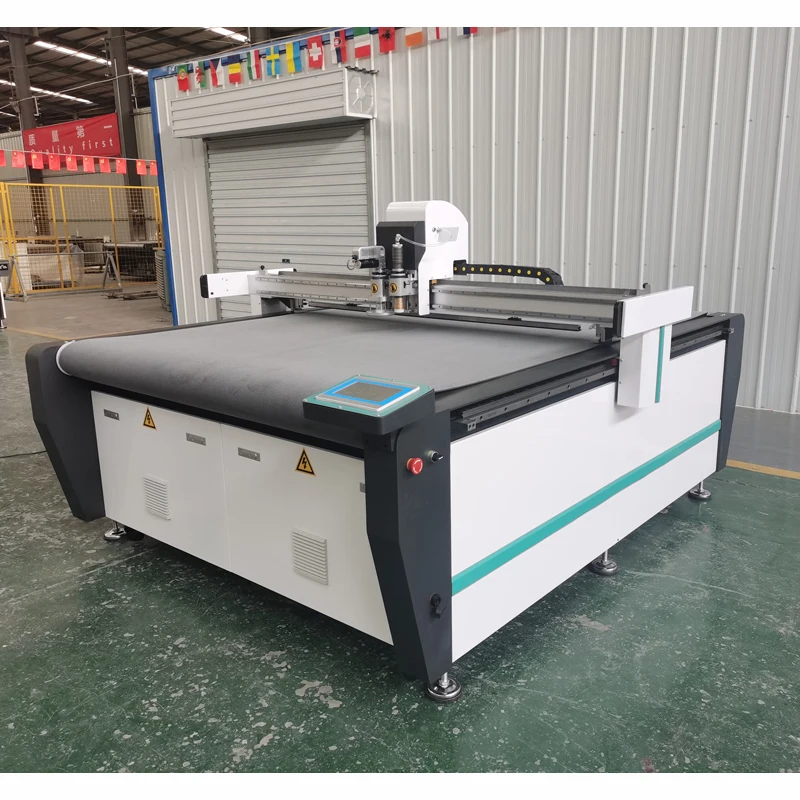
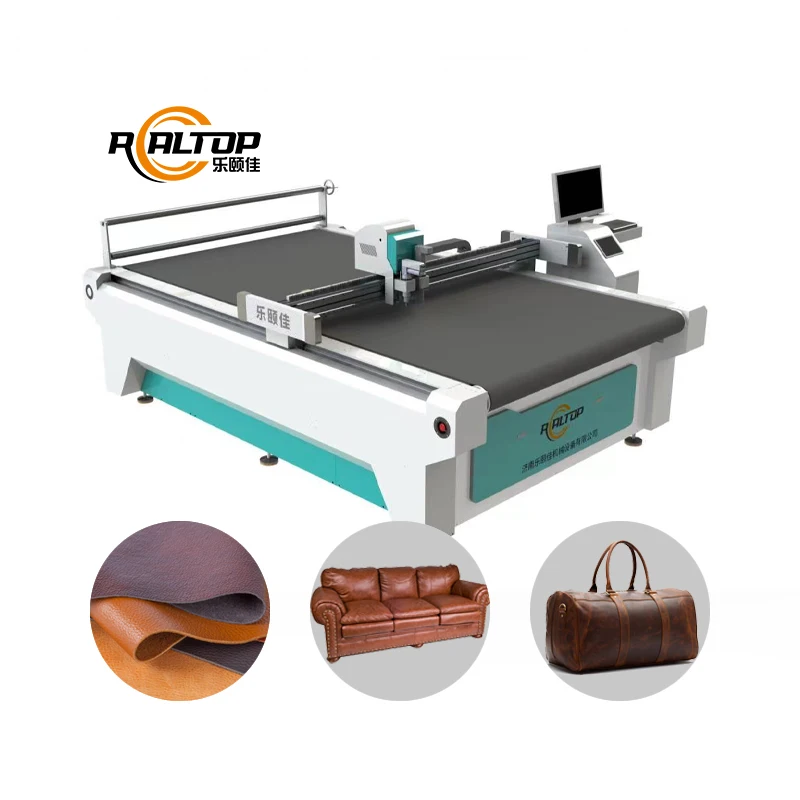
Multifunctional Tool Head Matching — The RT-D2516/RT-S2516 platform supports nine distinct tool head options, allowing leather, foam, and composite processors to configure the cutting action per material rather than forcing a single blade type across incompatible stock.
Technical Specifications
| Parameter | Value |
|---|---|
| Product Type | CNC Oscillating Knife Cutting Machine |
| Model | RT-D2516 / RT-S2516 |
| Working Area | 1600 × 2500 mm |
| Machine Size | 3450 × 2300 × 1250 mm |
| Rated Power | 9 kW |
| Voltage | 380V ±10% |
| Tool Head Type | Swiss imported oscillating knife (vibration full cutting, half cutting, cursor location) |
| Multifunctional Head Options | Pneumatic knife, high-power vibrating knife, circular knife, V-cutting knife, drag knife, creasing wheel, dotted line knife, punching, brush |
| Visual Positioning | Small CCD camera mark point positioning, panoramic camera recognition, projection positioning |
| Translational Velocity | 800–1200 mm/s |
| Cutting Thickness | 20–80 mm (basis not stated in source — confirm material type and density) |
| Repeated Accuracy | ≤0.1 mm |
| Transmission System | Digital servo motor, linear guide, synchronous belt, ball screw |
| Servo Motor | Taiwan Delta |
| Guide Rail | Taiwan Hiwin linear square rail |
| Rack Transmission | High-precision rack |
| Vacuum Table | Aluminum alloy vacuum adsorption with felt belt (composite fiber) |
| Vacuum Pump | 7.5 kW |
| Working Table | Flat working table / conveyor belt (Germany imported) |
| Auto Feeding | Yes (automatic pulling and receiving) |
| Safety Device | Infrared sensors |
| Instruction System | HP-GL compatible format |
| Software | Realtop self-developed software with pattern modules (carton, car foot pad, seat sleeve, clothing fabric) |
| Language Options | English, Russian, Italian, Chinese (customizable) |
| Assembly State | Fully assembled |
| Certification | CE |
Application Suitability
| Application | Material or Output |
|---|---|
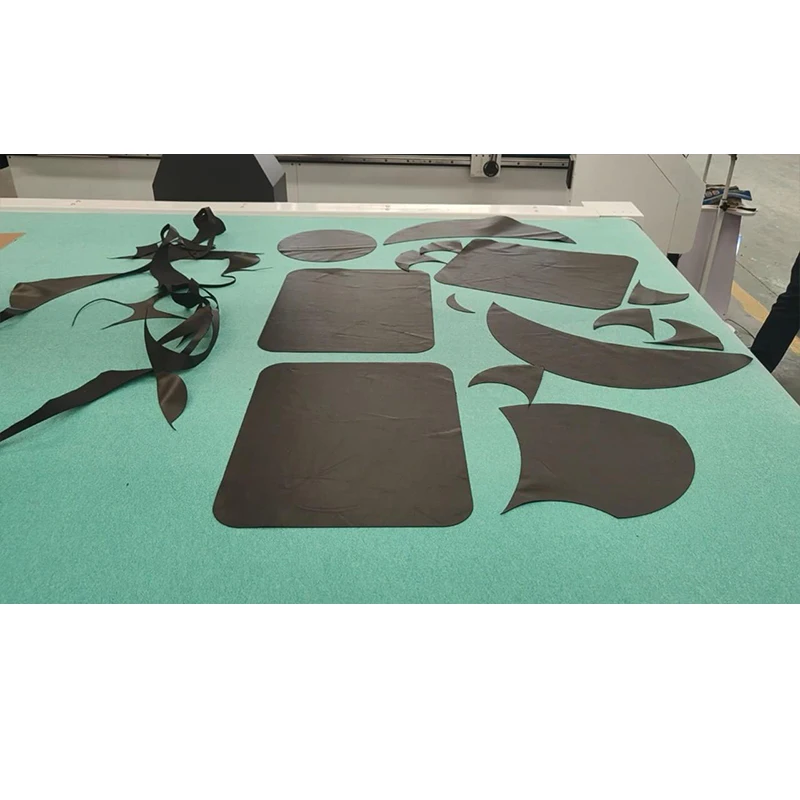
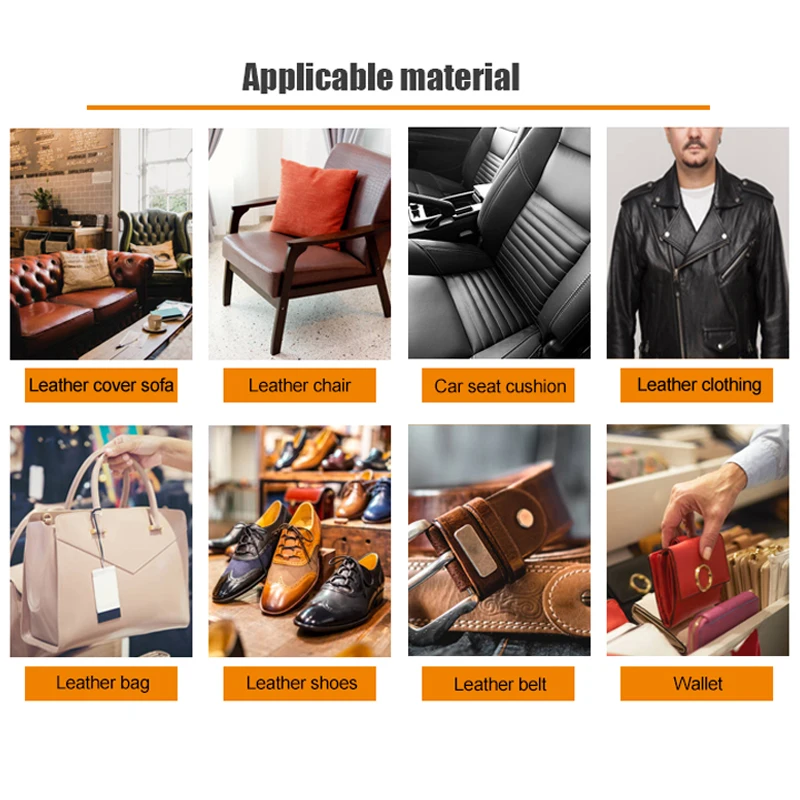
| Leather Goods & Footwear | Genuine and synthetic leather, PU, EVA for uppers, linings and soles |
| Automotive Interior | Car foot pads, seat sleeves, trunk mats from composite and foam-backed textiles |
| Apparel & Luggage | Clothing flexible material, sponge composite leather, fabric for nested cutting |
| Packaging & Sample Making | Carton, corrugated cardboard, plastic box folding and creasing |
| Gasket & Sealing | Rubber, silicon, PTFE, ETFE for industrial sealing pad production |
| Advertising & Signage | Sticker, film, PVC, soft glass for printed contour cutting |
| Sports & Outdoor | Carpet, floor mat, foam composite materials for sporting goods |
Why Working Area Alone Is Not Enough for Material Thickness
Matching the oscillating frequency and blade geometry to the actual material density determines whether a CNC oscillating knife cutting machine for sale delivers clean edges or frayed waste.
I have walked onto factory floors where the buyer selected a flatbed solely by table dimensions, only to find the standard oscillating head could not penetrate stacked synthetic leather at production speed. The edges came out crushed on the bottom layers, forcing two weeks of rework before the tool head was swapped. Thickness capacity shifts dramatically depending on whether you run soft foam or dense gasket rubber, and the vacuum hold-down must compensate for material compressibility. Specifying the blade type, stroke frequency, and vacuum zoning against your actual stock is the only way to prevent ragged cuts and material lift [NEED_CITE: CNC knife cutting material hold-down principles].
Tool Head Versatility Across the RT-D2516/RT-S2516 Platform
The multifunctional head system allows a single workstation to handle oscillating knife, drag knife, creasing wheel, punching, and brush tooling without manual changeover delays. This matters when a packaging sample maker needs to score carton crease lines and cut full contours in one pass, or when a footwear producer switches between genuine leather uppers and foam midsoles across shifts. Each tool option addresses a specific material behavior rather than relying on a compromise blade.
Visual Positioning for Irregular Contour Work
Three-tier vision positioning — CCD mark point, panoramic camera recognition, and projection positioning — gives operators different ways to handle printed and irregular stock. Panoramic recognition suits nested leather hides where natural defects require real-time path adjustment, while CCD mark points track registration prints on roll-fed textiles. Projection positioning overlays the cut path directly onto the material surface, letting operators verify placement before the blade engages on high-value genuine leather hides [NEED_CITE: CCD vision positioning accuracy in industrial cutting].
Transmission Precision and Vacuum Hold-Down
Taiwan Hiwin linear square rails paired with high-precision rack drive and Delta servo motors maintain ≤0.1 mm repeatability across the 1600 × 2500 mm working area. This tolerance matters when cutting interlocking pattern pieces for automotive seat covers where accumulated error across a nest causes assembly misalignment downstream. The 7.5 kW vacuum pump feeds an aluminum alloy table with composite fiber felt belt — the belt material resists blade penetration wear while maintaining suction distribution to small parts that would otherwise lift during high-speed traversal.
Spec Interpretation for Production Realities
Cutting thickness listed at 20–80 mm requires confirmation against your specific material density and layer count, because oscillating knife penetration on soft sponge composite differs fundamentally from dense rubber gasket stock. Translational velocity of 800–1200 mm/s applies to straight cuts on compatible materials; intricate contours with frequent direction changes reduce effective throughput. The HP-GL instruction format ensures compatibility with common CAD nesting workflows, but operators must verify that their existing file formats import without geometry loss. Voltage at 380V ±10% is the default configuration, though facilities running 220V or 440V three-phase supplies need confirmation before the electrical cabinet is built.
The Hidden Cost of Wrong Configuration Choices
Selecting a standard oscillating head for multi-layer synthetic cutting often produces frayed edges on the bottom sheets, requiring manual trimming that negates the automation benefit. Insufficient vacuum zoning on small pattern pieces causes material lift during blade withdrawal, shifting the workpiece and ruining the entire nest. Ignoring voltage confirmation before shipment results in transformer retrofit costs and commissioning delays that push installation back by weeks. Software incompatibility with the buyer’s existing nesting files forces operators to rebuild pattern libraries from scratch [NEED_CITE: CNC cutting software file format interoperability].
Why Source This Platform Here
In-house design covers both knife and laser cutting technologies, so buyers comparing methods for materials like synthetic leather can evaluate edge sealing versus blade finish on the same production floor. Tool head and table configuration are specified per material and production volume rather than offered as fixed packages. CCD camera positioning for printed contour work is tested against the buyer’s actual registration marks before dispatch. Software compatibility is confirmed during the inquiry stage, not discovered during commissioning. Sample cutting on the buyer’s own material provides physical evidence of edge quality and thickness capability before financial commitment [NEED_CITE: industrial cutting sample verification process].
Documentation & Verification
- Machine specification sheet listing confirmed tool head and table configuration per material
- Electrical schematic with voltage and frequency matched to buyer’s facility supply
- Sample cutting report on buyer-supplied material showing edge quality at target thickness
- Software licence and HP-GL file format compatibility note before shipment
- Factory test record documenting repeatability measurement across full working area
- Spare parts list with oscillating blade and felt belt consumable part numbers
Installation, Commissioning & Support
- Floor space must accommodate 3450 × 2300 mm machine footprint plus material staging clearance
- Dedicated 380V three-phase circuit required for combined 9 kW machine and 7.5 kW vacuum pump load
- Machine ships fully assembled; crane access needed for placement on production floor
- First-run calibration verifies ≤0.1 mm repeatability across the 1600 × 2500 mm table
- Operator training covers tool head changeover and CCD mark point teaching workflow
- Oscillating blade and felt belt are primary consumables requiring periodic replacement
What to Provide When Inquiring
To specify the correct configuration, share your material type with typical thickness range and whether you run single-layer or stacked cutting. Confirm your facility voltage and frequency, plus the control interface language your operators require. If you use existing nesting software or specific file formats, provide sample files so compatibility can be verified before order placement.
Frequently Asked Questions
Q: How do I choose between oscillating knife and laser cutting for my material?
A: Knife cutting produces no heat-affected zone, preserving material properties on foam, rubber, and multi-layer textiles where laser would melt or fuse edges. Laser suits applications requiring sealed edges on synthetics or engraving on wood and acrylic. The platform supports both technologies, allowing comparison on your actual stock.
Q: Which tool head handles my specific material thickness?
A: Swiss imported oscillating knife covers general leather and fabric, while high-power vibrating knife addresses denser composites. Pneumatic knife suits thicker foam, and drag knife handles vinyl and thin gasket material. Tool selection is confirmed against sample material before configuration is finalized.
Q: What CCD mark types can the vision system track at production speed?
A: Small CCD camera tracks printed registration marks on roll-fed textiles, while panoramic recognition handles irregular leather hides with natural defects. Tracking capability depends on mark contrast, size, and print quality — sample testing confirms reliable detection before commitment.
Q: Is voltage and control language confirmed before shipment?
A: Standard configuration is 380V ±10% with English, Russian, Italian, or Chinese interface. Other voltages and languages are customizable but must be specified during order confirmation. Electrical schematic is provided for verification against facility supply before the control cabinet is assembled.
Q: What software formats does the system accept for pattern import?
A: The system supports HP-GL compatible format and imports common CAD nesting files. Existing workflow compatibility is verified during inquiry using sample files from your production library, preventing format conversion issues during commissioning.
Multifunctional Tool Head Matching — The RT-D2516/RT-S2516 platform supports nine distinct tool head options, allowing leather, foam, and composite processors to configure the cutting action per material rather than forcing a single blade type across incompatible stock.
Technical Specifications
| Parameter | Value |
|---|---|
| Product Type | CNC Oscillating Knife Cutting Machine |
| Model | RT-D2516 / RT-S2516 |
| Working Area | 1600 × 2500 mm |
| Machine Size | 3450 × 2300 × 1250 mm |
| Rated Power | 9 kW |
| Voltage | 380V ±10% |
| Tool Head Type | Swiss imported oscillating knife (vibration full cutting, half cutting, cursor location) |
| Multifunctional Head Options | Pneumatic knife, high-power vibrating knife, circular knife, V-cutting knife, drag knife, creasing wheel, dotted line knife, punching, brush |
| Visual Positioning | Small CCD camera mark point positioning, panoramic camera recognition, projection positioning |
| Translational Velocity | 800–1200 mm/s |
| Cutting Thickness | 20–80 mm (basis not stated in source — confirm material type and density) |
| Repeated Accuracy | ≤0.1 mm |
| Transmission System | Digital servo motor, linear guide, synchronous belt, ball screw |
| Servo Motor | Taiwan Delta |
| Guide Rail | Taiwan Hiwin linear square rail |
| Rack Transmission | High-precision rack |
| Vacuum Table | Aluminum alloy vacuum adsorption with felt belt (composite fiber) |
| Vacuum Pump | 7.5 kW |
| Working Table | Flat working table / conveyor belt (Germany imported) |
| Auto Feeding | Yes (automatic pulling and receiving) |
| Safety Device | Infrared sensors |
| Instruction System | HP-GL compatible format |
| Software | Realtop self-developed software with pattern modules (carton, car foot pad, seat sleeve, clothing fabric) |
| Language Options | English, Russian, Italian, Chinese (customizable) |
| Assembly State | Fully assembled |
| Certification | CE |
Application Suitability
| Application | Material or Output |
|---|---|
| Leather Goods & Footwear | Genuine and synthetic leather, PU, EVA for uppers, linings and soles |
| Automotive Interior | Car foot pads, seat sleeves, trunk mats from composite and foam-backed textiles |
| Apparel & Luggage | Clothing flexible material, sponge composite leather, fabric for nested cutting |
| Packaging & Sample Making | Carton, corrugated cardboard, plastic box folding and creasing |
| Gasket & Sealing | Rubber, silicon, PTFE, ETFE for industrial sealing pad production |
| Advertising & Signage | Sticker, film, PVC, soft glass for printed contour cutting |
| Sports & Outdoor | Carpet, floor mat, foam composite materials for sporting goods |
Why Working Area Alone Is Not Enough for Material Thickness
Matching the oscillating frequency and blade geometry to the actual material density determines whether a CNC oscillating knife cutting machine for sale delivers clean edges or frayed waste.
I have walked onto factory floors where the buyer selected a flatbed solely by table dimensions, only to find the standard oscillating head could not penetrate stacked synthetic leather at production speed. The edges came out crushed on the bottom layers, forcing two weeks of rework before the tool head was swapped. Thickness capacity shifts dramatically depending on whether you run soft foam or dense gasket rubber, and the vacuum hold-down must compensate for material compressibility. Specifying the blade type, stroke frequency, and vacuum zoning against your actual stock is the only way to prevent ragged cuts and material lift [NEED_CITE: CNC knife cutting material hold-down principles].
Tool Head Versatility Across the RT-D2516/RT-S2516 Platform
The multifunctional head system allows a single workstation to handle oscillating knife, drag knife, creasing wheel, punching, and brush tooling without manual changeover delays. This matters when a packaging sample maker needs to score carton crease lines and cut full contours in one pass, or when a footwear producer switches between genuine leather uppers and foam midsoles across shifts. Each tool option addresses a specific material behavior rather than relying on a compromise blade.
Visual Positioning for Irregular Contour Work
Three-tier vision positioning — CCD mark point, panoramic camera recognition, and projection positioning — gives operators different ways to handle printed and irregular stock. Panoramic recognition suits nested leather hides where natural defects require real-time path adjustment, while CCD mark points track registration prints on roll-fed textiles. Projection positioning overlays the cut path directly onto the material surface, letting operators verify placement before the blade engages on high-value genuine leather hides [NEED_CITE: CCD vision positioning accuracy in industrial cutting].
Transmission Precision and Vacuum Hold-Down
Taiwan Hiwin linear square rails paired with high-precision rack drive and Delta servo motors maintain ≤0.1 mm repeatability across the 1600 × 2500 mm working area. This tolerance matters when cutting interlocking pattern pieces for automotive seat covers where accumulated error across a nest causes assembly misalignment downstream. The 7.5 kW vacuum pump feeds an aluminum alloy table with composite fiber felt belt — the belt material resists blade penetration wear while maintaining suction distribution to small parts that would otherwise lift during high-speed traversal.
Spec Interpretation for Production Realities
Cutting thickness listed at 20–80 mm requires confirmation against your specific material density and layer count, because oscillating knife penetration on soft sponge composite differs fundamentally from dense rubber gasket stock. Translational velocity of 800–1200 mm/s applies to straight cuts on compatible materials; intricate contours with frequent direction changes reduce effective throughput. The HP-GL instruction format ensures compatibility with common CAD nesting workflows, but operators must verify that their existing file formats import without geometry loss. Voltage at 380V ±10% is the default configuration, though facilities running 220V or 440V three-phase supplies need confirmation before the electrical cabinet is built.
The Hidden Cost of Wrong Configuration Choices
Selecting a standard oscillating head for multi-layer synthetic cutting often produces frayed edges on the bottom sheets, requiring manual trimming that negates the automation benefit. Insufficient vacuum zoning on small pattern pieces causes material lift during blade withdrawal, shifting the workpiece and ruining the entire nest. Ignoring voltage confirmation before shipment results in transformer retrofit costs and commissioning delays that push installation back by weeks. Software incompatibility with the buyer’s existing nesting files forces operators to rebuild pattern libraries from scratch [NEED_CITE: CNC cutting software file format interoperability].
Why Source This Platform Here
In-house design covers both knife and laser cutting technologies, so buyers comparing methods for materials like synthetic leather can evaluate edge sealing versus blade finish on the same production floor. Tool head and table configuration are specified per material and production volume rather than offered as fixed packages. CCD camera positioning for printed contour work is tested against the buyer’s actual registration marks before dispatch. Software compatibility is confirmed during the inquiry stage, not discovered during commissioning. Sample cutting on the buyer’s own material provides physical evidence of edge quality and thickness capability before financial commitment [NEED_CITE: industrial cutting sample verification process].
Documentation & Verification
- Machine specification sheet listing confirmed tool head and table configuration per material
- Electrical schematic with voltage and frequency matched to buyer’s facility supply
- Sample cutting report on buyer-supplied material showing edge quality at target thickness
- Software licence and HP-GL file format compatibility note before shipment
- Factory test record documenting repeatability measurement across full working area
- Spare parts list with oscillating blade and felt belt consumable part numbers
Installation, Commissioning & Support
- Floor space must accommodate 3450 × 2300 mm machine footprint plus material staging clearance
- Dedicated 380V three-phase circuit required for combined 9 kW machine and 7.5 kW vacuum pump load
- Machine ships fully assembled; crane access needed for placement on production floor
- First-run calibration verifies ≤0.1 mm repeatability across the 1600 × 2500 mm table
- Operator training covers tool head changeover and CCD mark point teaching workflow
- Oscillating blade and felt belt are primary consumables requiring periodic replacement
What to Provide When Inquiring
To specify the correct configuration, share your material type with typical thickness range and whether you run single-layer or stacked cutting. Confirm your facility voltage and frequency, plus the control interface language your operators require. If you use existing nesting software or specific file formats, provide sample files so compatibility can be verified before order placement.
Frequently Asked Questions
Q: How do I choose between oscillating knife and laser cutting for my material?
A: Knife cutting produces no heat-affected zone, preserving material properties on foam, rubber, and multi-layer textiles where laser would melt or fuse edges. Laser suits applications requiring sealed edges on synthetics or engraving on wood and acrylic. The platform supports both technologies, allowing comparison on your actual stock.
Q: Which tool head handles my specific material thickness?
A: Swiss imported oscillating knife covers general leather and fabric, while high-power vibrating knife addresses denser composites. Pneumatic knife suits thicker foam, and drag knife handles vinyl and thin gasket material. Tool selection is confirmed against sample material before configuration is finalized.
Q: What CCD mark types can the vision system track at production speed?
A: Small CCD camera tracks printed registration marks on roll-fed textiles, while panoramic recognition handles irregular leather hides with natural defects. Tracking capability depends on mark contrast, size, and print quality — sample testing confirms reliable detection before commitment.
Q: Is voltage and control language confirmed before shipment?
A: Standard configuration is 380V ±10% with English, Russian, Italian, or Chinese interface. Other voltages and languages are customizable but must be specified during order confirmation. Electrical schematic is provided for verification against facility supply before the control cabinet is assembled.
Q: What software formats does the system accept for pattern import?
A: The system supports HP-GL compatible format and imports common CAD nesting files. Existing workflow compatibility is verified during inquiry using sample files from your production library, preventing format conversion issues during commissioning.










商品评价
There are no reviews yet.