



Fast Delivery
Quick, reliable shipping to any location.

Free & easy returns
Return this item by mail or in store within 90 days for a full refund.
Configurable Tooling Architecture — A single oscillating knife platform adapted through head selection, vacuum zoning and software rather than forcing one cutting method across every board grade.
Technical Specifications
| Parameter | Value |
|---|---|
| Model | RT-D2516 / RT-S2516 |
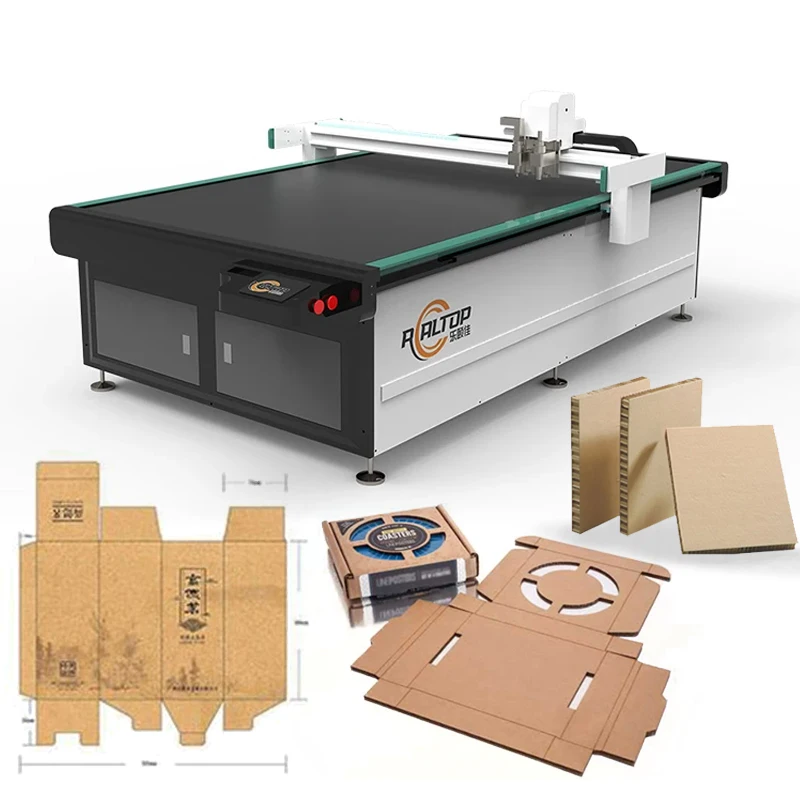
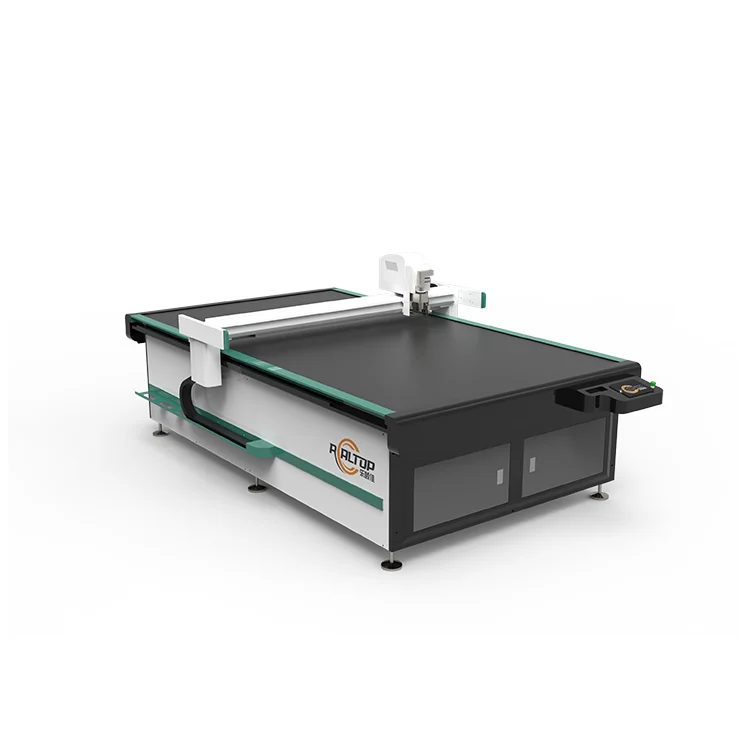
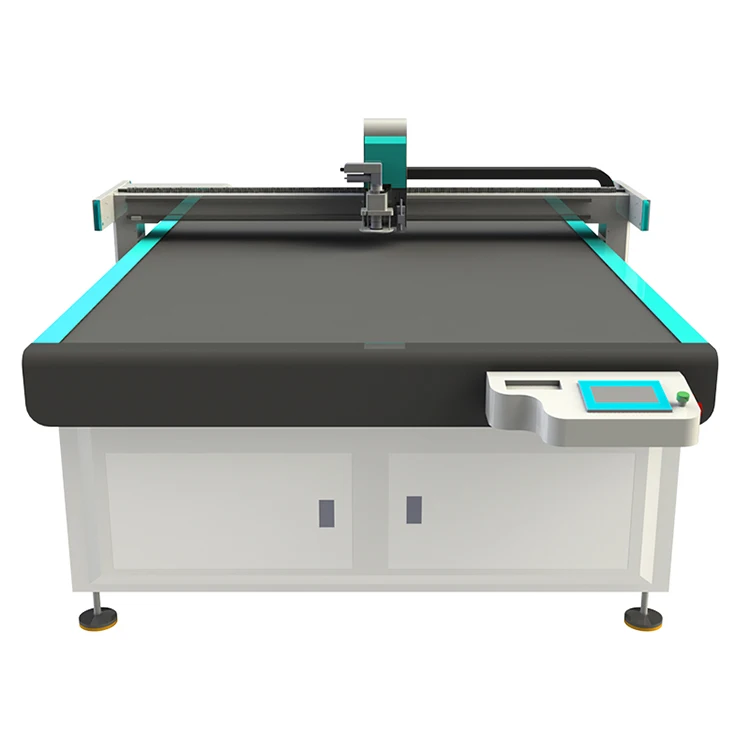
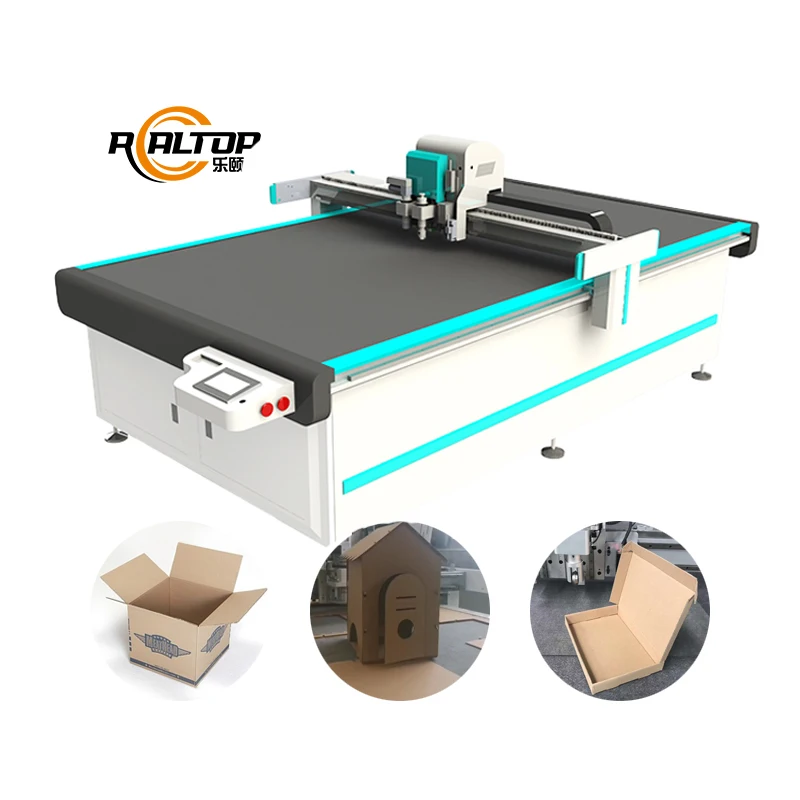
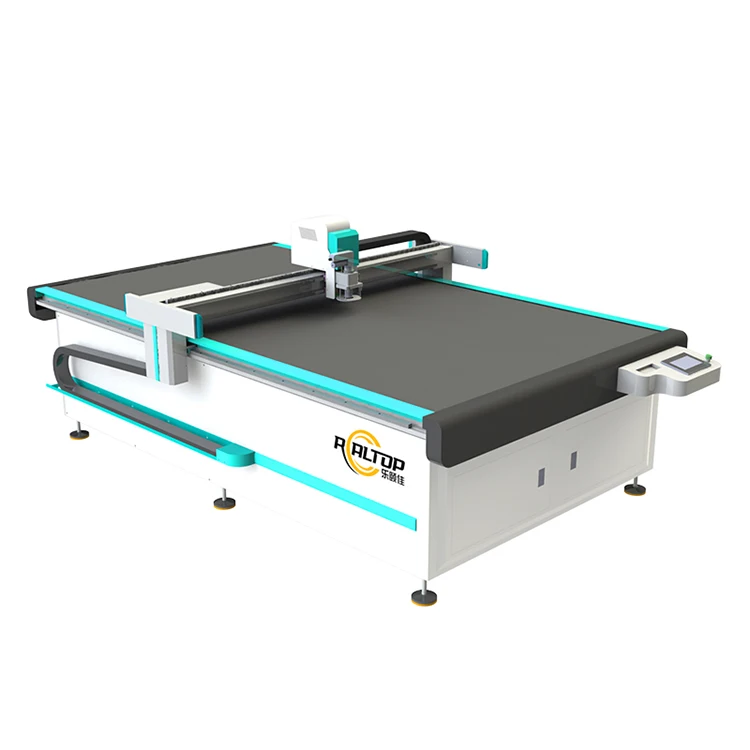
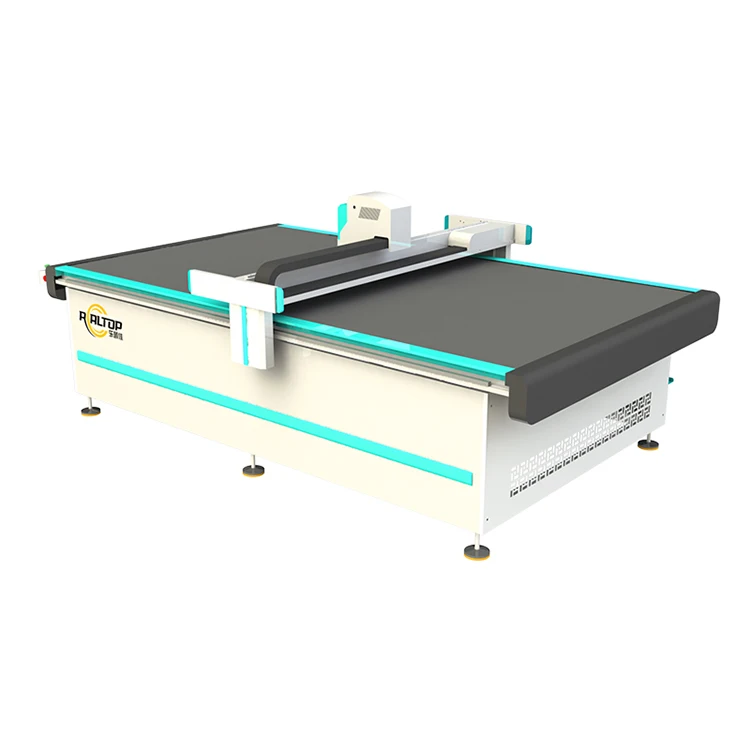
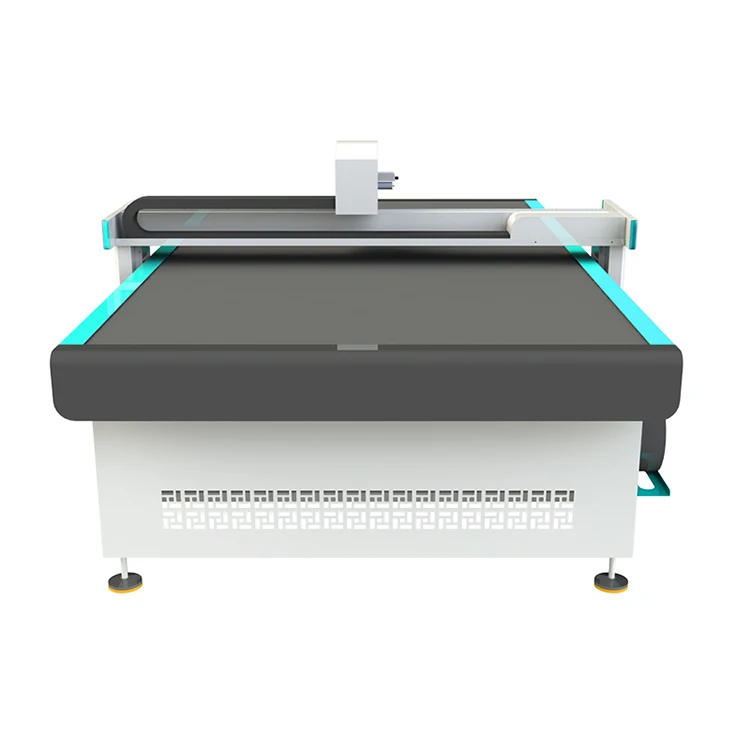
| Product Type | CNC Oscillating Knife Carton Cutting Machine |
| Working Area | 1600 × 2500 mm |
| Machine Footprint | 3450 × 2300 × 1250 mm |
| Rated Power | 9 kW |
| Vacuum Pump Power | 7.5 kW |
| Voltage | 380V ±10% (50Hz/60Hz to be confirmed) |
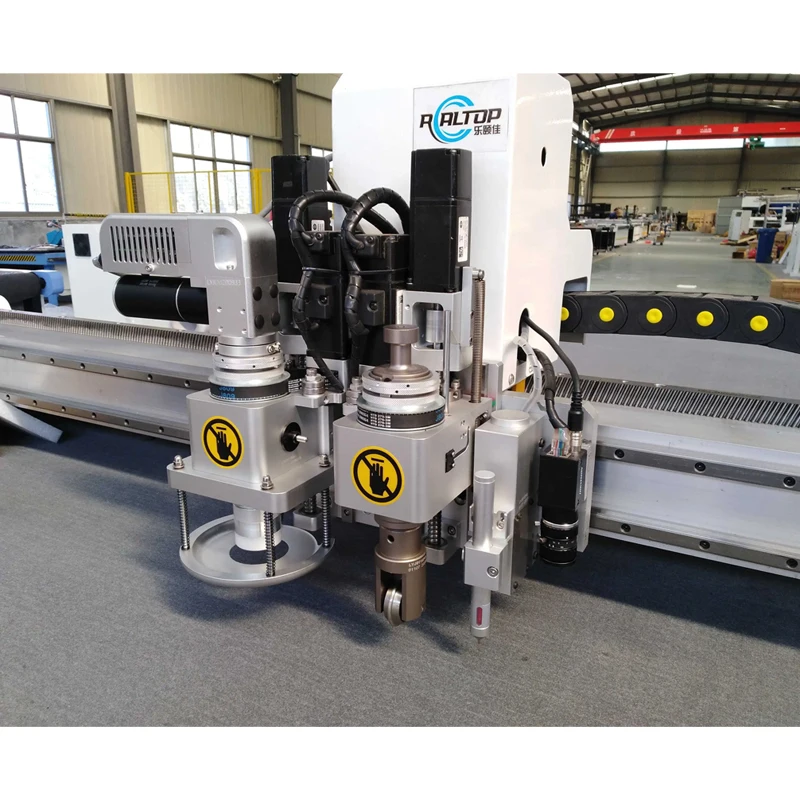
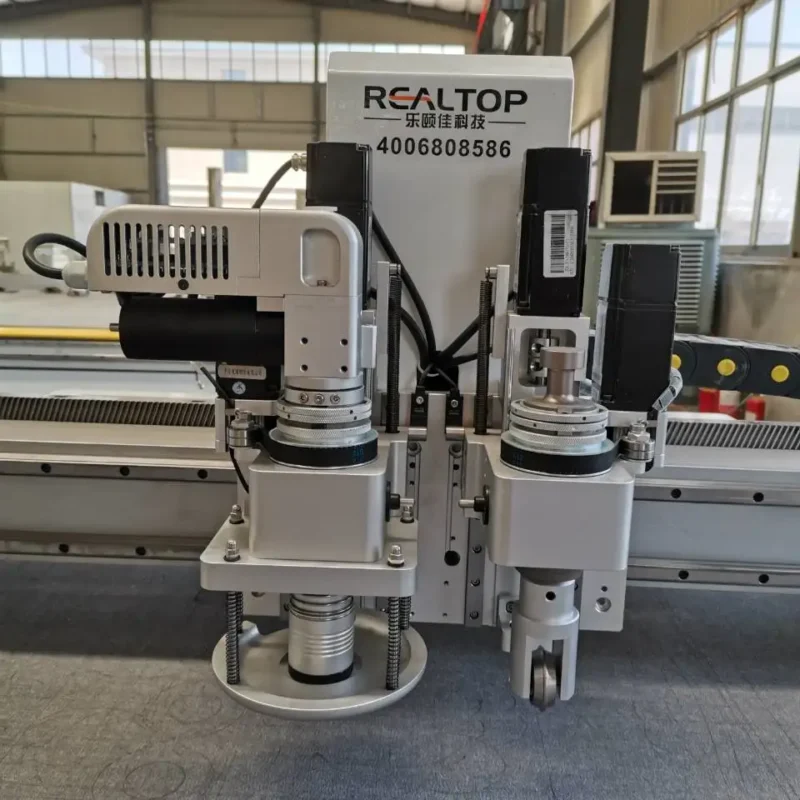
| Tool Head | Swiss imported oscillating knife (full cut, half cut, cursor location) |
| Table Surface | Aluminum alloy honeycomb vacuum platform with zoned follow-up suction |
| Maximum Cutting Thickness | ≤100 mm (varies with material density — confirm block format and flute grade) |
| Translational Velocity | 800–1200 mm/s |
| Cutting Speed | 200–800 mm/s (according to different cutting materials) |
| Repeatability | ≤0.1 mm |
| Transmission | Taiwan Delta digital servo motor, Taiwan Hiwin linear guide, synchronous belt, ball screw |
| Control Format | HP-GL compatible |
| Conveyor Belt | Germany imported, with auto feeding system |
| Safety Devices | Infrared sensors, emergency stop |
| Frame Construction | Welded thick square seamless steel structure, high-temperature treated |
| Software | Professional carton nesting and cutting design software included; multi-format file import |
| Interface Languages | English, Russian, Italian, Chinese (others on request) |
| Warranty | 1 year (free replacement parts; buyer covers shipping and on-site travel costs) |
Application Suitability
| Application | Material or Output |
|---|---|
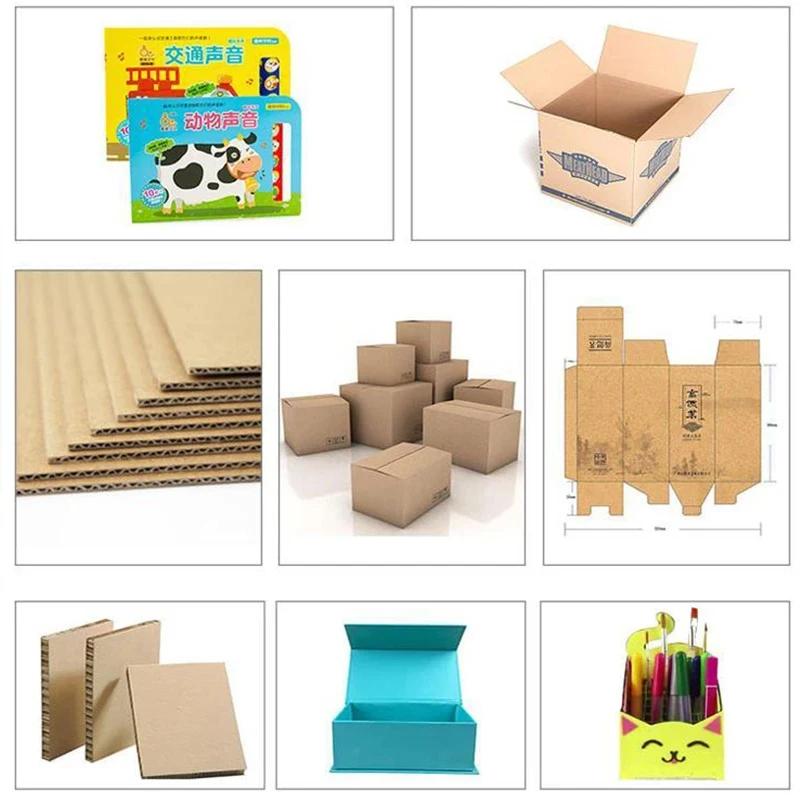
| Packaging sample making | Corrugated board across flute grades, greyboard, honeycomb paper board |
| Large-format carton prototyping | Electrical appliance cartons, express paper boxes, industrial shipping containers |
| Short-run retail packaging | Snack food boxes, high-end gift packaging, cosmetics cartons |
| Sticker and label contour cutting | Adhesive vinyl, printed sticker sheets, die-cut labels without tooling |
| Signage and POS display | Foam board, cardboard displays, business cards, hang tags |
| Flexible material processing | Leather, PVC, soft glass, silicone, rubber, sponge composite leather, foam |
Why the Wrong Tool Head Ruins a Perfectly Good CNC Carton Cutting Machine
Specifying on working area alone leaves the actual cutting method to chance, and chance is expensive when a full batch of sample cartons comes out with crushed edges.
I remember a carton sample shop in the Yangtze River Delta region that took delivery of a flatbed cutter spec’d entirely by bed size. The corrugated board they ran daily was noticeably heavier than the samples they had initially quoted. The oscillating knife couldn’t penetrate the flute depth cleanly, the creasing wheel left shallow impression marks, and every sample they sent to their clients got rejected. [NEED_CITE: tool head selection for corrugated flute grades in digital cutting] That situation repeats across the packaging sector because the conversation stops at dimensions instead of continuing through to material behaviour. A 1600 × 2500 mm bed only matters if the tooling on top of it actually matches the board you are feeding.
Mapping the Complete Flatbed Cutter Lineup
From a full-catalogue standpoint, the RT-D2516 and RT-S2516 occupy the packaging and sample-making position within the wider Realtop range. Buyers surveying options before committing to a method will find these models configured around the oscillating knife principle, where a high-frequency vibrating blade slices through corrugated flutes and fibre-based stocks without the burnished edges or thermal distortion that a CO2 laser introduces to paper products. This distinction matters because carton and packaging converters evaluating a CNC carton cutting machine manufacturer need to see where knife cutting ends and laser cutting begins, rather than assuming one technology covers every substrate on their shop floor.
How Knife, Laser and Combined Platforms Relate
When a production facility handles both printed packaging samples and acrylic or wood-based display components, the full catalogue reveals which machine family carries which workload. The oscillating knife units sit beside CO2 laser engravers and fibre laser cutters in the line, each addressing materials that the others cannot process cleanly. [NEED_CITE: comparative suitability of knife versus laser for paper-based packaging] A buyer comparing the complete range gains clarity on whether a single machine can stretch across their material list, or whether two specialised platforms yield better edge quality across corrugated board on one side and acrylic on the other.
Reading the Specifications Beyond the Bed Size
The Swiss imported oscillating knife head performs full cutting, half cutting and cursor location in one setup, which means a sample maker can crease a fold line and cut the perimeter without a tool change. The aluminum alloy honeycomb vacuum platform uses zoned follow-up suction, so small carton parts stay flat even when the cutting path releases internal tension from the flute structure. Taiwan Delta servo motors paired with Hiwin linear guides maintain repeatability within 0.1 mm across the full 1600 × 2500 mm travel, preventing cumulative drift that would misalign crease lines from cut edges. The included carton nesting software accepts multiple file formats and supports HP-GL compatible instruction sets, letting operators feed artwork from common design packages without rebuilding geometry in a proprietary environment.
The Cost of Skipping the Material Trial
Buyers who approve a configuration without seeing their own board run through the machine often discover problems after installation. [NEED_CITE: importance of pre-purchase sample cutting tests for packaging machinery] A vacuum table with insufficient zoning lets small carton lift-offs drift during the final perimeter cut, producing registration errors that only appear once production speed is reached. Software that cannot import a buyer’s existing file format forces operators to redraw artwork, adding hours to every sample job. These are not defects in the machine — they are gaps in the specification process that could have been closed with a single test cut before the order was confirmed.
Why Buyers Survey the Range Here
In-house design and production cover both knife and laser technologies, so a buyer comparing methods finds honest guidance on which cutting principle fits their material rather than being steered toward a single product line. Tool head and table configurations are specified per board grade and production volume, not quoted as a one-size default. CCD camera positioning options are confirmed against the buyer’s print registration requirements before commitment. [NEED_CITE: voltage and plug type confirmation procedures for industrial machinery exports] Software compatibility and control language are verified at the quotation stage, and sample cutting on the buyer’s own corrugated or sticker material is available before any purchase decision is finalised.
Documentation & Verification
- Machine specification sheet listing exact tool head and vacuum zoning matched to your board flute
- Electrical schematic with voltage and frequency confirmation for your target market grid
- Software licence certificate and file format compatibility note for your existing design workflow
- Sample cutting report produced on your own corrugated or sticker stock before shipment
- Factory test record documenting repeatability and edge quality across your specified material range
- Packing photographs showing frame, table surface and head assembly condition prior to crating
Installation, Commissioning & Support
- Foundation must support the 3450 × 2300 × 1250 mm footprint with level tolerance across the honeycomb table
- Dedicated 380V circuit rated for the combined 9 kW machine and 7.5 kW vacuum pump draw
- Machine ships fully assembled; confirm doorway and crane access at your facility before dispatch
- First-run calibration covers servo tuning, vacuum zone mapping and tool offset on your actual board
- Operator training includes nesting software workflow, HP-GL file import and blade change procedures
- Spare parts list covers oscillating knife blades, vacuum seals and conveyor belt segments
Preparing Your Enquiry
Share your most demanding corrugated flute grade, maximum board thickness and the smallest part size in your typical sample nest. Confirm the voltage and frequency at your facility along with the control language your operators will use. If you run an existing CAD or nesting workflow, list the file formats you need the software to accept so compatibility is confirmed before the quotation stage.
Frequently Asked Questions
Q: How do I decide between a knife cutter and a laser for my carton and sticker work?
A: Knife cutting suits corrugated board, greyboard and adhesive vinyl where thermal damage must be avoided. Laser cutting handles acrylic, wood and textile cleanly but chars paper-based stocks. The full catalogue covers both families so you can match the method to the material rather than compromise. Request sample cuts on your actual substrates to compare edge quality side by side before choosing.
Q: Which working area and tool head configuration fits my board flute and part size?
A: The 1600 × 2500 mm bed covers most packaging sample formats. Tool head selection depends on your thickest flute grade and whether you need creasing, half cutting or full cutting. Zoned vacuum adsorption is configured around your smallest part dimensions to prevent lift during cutting. Share your board samples so the exact head and zone layout is confirmed before build.
Q: What file formats does the included nesting software support and how does it connect to my design tools?
A: The software accepts multiple industry-standard file formats and processes HP-GL compatible instructions. It includes carton-specific nesting tools and can be set to your preferred interface language. If you use a specific CAD package, share the export formats so compatibility is verified at quotation stage rather than discovered after installation.
Q: How are voltage, plug type and control language handled for different export markets?
A: Voltage and frequency are confirmed during the quotation process to match your local grid. Plug type is specified per country standard, and the control interface language is set before shipment — available options include English, Russian, Italian and Chinese with additional languages on request. The electrical schematic is provided for your local electrician’s reference before the machine arrives.
Q: Can I see a sample cut on my own material before ordering?
A: Yes. Send your actual corrugated board, sticker stock or flexible material to the factory and receive a sample cutting report documenting edge quality, crease depth and cutting speed achieved. This test confirms the tool head, vacuum configuration and blade selection before any purchase commitment is made.
Configurable Tooling Architecture — A single oscillating knife platform adapted through head selection, vacuum zoning and software rather than forcing one cutting method across every board grade.
Technical Specifications
| Parameter | Value |
|---|---|
| Model | RT-D2516 / RT-S2516 |
| Product Type | CNC Oscillating Knife Carton Cutting Machine |
| Working Area | 1600 × 2500 mm |
| Machine Footprint | 3450 × 2300 × 1250 mm |
| Rated Power | 9 kW |
| Vacuum Pump Power | 7.5 kW |
| Voltage | 380V ±10% (50Hz/60Hz to be confirmed) |
| Tool Head | Swiss imported oscillating knife (full cut, half cut, cursor location) |
| Table Surface | Aluminum alloy honeycomb vacuum platform with zoned follow-up suction |
| Maximum Cutting Thickness | ≤100 mm (varies with material density — confirm block format and flute grade) |
| Translational Velocity | 800–1200 mm/s |
| Cutting Speed | 200–800 mm/s (according to different cutting materials) |
| Repeatability | ≤0.1 mm |
| Transmission | Taiwan Delta digital servo motor, Taiwan Hiwin linear guide, synchronous belt, ball screw |
| Control Format | HP-GL compatible |
| Conveyor Belt | Germany imported, with auto feeding system |
| Safety Devices | Infrared sensors, emergency stop |
| Frame Construction | Welded thick square seamless steel structure, high-temperature treated |
| Software | Professional carton nesting and cutting design software included; multi-format file import |
| Interface Languages | English, Russian, Italian, Chinese (others on request) |
| Warranty | 1 year (free replacement parts; buyer covers shipping and on-site travel costs) |
Application Suitability
| Application | Material or Output |
|---|---|
| Packaging sample making | Corrugated board across flute grades, greyboard, honeycomb paper board |
| Large-format carton prototyping | Electrical appliance cartons, express paper boxes, industrial shipping containers |
| Short-run retail packaging | Snack food boxes, high-end gift packaging, cosmetics cartons |
| Sticker and label contour cutting | Adhesive vinyl, printed sticker sheets, die-cut labels without tooling |
| Signage and POS display | Foam board, cardboard displays, business cards, hang tags |
| Flexible material processing | Leather, PVC, soft glass, silicone, rubber, sponge composite leather, foam |
Why the Wrong Tool Head Ruins a Perfectly Good CNC Carton Cutting Machine
Specifying on working area alone leaves the actual cutting method to chance, and chance is expensive when a full batch of sample cartons comes out with crushed edges.
I remember a carton sample shop in the Yangtze River Delta region that took delivery of a flatbed cutter spec’d entirely by bed size. The corrugated board they ran daily was noticeably heavier than the samples they had initially quoted. The oscillating knife couldn’t penetrate the flute depth cleanly, the creasing wheel left shallow impression marks, and every sample they sent to their clients got rejected. [NEED_CITE: tool head selection for corrugated flute grades in digital cutting] That situation repeats across the packaging sector because the conversation stops at dimensions instead of continuing through to material behaviour. A 1600 × 2500 mm bed only matters if the tooling on top of it actually matches the board you are feeding.
Mapping the Complete Flatbed Cutter Lineup
From a full-catalogue standpoint, the RT-D2516 and RT-S2516 occupy the packaging and sample-making position within the wider Realtop range. Buyers surveying options before committing to a method will find these models configured around the oscillating knife principle, where a high-frequency vibrating blade slices through corrugated flutes and fibre-based stocks without the burnished edges or thermal distortion that a CO2 laser introduces to paper products. This distinction matters because carton and packaging converters evaluating a CNC carton cutting machine manufacturer need to see where knife cutting ends and laser cutting begins, rather than assuming one technology covers every substrate on their shop floor.
How Knife, Laser and Combined Platforms Relate
When a production facility handles both printed packaging samples and acrylic or wood-based display components, the full catalogue reveals which machine family carries which workload. The oscillating knife units sit beside CO2 laser engravers and fibre laser cutters in the line, each addressing materials that the others cannot process cleanly. [NEED_CITE: comparative suitability of knife versus laser for paper-based packaging] A buyer comparing the complete range gains clarity on whether a single machine can stretch across their material list, or whether two specialised platforms yield better edge quality across corrugated board on one side and acrylic on the other.
Reading the Specifications Beyond the Bed Size
The Swiss imported oscillating knife head performs full cutting, half cutting and cursor location in one setup, which means a sample maker can crease a fold line and cut the perimeter without a tool change. The aluminum alloy honeycomb vacuum platform uses zoned follow-up suction, so small carton parts stay flat even when the cutting path releases internal tension from the flute structure. Taiwan Delta servo motors paired with Hiwin linear guides maintain repeatability within 0.1 mm across the full 1600 × 2500 mm travel, preventing cumulative drift that would misalign crease lines from cut edges. The included carton nesting software accepts multiple file formats and supports HP-GL compatible instruction sets, letting operators feed artwork from common design packages without rebuilding geometry in a proprietary environment.
The Cost of Skipping the Material Trial
Buyers who approve a configuration without seeing their own board run through the machine often discover problems after installation. [NEED_CITE: importance of pre-purchase sample cutting tests for packaging machinery] A vacuum table with insufficient zoning lets small carton lift-offs drift during the final perimeter cut, producing registration errors that only appear once production speed is reached. Software that cannot import a buyer’s existing file format forces operators to redraw artwork, adding hours to every sample job. These are not defects in the machine — they are gaps in the specification process that could have been closed with a single test cut before the order was confirmed.
Why Buyers Survey the Range Here
In-house design and production cover both knife and laser technologies, so a buyer comparing methods finds honest guidance on which cutting principle fits their material rather than being steered toward a single product line. Tool head and table configurations are specified per board grade and production volume, not quoted as a one-size default. CCD camera positioning options are confirmed against the buyer’s print registration requirements before commitment. [NEED_CITE: voltage and plug type confirmation procedures for industrial machinery exports] Software compatibility and control language are verified at the quotation stage, and sample cutting on the buyer’s own corrugated or sticker material is available before any purchase decision is finalised.
Documentation & Verification
- Machine specification sheet listing exact tool head and vacuum zoning matched to your board flute
- Electrical schematic with voltage and frequency confirmation for your target market grid
- Software licence certificate and file format compatibility note for your existing design workflow
- Sample cutting report produced on your own corrugated or sticker stock before shipment
- Factory test record documenting repeatability and edge quality across your specified material range
- Packing photographs showing frame, table surface and head assembly condition prior to crating
Installation, Commissioning & Support
- Foundation must support the 3450 × 2300 × 1250 mm footprint with level tolerance across the honeycomb table
- Dedicated 380V circuit rated for the combined 9 kW machine and 7.5 kW vacuum pump draw
- Machine ships fully assembled; confirm doorway and crane access at your facility before dispatch
- First-run calibration covers servo tuning, vacuum zone mapping and tool offset on your actual board
- Operator training includes nesting software workflow, HP-GL file import and blade change procedures
- Spare parts list covers oscillating knife blades, vacuum seals and conveyor belt segments
Preparing Your Enquiry
Share your most demanding corrugated flute grade, maximum board thickness and the smallest part size in your typical sample nest. Confirm the voltage and frequency at your facility along with the control language your operators will use. If you run an existing CAD or nesting workflow, list the file formats you need the software to accept so compatibility is confirmed before the quotation stage.
Frequently Asked Questions
Q: How do I decide between a knife cutter and a laser for my carton and sticker work?
A: Knife cutting suits corrugated board, greyboard and adhesive vinyl where thermal damage must be avoided. Laser cutting handles acrylic, wood and textile cleanly but chars paper-based stocks. The full catalogue covers both families so you can match the method to the material rather than compromise. Request sample cuts on your actual substrates to compare edge quality side by side before choosing.
Q: Which working area and tool head configuration fits my board flute and part size?
A: The 1600 × 2500 mm bed covers most packaging sample formats. Tool head selection depends on your thickest flute grade and whether you need creasing, half cutting or full cutting. Zoned vacuum adsorption is configured around your smallest part dimensions to prevent lift during cutting. Share your board samples so the exact head and zone layout is confirmed before build.
Q: What file formats does the included nesting software support and how does it connect to my design tools?
A: The software accepts multiple industry-standard file formats and processes HP-GL compatible instructions. It includes carton-specific nesting tools and can be set to your preferred interface language. If you use a specific CAD package, share the export formats so compatibility is verified at quotation stage rather than discovered after installation.
Q: How are voltage, plug type and control language handled for different export markets?
A: Voltage and frequency are confirmed during the quotation process to match your local grid. Plug type is specified per country standard, and the control interface language is set before shipment — available options include English, Russian, Italian and Chinese with additional languages on request. The electrical schematic is provided for your local electrician’s reference before the machine arrives.
Q: Can I see a sample cut on my own material before ordering?
A: Yes. Send your actual corrugated board, sticker stock or flexible material to the factory and receive a sample cutting report documenting edge quality, crease depth and cutting speed achieved. This test confirms the tool head, vacuum configuration and blade selection before any purchase commitment is made.
商品评价
There are no reviews yet.