

Fast Delivery
Quick, reliable shipping to any location.

Free & easy returns
Return this item by mail or in store within 90 days for a full refund.
Single-Source Cutting Range — Match oscillating knife or laser method to your material on one platform, avoiding forced compromises across mixed production jobs.
Technical Specifications
| Parameter | Value |
|---|---|
| Model | RT-D2516 / RT-S2516 |
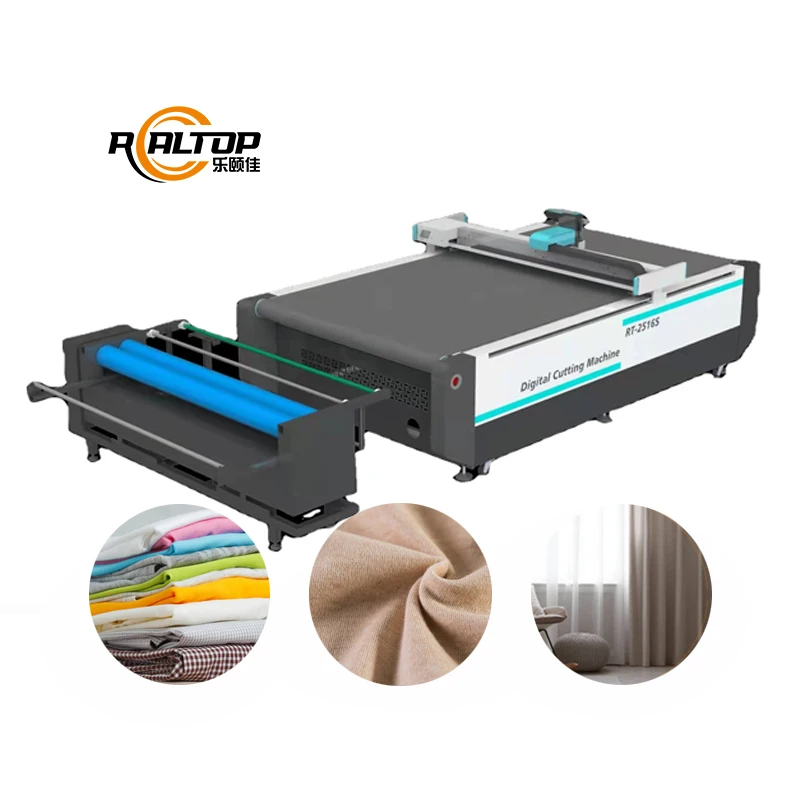
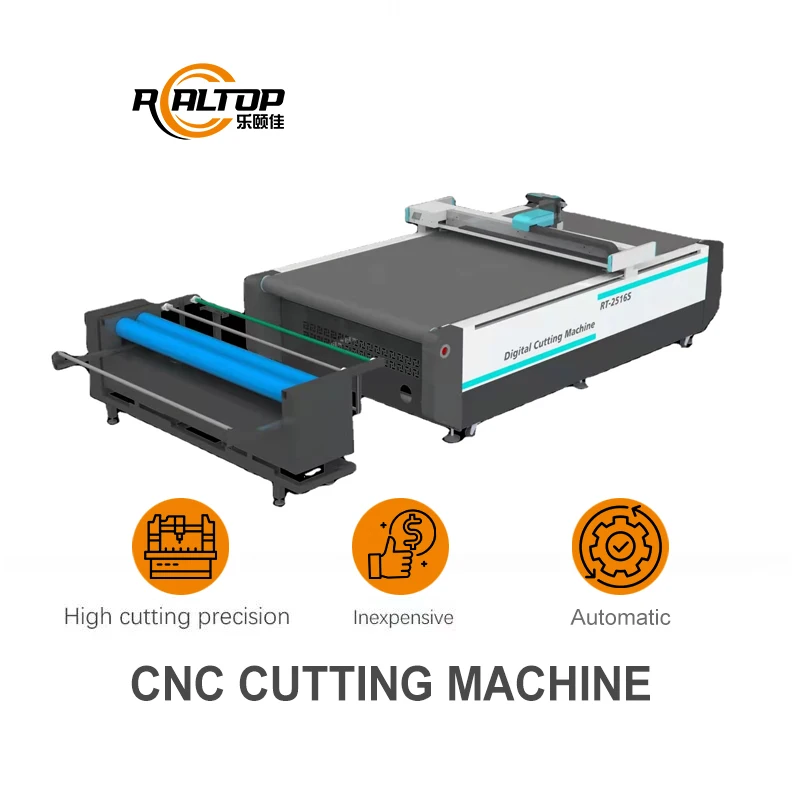
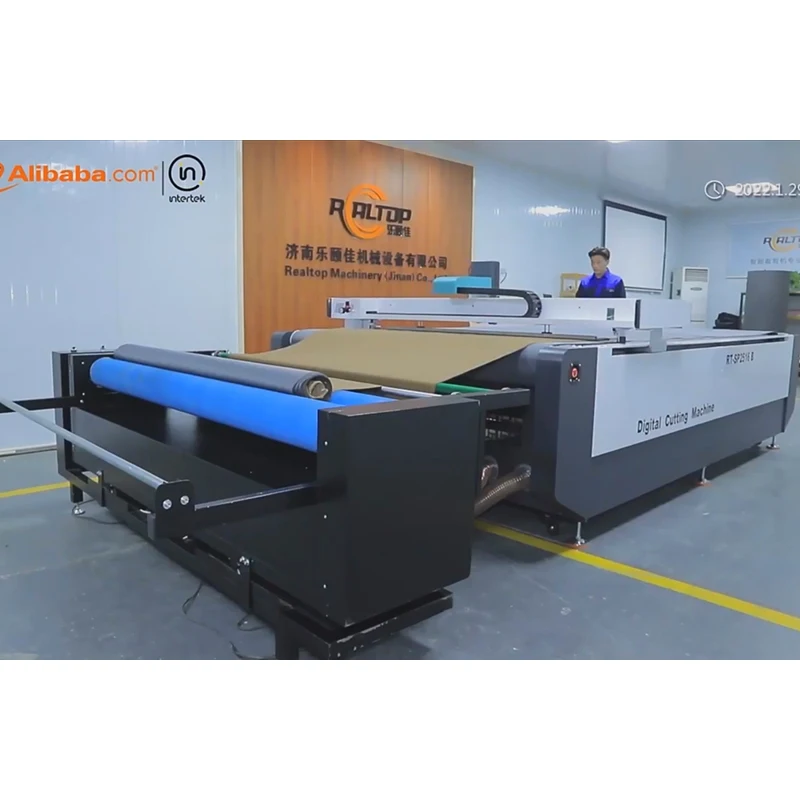
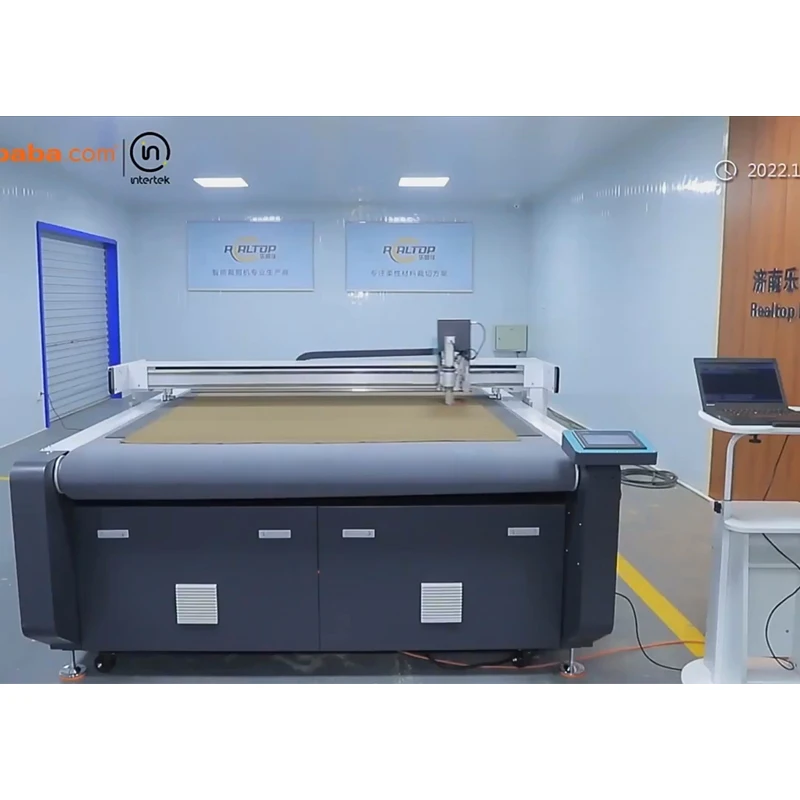
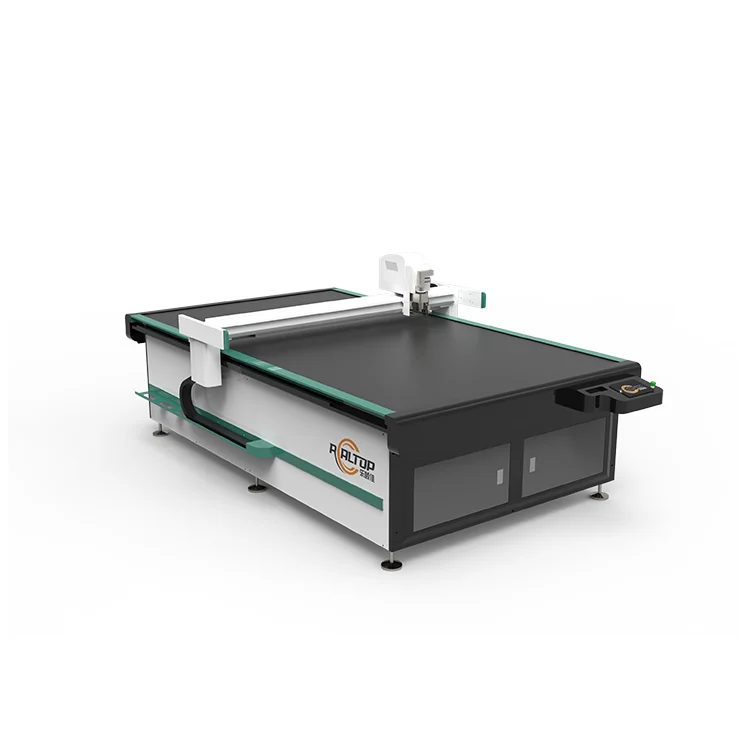
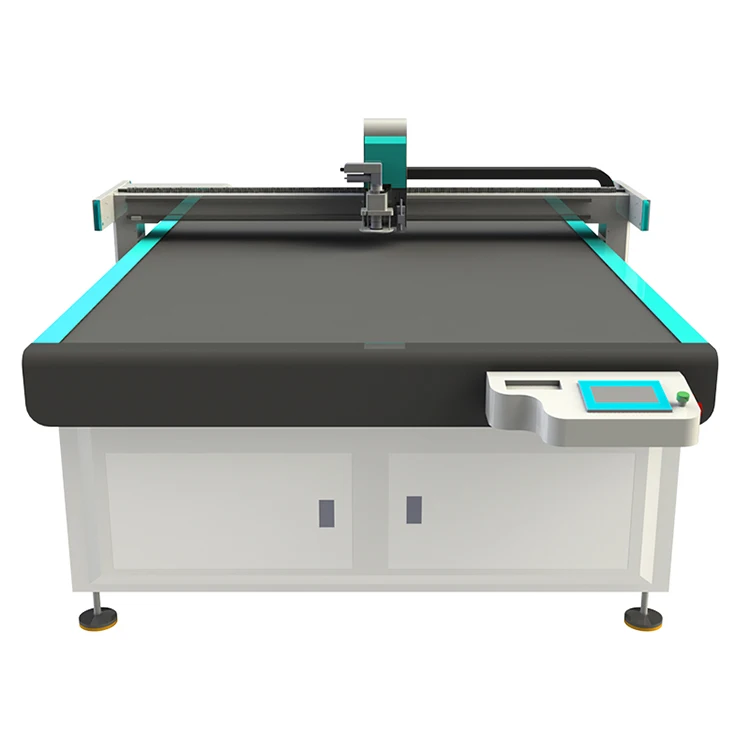
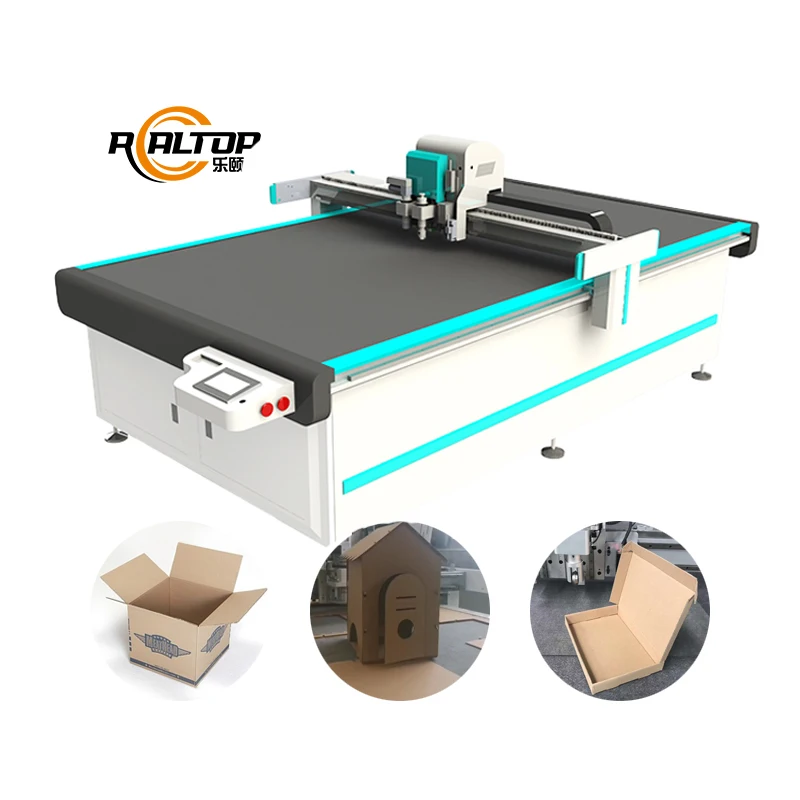
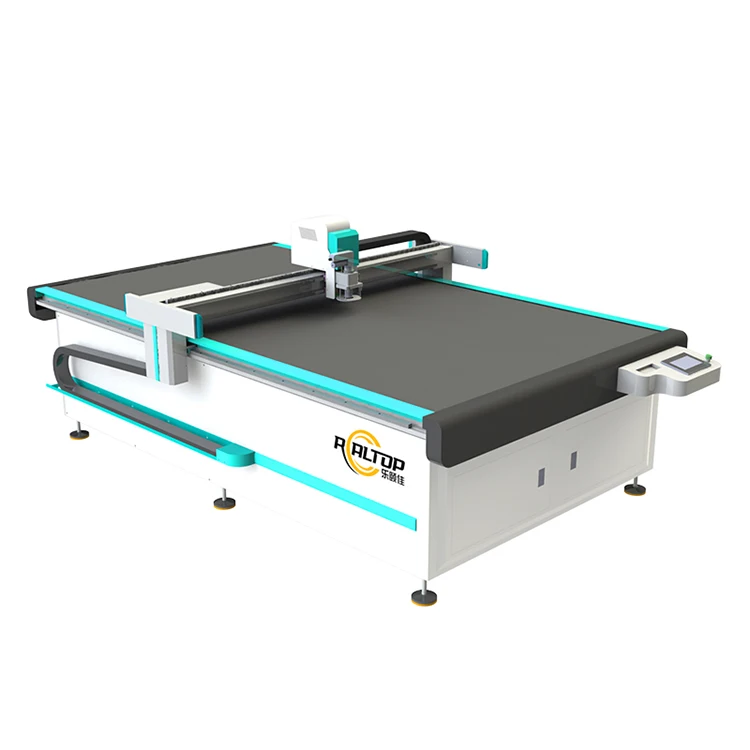
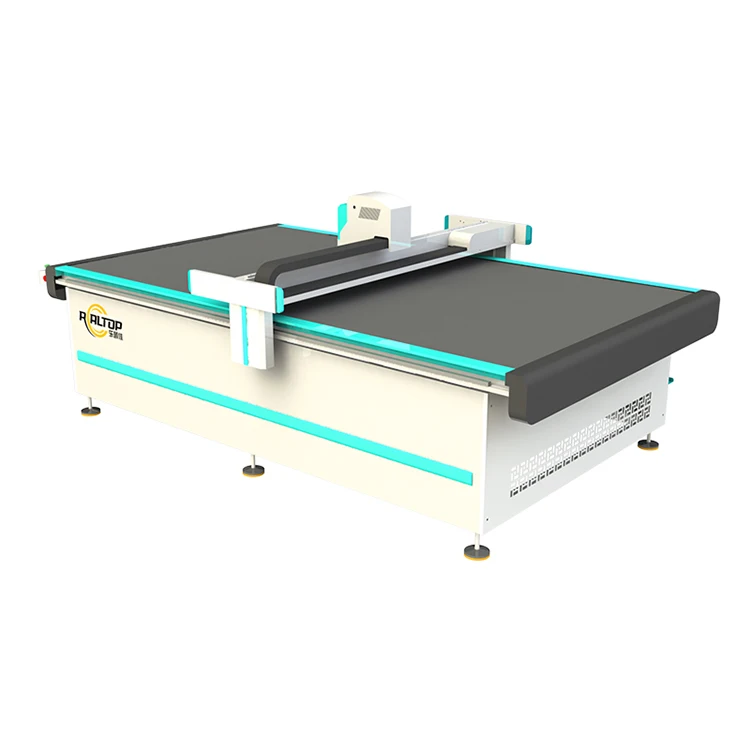
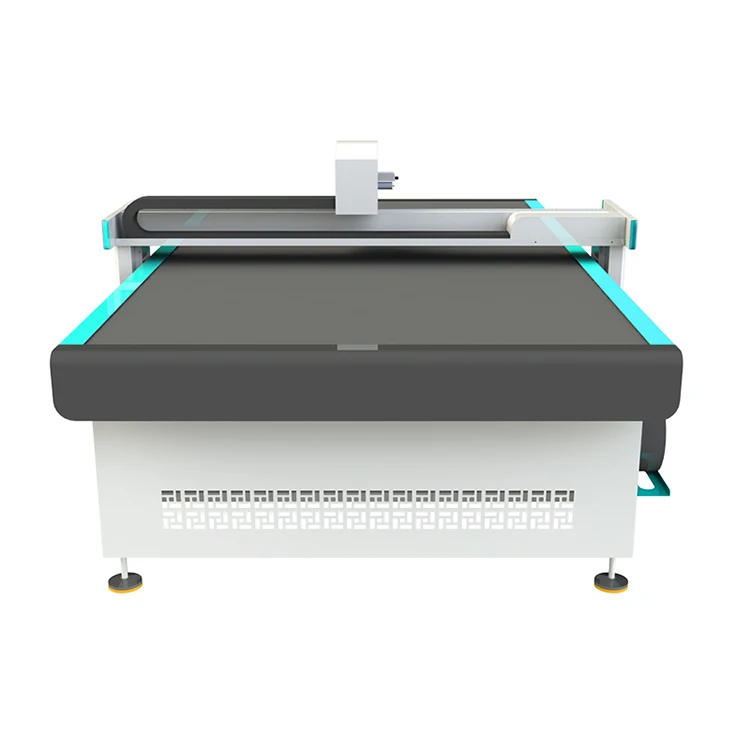
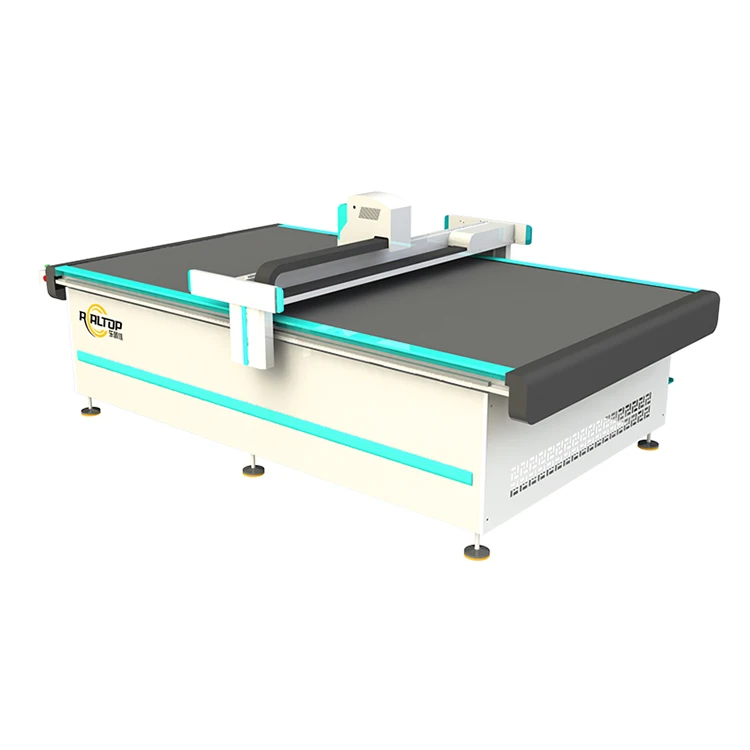
| Product Type | CNC Oscillating Knife Cutting Machine |
| Working Area | 1600 × 2500 mm |
| Overall Dimensions (L×W×H) | 3450 × 2300 × 1250 mm |
| Rated Power | 9 kW |
| Voltage | 380V ±10% |
| Translational Velocity | 800 – 1200 mm/s |
| Repeated Accuracy | ≤ 0.1 mm |
| Cutting Thickness | 20 – 80 mm (depends on material density and tool head) |
| Transmission System | Digital servo motor, linear guide, synchronous belt, imported ball screw |
| Vacuum Pump | 7.5 kW |
| Instruction System | HP-GL compatible format |
| Safety Devices | Infrared sensors with auto-pause, beam anti-collision, emergency stop |
Application Suitability
| Application | Material or Output |
|---|---|
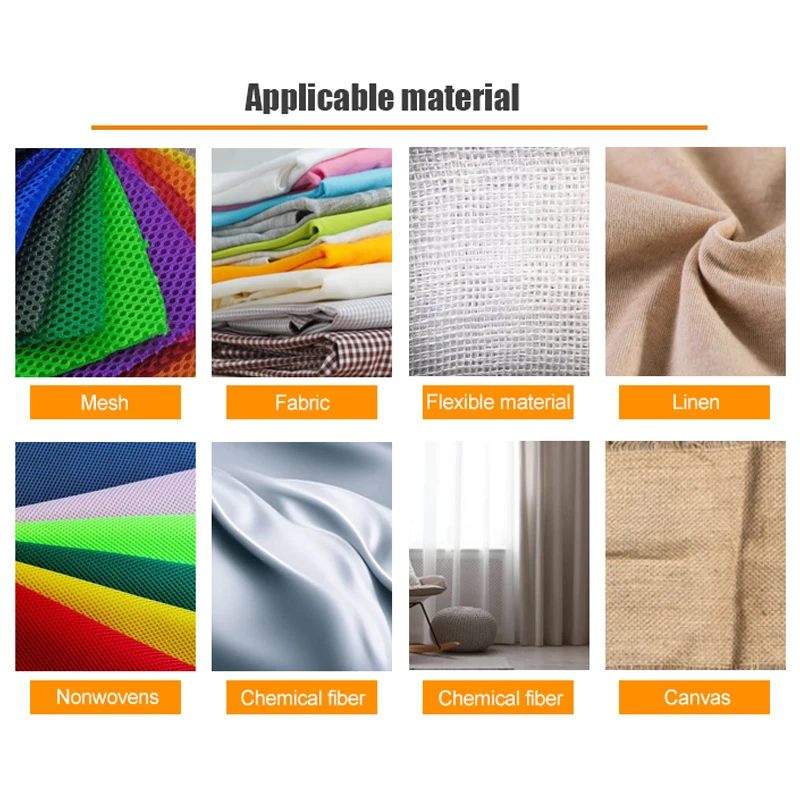
| Automotive Interior Trimming | Sponge composite leather, PU, EVA, XPE, gasket rubber |
| Footwear and Leather Goods | Natural leather, synthetic textile, non-woven fabric, shoe material |
| Soft Furnishings and Carpets | Fabric rolls, carpet, sponge, foam board, composite layers |
| Packaging and Sample Making | Corrugated cardboard, plastic box, sticker, film |
| Graphic Advertising and Printing | PVC, soft glass, silicon, printed vinyl with contour marks |
Why Working Area Alone Misses the Real Cutting Limit
Choosing a flatbed cutter by table size often leads to disappointment once the machine meets your actual material stack. A 1600×2500 mm bed handles large hides and fabric rolls comfortably, yet the effective cutting depth depends entirely on the tool head engaged and the compressibility of the stock being processed.
An automotive gasket producer once ordered a large-format table assuming the rated cutting thickness covered his 30 mm sponge composite leather. What the spec sheet did not spell out was that the standard oscillating knife reached that depth only on semi-rigid stock; on elastic foam, the material compressed under the blade and left uncut fibers at the base [NEED_CITE: oscillating knife cutting depth variance across material densities]. The fix required a high-power vibrating knife and adjusted vacuum zoning — lessons that only surfaced during a sample cutting trial on his actual roll stock.
Matching Knife Technology to Material Behavior
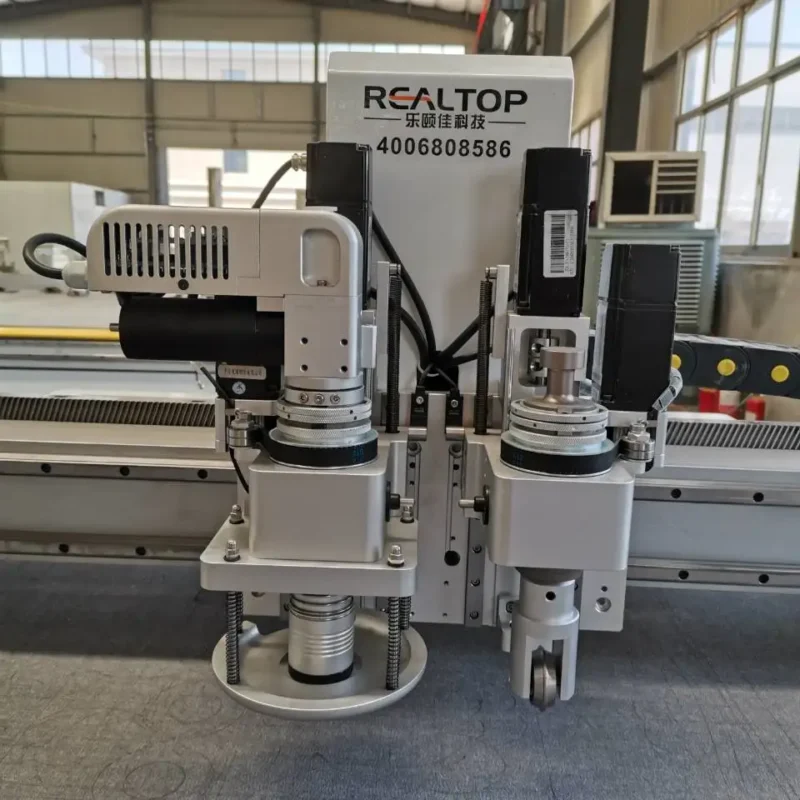
Selecting the correct knife option is the first decision any CNC oscillating knife cutting machine manufacturer should walk a buyer through. The Swiss imported oscillating knife handles full and half cutting across leather and flexible composites, while the circular knife suits continuous textile rolls where a drag knife would catch the weave. For thick sponge or multi-layer carpet, a high-power vibrating knife delivers cleaner separation without crushing the lower plies.
Tool Head Versatility Across Production Mixes
A packaging sample shop cutting corrugated board one hour and PVC stickers the next needs rapid tool changes rather than dedicated machines. This platform offers creasing wheel, drag knife, dotted line knife, and punching heads alongside the primary oscillating unit. Switching between them on the multifunctional head keeps workflow continuous and avoids repositioning the sheet on a second table [NEED_CITE: multi-tool CNC cutting table changeover procedures].
Reading the Specifications Beyond the Headline Numbers
Translational velocity of 800–1200 mm/s is achievable on straight runs with a drag knife on thin vinyl; oscillating cuts through 40 mm foam require slower passes to maintain the ≤0.1 mm repeated accuracy. The 7.5 kW vacuum pump pairs with a zoned table, meaning small gasket parts hold flat without the entire bed pulling air through uncovered zones. Delta servo motors and Taiwan Hiwin rails keep positional drift within tolerance across long production shifts. Voltage is configurable for the destination market, confirmed before the control cabinet is wired.
The Hidden Cost of Skipping a Material Trial
When a garment producer skips the sample cutting report and goes straight to order, the machine may arrive configured for standard woven fabric while the actual production uses high-stretch knits with significant recovery. The blade drags, edges feather, and nesting yield drops because the software assumed a different kerf width. These issues surface only on the shop floor, weeks after the container was loaded [NEED_CITE: fabric recovery effects on digital knife cutting accuracy]. A trial on buyer-supplied material reveals the correct knife frequency, hold-down pressure, and vacuum zone map before the machine leaves the factory.
Why Source from a Combined Knife and Laser Manufacturer
Procuring knife and laser equipment from one manufacturer means a single point of accountability when production spans both methods. A buyer cutting acrylic signage by laser and foam gaskets by knife can compare methods on the same material sample, removing guesswork. The design team engineers the frame, motion system, and vacuum table in-house, so specification changes — like adding a CCD camera for printed contour work — are integrated at build rather than bolted on afterward. Software compatibility and file format mapping are confirmed against the buyer’s existing nesting workflow. Voltage, plug type, and control language are locked in the specification sheet before production begins. Every machine ships with a factory test record run on the buyer’s material sample.
Documentation & Verification
- Machine specification sheet covering all selected tool heads and table zones
- Electrical schematic with confirmed voltage and plug type for destination market
- Sample cutting report produced on buyer-supplied material before dispatch
- Software licence and HP-GL file format compatibility note included
- Spare parts list matching the configured knife and vacuum components
- Packing photographs documenting crating and load securing before shipment
Installation, Commissioning & Support
- Floor space plan accommodating the 3450 × 2300 mm footprint plus operator clearance
- Dedicated 380V circuit sized for the 9 kW total draw plus 7.5 kW vacuum pump
- Machine ships as a single frame; beam and head assembled on site
- First-run parameter tuning on buyer material, including vacuum zone mapping
- Operator training covering tool change sequence and CCD camera calibration
- Wearing parts kit supplied: replacement knife blades, conveyor belt segments, and vacuum seals
What to Include in Your Next Inquiry
Send your material type, maximum thickness, and standard sheet or roll dimensions so the correct tool head and knife frequency can be selected. Confirm your local voltage and frequency, preferred control language, and whether your nesting software exports HP-GL or a proprietary format. If your production involves printed contour cutting, provide a sample print so CCD camera recognition can be tested before build.
Frequently Asked Questions
Q: How do I decide between oscillating knife and laser for my material?
A: Oscillating knife suits thick foam, sponge, gasket rubber, and multi-layer fabric where laser would melt or discolor the edge. Laser is preferred for acrylic, wood veneer, and synthetic textile requiring a sealed edge. Request a sample cut on your actual stock to compare edge quality and cutting speed before committing to one method.
Q: Which tool heads are available and what does each one cut?
A: The multifunctional head accepts oscillating knife, pneumatic knife, high-power vibrating knife, circular knife, V-cutting knife, drag knife, creasing wheel, dotted line knife, and punching tools. Each suits different materials: oscillating for leather and composites, circular for textiles, creasing wheel for carton folding lines, punching for hole patterns in gaskets.
Q: Can the CCD camera track printed marks at full production speed?
A: The small CCD and panoramic camera options both perform mark-point recognition, but tracking speed depends on print contrast, mark size, and ambient lighting on the shop floor. A printed sample should be tested during the pre-order trial to confirm the camera locks onto your registration marks at the intended feed rate.
Q: How do I know the vacuum table will hold small parts flat?
A: The 7.5 kW pump feeds a zoned vacuum table, allowing active suction only under the cutting area. During the sample cutting trial, the zone map is configured for your nesting layout so small gasket or label parts stay flat without material lifting at the blade exit point.
Single-Source Cutting Range — Match oscillating knife or laser method to your material on one platform, avoiding forced compromises across mixed production jobs.
Technical Specifications
| Parameter | Value |
|---|---|
| Model | RT-D2516 / RT-S2516 |
| Product Type | CNC Oscillating Knife Cutting Machine |
| Working Area | 1600 × 2500 mm |
| Overall Dimensions (L×W×H) | 3450 × 2300 × 1250 mm |
| Rated Power | 9 kW |
| Voltage | 380V ±10% |
| Translational Velocity | 800 – 1200 mm/s |
| Repeated Accuracy | ≤ 0.1 mm |
| Cutting Thickness | 20 – 80 mm (depends on material density and tool head) |
| Transmission System | Digital servo motor, linear guide, synchronous belt, imported ball screw |
| Vacuum Pump | 7.5 kW |
| Instruction System | HP-GL compatible format |
| Safety Devices | Infrared sensors with auto-pause, beam anti-collision, emergency stop |
Application Suitability
| Application | Material or Output |
|---|---|
| Automotive Interior Trimming | Sponge composite leather, PU, EVA, XPE, gasket rubber |
| Footwear and Leather Goods | Natural leather, synthetic textile, non-woven fabric, shoe material |
| Soft Furnishings and Carpets | Fabric rolls, carpet, sponge, foam board, composite layers |
| Packaging and Sample Making | Corrugated cardboard, plastic box, sticker, film |
| Graphic Advertising and Printing | PVC, soft glass, silicon, printed vinyl with contour marks |
Why Working Area Alone Misses the Real Cutting Limit
Choosing a flatbed cutter by table size often leads to disappointment once the machine meets your actual material stack. A 1600×2500 mm bed handles large hides and fabric rolls comfortably, yet the effective cutting depth depends entirely on the tool head engaged and the compressibility of the stock being processed.
An automotive gasket producer once ordered a large-format table assuming the rated cutting thickness covered his 30 mm sponge composite leather. What the spec sheet did not spell out was that the standard oscillating knife reached that depth only on semi-rigid stock; on elastic foam, the material compressed under the blade and left uncut fibers at the base [NEED_CITE: oscillating knife cutting depth variance across material densities]. The fix required a high-power vibrating knife and adjusted vacuum zoning — lessons that only surfaced during a sample cutting trial on his actual roll stock.
Matching Knife Technology to Material Behavior
Selecting the correct knife option is the first decision any CNC oscillating knife cutting machine manufacturer should walk a buyer through. The Swiss imported oscillating knife handles full and half cutting across leather and flexible composites, while the circular knife suits continuous textile rolls where a drag knife would catch the weave. For thick sponge or multi-layer carpet, a high-power vibrating knife delivers cleaner separation without crushing the lower plies.
Tool Head Versatility Across Production Mixes
A packaging sample shop cutting corrugated board one hour and PVC stickers the next needs rapid tool changes rather than dedicated machines. This platform offers creasing wheel, drag knife, dotted line knife, and punching heads alongside the primary oscillating unit. Switching between them on the multifunctional head keeps workflow continuous and avoids repositioning the sheet on a second table [NEED_CITE: multi-tool CNC cutting table changeover procedures].
Reading the Specifications Beyond the Headline Numbers
Translational velocity of 800–1200 mm/s is achievable on straight runs with a drag knife on thin vinyl; oscillating cuts through 40 mm foam require slower passes to maintain the ≤0.1 mm repeated accuracy. The 7.5 kW vacuum pump pairs with a zoned table, meaning small gasket parts hold flat without the entire bed pulling air through uncovered zones. Delta servo motors and Taiwan Hiwin rails keep positional drift within tolerance across long production shifts. Voltage is configurable for the destination market, confirmed before the control cabinet is wired.
The Hidden Cost of Skipping a Material Trial
When a garment producer skips the sample cutting report and goes straight to order, the machine may arrive configured for standard woven fabric while the actual production uses high-stretch knits with significant recovery. The blade drags, edges feather, and nesting yield drops because the software assumed a different kerf width. These issues surface only on the shop floor, weeks after the container was loaded [NEED_CITE: fabric recovery effects on digital knife cutting accuracy]. A trial on buyer-supplied material reveals the correct knife frequency, hold-down pressure, and vacuum zone map before the machine leaves the factory.
Why Source from a Combined Knife and Laser Manufacturer
Procuring knife and laser equipment from one manufacturer means a single point of accountability when production spans both methods. A buyer cutting acrylic signage by laser and foam gaskets by knife can compare methods on the same material sample, removing guesswork. The design team engineers the frame, motion system, and vacuum table in-house, so specification changes — like adding a CCD camera for printed contour work — are integrated at build rather than bolted on afterward. Software compatibility and file format mapping are confirmed against the buyer’s existing nesting workflow. Voltage, plug type, and control language are locked in the specification sheet before production begins. Every machine ships with a factory test record run on the buyer’s material sample.
Documentation & Verification
- Machine specification sheet covering all selected tool heads and table zones
- Electrical schematic with confirmed voltage and plug type for destination market
- Sample cutting report produced on buyer-supplied material before dispatch
- Software licence and HP-GL file format compatibility note included
- Spare parts list matching the configured knife and vacuum components
- Packing photographs documenting crating and load securing before shipment
Installation, Commissioning & Support
- Floor space plan accommodating the 3450 × 2300 mm footprint plus operator clearance
- Dedicated 380V circuit sized for the 9 kW total draw plus 7.5 kW vacuum pump
- Machine ships as a single frame; beam and head assembled on site
- First-run parameter tuning on buyer material, including vacuum zone mapping
- Operator training covering tool change sequence and CCD camera calibration
- Wearing parts kit supplied: replacement knife blades, conveyor belt segments, and vacuum seals
What to Include in Your Next Inquiry
Send your material type, maximum thickness, and standard sheet or roll dimensions so the correct tool head and knife frequency can be selected. Confirm your local voltage and frequency, preferred control language, and whether your nesting software exports HP-GL or a proprietary format. If your production involves printed contour cutting, provide a sample print so CCD camera recognition can be tested before build.
Frequently Asked Questions
Q: How do I decide between oscillating knife and laser for my material?
A: Oscillating knife suits thick foam, sponge, gasket rubber, and multi-layer fabric where laser would melt or discolor the edge. Laser is preferred for acrylic, wood veneer, and synthetic textile requiring a sealed edge. Request a sample cut on your actual stock to compare edge quality and cutting speed before committing to one method.
Q: Which tool heads are available and what does each one cut?
A: The multifunctional head accepts oscillating knife, pneumatic knife, high-power vibrating knife, circular knife, V-cutting knife, drag knife, creasing wheel, dotted line knife, and punching tools. Each suits different materials: oscillating for leather and composites, circular for textiles, creasing wheel for carton folding lines, punching for hole patterns in gaskets.
Q: Can the CCD camera track printed marks at full production speed?
A: The small CCD and panoramic camera options both perform mark-point recognition, but tracking speed depends on print contrast, mark size, and ambient lighting on the shop floor. A printed sample should be tested during the pre-order trial to confirm the camera locks onto your registration marks at the intended feed rate.
Q: How do I know the vacuum table will hold small parts flat?
A: The 7.5 kW pump feeds a zoned vacuum table, allowing active suction only under the cutting area. During the sample cutting trial, the zone map is configured for your nesting layout so small gasket or label parts stay flat without material lifting at the blade exit point.
商品评价
There are no reviews yet.