


Fast Delivery
Quick, reliable shipping to any location.

Free & easy returns
Return this item by mail or in store within 90 days for a full refund.
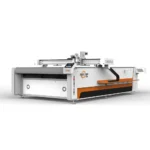
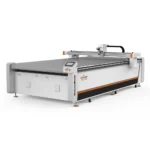
Seven Tool Heads — The 1625 platform offers oscillating, rotary, creasing, kiss-cut, pneumatic, milling, and V-groove heads, so the cutting action is matched to the actual fabric, leather, or composite being processed rather than forced through a single blade type.
Technical Specifications
| Parameter | Value |
|---|---|
| Model | 1625 |
| Product Type | CNC Oscillating Knife Cutting Machine |
| Working Area | 1600 × 2500 mm |
| Available Tool Heads | Oscillating knife, Driven rotary knife, Creasing wheel, Kiss cutting tool, Pneumatic knife, Milling tool, V-groove knife |
| Applicable Materials | Fabric, Cardboard, Carton, Mats, PVC, EVA, Leather, Acrylic, Foam, PTFE, Rubber |
| Cutting Speed | 0–2000 mm/s |
| Cutting Thickness | ≤ 30 mm (basis not stated in source — confirm material type and layer count) |
| Positioning Accuracy | ±0.1 mm |
| Vacuum Pump Power | 9 kW |
| Vacuum Table Type | Aluminum bellows vacuum table |
| Voltage Options | 110V / 220V / 380V (frequency to be confirmed per destination market) |
| Control System | PLC control panel with optional display languages |
| Servo Motor Options | Panasonic, Delta, Dorna (source value — verify against manufacturer catalog) |
| Supported File Formats | PLT, DXF, AI, PDF |
| Safety Devices | Infrared sensor, Emergency stop |
| Machine Dimensions (L×W×H) | 3300 × 2100 × 1350 mm |
| Language Options | English, Russian, Italian, Chinese (custom languages available) |
| Certification | CE (implied by certification image; specific standard not stated in source) |
Application Suitability
| Application | Material or Output |
|---|---|
| Apparel manufacturing | Suits, knitwear, lace, pattern-matching woven and synthetic fabrics |
| Automotive interiors | Seat fabrics, carpets, PVC floor mats, headliner textiles |
| Home textiles | Sofa upholstery fabrics, curtain panels, area rugs |
| Composite material processing | Carbon fiber prepreg, aramid weaves, specialty layered materials |
Why "Working Area" Is Not Enough When Sourcing a CNC Oscillating Knife Cutting Machine Manufacturer
The cutting method must be specified against the actual material stack, thickness, and edge-quality requirement — not just the table size.
I spent years on the assembly floor in Jinan before moving into technical sales, and the most expensive mistake I see buyers repeat is choosing a machine based solely on its 1600 × 2500 mm bed. A buyer once ordered a round-knife unit sized for his sheet dimensions, then discovered that multi-layer composite leather used in automotive seating crushed rather than cut at the thickness he needed. The machine was dimensionally correct but mechanically wrong for the job [NEED_CITE: material thickness versus tool head selection in flatbed digital cutting]. Edge fraying, delamination, and slowed throughput followed — problems that a proper tool-head and vacuum-zone specification would have prevented before the machine left the factory.
Matching the Blade to the Fabric, Not the Other Way Around
A CNC oscillating knife cutting machine manufacturer that builds both the frame and the tool heads can pair each head with the specific textile behavior it addresses. The oscillating knife handles single-ply woven and knit fabrics at high traverse speed, while the driven rotary knife slices through multi-layer layups without pulling the weave out of alignment. For kiss-cutting adhesive-backed vinyl or heat-transfer films, the dedicated kiss-cut tool controls depth to within a fraction of a millimeter, leaving the carrier sheet intact. This interchangeability means a garment workshop can move from silk lining to denim to synthetic leather on the same 1625 platform by swapping heads rather than buying a second machine.
Vacuum Zoning and Material Stability
Flexible textiles lift, shift, and wrinkle the moment vacuum suction is uneven across the bed. The aluminum bellows table on the 1625 distributes suction across the full working area, and a 9 kW vacuum pump maintains that hold even when the cutting path opens slots that would bleed pressure on a lesser system. When cutting small pattern pieces — think shoe uppers or gasket profiles — full-surface adsorption prevents the scrap from curling into the blade path and damaging the cutting edge [NEED_CITE: vacuum hold-down requirements for flexible sheet materials on CNC cutting tables].
How Core Parameters Translate on the Shop Floor
The ±0.1 mm positioning accuracy matters most when nesting pattern pieces with tight seam allowances; a drift of even half a millimeter accumulates across a multi-marker layup and wastes fabric at the margin. Cutting speed up to 2000 mm/s is achievable on lightweight single-ply materials, but effective speed on heavier composites depends on the oscillation frequency of the knife and the resistance of the material stack — always confirm achievable speed on your own sample before treating the headline figure as a production constant. The PLC control panel accepts DXF, PLT, AI, and PDF files directly, which eliminates the extra conversion step that often corrupts contour data when moving between design software and machine software. Voltage is configurable across 110V, 220V, and 380V, yet frequency (50 Hz versus 60 Hz) must be confirmed against the destination country’s grid to avoid servo overheating or vacuum pump underperformance.
The Hidden Cost of Skipping a Sample Cut
When a buyer commits without running their actual material on the machine, the first production day becomes an unplanned experiment. Ragged edges on technical fabrics force re-cutting, and crushed foam cores on automotive headliners generate scrap that no nesting software can recover. Delamination in layered composites shows up only under real blade pressure and vacuum conditions, not in a brochure photograph [NEED_CITE: cold cutting versus thermal cutting effects on composite laminates]. A pre-shipment sample cut on the buyer’s own roll goods eliminates these surprises and locks in the correct tool head, oscillation frequency, and vacuum zone map before the machine is crated.
What Distinguishes This Build
The design and production of both knife and laser platforms sit under one roof, so a buyer processing mixed materials — fabric seats alongside acrylic tail-light gaskets — can source both cutting methods from a single CNC oscillating knife cutting machine manufacturer rather than juggling separate suppliers. Tool-head and table configurations are written into the order specification per material type and daily volume, not left as a generic default. CCD camera contour recognition is available for printed-contour work where registration marks must be tracked at production speed. Software compatibility with the buyer’s existing nesting workflow and file format is confirmed at the quotation stage, not discovered during commissioning. Voltage, plug type, control panel language, and safety labeling are all agreed before production begins, so the machine arrives ready to plug into the local electrical infrastructure.
Documentation & Verification
- Machine specification sheet listing confirmed tool head and vacuum table zone layout
- Electrical schematic with voltage and frequency matched to destination grid
- Sample cutting report on buyer-supplied fabric or composite material
- Tool head and configuration list referencing each material in the production schedule
- Software licence and file format compatibility note for DXF, PLT, AI, PDF workflows
- Factory test record documenting positioning accuracy and cutting edge quality before dispatch
Installation, Commissioning & Support
- Foundation must be level within 2 mm across the 3300 × 2100 mm footprint to prevent frame twist
- Dedicated circuit rated for the selected voltage option and 9 kW vacuum pump draw
- Machine ships partially disassembled; reassembly covers gantry, table segments, and tool head carriage
- First-power commissioning includes servo tuning, vacuum zone mapping, and blade-depth calibration
- Operator training covers tool head changeover, nesting import, and emergency-stop reset procedures
- Spare blade and oscillating knife consumables list provided with recommended replacement intervals
Before You Send the Inquiry
Share the exact fabric or composite type, the maximum stack thickness you run, and the typical sheet dimensions you load onto the table. Specify your local voltage and frequency so the servo motors and vacuum pump are wound correctly at the factory. If you already use nesting software, tell us the file format it exports — we will confirm compatibility before quoting and, if needed, run a sample cut on your own roll goods to validate edge quality and achievable throughput.
Frequently Asked Questions
Q: How is the ≤ 30 mm cutting thickness verified before I commit?
A: The stated thickness depends on material density, layer count, and tool head selection. We run your actual fabric or composite sample on the 1625 and document edge quality, achievable layers, and cycle time in a written sample cutting report. This report becomes part of the order specification so there is no gap between expectation and machine capability.
Q: Which tool head should I use for my specific textile?
A: Single-ply woven and knit fabrics typically use the oscillating knife; multi-layer layups respond better to the driven rotary knife. Adhesive films and vinyl require the kiss-cut tool to protect the carrier sheet. We recommend the correct head based on your material sample and confirm the choice during the pre-order sample cut.
Q: How do I confirm the voltage and control language match my factory?
A: During the quotation stage we collect your local voltage, frequency, and plug type alongside the preferred control panel language. The PLC is configured and the electrical components are sourced accordingly before assembly begins, and the electrical schematic shipped with the machine reflects these confirmed values.
Q: Can I send my own material for a sample cut before placing the order?
A: Yes. We encourage buyers to ship roll goods or sheet samples to the factory. The sample cut tests tool head selection, vacuum hold-down, cutting speed, and edge quality on your actual material, and the results are documented in a report that accompanies the quotation.
Q: What file formats does the software accept, and is nesting included?
A: The control software imports DXF, PLT, AI, and PDF files for automatic path generation. If you already use third-party nesting software, we confirm file export compatibility before order. Nesting functionality within the machine software is clarified during the quotation so you know exactly what workflow is supported.










商品评价
There are no reviews yet.