

Fast Delivery
Quick, reliable shipping to any location.

Free & easy returns
Return this item by mail or in store within 90 days for a full refund.
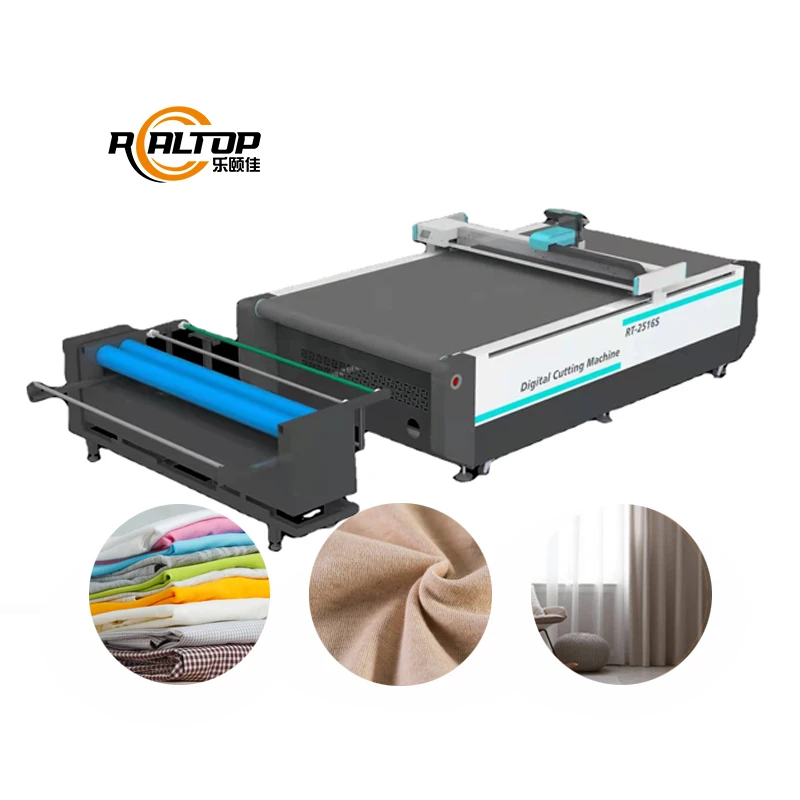
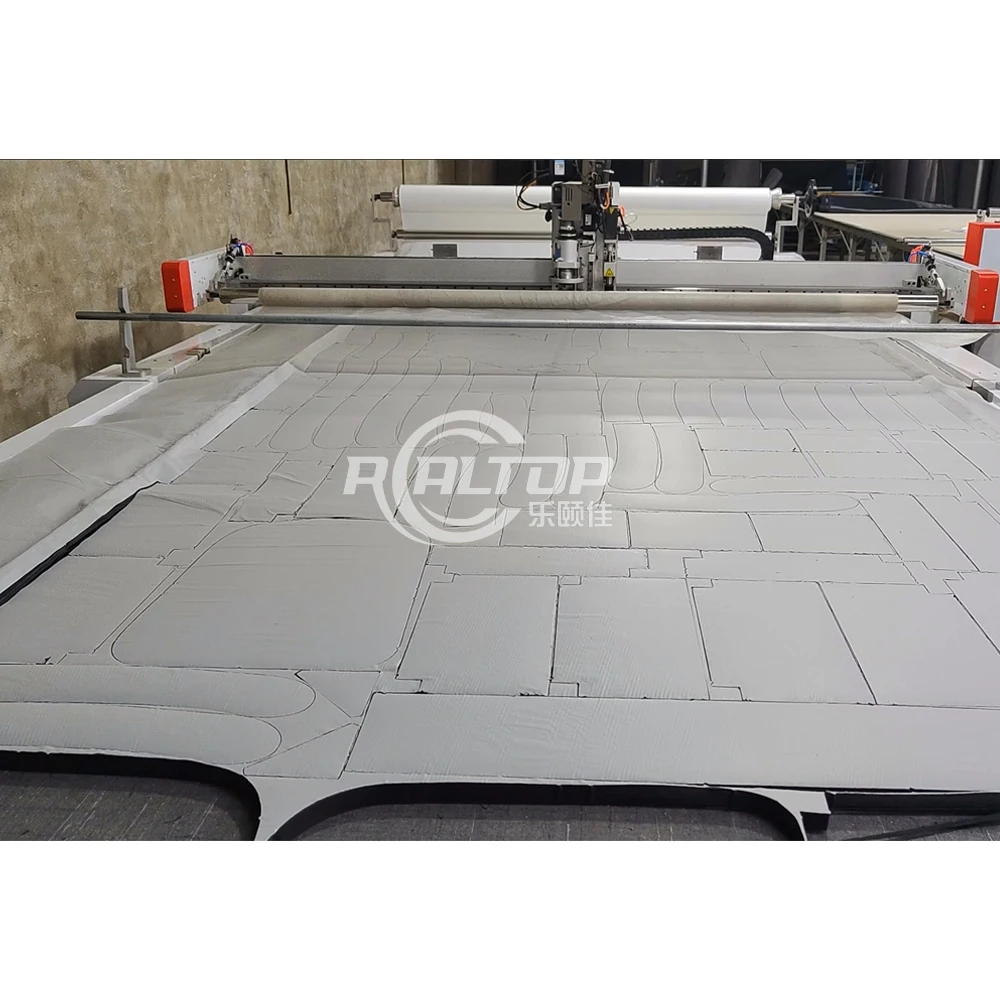
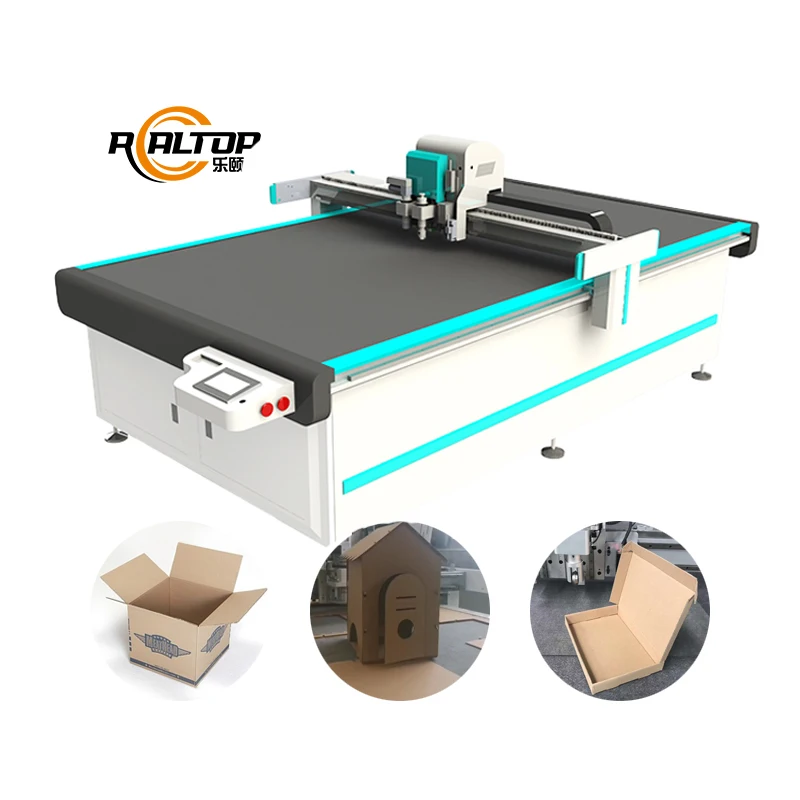
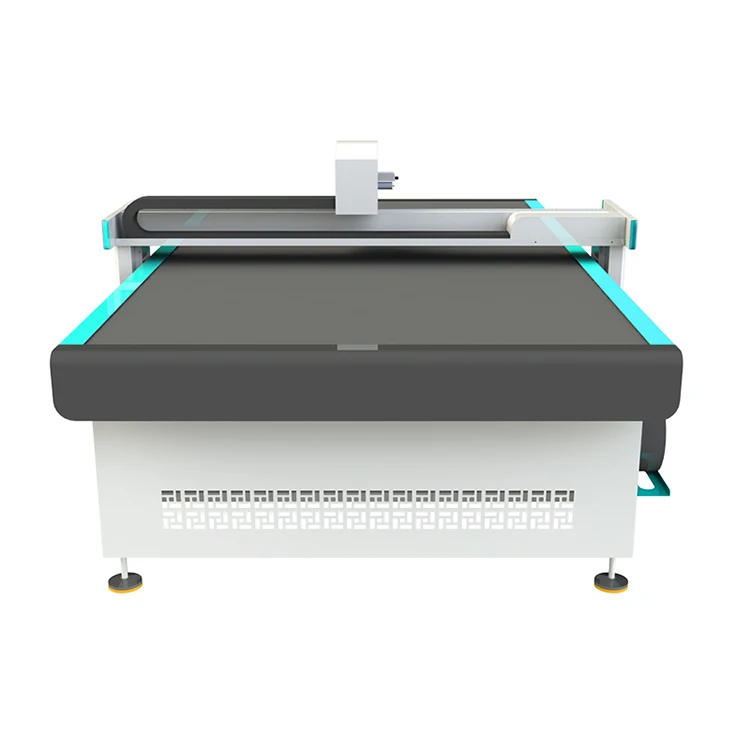
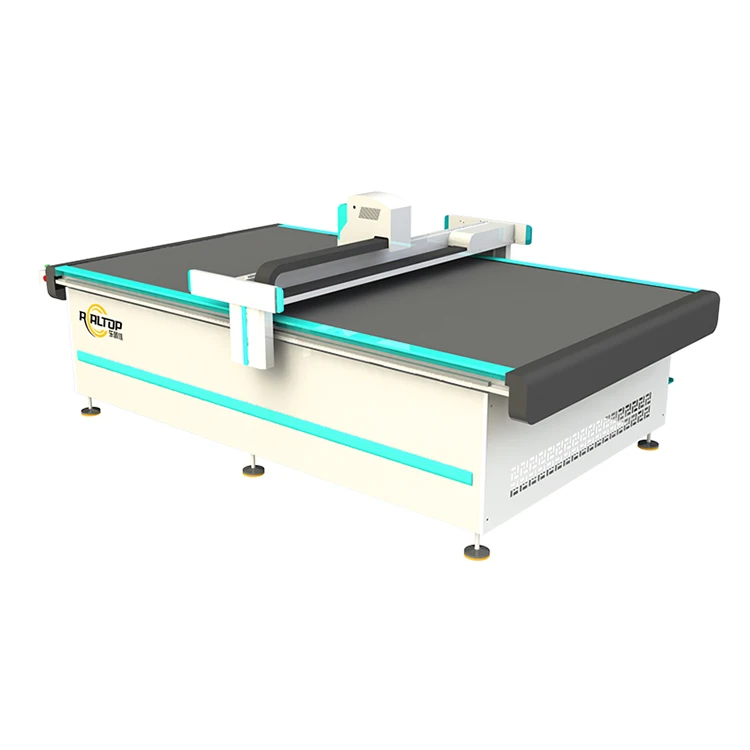
Integrated Design and Build — Both oscillating knife and laser cutting platforms engineered under one roof, so the RT-D2516/RT-S2516 is configured around your material rather than forced into a single-method catalogue.
Technical Specifications
| Parameter | Value |
|---|---|
| Model | RT-D2516/RT-S2516 |
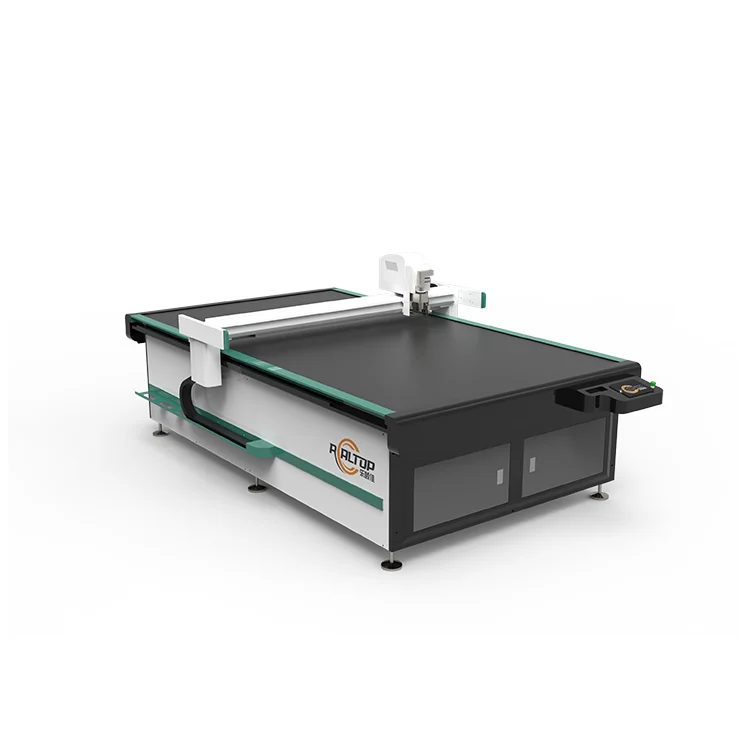
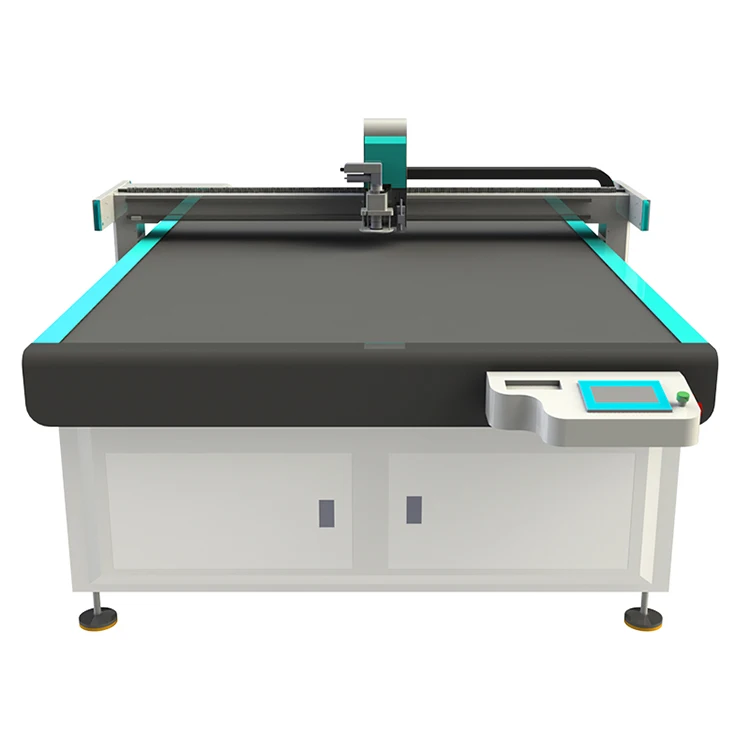
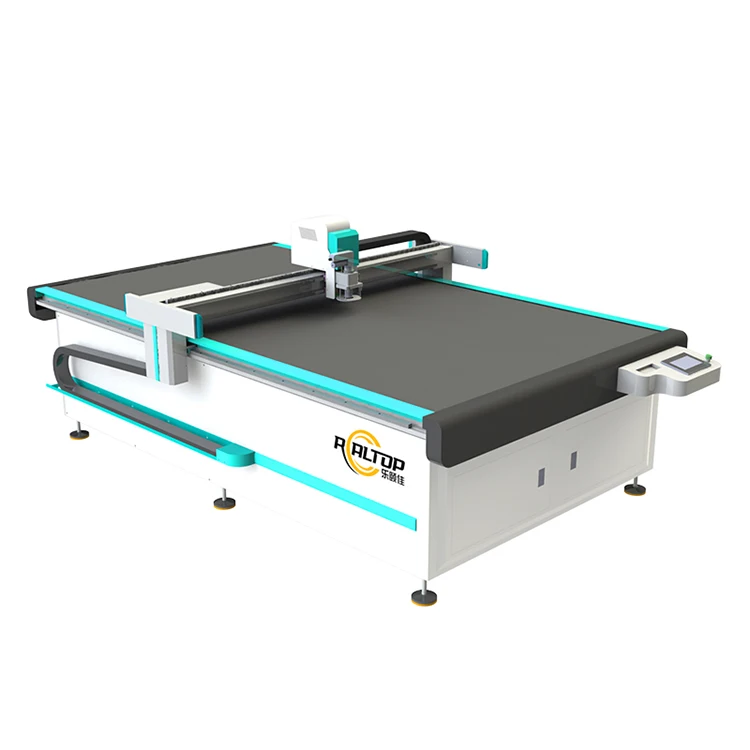
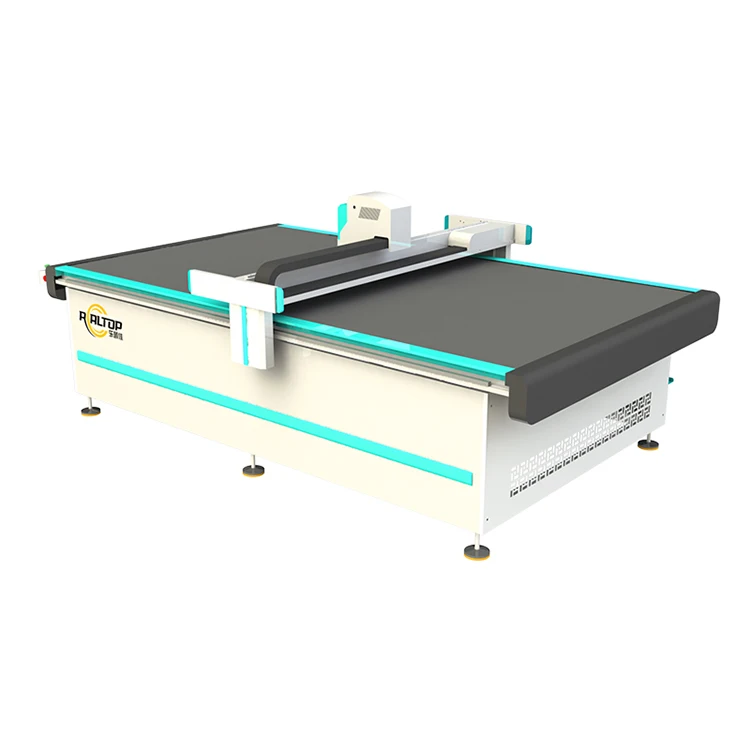
| Product Type | CNC Oscillating Knife Cutting Machine |
| Working Area | 1600 × 2500 mm |
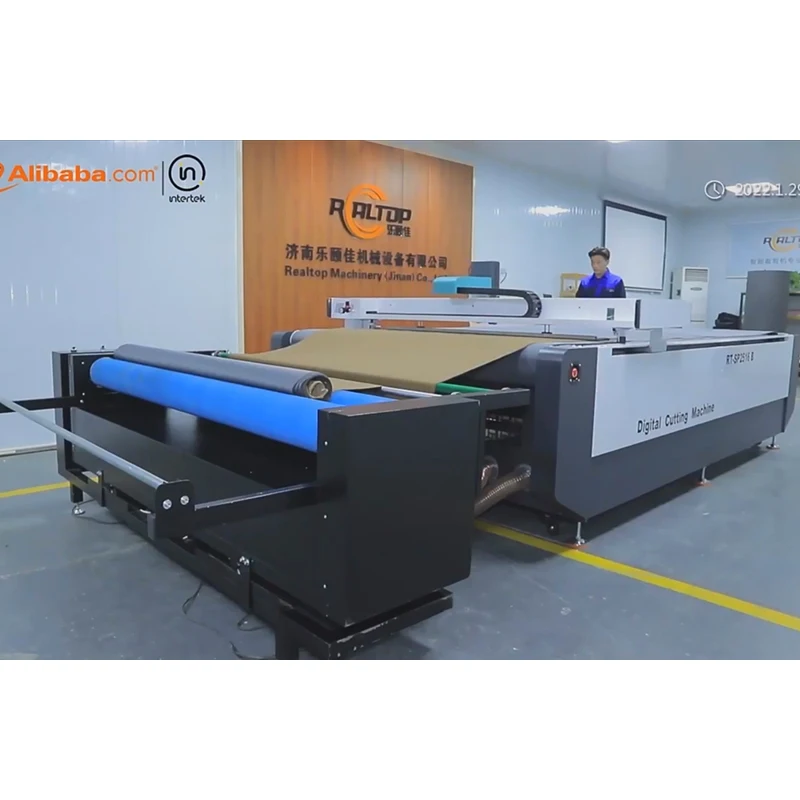
| Machine Size | 3450 × 2300 × 1250 mm |
| Rated Power | 9 kW |
| Table Type | Flat working table with vacuum and auto-feeding conveyor |
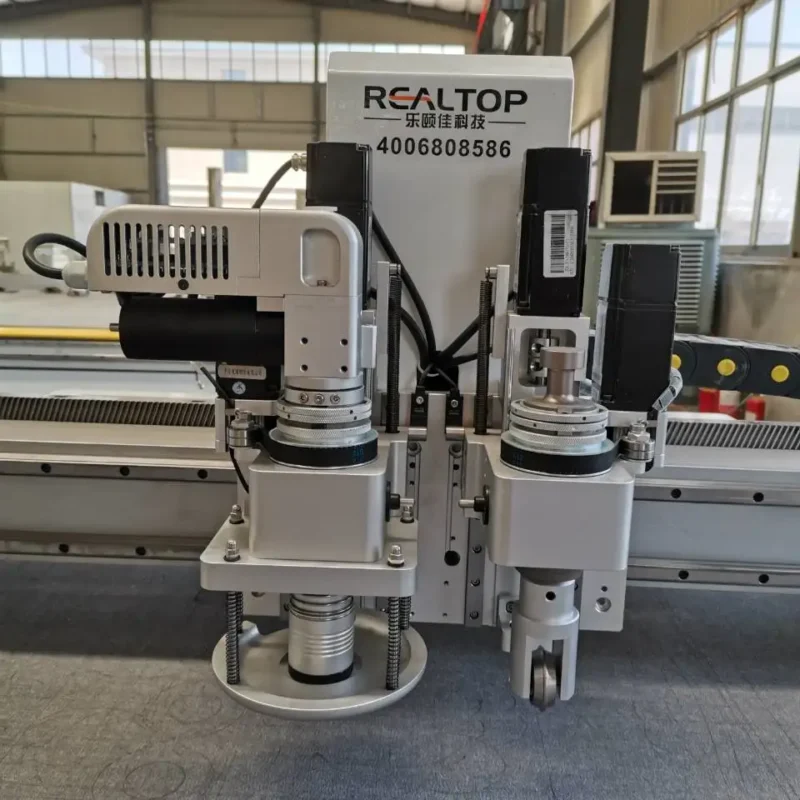
| Tool Head | Swiss imported knife — vibration full cutting, half cutting, cursor location |
| Modular Tool Holder | Compatible with round knife, marking pen, auto feeder |
| Safety Device | Infrared sensors |
| Translational Velocity | 800–1200 mm/s |
| Cutting Thickness | Up to 50 mm (varies by material) |
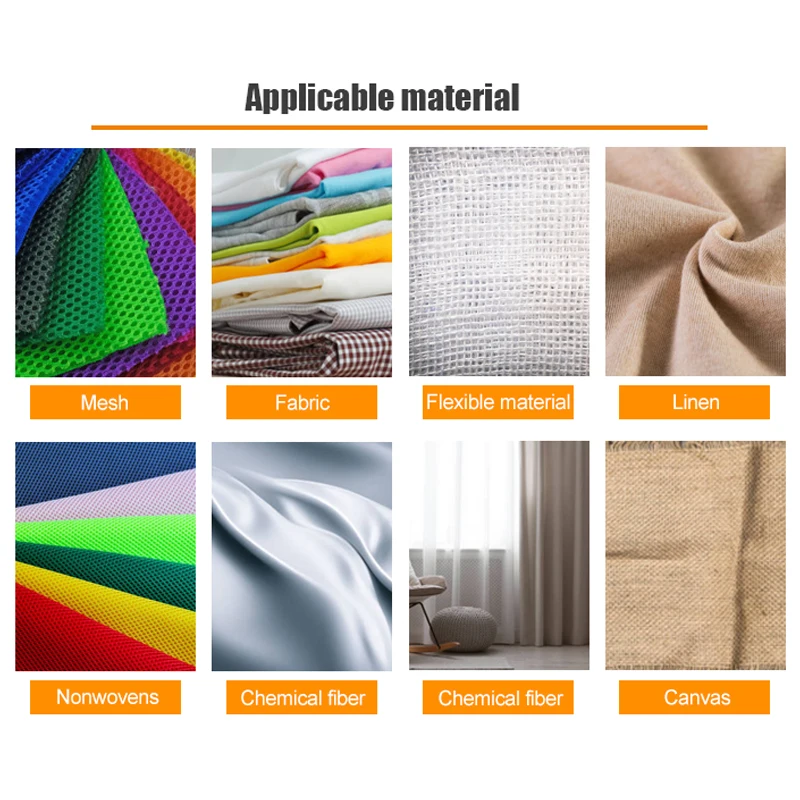
| Cutting Materials | Leather, flexible garment material, sponge composite leather, PVC, soft glass, silicone, rubber |
| Repeated Accuracy | ≤ 0.1 mm |
| Transmission System | Digital servo motor, linear guide, synchronous belt, ball screw |
| Servo Motor Brand | Panasonic / Delta (configuration dependent) |
| Linear Rail | Taiwan Hiwin |
| Vacuum Pump | 7.5 kW |
| Table Surface | High-density felt |
| Bed Structure | Overall welding, imported milling machine processing |
| Instruction System | HP-GL compatible format |
| Voltage | 380 V ± 10 % |
| Language Options | English, Russian, Italian, Chinese, custom |
| Control Electrical Box | Fixed on fuselage, high-flexibility cables |
| Certification | CE |
Application Suitability
| Application | Material or Output |
|---|---|
| Garment and textile cutting | Single and multi-layer fabric, woven and knit material, with nesting layout |
| Footwear production | Natural and synthetic leather, sponge composite, lining material |
| Automotive interior trimming | Leather, sponge composite leather, flexible gasket material |
| Gasket and seal fabrication | Silicone, rubber, soft composite sheets |
| Signage and packaging sample making | PVC, soft glass, board material, vinyl |
| Composite material processing | Multi-layer foam, laminated textile, flexible insulation |
When "1600 × 2500" Is Not the Whole Story
Working area only tells you what fits on the table — tool head, vacuum zoning and material test determine what actually cuts clean.
I have seen buyers lock in a flatbed CNC oscillating knife cutting machine manufacturer based on table dimensions alone, then discover on day one that the standard tool head crushes their sponge composite instead of slicing it. The RT-D2516/RT-S2516 platform is built around the principle that the cutting method and configuration must match the material stack and daily volume before the frame colour is even discussed. A 50 mm thickness rating means little if the vacuum zone layout lets small gasket parts lift during a contour pass [NEED_CITE: vacuum zoning requirements for small-part cutting].
How the Full Catalogue Maps to Your Material
Before committing to this oscillating knife flatbed, a buyer surveying options needs to see where it sits relative to laser and multi-layer systems in the REALTOP range. Laser excels at sealed edges on synthetics and fine engraving, while a high-volume multi-layer conveyor system serves garment factories cutting hundreds of fabric plies per hour. The RT-D2516/RT-S2516 occupies the middle ground — versatile flatbed knife cutting for mixed materials where edge compression must be avoided and contour accuracy stays within 0.1 mm.
Why Knife Versus Laser Matters Before the Quote
Choosing the cutting method is not a price decision; it is a material decision. Oscillating knife produces zero thermal damage, no melted edge on PVC, and no discolouration on leather — qualities a CO2 laser cannot replicate on those substrates. Conversely, laser seals synthetic textile edges that would fray under a blade. The CNC oscillating knife cutting machine manufacturer advantage here is access to both technologies from one factory floor, so a sample cut on your own material settles the debate before any specification sheet is signed [NEED_CITE: thermal versus mechanical cutting edge comparison].
Reading the Specs That Actually Affect Output
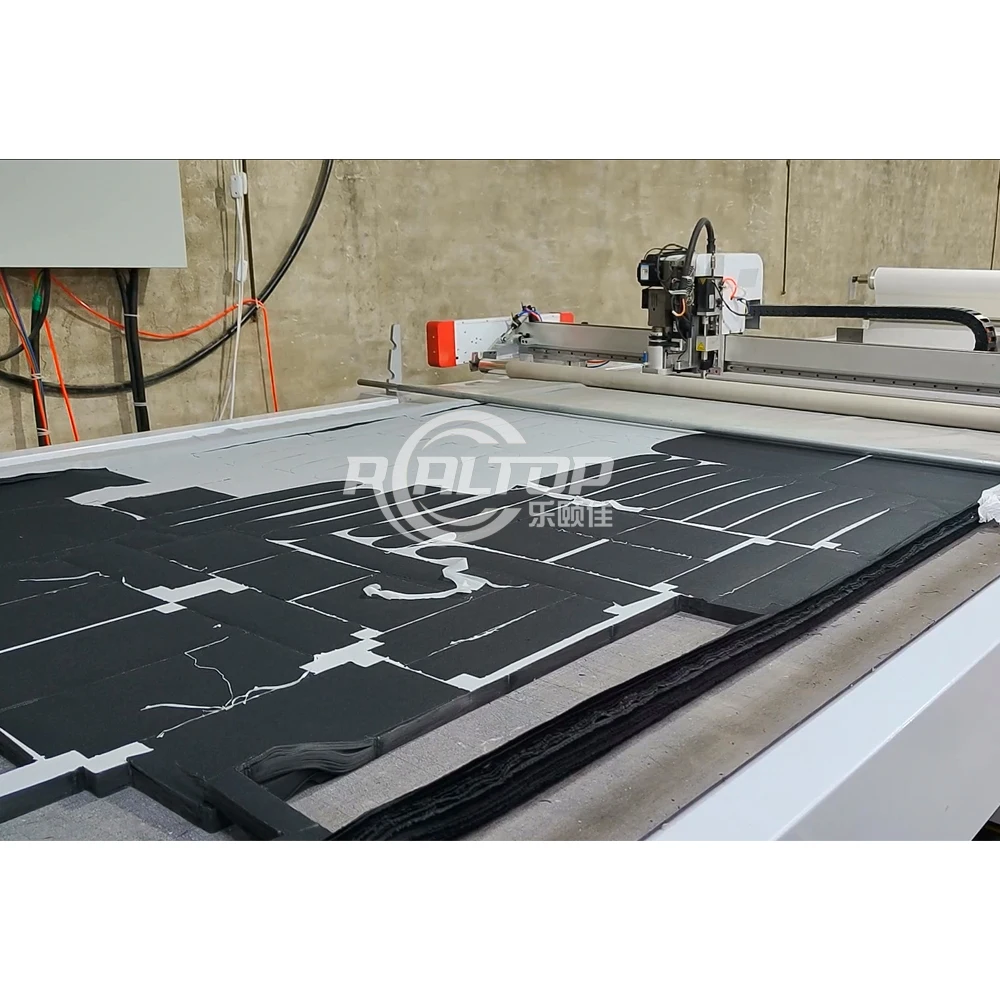
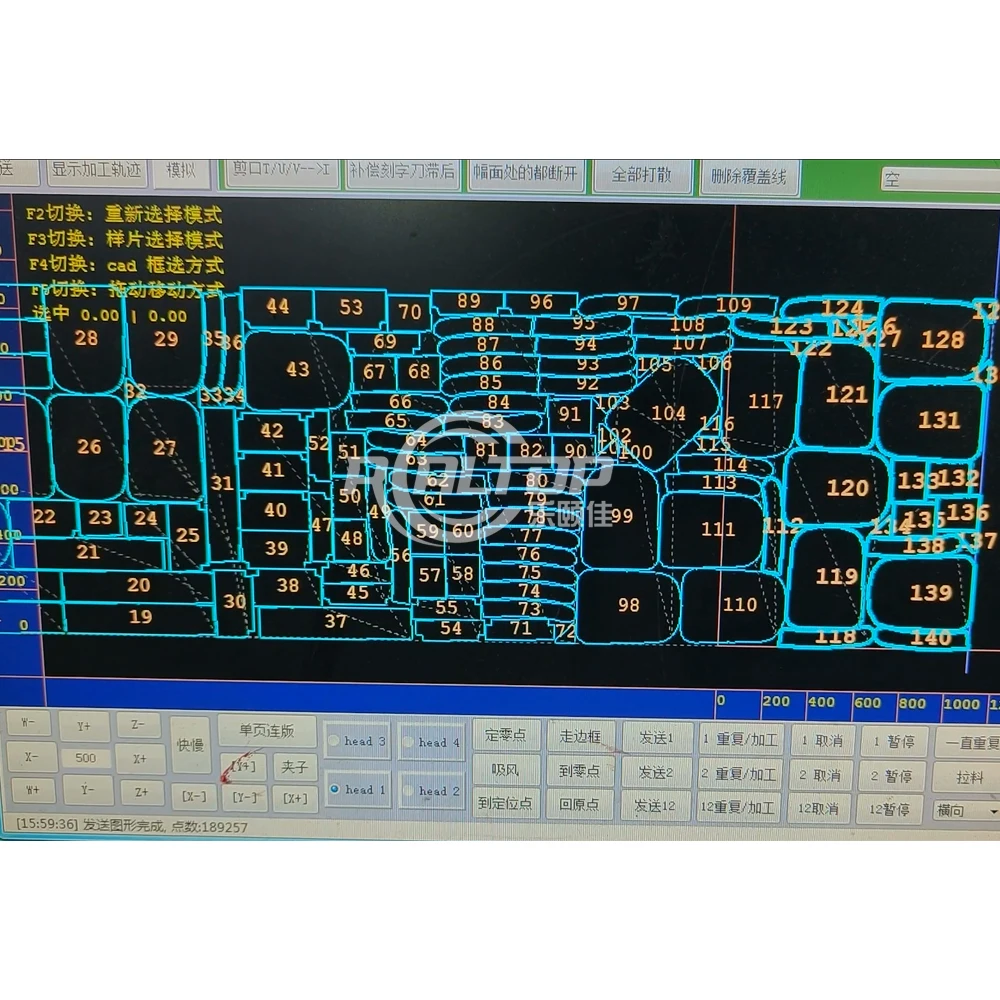
The Swiss imported oscillating knife head offers full-cut, half-cut and cursor location in one tool station — full-cut for through-material profiling, half-cut for kiss-cutting vinyl and sticker stock without penetrating the backing. Repeatability of ≤ 0.1 mm is delivered by Taiwan Hiwin linear rails paired with Panasonic or Delta servo motors through synchronous belt and ball screw drives; this matters when nesting software places hundreds of pattern pieces per sheet and every millimetre of drift becomes scrap. The 7.5 kW vacuum pump and high-density felt table surface must hold thin garment fabric flat at 800–1200 mm/s translational velocity — if vacuum zoning is too coarse, small pattern pieces lift and the knife snags. HP-GL compatibility means the controller accepts output from most mainstream nesting and CAD platforms, reducing the learning curve when migrating existing production files to a new CNC oscillating knife cutting machine manufacturer line.
The Cost of Skipping the Material Test
A buyer once sent a sample that cut cleanly with the standard tool head, but production stock was a denser multi-layer composite leather with a foam core — the blade deflected, edges came out ragged and an entire batch was written off. Small-part lift from inadequate vacuum zoning can cause the knife to drag material across the felt, scoring the table and dulling the blade prematurely. Language and voltage mismatches discovered after arrival mean the machine sits idle until an electrician and translator are sourced locally [NEED_CITE: electrical supply mismatch consequences on imported machinery].
Why Source This Platform From REALTOP
In-house engineering covers both knife and laser technologies, so a buyer evaluating the RT-D2516/RT-S2516 can compare methods on the same material without being pushed toward whichever machine is in stock. Tool head and vacuum table configuration are specified per material sample rather than selected from a fixed brochure line. CCD camera positioning is available for printed contour work when the job demands it. Software compatibility is confirmed against the buyer’s nesting workflow before the order is finalised. Voltage, plug type and control language are documented and verified before the crate is sealed. Sample cutting on the buyer’s own stock is standard practice — no configuration is approved without it.
Documentation & Verification
- Machine specification sheet locking working area, tool head and voltage for the RT-D2516/RT-S2516
- Sample cutting report on your material documenting edge quality and achievable thickness
- Electrical schematic with voltage and frequency confirmation matching your facility supply
- Software licence and HP-GL file format compatibility note for your nesting workflow
- Factory test record covering full-cut, half-cut and cursor location cycles before dispatch
- CE declaration applicable to this model range
Installation, Commissioning & Support
- 3450 × 2300 × 1250 mm footprint requires clear floor space with level concrete substrate
- 9 kW rated power needs a dedicated 380 V circuit with ±10 % tolerance verified on site
- Machine ships partially assembled; table and gantry aligned during factory test then bolted on arrival
- 7.5 kW vacuum pump commissioning includes felt surface inspection and zone balance check
- Operator training covers tool head changeover, HP-GL file loading and chosen control language
- Spare parts list includes oscillating knife blades, felt segments and high-flex cable sets
What to Include in Your Enquiry
Send material type, thickness range, sheet dimensions and the daily volume you plan to cut so the right tool head and vacuum configuration can be matched. Specify your local voltage, frequency and the control language your operators need. If you already run nesting software or have downstream sewing and assembly lines, note the file formats and workflow steps so compatibility is confirmed before build.
Frequently Asked Questions
Q: How do I decide between oscillating knife and laser for my material?
A: Oscillating knife avoids thermal damage, making it the right choice for leather, foam and multi-layer fabric where melted or discoloured edges are unacceptable. Laser seals synthetic textile edges and handles fine engraving. The decision is settled by a sample cut on your actual material using both methods before any purchase commitment is made.
Q: Will small gasket parts lift off the table during cutting?
A: Small parts are the main risk on any vacuum flatbed. The RT-D2516/RT-S2516 uses a 7.5 kW vacuum pump with high-density felt, but zone configuration must be matched to your typical part size. This is validated during the sample cutting stage so the correct zoning layout is specified before build.
Q: Is voltage and control language confirmed before the machine ships?
A: Yes. Voltage, plug type and frequency are documented on the electrical schematic and matched to your facility supply. Control language — English, Russian, Italian, Chinese or a custom option — is written into the specification sheet and verified during the factory test before the machine is crated.
Q: What happens if my production material is harder than the sample I sent?
A: Production stock that differs from the approved sample in density or layer composition can cause blade deflection and ragged edges. The specification is locked only after sample cutting on your exact material, and any change in stock should trigger a re-test before the tool head configuration is finalised.
Q: Where does this machine fit if my volume grows?
A: The RT-D2516/RT-S2516 handles mixed-material flatbed cutting for small to medium batch production. When daily volume demands continuous roll-fed operation or multi-layer fabric stacks, the catalogue includes conveyor-driven and high-volume systems. Discussing your throughput target at enquiry stage ensures the right platform is selected from the start.
Integrated Design and Build — Both oscillating knife and laser cutting platforms engineered under one roof, so the RT-D2516/RT-S2516 is configured around your material rather than forced into a single-method catalogue.
Technical Specifications
| Parameter | Value |
|---|---|
| Model | RT-D2516/RT-S2516 |
| Product Type | CNC Oscillating Knife Cutting Machine |
| Working Area | 1600 × 2500 mm |
| Machine Size | 3450 × 2300 × 1250 mm |
| Rated Power | 9 kW |
| Table Type | Flat working table with vacuum and auto-feeding conveyor |
| Tool Head | Swiss imported knife — vibration full cutting, half cutting, cursor location |
| Modular Tool Holder | Compatible with round knife, marking pen, auto feeder |
| Safety Device | Infrared sensors |
| Translational Velocity | 800–1200 mm/s |
| Cutting Thickness | Up to 50 mm (varies by material) |
| Cutting Materials | Leather, flexible garment material, sponge composite leather, PVC, soft glass, silicone, rubber |
| Repeated Accuracy | ≤ 0.1 mm |
| Transmission System | Digital servo motor, linear guide, synchronous belt, ball screw |
| Servo Motor Brand | Panasonic / Delta (configuration dependent) |
| Linear Rail | Taiwan Hiwin |
| Vacuum Pump | 7.5 kW |
| Table Surface | High-density felt |
| Bed Structure | Overall welding, imported milling machine processing |
| Instruction System | HP-GL compatible format |
| Voltage | 380 V ± 10 % |
| Language Options | English, Russian, Italian, Chinese, custom |
| Control Electrical Box | Fixed on fuselage, high-flexibility cables |
| Certification | CE |
Application Suitability
| Application | Material or Output |
|---|---|
| Garment and textile cutting | Single and multi-layer fabric, woven and knit material, with nesting layout |
| Footwear production | Natural and synthetic leather, sponge composite, lining material |
| Automotive interior trimming | Leather, sponge composite leather, flexible gasket material |
| Gasket and seal fabrication | Silicone, rubber, soft composite sheets |
| Signage and packaging sample making | PVC, soft glass, board material, vinyl |
| Composite material processing | Multi-layer foam, laminated textile, flexible insulation |
When "1600 × 2500" Is Not the Whole Story
Working area only tells you what fits on the table — tool head, vacuum zoning and material test determine what actually cuts clean.
I have seen buyers lock in a flatbed CNC oscillating knife cutting machine manufacturer based on table dimensions alone, then discover on day one that the standard tool head crushes their sponge composite instead of slicing it. The RT-D2516/RT-S2516 platform is built around the principle that the cutting method and configuration must match the material stack and daily volume before the frame colour is even discussed. A 50 mm thickness rating means little if the vacuum zone layout lets small gasket parts lift during a contour pass [NEED_CITE: vacuum zoning requirements for small-part cutting].
How the Full Catalogue Maps to Your Material
Before committing to this oscillating knife flatbed, a buyer surveying options needs to see where it sits relative to laser and multi-layer systems in the REALTOP range. Laser excels at sealed edges on synthetics and fine engraving, while a high-volume multi-layer conveyor system serves garment factories cutting hundreds of fabric plies per hour. The RT-D2516/RT-S2516 occupies the middle ground — versatile flatbed knife cutting for mixed materials where edge compression must be avoided and contour accuracy stays within 0.1 mm.
Why Knife Versus Laser Matters Before the Quote
Choosing the cutting method is not a price decision; it is a material decision. Oscillating knife produces zero thermal damage, no melted edge on PVC, and no discolouration on leather — qualities a CO2 laser cannot replicate on those substrates. Conversely, laser seals synthetic textile edges that would fray under a blade. The CNC oscillating knife cutting machine manufacturer advantage here is access to both technologies from one factory floor, so a sample cut on your own material settles the debate before any specification sheet is signed [NEED_CITE: thermal versus mechanical cutting edge comparison].
Reading the Specs That Actually Affect Output
The Swiss imported oscillating knife head offers full-cut, half-cut and cursor location in one tool station — full-cut for through-material profiling, half-cut for kiss-cutting vinyl and sticker stock without penetrating the backing. Repeatability of ≤ 0.1 mm is delivered by Taiwan Hiwin linear rails paired with Panasonic or Delta servo motors through synchronous belt and ball screw drives; this matters when nesting software places hundreds of pattern pieces per sheet and every millimetre of drift becomes scrap. The 7.5 kW vacuum pump and high-density felt table surface must hold thin garment fabric flat at 800–1200 mm/s translational velocity — if vacuum zoning is too coarse, small pattern pieces lift and the knife snags. HP-GL compatibility means the controller accepts output from most mainstream nesting and CAD platforms, reducing the learning curve when migrating existing production files to a new CNC oscillating knife cutting machine manufacturer line.
The Cost of Skipping the Material Test
A buyer once sent a sample that cut cleanly with the standard tool head, but production stock was a denser multi-layer composite leather with a foam core — the blade deflected, edges came out ragged and an entire batch was written off. Small-part lift from inadequate vacuum zoning can cause the knife to drag material across the felt, scoring the table and dulling the blade prematurely. Language and voltage mismatches discovered after arrival mean the machine sits idle until an electrician and translator are sourced locally [NEED_CITE: electrical supply mismatch consequences on imported machinery].
Why Source This Platform From REALTOP
In-house engineering covers both knife and laser technologies, so a buyer evaluating the RT-D2516/RT-S2516 can compare methods on the same material without being pushed toward whichever machine is in stock. Tool head and vacuum table configuration are specified per material sample rather than selected from a fixed brochure line. CCD camera positioning is available for printed contour work when the job demands it. Software compatibility is confirmed against the buyer’s nesting workflow before the order is finalised. Voltage, plug type and control language are documented and verified before the crate is sealed. Sample cutting on the buyer’s own stock is standard practice — no configuration is approved without it.
Documentation & Verification
- Machine specification sheet locking working area, tool head and voltage for the RT-D2516/RT-S2516
- Sample cutting report on your material documenting edge quality and achievable thickness
- Electrical schematic with voltage and frequency confirmation matching your facility supply
- Software licence and HP-GL file format compatibility note for your nesting workflow
- Factory test record covering full-cut, half-cut and cursor location cycles before dispatch
- CE declaration applicable to this model range
Installation, Commissioning & Support
- 3450 × 2300 × 1250 mm footprint requires clear floor space with level concrete substrate
- 9 kW rated power needs a dedicated 380 V circuit with ±10 % tolerance verified on site
- Machine ships partially assembled; table and gantry aligned during factory test then bolted on arrival
- 7.5 kW vacuum pump commissioning includes felt surface inspection and zone balance check
- Operator training covers tool head changeover, HP-GL file loading and chosen control language
- Spare parts list includes oscillating knife blades, felt segments and high-flex cable sets
What to Include in Your Enquiry
Send material type, thickness range, sheet dimensions and the daily volume you plan to cut so the right tool head and vacuum configuration can be matched. Specify your local voltage, frequency and the control language your operators need. If you already run nesting software or have downstream sewing and assembly lines, note the file formats and workflow steps so compatibility is confirmed before build.
Frequently Asked Questions
Q: How do I decide between oscillating knife and laser for my material?
A: Oscillating knife avoids thermal damage, making it the right choice for leather, foam and multi-layer fabric where melted or discoloured edges are unacceptable. Laser seals synthetic textile edges and handles fine engraving. The decision is settled by a sample cut on your actual material using both methods before any purchase commitment is made.
Q: Will small gasket parts lift off the table during cutting?
A: Small parts are the main risk on any vacuum flatbed. The RT-D2516/RT-S2516 uses a 7.5 kW vacuum pump with high-density felt, but zone configuration must be matched to your typical part size. This is validated during the sample cutting stage so the correct zoning layout is specified before build.
Q: Is voltage and control language confirmed before the machine ships?
A: Yes. Voltage, plug type and frequency are documented on the electrical schematic and matched to your facility supply. Control language — English, Russian, Italian, Chinese or a custom option — is written into the specification sheet and verified during the factory test before the machine is crated.
Q: What happens if my production material is harder than the sample I sent?
A: Production stock that differs from the approved sample in density or layer composition can cause blade deflection and ragged edges. The specification is locked only after sample cutting on your exact material, and any change in stock should trigger a re-test before the tool head configuration is finalised.
Q: Where does this machine fit if my volume grows?
A: The RT-D2516/RT-S2516 handles mixed-material flatbed cutting for small to medium batch production. When daily volume demands continuous roll-fed operation or multi-layer fabric stacks, the catalogue includes conveyor-driven and high-volume systems. Discussing your throughput target at enquiry stage ensures the right platform is selected from the start.
商品评价
There are no reviews yet.