



Fast Delivery
Quick, reliable shipping to any location.

Free & easy returns
Return this item by mail or in store within 90 days for a full refund.
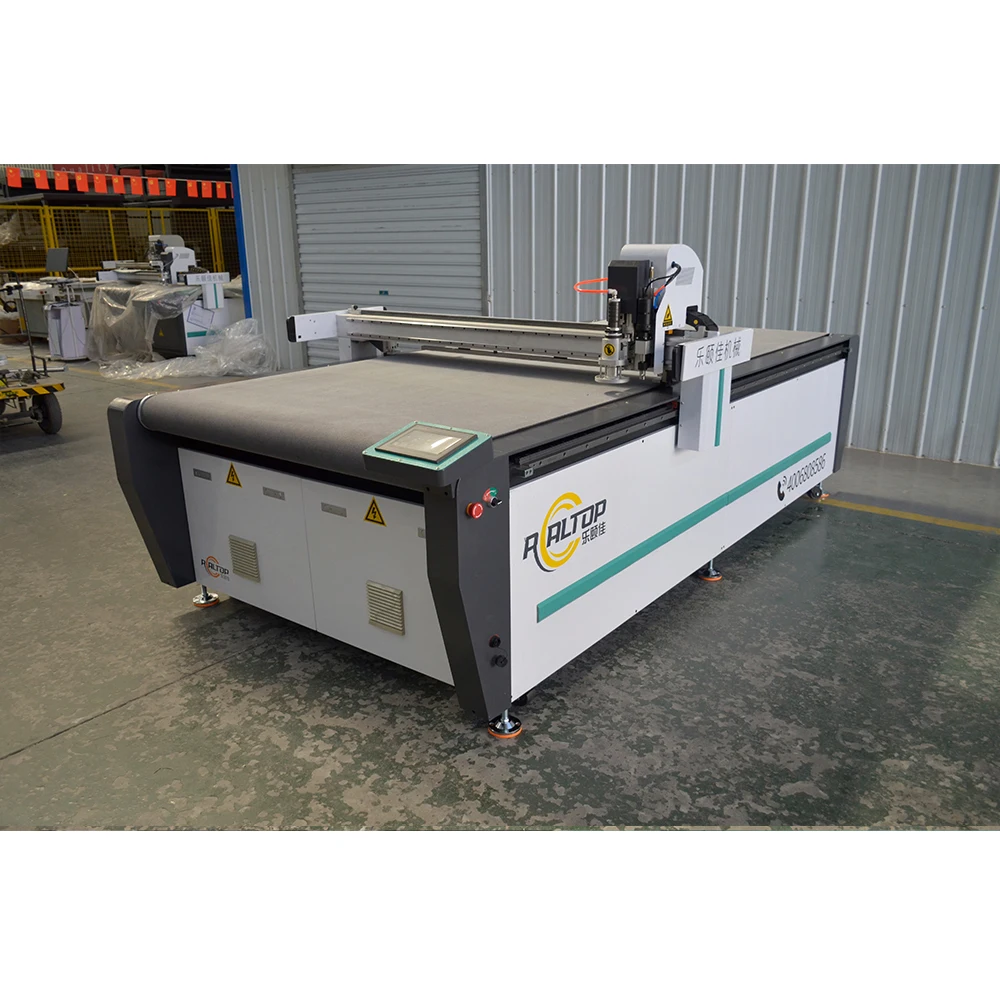
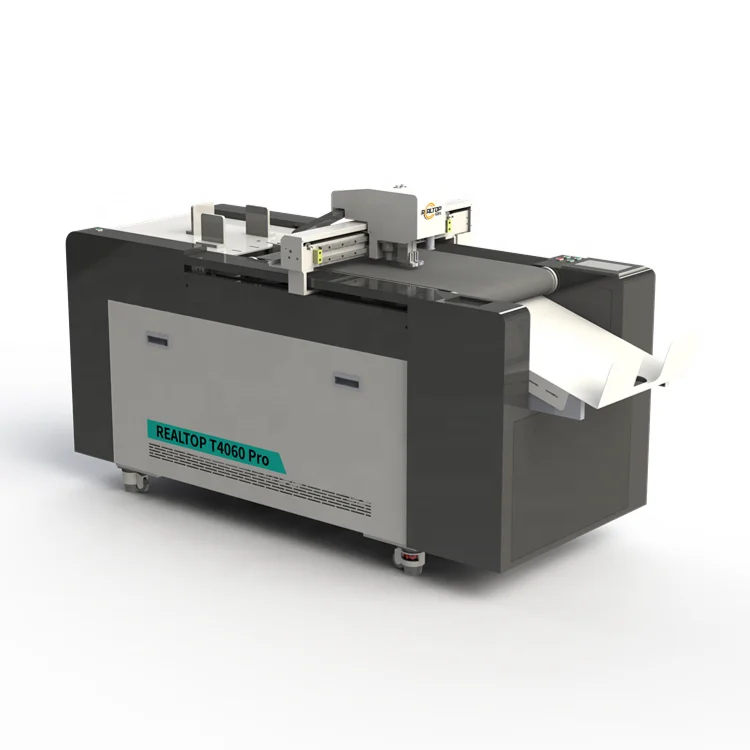
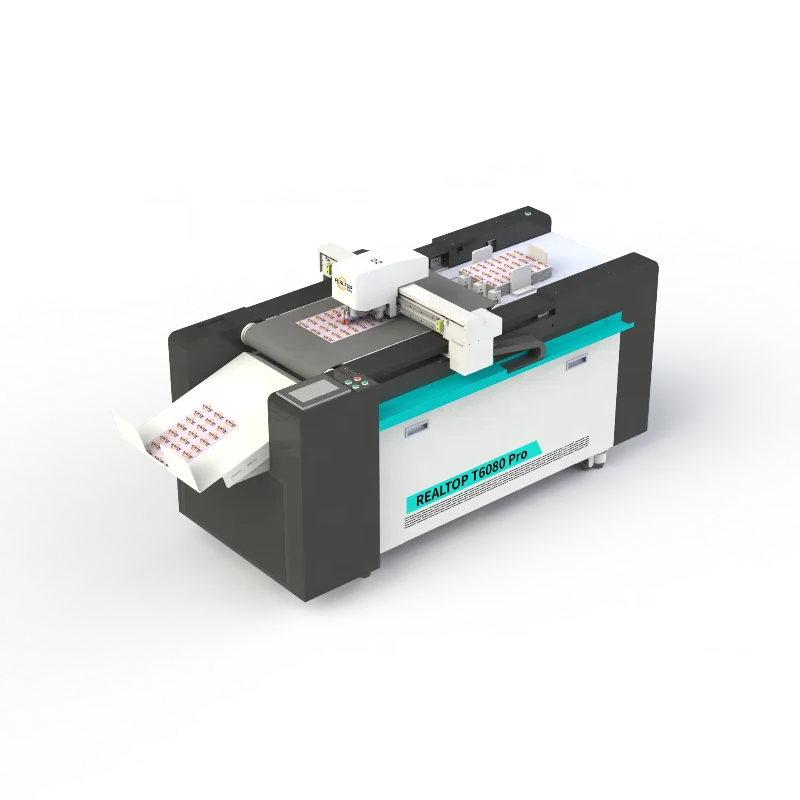
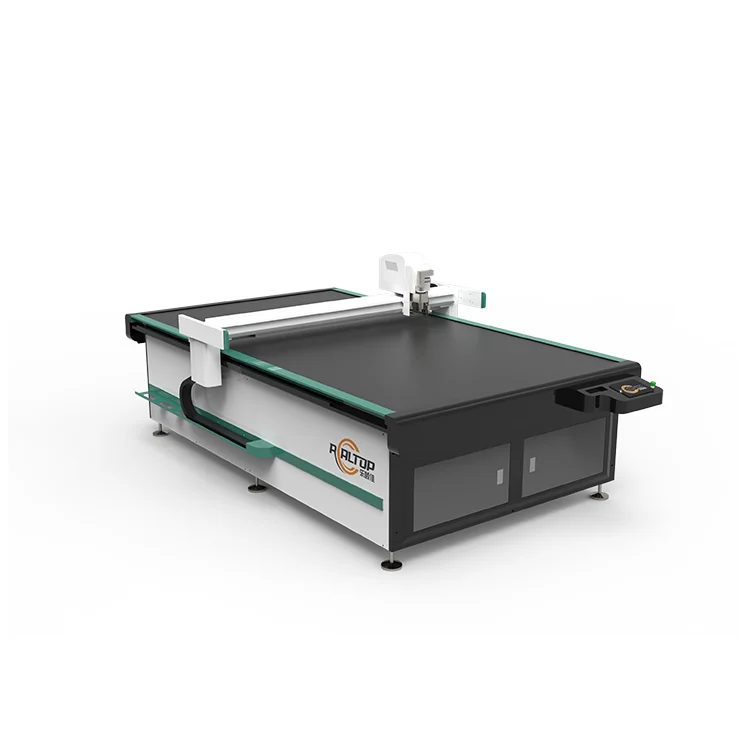
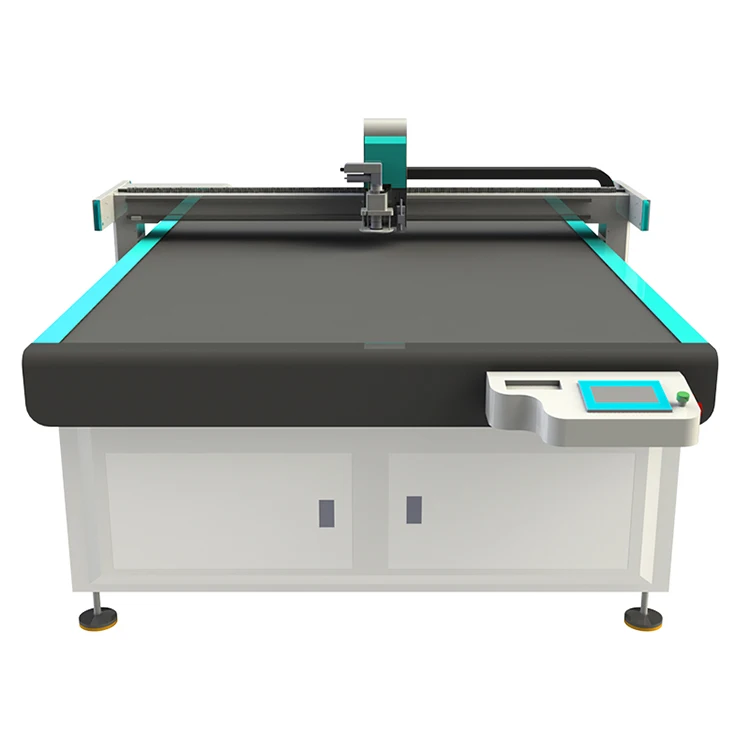
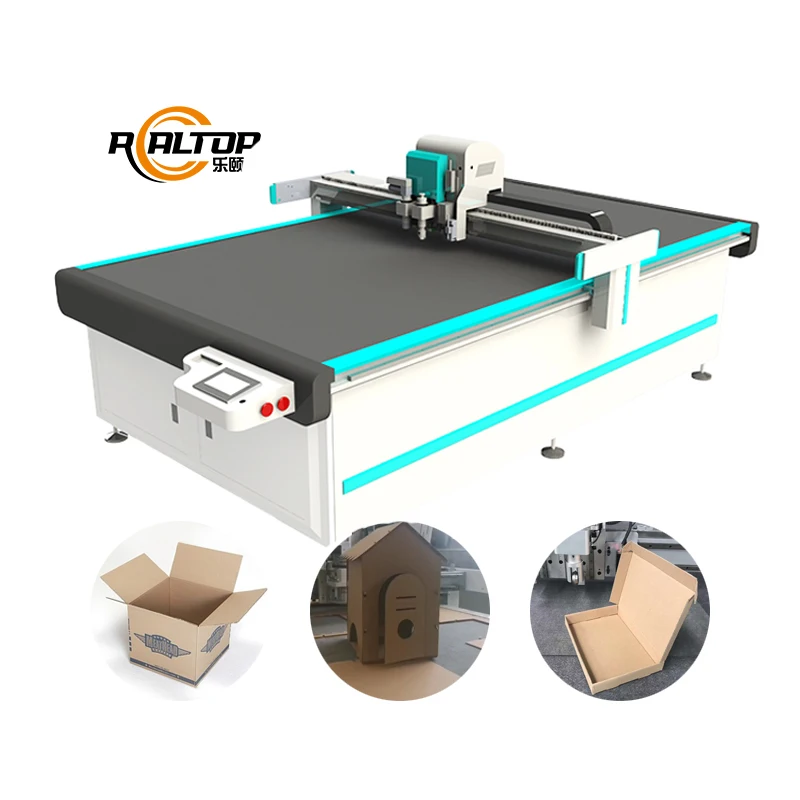
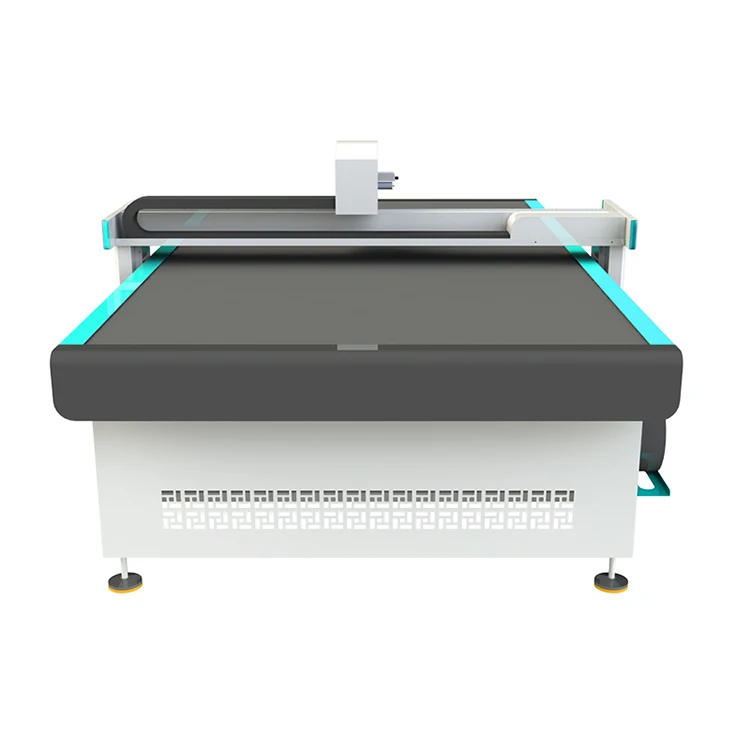
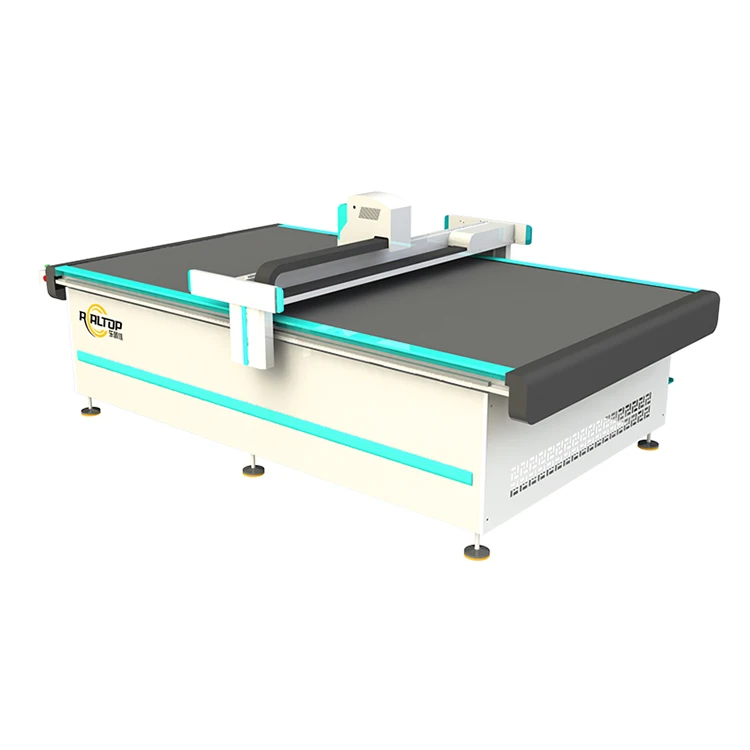
Complete Range Mapping — The RT-D2516/RT-S2516 sits within a full catalogue of CNC knife cutting configurations, letting buyers match tool head, vacuum zoning and CCD type to the exact fabric or composite before narrowing to a working area.
Technical Specifications
| Parameter | Value |
|---|---|
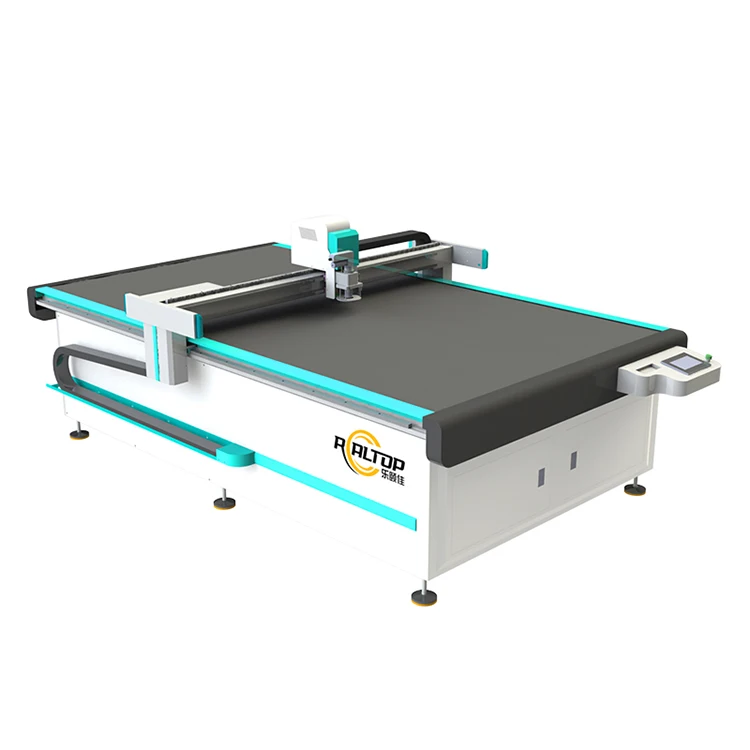
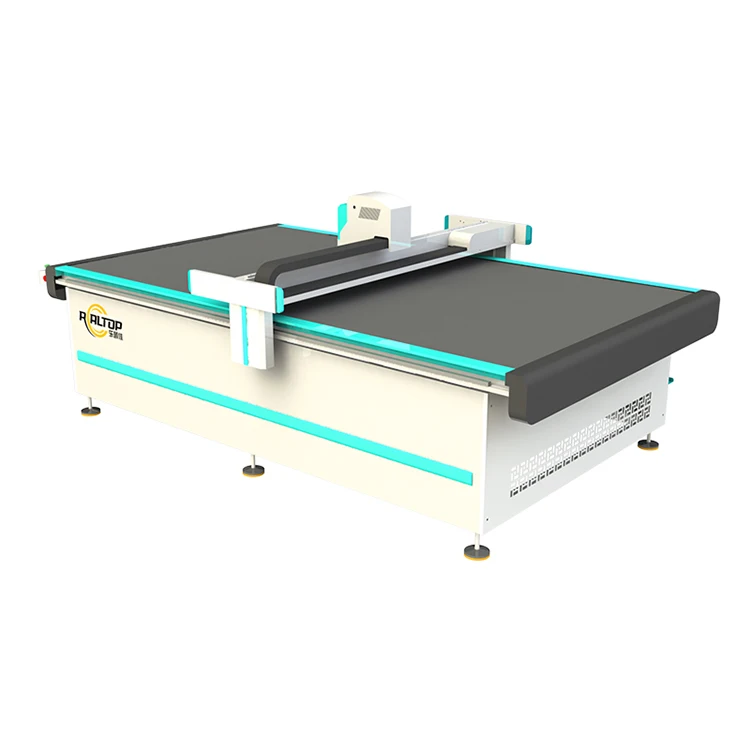
| Product Type | CNC Oscillating Knife Cutting Machine |
| Model | RT-D2516 / RT-S2516 |
| Working Area | 1600 × 2500 mm |
| Machine Size | 3450 × 2300 × 1250 mm |
| Rated Power | 9 kW |
| Working Table | Flat vacuum table with auto-feeding conveyor |
| Servo System | Delta digital servo motor |
| Linear Motion | Taiwan Hiwin rail, synchronous belt, ball screw (imported) |
| Cutting Thickness | Up to thick layered fabric and foam (basis to be confirmed per material) |
| Translational Velocity | 800–1200 mm/s |
| Repeated Accuracy | ≤ 0.1 mm |
| Instruction Format | HP-GL compatible |
| Voltage | 380 V ± 10 % |
| Vacuum Pump | 7.5 kW |
| Safety Device | Infrared sensors |
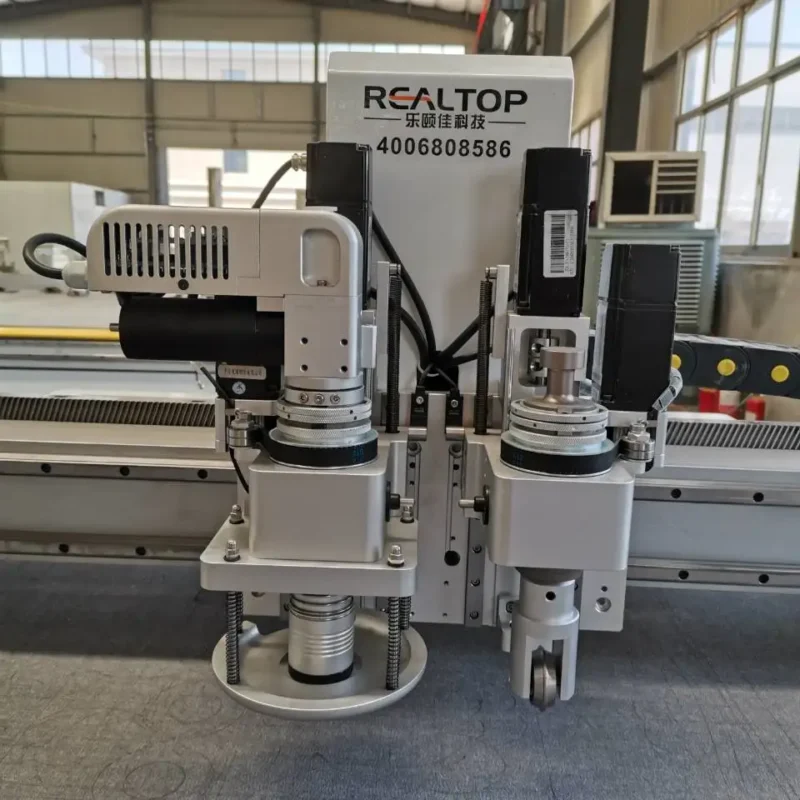
| Tool Head Options | Oscillating knife, pneumatic knife, high-power vibrating knife, circular knife, V-cutting knife, drag knife, creasing wheel, dotted line knife, punching, brush |
| Visual Positioning Options | Small CCD mark-point, panoramic camera recognition, projection positioning |
| Knife Source | Swiss-imported oscillating blade |
| Standards | CE declaration where applicable |
Application Suitability
| Application | Material or Output |
|---|---|
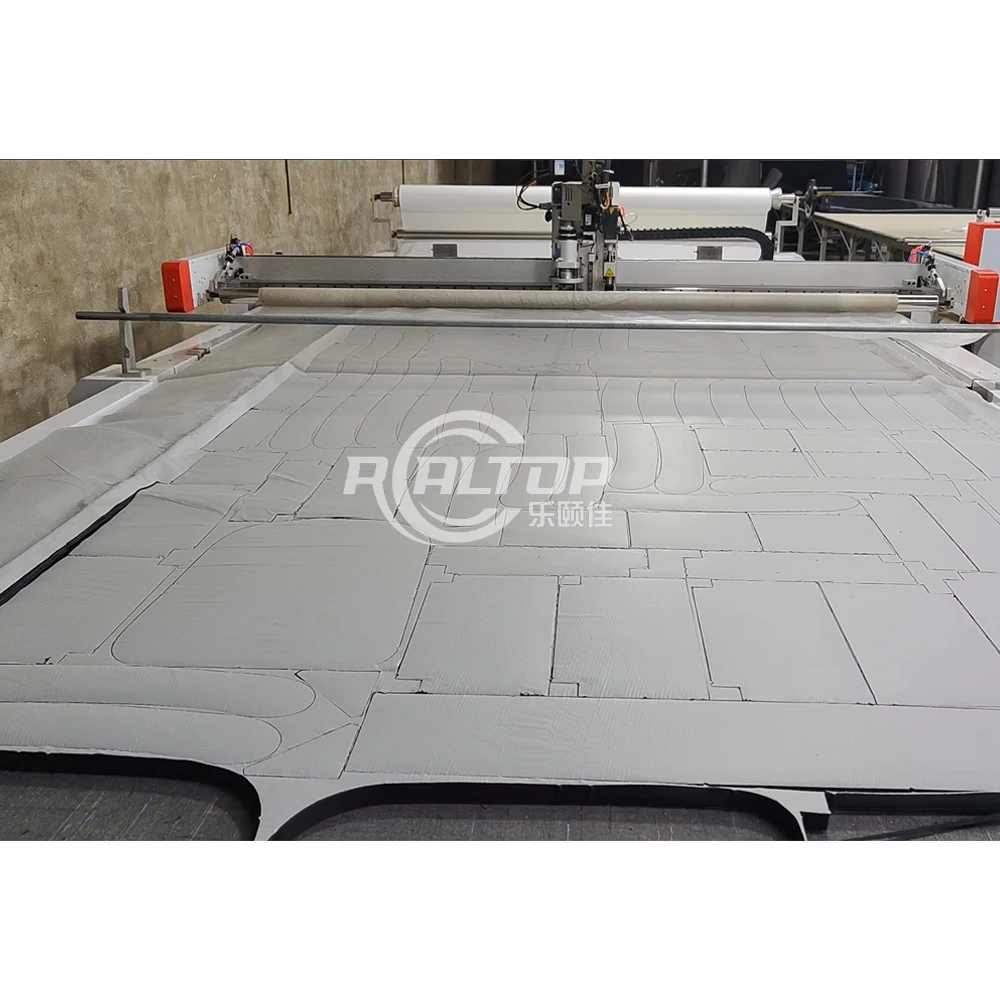
| Garment & footwear sampling | Woven cotton, polyester, lycra blends, multi-layer fabric lay |
| Automotive interior trimming | PU, EVA, XPE foam, sponge composite leather |
| Soft home furnishing | Upholstery textile, non-woven fabric, carpet |
| Graphic advertising & printing | PVC banner, sticker film, corrugated cardboard |
| Sealing & gasket fabrication | PTFE, ETFE, rubber sheet, silicone |
| Luggage & bag production | Nylon, canvas, leather, PE board |
| Sports & outdoor gear | Composite laminate, coated textile, EVA padding |
What Buyers Miss When They Specify Only by Working Area
A 1600 × 2500 mm bed tells you nothing about whether the blade will hold an edge on high-elasticity spandex blends or crush a 20 mm EVA foam layer instead of shearing it. The CNC oscillating knife cutting machine full catalogue exists because cutting force, stroke frequency and vacuum zoning must be matched to the material first — the bed size comes second. [NEED_CITE: cutting force requirements by textile density]
I once supplied an Auto Clothes Cutting Machine Textile Fabric Cutting Machinery setup to a Chilean workshop where the sample ran perfectly on polyester, but the daily production fabric was a high-elasticity spandex blend. The oscillating head could not keep up with the stretch, leaving ragged edges that forced the line to stop. Two weeks of downtime followed while a high-power vibrating knife was air-freighted across the Pacific. That failure was entirely preventable if the material question had preceded the bed-size question.
Knife-Head Selection Across the Textile Spectrum
The catalogue lists ten tool-head families, and each addresses a different failure mode in fabric cutting. A standard oscillating knife handles woven cotton and polyester cleanly, but high-elasticity knits demand the high-power vibrating variant to prevent the blade from dragging the weave. For leather and sponge composites, the pneumatic knife delivers the downward pressure needed to shear rather than tear the fibre structure. Selecting the head after the material is locked — not before — is what separates a line that runs daily from one that stops for blade swaps every shift.
Vacuum Zoning and Small-Part Hold-Down
A 7.5 kW vacuum pump moves serious air, yet suction is useless if the table is zoned for large panels while the nesting software lays out small collar pieces. The magnesium-aluminium table with PVDF powder coating is drilled in sections, so operators can isolate zones and concentrate suction under small parts that would otherwise lift at 1200 mm/s translational speed. When the pattern mix includes both full-front panels and narrow binding strips, zoning decisions made at order stage prevent lift-related miscuts on the production floor. [NEED_CITE: vacuum zoning effect on small textile parts]
Drive and Accuracy: What the Rail and Servo Pair Actually Do
The Taiwan Hiwin linear rail paired with a Delta digital servo keeps repeated accuracy within 0.1 mm, but the real production value shows up during long nesting runs where cumulative error would otherwise push the last piece off-grain. Synchronous belt drive on the X-axis and ball screw on the Y-axis split the load: the belt handles fast traverses between cut zones while the screw maintains position during intricate curves. HP-GL compatibility means the controller reads patterns from most textile CAD systems without file conversion, eliminating a common nesting bottleneck. The 9 kW total draw requires a dedicated 380 V ± 10 % circuit with stable phase balance — voltage drop under starting load is the single most frequent cause of servo faults in exported CNC knife equipment.
The Hidden Cost of Skipping the Material Trial
When the tool head and material mismatch surfaces after installation, the consequences extend far beyond a few ragged edges. Production halts while replacement heads are shipped internationally, operators lose confidence in the nesting software because cut quality looks inconsistent, and the buyer often blames the machine rather than the specification gap. Warranty claims rise, but the root cause is a missing sample report. Every week of stopped output costs more than the air-freight bill for a spare head — yet the trial itself takes only hours on the buyer’s own fabric roll. [NEED_CITE: cost of unplanned textile line stoppage]
Why Source the Full Range From One Build Team
REALTOP designs both knife and laser platforms in-house, so a buyer comparing methods for the same fabric gets an honest recommendation rather than a forced fit. The thick-walled steel frame undergoes high-temperature tempering and CNC machining-center finishing, keeping geometric accuracy stable through years of vibration cycles. Every configuration ships with a sample cutting report run on the buyer’s actual material, removing the guess-work that causes the spandex-blend scenario described above. Voltage, plug type and control language are confirmed at order, not discovered on the dock. The documentation package includes an electrical schematic matched to the destination grid, so the local electrician wires the cabinet correctly on day one.
Documentation & Verification
- Machine specification sheet listing the exact tool head and vacuum zone layout
- Sample cutting report on buyer’s fabric roll before dispatch
- Electrical schematic with confirmed 380 V ± 10 % wiring diagram
- HP-GL file format compatibility note for nesting software
- CE declaration included where applicable to destination market
- Spare parts list covering Swiss blades and vacuum seals
Installation, Commissioning & Support
- 3450 × 2300 mm footprint requires level concrete floor with anchor bolts
- Dedicated 380 V ± 10 % circuit with minimum breaker rating for 9 kW draw
- Table arrives fully assembled; conveyor belt tensioned on site
- First-power sequence includes servo tuning and vacuum zone mapping
- Operator training covers tool-head changeover and CCD calibration
- Blade and vacuum seal wear schedule issued at commissioning
What to Share With Your Next Inquiry
Tell us the exact fibre composition and weight per square metre of the fabric you run most often, the maximum lay height you plan to cut, and the daily metre output target. Confirm your workshop voltage, frequency and plug standard so the cabinet leaves the factory pre-wired. If your nesting workflow already uses a specific file format, send a sample file so we verify HP-GL compatibility before the build starts.
Frequently Asked Questions
Q: How do I pick the right tool head for my fabric?
A: Share the fibre type, weight and stretch percentage of your most demanding material. We run a sample cut with two or three head options — oscillating, pneumatic or high-power vibrating — and send you the edge-quality comparison so the decision is based on actual results, not catalogue descriptions.
Q: Which working area should I choose from the full range?
A: Match the bed to your largest pattern piece plus a 100 mm margin on each side. The 1600 × 2500 mm area covers most garment panels and automotive interior hides. If you regularly cut full-width rolls wider than 1600 mm, a larger format is available in the catalogue.
Q: Do I need CCD camera positioning for printed fabric?
A: If your designs rely on registered prints or sublimation transfers, the panoramic camera recognition option tracks printed marks at production speed and adjusts the cut path automatically. For plain-dyed fabric, the CCD mark-point or projection positioning is sufficient and keeps the investment lower.
Q: Will the vacuum table hold very small pieces in place?
A: The table is divided into independently valved zones. During nesting setup, the operator activates only the zones under small parts, concentrating the 7.5 kW pump’s suction and preventing lift at high traverse speeds. Zone mapping is saved with each job file for fast changeover.
Q: What file formats does the controller accept?
A: The system reads HP-GL compatible output, which covers most textile and sign-making CAD packages. Before order, we request a sample nesting file from your existing software and verify import, tool-path assignment and cut sequence so no conversion step is needed after installation.
Complete Range Mapping — The RT-D2516/RT-S2516 sits within a full catalogue of CNC knife cutting configurations, letting buyers match tool head, vacuum zoning and CCD type to the exact fabric or composite before narrowing to a working area.
Technical Specifications
| Parameter | Value |
|---|---|
| Product Type | CNC Oscillating Knife Cutting Machine |
| Model | RT-D2516 / RT-S2516 |
| Working Area | 1600 × 2500 mm |
| Machine Size | 3450 × 2300 × 1250 mm |
| Rated Power | 9 kW |
| Working Table | Flat vacuum table with auto-feeding conveyor |
| Servo System | Delta digital servo motor |
| Linear Motion | Taiwan Hiwin rail, synchronous belt, ball screw (imported) |
| Cutting Thickness | Up to thick layered fabric and foam (basis to be confirmed per material) |
| Translational Velocity | 800–1200 mm/s |
| Repeated Accuracy | ≤ 0.1 mm |
| Instruction Format | HP-GL compatible |
| Voltage | 380 V ± 10 % |
| Vacuum Pump | 7.5 kW |
| Safety Device | Infrared sensors |
| Tool Head Options | Oscillating knife, pneumatic knife, high-power vibrating knife, circular knife, V-cutting knife, drag knife, creasing wheel, dotted line knife, punching, brush |
| Visual Positioning Options | Small CCD mark-point, panoramic camera recognition, projection positioning |
| Knife Source | Swiss-imported oscillating blade |
| Standards | CE declaration where applicable |
Application Suitability
| Application | Material or Output |
|---|---|
| Garment & footwear sampling | Woven cotton, polyester, lycra blends, multi-layer fabric lay |
| Automotive interior trimming | PU, EVA, XPE foam, sponge composite leather |
| Soft home furnishing | Upholstery textile, non-woven fabric, carpet |
| Graphic advertising & printing | PVC banner, sticker film, corrugated cardboard |
| Sealing & gasket fabrication | PTFE, ETFE, rubber sheet, silicone |
| Luggage & bag production | Nylon, canvas, leather, PE board |
| Sports & outdoor gear | Composite laminate, coated textile, EVA padding |
What Buyers Miss When They Specify Only by Working Area
A 1600 × 2500 mm bed tells you nothing about whether the blade will hold an edge on high-elasticity spandex blends or crush a 20 mm EVA foam layer instead of shearing it. The CNC oscillating knife cutting machine full catalogue exists because cutting force, stroke frequency and vacuum zoning must be matched to the material first — the bed size comes second. [NEED_CITE: cutting force requirements by textile density]
I once supplied an Auto Clothes Cutting Machine Textile Fabric Cutting Machinery setup to a Chilean workshop where the sample ran perfectly on polyester, but the daily production fabric was a high-elasticity spandex blend. The oscillating head could not keep up with the stretch, leaving ragged edges that forced the line to stop. Two weeks of downtime followed while a high-power vibrating knife was air-freighted across the Pacific. That failure was entirely preventable if the material question had preceded the bed-size question.
Knife-Head Selection Across the Textile Spectrum
The catalogue lists ten tool-head families, and each addresses a different failure mode in fabric cutting. A standard oscillating knife handles woven cotton and polyester cleanly, but high-elasticity knits demand the high-power vibrating variant to prevent the blade from dragging the weave. For leather and sponge composites, the pneumatic knife delivers the downward pressure needed to shear rather than tear the fibre structure. Selecting the head after the material is locked — not before — is what separates a line that runs daily from one that stops for blade swaps every shift.
Vacuum Zoning and Small-Part Hold-Down
A 7.5 kW vacuum pump moves serious air, yet suction is useless if the table is zoned for large panels while the nesting software lays out small collar pieces. The magnesium-aluminium table with PVDF powder coating is drilled in sections, so operators can isolate zones and concentrate suction under small parts that would otherwise lift at 1200 mm/s translational speed. When the pattern mix includes both full-front panels and narrow binding strips, zoning decisions made at order stage prevent lift-related miscuts on the production floor. [NEED_CITE: vacuum zoning effect on small textile parts]
Drive and Accuracy: What the Rail and Servo Pair Actually Do
The Taiwan Hiwin linear rail paired with a Delta digital servo keeps repeated accuracy within 0.1 mm, but the real production value shows up during long nesting runs where cumulative error would otherwise push the last piece off-grain. Synchronous belt drive on the X-axis and ball screw on the Y-axis split the load: the belt handles fast traverses between cut zones while the screw maintains position during intricate curves. HP-GL compatibility means the controller reads patterns from most textile CAD systems without file conversion, eliminating a common nesting bottleneck. The 9 kW total draw requires a dedicated 380 V ± 10 % circuit with stable phase balance — voltage drop under starting load is the single most frequent cause of servo faults in exported CNC knife equipment.
The Hidden Cost of Skipping the Material Trial
When the tool head and material mismatch surfaces after installation, the consequences extend far beyond a few ragged edges. Production halts while replacement heads are shipped internationally, operators lose confidence in the nesting software because cut quality looks inconsistent, and the buyer often blames the machine rather than the specification gap. Warranty claims rise, but the root cause is a missing sample report. Every week of stopped output costs more than the air-freight bill for a spare head — yet the trial itself takes only hours on the buyer’s own fabric roll. [NEED_CITE: cost of unplanned textile line stoppage]
Why Source the Full Range From One Build Team
REALTOP designs both knife and laser platforms in-house, so a buyer comparing methods for the same fabric gets an honest recommendation rather than a forced fit. The thick-walled steel frame undergoes high-temperature tempering and CNC machining-center finishing, keeping geometric accuracy stable through years of vibration cycles. Every configuration ships with a sample cutting report run on the buyer’s actual material, removing the guess-work that causes the spandex-blend scenario described above. Voltage, plug type and control language are confirmed at order, not discovered on the dock. The documentation package includes an electrical schematic matched to the destination grid, so the local electrician wires the cabinet correctly on day one.
Documentation & Verification
- Machine specification sheet listing the exact tool head and vacuum zone layout
- Sample cutting report on buyer’s fabric roll before dispatch
- Electrical schematic with confirmed 380 V ± 10 % wiring diagram
- HP-GL file format compatibility note for nesting software
- CE declaration included where applicable to destination market
- Spare parts list covering Swiss blades and vacuum seals
Installation, Commissioning & Support
- 3450 × 2300 mm footprint requires level concrete floor with anchor bolts
- Dedicated 380 V ± 10 % circuit with minimum breaker rating for 9 kW draw
- Table arrives fully assembled; conveyor belt tensioned on site
- First-power sequence includes servo tuning and vacuum zone mapping
- Operator training covers tool-head changeover and CCD calibration
- Blade and vacuum seal wear schedule issued at commissioning
What to Share With Your Next Inquiry
Tell us the exact fibre composition and weight per square metre of the fabric you run most often, the maximum lay height you plan to cut, and the daily metre output target. Confirm your workshop voltage, frequency and plug standard so the cabinet leaves the factory pre-wired. If your nesting workflow already uses a specific file format, send a sample file so we verify HP-GL compatibility before the build starts.
Frequently Asked Questions
Q: How do I pick the right tool head for my fabric?
A: Share the fibre type, weight and stretch percentage of your most demanding material. We run a sample cut with two or three head options — oscillating, pneumatic or high-power vibrating — and send you the edge-quality comparison so the decision is based on actual results, not catalogue descriptions.
Q: Which working area should I choose from the full range?
A: Match the bed to your largest pattern piece plus a 100 mm margin on each side. The 1600 × 2500 mm area covers most garment panels and automotive interior hides. If you regularly cut full-width rolls wider than 1600 mm, a larger format is available in the catalogue.
Q: Do I need CCD camera positioning for printed fabric?
A: If your designs rely on registered prints or sublimation transfers, the panoramic camera recognition option tracks printed marks at production speed and adjusts the cut path automatically. For plain-dyed fabric, the CCD mark-point or projection positioning is sufficient and keeps the investment lower.
Q: Will the vacuum table hold very small pieces in place?
A: The table is divided into independently valved zones. During nesting setup, the operator activates only the zones under small parts, concentrating the 7.5 kW pump’s suction and preventing lift at high traverse speeds. Zone mapping is saved with each job file for fast changeover.
Q: What file formats does the controller accept?
A: The system reads HP-GL compatible output, which covers most textile and sign-making CAD packages. Before order, we request a sample nesting file from your existing software and verify import, tool-path assignment and cut sequence so no conversion step is needed after installation.
商品评价
There are no reviews yet.