



Fast Delivery
Quick, reliable shipping to any location.

Free & easy returns
Return this item by mail or in store within 90 days for a full refund.
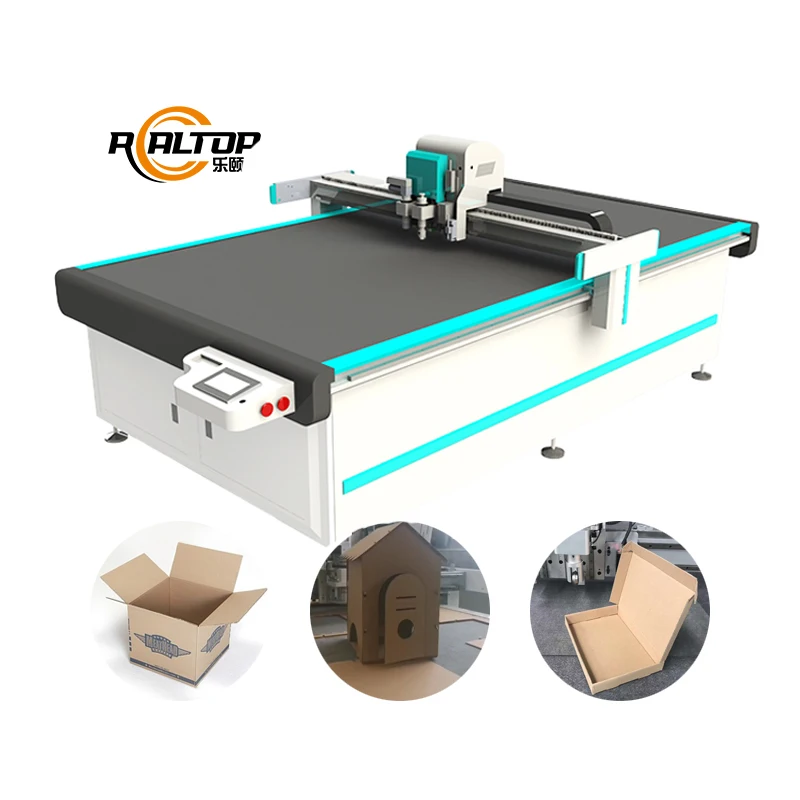
Customized tool head and table configuration — Every RT-D2516/RT-S2516 is set up after sample cutting on the buyer’s own material, ensuring the oscillating knife, vacuum zoning, and software match the actual production requirement rather than a generic template.
Technical Specifications
| Parameter | Value |
|---|---|
| Model | RT-D2516/RT-S2516 |
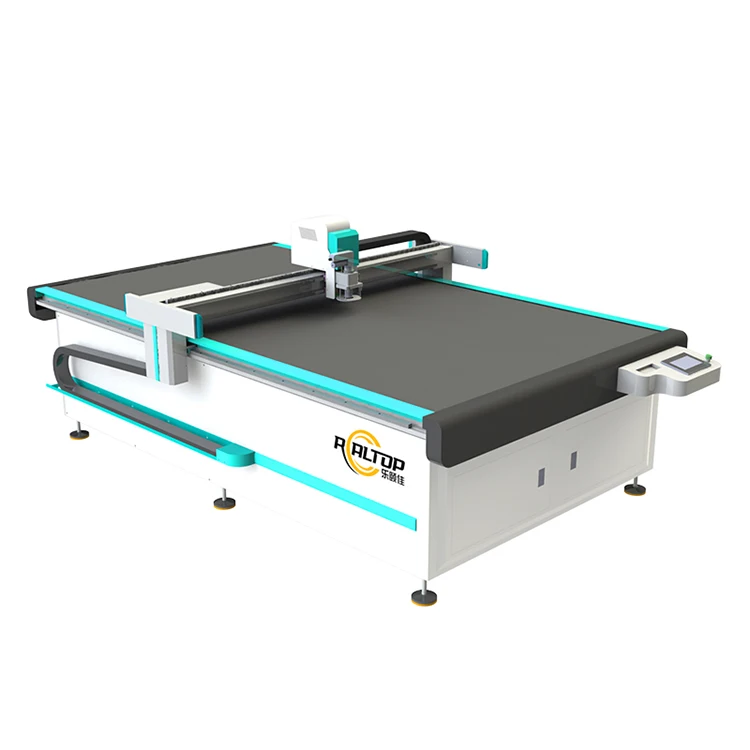
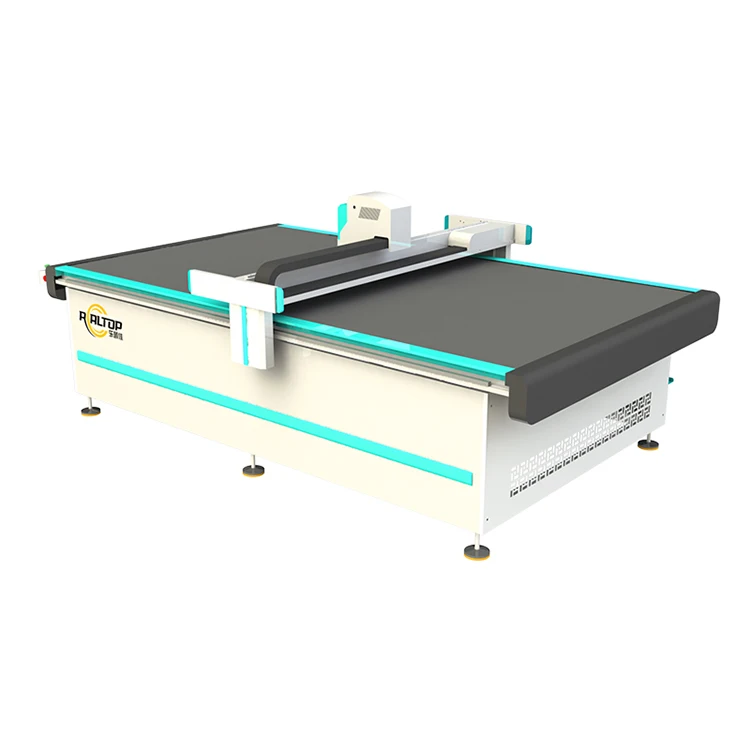
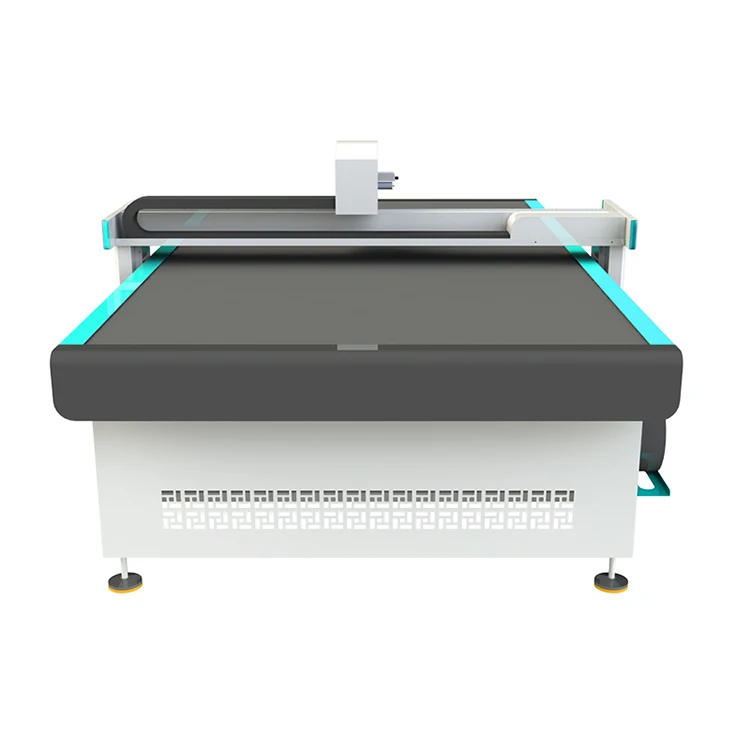
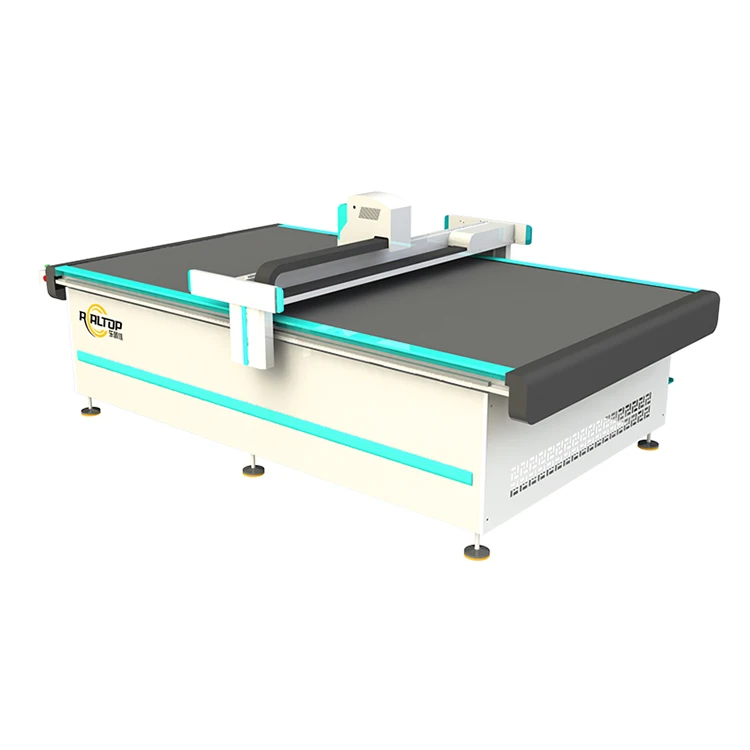
| Product Type | CNC Oscillating Knife Cutting Machine |
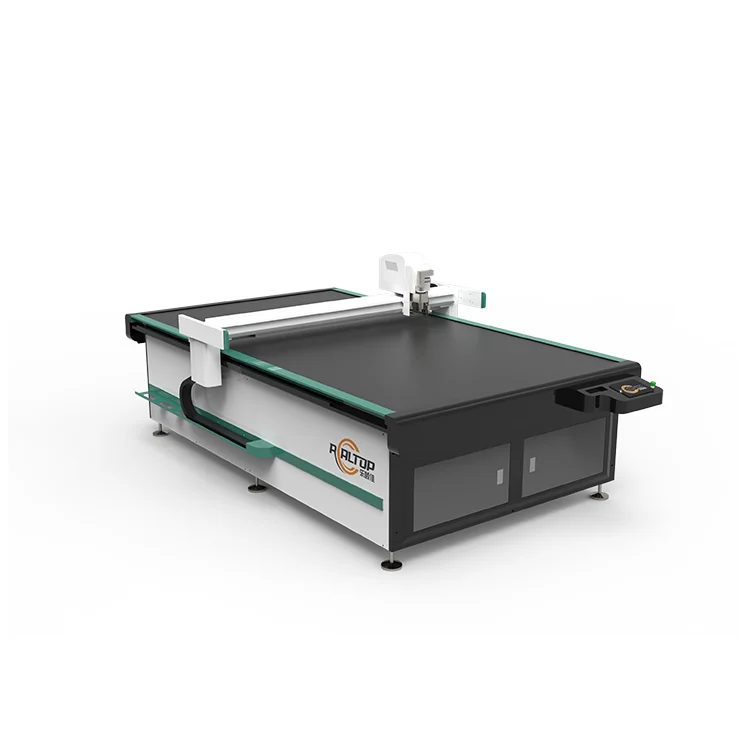
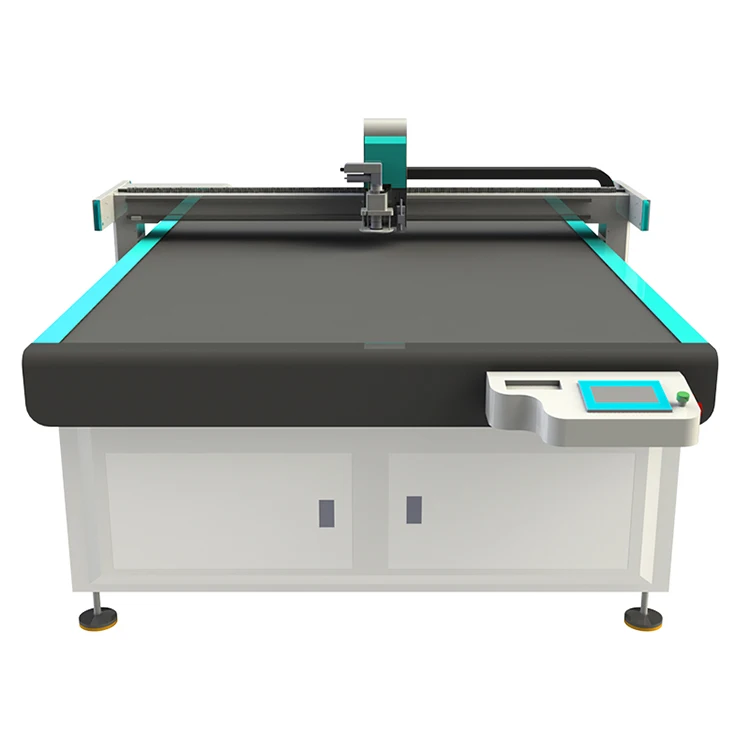
| Working Area | 1600 × 2500 mm |
| Machine Size (L × W × H) | 3450 × 2300 × 1250 mm |
| Rated Power | 9 kW |
| Voltage | 380V ± 10% |
| Table Type | Fixed flat working table |
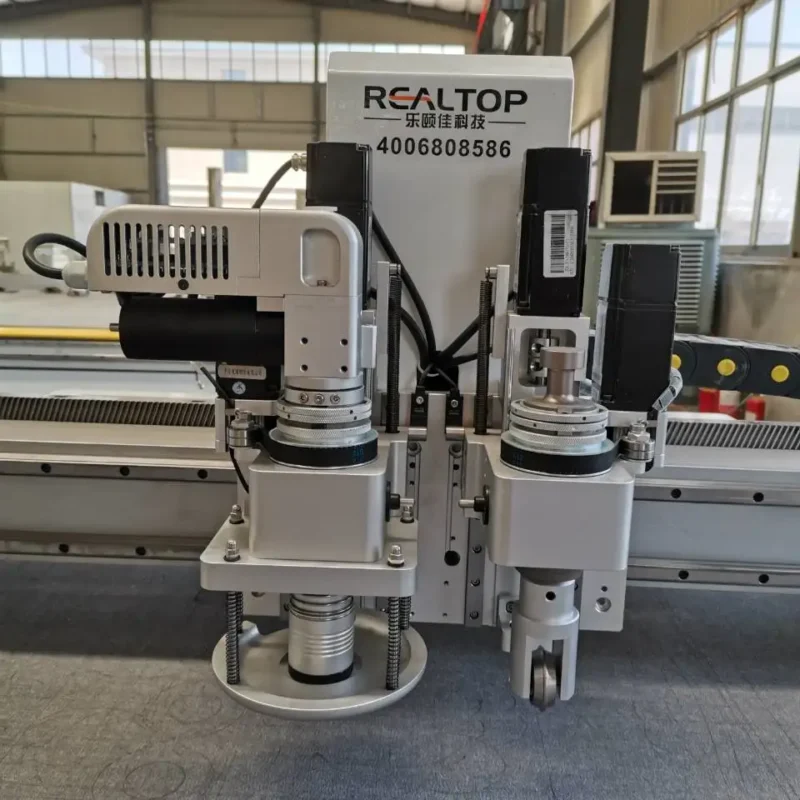
| Multifunctional Head | Swiss imported knife (vibration full cutting, half cutting, cursor location) |
| Tool Head Options | Oscillating knife, pneumatic knife, high-power vibrating knife, circular knife, V-cutting knife, drag knife, creasing wheel, dotted line knife, punching, brush |
| Visual Positioning | Small CCD camera mark point, panoramic camera recognition, projection positioning |
| Safety Device | Infrared sensors, anti-collision, emergency stop |
| Translational Velocity | 800–1200 mm/s |
| Cutting Thickness | 20–80 mm depending on material (basis not stated in source) |
| Repeated Accuracy | ≤ 0.1 mm |
| Transmission System | Digital servo motor, linear guide, synchronous belt, imported ball screw |
| Instruction System | HP-GL compatible format |
| Vacuum Table | Magnesium-aluminum alloy with PVDF powder spraying and hard oxidation |
| Vacuum Pump | 7.5 kW, integrated aviation aluminum shell with built-in silencer |
| Servo Motor | Delta (Panasonic optional), IP67 waterproof |
| Additional Configuration | Germany imported conveyor belt, auto feeding, Taiwan Hiwin rail |
| Language Options | English, Russian, Italian, Chinese (other languages customizable) |
| Assembly State | Fully assembled |
Application Suitability
| Application | Material or Output |
|---|---|
| Carton and packaging sample making | Corrugated cardboard, gray board, plastic box sheet |
| Garment and footwear production | Fabric, leather, shoe material, luggage material, non-woven fabric |
| Automotive interior and gasket fabrication | Foam board, sponge, PU, EVA, XPE, rubber, PTFE, ETFE |
| Advertising and signage cutting | PVC, PP, PE, sticker, film |
| Soft furnishing and carpet manufacturing | Textile, cloth, carpet, composite materials |
| Sealing and gasket production | Rubber, fiberglass, PTFE, composite gasket material |
Why Material Thickness Changes the Real Cutting Speed
Cutting speed claims mean nothing without the material specification attached.
I have watched buyers compare two flatbed machines purely on the stated translational velocity, then discover on the shop floor that cutting 2 mm leather runs smoothly while 15 mm EVA foam forces the head to slow down dramatically. The 800–1200 mm/s translational velocity on the RT-D2516/RT-S2516 refers to travel speed, not cutting throughput, and actual throughput shifts with material density and thickness. When a CNC oscillating knife cutting machine manufacturer quotes speed without a material context, the number is unverified for your production [NEED_CITE: industrial cutting speed testing standards for flatbed knife systems].
Matching the Tool Head to the Material Stack
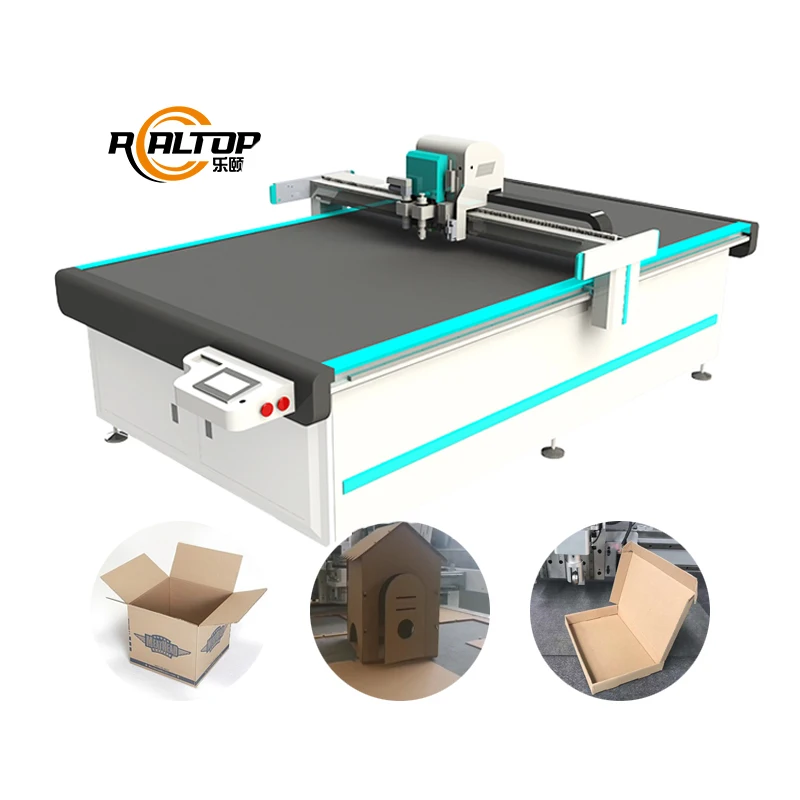
The Swiss imported multifunctional knife head on the RT-D2516/RT-S2516 handles vibration full cutting, half cutting, and cursor location within a single setup. For corrugated cardboard sample making, the oscillating knife produces clean edges without crushing the flute structure. When the job shifts to dense foam or rubber gaskets, a high-power vibrating knife or pneumatic knife option provides the down-force needed to penetrate thicker stock. Selecting the correct tool head at the order stage prevents ragged edges and excessive blade wear later.
Visual Positioning for Printed Contour Work
Printed graphics on packaging prototypes and signage require the cutter to locate registration marks and adjust the cut path in real time. The RT-D2516/RT-S2516 offers three visual positioning methods: a small CCD camera for mark point targeting, a panoramic camera for full-sheet recognition, and projection positioning for manual alignment. On short-run carton samples with full-color prints, the panoramic camera recognition tracks contours across the entire working area, reducing misalignment waste that accumulates over a production shift [NEED_CITE: CCD camera positioning accuracy on printed corrugated substrates].
How Vacuum Zoning, Rail Precision, and Table Flatness Interact
The magnesium-aluminum alloy vacuum table with PVDF coating and hard oxidation provides a flat surface that resists scratching from repeated knife passes. A 7.5 kW vacuum pump generates suction across the 1600 × 2500 mm area, and the zoning arrangement determines whether small nesting parts stay pinned during cutting. Taiwan Hiwin linear rails and imported ball screws deliver the ≤ 0.1 mm repeated accuracy required for tight-tolerance gasket and packaging die-board work. When vacuum zoning is undersized for small parts, material lift causes the knife to deflect, producing dimensional errors that compound through the rest of the production run.
The Hidden Cost of Skipping the Sample Cut
Buyers who approve a configuration based on a brochure spec sheet often encounter problems only when the machine runs their actual material. A wrong tool head on thick foam leaves crushed edges that require secondary trimming. Insufficient vacuum zoning lets small cardboard parts drift mid-cut, ruining the nesting yield. Software that cannot import the buyer’s native DXF or PLT files forces a manual conversion step that introduces geometry errors. Every one of these issues surfaces during a sample cut and costs far less to fix before the machine ships [NEED_CITE: common material handling failures in flatbed CNC knife cutting installations].
Why Procurement Teams Choose This Range
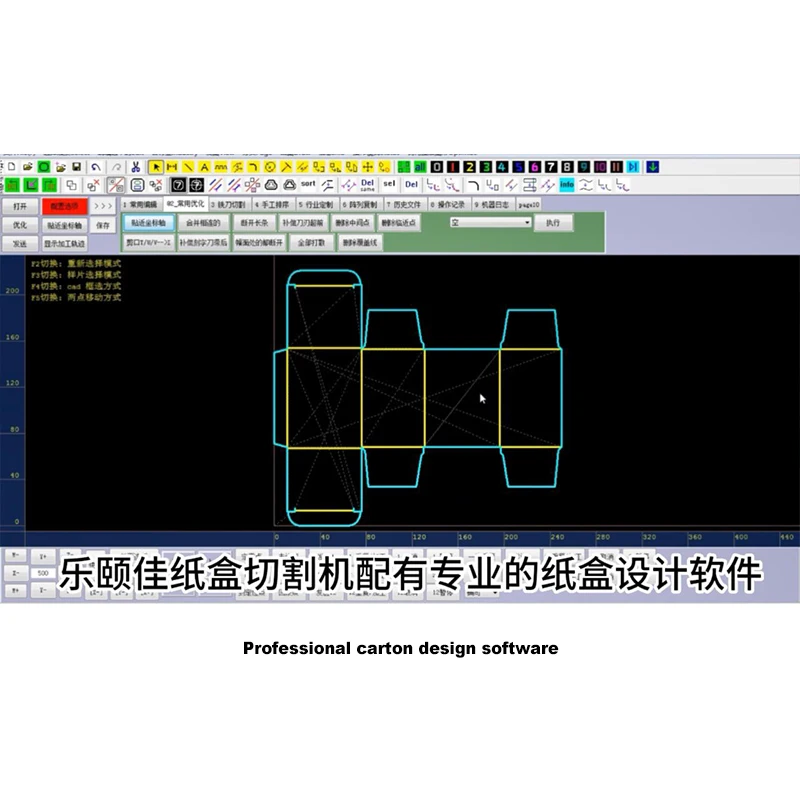
An in-house design team covers both oscillating knife and laser cutting, so the cutting method is matched to the material rather than forced into one technology. Tool head and table configurations are specified per material type, thickness, and production volume before the order is confirmed. CCD camera positioning options are validated on the buyer’s printed stock during sample testing. Software compatibility — including HP-GL format import and nesting workflow integration — is verified before shipment. Voltage, plug type, and control language are confirmed to match the destination facility, avoiding rewiring costs after arrival.
Documentation & Verification
- Machine specification sheet with confirmed voltage and electrical schematic for your facility
- Tool head and vacuum table configuration list matched to your material and thickness range
- Sample cutting report produced on your own material before order commitment
- Software licence and file format compatibility note for your CAD and nesting workflow
- Factory test record documenting cutting accuracy and vacuum performance pre-dispatch
Installation, Commissioning & Support
- 9 kW rated power requires a dedicated 380V ± 10% circuit with proper grounding at your facility
- Machine ships fully assembled at 3450 × 2300 × 1250 mm, requiring adequate door clearance and floor space
- Vacuum pump and servo motors calibrated on-site during first startup and parameter setting
- Operator training covers tool head changeover, vacuum zoning adjustment, and CCD camera calibration
- Spare parts list includes oscillating knife blades, vacuum seals, and Hiwin rail lubrication supplies
- Daily maintenance schedule for vacuum filter cleaning and linear guide inspection
What to Include in Your Inquiry
Provide the specific material type, thickness range, and maximum sheet size you plan to cut so the correct tool head and vacuum zoning can be selected. State your facility voltage and frequency, preferred control language, and the CAD or nesting software you currently use. If your production involves printed contour work, send a sample printed sheet so visual positioning performance can be evaluated before commitment.
Frequently Asked Questions
Q: How do I decide between oscillating knife and laser cutting for my material?
A: Oscillating knife cutting suits fabrics, foams, gaskets, and thick cardboard where a laser would burn or melt the edge. Laser cutting works better for acrylic, wood, and thin textiles that benefit from edge sealing. REALTOP produces both technologies, so the method is matched to your material during the sample cutting stage rather than defaulting to one approach.
Q: Which tool head options are available and which fits my material?
A: The RT-D2516/RT-S2516 offers oscillating knife, pneumatic knife, high-power vibrating knife, circular knife, drag knife, creasing wheel, and several specialty tools. For corrugated cardboard and thin board, the standard oscillating knife performs well. Dense foam and thick rubber benefit from a pneumatic or high-power vibrating knife. The correct tool is confirmed through sample cutting on your actual material.
Q: How can I verify the cutting speed will meet my production target?
A: Submit your material type, thickness, and typical sheet layout for a sample cutting run. The sample report records actual cutting time per sheet and edge quality, giving you a realistic throughput figure based on your production conditions rather than a generic travel speed number.
Q: What visual positioning options are offered for printed contour cutting?
A: Three options are available: a small CCD camera for mark point positioning, a panoramic camera for full-sheet recognition, and projection positioning for manual alignment. Performance on your specific printed material is verified during sample testing to confirm mark tracking at production speed.
Q: Can voltage, language, and software format be customized before ordering?
A: Yes. Voltage and plug type are confirmed against your facility supply. The control interface is available in English, Russian, Italian, Chinese, and other languages on request. HP-GL compatible file format and software licence details are verified to ensure your existing CAD and nesting workflow imports correctly.
Customized tool head and table configuration — Every RT-D2516/RT-S2516 is set up after sample cutting on the buyer’s own material, ensuring the oscillating knife, vacuum zoning, and software match the actual production requirement rather than a generic template.
Technical Specifications
| Parameter | Value |
|---|---|
| Model | RT-D2516/RT-S2516 |
| Product Type | CNC Oscillating Knife Cutting Machine |
| Working Area | 1600 × 2500 mm |
| Machine Size (L × W × H) | 3450 × 2300 × 1250 mm |
| Rated Power | 9 kW |
| Voltage | 380V ± 10% |
| Table Type | Fixed flat working table |
| Multifunctional Head | Swiss imported knife (vibration full cutting, half cutting, cursor location) |
| Tool Head Options | Oscillating knife, pneumatic knife, high-power vibrating knife, circular knife, V-cutting knife, drag knife, creasing wheel, dotted line knife, punching, brush |
| Visual Positioning | Small CCD camera mark point, panoramic camera recognition, projection positioning |
| Safety Device | Infrared sensors, anti-collision, emergency stop |
| Translational Velocity | 800–1200 mm/s |
| Cutting Thickness | 20–80 mm depending on material (basis not stated in source) |
| Repeated Accuracy | ≤ 0.1 mm |
| Transmission System | Digital servo motor, linear guide, synchronous belt, imported ball screw |
| Instruction System | HP-GL compatible format |
| Vacuum Table | Magnesium-aluminum alloy with PVDF powder spraying and hard oxidation |
| Vacuum Pump | 7.5 kW, integrated aviation aluminum shell with built-in silencer |
| Servo Motor | Delta (Panasonic optional), IP67 waterproof |
| Additional Configuration | Germany imported conveyor belt, auto feeding, Taiwan Hiwin rail |
| Language Options | English, Russian, Italian, Chinese (other languages customizable) |
| Assembly State | Fully assembled |
Application Suitability
| Application | Material or Output |
|---|---|
| Carton and packaging sample making | Corrugated cardboard, gray board, plastic box sheet |
| Garment and footwear production | Fabric, leather, shoe material, luggage material, non-woven fabric |
| Automotive interior and gasket fabrication | Foam board, sponge, PU, EVA, XPE, rubber, PTFE, ETFE |
| Advertising and signage cutting | PVC, PP, PE, sticker, film |
| Soft furnishing and carpet manufacturing | Textile, cloth, carpet, composite materials |
| Sealing and gasket production | Rubber, fiberglass, PTFE, composite gasket material |
Why Material Thickness Changes the Real Cutting Speed
Cutting speed claims mean nothing without the material specification attached.
I have watched buyers compare two flatbed machines purely on the stated translational velocity, then discover on the shop floor that cutting 2 mm leather runs smoothly while 15 mm EVA foam forces the head to slow down dramatically. The 800–1200 mm/s translational velocity on the RT-D2516/RT-S2516 refers to travel speed, not cutting throughput, and actual throughput shifts with material density and thickness. When a CNC oscillating knife cutting machine manufacturer quotes speed without a material context, the number is unverified for your production [NEED_CITE: industrial cutting speed testing standards for flatbed knife systems].
Matching the Tool Head to the Material Stack
The Swiss imported multifunctional knife head on the RT-D2516/RT-S2516 handles vibration full cutting, half cutting, and cursor location within a single setup. For corrugated cardboard sample making, the oscillating knife produces clean edges without crushing the flute structure. When the job shifts to dense foam or rubber gaskets, a high-power vibrating knife or pneumatic knife option provides the down-force needed to penetrate thicker stock. Selecting the correct tool head at the order stage prevents ragged edges and excessive blade wear later.
Visual Positioning for Printed Contour Work
Printed graphics on packaging prototypes and signage require the cutter to locate registration marks and adjust the cut path in real time. The RT-D2516/RT-S2516 offers three visual positioning methods: a small CCD camera for mark point targeting, a panoramic camera for full-sheet recognition, and projection positioning for manual alignment. On short-run carton samples with full-color prints, the panoramic camera recognition tracks contours across the entire working area, reducing misalignment waste that accumulates over a production shift [NEED_CITE: CCD camera positioning accuracy on printed corrugated substrates].
How Vacuum Zoning, Rail Precision, and Table Flatness Interact
The magnesium-aluminum alloy vacuum table with PVDF coating and hard oxidation provides a flat surface that resists scratching from repeated knife passes. A 7.5 kW vacuum pump generates suction across the 1600 × 2500 mm area, and the zoning arrangement determines whether small nesting parts stay pinned during cutting. Taiwan Hiwin linear rails and imported ball screws deliver the ≤ 0.1 mm repeated accuracy required for tight-tolerance gasket and packaging die-board work. When vacuum zoning is undersized for small parts, material lift causes the knife to deflect, producing dimensional errors that compound through the rest of the production run.
The Hidden Cost of Skipping the Sample Cut
Buyers who approve a configuration based on a brochure spec sheet often encounter problems only when the machine runs their actual material. A wrong tool head on thick foam leaves crushed edges that require secondary trimming. Insufficient vacuum zoning lets small cardboard parts drift mid-cut, ruining the nesting yield. Software that cannot import the buyer’s native DXF or PLT files forces a manual conversion step that introduces geometry errors. Every one of these issues surfaces during a sample cut and costs far less to fix before the machine ships [NEED_CITE: common material handling failures in flatbed CNC knife cutting installations].
Why Procurement Teams Choose This Range
An in-house design team covers both oscillating knife and laser cutting, so the cutting method is matched to the material rather than forced into one technology. Tool head and table configurations are specified per material type, thickness, and production volume before the order is confirmed. CCD camera positioning options are validated on the buyer’s printed stock during sample testing. Software compatibility — including HP-GL format import and nesting workflow integration — is verified before shipment. Voltage, plug type, and control language are confirmed to match the destination facility, avoiding rewiring costs after arrival.
Documentation & Verification
- Machine specification sheet with confirmed voltage and electrical schematic for your facility
- Tool head and vacuum table configuration list matched to your material and thickness range
- Sample cutting report produced on your own material before order commitment
- Software licence and file format compatibility note for your CAD and nesting workflow
- Factory test record documenting cutting accuracy and vacuum performance pre-dispatch
Installation, Commissioning & Support
- 9 kW rated power requires a dedicated 380V ± 10% circuit with proper grounding at your facility
- Machine ships fully assembled at 3450 × 2300 × 1250 mm, requiring adequate door clearance and floor space
- Vacuum pump and servo motors calibrated on-site during first startup and parameter setting
- Operator training covers tool head changeover, vacuum zoning adjustment, and CCD camera calibration
- Spare parts list includes oscillating knife blades, vacuum seals, and Hiwin rail lubrication supplies
- Daily maintenance schedule for vacuum filter cleaning and linear guide inspection
What to Include in Your Inquiry
Provide the specific material type, thickness range, and maximum sheet size you plan to cut so the correct tool head and vacuum zoning can be selected. State your facility voltage and frequency, preferred control language, and the CAD or nesting software you currently use. If your production involves printed contour work, send a sample printed sheet so visual positioning performance can be evaluated before commitment.
Frequently Asked Questions
Q: How do I decide between oscillating knife and laser cutting for my material?
A: Oscillating knife cutting suits fabrics, foams, gaskets, and thick cardboard where a laser would burn or melt the edge. Laser cutting works better for acrylic, wood, and thin textiles that benefit from edge sealing. REALTOP produces both technologies, so the method is matched to your material during the sample cutting stage rather than defaulting to one approach.
Q: Which tool head options are available and which fits my material?
A: The RT-D2516/RT-S2516 offers oscillating knife, pneumatic knife, high-power vibrating knife, circular knife, drag knife, creasing wheel, and several specialty tools. For corrugated cardboard and thin board, the standard oscillating knife performs well. Dense foam and thick rubber benefit from a pneumatic or high-power vibrating knife. The correct tool is confirmed through sample cutting on your actual material.
Q: How can I verify the cutting speed will meet my production target?
A: Submit your material type, thickness, and typical sheet layout for a sample cutting run. The sample report records actual cutting time per sheet and edge quality, giving you a realistic throughput figure based on your production conditions rather than a generic travel speed number.
Q: What visual positioning options are offered for printed contour cutting?
A: Three options are available: a small CCD camera for mark point positioning, a panoramic camera for full-sheet recognition, and projection positioning for manual alignment. Performance on your specific printed material is verified during sample testing to confirm mark tracking at production speed.
Q: Can voltage, language, and software format be customized before ordering?
A: Yes. Voltage and plug type are confirmed against your facility supply. The control interface is available in English, Russian, Italian, Chinese, and other languages on request. HP-GL compatible file format and software licence details are verified to ensure your existing CAD and nesting workflow imports correctly.
商品评价
There are no reviews yet.