


Fast Delivery
Quick, reliable shipping to any location.

Free & easy returns
Return this item by mail or in store within 90 days for a full refund.
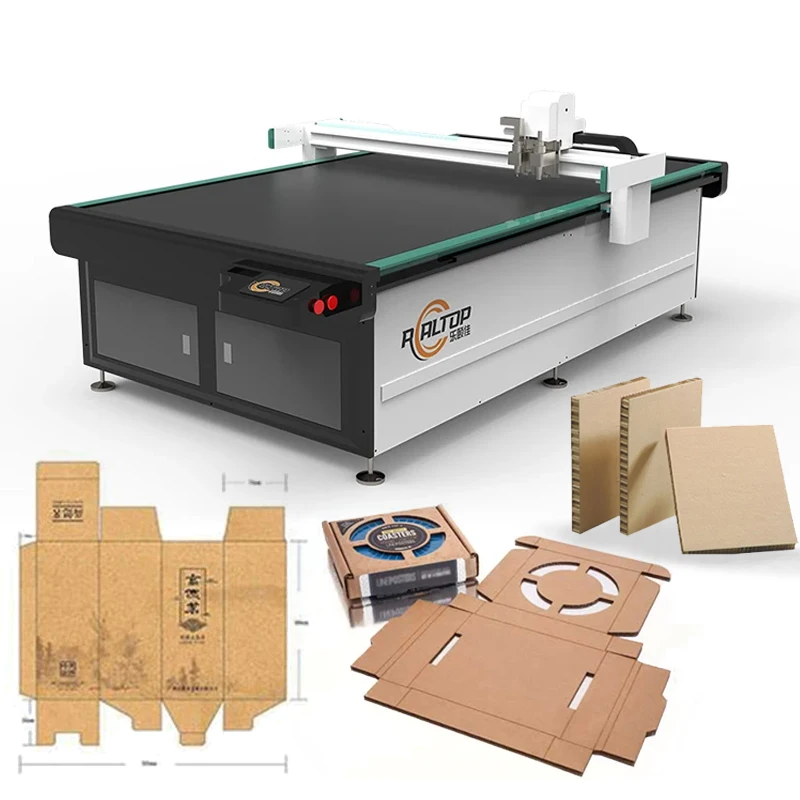
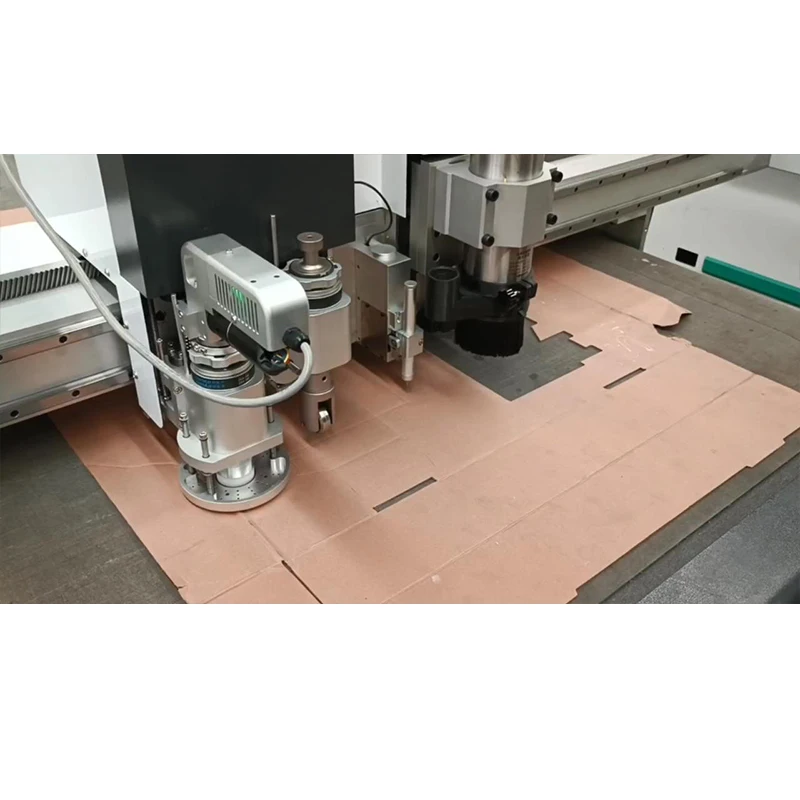
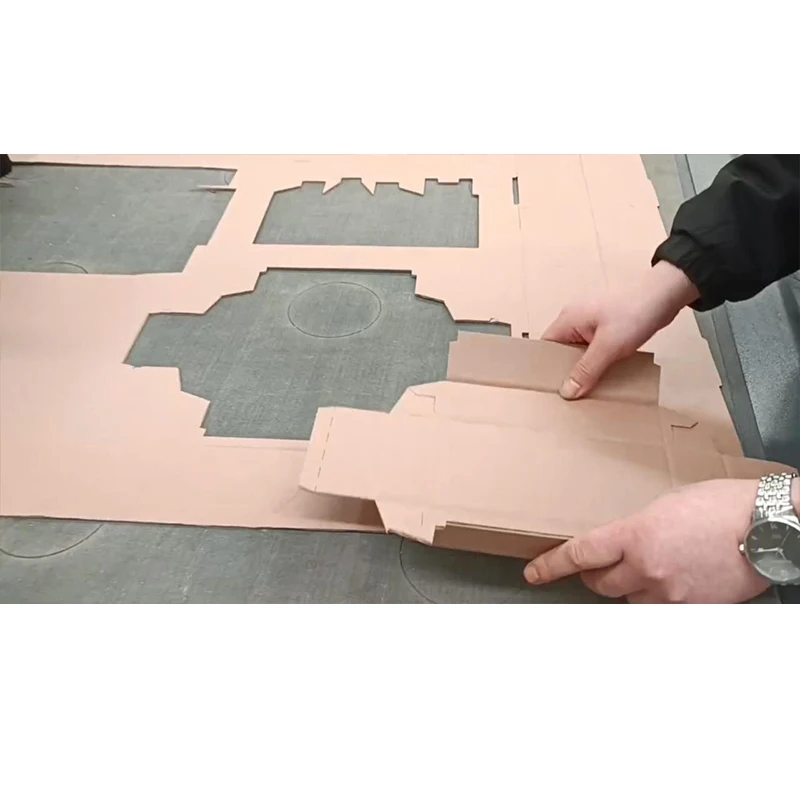
One cutting technology per material — rather than forcing every packaging job through a single method, this flatbed cutter line lets you specify oscillating knife, creasing, or kiss-cut tool heads based on the actual board grade and flute profile you run daily.
Technical Specifications
| Parameter | Value |
|---|---|
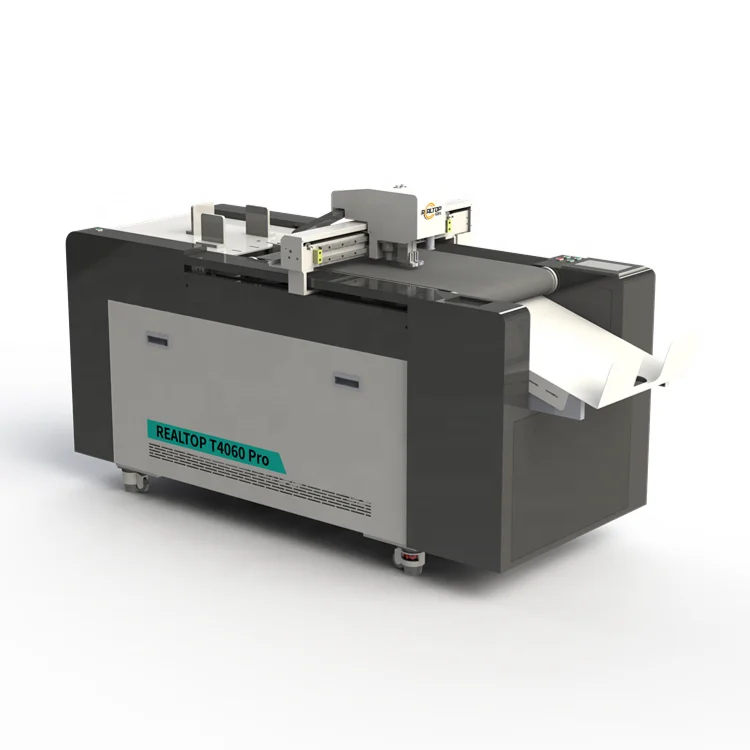
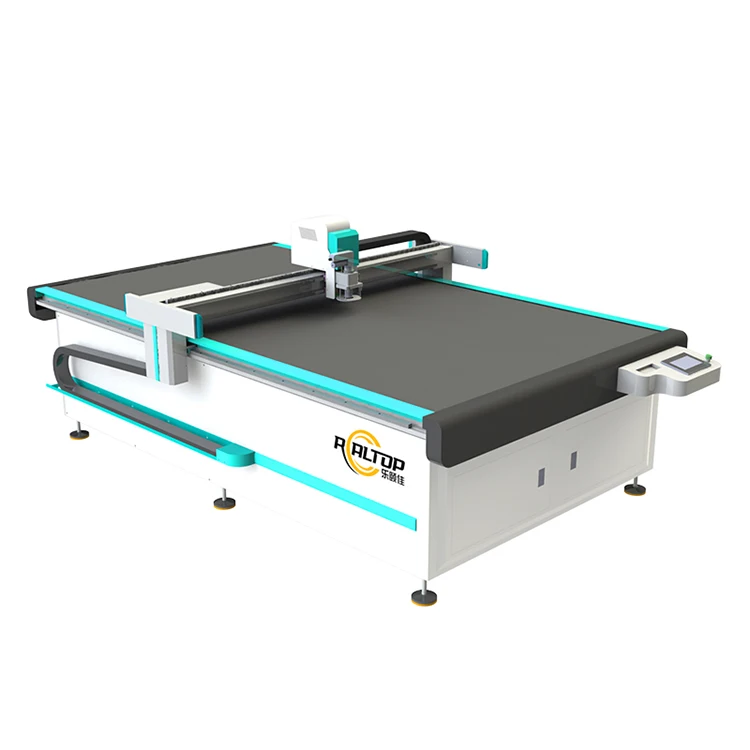
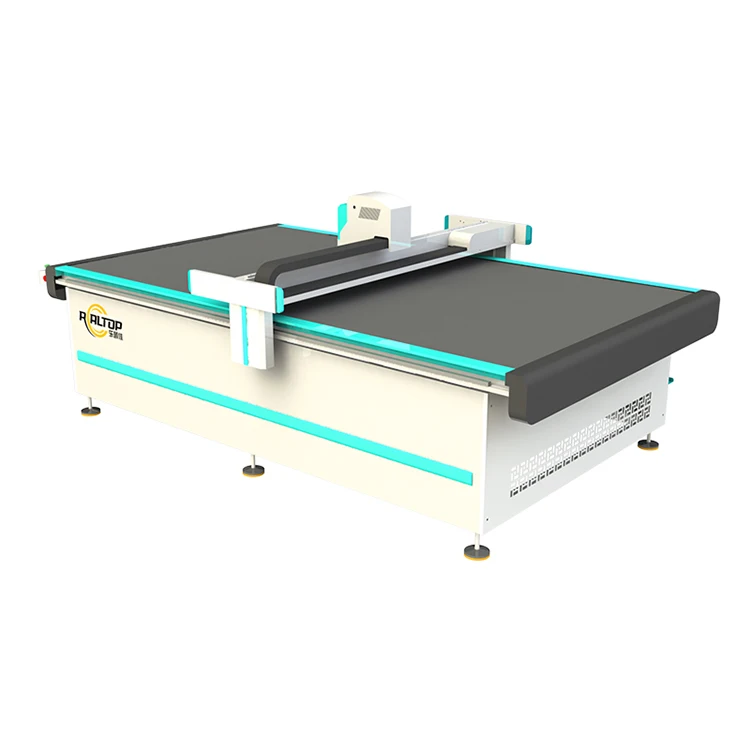
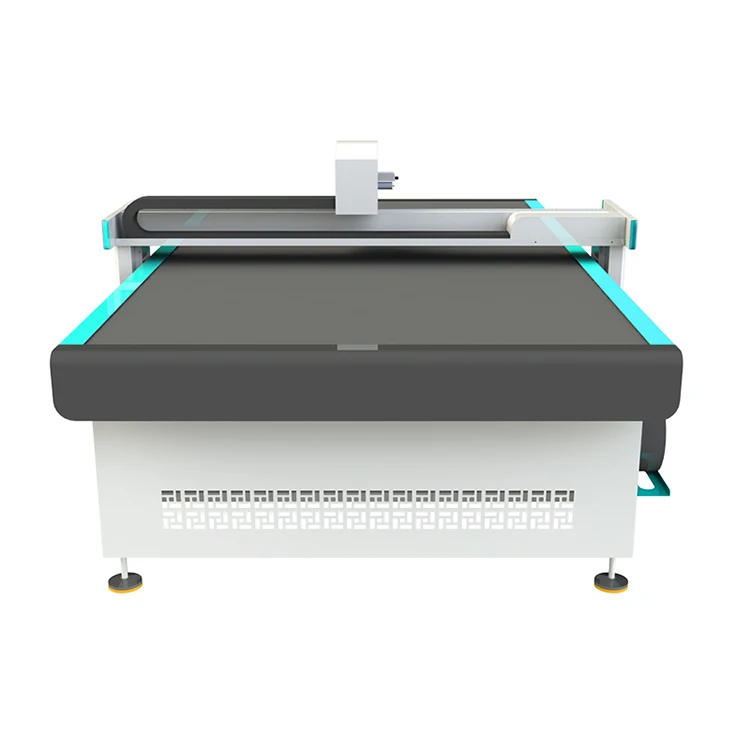
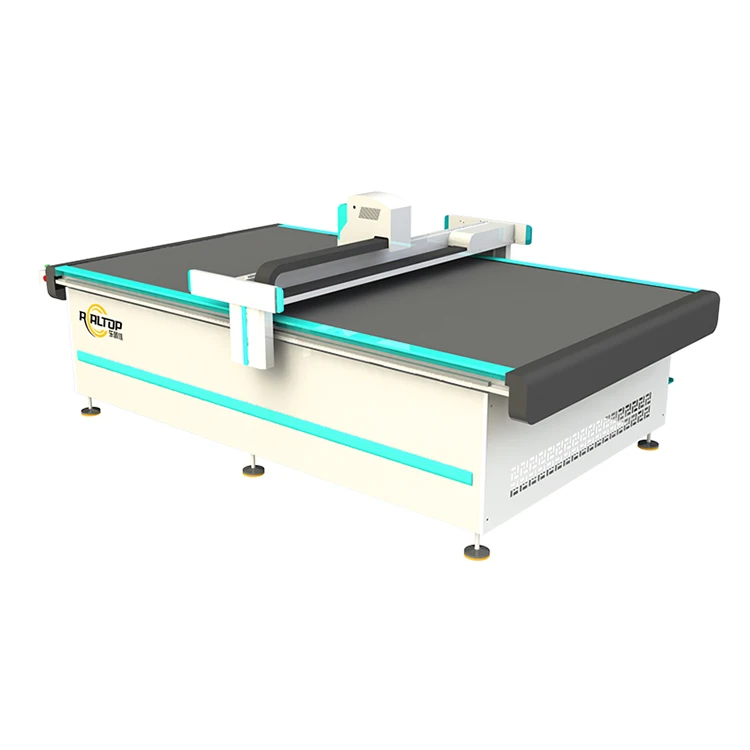
| Product Type | Digital Flatbed Cutter for Corrugated Cardboard |
| Model | Realtop-2516 / RT-R2513 / RT-D2516 / RT-S2516 |
| Working Area | 2500×1300 mm (RT-R2513); 1600×2500 mm (RT-D2516 / RT-S2516) |
| Machine Dimensions | 3550×1910×1400 mm (RT-R2513); 3450×2300×1250 mm (RT-D2516 / RT-S2516) |
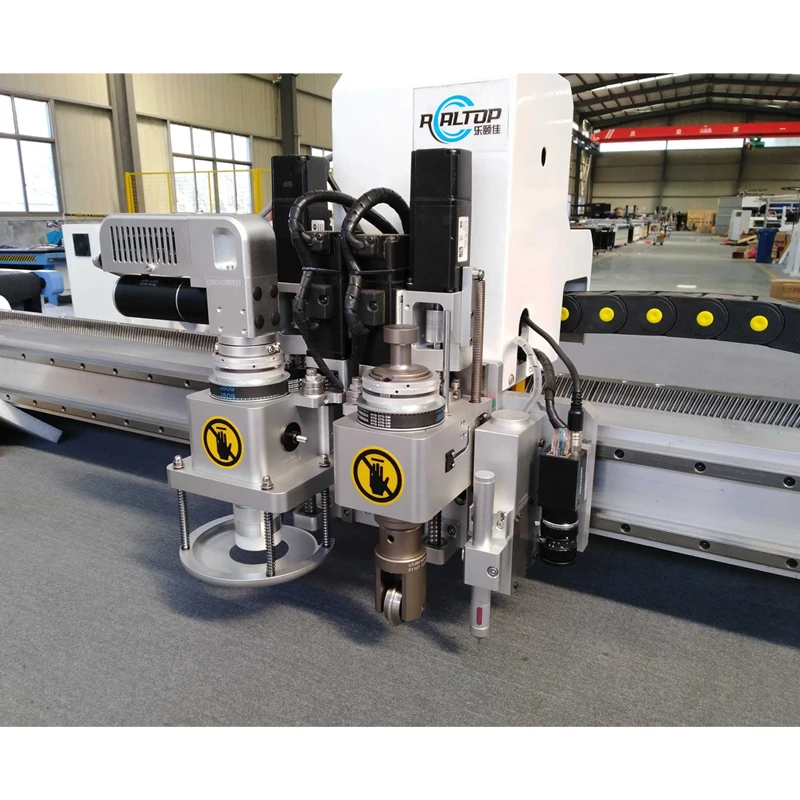
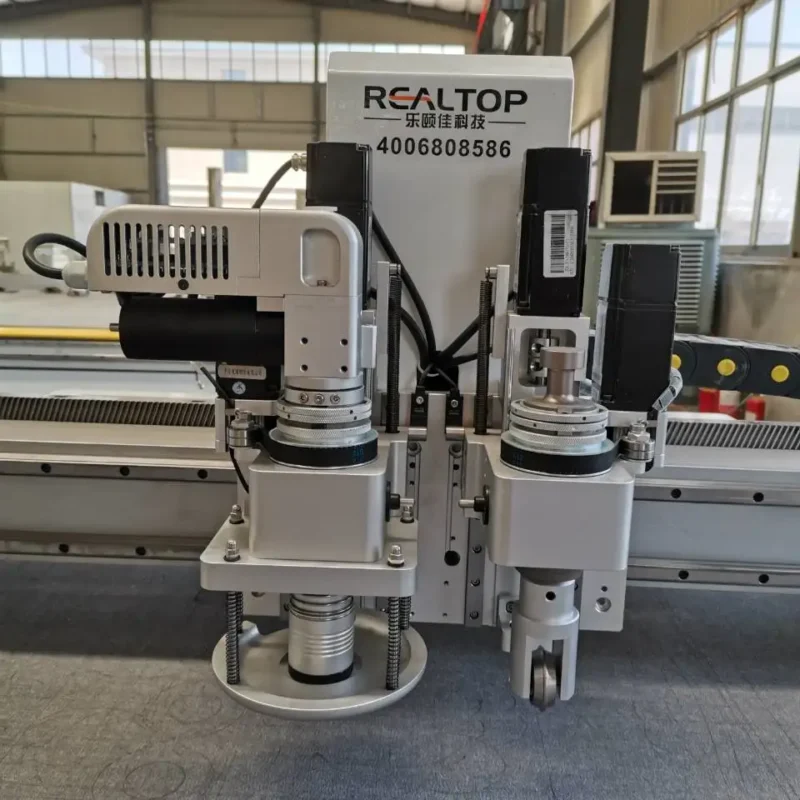
| Cutting Tools | Oscillating knife, creasing tool, kiss-cut knife, round punch |
| Cutting Thickness | ≤18 mm |
| Fixing Method | Aluminum alloy honeycomb vacuum adsorption platform |
| Rated Power | 9 kW |
| Vacuum Pump | 7.5 kW |
| Repeated Accuracy | <0.05 mm |
| Guide Rail | Taiwan Hiwin imported linear square guide |
| Transmission | Rack transmission |
| Servo Motor | Dongling servo / Delta servo motor (basis to be confirmed) |
| Voltage | 380 V (basis not stated in source) |
| Profile Format | DXF, OLT, PDF, AI |
| Data Transfer | Ethernet port |
| Safety Device | Infrared sensors, emergency stop |
| Assembly State | Fully assembled, welded thick square seamless steel structure, high temperature treated |
| Warranty | 1 year (excludes felt and knife blades) |
Application Suitability
| Application | Material or Output |
|---|---|
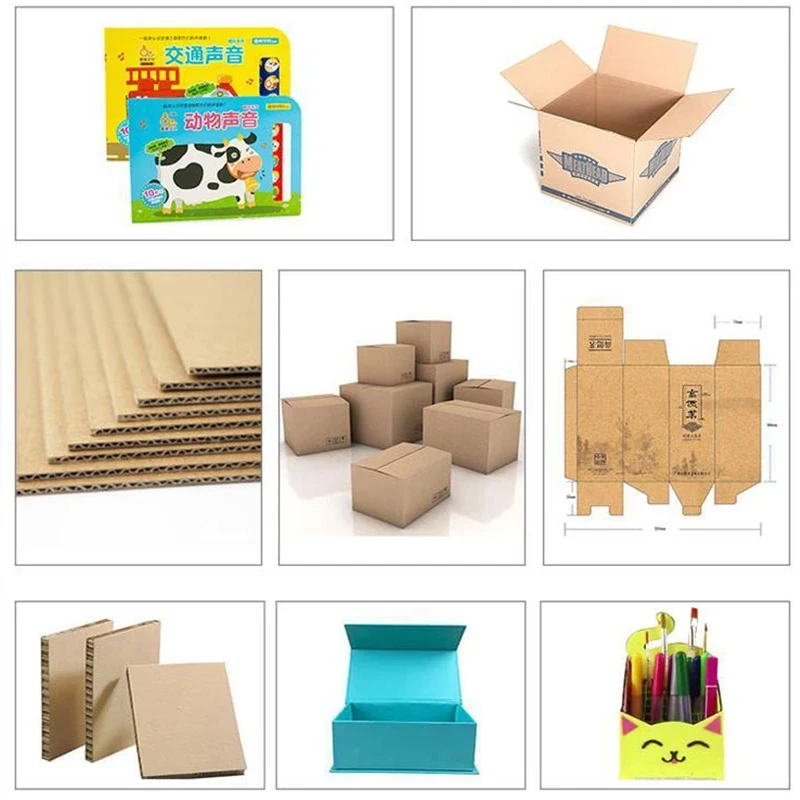
| Packaging carton sample making | Corrugated cardboard, single and double wall flute profiles up to 18 mm |
| Short-run carton production | Coated and uncoated kraft board, grey board, folding carton stock |
| Sticker and label contour cutting | Self-adhesive vinyl, PP paper, sticker sheets |
| Express packaging box manufacturing | E-flute and B-flute corrugated board for logistics cartons |
| Large appliance carton packaging | Heavy-duty double and triple wall corrugated sheets |
| Billboard and business card cutting | Foam board, paper card stock, laminated display board |
Why a "1600×2500" Label Tells You Nothing About Cutting Quality
A CNC flatbed digital cutting machine for sale might list a working area, but that number says nothing about whether the vacuum table can hold a 3 mm E-flute sheet flat when you are cutting dozens of small die-lines at speed. The real question is whether the zoned vacuum adsorption and tool head configuration match the board grade you actually process.
I once watched a 2516-class flatbed chew through a batch of laminated high-density corrugated meant for premium gift boxes. The operator had the machine set with a standard drag knife configured for light E-flute. Every crease line split the lamination, and the entire short-run order had to be scrapped. We swapped to an oscillating knife head with adjusted stroke frequency, re-zoned the vacuum platform for the smaller blank size, and the same sheet cut clean on the next pass [NEED_CITE:]. That is the difference between buying a machine by table size and buying one by material match.
Tool Head Selection Decides Edge Quality Before Anything Else
When you process corrugated board across different flute profiles, the cutting tool determines whether you get a clean shear or a crushed edge. The oscillating knife handles dense double-wall stock and laminated sheets by slicing at high stroke frequency, while the creasing tool compresses fold lines without penetrating the liner. A packaging CNC cutting machine manufacturer that only quotes one tool head is asking you to compromise on half your jobs. This flatbed cutter line offers oscillating knife, drag knife, creasing wheel, kiss-cut knife, and round punch options, letting you configure the machine around the flute types and board weights you run most often.
Vacuum Zoning and Small-Part Stability
Honeycomb aluminum platforms distribute suction across the bed, but small carton blanks — think snack food boxes or business card nests — tend to lift at the trailing edge if the vacuum zone is too large for the sheet. Zoned following suction narrows the active vacuum area to match the blank layout, keeping every piece locked flat through the final cut pass. Without this, the last few millimeters of a cut path can pull the part upward, leaving a ragged tail or shifting the crease alignment by a fraction that becomes visible after folding [NEED_CITE:]. The 7.5 kW vacuum pump provides sufficient suction reserve to maintain hold-down pressure even when multiple zones are active simultaneously.
What the Specification Numbers Actually Mean on the Shop Floor
The <0.05 mm repeated accuracy figure matters most when you are cutting interlocking tab-and-slot joints on display boxes — a mismatch of even two-tenths of a millimeter across a long crease line means the assembled box sits crooked on a retail shelf. Taiwan Hiwin linear rails paired with rack transmission keep the carriage true across the full 2500 mm stroke without the belt stretch that degrades accuracy over months of use. The 9 kW rated power covers the oscillating knife drive and the vacuum pump simultaneously, so you do not trip a breaker when both systems run under load. Software compatibility with DXF, OLT, PDF, and AI files means your existing carton design workflow transfers directly into the nesting and cutting queue without manual redraws.
What Happens When You Skip the Material Trial
Buyers who specify a flatbed cutter by working area alone and skip the sample cutting trial often discover the problem mid-production. A machine configured for standard kraft corrugated may struggle with coated or laminated board where the surface film resists the drag knife and demands an oscillating stroke instead. Voltage mismatches are another common on-site failure — a 380 V three-phase machine delivered to a workshop running 220 V single-phase sits idle until a transformer is sourced and wired [NEED_CITE:]. Software format incompatibility can also stall a first production run if the buyer’s CAD package exports in a format the nesting software cannot parse. Every one of these issues is caught by running the buyer’s own material through the machine before shipment.
Why Source This CNC Flatbed Digital Cutting Machine Range Here
In-house design covers both knife cutting and laser cutting technologies, so you can match the process to your material rather than forcing corrugated board through a laser or acrylic through a knife. Tool head and vacuum table configurations are specified per material type and daily volume, not sold as a single fixed package. CCD camera positioning is available for printed contour cutting on pre-printed carton and label stock. Voltage, plug type, and control interface language are confirmed before production so the machine arrives ready to run in your local electrical standard. Every unit ships with a sample cutting report on your specific board grade, giving you documented proof of edge quality and crease performance before the crate leaves the factory floor [NEED_CITE:]. The professional carton nesting software is included with the machine, supporting automatic layout calculation to improve material yield on standard sheet sizes.
Documentation & Verification
- Machine specification sheet listing confirmed tool head and vacuum table configuration for your board grade
- Electrical schematic with voltage, phase, and frequency verified against your local supply standard
- Sample cutting report on your own corrugated material showing edge quality and crease integrity
- Software license and file format compatibility note confirming DXF, PDF, AI import workflow
- Factory test record documenting repeated accuracy and cutting depth on your specified flute profile
- Spare parts list with oscillating blade and felt replacement intervals for your production volume
Installation, Commissioning & Support
- Requires a level concrete floor with sufficient clearance around the 3450×2300×1250 mm machine envelope for sheet loading
- Dedicated 380 V three-phase circuit rated above the 9 kW machine load plus 7.5 kW vacuum pump draw
- Ships fully assembled with welded steel frame — no on-site structural bolting or alignment required
- First-run parameter setting covers vacuum zone mapping, knife stroke calibration, and crease depth adjustment
- Operator training covers tool head changeover, nesting software import, and emergency stop procedures
- Ten oscillating blades included; blade and felt replacement schedules matched to your daily cutting volume
Before You Request a Quote
Send a sample of the corrugated board grades you run most often — including any coated or laminated sheets — along with the flute profile and board thickness. Specify your workshop voltage, phase, and frequency so the electrical system is built to match. If you already use carton design software, provide a sample export file so we confirm format compatibility with the nesting workflow before the machine enters production.
Frequently Asked Questions
Q: How do I choose between oscillating knife and drag knife for my corrugated board?
A: Oscillating knife suits dense double-wall and laminated corrugated where a high-frequency slicing action produces a clean edge without crushing the flute structure. Drag knife works well on single-wall E-flute and lighter board where a simple pull-through cut is sufficient. The right choice depends on your most common board grade, which is why we run a sample cutting trial on your material before finalizing the tool head configuration.
Q: What file formats does the included nesting software accept?
A: The professional carton nesting software imports DXF, OLT, PDF, and AI files directly. It supports automatic layout calculation to arrange carton blanks across the sheet for improved material yield. If your current design package exports in one of these formats, the workflow transfers without manual redraws. We verify file compatibility during the pre-order sample cutting stage using your actual design files.
Q: What is included in the machine package versus what is optional?
A: The standard package includes the vacuum pump, ten oscillating blades, the professional carton nesting software, and the auto-feeding conveyor belt system. CCD camera contour recognition and additional tool heads beyond the base configuration are available as options. Voltage, plug type, and control language are customized per order. We provide a full configuration list before production so every included and optional item is documented.
Q: How is the voltage and control language confirmed before shipment?
A: We collect your workshop voltage, phase, frequency, and plug type during the inquiry stage and build the electrical system to match. The control interface language is set to your operator preference — standard options include English, Russian, Italian, and Chinese, with additional languages available on request. The electrical schematic and language confirmation are included in the pre-shipment documentation package for your review.
One cutting technology per material — rather than forcing every packaging job through a single method, this flatbed cutter line lets you specify oscillating knife, creasing, or kiss-cut tool heads based on the actual board grade and flute profile you run daily.
Technical Specifications
| Parameter | Value |
|---|---|
| Product Type | Digital Flatbed Cutter for Corrugated Cardboard |
| Model | Realtop-2516 / RT-R2513 / RT-D2516 / RT-S2516 |
| Working Area | 2500×1300 mm (RT-R2513); 1600×2500 mm (RT-D2516 / RT-S2516) |
| Machine Dimensions | 3550×1910×1400 mm (RT-R2513); 3450×2300×1250 mm (RT-D2516 / RT-S2516) |
| Cutting Tools | Oscillating knife, creasing tool, kiss-cut knife, round punch |
| Cutting Thickness | ≤18 mm |
| Fixing Method | Aluminum alloy honeycomb vacuum adsorption platform |
| Rated Power | 9 kW |
| Vacuum Pump | 7.5 kW |
| Repeated Accuracy | <0.05 mm |
| Guide Rail | Taiwan Hiwin imported linear square guide |
| Transmission | Rack transmission |
| Servo Motor | Dongling servo / Delta servo motor (basis to be confirmed) |
| Voltage | 380 V (basis not stated in source) |
| Profile Format | DXF, OLT, PDF, AI |
| Data Transfer | Ethernet port |
| Safety Device | Infrared sensors, emergency stop |
| Assembly State | Fully assembled, welded thick square seamless steel structure, high temperature treated |
| Warranty | 1 year (excludes felt and knife blades) |
Application Suitability
| Application | Material or Output |
|---|---|
| Packaging carton sample making | Corrugated cardboard, single and double wall flute profiles up to 18 mm |
| Short-run carton production | Coated and uncoated kraft board, grey board, folding carton stock |
| Sticker and label contour cutting | Self-adhesive vinyl, PP paper, sticker sheets |
| Express packaging box manufacturing | E-flute and B-flute corrugated board for logistics cartons |
| Large appliance carton packaging | Heavy-duty double and triple wall corrugated sheets |
| Billboard and business card cutting | Foam board, paper card stock, laminated display board |
Why a "1600×2500" Label Tells You Nothing About Cutting Quality
A CNC flatbed digital cutting machine for sale might list a working area, but that number says nothing about whether the vacuum table can hold a 3 mm E-flute sheet flat when you are cutting dozens of small die-lines at speed. The real question is whether the zoned vacuum adsorption and tool head configuration match the board grade you actually process.
I once watched a 2516-class flatbed chew through a batch of laminated high-density corrugated meant for premium gift boxes. The operator had the machine set with a standard drag knife configured for light E-flute. Every crease line split the lamination, and the entire short-run order had to be scrapped. We swapped to an oscillating knife head with adjusted stroke frequency, re-zoned the vacuum platform for the smaller blank size, and the same sheet cut clean on the next pass [NEED_CITE:]. That is the difference between buying a machine by table size and buying one by material match.
Tool Head Selection Decides Edge Quality Before Anything Else
When you process corrugated board across different flute profiles, the cutting tool determines whether you get a clean shear or a crushed edge. The oscillating knife handles dense double-wall stock and laminated sheets by slicing at high stroke frequency, while the creasing tool compresses fold lines without penetrating the liner. A packaging CNC cutting machine manufacturer that only quotes one tool head is asking you to compromise on half your jobs. This flatbed cutter line offers oscillating knife, drag knife, creasing wheel, kiss-cut knife, and round punch options, letting you configure the machine around the flute types and board weights you run most often.
Vacuum Zoning and Small-Part Stability
Honeycomb aluminum platforms distribute suction across the bed, but small carton blanks — think snack food boxes or business card nests — tend to lift at the trailing edge if the vacuum zone is too large for the sheet. Zoned following suction narrows the active vacuum area to match the blank layout, keeping every piece locked flat through the final cut pass. Without this, the last few millimeters of a cut path can pull the part upward, leaving a ragged tail or shifting the crease alignment by a fraction that becomes visible after folding [NEED_CITE:]. The 7.5 kW vacuum pump provides sufficient suction reserve to maintain hold-down pressure even when multiple zones are active simultaneously.
What the Specification Numbers Actually Mean on the Shop Floor
The <0.05 mm repeated accuracy figure matters most when you are cutting interlocking tab-and-slot joints on display boxes — a mismatch of even two-tenths of a millimeter across a long crease line means the assembled box sits crooked on a retail shelf. Taiwan Hiwin linear rails paired with rack transmission keep the carriage true across the full 2500 mm stroke without the belt stretch that degrades accuracy over months of use. The 9 kW rated power covers the oscillating knife drive and the vacuum pump simultaneously, so you do not trip a breaker when both systems run under load. Software compatibility with DXF, OLT, PDF, and AI files means your existing carton design workflow transfers directly into the nesting and cutting queue without manual redraws.
What Happens When You Skip the Material Trial
Buyers who specify a flatbed cutter by working area alone and skip the sample cutting trial often discover the problem mid-production. A machine configured for standard kraft corrugated may struggle with coated or laminated board where the surface film resists the drag knife and demands an oscillating stroke instead. Voltage mismatches are another common on-site failure — a 380 V three-phase machine delivered to a workshop running 220 V single-phase sits idle until a transformer is sourced and wired [NEED_CITE:]. Software format incompatibility can also stall a first production run if the buyer’s CAD package exports in a format the nesting software cannot parse. Every one of these issues is caught by running the buyer’s own material through the machine before shipment.
Why Source This CNC Flatbed Digital Cutting Machine Range Here
In-house design covers both knife cutting and laser cutting technologies, so you can match the process to your material rather than forcing corrugated board through a laser or acrylic through a knife. Tool head and vacuum table configurations are specified per material type and daily volume, not sold as a single fixed package. CCD camera positioning is available for printed contour cutting on pre-printed carton and label stock. Voltage, plug type, and control interface language are confirmed before production so the machine arrives ready to run in your local electrical standard. Every unit ships with a sample cutting report on your specific board grade, giving you documented proof of edge quality and crease performance before the crate leaves the factory floor [NEED_CITE:]. The professional carton nesting software is included with the machine, supporting automatic layout calculation to improve material yield on standard sheet sizes.
Documentation & Verification
- Machine specification sheet listing confirmed tool head and vacuum table configuration for your board grade
- Electrical schematic with voltage, phase, and frequency verified against your local supply standard
- Sample cutting report on your own corrugated material showing edge quality and crease integrity
- Software license and file format compatibility note confirming DXF, PDF, AI import workflow
- Factory test record documenting repeated accuracy and cutting depth on your specified flute profile
- Spare parts list with oscillating blade and felt replacement intervals for your production volume
Installation, Commissioning & Support
- Requires a level concrete floor with sufficient clearance around the 3450×2300×1250 mm machine envelope for sheet loading
- Dedicated 380 V three-phase circuit rated above the 9 kW machine load plus 7.5 kW vacuum pump draw
- Ships fully assembled with welded steel frame — no on-site structural bolting or alignment required
- First-run parameter setting covers vacuum zone mapping, knife stroke calibration, and crease depth adjustment
- Operator training covers tool head changeover, nesting software import, and emergency stop procedures
- Ten oscillating blades included; blade and felt replacement schedules matched to your daily cutting volume
Before You Request a Quote
Send a sample of the corrugated board grades you run most often — including any coated or laminated sheets — along with the flute profile and board thickness. Specify your workshop voltage, phase, and frequency so the electrical system is built to match. If you already use carton design software, provide a sample export file so we confirm format compatibility with the nesting workflow before the machine enters production.
Frequently Asked Questions
Q: How do I choose between oscillating knife and drag knife for my corrugated board?
A: Oscillating knife suits dense double-wall and laminated corrugated where a high-frequency slicing action produces a clean edge without crushing the flute structure. Drag knife works well on single-wall E-flute and lighter board where a simple pull-through cut is sufficient. The right choice depends on your most common board grade, which is why we run a sample cutting trial on your material before finalizing the tool head configuration.
Q: What file formats does the included nesting software accept?
A: The professional carton nesting software imports DXF, OLT, PDF, and AI files directly. It supports automatic layout calculation to arrange carton blanks across the sheet for improved material yield. If your current design package exports in one of these formats, the workflow transfers without manual redraws. We verify file compatibility during the pre-order sample cutting stage using your actual design files.
Q: What is included in the machine package versus what is optional?
A: The standard package includes the vacuum pump, ten oscillating blades, the professional carton nesting software, and the auto-feeding conveyor belt system. CCD camera contour recognition and additional tool heads beyond the base configuration are available as options. Voltage, plug type, and control language are customized per order. We provide a full configuration list before production so every included and optional item is documented.
Q: How is the voltage and control language confirmed before shipment?
A: We collect your workshop voltage, phase, frequency, and plug type during the inquiry stage and build the electrical system to match. The control interface language is set to your operator preference — standard options include English, Russian, Italian, and Chinese, with additional languages available on request. The electrical schematic and language confirmation are included in the pre-shipment documentation package for your review.
商品评价
There are no reviews yet.