


Fast Delivery
Quick, reliable shipping to any location.

Free & easy returns
Return this item by mail or in store within 90 days for a full refund.
Multi-Tool Head Configuration — The RT-D2516 and RT-S2516 oscillating knife cutters pair creasing wheels, kiss-cut knives, and round punches in one setup, so corrugated sample makers can cut and score without re-fixturing the sheet.
Technical Specifications
| Parameter | Value |
|---|---|
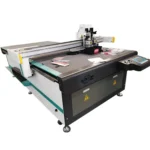
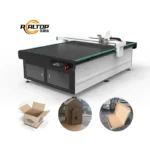
| Product Type | CNC Digital Flatbed Paper Carton Cutter Plotter |
| Model | RT–R2513 / RT-D2516 / RT-S2516 |
| Working Area | 2500×1300 mm (RT–R2513) / 1600×2500 mm (RT-D2516 / RT-S2516) |
| Machine Size | 3550×1910×1400 mm (RT–R2513) / 3450×2300×1250 mm (RT-D2516 / RT-S2516) |
| Cutting Thickness | ≤18mm (basis not stated in source — confirm material type and density) |
| Repeated Accuracy | <0.05 mm |
| Rated Power | 9 kW |
| Voltage | 380V |
| Servo Motor | Dongling servo (Delta servo motor available) |
| Transmission Components | Rack transmission, imported straight-line square guide (Taiwan Hiwin rail available) |
| Fixing Method | Vacuum system with 7.5 kW pump, aluminum alloy honeycomb structure platform |
| Profile Format | DXF, OLT, PDF, AI |
| Safety Device | Infrared sensors, emergency stop devices |
| Software | Professional carton nesting software, customized language support |
| Cutting Materials | Leather, Labels, Cardboard Boxes, Paper, Stickers, PP Paper |
| Frame Structure | Welded thick square seamless steel structure with high temperature treatment |
| Standards | CE |
Application Suitability
| Application | Material or Output |
|---|---|
| Packaging carton sample making | Corrugated board, greyboard, folding carton stock |
| Sticker and label contour cutting | Adhesive vinyl, PP paper, coated label stock |
| Paper box prototyping | Art card, kraft board, bleached sulphate board |
| Billboard and business card production | Foam PVC board, card stock, lightweight corrugated |
Why the Vacuum Zone Map Must Match Your Smallest Part
A 7.5 kW pump only holds the sheet if the active zone is smaller than the part being cut.
When a packaging sample maker nests a dozen small carton blanks across a 2500×1300 mm bed, a single full-area vacuum zone will leave the edges of each blank lifting as the oscillating knife exits the cut. The aluminium honeycomb table on the RT–R2513 moves a lot of air, but without multi-zone valving matched to the actual nesting layout, that airflow simply pulls from the open zones instead of clamping the workpiece [NEED_CITE: vacuum table zoning principles for flatbed digital cutters]. I have seen short-run carton producers lose an entire batch of samples because the vacuum specification looked adequate on paper but the zoning did not reflect their typical part geometry. A CNC digital flatbed cutter for sale with impressive pump specs can still fail at the table edge if the zone boundaries are not configured before the machine ships.
Matching Knife Type to Board Weight and Flute Profile
The oscillating knife, creasing tool, kiss-cut knife, and round punch each engage the material differently. Corrugated E-flute at 1.5 mm needs a high-frequency oscillating blade to shear through the flutes without crushing them, while a 350 gsm folding carton responds better to a drag knife or kiss-cut tool that scores the liner without penetrating the backing. Choosing the wrong tool head for the grammage produces ragged edges or compressed flute cores that compromise the fold line [NEED_CITE: oscillating knife cutting mechanics for corrugated board].
File Format Continuity Across the Packaging Workflow
Most carton sample rooms already run designs through Illustrator or a dedicated packaging CAD package. The RT-D2516 accepts DXF, OLT, PDF and AI files directly, which means the nesting software does not force a re-draw of every contour. When a packaging CNC cutting machine manufacturer confirms file compatibility before order, the sample room avoids the bottleneck of re-exporting every die-line through an intermediate converter. This matters most when a client sends a last-minute revision and the operator needs to load, nest, and cut within the same shift [NEED_CITE: packaging CAD file interchange standards].
Reading the Spec Sheet Against Your Actual Board Stack
The published cutting thickness states ≤18mm, but that figure carries no material basis in the source documentation. Double-wall corrugated at 7 mm cuts very differently from 18 mm solid greyboard, because the honeycomb structure of the flute absorbs oscillating energy while dense fibre board demands higher downward pressure and slower feed rates. The repeated accuracy of <0.05 mm across the rack-and-pinion drive is meaningful only when the vacuum table holds the sheet flat against that same tolerance. Buyers should request a sample cut on their own board grade to confirm edge quality, crease definition, and dimensional accuracy before committing to a packaging carton cutting machine manufacturer order.
What Happens When Voltage and Plug Type Are an Afterthought
A 380V machine wired for 50 Hz will run hot and slow on a 60 Hz supply, and the servo drives may fault intermittently under load. I once saw a carton sample room in Southeast Asia receive a cutter configured for mainland Chinese voltage; the local 415V three-phase supply pushed the 9 kW rated power draw past the breaker rating, tripping the dedicated circuit mid-cut. The infrared sensors and emergency stop devices still worked, but every restart required a full homing sequence. Confirming voltage, frequency, plug type, and control language before production starts avoids a machine that sits idle while an electrician rewires the workshop [NEED_CITE: voltage and frequency standards by export market].
Buying Direct from the Factory Floor
Realtop builds both knife and laser cutting platforms in-house, which means the frame welding, high-temperature stress relief, and honeycomb table assembly all happen under one roof. The RT-S2516 uses a welded thick square seamless steel structure, so the gantry does not deflect under the lateral forces of an oscillating knife pass through dense board. Delta servo motors and Taiwan Hiwin linear guides are available as upgrade paths for buyers who need tighter contour tracking at higher traverse speeds. Professional carton nesting software ships with the machine, and language customization is confirmed before dispatch rather than patched after arrival. A sample cutting report on the buyer’s own material accompanies the factory test record, so edge quality is documented before the crate closes.
Documentation & Verification
- Machine specification sheet listing confirmed tool heads and vacuum zone map for your board range
- Electrical schematic with voltage, frequency, and plug type matched to your facility
- Sample cutting report on your own corrugated or greyboard stock before dispatch
- Software licence and file format compatibility note for DXF, AI, PDF, and OLT workflows
- Factory test record showing repeated accuracy across the full working area
- Operation and maintenance manual in your specified control language
Installation, Commissioning & Support
- Dedicated 380V circuit rated above the 9 kW draw with correct breaker sizing for local code
- Level floor with clearance for the 3550×1910×1400 mm envelope plus operator access on three sides
- 7.5 kW vacuum pump requires separate exhaust routing to avoid dust recirculation in the sample room
- First-run parameter tuning on your board grammage to set oscillating knife frequency and feed rate
- Operator training on nesting software, tool head changeover, and vacuum zone activation
- Ten oscillating blades included; felt pad and blade replacement schedule documented at handover
Before You Send the Drawing
Share the specific board types you cut most often — flute profile, grammage, and maximum sheet size — along with your typical nesting layout. If your facility runs on a voltage or frequency other than 380V/50Hz, confirm that early so the servo drives and vacuum pump are wound correctly. Let us know which file format your design team exports and whether the control interface needs to operate in a language other than English or Chinese. If you want to see cut quality first, send a sample of your board stock and we will return a cut report with edge and crease photographs.
Frequently Asked Questions
Q: Should I choose knife cutting or laser for my corrugated carton samples?
A: Knife cutting with an oscillating blade shears through flutes without burning the liner, which keeps fold lines clean and avoids the charred edge that a CO2 laser leaves on kraft-faced board. Laser is better suited to engraving or cutting thin non-corrugated stock where a sealed edge is acceptable. Match the method to your most common board type and production volume.
Q: How do I size the vacuum table zoning for my part range?
A: Identify your smallest and largest cut parts, then specify zone boundaries that isolate vacuum to the active cutting area. A single open zone across the full 2500×1300 mm bed will fail to hold small carton blanks near the edges. Multi-zone valving configured to your nesting pattern ensures consistent hold-down across every part size you produce.
Q: Which tool heads do I need for cutting and creasing corrugated board?
A: An oscillating knife handles the contour cut through the flute, while a creasing wheel compresses the fold line without penetrating the liner. For kiss-cut labels on a release liner, a dedicated kiss-cut tool controls depth precisely. Request a configuration that covers your most frequent material combinations in a single setup.
Q: Will the nesting software accept my existing packaging design files?
A: The included carton nesting software reads DXF, OLT, PDF and AI formats directly, so die-lines from most packaging CAD systems import without re-drawing. Confirm your specific export format and version with the supplier before order, and request a compatibility test if your workflow uses a less common file type or a proprietary nesting engine.










商品评价
There are no reviews yet.