



Fast Delivery
Quick, reliable shipping to any location.

Free & easy returns
Return this item by mail or in store within 90 days for a full refund.
Knife and Laser Range Matched to Material — A single cutting method rarely suits every packaging stock, so we configure oscillating knife, creasing or kiss-cut heads based on your actual board density and daily volume rather than quoting one default setup.
Technical Specifications
| Parameter | Value |
|---|---|
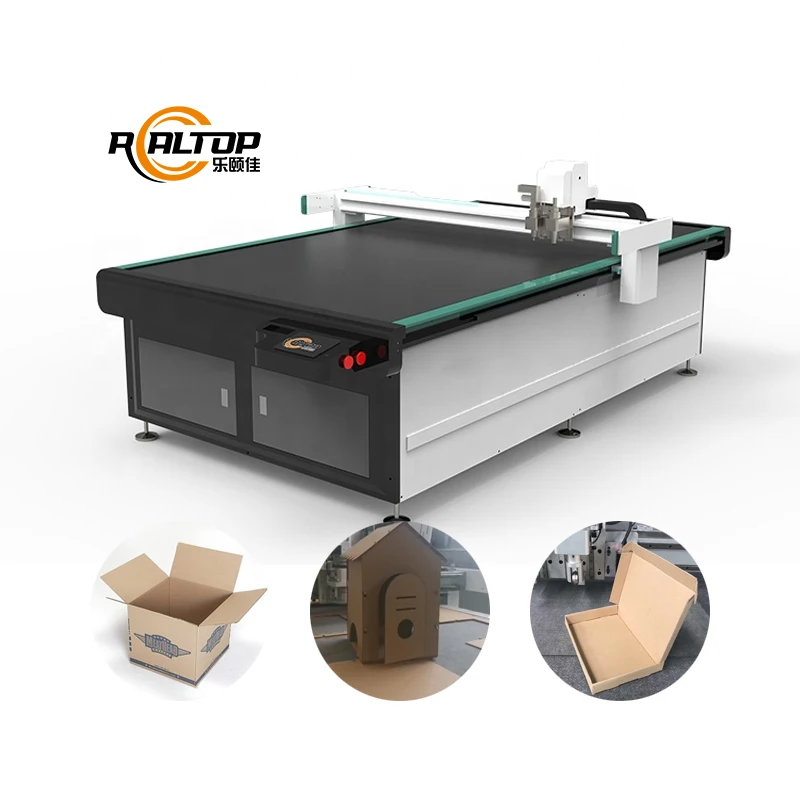
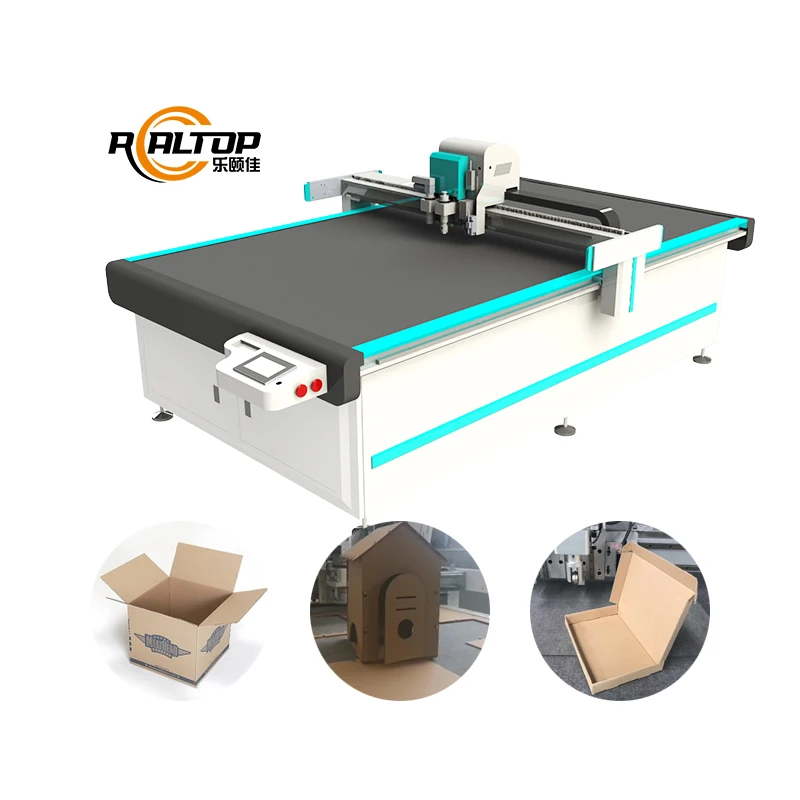
| Product Type | CNC Oscillating Knife Cutting Machine for Packaging & Carton |
| Model | RT–R2513 / RT-D2516 / RT-S2516 |
| Working Area | 2500×1300 mm (RT–R2513); 1600×2500 mm (RT-D2516 / RT-S2516) |
| Overall Dimensions (L×W×H) | 3550×1910×1400 mm (RT–R2513); 3450×2300×1250 mm (RT-D2516 / RT-S2516) |
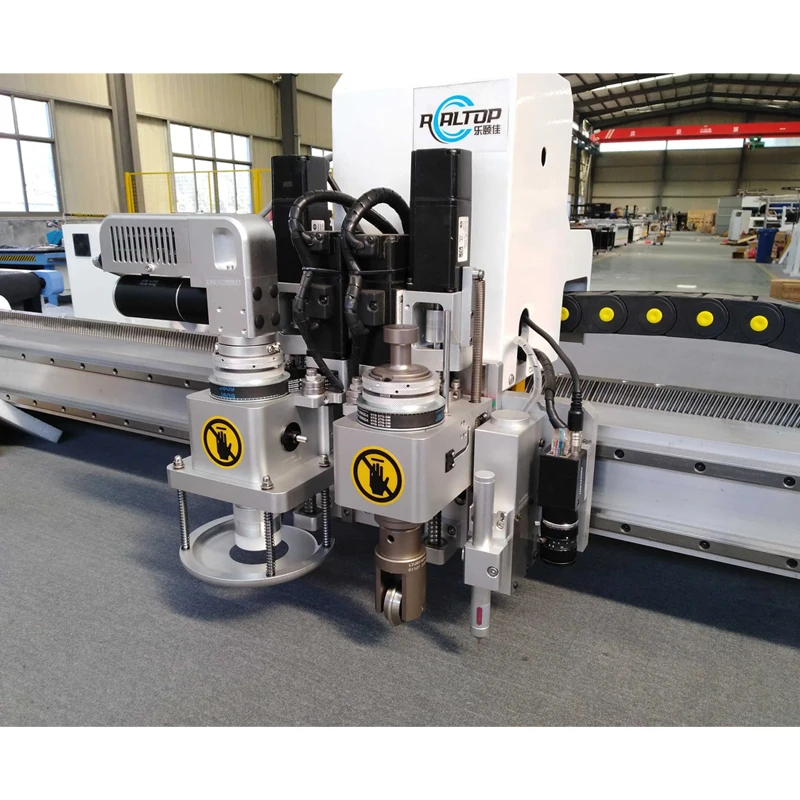
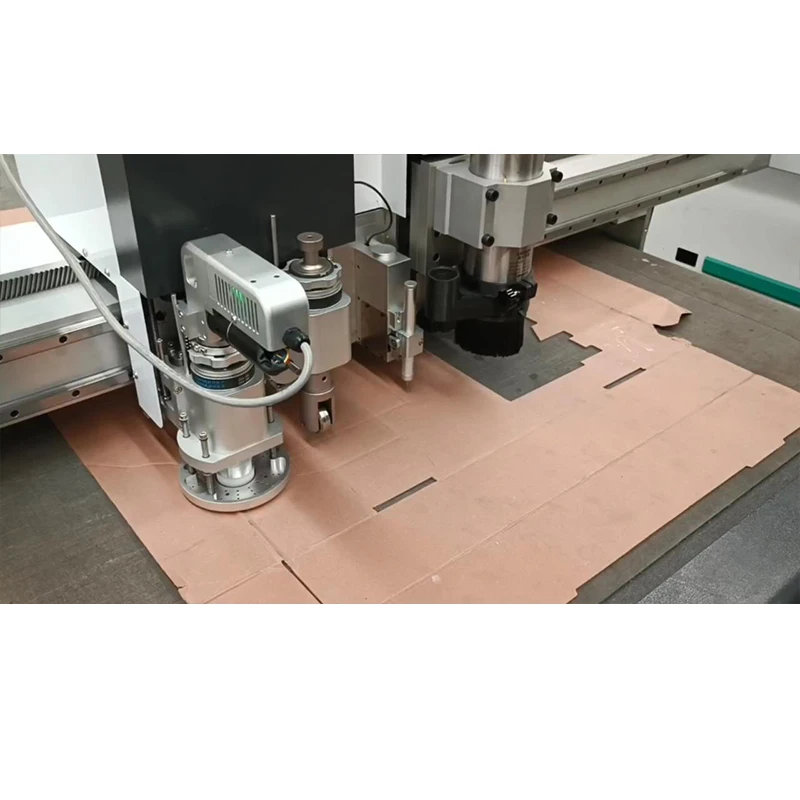
| Cutting Tools | Oscillating knife, Creasing tool, Kiss-Cut Knife Tool, Round punch |
| Cutting Thickness | ≤18 mm |
| Fixing Method | Vacuum system with zone-following adsorption |
| Vacuum Table | Aluminum alloy honeycomb structure |
| Rated Power | 9 kW |
| Voltage | 380 V (frequency to be confirmed per destination) |
| Servo Motor | Dongling servo (Delta servo optional) |
| Frame Structure | Welded thick square seamless steel, high-temperature treated |
| Guide Rail | Imported straight-line square guide |
| Drive | Rack transmission |
| Felt Belt | Composite fiber, wear-resistant, anti-pull |
| Transmission Method | Ethernet port |
| Supported File Formats | DXF, OLT, PDF, AI |
| Repeated Accuracy | <0.05 mm |
| Safety Device | Infrared sensors |
| Control Language | Customizable (English, Russian, Italian, Chinese available) |
| Included Blades | 10 pieces of oscillating blades |
| Optional Configuration | Delta servo motor, Germany imported conveyor belt, auto feeding, Taiwan Hiwin rail, 7.5 kW vacuum pump |
| Delivery Time | <30 working days |
Application Suitability
| Application | Material or Output |
|---|---|
| Packaging carton and corrugated box sample making | Corrugated board, grey board, folding carton stock up to 18 mm |
| Sticker and label contour cutting | Self-adhesive vinyl, paper labels, sticker sheets |
| Paper-based signage and business card cutting | Coated and uncoated card stock, PP paper |
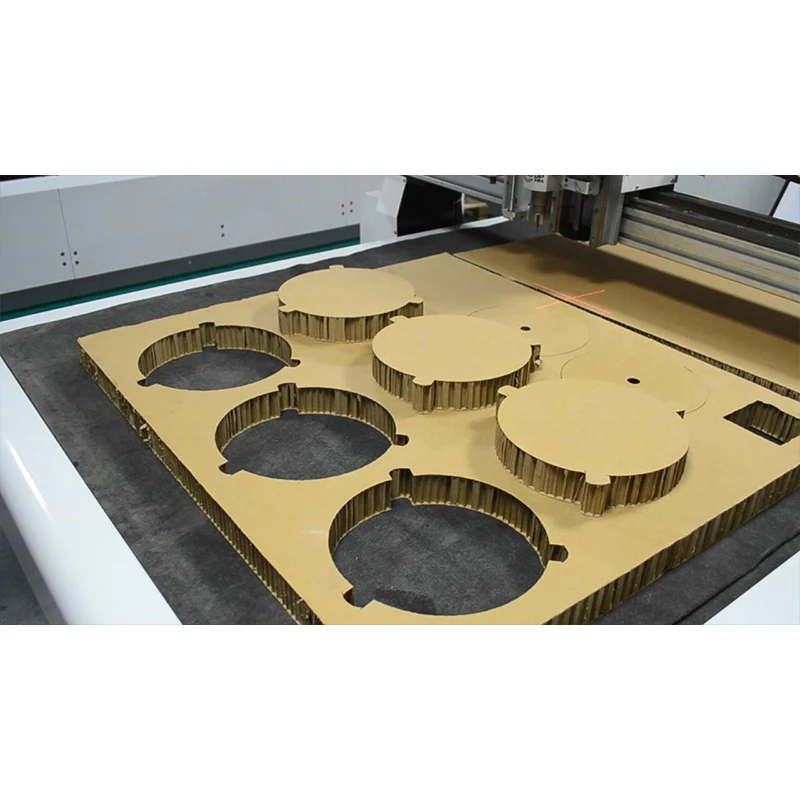
| Cardboard display and POP material cutting | Honeycomb cardboard, corrugated display board |
| Synthetic paper processing | PP paper, synthetic paper for durable labels and tags |
Why Board Thickness Alone Is Not Enough to Pick a CNC Packaging Cutting Machine Manufacturer
Specifying a carton sample cutting machine for sale on working area without verifying tool head pressure against your densest board leads to incomplete cuts and scrapped samples.
I worked the assembly floor in Jinan before moving into technical sales, and one mistake I saw repeated was buyers choosing a machine based purely on bed size. A Middle East customer once ordered a standard carton cutter for corrugated trials that went perfectly, only to find his production grey board was far denser. The knife could not penetrate in a single pass, edges crushed, and the entire sample batch was reworked manually. Now I insist on running the buyer’s actual stock on our machine before any contract is signed, so tool head selection and vacuum zoning are locked to real conditions [NEED_CITE: material density variation in packaging substrates].
Matching the Cutting Head to Your Board Family
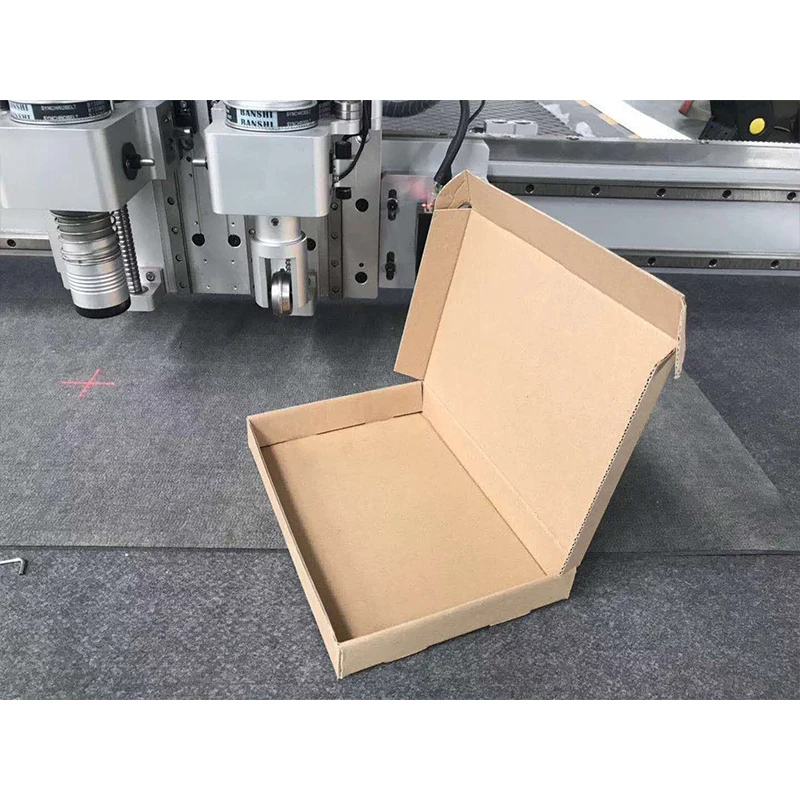
A carton sample cutting machine for sale must offer more than one blade option if your shop runs mixed materials. The oscillating knife handles corrugated and thick grey board through a rapid up-and-down stroke that shears rather than drags, preventing the delamination you see with a static drag knife on multi-ply stock. The creasing tool scores fold lines without cutting through, while the kiss-cut knife scores sticker sheets down to the backing paper without piercing it. Having all four tool positions — oscillating, creasing, kiss-cut, and round punch — on one workstation means a packaging sample maker can move from a corrugated box prototype to a self-adhesive label run without changing machines or re-fixturing the material.
Vacuum Zoning and What It Means for Small Parts
When the vacuum table is a single undivided zone, small sticker and label parts lift at the edges during high-speed knife travel, ruining contour accuracy and wasting sheet area near the borders. The aluminum alloy honeycomb table on this series uses zone-following adsorption, which activates only the cells beneath the current cutting path. This keeps flat stock like thin PP paper and business card card firmly pinned without requiring a full-sheet overlay or manual weighting. The felt belt riding on top is a composite fiber rated for repeated blade contact, and replacement intervals depend on your daily cut volume and blade sharpness discipline [NEED_CITE: vacuum zoning impact on small-part cutting accuracy].
Reading the Specs Through a Packaging Lens
Cutting thickness rated at ≤18 mm tells a carton producer that standard E-flute and B-flute corrugated are within range, but double-wall or heavy grey board approaching that limit will require the oscillating knife at full stroke rather than the drag knife. Repeated accuracy of <0.05 mm matters most on kiss-cut label work where the blade must stop precisely at the backing paper; any accumulated backlash in the rack transmission shows up immediately as ragged contour corners. The 9 kW rated power covers the servo drive, vacuum pump and oscillating motor simultaneously, so buyers planning to run the 7.5 kW vacuum pump option should verify their workshop circuit can handle peak draw on startup. Voltage is listed at 380 V, but the frequency must match the destination grid before the electrical cabinet is wired — a 50 Hz motor on a 60 Hz supply runs hotter and shorter.
What Happens When the Wrong Configuration Ships
I have seen buyers receive a machine with a single-zone vacuum table and spend weeks trying to cut small labels, only to watch pieces drift mid-cut and nest yield collapse. Others specified a drag knife for 3 mm grey board because it was the default quote, then discovered the blade dragged and tore rather than sheared, producing edges that needed manual trimming on every sample. A third recurring issue is software: if the machine arrives expecting DXF files but your design team works exclusively in AI or PDF, the conversion step introduces node errors that show up as jagged crease lines on the finished box. Each of these problems is preventable with a pre-shipment sample cut on your own material and a confirmed software workflow [NEED_CITE: file format compatibility in digital cutting workflows].
What Sets This Range Apart for Packaging Buyers
Our in-house design team covers both knife and laser cutting, so a packaging buyer is never forced into one technology when the material calls for the other — thick corrugated goes to the oscillating knife, while thin film and adhesive layers may suit a laser seal. Tool head and table configuration are specified per material and production volume rather than offered as a one-size default. CCD camera positioning is available for printed contour work on sticker and label stock where registration marks must be tracked at speed. Software compatibility is confirmed before the order is released, not discovered during commissioning. Sample cutting on your own board or sticker stock runs before commitment, and the cutting report travels with the shipment documentation.
Documentation & Verification
- Machine specification sheet listing tool head and vacuum table configuration per material
- Sample cutting report on your cardboard or sticker stock before commitment
- Electrical schematic with voltage and frequency matched to destination country
- Software licence and file format compatibility note for DXF, OLT, PDF, AI
- Factory test record documenting repeated accuracy and cutting depth on specified stock
- Spare parts list including oscillating blade count and felt belt replacement schedule
Installation, Commissioning & Support
- Foundation must be level within the 3550×1910 mm or 3450×2300 mm footprint depending on model selected
- Dedicated 380 V circuit with confirmed frequency and breaker rating to cover the 9 kW rated power
- Machine ships with frame and gantry separated; reassembly requires overhead clearance matching the 1400 mm or 1250 mm height
- First power-on includes servo calibration, vacuum zone mapping and infrared sensor safety check
- Operator training covers tool head changeover between oscillating knife, creasing and kiss-cut positions
- Included 10 oscillating blades plus felt belt wear schedule discussed during commissioning
What to Share Before Requesting a Quote
To match the right working area, tool head and vacuum configuration to your line, please provide the board types and maximum thickness you run, your typical daily sheet volume, and whether you need kiss-cut capability for labels. Confirm your local voltage and frequency, the control language your operators need, and whether your design workflow uses DXF, AI, PDF or another format so we can verify software compatibility before building.
Frequently Asked Questions
Q: Should I choose oscillating knife or laser for my corrugated carton samples?
A: Oscillating knife is the standard for corrugated and grey board because it shears through fibrous layers without melting or sealing the edges, which a laser would do on synthetic coatings. Laser suits thin film overlays or adhesive kiss-cutting where a sealed edge is beneficial. We recommend running both methods on your actual stock before deciding, which is why sample cutting precedes every contract.
Q: How do I read this catalogue to narrow down the right machine family?
A: Start with your thickest material and match it against the ≤18 mm cutting depth. Then check your largest sheet dimension against the available working areas. If you run small labels alongside cartons, prioritize the zone-following vacuum table. Finally, confirm whether you need CCD contour recognition for printed registration marks, which determines the camera option.
Q: What is the difference between the listed working area and real usable cutting zone?
A: The working area defines the travel limits of the tool head across the honeycomb table. Usable cutting zone is slightly smaller once you account for clamp or hold-down margins at the sheet edges. We state both values in the specification sheet so you can plan nesting layouts before the machine arrives, avoiding surprises when a full sheet does not yield the expected part count.
Q: How does vacuum table zoning affect my small sticker and label parts?
A: Zone-following adsorption activates only the honeycomb cells under the active cutting path, holding small parts flat without requiring a full-sheet vacuum seal. This prevents edge lift and drift that single-zone tables cause on sticker stock, improving contour accuracy and reducing material waste from misregistered cuts near the sheet border.
Q: Will the software work with my existing design files and nesting workflow?
A: The system supports DXF, OLT, PDF and AI formats, but we verify your specific file versions and nesting software before the order is released. A file format compatibility note is included in the shipment documentation, and any required conversion steps are tested during the pre-shipment sample cut on your material.










商品评价
There are no reviews yet.