

Fast Delivery
Quick, reliable shipping to any location.

Free & easy returns
Return this item by mail or in store within 90 days for a full refund.
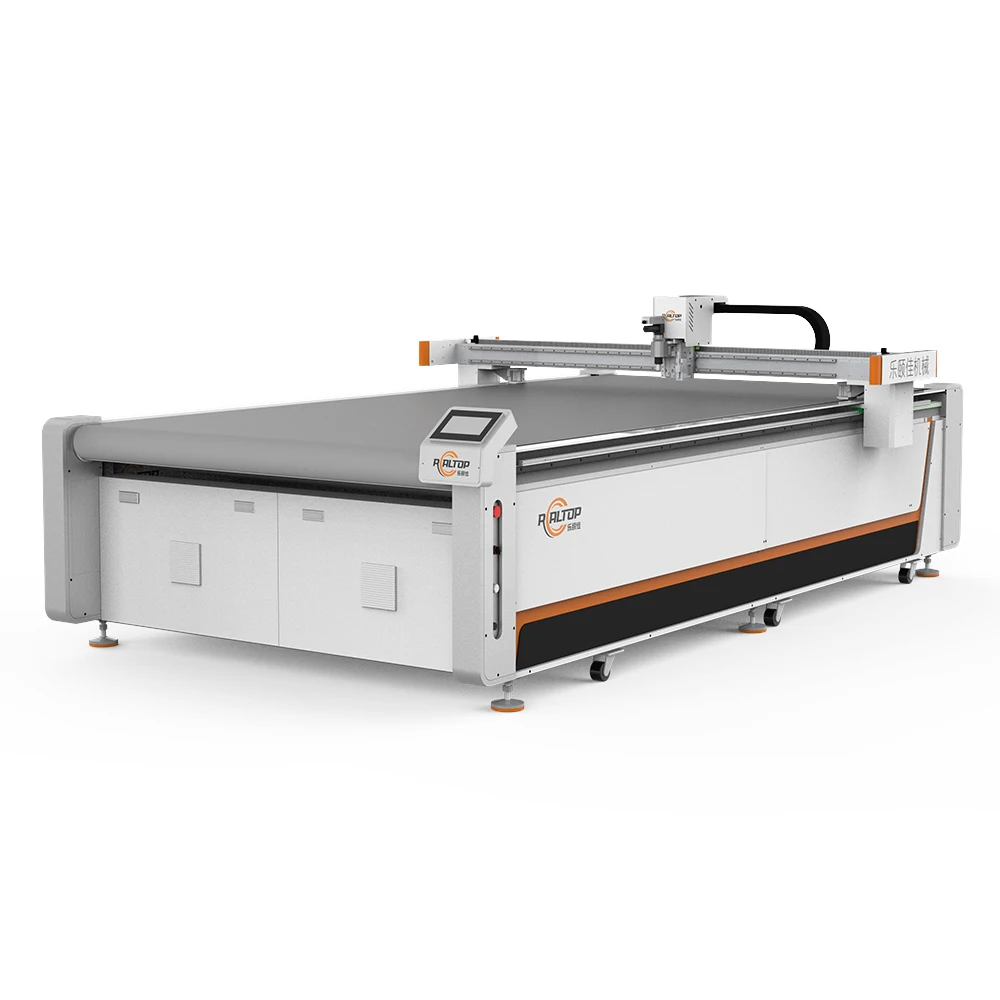
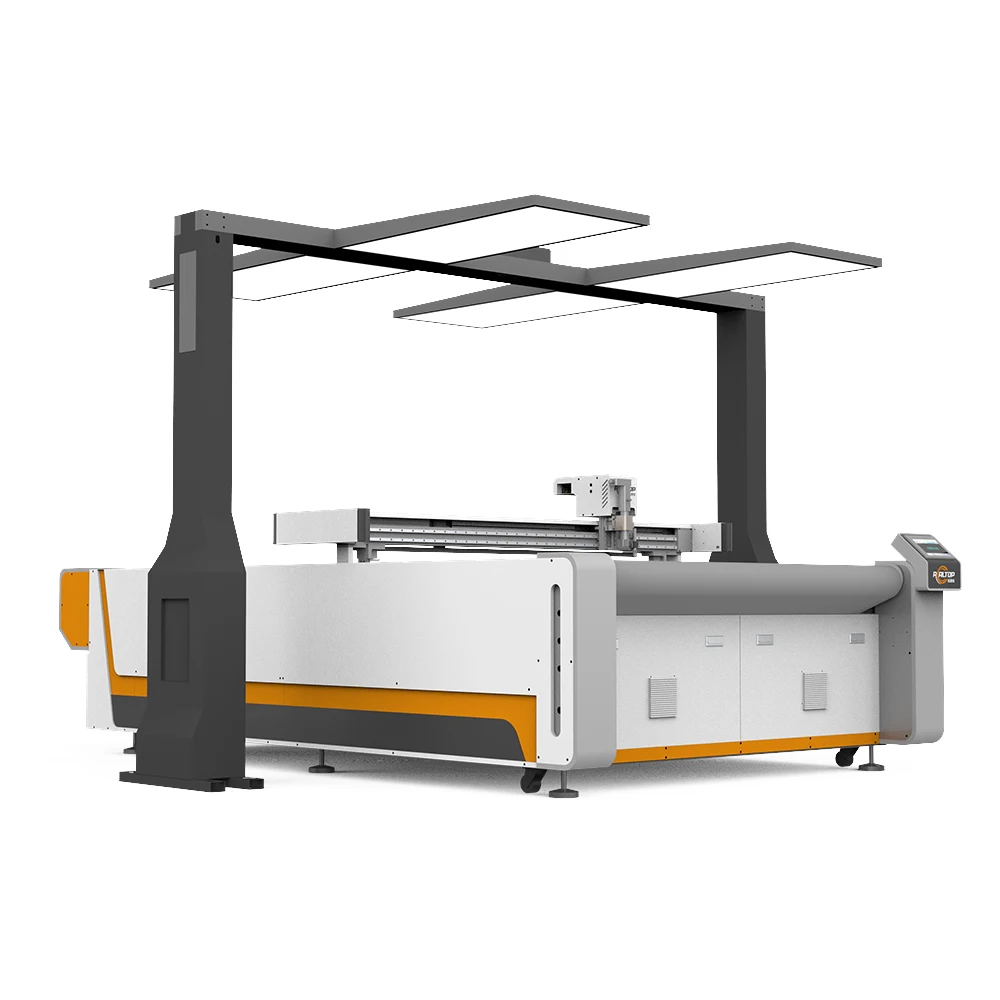
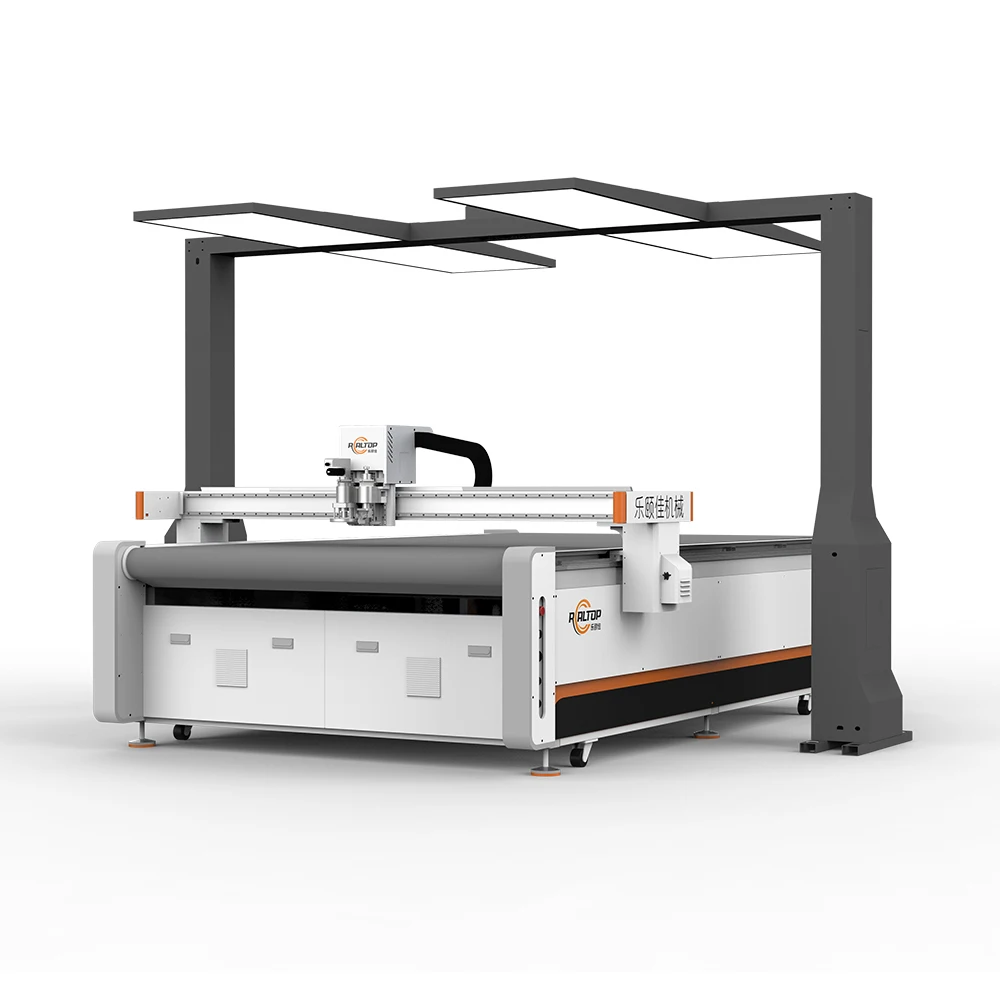
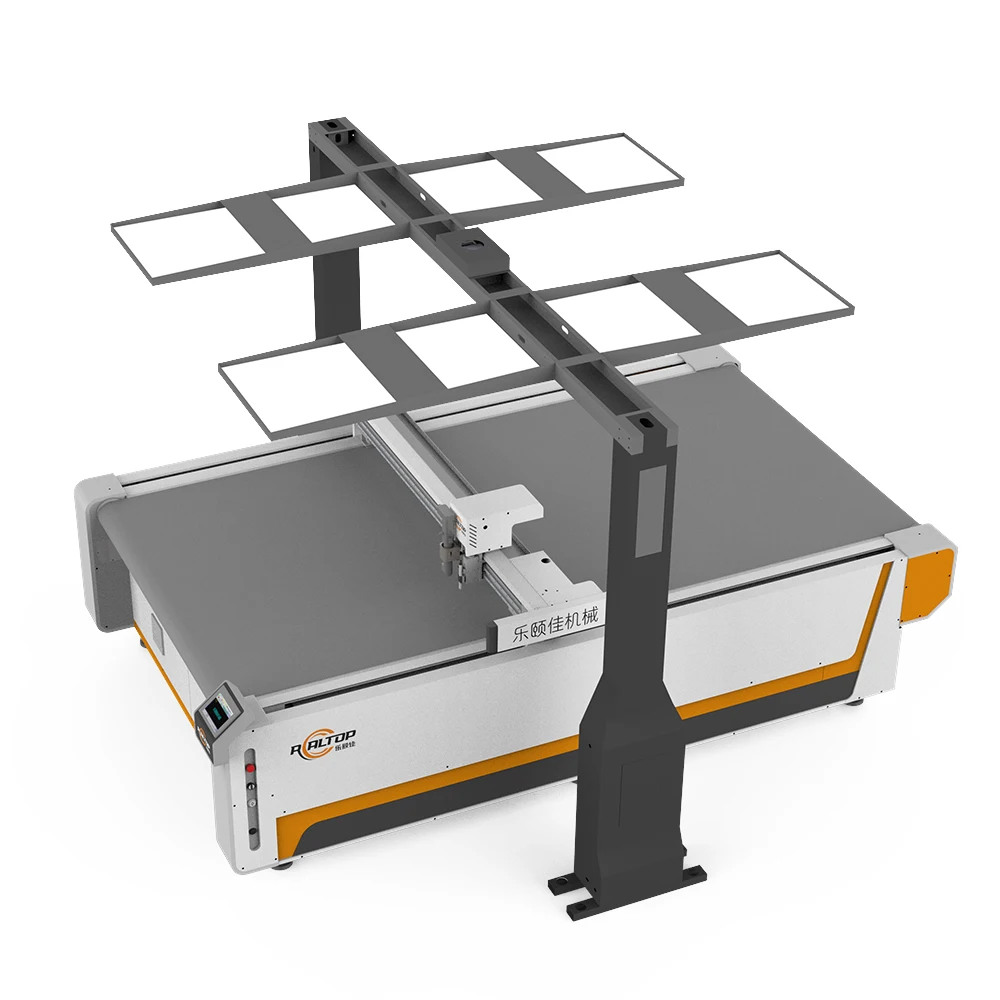
Customized knife and table configuration — every oscillating knife cutting table is specified per material thickness, density and production volume, then sample-cut on the buyer’s actual stock before order confirmation.
Technical Specifications
| Parameter | Value |
|---|---|
| Product Type | CNC Oscillating Knife Cutting Machine |
| Working Area | 1600 × 2500 mm |
| Tool Head Options | Oscillating knife, Driven rotary knife, Creasing wheel, Kiss cutting tool, Pneumatic knife, Milling tool, V groove knife |
| Cutting Speed | 0 – 2000 mm/s |
| Cutting Thickness | ≤ 30 mm (basis not stated in source — confirm material type and density) |
| Cutting Accuracy | ±0.1 mm |
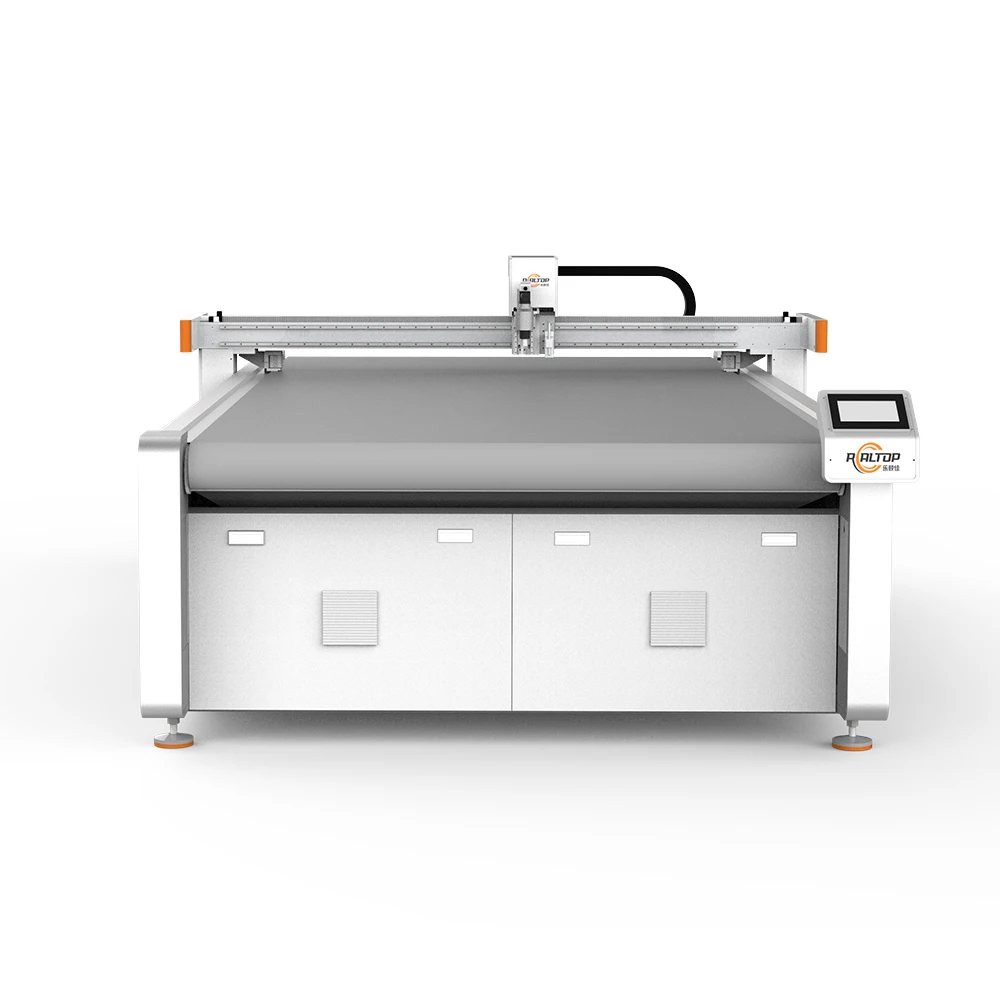
| Vacuum Table | Aluminum bellows vacuum table |
| Vacuum Pump | 9 kW |
| Control System | PLC control panel |
| Servo Motor Options | Panasonic, Delta, Dorna |
| Positioning System | CCD camera contour recognition |
| Supported File Formats | PLT, DXF, AI, PDF |
| Voltage Options | 110V, 220V, 380V |
| Safety Device | Infrared sensor device and emergency stop device |
| Machine Size | 3300 × 2100 × 1350 mm |
| Language Options | English, Russian, Italian, Chinese; special languages customizable |
| Software | Dedicated packaging box structure design software included |
| Standards | CE |
Application Suitability
| Application | Material or Output |
|---|---|
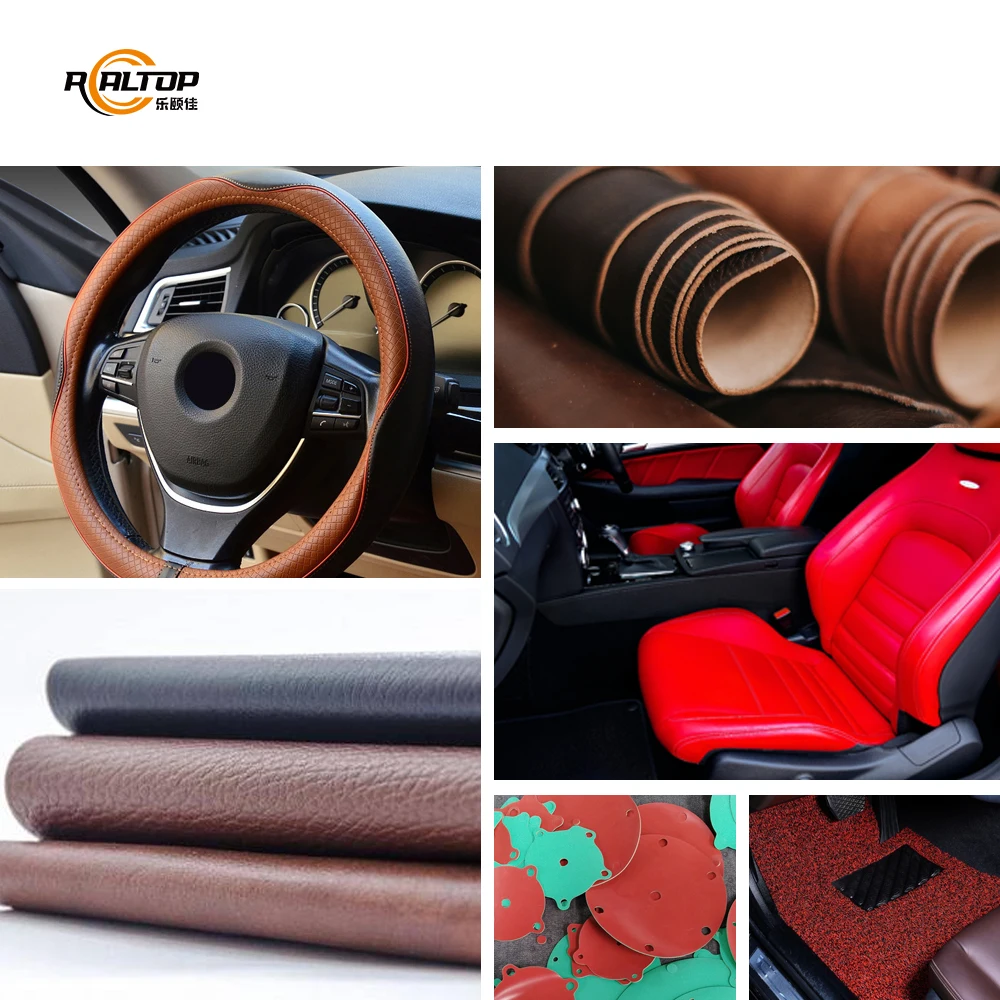
| Footwear and leather goods production | Genuine leather, synthetic leather, shoe uppers, bag components |
| Automotive interior trimming | PVC leather car mats, EVA foam layers, composite interior panels |
| Garment and textile manufacturing | Printed fabrics, patterned rolls, sofa upholstery textiles |
| Signage and advertising fabrication | Foam boards, adhesive stickers, vehicle wrap vinyl, PVC sheets |
| Packaging sample making | Corrugated cartons, gift box structures, folding carton prototypes |
| Composite and foam processing | EPE foam, insulation materials, multi-layer flexible composites |
Why Material Density Matters More Than Working Area When Selecting a CNC Oscillating Knife Cutting Machine manufacturer
A cutting table rated by bed size alone tells you nothing about how it will handle your specific material stack.
I have watched buyers spend weeks comparing working areas and servo brands, only to discover on delivery day that the vacuum table cannot hold down their small nested leather pieces during oscillating cuts. The 9 kW pump specification means little if the table zoning does not match your nesting pattern. A CNC oscillating knife cutting machine manufacturer that asks about your material density and daily volume before quoting a configuration is the one worth continuing the conversation with [NEED_CITE: vacuum hold-down requirements by material porosity and part size].
Matching the Knife Head to the Material Stack
The seven available tool heads exist because no single blade geometry cuts clean edges across leather, foam and corrugated board simultaneously. Oscillating knife action handles dense leather and composites by vibrating the blade vertically at high frequency, reducing drag and preventing material bunching. Driven rotary knives slice through woven textiles and patterned rolls without fraying the edge. When a buyer’s material list spans shoe uppers and EVA foam car mats, the configuration must allow head changes within the same production shift without recalibration drift.
Contour Recognition on Printed and Patterned Materials
CCD camera positioning reads registration marks on pre-printed fabrics and vinyl sheets, adjusting the cut path in real time to compensate for stretch or skew introduced during printing. This matters for vehicle wrap producers and signage shops where the graphic is already on the material before it reaches the cutting bed. Without camera tracking, operators manually align each sheet against a projected template, which slows throughput and increases miscut scrap on long production runs [NEED_CITE: CCD contour registration accuracy on flexible printed substrates].
Reading the Specifications Against Your Production Reality
The 1600 × 2500 mm bed accommodates standard leather hides and full-width fabric rolls without excessive repositioning. Cutting accuracy of ±0.1 mm keeps shoe upper pieces within lasting tolerance and prevents cumulative error in multi-piece bag assemblies. The PLC control panel with Panasonic, Delta or Dorna servo options gives maintenance teams flexibility when sourcing replacement drives in different export markets. Aluminum bellows vacuum table construction resists corrosion from leather tanning residues and adhesive off-gassing far better than mild steel alternatives, which matters when the machine runs composite materials with solvent-based laminating adhesives.
What Happens When the Wrong Tool Head Meets Your Material
Selecting a drag knife for multi-layer automotive foam produces compressed top layers and ragged bottom edges, because the blade pulls rather than slices. Using an oscillating head on thin vinyl stickers without kiss-cut adjustment drives the blade through the backing paper, ruining the release liner and wasting entire sheets. These failures rarely show up in the factory test because the seller ran standard sample material rather than the buyer’s actual stock [NEED_CITE: tool head selection errors and edge quality defects in flexible material cutting].
Why Buyers Choose This CNC Oscillating Knife Cutting Machine manufacturer
In-house design covers both knife and laser processes, so buyers compare methods against their material rather than being locked into one technology. Tool head and vacuum table zoning are specified per material type and nesting layout, not offered as a default package. CCD camera positioning is confirmed working on the buyer’s printed material before shipment, not listed as an optional extra that arrives untested. Software compatibility with DXF, PLT, AI and PDF files is verified against the buyer’s existing design workflow during the sample cutting stage. Voltage, plug type and control language are documented and locked before production begins, eliminating the common scenario where a 380V machine arrives at a 220V workshop.
Documentation & Verification
- Machine specification sheet listing confirmed tool heads and vacuum zone layout
- Electrical schematic with voltage, frequency and plug type for destination market
- Sample cutting report on buyer’s own leather or composite material with edge photographs
- Tool head and table configuration list matched to stated material thickness and daily volume
- Software licence and file format compatibility note for PLT, DXF, AI and PDF workflows
- Factory test record showing positional accuracy across the full 1600 × 2500 mm bed
Installation, Commissioning & Support
- Foundation must be level within tolerance across the 3300 × 2100 mm machine footprint to prevent vacuum seal leaks
- Dedicated electrical circuit matching confirmed voltage option (110V, 220V or 380V) with correct breaker rating for the 9 kW vacuum pump
- Machine ships partially assembled; gantry and tool head carriage require on-site alignment and belt tensioning
- First-run commissioning includes vacuum zoning test with buyer’s smallest nested part geometry
- Operator training covers tool head changeover, CCD mark registration and PLC parameter adjustment
- Spare parts list identifies oscillating knife blades, vacuum seals and servo drive consumables
What We Need to Recommend the Right Configuration
Provide your material type, maximum thickness, sheet or roll width and daily cutting volume. Confirm your workshop voltage and frequency, and whether your design team works in DXF, AI or another file format. If your material is pre-printed or patterned, send a sample sheet so we can verify CCD tracking accuracy before building your quotation.
Frequently Asked Questions
Q: Should I choose an oscillating knife or a laser for cutting leather?
A: Oscillating knives cut leather without burning the edge or producing the fumes that laser processing generates on organic materials. Lasers seal synthetic edges but char genuine leather. When your product line includes both genuine and synthetic leather, having both technologies available from one CNC oscillating knife cutting machine manufacturer lets you assign each material to the process that suits it rather than forcing one method across the board.
Q: Which tool head works best for EVA foam car mats?
A: Pneumatic knife and oscillating knife heads both handle EVA foam, but the choice depends on thickness and whether the foam is laminated to a PVC top layer. Pneumatic knives plunge through dense multi-layer stacks, while oscillating knives follow complex contours on thinner foam shapes. We run a sample cut on your exact foam stack to confirm which head produces clean edges without crushing the cell structure.
Q: Can the CCD camera track printed marks on stretchy vehicle wrap vinyl?
A: Yes, provided the registration marks are printed with sufficient contrast and spacing for the camera to detect them at cutting speed. Stretch and skew in thin vinyl are common after inkjet printing, and the CCD system compensates by adjusting the cut path between marks. We verify tracking performance on your printed sample material before the machine leaves the factory.
Q: Is the vacuum table hold-down strong enough for small nested leather pieces?
A: The aluminum bellows vacuum table divides into zones, and hold-down adequacy depends on whether the active zones match your typical nesting layout. Small pieces near zone boundaries can lift during aggressive oscillating cuts if the pump capacity is spread across inactive areas. We review your nesting files and configure zone mapping accordingly during the specification stage.
Q: How do I confirm voltage and control language before shipment?
A: Voltage, plug type and PLC display language are documented in the electrical schematic and specification sheet that we send for your written approval before production begins. This prevents the situation where a machine arrives configured for a different electrical standard or with a control interface your operators cannot read.










商品评价
There are no reviews yet.