

Fast Delivery
Quick, reliable shipping to any location.

Free & easy returns
Return this item by mail or in store within 90 days for a full refund.
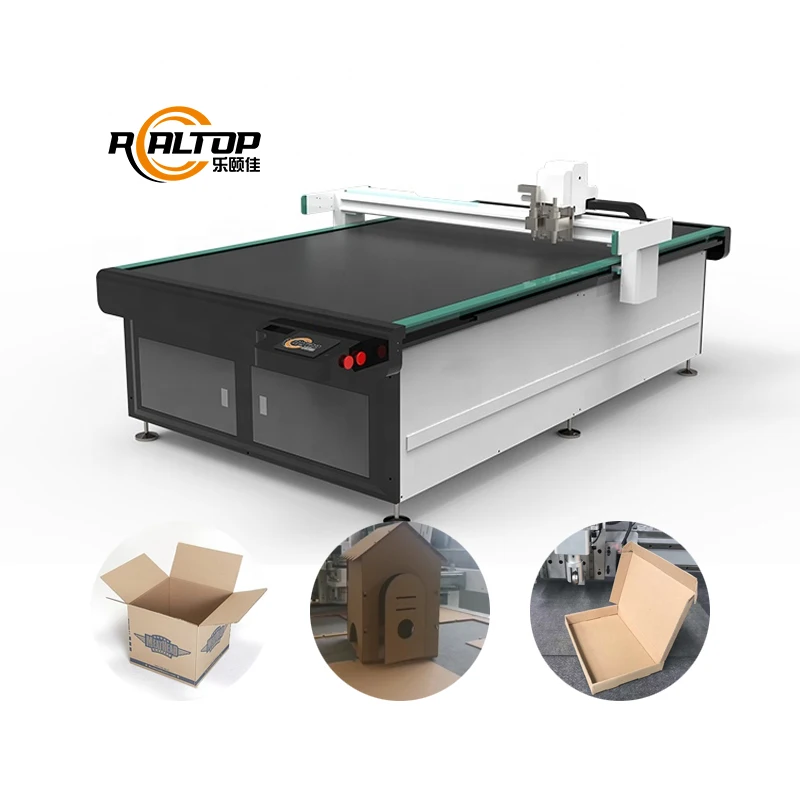
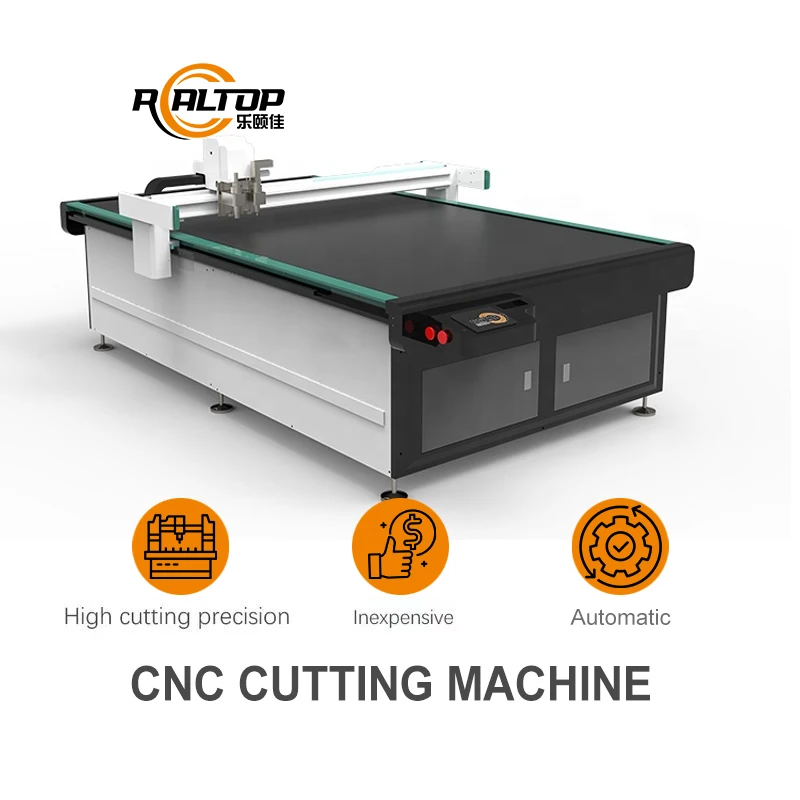
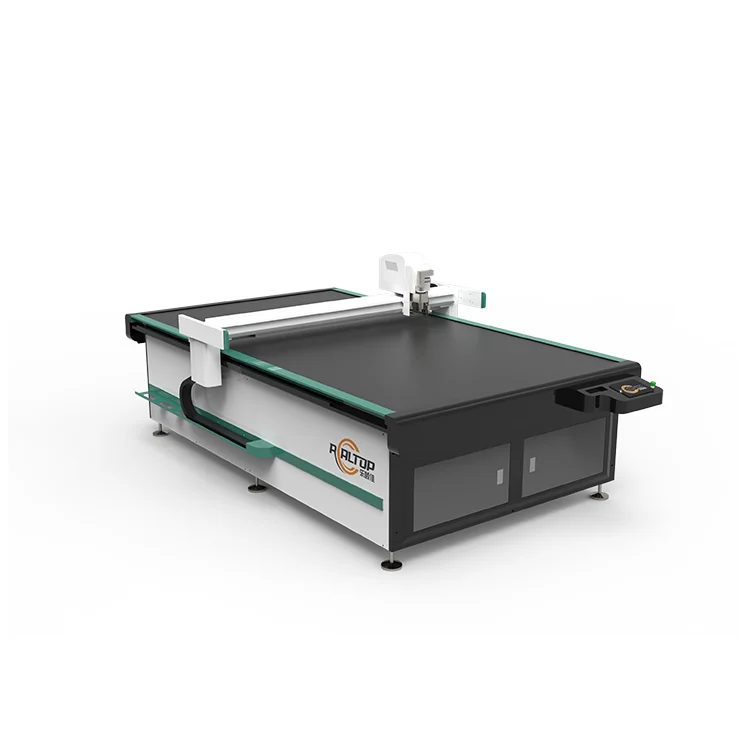
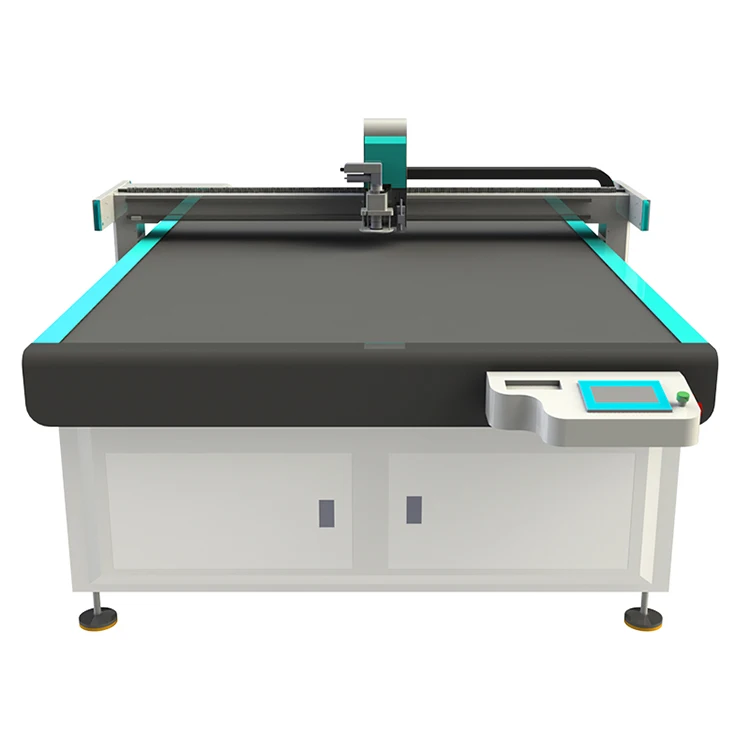
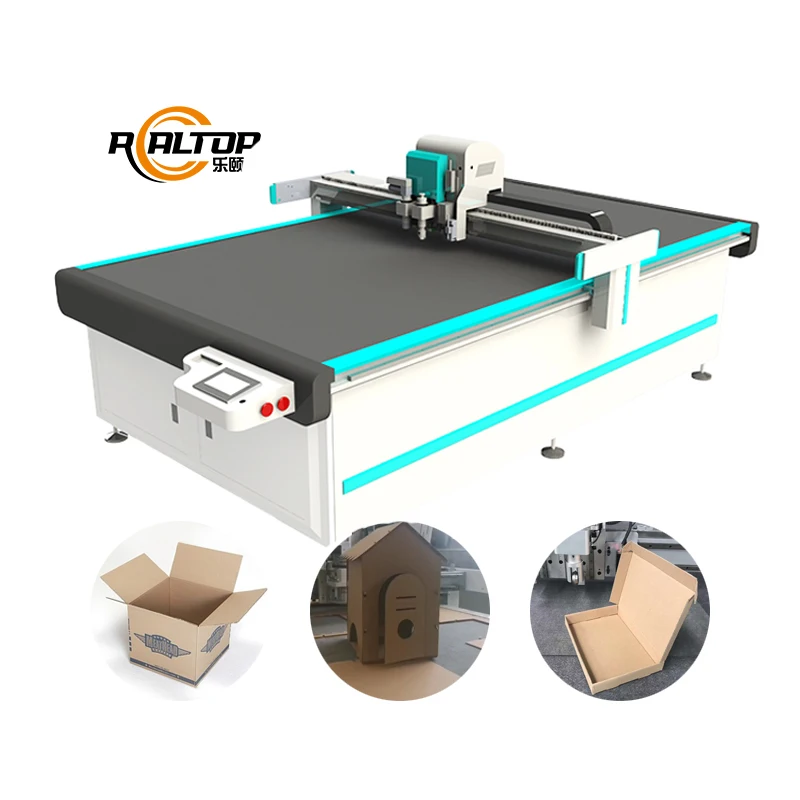
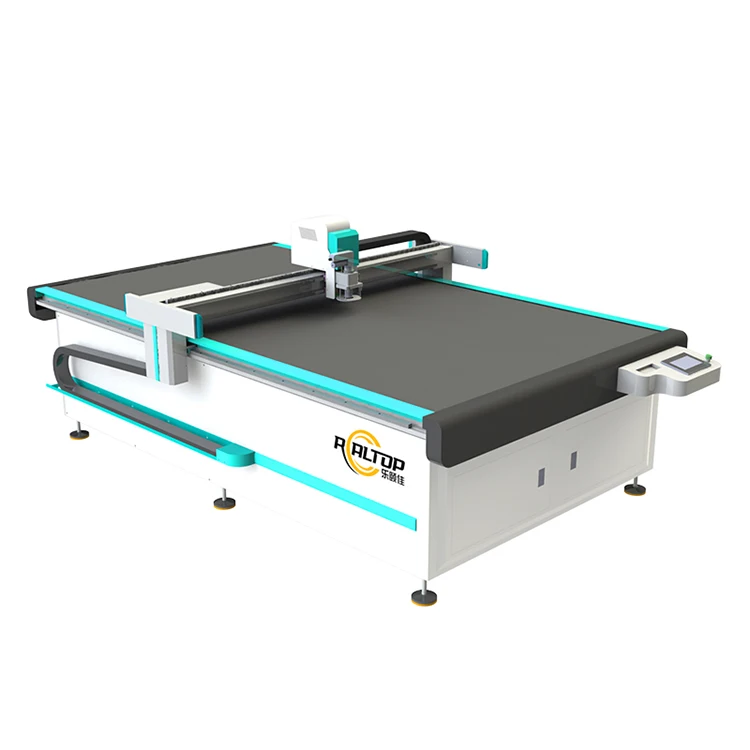
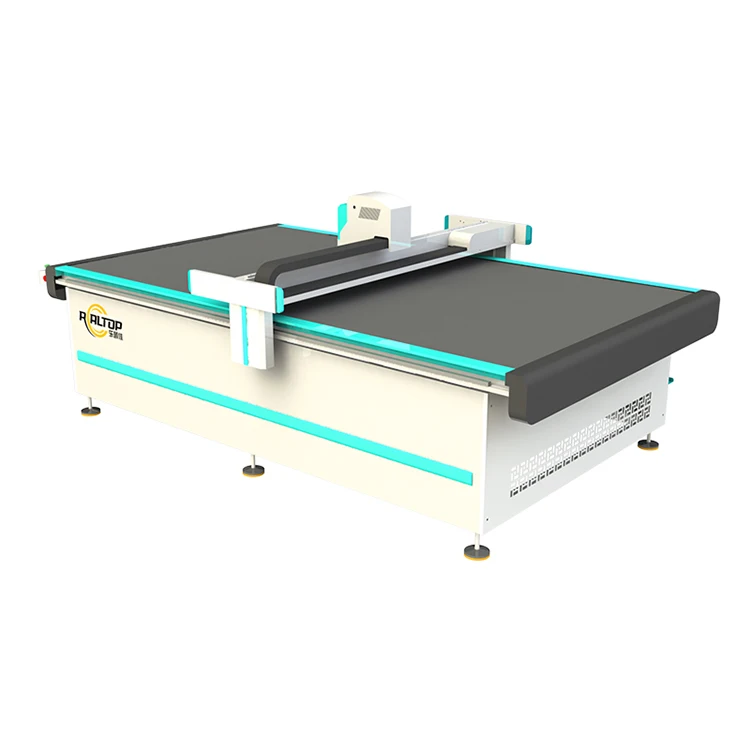
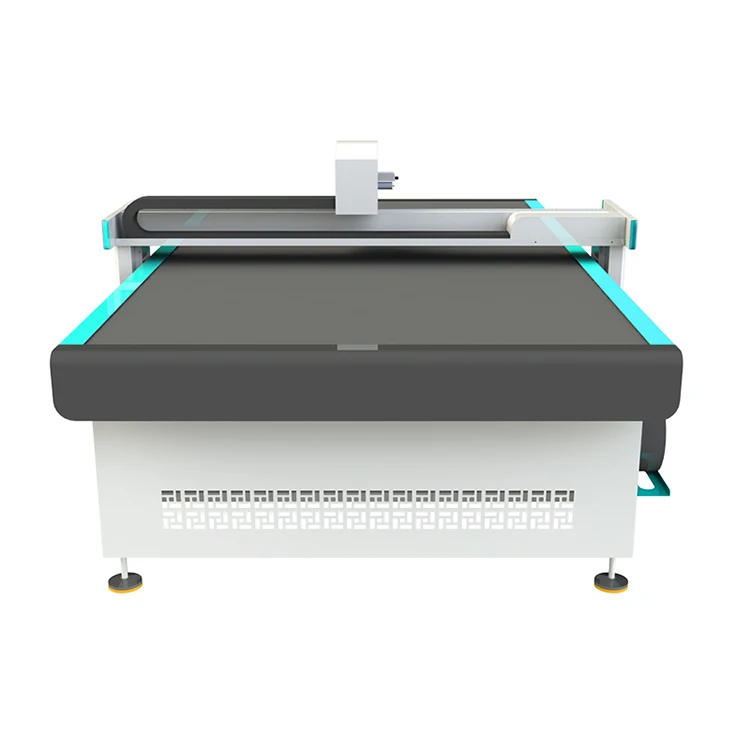
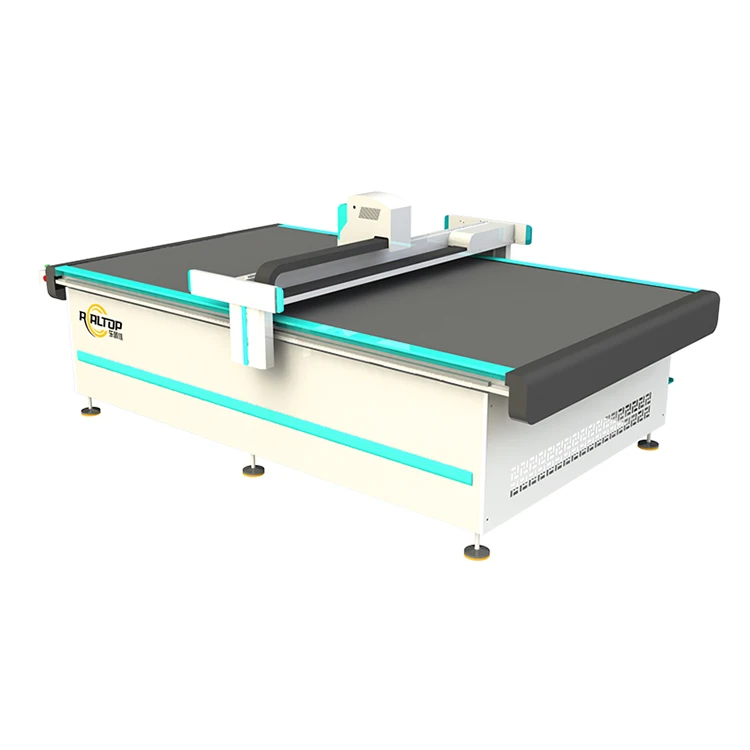
Full-range knife systems — In-house design spans oscillating, drag, creasing and punching heads on a single bed, so the RT-D2516/RT-S2516 meets material needs instead of forcing one tool.
Technical Specifications
| Parameter | Value |
|---|---|
| Model | RT-D2516/RT-S2516 |
| Working Area | 1600 × 2500 mm |
| Machine Size | 3450 × 2300 × 1250 mm |
| Rated Power | 9 kW |
| Voltage | 380V ±10% |
| Fixed Model | Flat working table |
| Cutting Thickness | 20 mm – 80 mm (basis not stated in source — confirm block format, material and thickness before quoting) |
| Translational Velocity | 800 – 1200 mm/s |
| Repeated Accuracy | ≤0.1 mm |
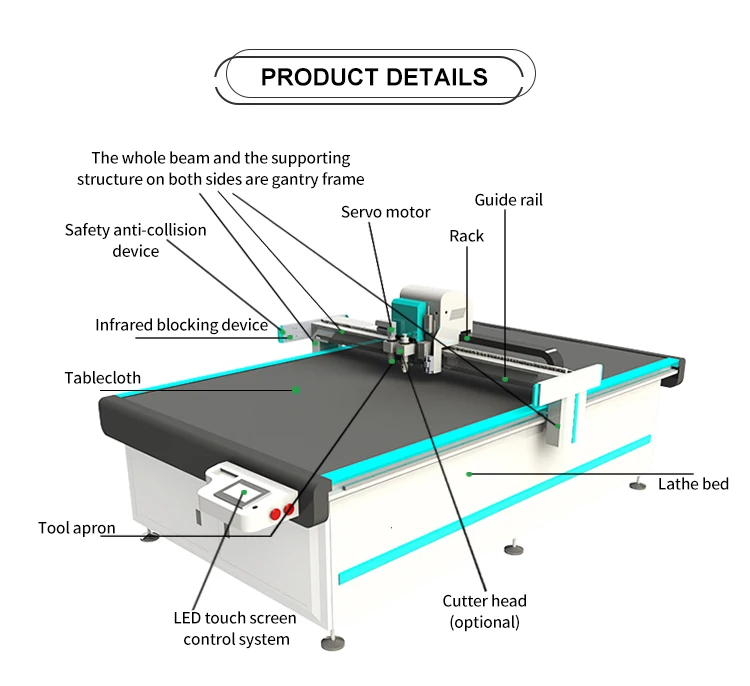
| Transmission System | Imported digital servo motor, linear guide, synchronous belt, ball screw |
| Servo Motor Brand | Delta (optional Panasonic) |
| Linear Guide | Taiwan Hiwin rail |
| Vacuum Table | Magnesium-aluminum alloy with fluorocarbon PVDF powder spraying, anodic and hard oxidation; 7.5 kW vacuum pump |
| Conveyor Belt | Germany imported (optional configuration) |
| Auto Feeding | Available |
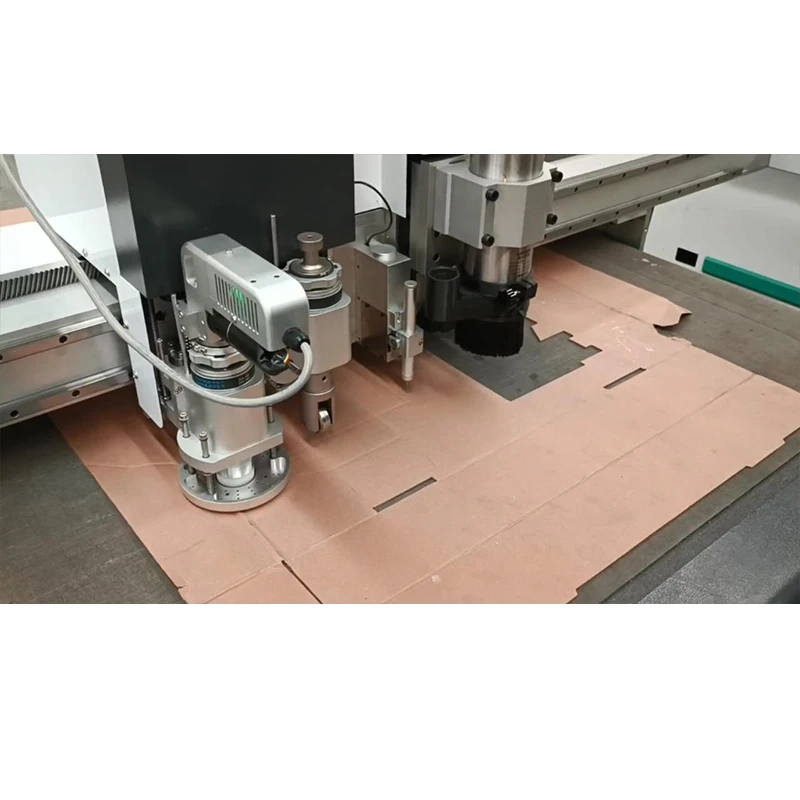
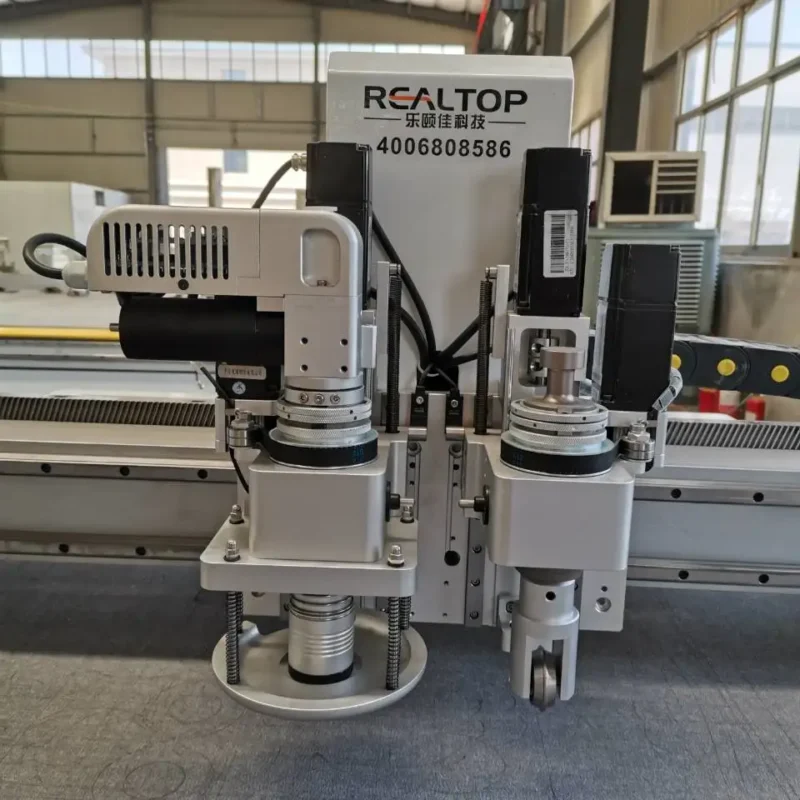
| Multifunctional Head | Swiss imported knife with vibration full cutting, half cutting and cursor location; optional oscillating knife, pneumatic knife, high-power vibrating knife, circular knife, V cutting knife, drag knife, creasing wheel, dotted line knife, punching, brush |
| Visual Positioning | Small CCD camera mark point positioning, panoramic camera recognition, projection positioning (options) |
| Instruction System | HP-GL compatible format |
| Language Options | English, Russian, Italian, Chinese; special languages customizable |
| Safety Device | Infrared sensors, anti-collision, emergency stop |
| Assembly State | Fully assembled |
| CE Declaration | Available where applicable |
Application Suitability
| Application | Material or Output |
|---|---|
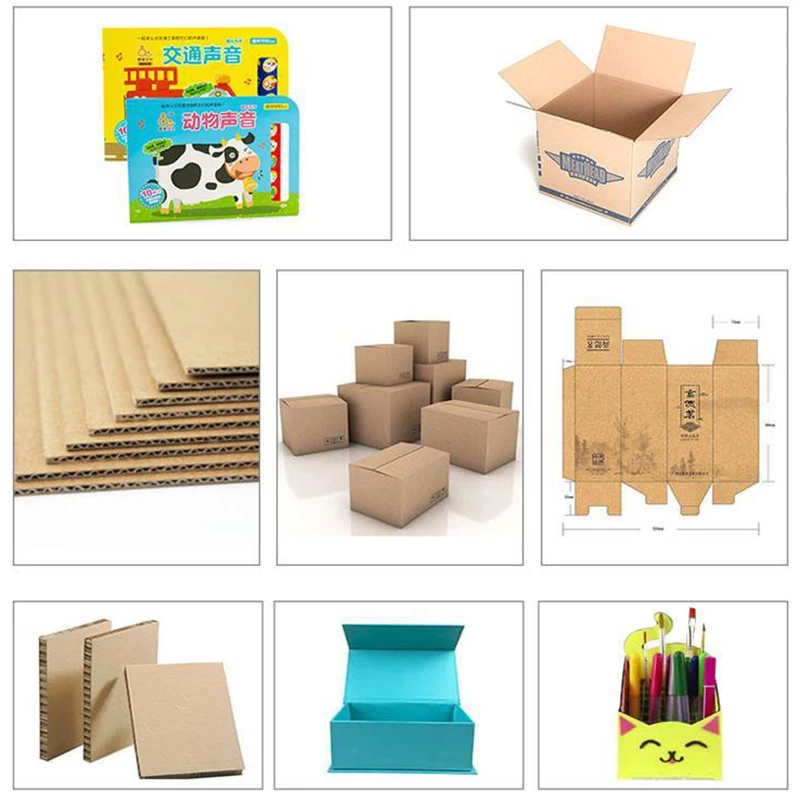
| Packaging and carton sample making | Corrugated cardboard, plastic box, sticker, film |
| Automotive interiors and gaskets | Sponge composite leather, rubber, PU, EVA, XPE |
| Garment, footwear and luggage | Leather, clothing flexible material, shoe material, luggage material |
| Soft home furnishings and carpets | Carpet, sponge, non-woven fabric |
| Sealing pads and composites | Gasket material, PTFE, ETFE, fiberglass, silicon |
| Graphic advertising and printing | PVC, soft glass, foam board |
Why a Working-Area Quote Is Not Enough for a CNC Knife Cutting Machine Manufacturer
A 1600×2500 mm bed tells you where the material sits, not whether the knife will hold up at depth.
Spec sheets that lead with footprint often hide the factors that actually determine daily output. Thickness capability, vacuum zoning and tool head range decide whether a board stays flat and a cut stays clean. I have walked into workshops where a machine sized for the sheet was still unable to finish a gasket because the vacuum pulled unevenly on small off-cuts and the drag knife left ragged edges on 30 mm foam [NEED_CITE: vacuum zoning principles for small-part CNC cutting]. The right CNC oscillating knife cutting table for sale is the one whose configuration matches the material stack, not just the room it sits in.
Matching the Tool Head to the Material Stack
Oscillating knives slice through fibrous and layered stock cleanly, while a drag knife suits thinner vinyl and sticker films. Creasing wheels score cardboard without penetrating the bottom liner, and punching tools handle eyelets or ventilation holes in a single pass. Choosing the wrong head produces crushed edges or incomplete cuts that need secondary finishing.
Visual Positioning Choices Across the Catalogue
Small CCD mark-point reading suits printed sheets where a few fiducials drive the contour path. Panoramic camera recognition scans the entire bed for randomly placed pieces, useful when nesting textile panels. Projection positioning overlays the cut path onto the material for manual alignment checks before the head engages.
Reading the Specs That Actually Matter
The 1600 × 2500 mm working area accommodates standard textile rolls and full carton sheets, but the magnesium-aluminum vacuum table with PVDF coating is what keeps porous and textured stock from lifting during high-speed passes. A 7.5 kW vacuum pump generates the suction needed for dense materials, while the Hiwin linear rail and imported servo motor maintain ≤0.1 mm repeated accuracy across the bed. Translational velocity of 800–1200 mm/s only delivers clean edges when the chosen knife frequency matches material density [NEED_CITE: relationship between oscillation frequency and material thickness in knife cutting]. Thickness ratings of 20–80 mm must be confirmed against the actual material block format before committing.
The Hidden Cost of a Wrong Configuration
A machine set up for thin vinyl will stall on 40 mm EVA foam, producing ragged edges and forcing a complete re-order of the tool head. Insufficient vacuum zoning lets small gasket parts lift mid-cut, wasting sheet yield. Ignoring voltage confirmation at the order stage leads to transformer add-ons at the destination port, delaying commissioning [NEED_CITE: voltage mismatch impact on industrial CNC equipment].
Why Buyers Source This Range Here
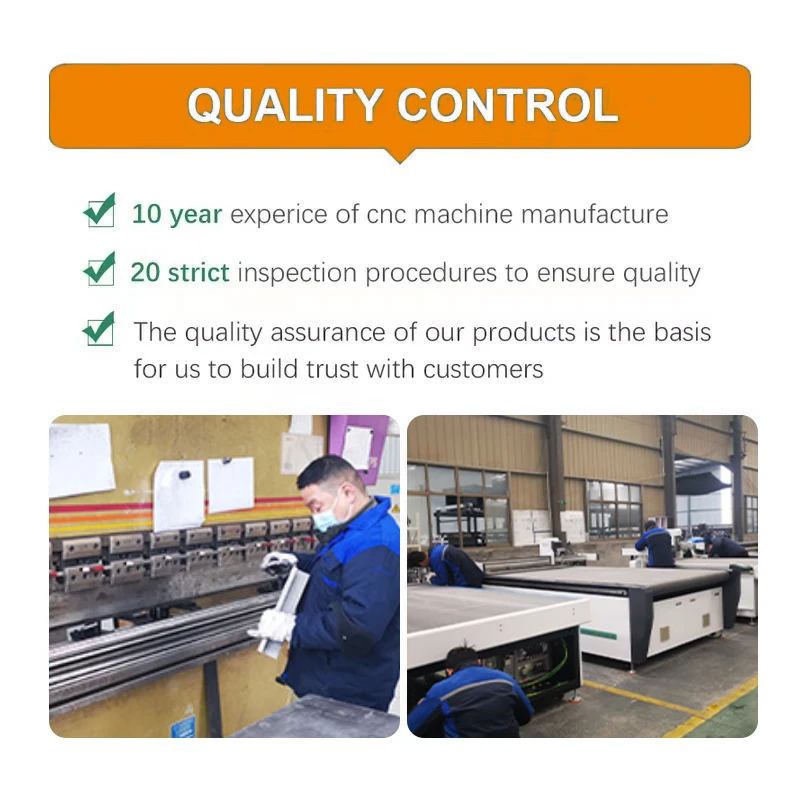
In-house design covers both knife and laser methods, so a buyer can switch technologies when the material demands it rather than being locked in. Tool heads and table zones are specified per material and volume after sample cutting on the buyer’s own stock. CCD contour capability is tested at production speed before dispatch, and software compatibility is confirmed against the buyer’s nesting workflow. Voltage, plug type and control language are locked down before the machine leaves the factory.
Documentation & Verification
- Machine specification sheet with working area, tool head list and confirmed voltage
- Sample cutting report on the buyer’s actual material before order commitment
- Electrical schematic and voltage confirmation matching the destination market
- Software licence and HP-GL file format compatibility note
- Factory test record showing repeated accuracy and vacuum performance
- Spare parts list with recommended consumables for the chosen tool head
Installation, Commissioning & Support
- 3450 × 2300 mm footprint requires level concrete floor with clear access for fully assembled delivery
- 380V ±10% three-phase supply with dedicated circuit for 9 kW rated load
- Machine arrives fully assembled; only vacuum hose and conveyor belt connection required
- First-run parameter tuning on the buyer’s material and chosen tool head
- Operator training on HP-GL file import, nesting and CCD mark-point setup
- Spare knife blades, vacuum seals and filter elements supplied for initial operation
What We Need From You
Please share the material type, maximum thickness and standard sheet dimensions you plan to cut, along with your daily volume target. Confirm the local voltage and frequency, plus the control language your operators prefer. If you already run a nesting software workflow, tell us which package so we can verify file compatibility before quotation.
Frequently Asked Questions
Q: Knife versus laser — which method suits which material?
A: Knife cutting handles layered, fibrous and compressible stock like foam, textile, gasket and corrugated board without melting edges. Laser suits thin non-metals where a sealed edge is needed. Our catalogue covers both, so the choice follows the material rather than the machine.
Q: How do I size the working area to my sheet and throughput?
A: Start from the largest standard sheet or roll width you run daily. The 1600 × 2500 mm bed covers most carton and textile formats. Add auto-feeding and conveyor options when continuous throughput matters more than batch sample making.
Q: Which tool head fits my material?
A: Oscillating knives cut thick foam and composites cleanly; drag knives suit thin vinyl and sticker; creasing wheels score carton; punching handles holes. We specify the head after sample cutting on your actual stock.
Q: Can voltage, plug and language be confirmed before shipment?
A: Yes. We lock voltage, plug type and control language at order stage, matching the destination market. The electrical schematic is supplied with the documentation pack for local electrician review.
Q: CCD camera or panoramic camera for printed contour work?
A: CCD mark-point reading suits sheets with printed fiducials. Panoramic recognition scans the whole bed for randomly placed pieces. We test the chosen system at production speed on your printed stock before dispatch.
Full-range knife systems — In-house design spans oscillating, drag, creasing and punching heads on a single bed, so the RT-D2516/RT-S2516 meets material needs instead of forcing one tool.
Technical Specifications
| Parameter | Value |
|---|---|
| Model | RT-D2516/RT-S2516 |
| Working Area | 1600 × 2500 mm |
| Machine Size | 3450 × 2300 × 1250 mm |
| Rated Power | 9 kW |
| Voltage | 380V ±10% |
| Fixed Model | Flat working table |
| Cutting Thickness | 20 mm – 80 mm (basis not stated in source — confirm block format, material and thickness before quoting) |
| Translational Velocity | 800 – 1200 mm/s |
| Repeated Accuracy | ≤0.1 mm |
| Transmission System | Imported digital servo motor, linear guide, synchronous belt, ball screw |
| Servo Motor Brand | Delta (optional Panasonic) |
| Linear Guide | Taiwan Hiwin rail |
| Vacuum Table | Magnesium-aluminum alloy with fluorocarbon PVDF powder spraying, anodic and hard oxidation; 7.5 kW vacuum pump |
| Conveyor Belt | Germany imported (optional configuration) |
| Auto Feeding | Available |
| Multifunctional Head | Swiss imported knife with vibration full cutting, half cutting and cursor location; optional oscillating knife, pneumatic knife, high-power vibrating knife, circular knife, V cutting knife, drag knife, creasing wheel, dotted line knife, punching, brush |
| Visual Positioning | Small CCD camera mark point positioning, panoramic camera recognition, projection positioning (options) |
| Instruction System | HP-GL compatible format |
| Language Options | English, Russian, Italian, Chinese; special languages customizable |
| Safety Device | Infrared sensors, anti-collision, emergency stop |
| Assembly State | Fully assembled |
| CE Declaration | Available where applicable |
Application Suitability
| Application | Material or Output |
|---|---|
| Packaging and carton sample making | Corrugated cardboard, plastic box, sticker, film |
| Automotive interiors and gaskets | Sponge composite leather, rubber, PU, EVA, XPE |
| Garment, footwear and luggage | Leather, clothing flexible material, shoe material, luggage material |
| Soft home furnishings and carpets | Carpet, sponge, non-woven fabric |
| Sealing pads and composites | Gasket material, PTFE, ETFE, fiberglass, silicon |
| Graphic advertising and printing | PVC, soft glass, foam board |
Why a Working-Area Quote Is Not Enough for a CNC Knife Cutting Machine Manufacturer
A 1600×2500 mm bed tells you where the material sits, not whether the knife will hold up at depth.
Spec sheets that lead with footprint often hide the factors that actually determine daily output. Thickness capability, vacuum zoning and tool head range decide whether a board stays flat and a cut stays clean. I have walked into workshops where a machine sized for the sheet was still unable to finish a gasket because the vacuum pulled unevenly on small off-cuts and the drag knife left ragged edges on 30 mm foam [NEED_CITE: vacuum zoning principles for small-part CNC cutting]. The right CNC oscillating knife cutting table for sale is the one whose configuration matches the material stack, not just the room it sits in.
Matching the Tool Head to the Material Stack
Oscillating knives slice through fibrous and layered stock cleanly, while a drag knife suits thinner vinyl and sticker films. Creasing wheels score cardboard without penetrating the bottom liner, and punching tools handle eyelets or ventilation holes in a single pass. Choosing the wrong head produces crushed edges or incomplete cuts that need secondary finishing.
Visual Positioning Choices Across the Catalogue
Small CCD mark-point reading suits printed sheets where a few fiducials drive the contour path. Panoramic camera recognition scans the entire bed for randomly placed pieces, useful when nesting textile panels. Projection positioning overlays the cut path onto the material for manual alignment checks before the head engages.
Reading the Specs That Actually Matter
The 1600 × 2500 mm working area accommodates standard textile rolls and full carton sheets, but the magnesium-aluminum vacuum table with PVDF coating is what keeps porous and textured stock from lifting during high-speed passes. A 7.5 kW vacuum pump generates the suction needed for dense materials, while the Hiwin linear rail and imported servo motor maintain ≤0.1 mm repeated accuracy across the bed. Translational velocity of 800–1200 mm/s only delivers clean edges when the chosen knife frequency matches material density [NEED_CITE: relationship between oscillation frequency and material thickness in knife cutting]. Thickness ratings of 20–80 mm must be confirmed against the actual material block format before committing.
The Hidden Cost of a Wrong Configuration
A machine set up for thin vinyl will stall on 40 mm EVA foam, producing ragged edges and forcing a complete re-order of the tool head. Insufficient vacuum zoning lets small gasket parts lift mid-cut, wasting sheet yield. Ignoring voltage confirmation at the order stage leads to transformer add-ons at the destination port, delaying commissioning [NEED_CITE: voltage mismatch impact on industrial CNC equipment].
Why Buyers Source This Range Here
In-house design covers both knife and laser methods, so a buyer can switch technologies when the material demands it rather than being locked in. Tool heads and table zones are specified per material and volume after sample cutting on the buyer’s own stock. CCD contour capability is tested at production speed before dispatch, and software compatibility is confirmed against the buyer’s nesting workflow. Voltage, plug type and control language are locked down before the machine leaves the factory.
Documentation & Verification
- Machine specification sheet with working area, tool head list and confirmed voltage
- Sample cutting report on the buyer’s actual material before order commitment
- Electrical schematic and voltage confirmation matching the destination market
- Software licence and HP-GL file format compatibility note
- Factory test record showing repeated accuracy and vacuum performance
- Spare parts list with recommended consumables for the chosen tool head
Installation, Commissioning & Support
- 3450 × 2300 mm footprint requires level concrete floor with clear access for fully assembled delivery
- 380V ±10% three-phase supply with dedicated circuit for 9 kW rated load
- Machine arrives fully assembled; only vacuum hose and conveyor belt connection required
- First-run parameter tuning on the buyer’s material and chosen tool head
- Operator training on HP-GL file import, nesting and CCD mark-point setup
- Spare knife blades, vacuum seals and filter elements supplied for initial operation
What We Need From You
Please share the material type, maximum thickness and standard sheet dimensions you plan to cut, along with your daily volume target. Confirm the local voltage and frequency, plus the control language your operators prefer. If you already run a nesting software workflow, tell us which package so we can verify file compatibility before quotation.
Frequently Asked Questions
Q: Knife versus laser — which method suits which material?
A: Knife cutting handles layered, fibrous and compressible stock like foam, textile, gasket and corrugated board without melting edges. Laser suits thin non-metals where a sealed edge is needed. Our catalogue covers both, so the choice follows the material rather than the machine.
Q: How do I size the working area to my sheet and throughput?
A: Start from the largest standard sheet or roll width you run daily. The 1600 × 2500 mm bed covers most carton and textile formats. Add auto-feeding and conveyor options when continuous throughput matters more than batch sample making.
Q: Which tool head fits my material?
A: Oscillating knives cut thick foam and composites cleanly; drag knives suit thin vinyl and sticker; creasing wheels score carton; punching handles holes. We specify the head after sample cutting on your actual stock.
Q: Can voltage, plug and language be confirmed before shipment?
A: Yes. We lock voltage, plug type and control language at order stage, matching the destination market. The electrical schematic is supplied with the documentation pack for local electrician review.
Q: CCD camera or panoramic camera for printed contour work?
A: CCD mark-point reading suits sheets with printed fiducials. Panoramic recognition scans the whole bed for randomly placed pieces. We test the chosen system at production speed on your printed stock before dispatch.
商品评价
There are no reviews yet.