





Fast Delivery
Quick, reliable shipping to any location.

Free & easy returns
Return this item by mail or in store within 90 days for a full refund.
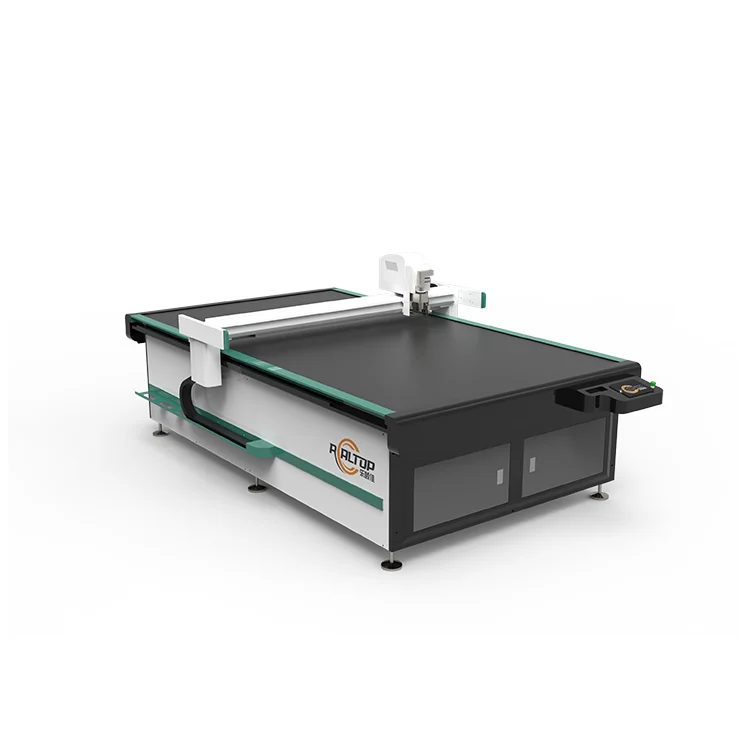
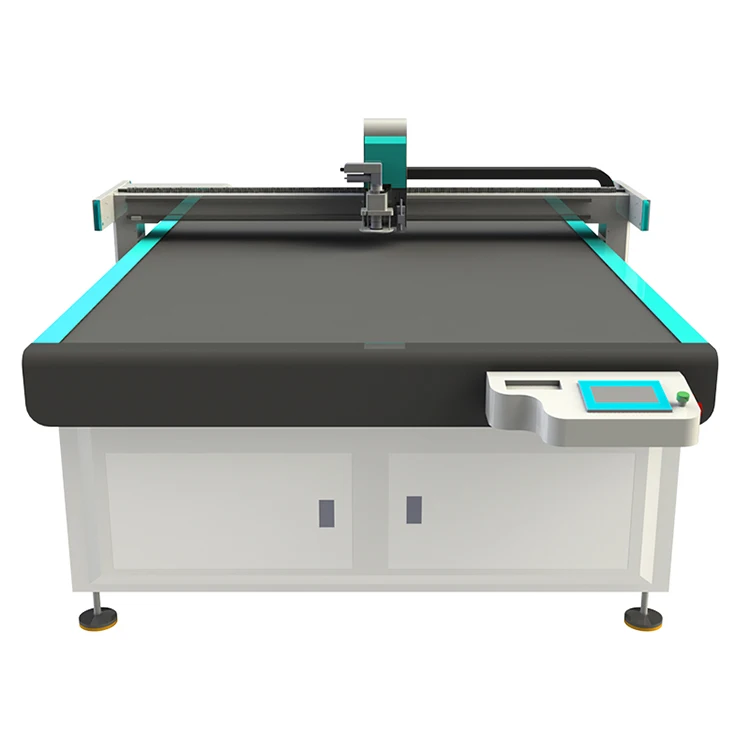
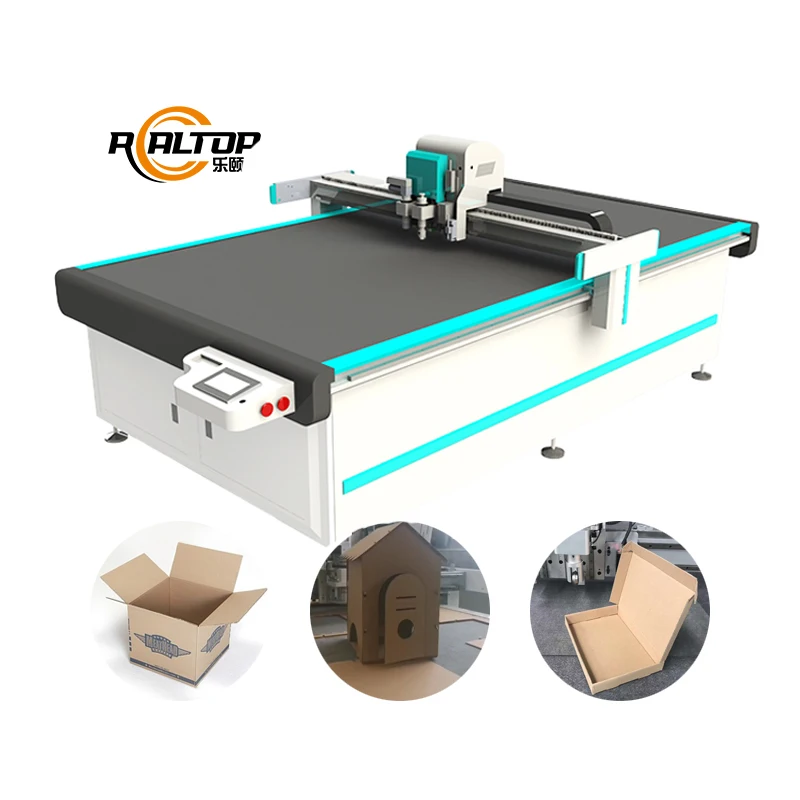
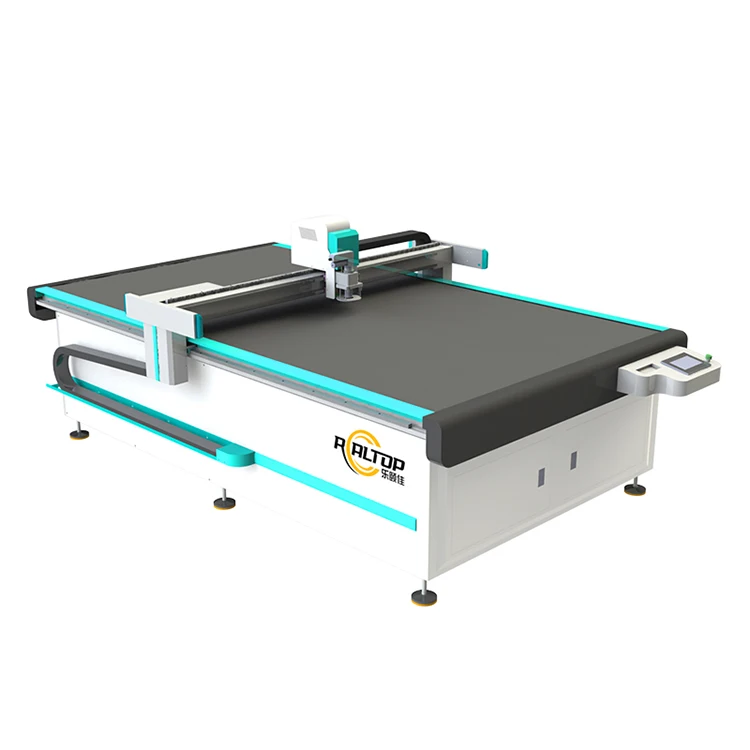
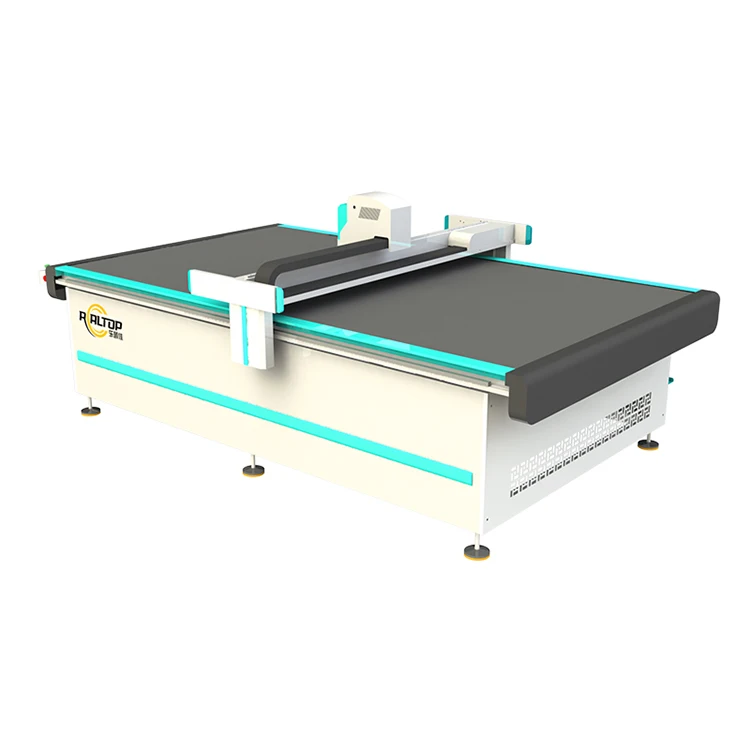
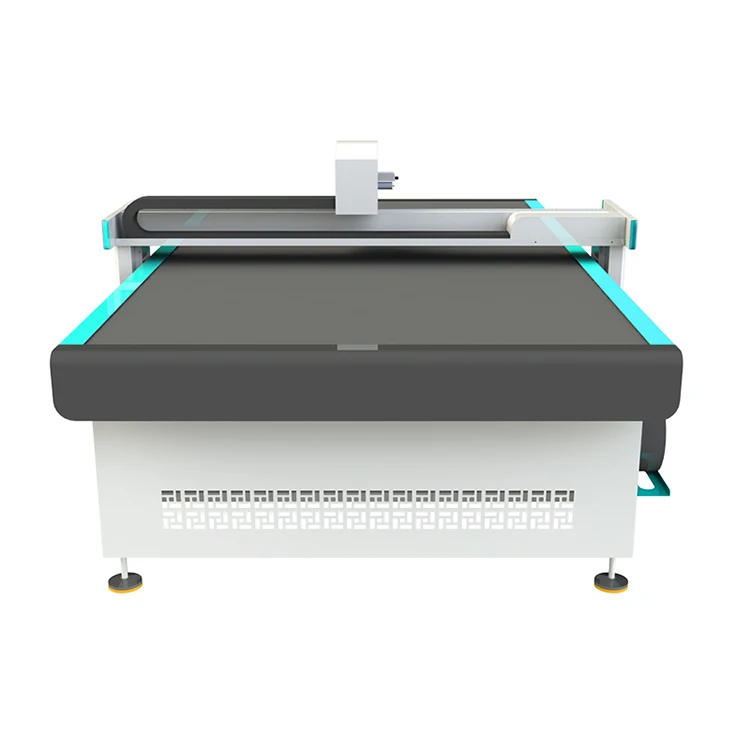
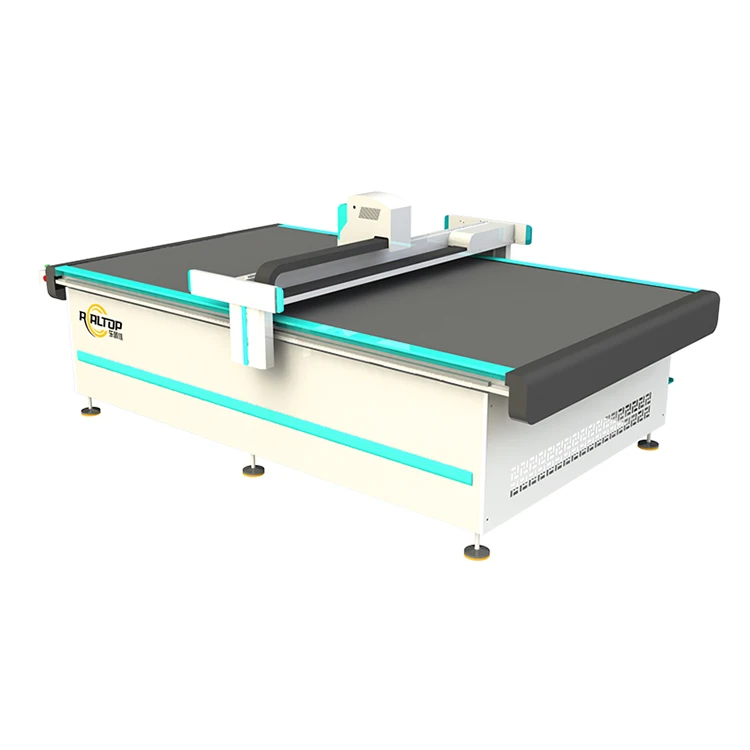
Configurable Tool Head Matching — The RT-D2516/RT-S2516 sits within a complete catalogue of CNC knife cutting machines, letting buyers select oscillating, drag, creasing or multi-tool configurations based on their actual material rather than forcing a single cutting method.
Technical Specifications
| Parameter | Value |
|---|---|
| Product Type | CNC Oscillating Knife Cutting Machine |
| Model | RT-D2516/RT-S2516 |
| Working Area | 1600×2500 mm |
| Machine Size | 3450×2300×1250 mm |
| Rated Power | 9 kW |
| Voltage | 380V ±10% |
| Vacuum Pump Power | 7.5 kW |
| Working Table | Flat vacuum adsorption table, magnesium-aluminum alloy with PVDF powder spray and anodic oxidation |
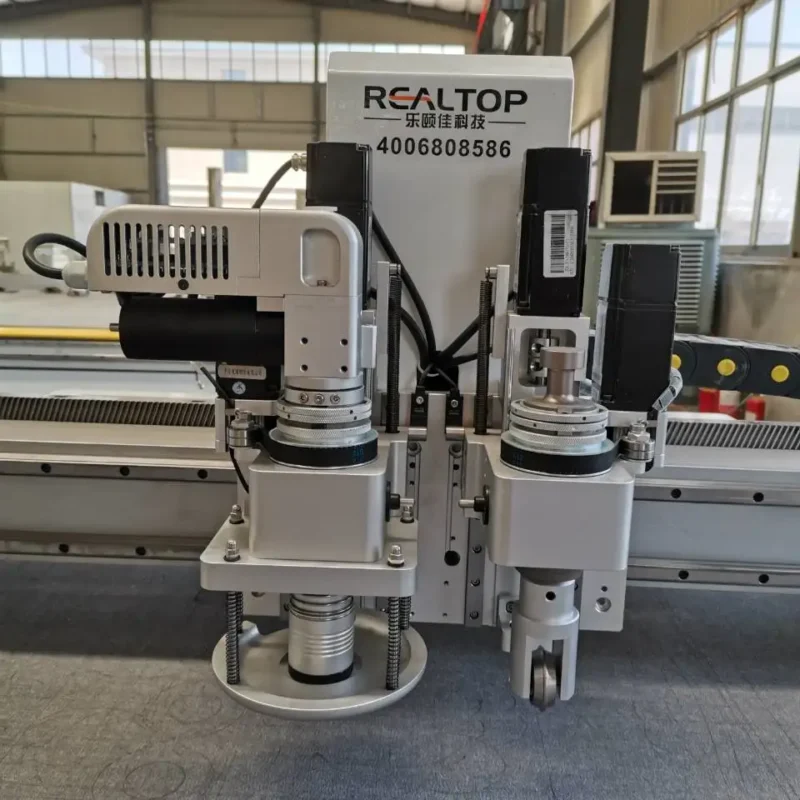
| Tool Head | Swiss imported knife — vibration full cutting, vibration half cutting, cursor location |
| Translational Velocity | 800–1200 mm/s |
| Cutting Thickness | 20–80 mm depending on material (basis to be confirmed) |
| Repeated Accuracy | ≤0.1 mm |
| Transmission System | Imported digital servo motor, linear guide, synchronous belt, ball screw |
| Servo Motor Brand | Delta (optional Panasonic) |
| Linear Guide | Taiwan Hiwin rail |
| Conveyor Belt | Germany imported |
| Control/Instruction System | HP-GL compatible format |
| Safety Device | Infrared sensors with intelligent stop function, beam anti-collision on both sides, emergency stop button |
| Language Options | English, Russian, Italian, Chinese (special languages customizable) |
| Cutting Method | Blade physical cutting — no laser, no burnt edge |
| Auto Feeding | Yes |
| Certification | CE (where applicable) |
Application Suitability
| Application | Material or Output |
|---|---|
| Garment and footwear production | Fabric, leather, shoe material, luggage material, non-woven fabric |
| Automotive interior and gasket manufacturing | Composite materials, sponge, PU, EVA, XPE, rubber, PVC |
| Packaging and carton sample making | Corrugated cardboard, sticker, film, cardboard, plastic box |
| Soft home furnishings and carpets | Carpet, cloth, textile, soft home furnishing fabrics |
| Sports, outdoor and sealing products | Foam board, fiberglass, PTFE, ETFE, gasket material |
Why Specified Working Area Alone Leads to Material Failures
Buyers often select a CNC knife cutting machine for sale based purely on bed size, then discover on the production floor that the configured tool head cannot penetrate their actual material stack — resulting in ragged edges, crushed foam cores or incomplete cuts through multi-layer composites.
The working area defines what fits on the table, but the tool head and amplitude settings define what you can actually cut.
I spent years in assembly and technical sales here in Jinan, and one pattern repeats across industries. A buyer sends a drawing showing 1600×2500 mm sheet dimensions and assumes the rest is standard. Then the machine arrives and their five-layer automotive floor mat composite — PVC top, foam middle, fabric backing — only cuts cleanly through the first two layers. The oscillating knife amplitude and downward pressure were never matched to that stack. The vacuum zoning may also leave small offcuts drifting during the final passes. [NEED_CITE: material thickness versus tool head amplitude matching in oscillating knife cutting] This is exactly why sample cutting on the buyer’s own material before any commitment is non-negotiable in our process.
Surveying the Catalogue Range by Material Type
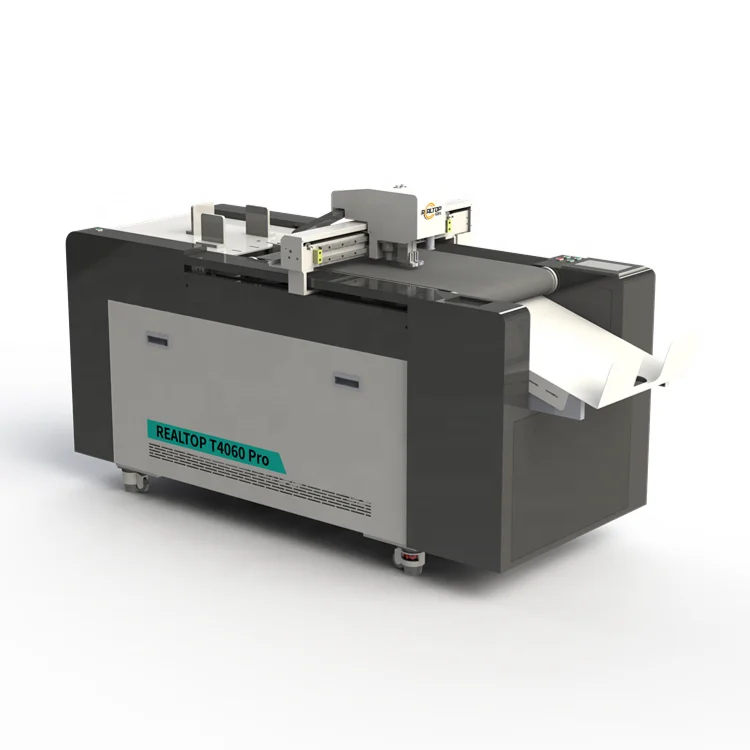
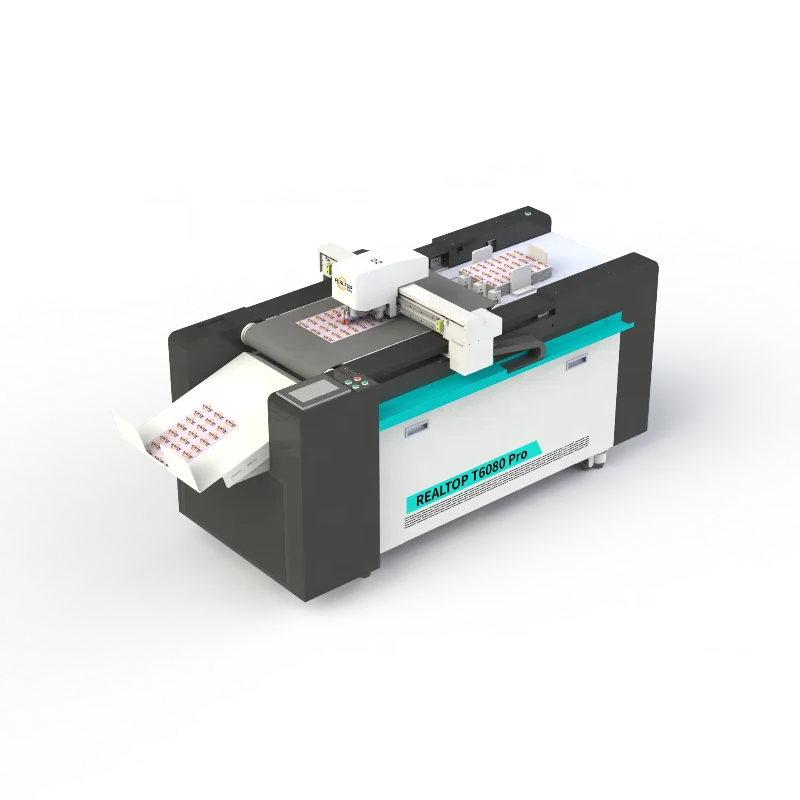
This CNC oscillating knife cutting machine manufacturer offers a family of flatbed cutting tables that span oscillating knife, drag knife, creasing wheel and multi-tool configurations. The RT-D2516/RT-S2516 occupies the mid-to-large format segment, handling sheet-format flexible materials where knife cutting avoids the burnt edges that laser systems produce on synthetics and foams. Buyers surveying the full range can identify whether their material calls for high-frequency vibration cutting through dense composites or a simpler drag knife approach for thin films and stickers.
Matching Tool Head to Production Volume
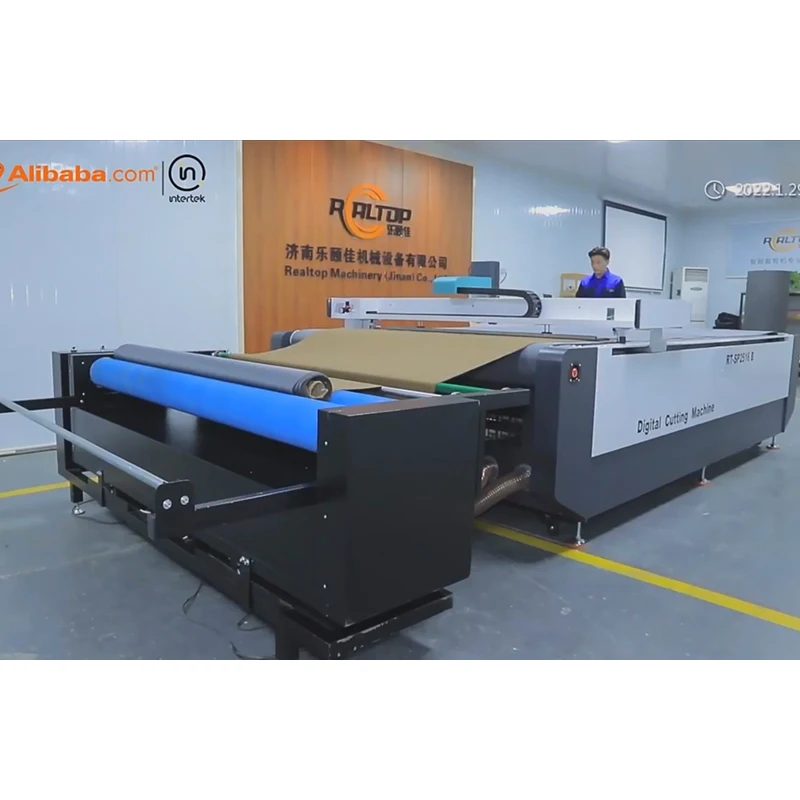
The Swiss imported knife head on this model supports vibration full cutting, vibration half cutting and cursor location functions. For high-volume fabric or automotive interior producers, the auto-feeding system paired with the conveyor belt enables continuous sheet processing across the 1600×2500 mm working area. [NEED_CITE: continuous feeding versus static table throughput in textile cutting operations] Lower-volume packaging sample makers can prioritize precision — the ≤0.1 mm repeated accuracy driven by Delta servo motors and Hiwin linear guides ensures creasing wheels and drag knives track complex carton geometries without drift over long production runs.
Reading the Spec Sheet Against Your Actual Material
The 20–80 mm cutting thickness range covers a broad span, but that range is material-dependent — soft foam and single-layer leather cut very differently from five-layer PVC composites or dense rubber gaskets. The 7.5 kW vacuum pump paired with the magnesium-aluminum alloy table provides strong adsorption, yet vacuum zoning must be verified for small parts that tend to lift during final contour passes. The 800–1200 mm/s translational velocity allows fast traversal, but actual cutting speed through thick composites will be lower. HP-GL compatible control means most standard CAD/CAM nesting software can drive the machine, though file format and nesting workflow compatibility should be confirmed before order placement.
The Hidden Cost of a Mismatched Configuration
When the tool head is wrong for the material, the consequences extend beyond a few bad cuts. Ragged edges on leather mean rejected pieces that cannot be reworked. Crushed foam in automotive interiors fails the OEM quality audit. Insufficient vacuum on small gasket parts causes sheet lift, producing dimensional errors that only surface during assembly downstream. [NEED_CITE: dimensional tolerance requirements for automotive interior component assembly] Buyers who skip the sample-cutting step often discover these problems after the machine is installed and their production schedule is already committed.
Why Source This CNC Knife Cutting Machine From This Catalogue
The in-house design team covers both knife and laser cutting technologies, so the cutting method is matched to the material rather than forced into one approach. Tool head and table configurations are specified per material type and production volume before the order is finalized. CCD camera positioning is available for printed contour work where registration accuracy matters. Software compatibility and file format support are confirmed before shipment to avoid workflow disruptions on arrival. Voltage, plug type and control language — English, Russian, Italian, Chinese or a custom language — are locked in during the specification stage, not discovered at uncrating.
Documentation & Verification
- Machine specification sheet listing working area, tool head options and material-specific cutting thickness ranges
- Sample cutting report performed on the buyer’s own material before order commitment
- Electrical schematic confirming voltage, frequency and plug configuration for the target market
- Factory test record documenting repeated accuracy and cutting performance across configured tool heads
- Software licence and HP-GL file format compatibility note verified against the buyer’s nesting workflow
- Spare parts list covering blades, vacuum seals and consumable wear items specific to the chosen configuration
Installation, Commissioning & Support
- Machine footprint of 3450×2300 mm requires a level concrete floor with clearance for the 1600×2500 mm feeding zone
- Dedicated 380V ±10% three-phase circuit rated for the 9 kW machine load plus the 7.5 kW vacuum pump
- Arrives partially assembled with the working table, gantry and control cabinet requiring on-site alignment
- First-run commissioning includes vacuum zoning verification and servo calibration to confirm ≤0.1 mm repeated accuracy
- Operator training covers tool head changeover, HP-GL file import and the infrared safety sensor system
- Spare blade and vacuum seal kit provided with the initial shipment for immediate production readiness
Preparing Your Inquiry
To match the right configuration from the full catalogue, we need your material type, maximum thickness, sheet dimensions and daily cutting volume. Share your current nesting software and file formats so compatibility can be verified before quotation. Confirm your workshop voltage, frequency and preferred control language so the electrical and interface package is specified correctly from the start.
Frequently Asked Questions
Q: How do I choose the right tool head from the catalogue for my material?
A: The tool head selection depends on material composition, thickness and edge quality requirements. Oscillating knife suits dense composites and foams, drag knife handles thin films and stickers, and creasing wheels work for carton sample making. We recommend sample cutting on your actual material to verify the chosen head produces clean edges at your required cutting depth before finalizing the configuration.
Q: What working area sizes are available across the machine family?
A: The range spans compact to large-format tables. The RT-D2516/RT-S2516 offers 1600×2500 mm, positioned for sheet-format flexible materials. Other models in the catalogue cover smaller benchtop sizes for sample work and larger formats for full-roll textile processing. Working area should be selected based on your standard sheet or roll dimensions and the nesting layout your software produces.
Q: How can I verify cutting thickness capability against my actual material?
A: The stated 20–80 mm range varies by material type. We perform sample cutting using your supplied material — including multi-layer composites if applicable — and provide a cutting report documenting edge quality, depth achieved and recommended tool head settings. This report confirms real performance on your specific stack before any purchase commitment is made.
Q: What voltage and control language options are available for my market?
A: The standard configuration runs on 380V ±10% three-phase power, with voltage adjustable for markets requiring different supply standards. Control interfaces are available in English, Russian, Italian and Chinese, with special language customization on request. Voltage, plug type and language are confirmed during the specification stage and documented in the electrical schematic before production begins.
Q: What is the difference between knife cutting and laser cutting models in the range?
A: Knife cutting uses a physical blade with no heat, producing clean edges on fabrics, foams, composites and rubber without melting or burning. Laser cutting seals synthetic edges and handles intricate contours on acrylic, wood and textile. The choice depends on your material — knife cutting is preferred where heat damage, edge sealing or fume extraction would be problematic for your production environment.
Configurable Tool Head Matching — The RT-D2516/RT-S2516 sits within a complete catalogue of CNC knife cutting machines, letting buyers select oscillating, drag, creasing or multi-tool configurations based on their actual material rather than forcing a single cutting method.
Technical Specifications
| Parameter | Value |
|---|---|
| Product Type | CNC Oscillating Knife Cutting Machine |
| Model | RT-D2516/RT-S2516 |
| Working Area | 1600×2500 mm |
| Machine Size | 3450×2300×1250 mm |
| Rated Power | 9 kW |
| Voltage | 380V ±10% |
| Vacuum Pump Power | 7.5 kW |
| Working Table | Flat vacuum adsorption table, magnesium-aluminum alloy with PVDF powder spray and anodic oxidation |
| Tool Head | Swiss imported knife — vibration full cutting, vibration half cutting, cursor location |
| Translational Velocity | 800–1200 mm/s |
| Cutting Thickness | 20–80 mm depending on material (basis to be confirmed) |
| Repeated Accuracy | ≤0.1 mm |
| Transmission System | Imported digital servo motor, linear guide, synchronous belt, ball screw |
| Servo Motor Brand | Delta (optional Panasonic) |
| Linear Guide | Taiwan Hiwin rail |
| Conveyor Belt | Germany imported |
| Control/Instruction System | HP-GL compatible format |
| Safety Device | Infrared sensors with intelligent stop function, beam anti-collision on both sides, emergency stop button |
| Language Options | English, Russian, Italian, Chinese (special languages customizable) |
| Cutting Method | Blade physical cutting — no laser, no burnt edge |
| Auto Feeding | Yes |
| Certification | CE (where applicable) |
Application Suitability
| Application | Material or Output |
|---|---|
| Garment and footwear production | Fabric, leather, shoe material, luggage material, non-woven fabric |
| Automotive interior and gasket manufacturing | Composite materials, sponge, PU, EVA, XPE, rubber, PVC |
| Packaging and carton sample making | Corrugated cardboard, sticker, film, cardboard, plastic box |
| Soft home furnishings and carpets | Carpet, cloth, textile, soft home furnishing fabrics |
| Sports, outdoor and sealing products | Foam board, fiberglass, PTFE, ETFE, gasket material |
Why Specified Working Area Alone Leads to Material Failures
Buyers often select a CNC knife cutting machine for sale based purely on bed size, then discover on the production floor that the configured tool head cannot penetrate their actual material stack — resulting in ragged edges, crushed foam cores or incomplete cuts through multi-layer composites.
The working area defines what fits on the table, but the tool head and amplitude settings define what you can actually cut.
I spent years in assembly and technical sales here in Jinan, and one pattern repeats across industries. A buyer sends a drawing showing 1600×2500 mm sheet dimensions and assumes the rest is standard. Then the machine arrives and their five-layer automotive floor mat composite — PVC top, foam middle, fabric backing — only cuts cleanly through the first two layers. The oscillating knife amplitude and downward pressure were never matched to that stack. The vacuum zoning may also leave small offcuts drifting during the final passes. [NEED_CITE: material thickness versus tool head amplitude matching in oscillating knife cutting] This is exactly why sample cutting on the buyer’s own material before any commitment is non-negotiable in our process.
Surveying the Catalogue Range by Material Type
This CNC oscillating knife cutting machine manufacturer offers a family of flatbed cutting tables that span oscillating knife, drag knife, creasing wheel and multi-tool configurations. The RT-D2516/RT-S2516 occupies the mid-to-large format segment, handling sheet-format flexible materials where knife cutting avoids the burnt edges that laser systems produce on synthetics and foams. Buyers surveying the full range can identify whether their material calls for high-frequency vibration cutting through dense composites or a simpler drag knife approach for thin films and stickers.
Matching Tool Head to Production Volume
The Swiss imported knife head on this model supports vibration full cutting, vibration half cutting and cursor location functions. For high-volume fabric or automotive interior producers, the auto-feeding system paired with the conveyor belt enables continuous sheet processing across the 1600×2500 mm working area. [NEED_CITE: continuous feeding versus static table throughput in textile cutting operations] Lower-volume packaging sample makers can prioritize precision — the ≤0.1 mm repeated accuracy driven by Delta servo motors and Hiwin linear guides ensures creasing wheels and drag knives track complex carton geometries without drift over long production runs.
Reading the Spec Sheet Against Your Actual Material
The 20–80 mm cutting thickness range covers a broad span, but that range is material-dependent — soft foam and single-layer leather cut very differently from five-layer PVC composites or dense rubber gaskets. The 7.5 kW vacuum pump paired with the magnesium-aluminum alloy table provides strong adsorption, yet vacuum zoning must be verified for small parts that tend to lift during final contour passes. The 800–1200 mm/s translational velocity allows fast traversal, but actual cutting speed through thick composites will be lower. HP-GL compatible control means most standard CAD/CAM nesting software can drive the machine, though file format and nesting workflow compatibility should be confirmed before order placement.
The Hidden Cost of a Mismatched Configuration
When the tool head is wrong for the material, the consequences extend beyond a few bad cuts. Ragged edges on leather mean rejected pieces that cannot be reworked. Crushed foam in automotive interiors fails the OEM quality audit. Insufficient vacuum on small gasket parts causes sheet lift, producing dimensional errors that only surface during assembly downstream. [NEED_CITE: dimensional tolerance requirements for automotive interior component assembly] Buyers who skip the sample-cutting step often discover these problems after the machine is installed and their production schedule is already committed.
Why Source This CNC Knife Cutting Machine From This Catalogue
The in-house design team covers both knife and laser cutting technologies, so the cutting method is matched to the material rather than forced into one approach. Tool head and table configurations are specified per material type and production volume before the order is finalized. CCD camera positioning is available for printed contour work where registration accuracy matters. Software compatibility and file format support are confirmed before shipment to avoid workflow disruptions on arrival. Voltage, plug type and control language — English, Russian, Italian, Chinese or a custom language — are locked in during the specification stage, not discovered at uncrating.
Documentation & Verification
- Machine specification sheet listing working area, tool head options and material-specific cutting thickness ranges
- Sample cutting report performed on the buyer’s own material before order commitment
- Electrical schematic confirming voltage, frequency and plug configuration for the target market
- Factory test record documenting repeated accuracy and cutting performance across configured tool heads
- Software licence and HP-GL file format compatibility note verified against the buyer’s nesting workflow
- Spare parts list covering blades, vacuum seals and consumable wear items specific to the chosen configuration
Installation, Commissioning & Support
- Machine footprint of 3450×2300 mm requires a level concrete floor with clearance for the 1600×2500 mm feeding zone
- Dedicated 380V ±10% three-phase circuit rated for the 9 kW machine load plus the 7.5 kW vacuum pump
- Arrives partially assembled with the working table, gantry and control cabinet requiring on-site alignment
- First-run commissioning includes vacuum zoning verification and servo calibration to confirm ≤0.1 mm repeated accuracy
- Operator training covers tool head changeover, HP-GL file import and the infrared safety sensor system
- Spare blade and vacuum seal kit provided with the initial shipment for immediate production readiness
Preparing Your Inquiry
To match the right configuration from the full catalogue, we need your material type, maximum thickness, sheet dimensions and daily cutting volume. Share your current nesting software and file formats so compatibility can be verified before quotation. Confirm your workshop voltage, frequency and preferred control language so the electrical and interface package is specified correctly from the start.
Frequently Asked Questions
Q: How do I choose the right tool head from the catalogue for my material?
A: The tool head selection depends on material composition, thickness and edge quality requirements. Oscillating knife suits dense composites and foams, drag knife handles thin films and stickers, and creasing wheels work for carton sample making. We recommend sample cutting on your actual material to verify the chosen head produces clean edges at your required cutting depth before finalizing the configuration.
Q: What working area sizes are available across the machine family?
A: The range spans compact to large-format tables. The RT-D2516/RT-S2516 offers 1600×2500 mm, positioned for sheet-format flexible materials. Other models in the catalogue cover smaller benchtop sizes for sample work and larger formats for full-roll textile processing. Working area should be selected based on your standard sheet or roll dimensions and the nesting layout your software produces.
Q: How can I verify cutting thickness capability against my actual material?
A: The stated 20–80 mm range varies by material type. We perform sample cutting using your supplied material — including multi-layer composites if applicable — and provide a cutting report documenting edge quality, depth achieved and recommended tool head settings. This report confirms real performance on your specific stack before any purchase commitment is made.
Q: What voltage and control language options are available for my market?
A: The standard configuration runs on 380V ±10% three-phase power, with voltage adjustable for markets requiring different supply standards. Control interfaces are available in English, Russian, Italian and Chinese, with special language customization on request. Voltage, plug type and language are confirmed during the specification stage and documented in the electrical schematic before production begins.
Q: What is the difference between knife cutting and laser cutting models in the range?
A: Knife cutting uses a physical blade with no heat, producing clean edges on fabrics, foams, composites and rubber without melting or burning. Laser cutting seals synthetic edges and handles intricate contours on acrylic, wood and textile. The choice depends on your material — knife cutting is preferred where heat damage, edge sealing or fume extraction would be problematic for your production environment.
商品评价
There are no reviews yet.