



Fast Delivery
Quick, reliable shipping to any location.

Free & easy returns
Return this item by mail or in store within 90 days for a full refund.
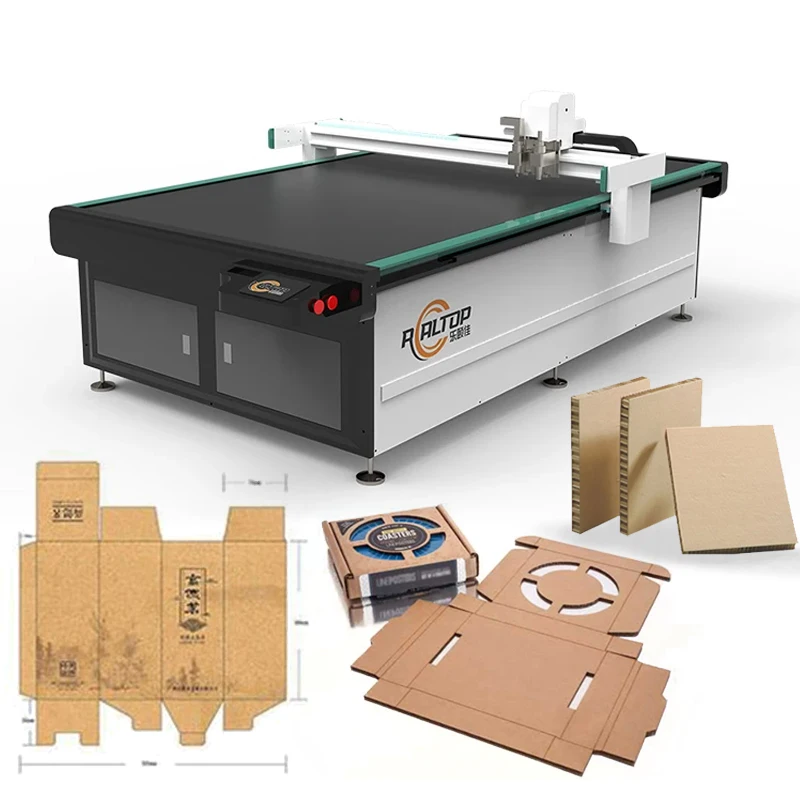
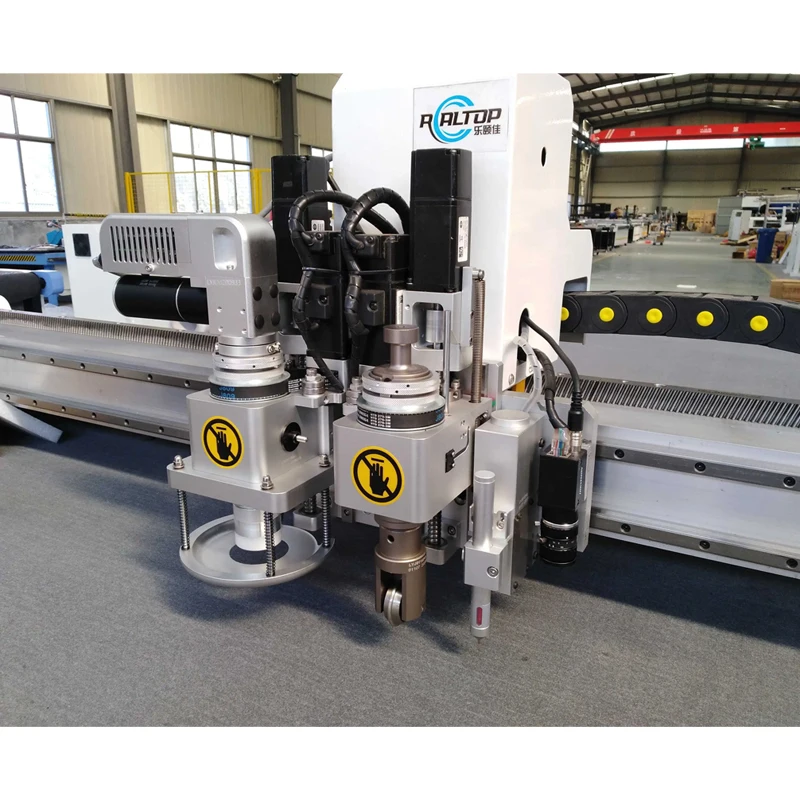
Tool Head Matched to Material — our oscillating knife, drag knife and creasing wheel options are specified after testing your actual board stock, not chosen from a generic list.
Technical Specifications
| Parameter | Value |
|---|---|
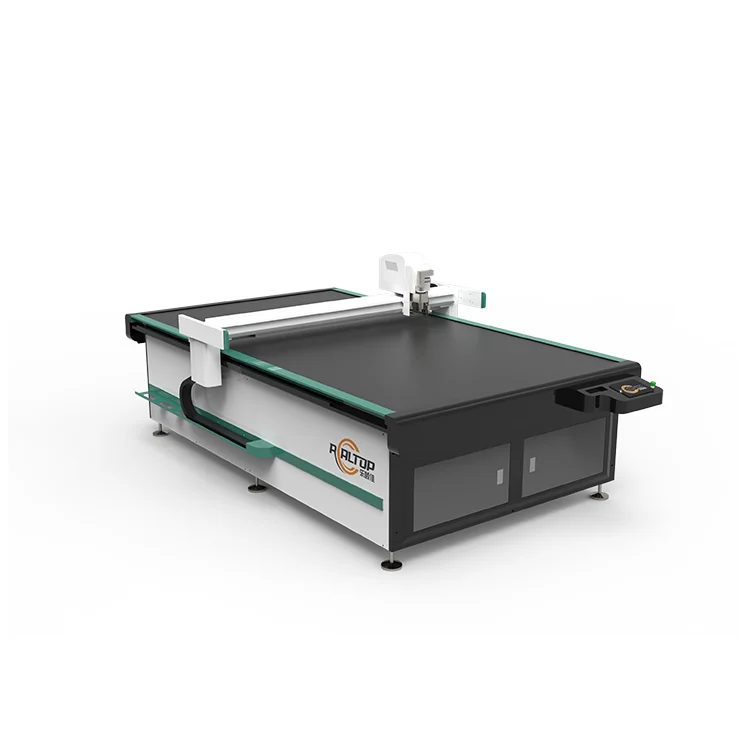
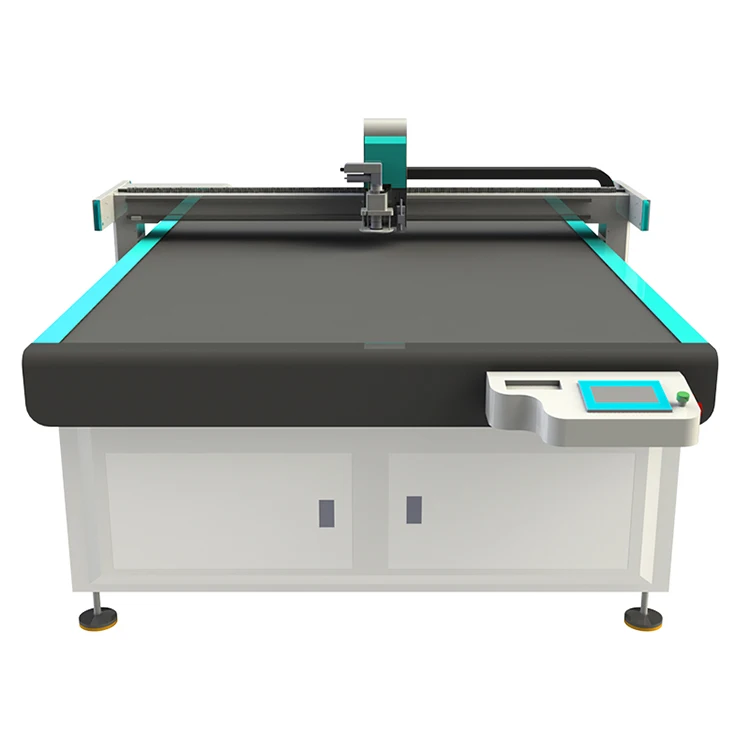
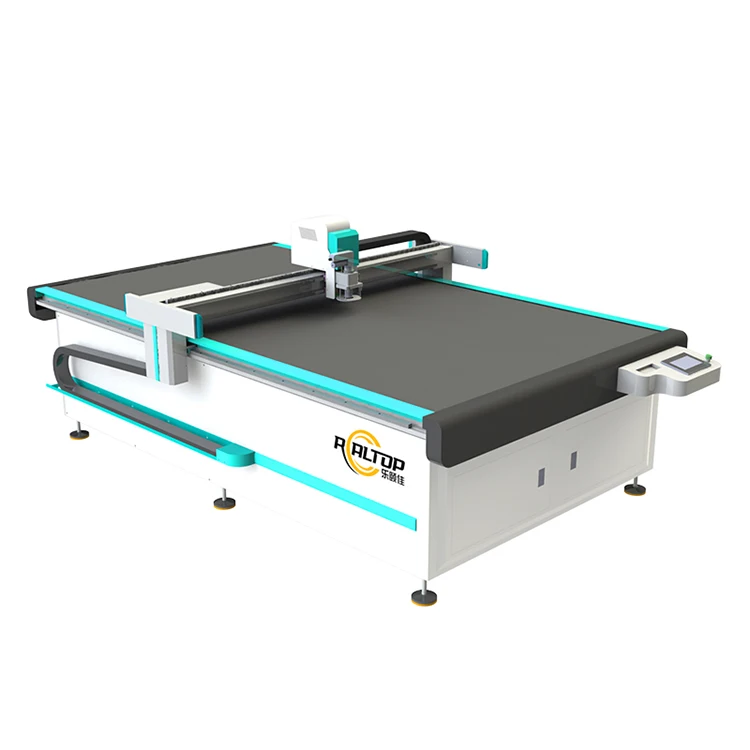
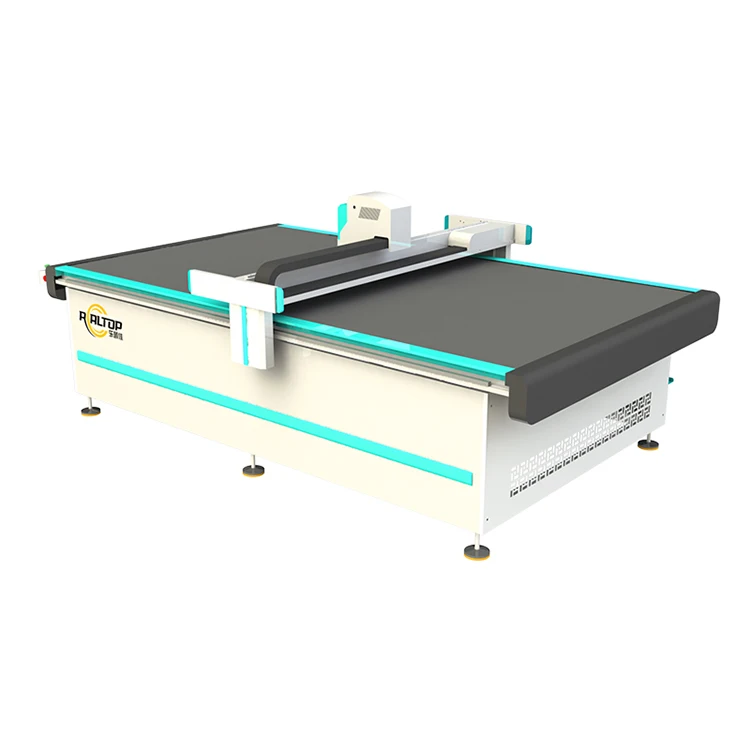
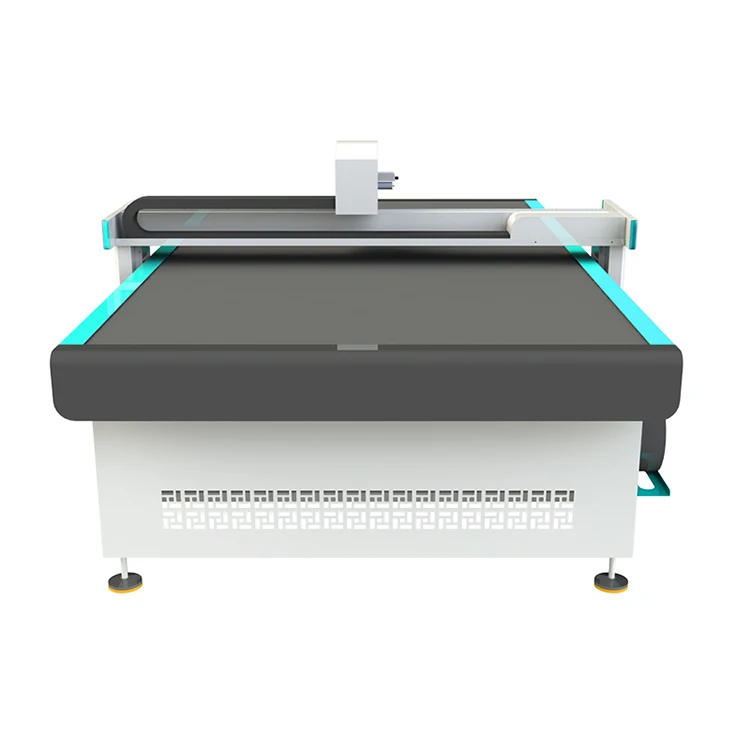
| Product Type | CNC Oscillating Knife Cutting Machine |
| Model | RT-D2516/RT-S2516 |
| Working Area | 1600 × 2500 mm |
| Machine Size | 3450 × 2300 × 1250 mm |
| Rated Power | 9 kW |
| Table Type | Flat working table with vacuum and auto feeding |
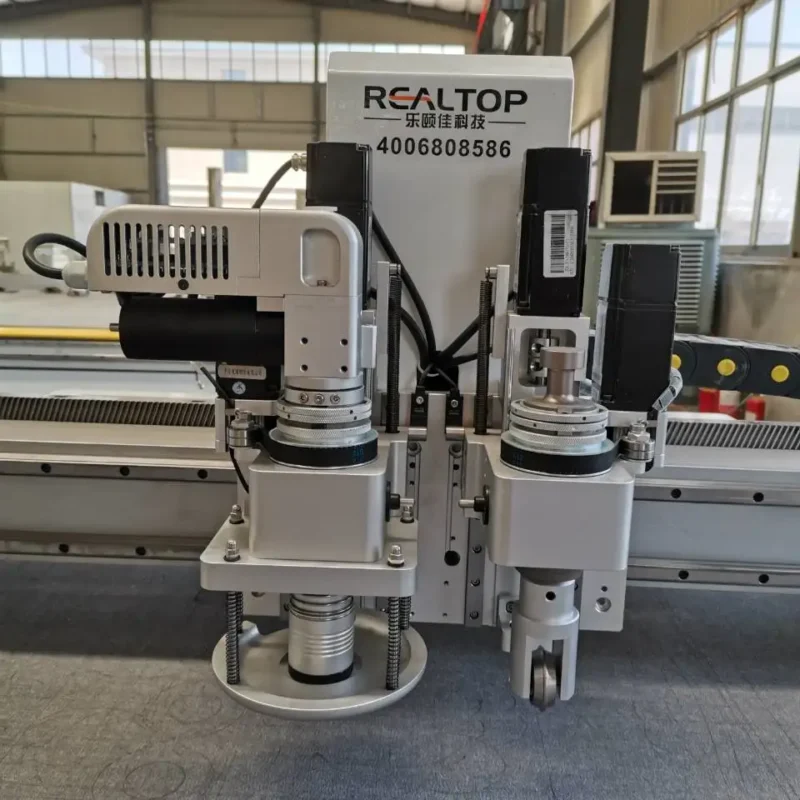
| Tool Head | Swiss imported knife with vibration full cut, half cut and cursor location |
| Transmission System | Digital servo motor, linear guide, synchronous belt, ball screw |
| Repeated Accuracy | ≤ 0.1 mm |
| Translational Velocity | 800–1200 mm/s |
| Cutting Speed | 200–800 mm/s (basis to be confirmed by material type and thickness) |
| Vacuum Pump | 7.5 kW |
| Voltage | 380V ± 10% |
| Instruction Format | HP-GL compatible |
| Safety Device | Infrared sensors |
| Additional Hardware | Delta servo motor, Germany imported conveyor belt, Taiwan Hiwin rail |
Application Suitability
| Application | Material or Output |
|---|---|
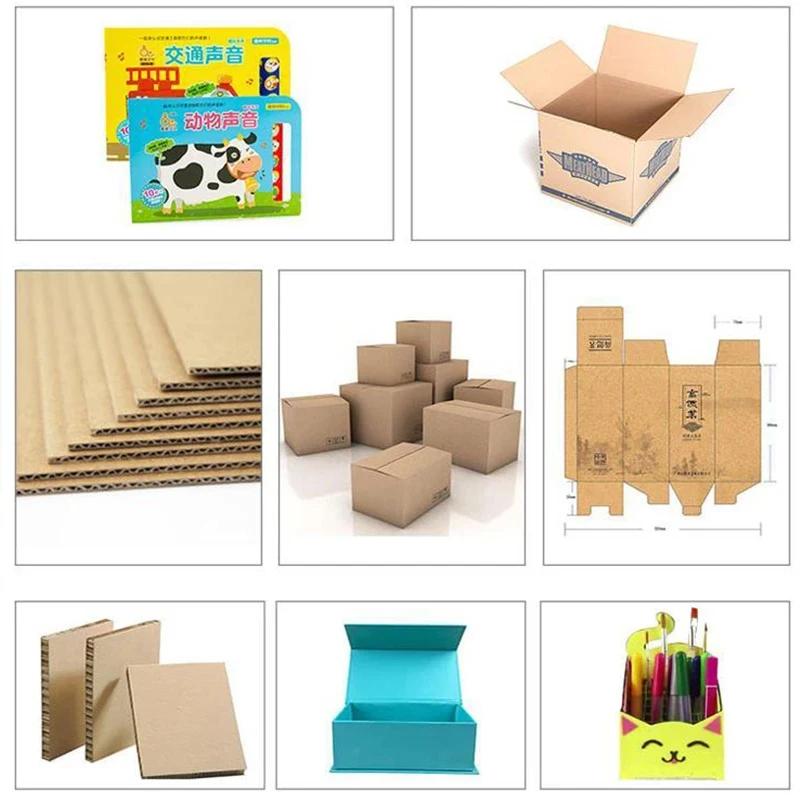
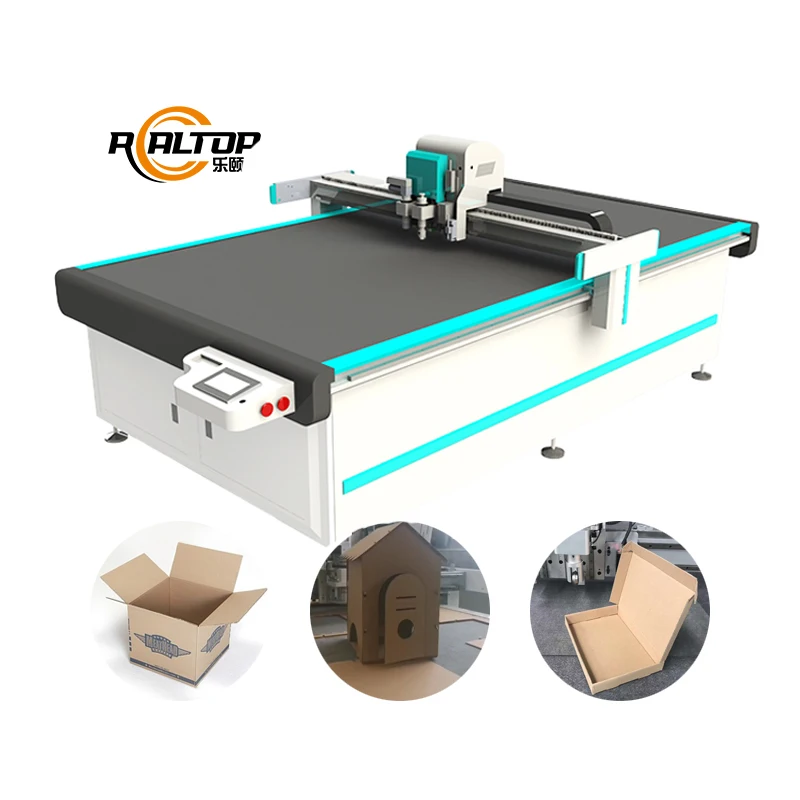
| Packaging carton sample making | Corrugated board, grey board, honeycomb paper |
| Sticker and label contour cutting | Vinyl, self-adhesive film, printed sticker sheets |
| Display and signage board cutting | Foam board, PVC sheet, lightweight cardboard |
| Gift box and premium packaging | Art board, laminated card stock, folding carton |
| Express and logistics box prototyping | Single and double-wall corrugated, kraft liner |
Why Working Area Alone Will Not Tell You If This Machine Fits Your Line
A 1600 × 2500 mm table means nothing if the vacuum zoning cannot hold your smallest carton blank during the final release cut.
I spent three days in a carton sample workshop last year because the machine we sent had the right table size but the wrong vacuum zoning layout. Their standard job was small-insert gift boxes, and the large vacuum zones let the piece lift right at the corner release. We re-zoned the table and swapped to a higher-frequency oscillating knife, and the problem disappeared. That is why every inquiry we handle starts with your actual sheet size, daily blank count and thickest board grade [NEED_CITE: vacuum table zoning requirements for small-format digital cutting]. A CNC oscillating knife cutting machine manufacturer worth talking to will ask for a material sample before they finalize the configuration.
Knife and Laser in One Catalogue Instead of One Forced Solution
Some packaging converters run both corrugated board prototyping and acrylic display stand fabrication under the same roof. Forcing both materials through a single cutting method compromises edge quality on one or both. Our catalogue covers oscillating knife for fibrous board stock and laser for non-metal display materials, so a buyer can match the cutting method to the job rather than accept a compromise. The RT-D2516/RT-S2516 sits in the knife family for board and flexible packaging materials where clean creasing and crush-free edges matter.
From Board Grade to Tool Head: The Specification Sequence That Prevents Rework
A grey board at 2 mm thickness behaves differently under an oscillating knife than a single-wall corrugated sheet at the same caliper. The fibre density, internal ply adhesion and surface coating all change the cutting resistance and the tool wear rate. We specify the knife type, oscillation frequency and downward pressure after running a sample on the buyer’s own stock. This sequence removes the guesswork and keeps the first production run within tolerance instead of burning through a week of blade changes [NEED_CITE: oscillating knife selection criteria for packaging board grades].
Reading the RT-D2516/RT-S2516 Spec Sheet Against Real Packaging Workflows
The 7.5 kW vacuum pump paired with the flat working table is sized to hold corrugated and grey board sheets flat across the 1600 × 2500 mm area, but the zoning layout determines whether small carton blanks stay put. The Swiss imported knife head delivers vibration full cutting and half cutting, which in packaging terms means through-cutting the board for the blank outline and half-cutting for fold-line scoring in a single pass. The ≤ 0.1 mm repeated accuracy keeps crease lines aligned with printed graphics across long production runs. Delta servo motors and Taiwan Hiwin rails maintain that positional accuracy under continuous lateral acceleration. The HP-GL compatible instruction format integrates with common packaging CAD software, though file format compatibility should always be confirmed before order placement.
What Happens When the Wrong Configuration Reaches Your Floor
A carton sample maker who receives a machine configured for thick corrugated but actually cuts thin art board for luxury packaging will see ragged edges on every short-run job. The vacuum pull-through on thin stock causes the sheet to shift mid-cut, and the oscillating knife tears the coated surface. Reconfiguring after delivery means a service visit, replacement tool holders and lost production days [NEED_CITE: cost impact of post-delivery machine reconfiguration in packaging workshops]. The real expense is not the hardware swap — it is the two weeks of sample rejections while the new setup stabilizes.
What We Build Into the Order Before the Machine Ships
We produce both knife and laser cutting systems in-house, so a packaging buyer evaluating board and film applications gets an honest method recommendation rather than a single-technology pitch. Every RT-D2516/RT-S2516 ships with the tool head and table configuration locked to the buyer’s confirmed material list. Software file format compatibility is verified before the order enters production. Voltage and control language are set to the destination workshop. And a sample cutting report on the buyer’s own board stock is delivered before commitment.
Documentation & Verification
- Machine specification sheet listing every RT-D2516/RT-S2516 component by brand and origin
- Electrical schematic with 380V circuit diagram and breaker sizing for your workshop panel
- Tool head and vacuum table configuration list matched to your board grade and sheet size
- Sample cutting report on your corrugated or grey board stock with edge quality photographs
- Software licence key and HP-GL file format compatibility confirmation note
- Spare parts list covering knife blades, conveyor belt segments and vacuum seals
Installation, Commissioning & Support
- Floor space planning for the 3450 × 2300 mm footprint plus operator clearance on three sides
- Dedicated 380V circuit with breaker sizing matched to the 9 kW rated power draw
- Table levelling and vacuum zone seal check during first-day commissioning on your floor
- Oscillation frequency and knife depth calibration on your thickest board grade at startup
- Operator training covering HP-GL file import, vacuum zoning control and tool change procedure
- First-month blade wear tracking and reorder schedule based on your daily cut volume
What We Need to Quote the Right Configuration
Send us the board grades you cut most often with caliper and ply count, your largest and smallest blank dimensions, and the daily volume your sample room or short-run line handles. Tell us the voltage and frequency at your facility and the language your operators prefer on the control screen. If you already run packaging CAD software, share the export file format so we confirm compatibility before the machine is built.
Frequently Asked Questions
Q: How do I decide between oscillating knife and laser for my packaging materials?
A: Knife cutting handles fibrous board stock like corrugated and grey board where creasing and through-cutting happen in one pass without burn marks. Laser suits non-metal display materials and thin film where sealed edges prevent fraying. We test your actual material on both methods if the application sits in the overlap zone, then recommend based on edge quality and throughput.
Q: What working area should I specify for carton sample making?
A: The 1600 × 2500 mm table on the RT-D2516/RT-S2516 covers standard carton blank sizes and allows nesting of multiple small-box samples per sheet. If your largest blank exceeds these dimensions or you run high-volume nesting, a larger format table is available in the range.
Q: Will this machine read files from my existing packaging CAD software?
A: The instruction system supports HP-GL compatible format, which covers most packaging CAD exports. We confirm the exact file type, nesting workflow and any required post-processor setting before order so there are no surprises at commissioning.
Q: Can the machine handle printed sticker contour cutting at production speed?
A: The Swiss imported knife head with cursor location function supports contour following on printed sheets. Registration mark tracking speed depends on mark contrast and sheet feed rate, so we run a print sample from your supplier to verify tracking accuracy before finalizing the configuration.
Tool Head Matched to Material — our oscillating knife, drag knife and creasing wheel options are specified after testing your actual board stock, not chosen from a generic list.
Technical Specifications
| Parameter | Value |
|---|---|
| Product Type | CNC Oscillating Knife Cutting Machine |
| Model | RT-D2516/RT-S2516 |
| Working Area | 1600 × 2500 mm |
| Machine Size | 3450 × 2300 × 1250 mm |
| Rated Power | 9 kW |
| Table Type | Flat working table with vacuum and auto feeding |
| Tool Head | Swiss imported knife with vibration full cut, half cut and cursor location |
| Transmission System | Digital servo motor, linear guide, synchronous belt, ball screw |
| Repeated Accuracy | ≤ 0.1 mm |
| Translational Velocity | 800–1200 mm/s |
| Cutting Speed | 200–800 mm/s (basis to be confirmed by material type and thickness) |
| Vacuum Pump | 7.5 kW |
| Voltage | 380V ± 10% |
| Instruction Format | HP-GL compatible |
| Safety Device | Infrared sensors |
| Additional Hardware | Delta servo motor, Germany imported conveyor belt, Taiwan Hiwin rail |
Application Suitability
| Application | Material or Output |
|---|---|
| Packaging carton sample making | Corrugated board, grey board, honeycomb paper |
| Sticker and label contour cutting | Vinyl, self-adhesive film, printed sticker sheets |
| Display and signage board cutting | Foam board, PVC sheet, lightweight cardboard |
| Gift box and premium packaging | Art board, laminated card stock, folding carton |
| Express and logistics box prototyping | Single and double-wall corrugated, kraft liner |
Why Working Area Alone Will Not Tell You If This Machine Fits Your Line
A 1600 × 2500 mm table means nothing if the vacuum zoning cannot hold your smallest carton blank during the final release cut.
I spent three days in a carton sample workshop last year because the machine we sent had the right table size but the wrong vacuum zoning layout. Their standard job was small-insert gift boxes, and the large vacuum zones let the piece lift right at the corner release. We re-zoned the table and swapped to a higher-frequency oscillating knife, and the problem disappeared. That is why every inquiry we handle starts with your actual sheet size, daily blank count and thickest board grade [NEED_CITE: vacuum table zoning requirements for small-format digital cutting]. A CNC oscillating knife cutting machine manufacturer worth talking to will ask for a material sample before they finalize the configuration.
Knife and Laser in One Catalogue Instead of One Forced Solution
Some packaging converters run both corrugated board prototyping and acrylic display stand fabrication under the same roof. Forcing both materials through a single cutting method compromises edge quality on one or both. Our catalogue covers oscillating knife for fibrous board stock and laser for non-metal display materials, so a buyer can match the cutting method to the job rather than accept a compromise. The RT-D2516/RT-S2516 sits in the knife family for board and flexible packaging materials where clean creasing and crush-free edges matter.
From Board Grade to Tool Head: The Specification Sequence That Prevents Rework
A grey board at 2 mm thickness behaves differently under an oscillating knife than a single-wall corrugated sheet at the same caliper. The fibre density, internal ply adhesion and surface coating all change the cutting resistance and the tool wear rate. We specify the knife type, oscillation frequency and downward pressure after running a sample on the buyer’s own stock. This sequence removes the guesswork and keeps the first production run within tolerance instead of burning through a week of blade changes [NEED_CITE: oscillating knife selection criteria for packaging board grades].
Reading the RT-D2516/RT-S2516 Spec Sheet Against Real Packaging Workflows
The 7.5 kW vacuum pump paired with the flat working table is sized to hold corrugated and grey board sheets flat across the 1600 × 2500 mm area, but the zoning layout determines whether small carton blanks stay put. The Swiss imported knife head delivers vibration full cutting and half cutting, which in packaging terms means through-cutting the board for the blank outline and half-cutting for fold-line scoring in a single pass. The ≤ 0.1 mm repeated accuracy keeps crease lines aligned with printed graphics across long production runs. Delta servo motors and Taiwan Hiwin rails maintain that positional accuracy under continuous lateral acceleration. The HP-GL compatible instruction format integrates with common packaging CAD software, though file format compatibility should always be confirmed before order placement.
What Happens When the Wrong Configuration Reaches Your Floor
A carton sample maker who receives a machine configured for thick corrugated but actually cuts thin art board for luxury packaging will see ragged edges on every short-run job. The vacuum pull-through on thin stock causes the sheet to shift mid-cut, and the oscillating knife tears the coated surface. Reconfiguring after delivery means a service visit, replacement tool holders and lost production days [NEED_CITE: cost impact of post-delivery machine reconfiguration in packaging workshops]. The real expense is not the hardware swap — it is the two weeks of sample rejections while the new setup stabilizes.
What We Build Into the Order Before the Machine Ships
We produce both knife and laser cutting systems in-house, so a packaging buyer evaluating board and film applications gets an honest method recommendation rather than a single-technology pitch. Every RT-D2516/RT-S2516 ships with the tool head and table configuration locked to the buyer’s confirmed material list. Software file format compatibility is verified before the order enters production. Voltage and control language are set to the destination workshop. And a sample cutting report on the buyer’s own board stock is delivered before commitment.
Documentation & Verification
- Machine specification sheet listing every RT-D2516/RT-S2516 component by brand and origin
- Electrical schematic with 380V circuit diagram and breaker sizing for your workshop panel
- Tool head and vacuum table configuration list matched to your board grade and sheet size
- Sample cutting report on your corrugated or grey board stock with edge quality photographs
- Software licence key and HP-GL file format compatibility confirmation note
- Spare parts list covering knife blades, conveyor belt segments and vacuum seals
Installation, Commissioning & Support
- Floor space planning for the 3450 × 2300 mm footprint plus operator clearance on three sides
- Dedicated 380V circuit with breaker sizing matched to the 9 kW rated power draw
- Table levelling and vacuum zone seal check during first-day commissioning on your floor
- Oscillation frequency and knife depth calibration on your thickest board grade at startup
- Operator training covering HP-GL file import, vacuum zoning control and tool change procedure
- First-month blade wear tracking and reorder schedule based on your daily cut volume
What We Need to Quote the Right Configuration
Send us the board grades you cut most often with caliper and ply count, your largest and smallest blank dimensions, and the daily volume your sample room or short-run line handles. Tell us the voltage and frequency at your facility and the language your operators prefer on the control screen. If you already run packaging CAD software, share the export file format so we confirm compatibility before the machine is built.
Frequently Asked Questions
Q: How do I decide between oscillating knife and laser for my packaging materials?
A: Knife cutting handles fibrous board stock like corrugated and grey board where creasing and through-cutting happen in one pass without burn marks. Laser suits non-metal display materials and thin film where sealed edges prevent fraying. We test your actual material on both methods if the application sits in the overlap zone, then recommend based on edge quality and throughput.
Q: What working area should I specify for carton sample making?
A: The 1600 × 2500 mm table on the RT-D2516/RT-S2516 covers standard carton blank sizes and allows nesting of multiple small-box samples per sheet. If your largest blank exceeds these dimensions or you run high-volume nesting, a larger format table is available in the range.
Q: Will this machine read files from my existing packaging CAD software?
A: The instruction system supports HP-GL compatible format, which covers most packaging CAD exports. We confirm the exact file type, nesting workflow and any required post-processor setting before order so there are no surprises at commissioning.
Q: Can the machine handle printed sticker contour cutting at production speed?
A: The Swiss imported knife head with cursor location function supports contour following on printed sheets. Registration mark tracking speed depends on mark contrast and sheet feed rate, so we run a print sample from your supplier to verify tracking accuracy before finalizing the configuration.
商品评价
There are no reviews yet.