



Fast Delivery
Quick, reliable shipping to any location.

Free & easy returns
Return this item by mail or in store within 90 days for a full refund.
Tool Head Flexibility — Multi-head configurations specified per material and production volume ensure the cutting method matches the application rather than forcing one method across all jobs.
Technical Specifications
| Parameter | Value |
|---|---|
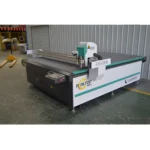
| Product Type | CNC Flatbed Digital Cutting Table |
| Working Area | 2500×1300 mm / 1600×2500 mm options |
| Cutting Tools | Oscillating knife, Creasing tool, Kiss-Cut Knife Tool, Round punch |
| Fixing Method | Vacuum system with aluminum honeycomb platform |
| Rated Power | 9 kW |
| Cutting Thickness | Up to 18 mm (basis not stated in source — confirm material type and density) |
| Cutting Materials | Leather, Labels, Cardboard Boxes, Paper, Stickers, PP Paper |
| Repeated Accuracy | <0.05 mm |
| Voltage | 380V (customizable) |
| Servo Motor | Dongling servo (Delta servo available in other configurations) |
| Vacuum Pump | 7.5 kW |
| Guide Rail | Taiwan Hiwin rail |
| Safety Device | Infrared sensors and emergency stop devices |
| Profile Format | DXF, OLT, PDF, AI |
| Transmission Method | Ethernet port |
| Delivery Time | <30 working days |
| Warranty | 1 year (excludes felt and knife blades) |
| Blade Provision | 10 pieces of oscillating blades included |
| Software | Professional carton cutting software included, customized language supported |
| Certification | CE declaration |
Application Suitability
| Application | Material or Output |
|---|---|
| Packaging carton sample making | Corrugated board, greyboard, and coated paper stocks for short-run and prototype boxes |
| Express paper box production | Single-wall and double-wall corrugated formats for shipping containers |
| High-end gift box manufacturing | Thick card stock, art paper, and laminated boards for rigid box structures |
| Sticker and label die-cutting | Adhesive-backed vinyl, PP paper, and coated label stocks with kiss-cut capability |
| Billboard and business card cutting | PVC sheets, synthetic paper, and heavy card stock for signage and print finishing |
| Large electrical carton packaging | Heavy-duty corrugated formats for industrial equipment shipping containers |
| Snack food packaging prototyping | Food-grade coated boards and folding carton materials for retail packaging samples |
Why the Wrong Cutting Tool Head Wastes More Than Just Material
Matching the tool head to the actual material thickness and density before committing to a configuration prevents the most expensive mistakes in packaging production.
I remember a job last year where we specified an oscillating knife for what the buyer described as standard coated paper. The test cuts looked clean, the edge quality checked out, and we shipped the machine. When it arrived at their facility, we learned their actual daily work involved three-layer corrugated board. The blade pressure was nowhere near sufficient, and every edge came out crushed and fibrous. The entire sample batch was scrapped before they ever ran production. A CNC flatbed digital cutting table for sale only delivers value when the tool configuration reflects what the machine will actually cut on the shop floor, not what a spec sheet assumes. This mismatch between stated material and real production material happens far more often than buyers expect [NEED_CITE:].
Navigating the Full Catalogue of Cutting Table Configurations
Selecting from a complete range of CNC flatbed cutting systems means understanding where each machine family sits relative to your material profile and daily volume. A buyer surveying options needs to evaluate working area, tool head selection, vacuum table zoning, and motion system accuracy as a combined package rather than picking individual features in isolation. The CNC flatbed digital cutting table for sale in this range covers compact and large-format options, with tool heads that can be specified for oscillating knife cuts on thick corrugated, kiss-cut operations on adhesive labels, or creasing wheel passes for fold-line scoring.
How Working Area and Format Drive Machine Selection
The decision between a 1600×2500 mm bed and a 2500×1300 mm format is not simply about the largest sheet you plan to process. Production managers must consider how the cutting layout interacts with nesting software, material yield per sheet, and the footprint available on the production floor. A longer, narrower bed suits continuous-feed operations with roll material or long carton blank layouts, while a wider format accommodates full-pallet sheet stock commonly used in packaging sample rooms [NEED_CITE:]. The aluminum alloy honeycomb vacuum adsorption platform works across both configurations, providing uniform holding pressure that prevents material lift during high-speed knife passes.
Reading the Specifications Against Your Production Reality
The repeated accuracy specification of less than 0.05 mm matters most when you are cutting interlocking tab-and-slot carton structures where registration errors accumulate across multiple crease lines. Rated power at 9 kW drives both the servo motion system and the 7.5 kW vacuum pump simultaneously, which means the electrical supply must account for peak draw when all systems engage at once. The Taiwan Hiwin guide rails provide the linear motion stability that keeps oscillating knife cuts true over long traverse distances, and the Dongling servo system maintains positional accuracy during rapid direction changes common in complex box geometry cutting. Software compatibility with DXF, OLT, PDF, and AI formats ensures that the carton cutting software integrates with whatever design workflow the buyer already operates, reducing the friction of introducing new equipment into an existing production line.
The Hidden Cost of Specifying on Working Area Alone
When a buyer sources a machine based primarily on bed size and discovers afterward that the vacuum zoning cannot hold small label formats flat, the result is material movement during cutting and ruined output. Inadequate vacuum segmentation means the pump generates suction across the entire table, but small parts sitting on inactive zones receive insufficient hold-down force and lift when the knife exits the cut [NEED_CITE:]. Equally problematic is specifying a creasing tool without confirming the wheel profile matches the board thickness being scored, which produces fold lines that crack the coated surface rather than compressing the fiber cleanly. These configuration gaps are not visible in a brochure but surface immediately during the first production run.
What This Range Delivers for Packaging Buyers
The design and production capability covers both knife and laser cutting technologies under one manufacturer, so packaging buyers can match the cutting method to their specific material rather than being limited to a single process. Tool head and table configurations are specified individually per material type and production volume, based on test cutting data rather than generic recommendations. The CCD camera positioning option addresses printed contour work where registration to pre-printed graphics is required. Software compatibility is confirmed before order placement, including file format verification and nesting workflow integration. Voltage, control language, and plug type customization are locked in during the specification stage, preventing the shipment of a machine that requires a transformer or rewiring upon arrival.
Documentation & Verification
- Machine specification sheet with confirmed tool head and vacuum table configuration for your material type
- Electrical schematic with voltage, frequency, and plug type verified against your facility supply
- Sample cutting report produced on your actual material stock before order commitment
- Software licence documentation with file format compatibility confirmation for your design workflow
- Factory test record documenting repeated accuracy and cutting performance on specified materials
- Spare parts list with oscillating blade specifications and consumable replacement intervals
Installation, Commissioning & Support
- Facility must provide dedicated 380V circuit with capacity for 9 kW total draw plus vacuum pump startup surge
- Floor must be level within tolerance to maintain 0.05 mm repeated accuracy across the full 2500×1300 mm working area
- Machine ships partially assembled with guide rails and gantry requiring on-site alignment and calibration
- First-run commissioning includes tool head pressure tuning against your specific board thickness and density
- Operator training covers carton nesting software workflow, file import procedures, and blade replacement routines
- Ten oscillating blades included with recommended replacement schedule based on material abrasiveness
Starting the Configuration Conversation
To move from browsing the catalogue to a specific machine recommendation, provide the material type, maximum sheet thickness, and typical daily volume you plan to cut. Include the file formats your design team currently outputs and confirm the voltage and frequency standard at your facility. If you have existing upstream printing or downstream folding equipment, note the format sizes those machines accept so the cutting table output aligns with the rest of the production line.
Frequently Asked Questions
Q: How do I match the cutting tool head to my specific material type and thickness?
A: Tool head selection depends on material composition, density, and thickness. Oscillating knives handle thick corrugated and foam boards, creasing wheels score fold lines without cutting through, and kiss-cut tools slice adhesive layers without penetrating the backing paper. We conduct sample cutting on your actual material stock before finalizing the configuration to verify edge quality and pressure settings.
Q: What voltage and language options are available for different export markets?
A: The standard configuration runs on 380V, but voltage and frequency can be customized to match your local electrical supply standards. Control language is configured before shipment based on operator requirements, and plug type is specified to your regional standard. These details are confirmed during the specification stage to avoid on-site electrical modifications.
Q: How does vacuum table zoning work for small parts and irregular shapes?
A: The aluminum honeycomb vacuum platform is segmented into zones that can be activated independently. This means small label formats or irregular carton shapes receive concentrated suction only where material is present, preventing lift during cutting without wasting pump capacity on uncovered table areas. Zone configuration is matched to your typical part layout.
Q: What file formats does the included carton cutting software support?
A: The professional carton cutting software accepts DXF, OLT, PDF, and AI file formats directly. Nesting optimization is included to maximize material yield per sheet. We verify compatibility with your existing design output before order confirmation to ensure your workflow transfers without file conversion issues or geometry loss during import.
Q: What is the typical lead time, and are sample cuttings provided before commitment?
A: Delivery runs within thirty working days from order confirmation. Before committing to a purchase, we run sample cuts on your actual material and provide a cutting report documenting edge quality, tool pressure, and achievable accuracy. This allows you to evaluate production results on your own stock before the machine enters the build schedule.










商品评价
There are no reviews yet.