


Fast Delivery
Quick, reliable shipping to any location.

Free & easy returns
Return this item by mail or in store within 90 days for a full refund.
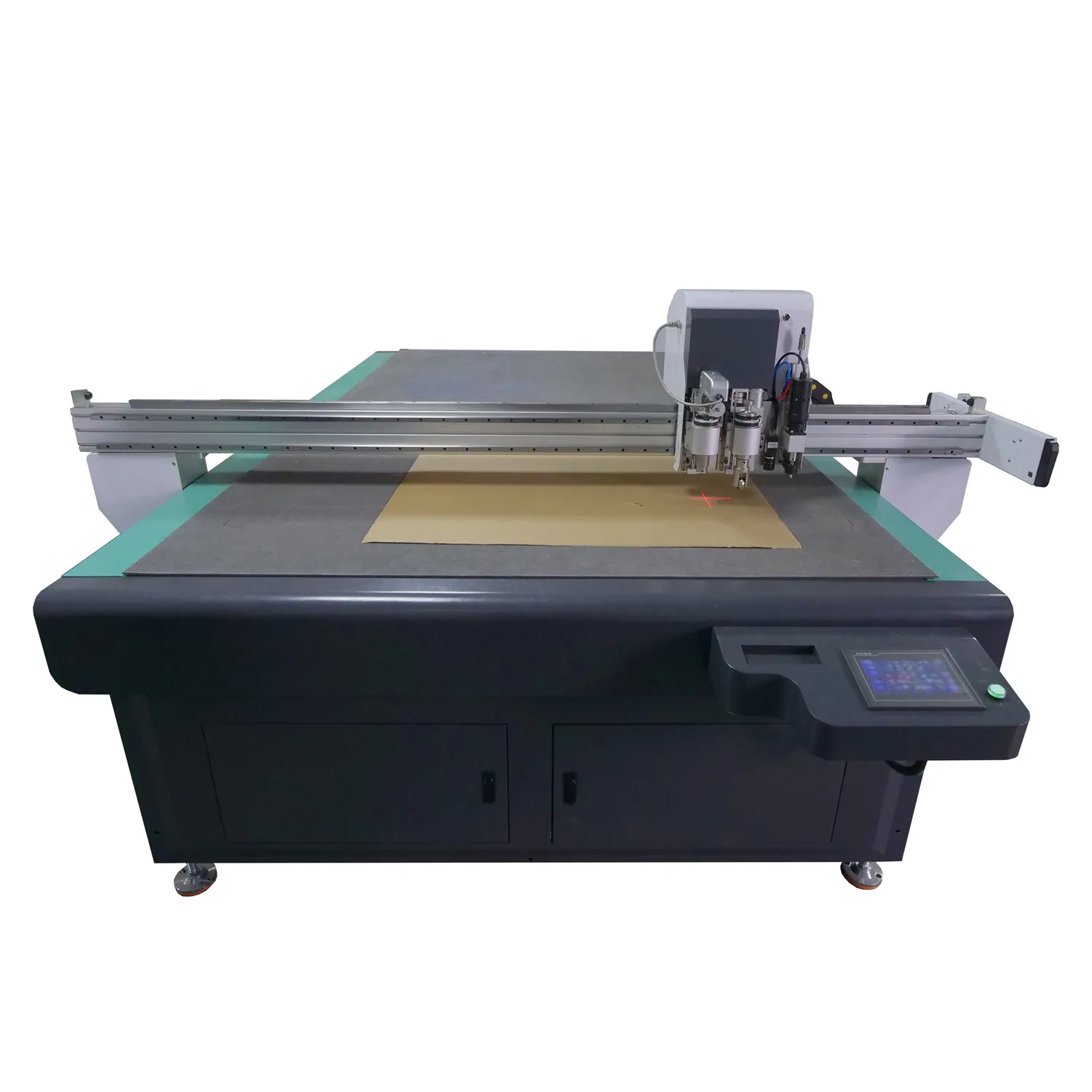
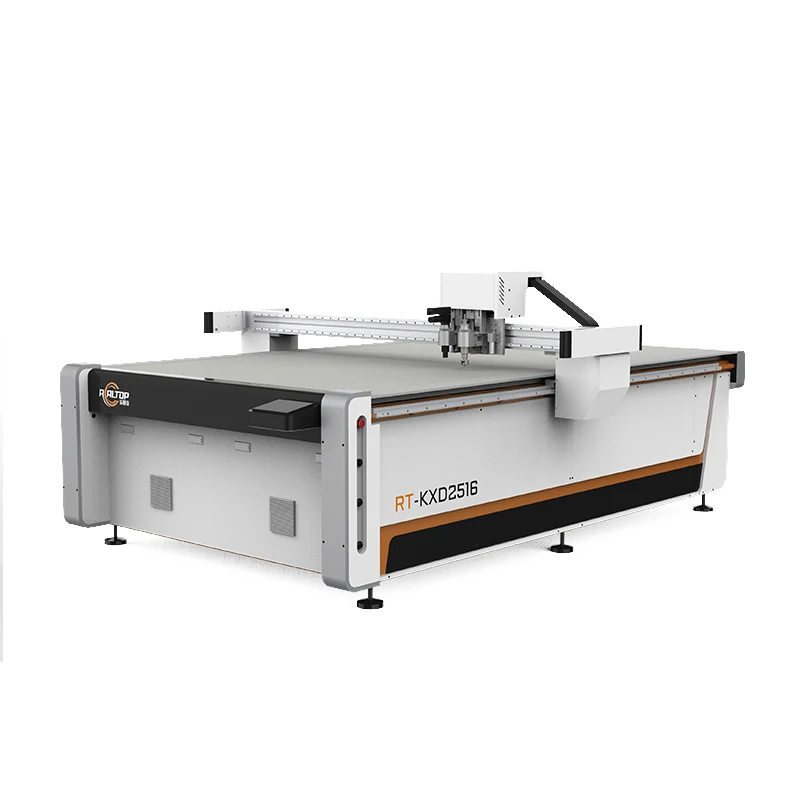
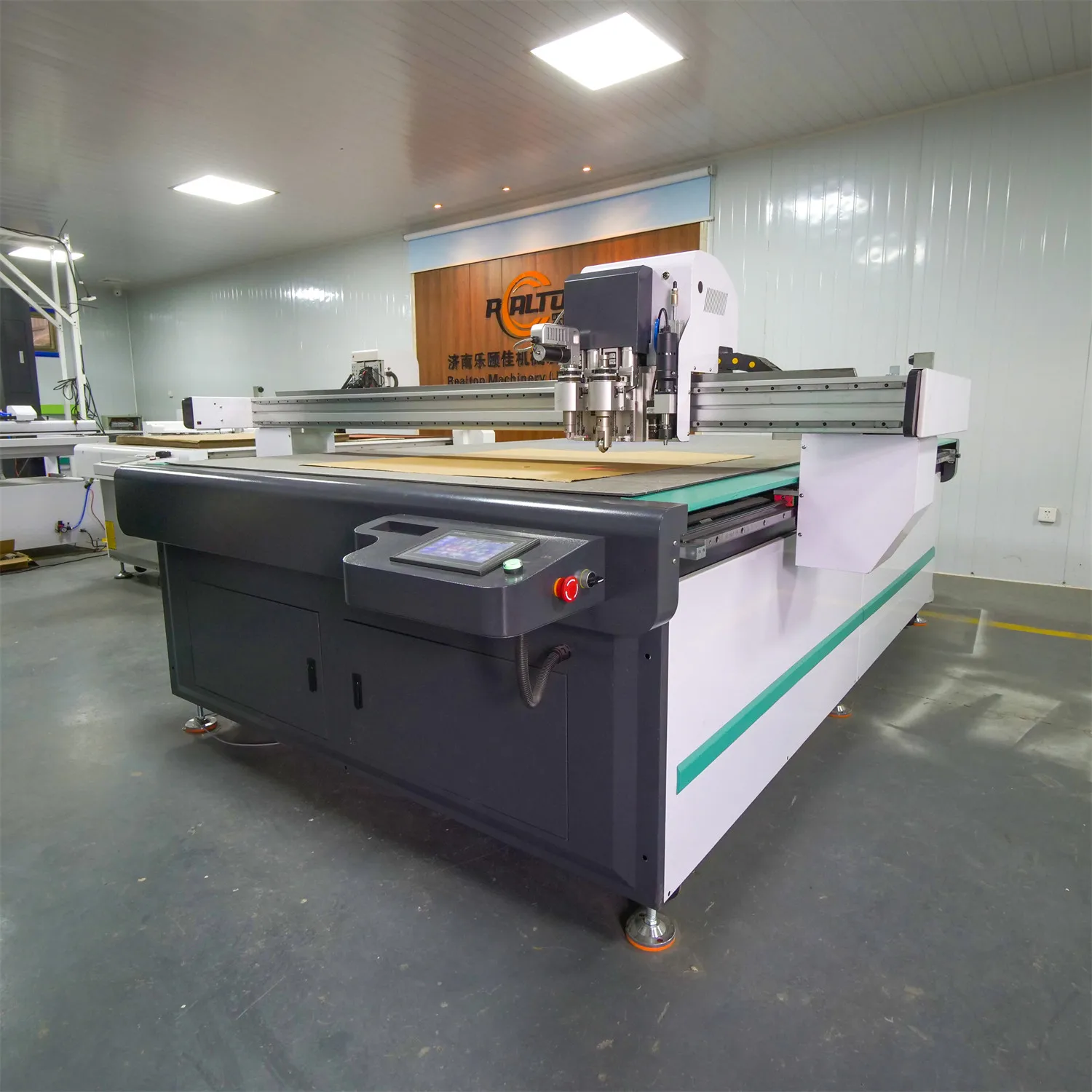
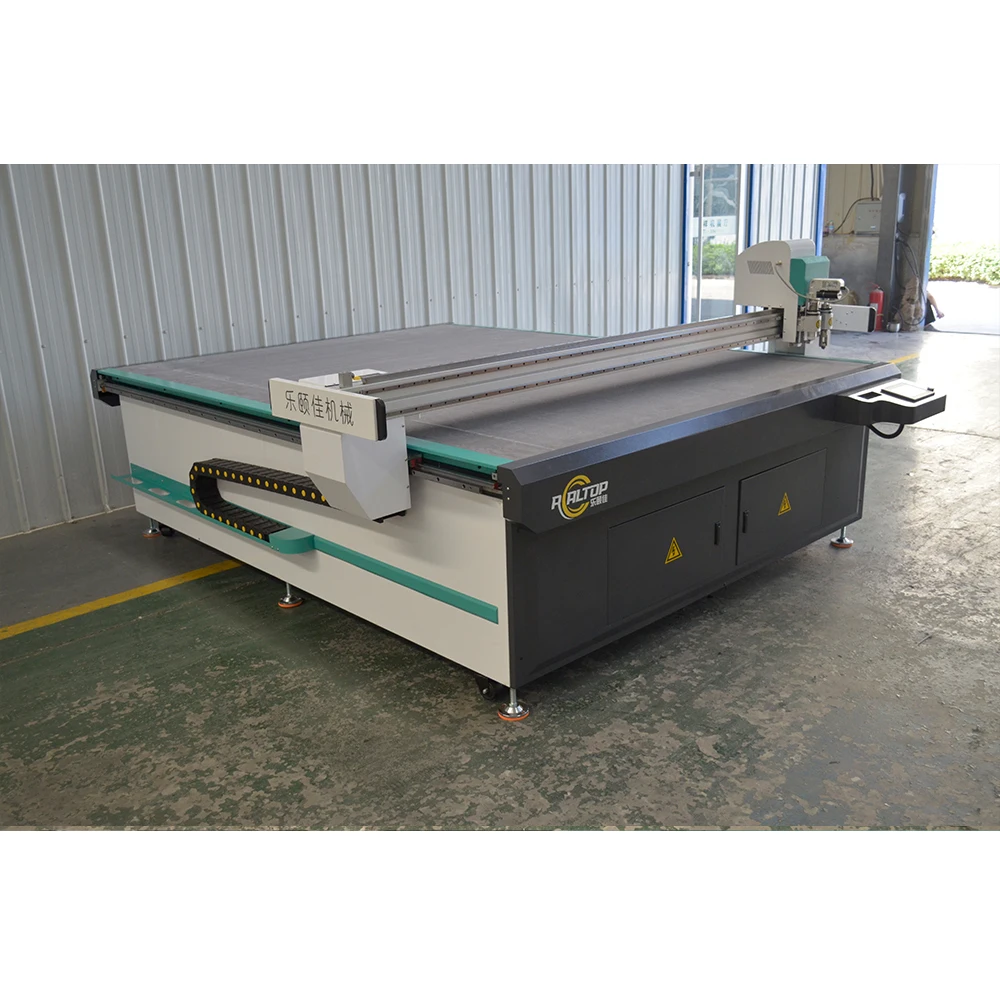
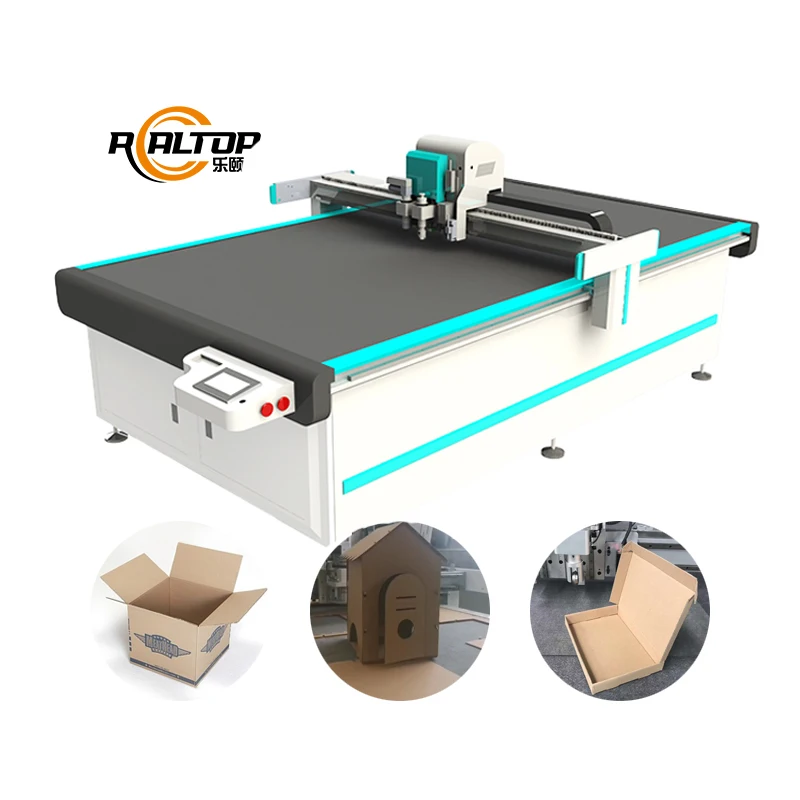
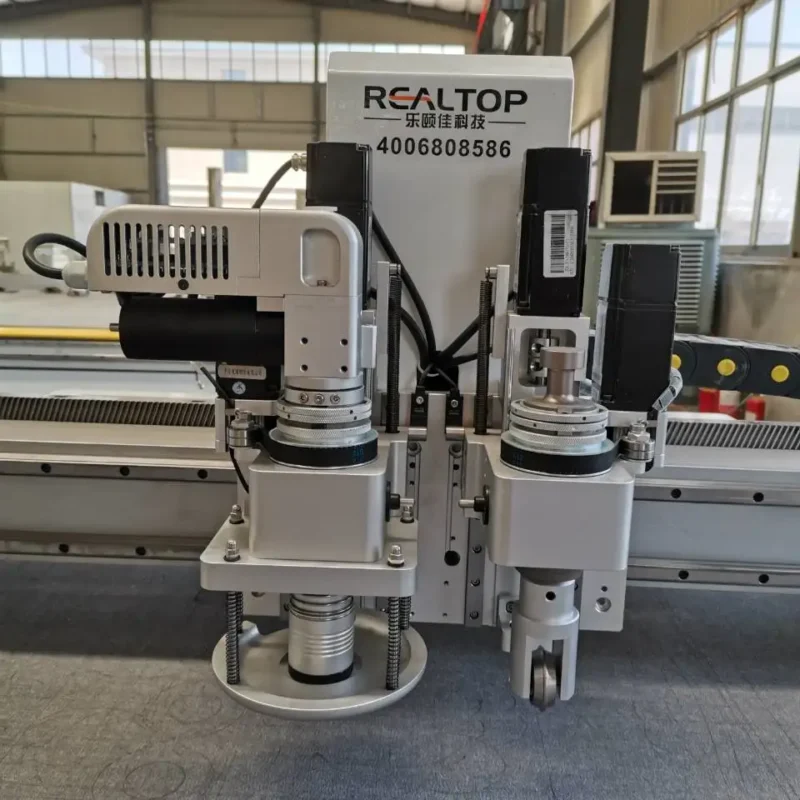
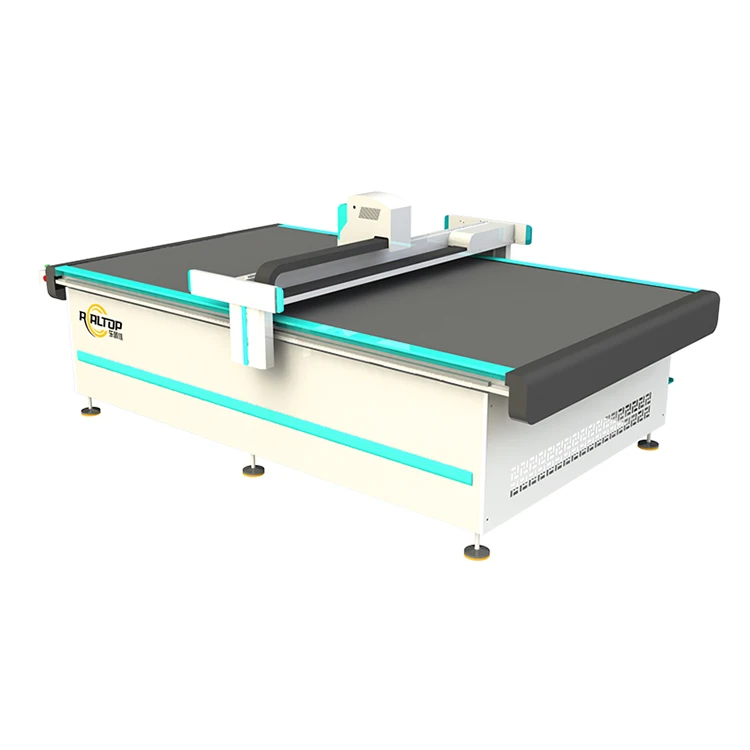
Tool Head Configuration per Material — the RT-D2516/RT-S2516 ships with a Swiss imported oscillating knife supporting full cut, half cut and cursor location, matched to corrugated board, stickers and flexible substrates rather than forced through a single blade type.
Technical Specifications
| Parameter | Value |
|---|---|
| Model | RT-D2516/RT-S2516 |
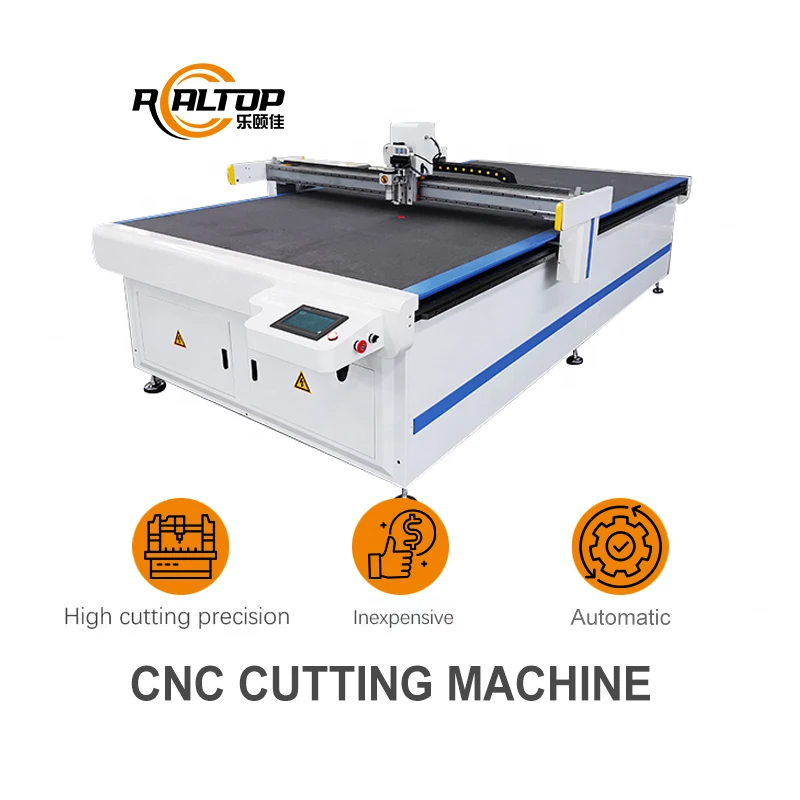
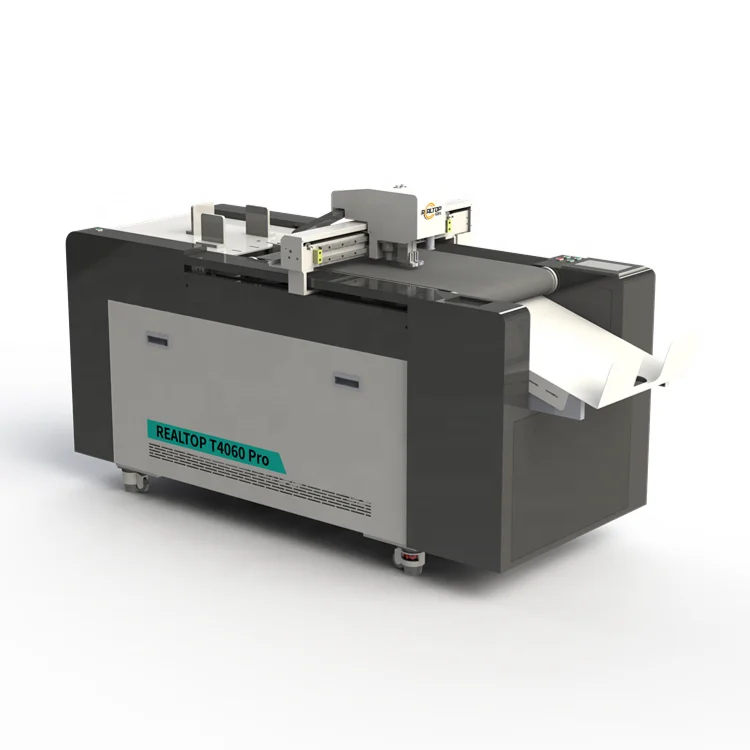
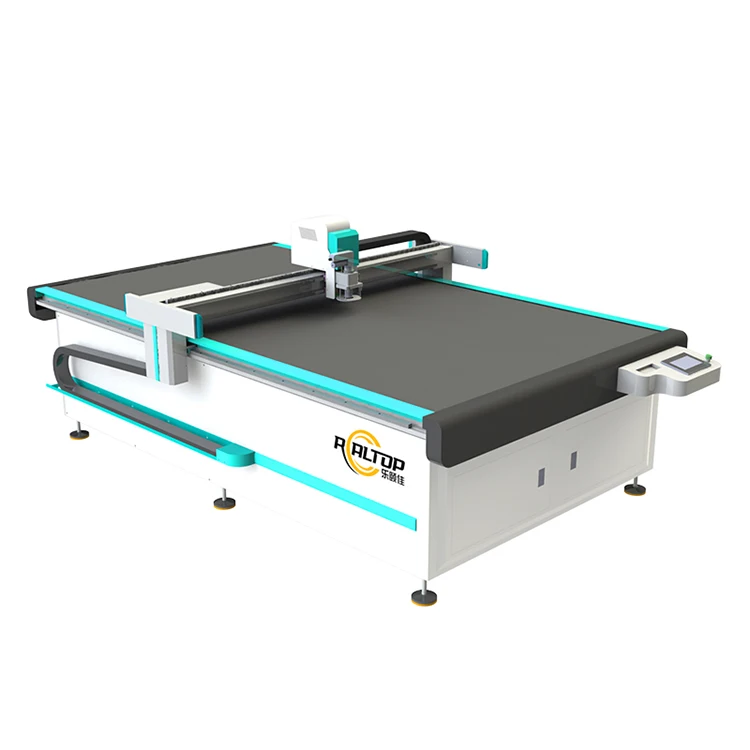
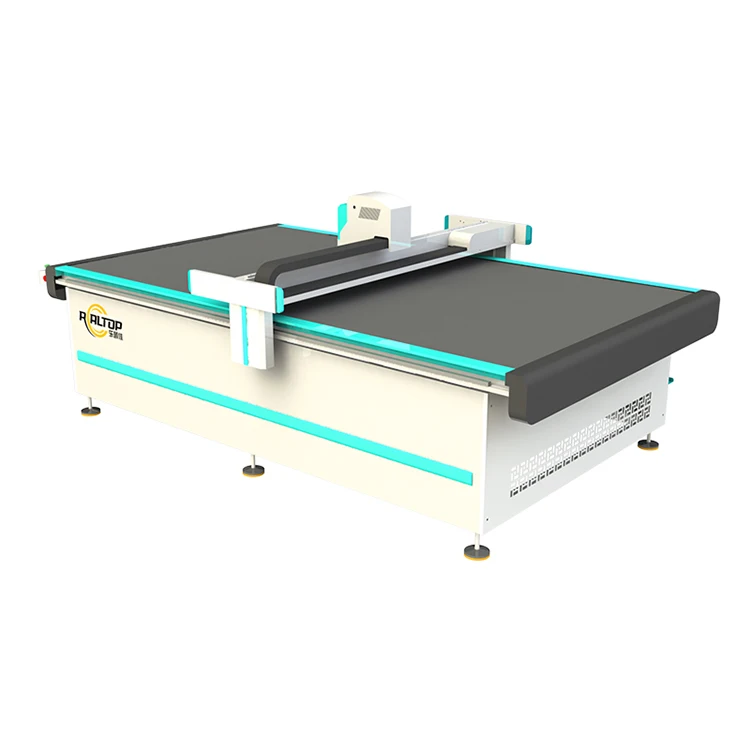
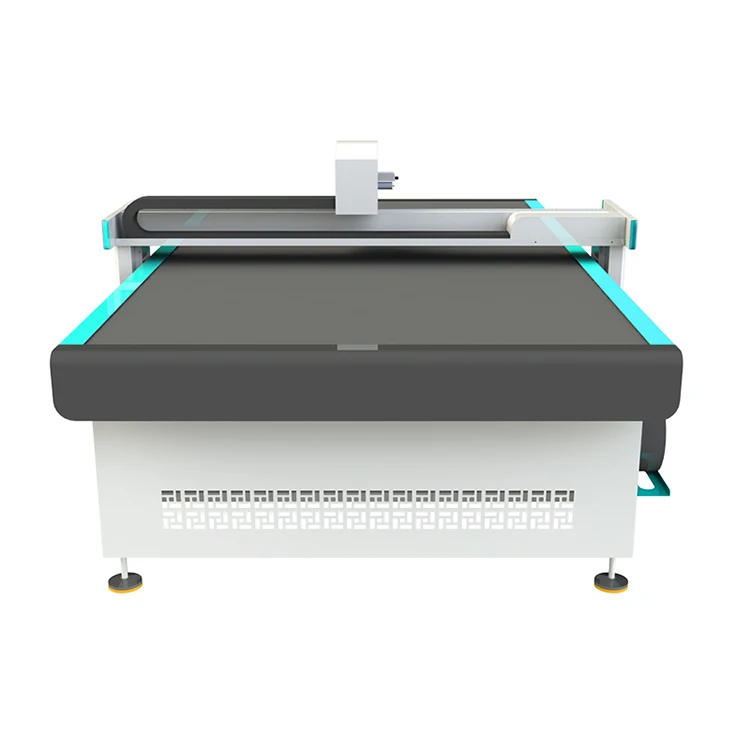
| Product Type | CNC Oscillating Knife Digital Cutting Machine |
| Working Area | 1600 × 2500 mm |
| Machine Size | 3450 × 2300 × 1250 mm |
| Rated Power | 9 kW |
| Vacuum Pump | 7.5 kW |
| Table Type | Flat working table, aluminum alloy honeycomb structure |
| Tool Head | Swiss imported knife with vibration full cutting, vibration half cutting and cursor location |
| Translational Velocity | 800–2000 mm/s |
| Cutting Speed | 200–800 mm/s (according to different cutting materials) |
| Repeated Accuracy | ≤ 0.1 mm |
| Transmission System | Digital servo motor, linear guide, synchronous belt, ball screw |
| Servo Motor | Delta |
| Rail | Taiwan Hiwin |
| Instruction System | HP-GL compatible format |
| Voltage | 380V ± 10% |
| Safety Device | Infrared sensors |
| Language Options | English, Russian, Italian, Chinese (special languages can be customized) |
| Standards | CE (basis not stated in source — confirm certification status) |
Application Suitability
| Application | Material or Output |
|---|---|
| Packaging carton sample making | Corrugated board, cardboard, folding carton stock |
| Sticker and label prototyping | Adhesive vinyl, sticker sheets, self-adhesive film |
| Signage and display cutting | Foam board, PVC sheet, corrugated plastic |
| Flexible material processing | Leather, garment fabric, sponge composite leather, soft glass, silicon, rubber |
| Gasket and seal prototyping | Rubber sheet, silicone, non-metallic composite materials |
Why Working Area Alone Is the Wrong Starting Point for a CNC Oscillating Knife Cutting Machine Manufacturer
Match the tool head and vacuum zone layout to your actual nesting pattern, not just to the largest sheet you might run.
A common mistake in packaging sample shops is specifying a flatbed cutter based on maximum sheet size, then discovering that the vacuum table cannot hold small carton blanks flat. The material lifts near the knife path, producing ragged edges or pulling the workpiece into the gantry. This is especially common when cutting nested sticker layouts or short-run corrugated inserts where parts are smaller than a single vacuum zone [NEED_CITE: vacuum zoning requirements for small-part digital cutting].
In my years configuring cutting equipment for workshops across the Yangtze River Delta, I watched a premium packaging client lose two full weeks of production. They specified a standard table layout but ran mostly small-format box prototypes. The board edges curled under the knife, and every cut required re-fixturing. The fix was not a new machine — it was a vacuum zone map matched to their real nesting files. That experience shaped how I now approach every configuration: pull the buyer’s actual layout files first, then specify the table zoning.
Oscillating Knife Versus Drag Knife on Corrugated and Flexible Stocks
The RT-D2516/RT-S2516 carries a Swiss imported oscillating knife that vibrates at high frequency to shear through corrugated flutes without crushing them. This matters for double-wall and triple-wall board where a drag knife would compress the flute profile and leave a deformed edge. The same head handles half cuts for sticker kiss-cutting, where the blade scores the face film without cutting through the release liner.
For materials like sponge composite leather or soft glass, the oscillating action prevents the blade from dragging and distorting the substrate. A CNC oscillating knife cutting machine manufacturer that only offers drag knife tooling forces buyers to compromise on edge quality across thicker, softer stocks. The cursor location function on this head also supports manual registration when optical mark reading is not part of the configuration.
HP-GL Compatibility and File Format Reality in Packaging Workflows
Most packaging sample studios and short-run carton shops work in vector environments that export HP-GL or HP-GL/2 plotter files. The instruction system on the RT-D2516/RT-S2516 reads this format directly, which means files from common packaging CAD stations can move to the cutting table without intermediate conversion. This removes a step where geometry errors — open contours, duplicate lines, misread spline curves — typically appear [NEED_CITE: file format compatibility in digital packaging sample cutting].
When buyers skip the format check before ordering, the result is often a machine that technically runs but requires operators to rebuild every file manually. Confirming software licence terms and file compatibility before shipment prevents this bottleneck. The control interface is available in English, Russian, Italian and Chinese, with other languages configurable for specific markets.
Drive Train and Accuracy: What the Specs Mean on the Shop Floor
The Delta digital servo motor paired with Taiwan Hiwin linear rails and ball screws gives the RT-D2516/RT-S2516 a repeated accuracy of ≤ 0.1 mm. On a 1600 × 2500 mm working area, maintaining that tolerance across the full travel range depends on the rigidity of the gantry and the preload on the linear guides. For packaging carton manufacturing, this means crease lines and cut lines stay registered across a full sheet of nested carton blanks, so folding tabs slot into their corresponding slots without hand trimming.
The translational velocity range of 800–2000 mm/s governs how fast the head moves between cuts, while the cutting speed of 200–800 mm/s reflects actual material separation rates. Thicker corrugated board sits at the lower end; thin sticker films and vinyl run at the upper end. The 7.5 kW vacuum pump paired with the aluminum alloy honeycomb table provides distributed holding force across the bed, which is necessary when cutting lightweight board that would otherwise shift under lateral knife load.
The Cost of Skipping the Sample Cut Before Commitment
When a buyer orders a flatbed digital cutter without testing their specific material on the machine, three problems tend to surface after installation. First, the cutting speed assumed during quoting may not hold on the actual substrate — corrugated board with high recycled content dulls blades faster and requires slower feed rates. Second, the vacuum hold-down may be adequate for full-sheet cutting but insufficient once the sheet is partitioned into many small parts [NEED_CITE: material-specific vacuum holding requirements for digital knife cutting].
Third, the half-cut depth needed for kiss-cutting stickers varies with liner thickness and adhesive type, and the factory setting may not match the buyer’s stock. These issues are solvable, but resolving them remotely after shipment costs more in downtime and blade waste than a sample cutting session before the order is confirmed.
Why Source This Range Here
In-house design and production covering oscillating knife and drag knife tooling means the RT-D2516/RT-S2516 configuration is selected to match the buyer’s material stack rather than limited to whatever head happens to be on the standard build. Each machine ships with a tool head and table configuration list that documents exactly which knife, blade depth and vacuum zone layout was chosen for the agreed material range.
Sample cutting on the buyer’s own corrugated board, sticker stock or flexible material is conducted before commitment, producing a sample cutting report that confirms edge quality, crease definition and holding adequacy. Voltage, plug type and control language are confirmed in writing before production begins, so a 380V ± 10% machine destined for a market with different supply characteristics can be adjusted at the factory rather than rewired on arrival.
Documentation & Verification
- Machine specification sheet listing RT-D2516/RT-S2516 working area, tool head and drive components
- Electrical schematic confirming 380V ± 10% supply and 7.5 kW vacuum pump circuit requirements
- Sample cutting report produced on buyer’s own corrugated or flexible material before shipment
- Software licence note with HP-GL file format compatibility confirmation
- Factory test record documenting repeated accuracy and translational velocity verification
- Packing photographs showing machine condition and crate integrity before dispatch
Installation, Commissioning & Support
- Floor space of at least 4.5 × 3.5 m required around the 3450 × 2300 × 1250 mm machine envelope for operator access
- Dedicated 380V ± 10% circuit rated for the 9 kW machine load plus the 7.5 kW vacuum pump
- Machine ships as a single assembled unit; rigging equipment rated for the full weight needed at receiving bay
- First-run calibration includes vacuum zone mapping to the buyer’s nesting layout and blade depth setting on sample material
- Operator training covers HP-GL file import, tool head changeover between full cut and half cut, and infrared sensor safety protocols
- Spare parts list includes oscillating knife blades, vacuum table seals and Hiwin rail wipers for scheduled maintenance
What to Prepare Before Requesting a Quote
To configure the RT-D2516/RT-S2516 for your line, share your typical material types and thicknesses, the range of part sizes you nest on a sheet, and your daily cutting volume. Include your facility voltage and frequency, the control language your operators need, and a sample DXF or HP-GL file so the vacuum zoning and tool head can be validated against your actual work. If your workflow depends on specific nesting software, provide the export format so compatibility can be confirmed before the order.
Frequently Asked Questions
Q: How do I choose between oscillating knife, drag knife and creasing wheel for packaging work?
A: Oscillating knives handle corrugated board and thick foam without crushing the flute structure. Drag knives suit thin vinyl and sticker films where a continuous cut path is sufficient. Creasing wheels score fold lines on carton stock without cutting through. The RT-D2516/RT-S2516 supports oscillating knife as standard, with other tool heads configurable based on your material mix and creasing requirements.
Q: What file formats does the control software accept?
A: The instruction system is HP-GL compatible, which covers output from most packaging CAD stations and vector design software. Before ordering, share a sample file from your existing workflow so format compatibility and contour accuracy can be verified. If your studio uses proprietary nesting software, confirm the export format during the specification stage.
Q: Can the vacuum table hold small carton blanks without lifting?
A: The aluminum alloy honeycomb table distributes vacuum across the 1600 × 2500 mm working area, but holding small parts depends on zone configuration. Share your nesting layout so the vacuum zoning can be mapped to your typical part sizes. Inadequate zoning is a common cause of material lift during cutting, especially on lightweight corrugated and sticker stocks.
Q: What voltage and language options are available?
A: The standard configuration runs on 380V ± 10%, but voltage and plug type are confirmed with each buyer before production to match local supply. The control interface ships in English, Russian, Italian or Chinese, and other languages can be customized. Confirming these details before shipment avoids rewiring and reconfiguration costs at the installation site.
Q: Can I test my specific material before placing the order?
A: Yes. Send a sample of your corrugated board, sticker stock or flexible material to the factory for a test cut. The resulting sample cutting report documents edge quality, cutting speed achieved on your material and vacuum holding performance. This step confirms the configuration before commitment and avoids post-installation adjustments.
Tool Head Configuration per Material — the RT-D2516/RT-S2516 ships with a Swiss imported oscillating knife supporting full cut, half cut and cursor location, matched to corrugated board, stickers and flexible substrates rather than forced through a single blade type.
Technical Specifications
| Parameter | Value |
|---|---|
| Model | RT-D2516/RT-S2516 |
| Product Type | CNC Oscillating Knife Digital Cutting Machine |
| Working Area | 1600 × 2500 mm |
| Machine Size | 3450 × 2300 × 1250 mm |
| Rated Power | 9 kW |
| Vacuum Pump | 7.5 kW |
| Table Type | Flat working table, aluminum alloy honeycomb structure |
| Tool Head | Swiss imported knife with vibration full cutting, vibration half cutting and cursor location |
| Translational Velocity | 800–2000 mm/s |
| Cutting Speed | 200–800 mm/s (according to different cutting materials) |
| Repeated Accuracy | ≤ 0.1 mm |
| Transmission System | Digital servo motor, linear guide, synchronous belt, ball screw |
| Servo Motor | Delta |
| Rail | Taiwan Hiwin |
| Instruction System | HP-GL compatible format |
| Voltage | 380V ± 10% |
| Safety Device | Infrared sensors |
| Language Options | English, Russian, Italian, Chinese (special languages can be customized) |
| Standards | CE (basis not stated in source — confirm certification status) |
Application Suitability
| Application | Material or Output |
|---|---|
| Packaging carton sample making | Corrugated board, cardboard, folding carton stock |
| Sticker and label prototyping | Adhesive vinyl, sticker sheets, self-adhesive film |
| Signage and display cutting | Foam board, PVC sheet, corrugated plastic |
| Flexible material processing | Leather, garment fabric, sponge composite leather, soft glass, silicon, rubber |
| Gasket and seal prototyping | Rubber sheet, silicone, non-metallic composite materials |
Why Working Area Alone Is the Wrong Starting Point for a CNC Oscillating Knife Cutting Machine Manufacturer
Match the tool head and vacuum zone layout to your actual nesting pattern, not just to the largest sheet you might run.
A common mistake in packaging sample shops is specifying a flatbed cutter based on maximum sheet size, then discovering that the vacuum table cannot hold small carton blanks flat. The material lifts near the knife path, producing ragged edges or pulling the workpiece into the gantry. This is especially common when cutting nested sticker layouts or short-run corrugated inserts where parts are smaller than a single vacuum zone [NEED_CITE: vacuum zoning requirements for small-part digital cutting].
In my years configuring cutting equipment for workshops across the Yangtze River Delta, I watched a premium packaging client lose two full weeks of production. They specified a standard table layout but ran mostly small-format box prototypes. The board edges curled under the knife, and every cut required re-fixturing. The fix was not a new machine — it was a vacuum zone map matched to their real nesting files. That experience shaped how I now approach every configuration: pull the buyer’s actual layout files first, then specify the table zoning.
Oscillating Knife Versus Drag Knife on Corrugated and Flexible Stocks
The RT-D2516/RT-S2516 carries a Swiss imported oscillating knife that vibrates at high frequency to shear through corrugated flutes without crushing them. This matters for double-wall and triple-wall board where a drag knife would compress the flute profile and leave a deformed edge. The same head handles half cuts for sticker kiss-cutting, where the blade scores the face film without cutting through the release liner.
For materials like sponge composite leather or soft glass, the oscillating action prevents the blade from dragging and distorting the substrate. A CNC oscillating knife cutting machine manufacturer that only offers drag knife tooling forces buyers to compromise on edge quality across thicker, softer stocks. The cursor location function on this head also supports manual registration when optical mark reading is not part of the configuration.
HP-GL Compatibility and File Format Reality in Packaging Workflows
Most packaging sample studios and short-run carton shops work in vector environments that export HP-GL or HP-GL/2 plotter files. The instruction system on the RT-D2516/RT-S2516 reads this format directly, which means files from common packaging CAD stations can move to the cutting table without intermediate conversion. This removes a step where geometry errors — open contours, duplicate lines, misread spline curves — typically appear [NEED_CITE: file format compatibility in digital packaging sample cutting].
When buyers skip the format check before ordering, the result is often a machine that technically runs but requires operators to rebuild every file manually. Confirming software licence terms and file compatibility before shipment prevents this bottleneck. The control interface is available in English, Russian, Italian and Chinese, with other languages configurable for specific markets.
Drive Train and Accuracy: What the Specs Mean on the Shop Floor
The Delta digital servo motor paired with Taiwan Hiwin linear rails and ball screws gives the RT-D2516/RT-S2516 a repeated accuracy of ≤ 0.1 mm. On a 1600 × 2500 mm working area, maintaining that tolerance across the full travel range depends on the rigidity of the gantry and the preload on the linear guides. For packaging carton manufacturing, this means crease lines and cut lines stay registered across a full sheet of nested carton blanks, so folding tabs slot into their corresponding slots without hand trimming.
The translational velocity range of 800–2000 mm/s governs how fast the head moves between cuts, while the cutting speed of 200–800 mm/s reflects actual material separation rates. Thicker corrugated board sits at the lower end; thin sticker films and vinyl run at the upper end. The 7.5 kW vacuum pump paired with the aluminum alloy honeycomb table provides distributed holding force across the bed, which is necessary when cutting lightweight board that would otherwise shift under lateral knife load.
The Cost of Skipping the Sample Cut Before Commitment
When a buyer orders a flatbed digital cutter without testing their specific material on the machine, three problems tend to surface after installation. First, the cutting speed assumed during quoting may not hold on the actual substrate — corrugated board with high recycled content dulls blades faster and requires slower feed rates. Second, the vacuum hold-down may be adequate for full-sheet cutting but insufficient once the sheet is partitioned into many small parts [NEED_CITE: material-specific vacuum holding requirements for digital knife cutting].
Third, the half-cut depth needed for kiss-cutting stickers varies with liner thickness and adhesive type, and the factory setting may not match the buyer’s stock. These issues are solvable, but resolving them remotely after shipment costs more in downtime and blade waste than a sample cutting session before the order is confirmed.
Why Source This Range Here
In-house design and production covering oscillating knife and drag knife tooling means the RT-D2516/RT-S2516 configuration is selected to match the buyer’s material stack rather than limited to whatever head happens to be on the standard build. Each machine ships with a tool head and table configuration list that documents exactly which knife, blade depth and vacuum zone layout was chosen for the agreed material range.
Sample cutting on the buyer’s own corrugated board, sticker stock or flexible material is conducted before commitment, producing a sample cutting report that confirms edge quality, crease definition and holding adequacy. Voltage, plug type and control language are confirmed in writing before production begins, so a 380V ± 10% machine destined for a market with different supply characteristics can be adjusted at the factory rather than rewired on arrival.
Documentation & Verification
- Machine specification sheet listing RT-D2516/RT-S2516 working area, tool head and drive components
- Electrical schematic confirming 380V ± 10% supply and 7.5 kW vacuum pump circuit requirements
- Sample cutting report produced on buyer’s own corrugated or flexible material before shipment
- Software licence note with HP-GL file format compatibility confirmation
- Factory test record documenting repeated accuracy and translational velocity verification
- Packing photographs showing machine condition and crate integrity before dispatch
Installation, Commissioning & Support
- Floor space of at least 4.5 × 3.5 m required around the 3450 × 2300 × 1250 mm machine envelope for operator access
- Dedicated 380V ± 10% circuit rated for the 9 kW machine load plus the 7.5 kW vacuum pump
- Machine ships as a single assembled unit; rigging equipment rated for the full weight needed at receiving bay
- First-run calibration includes vacuum zone mapping to the buyer’s nesting layout and blade depth setting on sample material
- Operator training covers HP-GL file import, tool head changeover between full cut and half cut, and infrared sensor safety protocols
- Spare parts list includes oscillating knife blades, vacuum table seals and Hiwin rail wipers for scheduled maintenance
What to Prepare Before Requesting a Quote
To configure the RT-D2516/RT-S2516 for your line, share your typical material types and thicknesses, the range of part sizes you nest on a sheet, and your daily cutting volume. Include your facility voltage and frequency, the control language your operators need, and a sample DXF or HP-GL file so the vacuum zoning and tool head can be validated against your actual work. If your workflow depends on specific nesting software, provide the export format so compatibility can be confirmed before the order.
Frequently Asked Questions
Q: How do I choose between oscillating knife, drag knife and creasing wheel for packaging work?
A: Oscillating knives handle corrugated board and thick foam without crushing the flute structure. Drag knives suit thin vinyl and sticker films where a continuous cut path is sufficient. Creasing wheels score fold lines on carton stock without cutting through. The RT-D2516/RT-S2516 supports oscillating knife as standard, with other tool heads configurable based on your material mix and creasing requirements.
Q: What file formats does the control software accept?
A: The instruction system is HP-GL compatible, which covers output from most packaging CAD stations and vector design software. Before ordering, share a sample file from your existing workflow so format compatibility and contour accuracy can be verified. If your studio uses proprietary nesting software, confirm the export format during the specification stage.
Q: Can the vacuum table hold small carton blanks without lifting?
A: The aluminum alloy honeycomb table distributes vacuum across the 1600 × 2500 mm working area, but holding small parts depends on zone configuration. Share your nesting layout so the vacuum zoning can be mapped to your typical part sizes. Inadequate zoning is a common cause of material lift during cutting, especially on lightweight corrugated and sticker stocks.
Q: What voltage and language options are available?
A: The standard configuration runs on 380V ± 10%, but voltage and plug type are confirmed with each buyer before production to match local supply. The control interface ships in English, Russian, Italian or Chinese, and other languages can be customized. Confirming these details before shipment avoids rewiring and reconfiguration costs at the installation site.
Q: Can I test my specific material before placing the order?
A: Yes. Send a sample of your corrugated board, sticker stock or flexible material to the factory for a test cut. The resulting sample cutting report documents edge quality, cutting speed achieved on your material and vacuum holding performance. This step confirms the configuration before commitment and avoids post-installation adjustments.
商品评价
There are no reviews yet.