

Fast Delivery
Quick, reliable shipping to any location.

Free & easy returns
Return this item by mail or in store within 90 days for a full refund.
Complete Range Coverage — in-house design and production spanning both oscillating knife and laser platforms means the RT-D2516/RT-S2516 sits within a full catalogue where cutting method is matched to material rather than forced.
Technical Specifications
| Parameter | Value |
|---|---|
| Model | RT-D2516 / RT-S2516 |
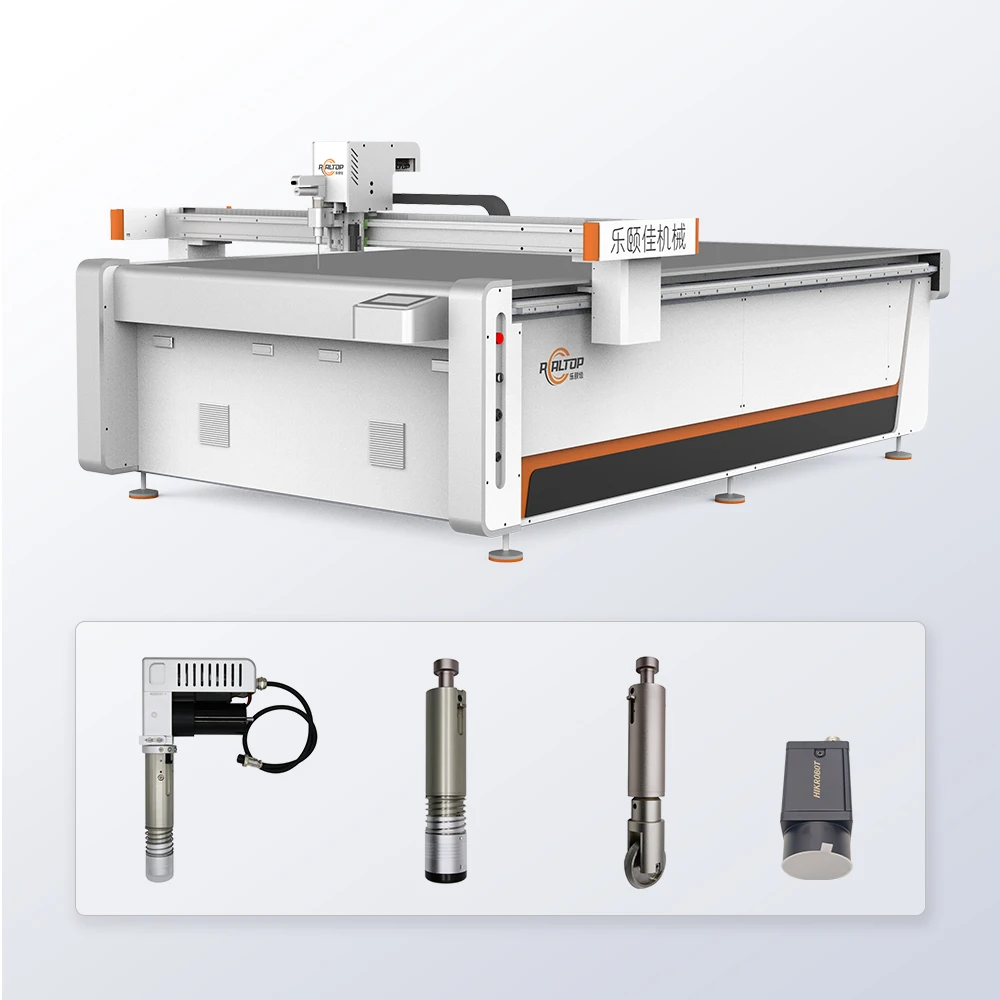
| Product Type | CNC Oscillating Knife Cutting Machine |
| Working Area | 1600 × 2500 mm |
| Machine Dimensions | 3450 × 2300 × 1250 mm |
| Rated Power | 9 kW |
| Vacuum Pump | 7.5 kW |
| Table Type | Flat vacuum working table with magnesium-aluminum alloy surface |
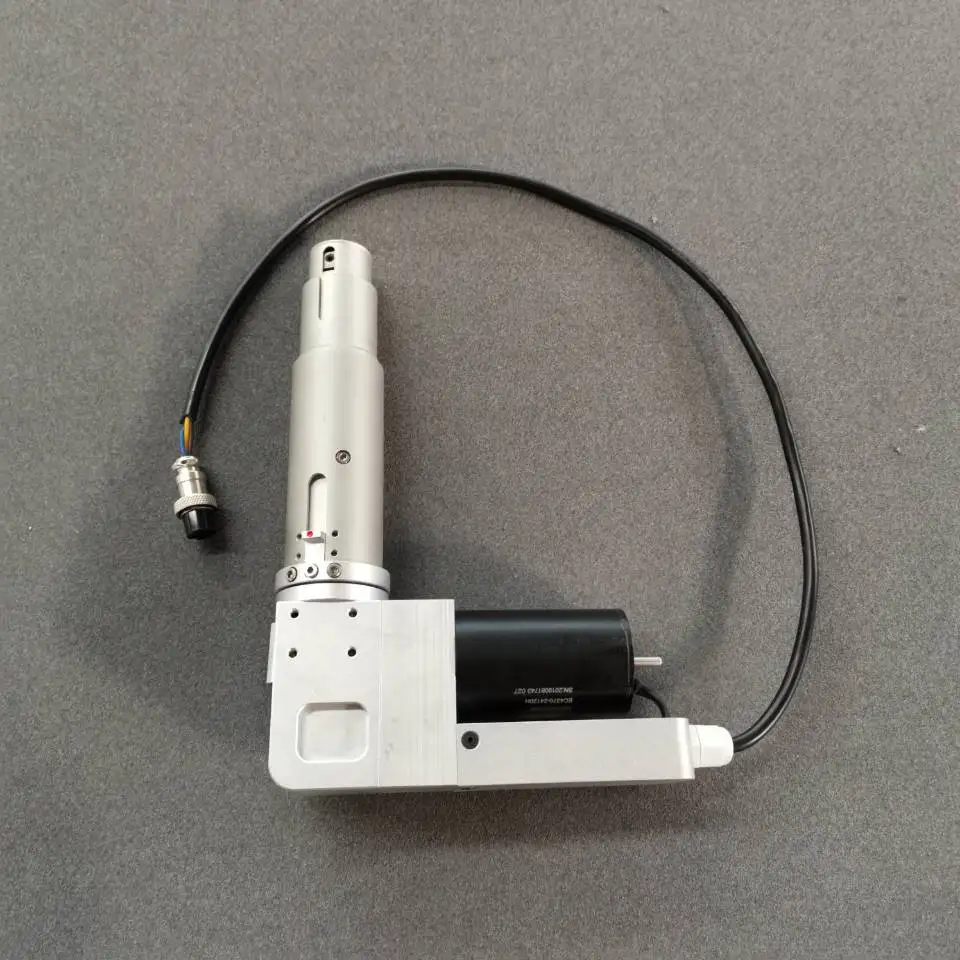
| Multifunctional Head | Swiss-imported knife with vibration full cutting, vibration half cutting, and cursor location |
| Translational Velocity | 800–1200 mm/s |
| Cutting Speed | 200–800 mm/s (varies by material type and thickness) |
| Cutting Thickness | Up to 100 mm (basis not stated in source — confirm block format, material, and thickness) |
| Repeated Accuracy | ≤0.1 mm |
| Transmission System | Digital servo motor, linear guide, synchronous belt, ball screw |
| Servo Motor Brand | Delta (Panasonic optional) |
| Instruction Format | HP-GL compatible |
| Voltage | 380V ±10% |
| Safety Devices | Infrared sensors, anti-collision, emergency stop |
| Additional Configuration | Germany-imported conveyor belt, Taiwan Hiwin rail, auto feeding |
| Language Options | English, Russian, Italian, Chinese; special languages customizable |
| Assembly State | Fully assembled at factory before dispatch |
| Warranty | One year free warranty |
| Certification | CE declaration where applicable |
Application Suitability
| Application | Material or Output |
|---|---|
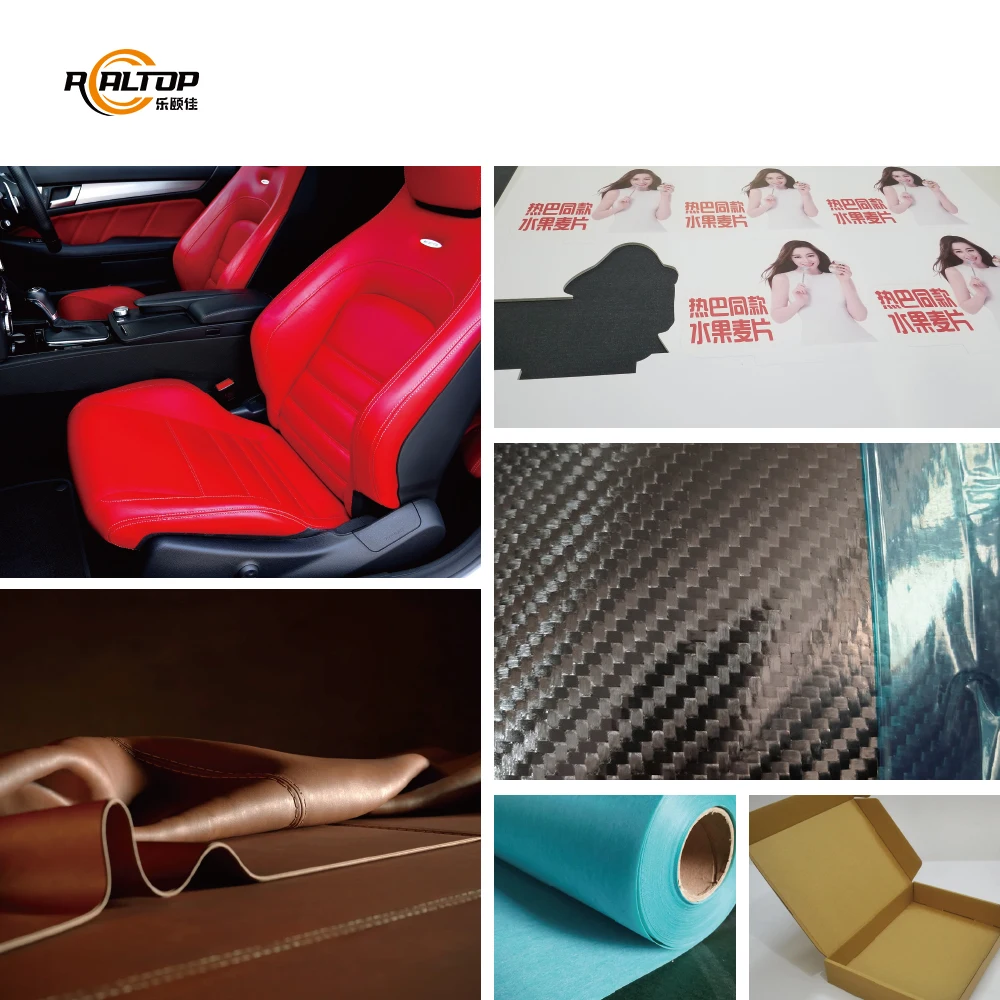
| Packaging and carton sample making | Corrugated cardboard, grey board, plastic box stock, sticker film |
| Garment and footwear production | Clothing cloth, shoe material, leather, luggage material, non-woven fabric |
| Automotive interior trimming | PU, EVA, XPE, PVC, sponge, composite materials |
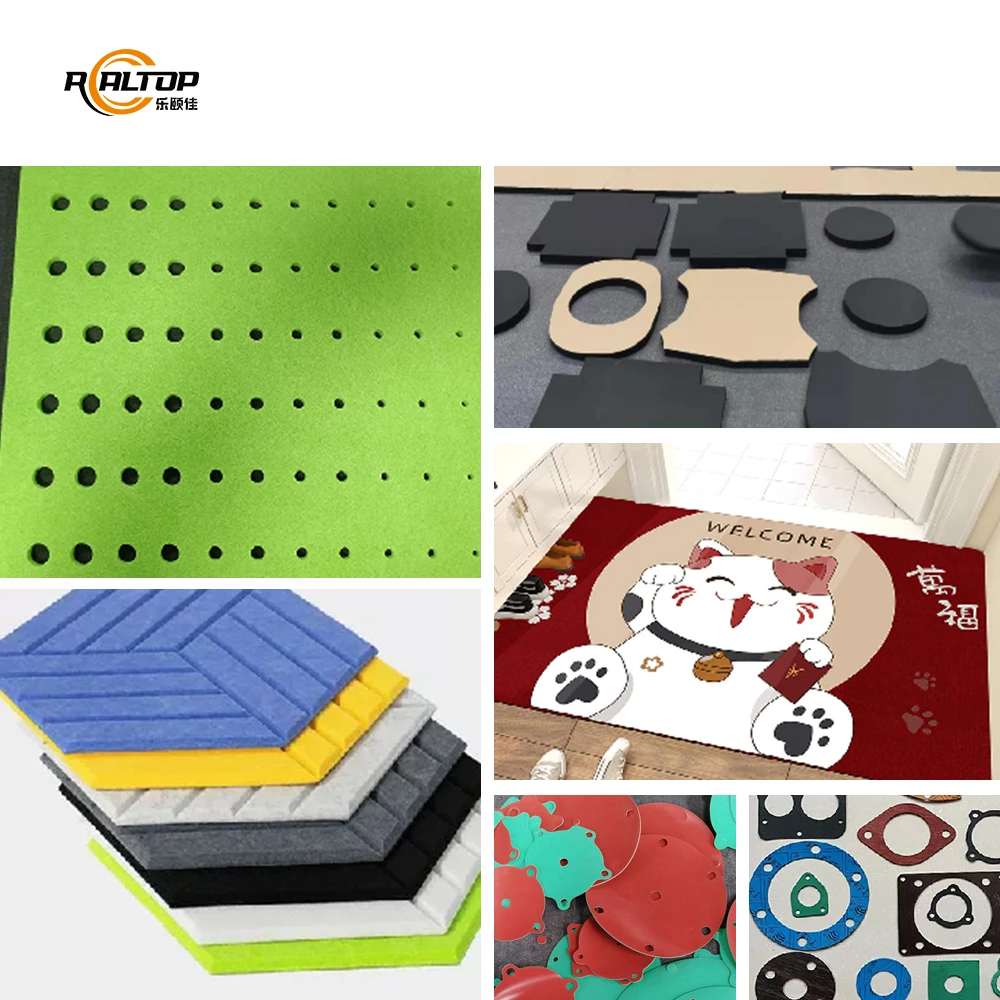
| Gasket and sealing fabrication | Rubber, PTFE, ETFE, fiberglass, foam board |
| Graphic advertising and signage | Vinyl, foam board, PVC, PP, PE |
| Soft furnishings and floor coverings | Carpet, textile, fabric rolls |
Why Material Thickness Decisions Get Made Too Late
Many buyers choose a CNC oscillating knife cutting machine for sale based on working area alone, only to discover on the shop floor that the tool head cannot handle their actual material density or thickness. A 1600 × 2500 mm table means nothing if high-density grey board crushes under the blade or corrugated layers tear at the edge instead of shearing cleanly. The working area tells you what fits on the table; the tool head and vacuum configuration tell you what actually cuts. [NEED_CITE:]
When packaging sample makers send inquiry emails listing only sheet dimensions without specifying board grade or flute type, the machine ships configured for a generic assumption. The first test run then reveals ragged edges on folding lines, incomplete through-cuts on multi-layer stock, or small die-cut pieces lifting off the vacuum zone mid-cycle. These are not warranty issues — they are specification gaps that could have been closed before the order was placed.
Mapping the Full Catalogue to Your Material Stack
The RT-D2516 and RT-S2516 occupy the mid-to-large format tier within a broader catalogue that stretches from compact desktop units to multi-head industrial lines. This CNC oscillating knife cutting machine for sale is positioned where daily volume justifies a dedicated flatbed but does not yet require a continuous conveyor system running multiple shifts. The magnesium-aluminum alloy vacuum table provides the flatness needed for precision packaging die-cutting and the uniform suction needed to hold thin films without edge lift.
Buyers evaluating options across the catalogue should anchor their decision on material first, then volume, then working area. A fabric producer cutting multiple plies of automotive textile needs a different tool head profile than a carton sample maker working with single-ply corrugated. The full range exists so that neither buyer is forced to adapt their process to a machine that was designed for the other.
Knife Versus Laser: Choosing the Right Side of the Catalogue
The catalogue includes both knife-based and laser-based platforms, and the distinction matters far more than most buyers realize at the inquiry stage. Oscillating knife technology produces clean mechanical shearing on corrugated board, foam, and composite gasket materials where a thermal process would leave melted or discolored edges. Laser cutting, by contrast, seals synthetic fabric edges automatically and handles intricate contours in thin acrylic or wood veneer where a physical blade would deflect. [NEED_CITE:]
A buyer cutting both packaging cardboard and PU foam gaskets may find that one knife platform with swappable tool heads covers both needs, while a buyer adding acrylic signage to the mix may require a separate laser unit. The catalogue approach means the cutting method is selected based on the material physics, not on whichever machine was quoted first.
Reading the Specs That Actually Affect Daily Output
The 9 kW rated power covers the combined draw of the servo drive system, vacuum pump motor, and control electronics — buyers should verify that their workshop electrical panel can supply a dedicated 380V ±10% circuit with adequate breaker capacity before installation. The 7.5 kW vacuum pump paired with the magnesium-aluminum alloy flat table generates the suction needed to hold corrugated stock flat during high-speed traversal, though zoning configuration should be confirmed for small-part nesting where localized lift is most likely to occur.
Repeated accuracy of ≤0.1 mm is achieved through the combination of Taiwan Hiwin linear rails, ball screw drive on the critical axes, and digital servo control from Delta or optional Panasonic. For packaging sample makers producing crease-and-fold prototypes, this tolerance window determines whether scored fold lines register correctly against cut outlines across a full 2500 mm stroke. The Swiss-imported vibration knife within the multifunctional head handles full through-cuts and half-cuts on materials up to 100 mm thick — though that upper limit depends entirely on material density and should be validated with a physical sample test on your specific stock. [NEED_CITE:]
The Hidden Cost of Skipping the Sample Test
When a packaging converter orders based on a brochure spec sheet without sending actual material for a cutting trial, the machine arrives configured for a generic board weight. The first production run on 2 mm high-density grey board reveals that the default oscillating frequency produces delamination rather than clean shear, and the vacuum zoning was set for larger carton blanks rather than the small insert dividers the shop actually runs. Correcting this after delivery means waiting for replacement tool heads, reprogramming vacuum zones, and absorbing days of downtime that a pre-shipment sample cut would have prevented entirely. [NEED_CITE:]
Similarly, a buyer cutting automotive interior composites may specify the working area correctly but overlook that the standard drag knife cannot handle the fiberglass reinforcement layer within the material sandwich. The result is frayed edges that fail downstream quality inspection and require manual trimming — a labor cost that was never factored into the purchase decision.
Why Buyers Source This Machine From the Catalogue Origin
The design team engineers both knife and laser platforms under one roof, so when a packaging buyer’s requirements shift to include acrylic window inserts, the conversation stays within the same technical team rather than transferring to a separate vendor. The RT-D2516 and RT-S2516 benefit from shared motion-control architecture across the catalogue, meaning servo tuning, rail specification, and software compatibility carry through consistently whether the buyer starts with one unit and adds a second platform later.
Tool head selection is specified against the buyer’s material sample rather than a generic chart, and the configuration list attached to each order documents exactly which knife profile, oscillating frequency setting, and vacuum zone map was validated. Voltage, control language, and plug type are confirmed against the destination market before the machine enters final assembly — not discovered as a mismatch when the crate is opened.
Documentation & Verification
- Machine specification sheet listing confirmed tool head configuration and vacuum zone map for your material
- Electrical schematic showing 380V circuit requirements and breaker sizing for workshop installation
- Sample cutting report documenting edge quality and through-cut results on your supplied packaging stock
- Factory test record with repeated accuracy measurements taken on the actual 1600 × 2500 mm working area
- Software licence documentation confirming HP-GL file format compatibility with your existing design workflow
- Spare parts list identifying consumable blades, belts, and vacuum seals specific to the shipped configuration
Installation, Commissioning & Support
- Workshop floor must support the 3450 × 2300 mm footprint with level tolerance for the Hiwin rail alignment
- Dedicated 380V ±10% circuit with breaker capacity matching the 9 kW rated power draw is required before delivery
- Machine ships fully assembled; only utility connections and vacuum hose routing are needed on site
- First-run commissioning includes vacuum zone calibration and servo tuning for your confirmed material type
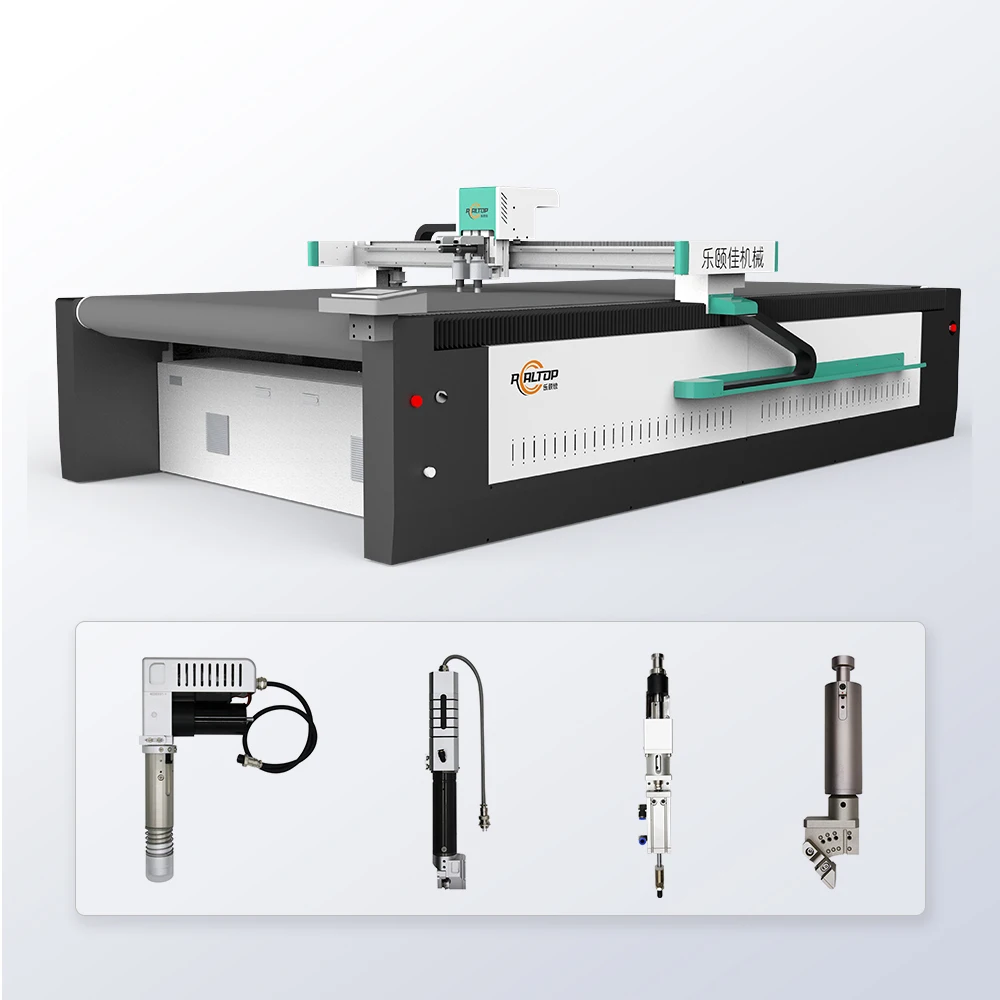
- Operator training covers tool head changeover between oscillating knife, drag knife, and creasing wheel modes
- One-year warranty covers servo motors, linear guides, and control electronics with spare blades stocked separately
What to Include in Your Initial Inquiry
To match the right configuration from the catalogue, provide your primary material types with actual thickness ranges and daily sheet volume so the tool head and vacuum layout can be specified before quotation. Confirm your local voltage and frequency standard along with preferred control interface language. If your workflow depends on specific nesting software or file formats beyond HP-GL, state this upfront so compatibility can be verified before the order is finalized rather than after delivery.
Frequently Asked Questions
Q: How do I choose between oscillating knife, drag knife, and creasing wheel for packaging work?
A: Oscillating knife handles through-cuts on corrugated and foam with clean shearing action. Drag knife suits thinner sticker film and vinyl where high-frequency vibration would tear the material. Creasing wheel scores fold lines without penetrating the board surface. The correct combination depends on your material stack, and a sample cut on your actual stock confirms the selection before order.
Q: What working area size matches my sheet dimensions and daily production targets?
A: The 1600 × 2500 mm table accommodates standard packaging board sheets with margin for nesting optimization. Buyers running smaller insert components at high volume may benefit from tighter-format machines with faster acceleration, while those cutting oversized display boxes may need a larger bed. Daily throughput expectations determine whether single-head or multi-head configuration is appropriate.
Q: How does CCD camera contour recognition perform on printed packaging at production speed?
A: Small CCD mark-point positioning locates registration marks for contour cutting around pre-printed graphics. Panoramic camera recognition handles full-sheet pattern matching where print distortion or stretch is present. Performance depends on mark contrast, lighting conditions, and the speed setting chosen for the material. Specify your print registration method during the sample-cutting stage.
Q: Which is better for my packaging material — knife cutting or laser?
A: Knife cutting produces mechanical shear edges on corrugated board and grey board without thermal discoloration or odor. Laser cutting seals edges on synthetic films and handles intricate micro-perforations that a blade cannot achieve. Some packaging converters run both platforms for different product lines. The material itself determines which method is appropriate.
Q: How should vacuum table zoning be set up for small die-cut packaging parts?
A: Standard zoning divides the 1600 × 2500 mm table into regions that activate independently, concentrating suction under the active cutting area. Small parts near zone boundaries can lift if the zoning does not match the nesting pattern. Confirm your typical nest layout during configuration so zones are mapped to your specific production geometry before the table is finalized.
Complete Range Coverage — in-house design and production spanning both oscillating knife and laser platforms means the RT-D2516/RT-S2516 sits within a full catalogue where cutting method is matched to material rather than forced.
Technical Specifications
| Parameter | Value |
|---|---|
| Model | RT-D2516 / RT-S2516 |
| Product Type | CNC Oscillating Knife Cutting Machine |
| Working Area | 1600 × 2500 mm |
| Machine Dimensions | 3450 × 2300 × 1250 mm |
| Rated Power | 9 kW |
| Vacuum Pump | 7.5 kW |
| Table Type | Flat vacuum working table with magnesium-aluminum alloy surface |
| Multifunctional Head | Swiss-imported knife with vibration full cutting, vibration half cutting, and cursor location |
| Translational Velocity | 800–1200 mm/s |
| Cutting Speed | 200–800 mm/s (varies by material type and thickness) |
| Cutting Thickness | Up to 100 mm (basis not stated in source — confirm block format, material, and thickness) |
| Repeated Accuracy | ≤0.1 mm |
| Transmission System | Digital servo motor, linear guide, synchronous belt, ball screw |
| Servo Motor Brand | Delta (Panasonic optional) |
| Instruction Format | HP-GL compatible |
| Voltage | 380V ±10% |
| Safety Devices | Infrared sensors, anti-collision, emergency stop |
| Additional Configuration | Germany-imported conveyor belt, Taiwan Hiwin rail, auto feeding |
| Language Options | English, Russian, Italian, Chinese; special languages customizable |
| Assembly State | Fully assembled at factory before dispatch |
| Warranty | One year free warranty |
| Certification | CE declaration where applicable |
Application Suitability
| Application | Material or Output |
|---|---|
| Packaging and carton sample making | Corrugated cardboard, grey board, plastic box stock, sticker film |
| Garment and footwear production | Clothing cloth, shoe material, leather, luggage material, non-woven fabric |
| Automotive interior trimming | PU, EVA, XPE, PVC, sponge, composite materials |
| Gasket and sealing fabrication | Rubber, PTFE, ETFE, fiberglass, foam board |
| Graphic advertising and signage | Vinyl, foam board, PVC, PP, PE |
| Soft furnishings and floor coverings | Carpet, textile, fabric rolls |
Why Material Thickness Decisions Get Made Too Late
Many buyers choose a CNC oscillating knife cutting machine for sale based on working area alone, only to discover on the shop floor that the tool head cannot handle their actual material density or thickness. A 1600 × 2500 mm table means nothing if high-density grey board crushes under the blade or corrugated layers tear at the edge instead of shearing cleanly. The working area tells you what fits on the table; the tool head and vacuum configuration tell you what actually cuts. [NEED_CITE:]
When packaging sample makers send inquiry emails listing only sheet dimensions without specifying board grade or flute type, the machine ships configured for a generic assumption. The first test run then reveals ragged edges on folding lines, incomplete through-cuts on multi-layer stock, or small die-cut pieces lifting off the vacuum zone mid-cycle. These are not warranty issues — they are specification gaps that could have been closed before the order was placed.
Mapping the Full Catalogue to Your Material Stack
The RT-D2516 and RT-S2516 occupy the mid-to-large format tier within a broader catalogue that stretches from compact desktop units to multi-head industrial lines. This CNC oscillating knife cutting machine for sale is positioned where daily volume justifies a dedicated flatbed but does not yet require a continuous conveyor system running multiple shifts. The magnesium-aluminum alloy vacuum table provides the flatness needed for precision packaging die-cutting and the uniform suction needed to hold thin films without edge lift.
Buyers evaluating options across the catalogue should anchor their decision on material first, then volume, then working area. A fabric producer cutting multiple plies of automotive textile needs a different tool head profile than a carton sample maker working with single-ply corrugated. The full range exists so that neither buyer is forced to adapt their process to a machine that was designed for the other.
Knife Versus Laser: Choosing the Right Side of the Catalogue
The catalogue includes both knife-based and laser-based platforms, and the distinction matters far more than most buyers realize at the inquiry stage. Oscillating knife technology produces clean mechanical shearing on corrugated board, foam, and composite gasket materials where a thermal process would leave melted or discolored edges. Laser cutting, by contrast, seals synthetic fabric edges automatically and handles intricate contours in thin acrylic or wood veneer where a physical blade would deflect. [NEED_CITE:]
A buyer cutting both packaging cardboard and PU foam gaskets may find that one knife platform with swappable tool heads covers both needs, while a buyer adding acrylic signage to the mix may require a separate laser unit. The catalogue approach means the cutting method is selected based on the material physics, not on whichever machine was quoted first.
Reading the Specs That Actually Affect Daily Output
The 9 kW rated power covers the combined draw of the servo drive system, vacuum pump motor, and control electronics — buyers should verify that their workshop electrical panel can supply a dedicated 380V ±10% circuit with adequate breaker capacity before installation. The 7.5 kW vacuum pump paired with the magnesium-aluminum alloy flat table generates the suction needed to hold corrugated stock flat during high-speed traversal, though zoning configuration should be confirmed for small-part nesting where localized lift is most likely to occur.
Repeated accuracy of ≤0.1 mm is achieved through the combination of Taiwan Hiwin linear rails, ball screw drive on the critical axes, and digital servo control from Delta or optional Panasonic. For packaging sample makers producing crease-and-fold prototypes, this tolerance window determines whether scored fold lines register correctly against cut outlines across a full 2500 mm stroke. The Swiss-imported vibration knife within the multifunctional head handles full through-cuts and half-cuts on materials up to 100 mm thick — though that upper limit depends entirely on material density and should be validated with a physical sample test on your specific stock. [NEED_CITE:]
The Hidden Cost of Skipping the Sample Test
When a packaging converter orders based on a brochure spec sheet without sending actual material for a cutting trial, the machine arrives configured for a generic board weight. The first production run on 2 mm high-density grey board reveals that the default oscillating frequency produces delamination rather than clean shear, and the vacuum zoning was set for larger carton blanks rather than the small insert dividers the shop actually runs. Correcting this after delivery means waiting for replacement tool heads, reprogramming vacuum zones, and absorbing days of downtime that a pre-shipment sample cut would have prevented entirely. [NEED_CITE:]
Similarly, a buyer cutting automotive interior composites may specify the working area correctly but overlook that the standard drag knife cannot handle the fiberglass reinforcement layer within the material sandwich. The result is frayed edges that fail downstream quality inspection and require manual trimming — a labor cost that was never factored into the purchase decision.
Why Buyers Source This Machine From the Catalogue Origin
The design team engineers both knife and laser platforms under one roof, so when a packaging buyer’s requirements shift to include acrylic window inserts, the conversation stays within the same technical team rather than transferring to a separate vendor. The RT-D2516 and RT-S2516 benefit from shared motion-control architecture across the catalogue, meaning servo tuning, rail specification, and software compatibility carry through consistently whether the buyer starts with one unit and adds a second platform later.
Tool head selection is specified against the buyer’s material sample rather than a generic chart, and the configuration list attached to each order documents exactly which knife profile, oscillating frequency setting, and vacuum zone map was validated. Voltage, control language, and plug type are confirmed against the destination market before the machine enters final assembly — not discovered as a mismatch when the crate is opened.
Documentation & Verification
- Machine specification sheet listing confirmed tool head configuration and vacuum zone map for your material
- Electrical schematic showing 380V circuit requirements and breaker sizing for workshop installation
- Sample cutting report documenting edge quality and through-cut results on your supplied packaging stock
- Factory test record with repeated accuracy measurements taken on the actual 1600 × 2500 mm working area
- Software licence documentation confirming HP-GL file format compatibility with your existing design workflow
- Spare parts list identifying consumable blades, belts, and vacuum seals specific to the shipped configuration
Installation, Commissioning & Support
- Workshop floor must support the 3450 × 2300 mm footprint with level tolerance for the Hiwin rail alignment
- Dedicated 380V ±10% circuit with breaker capacity matching the 9 kW rated power draw is required before delivery
- Machine ships fully assembled; only utility connections and vacuum hose routing are needed on site
- First-run commissioning includes vacuum zone calibration and servo tuning for your confirmed material type
- Operator training covers tool head changeover between oscillating knife, drag knife, and creasing wheel modes
- One-year warranty covers servo motors, linear guides, and control electronics with spare blades stocked separately
What to Include in Your Initial Inquiry
To match the right configuration from the catalogue, provide your primary material types with actual thickness ranges and daily sheet volume so the tool head and vacuum layout can be specified before quotation. Confirm your local voltage and frequency standard along with preferred control interface language. If your workflow depends on specific nesting software or file formats beyond HP-GL, state this upfront so compatibility can be verified before the order is finalized rather than after delivery.
Frequently Asked Questions
Q: How do I choose between oscillating knife, drag knife, and creasing wheel for packaging work?
A: Oscillating knife handles through-cuts on corrugated and foam with clean shearing action. Drag knife suits thinner sticker film and vinyl where high-frequency vibration would tear the material. Creasing wheel scores fold lines without penetrating the board surface. The correct combination depends on your material stack, and a sample cut on your actual stock confirms the selection before order.
Q: What working area size matches my sheet dimensions and daily production targets?
A: The 1600 × 2500 mm table accommodates standard packaging board sheets with margin for nesting optimization. Buyers running smaller insert components at high volume may benefit from tighter-format machines with faster acceleration, while those cutting oversized display boxes may need a larger bed. Daily throughput expectations determine whether single-head or multi-head configuration is appropriate.
Q: How does CCD camera contour recognition perform on printed packaging at production speed?
A: Small CCD mark-point positioning locates registration marks for contour cutting around pre-printed graphics. Panoramic camera recognition handles full-sheet pattern matching where print distortion or stretch is present. Performance depends on mark contrast, lighting conditions, and the speed setting chosen for the material. Specify your print registration method during the sample-cutting stage.
Q: Which is better for my packaging material — knife cutting or laser?
A: Knife cutting produces mechanical shear edges on corrugated board and grey board without thermal discoloration or odor. Laser cutting seals edges on synthetic films and handles intricate micro-perforations that a blade cannot achieve. Some packaging converters run both platforms for different product lines. The material itself determines which method is appropriate.
Q: How should vacuum table zoning be set up for small die-cut packaging parts?
A: Standard zoning divides the 1600 × 2500 mm table into regions that activate independently, concentrating suction under the active cutting area. Small parts near zone boundaries can lift if the zoning does not match the nesting pattern. Confirm your typical nest layout during configuration so zones are mapped to your specific production geometry before the table is finalized.










商品评价
There are no reviews yet.