

Fast Delivery
Quick, reliable shipping to any location.

Free & easy returns
Return this item by mail or in store within 90 days for a full refund.
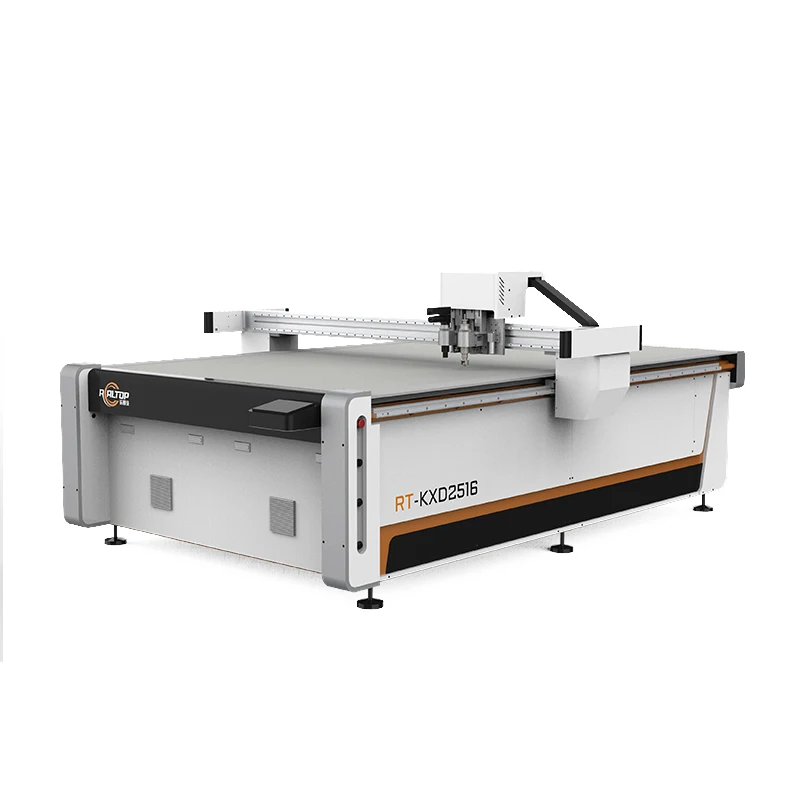
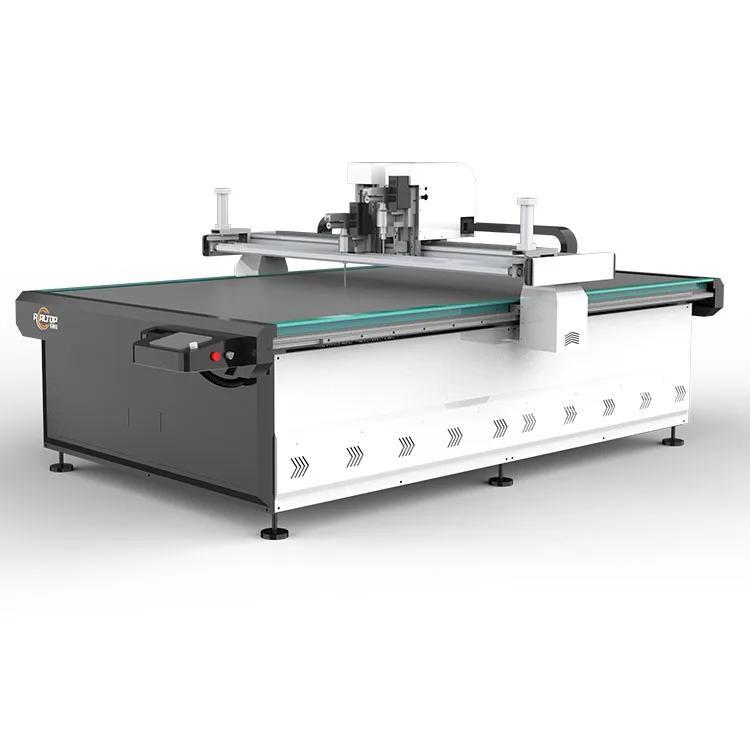
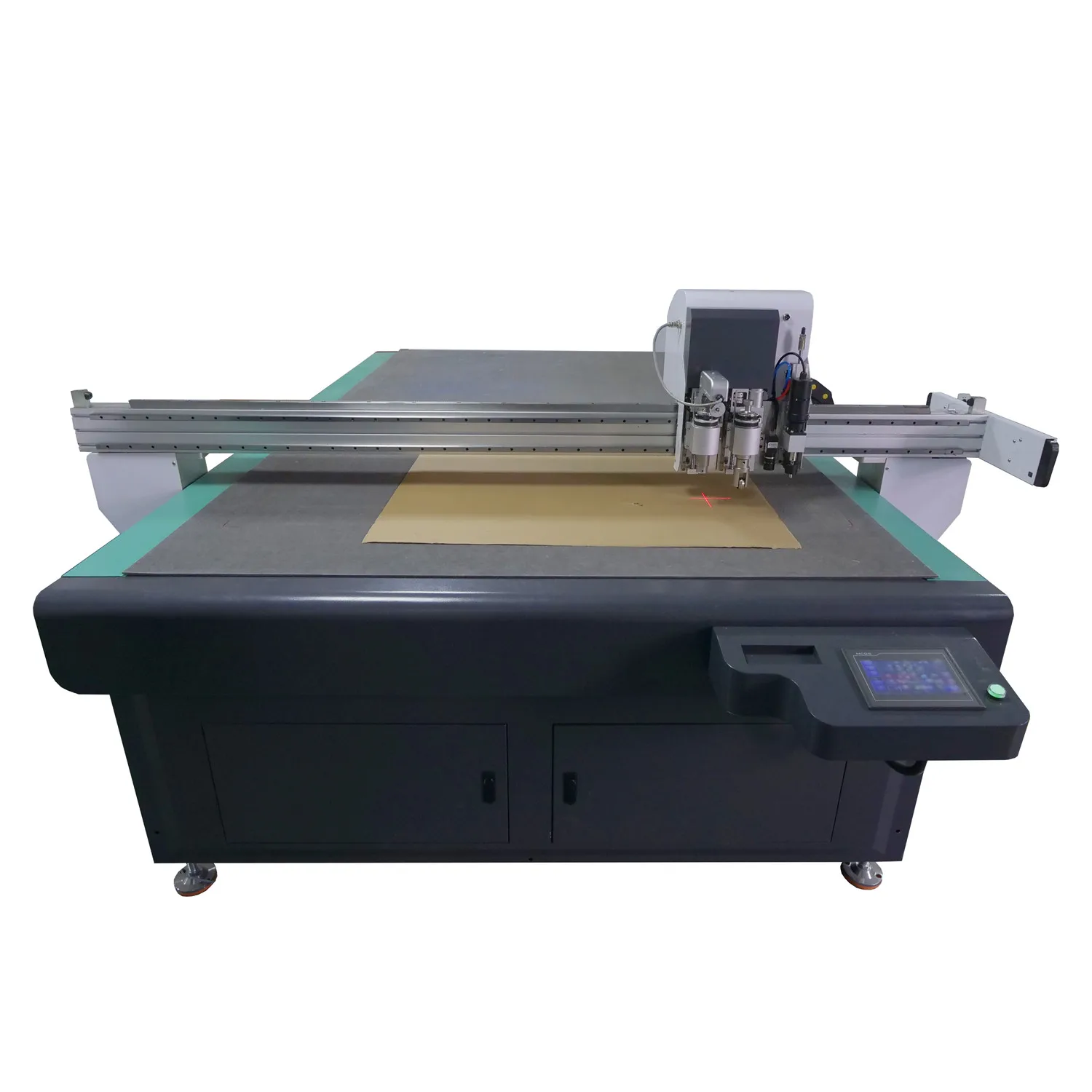
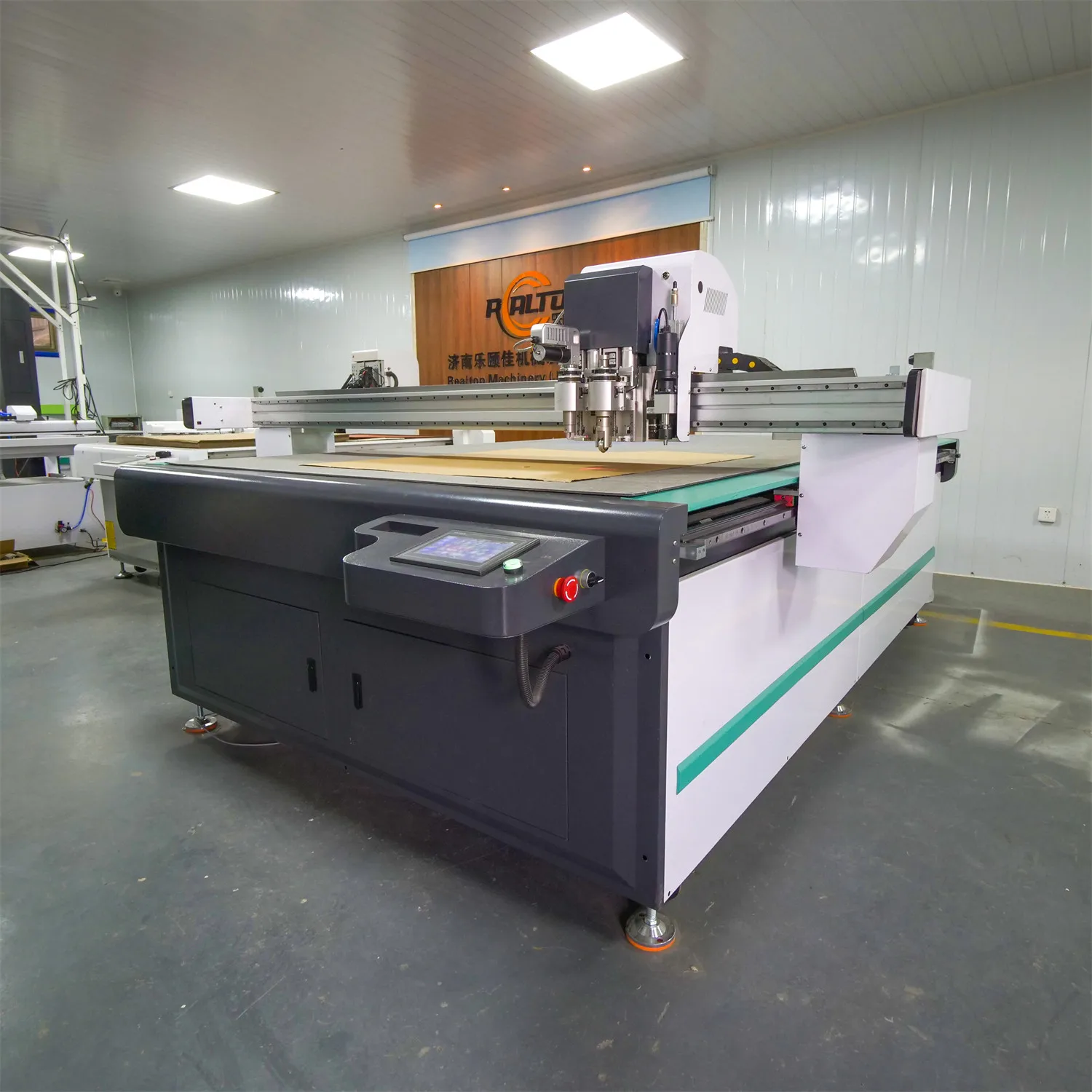
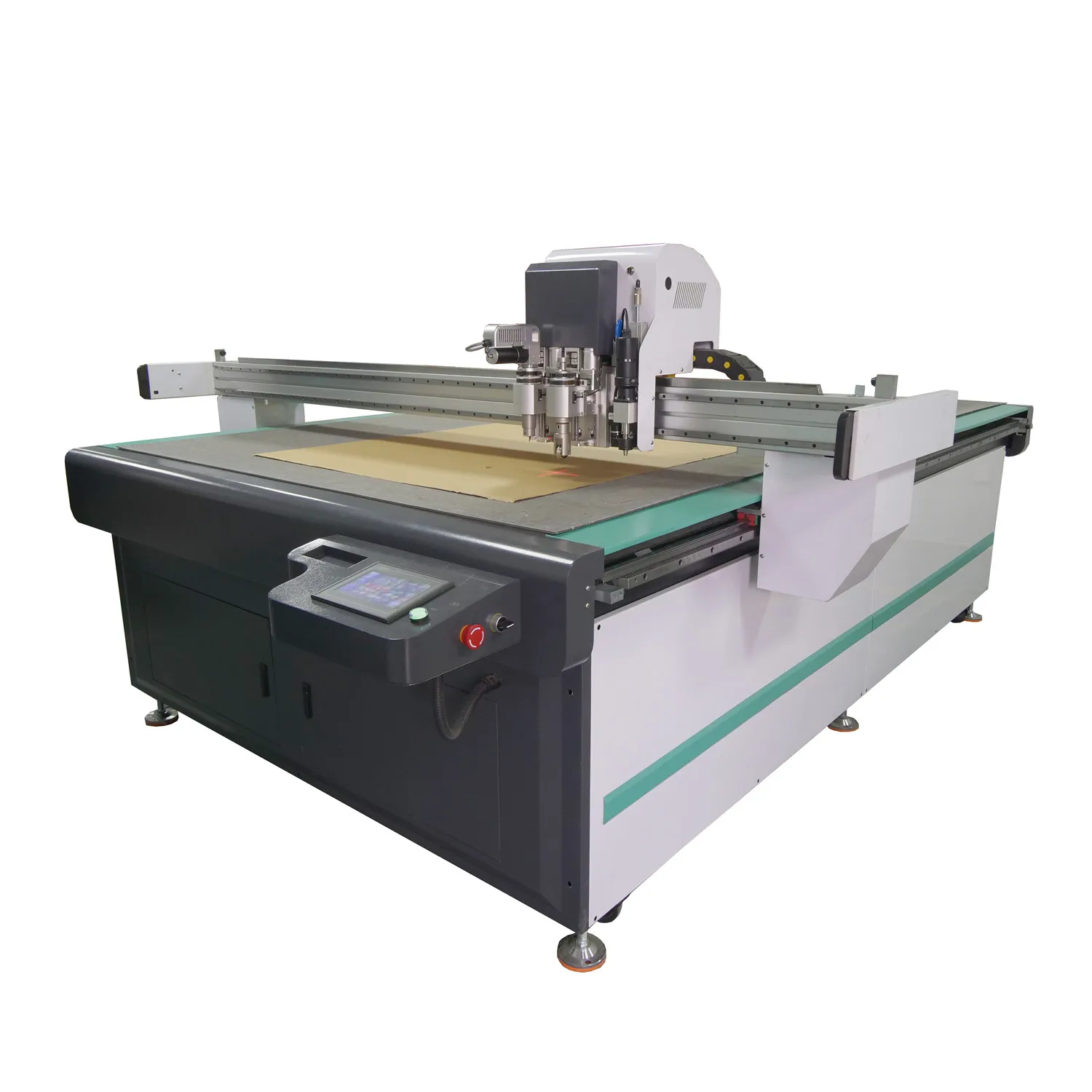
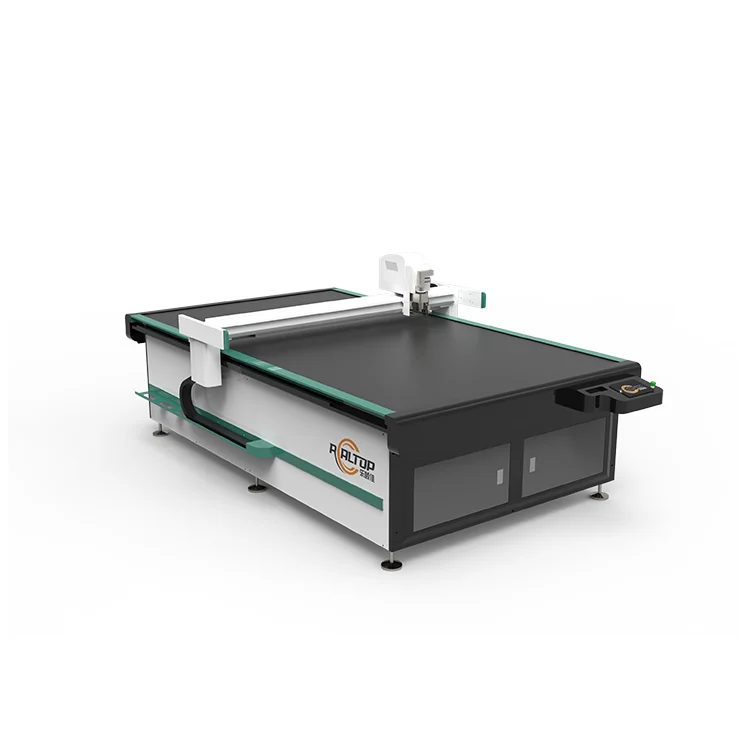
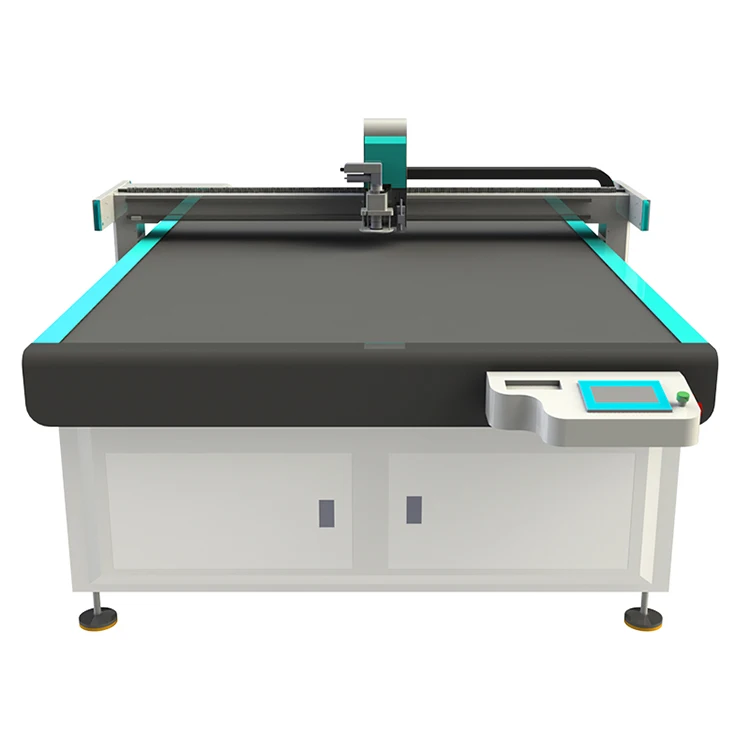
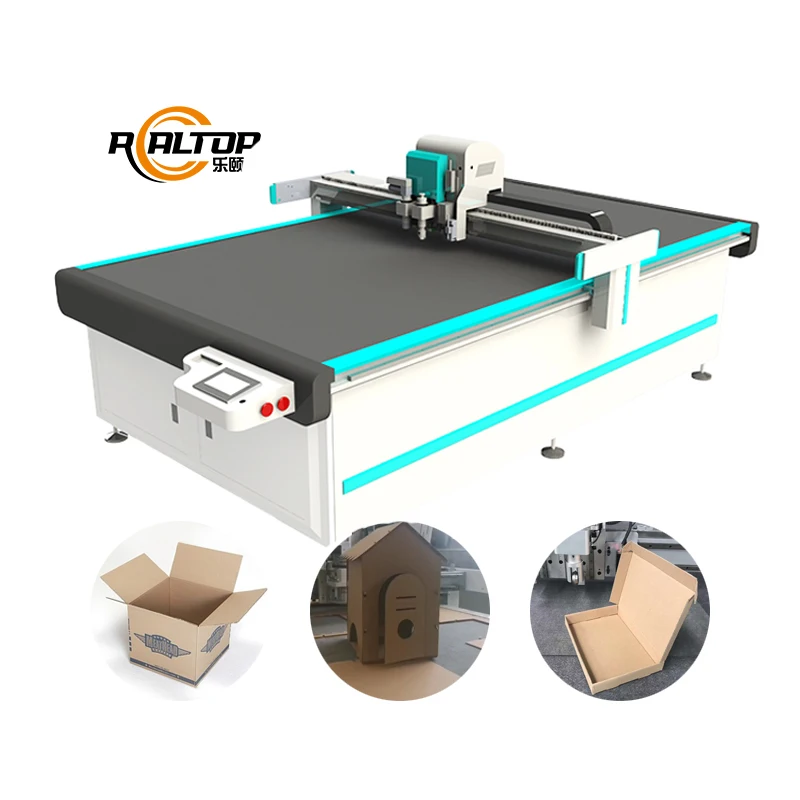
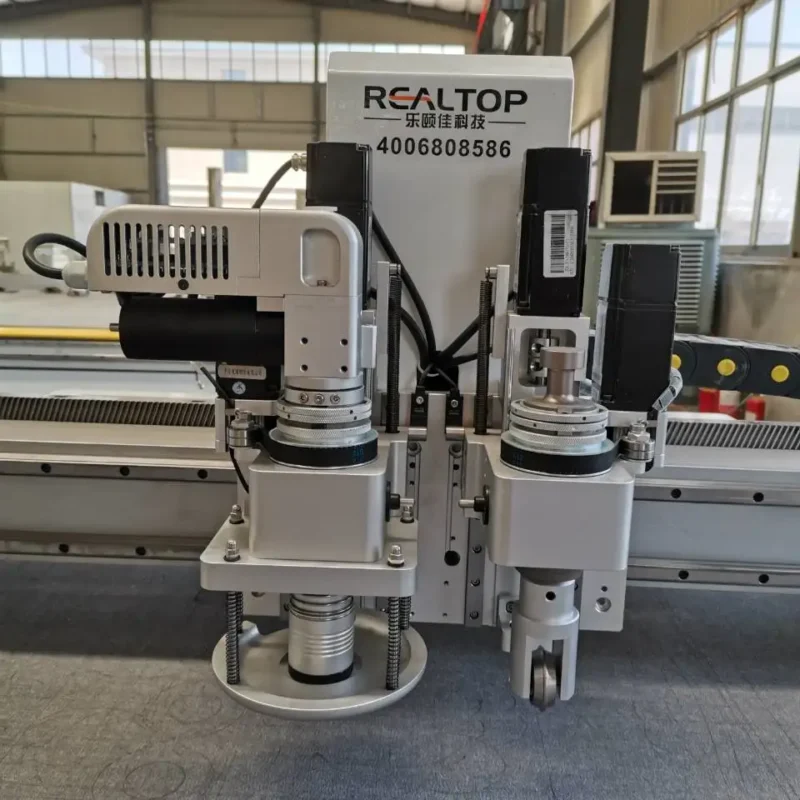
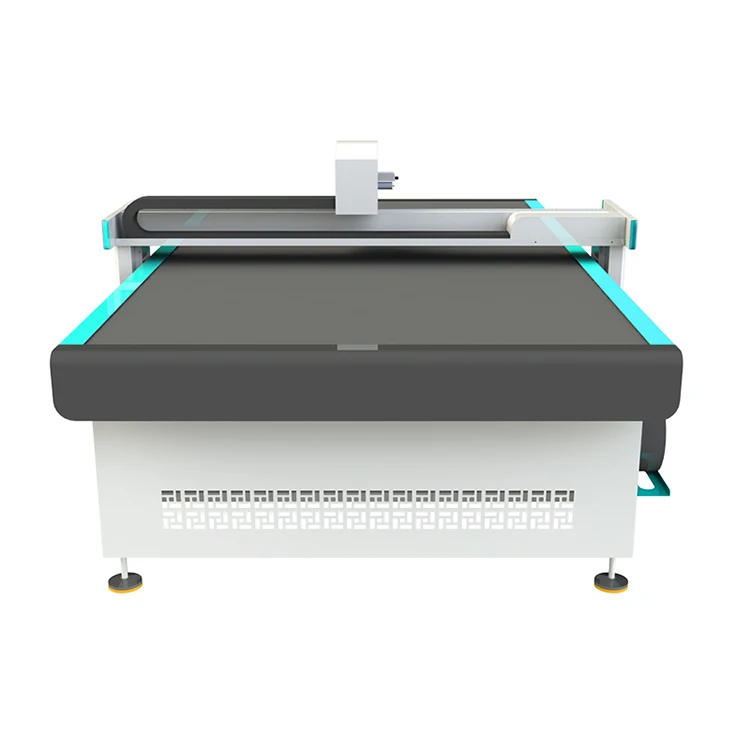
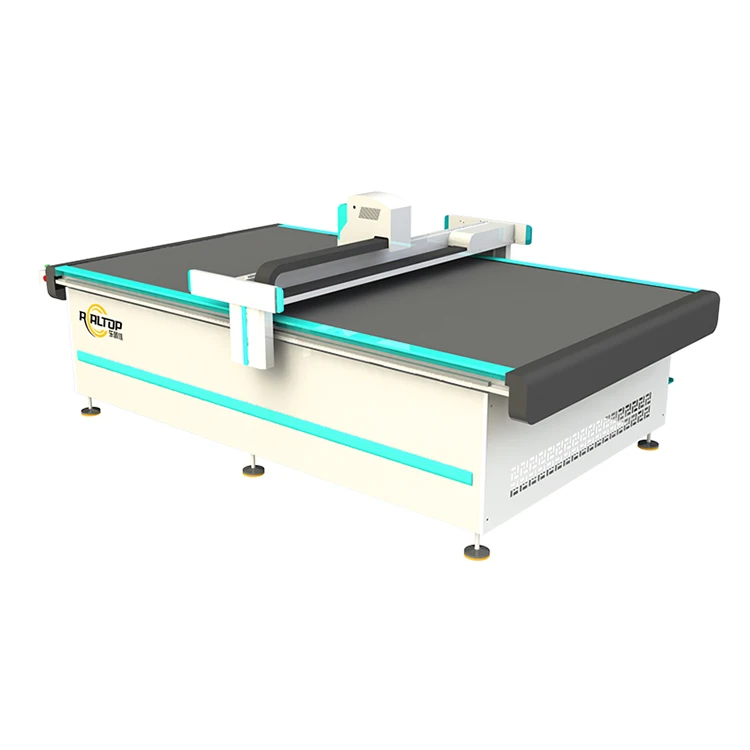
Swiss Knife Precision — The CLD2516 uses imported Swiss oscillating tooling to hold full-cut and creasing depth on corrugated board without crushing the flute structure.
Technical Specifications
| Parameter | Value |
|---|---|
| Model | CLD2516 |
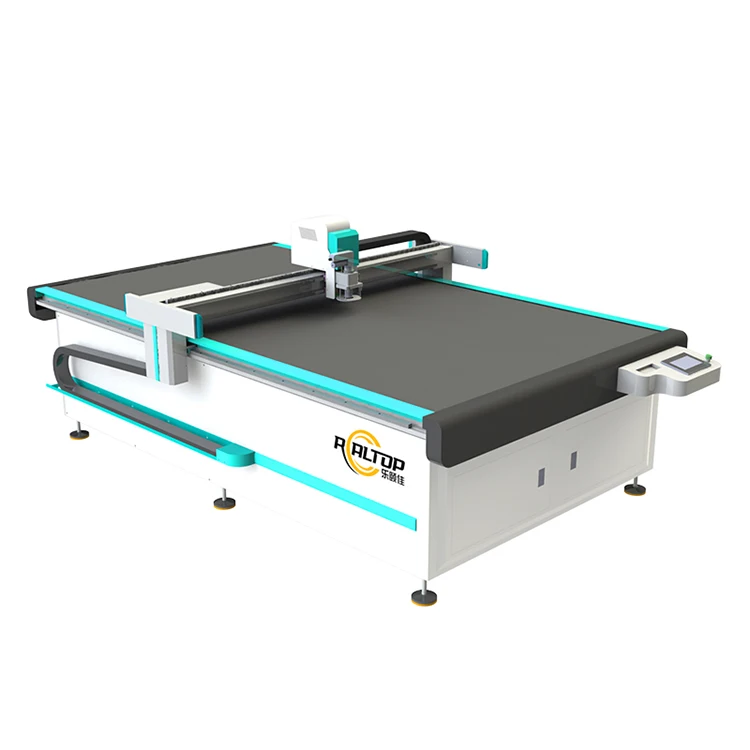
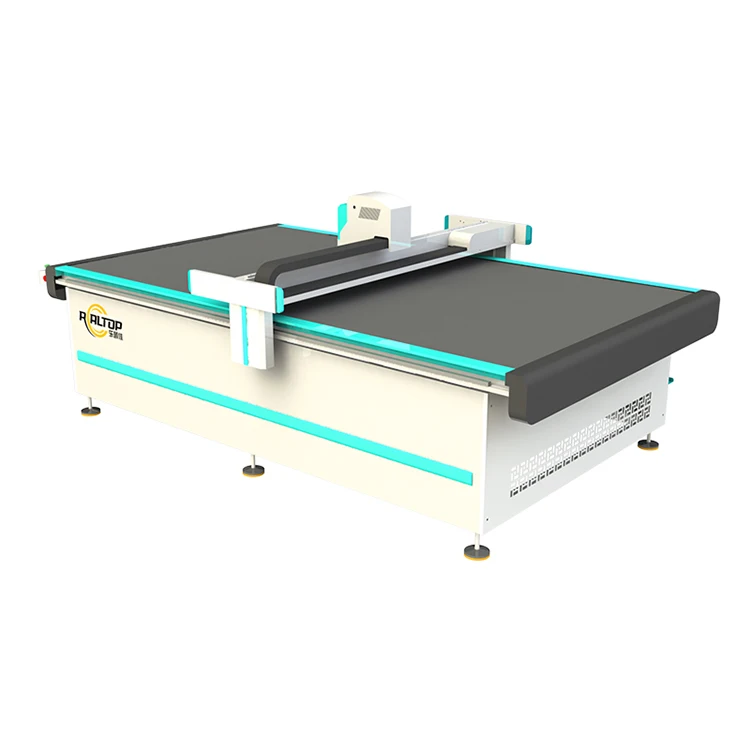
| Product Type | CNC Oscillating Knife Cutting Machine |
| Working Area | 1600mm × 2500mm |
| Machine Size | 3450mm × 2300mm × 1250mm |
| Rated Power | 6.6 kW |
| Voltage | 380V ±10% |
| Translational Velocity | 800–1200 mm/s |
| Cutting Thickness | 20–80 mm (basis not stated in source — confirm board format and material) |
| Repeatability | ≤0.1mm |
| Tool Head | Swiss imported oscillating knife with full-cut, half-cut and cursor location |
| Transmission System | Digital servo motor, linear guide, synchronous belt, ball screw (imported) |
| Servo Motor | Delta (Taiwan) |
| Linear Rail | Taiwan Hiwin |
| Vacuum Pump | 7.5 kW |
| Table Type | Aluminum alloy honeycomb flatbed with vacuum partition adsorption |
| Conveyor Belt | Germany imported |
| Safety Device | Infrared sensors, emergency stop |
| Software | Professional carton cutting design software (free, language customizable) |
| Supported File Formats | PLT, DXF |
| Instruction System | HP-GL compatible |
| Frame | Welded thick square seamless steel, high-temperature treated |
| Auto Feeding | Yes |
| Assembly State | Fully assembled |
| Standards | CE declared |
Application Suitability
| Application | Material or Output |
|---|---|
| Carton box sample making | Corrugated board, cardboard, kraft paper |
| Sticker and label contour cutting | Printed vinyl, adhesive-backed board |
| Signage and billboard production | KT board, foam PVC, honeycomb paper |
| Greeting card and business card finishing | Coated card stock, specialty paper |
| Flexible non-metal processing | Leather, fabric, sponge composite, PVC, soft glass, silicon, rubber |
| Footwear and leather goods sampling | Genuine and synthetic leather sheets |
| Automotive interior trim prototyping | Composite foam, soft-touch materials |
Why a "20–80mm Thickness Range" Means Nothing Without Context
Real cutting depth depends on the knife stroke, material density, and flute direction, not the spec sheet number.
A buyer sources a CNC oscillating knife cutting machine manufacturer expecting to slice through 80mm double-wall corrugated at production speed, only to find ragged top layers and crushed bottom flutes. The listed thickness range covers every material the head can theoretically penetrate — not what it handles cleanly in a single pass on your specific board grade [NEED_CITE:]. I have seen packaging plants in Latin America receive machines that cut beautifully on thin card but stall on their daily corrugated stock because the oscillation frequency and blade geometry were never matched to the material. The result is blade wear measured in days rather than weeks, and a production line sitting idle while replacement tooling ships across borders.
Mapping the Full Equipment Range by Material
The CLD2516 occupies the mid-format flatbed knife-cutting position in a broader CNC cutting equipment for sale range. Buyers evaluating carton and packaging work start here because the 1600 × 2500mm bed covers standard sheet sizes, and the oscillating head handles both full-cut outlines and half-cut crease lines without a tool change. For producers working exclusively with acrylic or wood, the catalogue extends into CO2 laser systems that seal edges on synthetics — a fundamentally different process that belongs on a different machine family.
Knife Versus Laser: Where Each Method Fits
The decision between knife and laser is rarely about speed alone. Oscillating knife cutting leaves a clean mechanical edge on corrugated and foam without the thermal discoloration or fume extraction requirements that accompany laser processing. Laser systems, meanwhile, handle intricate interior cutouts on thin materials and seal textile edges that would otherwise fray. A CNC oscillating knife cutting machine manufacturer that builds both platforms allows the buyer to match the cutting method to the material rather than forcing one method to cover every job in the shop [NEED_CITE:].
How Drive Components Define Edge Quality on Corrugated
The Delta servo drive paired with Taiwan Hiwin linear rails holds the oscillating knife within ≤0.1mm repeatability across the full 2500mm travel length. On corrugated board, this matters because even minor axis drift translates to misaligned crease lines that prevent carton folding. The imported ball screw and synchronous belt transmission eliminates the backlash common in rack-and-pinion setups at this price tier, keeping the Swiss oscillating knife perpendicular to the flute structure through directional changes. The 7.5 kW vacuum pump with partition zoning on the aluminum honeycomb table locks small sticker and label parts in place, preventing the material lift that ruins contour accuracy at high translational velocity.
The Hidden Cost of Skipping Material Testing
Specifying a flatbed cutting table on working area alone leaves too many variables unverified. A packaging plant running 3mm E-flute board daily may find the Swiss knife head holds an edge for weeks, while a shop cutting abrasive composite foam may burn through blades in ten days with no spares on hand. Without a sample cutting report on the buyer’s own material, the machine configuration — knife angle, oscillation frequency, vacuum zone layout — is a guess rather than a specification [NEED_CITE:]. Two weeks waiting for the correct replacement blades can idle an entire box-making line, and that downtime is never factored into the initial quotation.
Why Source the Complete Range From One Manufacturer
The CLD2516 is designed and built in the same facility that produces the CO2 and fiber laser cutting lines, so tool head and table configurations are specified against actual material test data rather than generic application charts. Voltage, plug type, and control interface language are confirmed against the destination market before the frame enters assembly — 380V ±10% is standard, but the electrical schematic is adjusted for local frequency and connector requirements. The carton cutting design software ships with the buyer’s language loaded and PLT/DXF/HP-GL compatibility verified against existing design workflows. Every unit leaves the factory with a test record run on material samples that match the buyer’s production stock, and the wear-parts kit includes enough oscillating blades and belts to cover the first months of operation without emergency air freight.
Documentation & Verification
- Machine specification sheet confirming tool head and table configuration matched to your material grade
- Electrical schematic with voltage and frequency notation for your destination market before dispatch
- Sample cutting report on your corrugated or cardboard stock showing edge quality and crease depth
- Software licence key with PLT, DXF and HP-GL file format compatibility confirmation note
- Spare parts list covering oscillating blades, conveyor belt segments and vacuum seals
- CE declaration documentation with full machinery directive compliance notation
Installation, Commissioning & Support
- 3450 × 2300mm footprint requires level concrete floor with clearance for conveyor feed and operator access
- 380V ±10% supply with dedicated circuit rated for combined 6.6 kW machine and 7.5 kW vacuum pump draw
- Fully assembled delivery with on-site positioning, leveling and vacuum partition zone calibration
- First-run parameter setup including servo tuning, knife oscillation frequency and vacuum adsorption test
- Operator training covering blade change procedure, file import workflow and crease-line depth adjustment
- Laminated blade-change guide and wear-parts kit supplied in operator’s language at delivery
What We Need to Match the Right Machine to Your Line
To recommend the correct tool head, vacuum table layout and conveyor configuration, share the material type, thickness range and sheet dimensions you run most frequently. Confirm the local voltage, frequency and plug standard at your facility, along with the preferred control interface language. If you are replacing an existing cutter or adding capacity to a line, tell us what upstream design software and downstream finishing equipment the new unit must connect with.
Frequently Asked Questions
Q: Should I choose knife cutting or laser cutting for corrugated packaging samples?
A: Knife cutting handles corrugated board without thermal damage, preserving flute structure and producing a clean mechanical edge. Laser cutting suits thin non-metal materials where edge sealing is beneficial. The full range covers both methods, and the correct choice depends on your primary material and edge-quality requirement rather than throughput assumptions.
Q: How do I compare working area and cutting depth across the catalogue?
A: Working area defines the maximum sheet the bed accepts, while cutting depth varies by material density and knife configuration. Always review both values together and request a sample cutting report on your actual stock before committing to a specific model in the range.
Q: What tool head options are available and how are they assigned?
A: The catalogue includes oscillating knife, drag knife, creasing wheel, milling and pen tool heads. Each is matched to the material type and the cut or mark required — oscillating knife for thick corrugated and foam, drag knife for thin vinyl, creasing wheel for fold lines on card stock.
Q: Which machine family handles high-volume carton production?
A: Single-head flatbed systems like the CLD2516 serve sample making and medium-volume packaging shops. Multi-head and conveyor-fed configurations address higher daily volumes with continuous material feed. The correct selection depends on your sheet throughput and whether your workflow supports roll or sheet loading.
Q: What electrical and software details are confirmed before shipment?
A: Voltage, plug type, control language and file format compatibility are all verified before the machine enters final assembly. The software licence, supported formats and instruction system documentation ship with the unit so your design files import correctly on day one.
Swiss Knife Precision — The CLD2516 uses imported Swiss oscillating tooling to hold full-cut and creasing depth on corrugated board without crushing the flute structure.
Technical Specifications
| Parameter | Value |
|---|---|
| Model | CLD2516 |
| Product Type | CNC Oscillating Knife Cutting Machine |
| Working Area | 1600mm × 2500mm |
| Machine Size | 3450mm × 2300mm × 1250mm |
| Rated Power | 6.6 kW |
| Voltage | 380V ±10% |
| Translational Velocity | 800–1200 mm/s |
| Cutting Thickness | 20–80 mm (basis not stated in source — confirm board format and material) |
| Repeatability | ≤0.1mm |
| Tool Head | Swiss imported oscillating knife with full-cut, half-cut and cursor location |
| Transmission System | Digital servo motor, linear guide, synchronous belt, ball screw (imported) |
| Servo Motor | Delta (Taiwan) |
| Linear Rail | Taiwan Hiwin |
| Vacuum Pump | 7.5 kW |
| Table Type | Aluminum alloy honeycomb flatbed with vacuum partition adsorption |
| Conveyor Belt | Germany imported |
| Safety Device | Infrared sensors, emergency stop |
| Software | Professional carton cutting design software (free, language customizable) |
| Supported File Formats | PLT, DXF |
| Instruction System | HP-GL compatible |
| Frame | Welded thick square seamless steel, high-temperature treated |
| Auto Feeding | Yes |
| Assembly State | Fully assembled |
| Standards | CE declared |
Application Suitability
| Application | Material or Output |
|---|---|
| Carton box sample making | Corrugated board, cardboard, kraft paper |
| Sticker and label contour cutting | Printed vinyl, adhesive-backed board |
| Signage and billboard production | KT board, foam PVC, honeycomb paper |
| Greeting card and business card finishing | Coated card stock, specialty paper |
| Flexible non-metal processing | Leather, fabric, sponge composite, PVC, soft glass, silicon, rubber |
| Footwear and leather goods sampling | Genuine and synthetic leather sheets |
| Automotive interior trim prototyping | Composite foam, soft-touch materials |
Why a "20–80mm Thickness Range" Means Nothing Without Context
Real cutting depth depends on the knife stroke, material density, and flute direction, not the spec sheet number.
A buyer sources a CNC oscillating knife cutting machine manufacturer expecting to slice through 80mm double-wall corrugated at production speed, only to find ragged top layers and crushed bottom flutes. The listed thickness range covers every material the head can theoretically penetrate — not what it handles cleanly in a single pass on your specific board grade [NEED_CITE:]. I have seen packaging plants in Latin America receive machines that cut beautifully on thin card but stall on their daily corrugated stock because the oscillation frequency and blade geometry were never matched to the material. The result is blade wear measured in days rather than weeks, and a production line sitting idle while replacement tooling ships across borders.
Mapping the Full Equipment Range by Material
The CLD2516 occupies the mid-format flatbed knife-cutting position in a broader CNC cutting equipment for sale range. Buyers evaluating carton and packaging work start here because the 1600 × 2500mm bed covers standard sheet sizes, and the oscillating head handles both full-cut outlines and half-cut crease lines without a tool change. For producers working exclusively with acrylic or wood, the catalogue extends into CO2 laser systems that seal edges on synthetics — a fundamentally different process that belongs on a different machine family.
Knife Versus Laser: Where Each Method Fits
The decision between knife and laser is rarely about speed alone. Oscillating knife cutting leaves a clean mechanical edge on corrugated and foam without the thermal discoloration or fume extraction requirements that accompany laser processing. Laser systems, meanwhile, handle intricate interior cutouts on thin materials and seal textile edges that would otherwise fray. A CNC oscillating knife cutting machine manufacturer that builds both platforms allows the buyer to match the cutting method to the material rather than forcing one method to cover every job in the shop [NEED_CITE:].
How Drive Components Define Edge Quality on Corrugated
The Delta servo drive paired with Taiwan Hiwin linear rails holds the oscillating knife within ≤0.1mm repeatability across the full 2500mm travel length. On corrugated board, this matters because even minor axis drift translates to misaligned crease lines that prevent carton folding. The imported ball screw and synchronous belt transmission eliminates the backlash common in rack-and-pinion setups at this price tier, keeping the Swiss oscillating knife perpendicular to the flute structure through directional changes. The 7.5 kW vacuum pump with partition zoning on the aluminum honeycomb table locks small sticker and label parts in place, preventing the material lift that ruins contour accuracy at high translational velocity.
The Hidden Cost of Skipping Material Testing
Specifying a flatbed cutting table on working area alone leaves too many variables unverified. A packaging plant running 3mm E-flute board daily may find the Swiss knife head holds an edge for weeks, while a shop cutting abrasive composite foam may burn through blades in ten days with no spares on hand. Without a sample cutting report on the buyer’s own material, the machine configuration — knife angle, oscillation frequency, vacuum zone layout — is a guess rather than a specification [NEED_CITE:]. Two weeks waiting for the correct replacement blades can idle an entire box-making line, and that downtime is never factored into the initial quotation.
Why Source the Complete Range From One Manufacturer
The CLD2516 is designed and built in the same facility that produces the CO2 and fiber laser cutting lines, so tool head and table configurations are specified against actual material test data rather than generic application charts. Voltage, plug type, and control interface language are confirmed against the destination market before the frame enters assembly — 380V ±10% is standard, but the electrical schematic is adjusted for local frequency and connector requirements. The carton cutting design software ships with the buyer’s language loaded and PLT/DXF/HP-GL compatibility verified against existing design workflows. Every unit leaves the factory with a test record run on material samples that match the buyer’s production stock, and the wear-parts kit includes enough oscillating blades and belts to cover the first months of operation without emergency air freight.
Documentation & Verification
- Machine specification sheet confirming tool head and table configuration matched to your material grade
- Electrical schematic with voltage and frequency notation for your destination market before dispatch
- Sample cutting report on your corrugated or cardboard stock showing edge quality and crease depth
- Software licence key with PLT, DXF and HP-GL file format compatibility confirmation note
- Spare parts list covering oscillating blades, conveyor belt segments and vacuum seals
- CE declaration documentation with full machinery directive compliance notation
Installation, Commissioning & Support
- 3450 × 2300mm footprint requires level concrete floor with clearance for conveyor feed and operator access
- 380V ±10% supply with dedicated circuit rated for combined 6.6 kW machine and 7.5 kW vacuum pump draw
- Fully assembled delivery with on-site positioning, leveling and vacuum partition zone calibration
- First-run parameter setup including servo tuning, knife oscillation frequency and vacuum adsorption test
- Operator training covering blade change procedure, file import workflow and crease-line depth adjustment
- Laminated blade-change guide and wear-parts kit supplied in operator’s language at delivery
What We Need to Match the Right Machine to Your Line
To recommend the correct tool head, vacuum table layout and conveyor configuration, share the material type, thickness range and sheet dimensions you run most frequently. Confirm the local voltage, frequency and plug standard at your facility, along with the preferred control interface language. If you are replacing an existing cutter or adding capacity to a line, tell us what upstream design software and downstream finishing equipment the new unit must connect with.
Frequently Asked Questions
Q: Should I choose knife cutting or laser cutting for corrugated packaging samples?
A: Knife cutting handles corrugated board without thermal damage, preserving flute structure and producing a clean mechanical edge. Laser cutting suits thin non-metal materials where edge sealing is beneficial. The full range covers both methods, and the correct choice depends on your primary material and edge-quality requirement rather than throughput assumptions.
Q: How do I compare working area and cutting depth across the catalogue?
A: Working area defines the maximum sheet the bed accepts, while cutting depth varies by material density and knife configuration. Always review both values together and request a sample cutting report on your actual stock before committing to a specific model in the range.
Q: What tool head options are available and how are they assigned?
A: The catalogue includes oscillating knife, drag knife, creasing wheel, milling and pen tool heads. Each is matched to the material type and the cut or mark required — oscillating knife for thick corrugated and foam, drag knife for thin vinyl, creasing wheel for fold lines on card stock.
Q: Which machine family handles high-volume carton production?
A: Single-head flatbed systems like the CLD2516 serve sample making and medium-volume packaging shops. Multi-head and conveyor-fed configurations address higher daily volumes with continuous material feed. The correct selection depends on your sheet throughput and whether your workflow supports roll or sheet loading.
Q: What electrical and software details are confirmed before shipment?
A: Voltage, plug type, control language and file format compatibility are all verified before the machine enters final assembly. The software licence, supported formats and instruction system documentation ship with the unit so your design files import correctly on day one.
商品评价
There are no reviews yet.