



Fast Delivery
Quick, reliable shipping to any location.

Free & easy returns
Return this item by mail or in store within 90 days for a full refund.
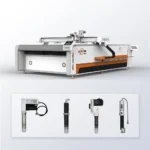
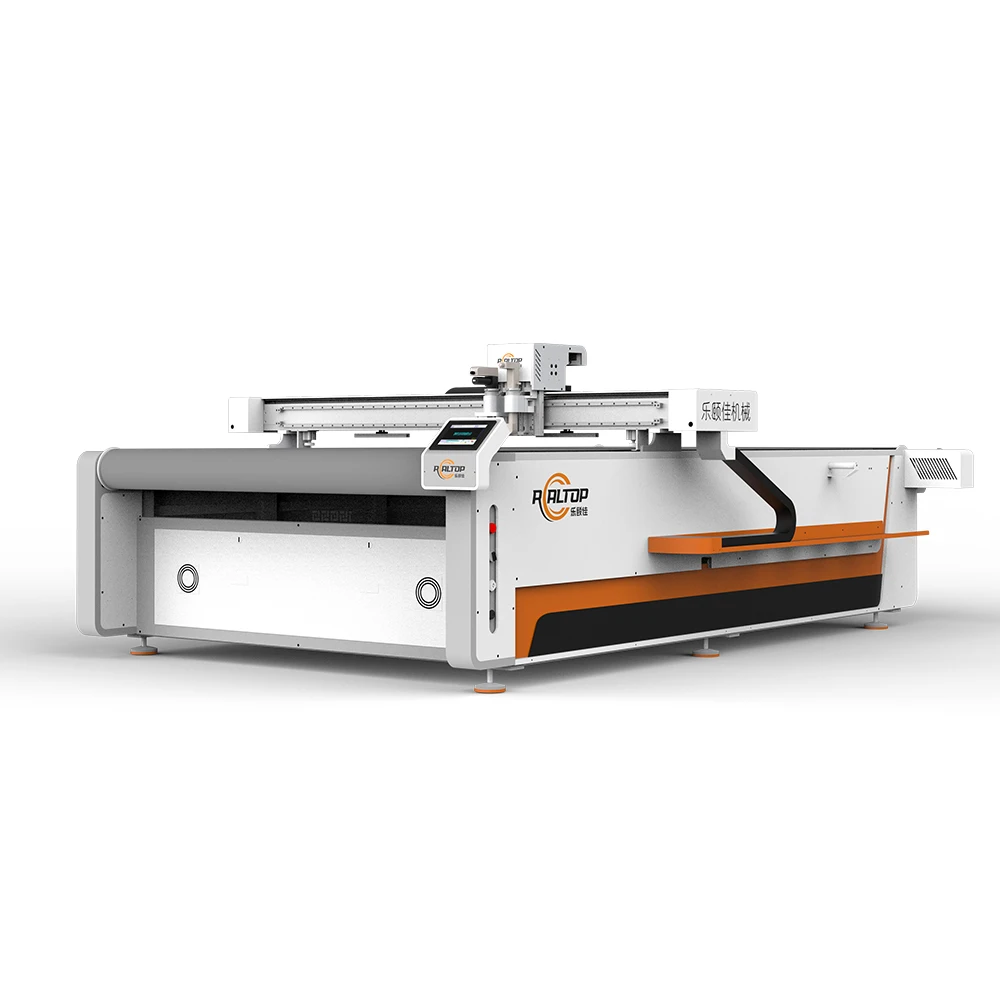
Seven Tool Heads, One Platform — matching the cutting method to the material instead of forcing a single technology across every job.
Technical Specifications
| Parameter | Value |
|---|---|
| Product Type | CNC Oscillating Knife Cutting Machine |
| Model | 1625 |
| Working Area | 1600×2500 mm |
| Cutting Speed | 0–2000 mm/s |
| Cutting Thickness | ≤30 mm (basis to be confirmed by material type and layer count) |
| Cutting Accuracy | ±0.1 mm (repeatability) |
| Tool Heads Available | Oscillating knife, Driven rotary knife, Creasing wheel, Kiss cutting tool, Pneumatic knife, Milling tool, V-groove knife |
| Vacuum Pump Power | 9 kW |
| Vacuum Table | Aluminum bellows vacuum table |
| Voltage Options | 110V / 220V / 380V (frequency to be confirmed for target market) |
| Control System | PLC control panel |
| Software File Formats | PLT, DXF, AI, PDF |
| Display Language Options | English, Russian, Italian, Chinese (custom languages available) |
| Safety Devices | Infrared sensor, Emergency stop |
| Machine Dimensions (L×W×H) | 3300×2100×1350 mm |
| Servo Motor Options | Panasonic, Delta, Dorna (verify against current catalog) |
| Assembly State | Fully assembled |
| Certification | CE (documentation to be confirmed) |
Application Suitability
| Application | Material or Output |
|---|---|
| Apparel manufacturing | Suits, knitwear, lace, complex woven and knitted fabrics |
| Automotive interiors | Seat fabrics, carpets, PVC mats, headliner materials |
| Home textiles | Sofa fabrics, curtains, rugs, upholstery layers |
| Composite processing | Carbon fiber prepreg, aramid, specialty laminates |
| Flexible material conversion | Leather, foam, EVA, PTFE, rubber, cardboard, PVC |
Why Material Thickness Alone Is Not Enough to Specify a CNC Oscillating Knife Cutting Machine
The cutting depth number on the spec sheet means nothing without the material name next to it.
I learned this on the shop floor. A buyer sends a fabric sample, we confirm the thickness, and the machine ships. Weeks later, the call comes: the blade chews through single-layer cotton fine, but multi-layer neoprene stalls the head mid-pass. The thickness was within range, yet the actual cutting behavior was completely different. That is because density, fiber structure, and layer count all change how the knife engages. Without a sample test on the exact material stack, the rated thickness is a starting point, not a guarantee [NEED_CITE: material density effects on oscillating knife cutting performance].
Matching Tool Heads to the Material on the Bench
The 1625 offers seven distinct tool heads, each engineered for a different material response. An oscillating knife slices through layered fabric and foam with a high-frequency vertical stroke, leaving clean edges without fraying. A driven rotary knife handles thicker woven textiles and technical fabrics where continuous shearing action produces a smoother cut line. The pneumatic knife tackles dense composites and rubber where downward force must exceed what a standard oscillating head delivers. Selecting the correct head at the order stage prevents edge quality issues that no amount of speed adjustment can fix later.
Vacuum Zoning and Small-Part Stability
The aluminum bellows vacuum table paired with a 9 kW pump creates consistent suction across the full 1600×2500 mm surface. But flat holding power is only half the story. When cutting nested gaskets or small pattern pieces from leather, un-zoned vacuum tables lose grip at the edges where air bleeds in. A properly zoned table concentrates suction only under the active cutting area, preventing parts from lifting as the knife completes its final pass [NEED_CITE: vacuum table zoning requirements for small-part digital cutting].
Reading the Specs That Actually Matter on the Floor
Cutting speed is listed at 0–2000 mm/s, a wide range that reflects the difference between tracing a long straight line and negotiating tight corners on a lace pattern. The practical throughput depends on contour complexity, not just the maximum travel rate. Repeatability at ±0.1 mm matters most when cutting multi-layer stacks for apparel, where a cumulative drift across fifty plies pushes the bottom layer out of tolerance. The PLC control panel with multi-language display reduces setup errors when operators switch between jobs. Software compatibility with PLT, DXF, AI, and PDF files means most nesting layouts import without conversion, though this should be verified with the buyer’s actual workflow files before the order is finalized.
What Happens When the Wrong Tool Head Ships
A drag knife on foam crushes the cell structure instead of cutting it, leaving compressed edges that ruin the seal when the gasket is installed. An oscillating knife set to the wrong stroke frequency on thin vinyl produces chatter marks visible in the finished product. These are not adjustment problems; they are specification errors caught only after the machine arrives and the first sheet is ruined [NEED_CITE: tool head selection errors in digital flatbed cutting].
Why Buyers Source This Equipment from Our Line
Our in-house design team covers both knife and laser cutting technology, so a buyer evaluating fabric versus acrylic can receive a recommendation based on the material, not on which machine happens to be in stock. Every CNC oscillating knife cutting machine we ship is configured with the tool head and table zoning matched to the buyer’s stated material and production volume. Voltage, plug type, and control language are confirmed in writing before production begins, not assumed from the shipping address. Sample cutting on the buyer’s own material is completed before commitment, with a written report documenting edge quality and achievable speed. CE documentation and electrical schematics ship with the machine.
Documentation & Verification
- Machine specification sheet confirming tool head and vacuum table zoning matched to your material
- Electrical schematic with voltage, frequency, and plug type confirmed for your market
- Sample cutting report on your own fabric or composite before order commitment
- Software license and file format compatibility note for your nesting workflow
- Operation and maintenance manual with spare parts list
Installation, Commissioning & Support
- Fully assembled delivery; the 3300×2100×1350 mm frame requires a level concrete floor with adequate overhead clearance
- Dedicated power circuit matching your confirmed voltage option (110V, 220V, or 380V) with correct frequency
- 9 kW vacuum pump requires separate circuit sizing to avoid voltage drop during pump startup
- PLC control panel language set to operator preference before dispatch
- Initial parameter calibration on your material during commissioning visit
- Wear parts list and recommended replacement intervals for oscillating knife blades and vacuum seals
What to Include in Your Inquiry
Send the material type, thickness, and maximum sheet size you plan to cut, along with your daily volume target. Specify your local voltage and frequency standard, the preferred control panel language, and the software your design team currently uses for nesting. If your production involves printed materials requiring contour recognition, note that as well so the correct positioning system is included in the quotation.
Frequently Asked Questions
Q: How do I decide between oscillating knife, drag knife, and laser for my material?
A: Oscillating knife suits layered fabric, foam, and composites where cold cutting preserves edge integrity. Drag knife works for thin vinyl and single-layer materials. Laser seals synthetic edges but generates fumes on organics. The correct choice depends on your material composition and acceptable edge finish, not on a single specification number.
Q: What working area and tool head do I need for my production volume?
A: The 1600×2500 mm table handles most roll-good and sheet-stock formats. Tool head selection depends on material density and thickness. Share your material samples and daily output target so the configuration can be matched before quotation.
Q: How can I verify cutting quality before committing to the order?
A: We run a sample cut on your exact material, documenting edge quality, cutting speed, and any tool head adjustments required. The sample cutting report is provided before you finalize the purchase decision.
Q: Which voltage and language options are available for my market?
A: The system supports 110V, 220V, and 380V configurations. Control panel languages include English, Russian, Italian, and Chinese, with custom options available. Voltage, frequency, and plug type are confirmed before production.
Q: Is my existing nesting software compatible with this machine?
A: The control system accepts PLT, DXF, AI, and PDF files. Compatibility with your specific nesting workflow is tested and confirmed with a written note before shipment to avoid integration delays on arrival.










商品评价
There are no reviews yet.