

Fast Delivery
Quick, reliable shipping to any location.

Free & easy returns
Return this item by mail or in store within 90 days for a full refund.
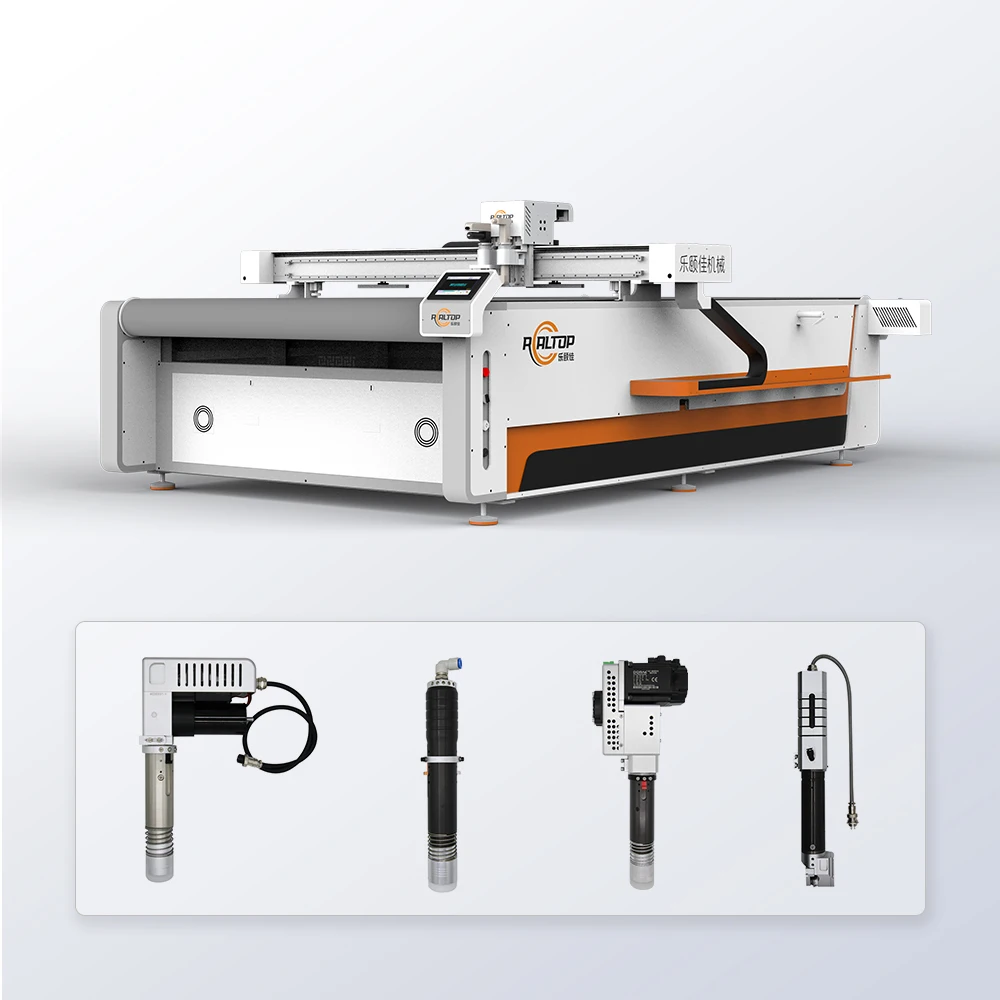
Tool Head Flexibility — Interchangeable cutting heads let you assign the correct knife, wheel or bit to each fabric or composite, rather than forcing one tool across every material.
Technical Specifications
| Parameter | Value |
|---|---|
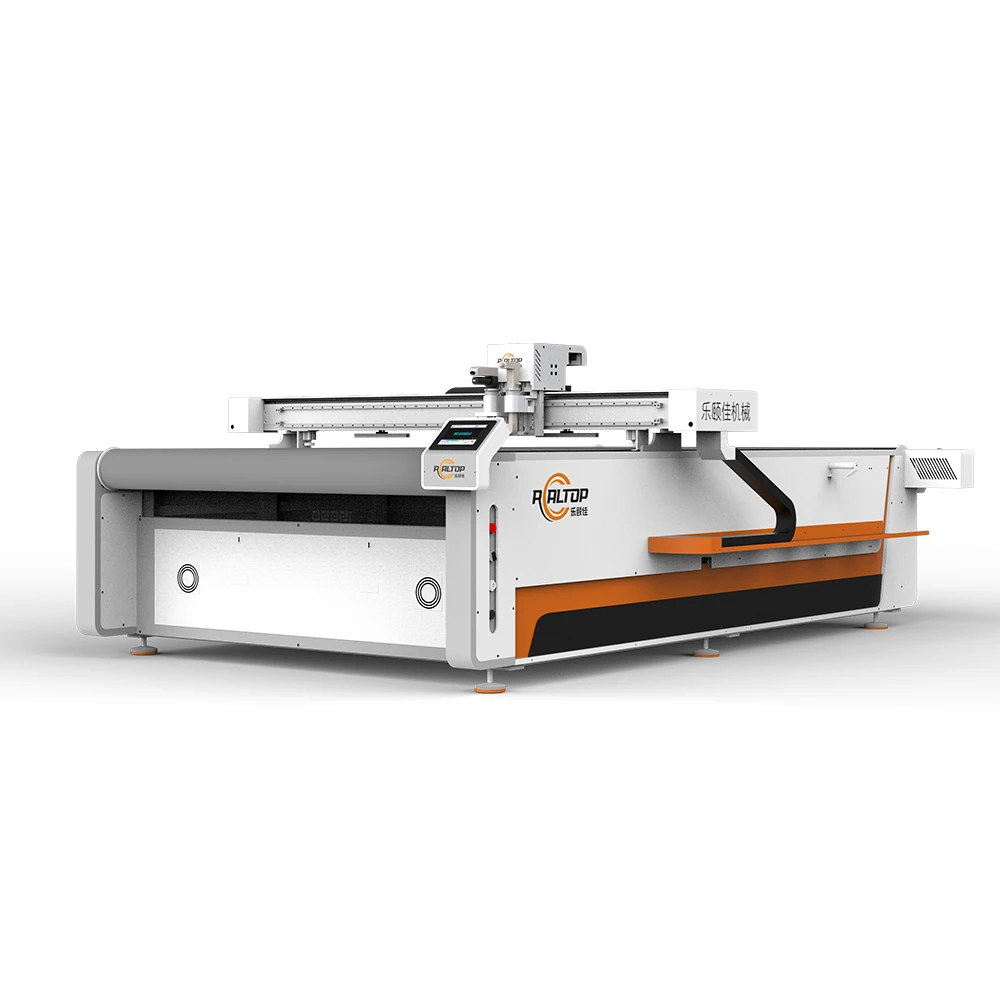
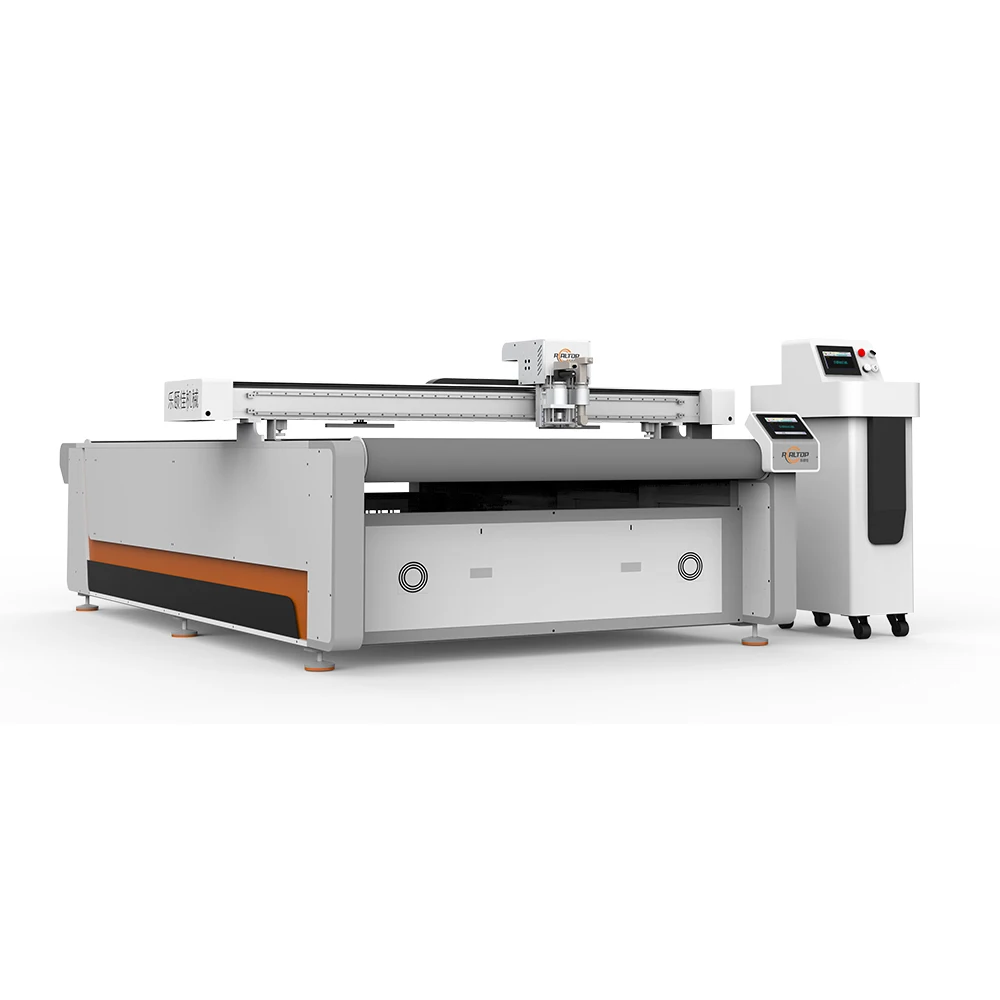
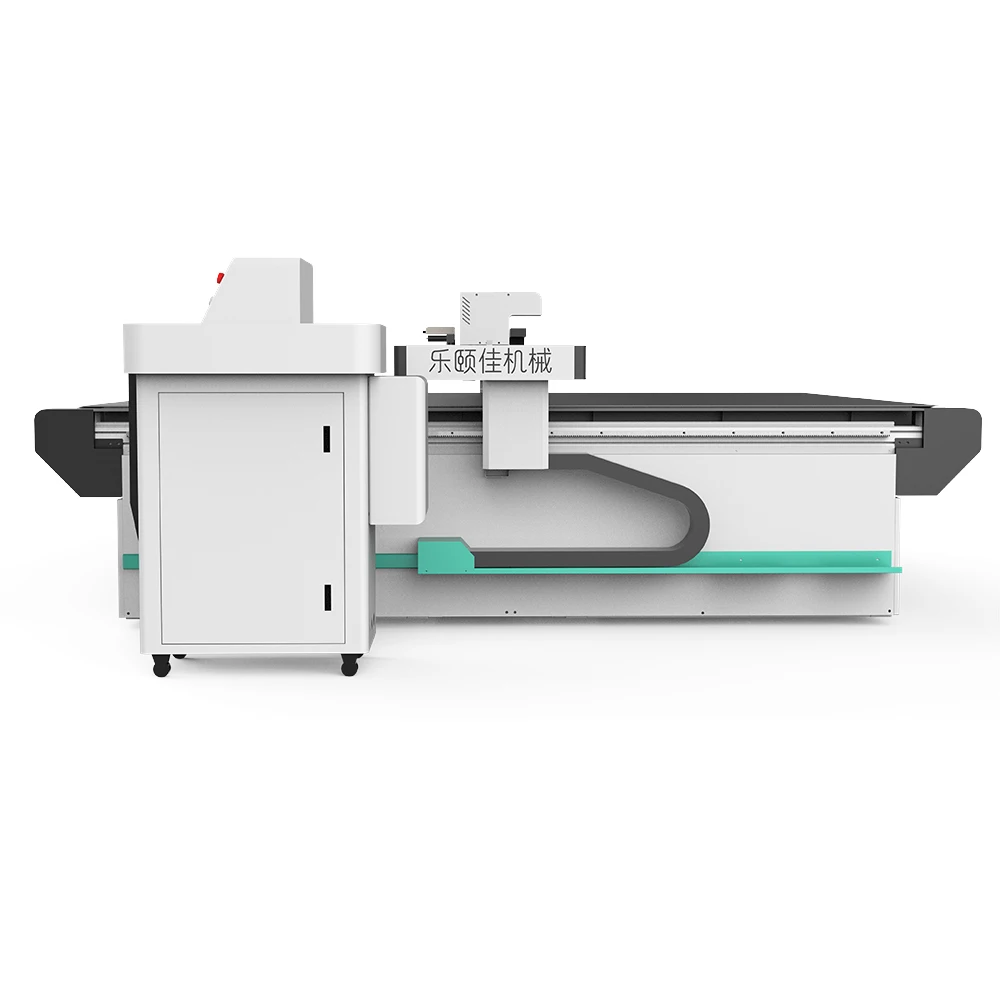
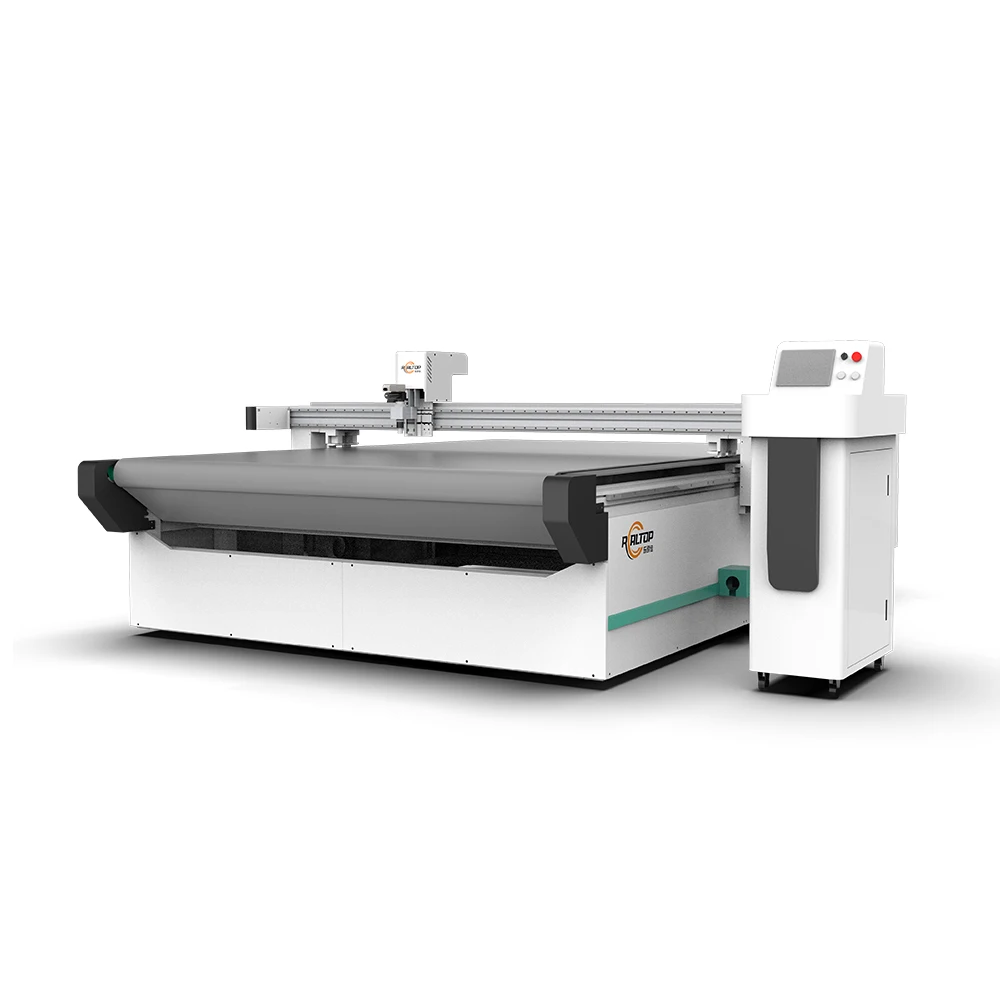
| Product Type | CNC Oscillating Knife Cutting Machine |
| Working Area | 1600 × 2500 mm |
| Tool Head Options | Oscillating knife, driven rotary knife, creasing wheel, kiss cutting tool, pneumatic knife, milling tool, V groove knife |
| Cutting Speed | 0 – 2000 mm/s |
| Cutting Thickness | Up to 30 mm |
| Positioning Accuracy | ±0.1 mm |
| Vacuum Pump | 9 kW |
| Vacuum Table | Aluminum bellows vacuum table |
| Voltage Options | 110V / 220V / 380V (basis not stated in source — confirm frequency and phase) |
| Servo Motor Options | Panasonic, Delta, Dorna (source value — verify against manufacturer catalog) |
| Control System | PLC control panel with optional display languages |
| Language Options | English, Russian, Italian, Chinese, customizable |
| Profile Formats | PLT, DXF, AI, PDF |
| Safety Devices | Infrared sensor device and emergency stop device |
| Machine Size | 3300 × 2100 × 1350 mm |
| Compliance | CE |
Application Suitability
| Application | Material or Output |
|---|---|
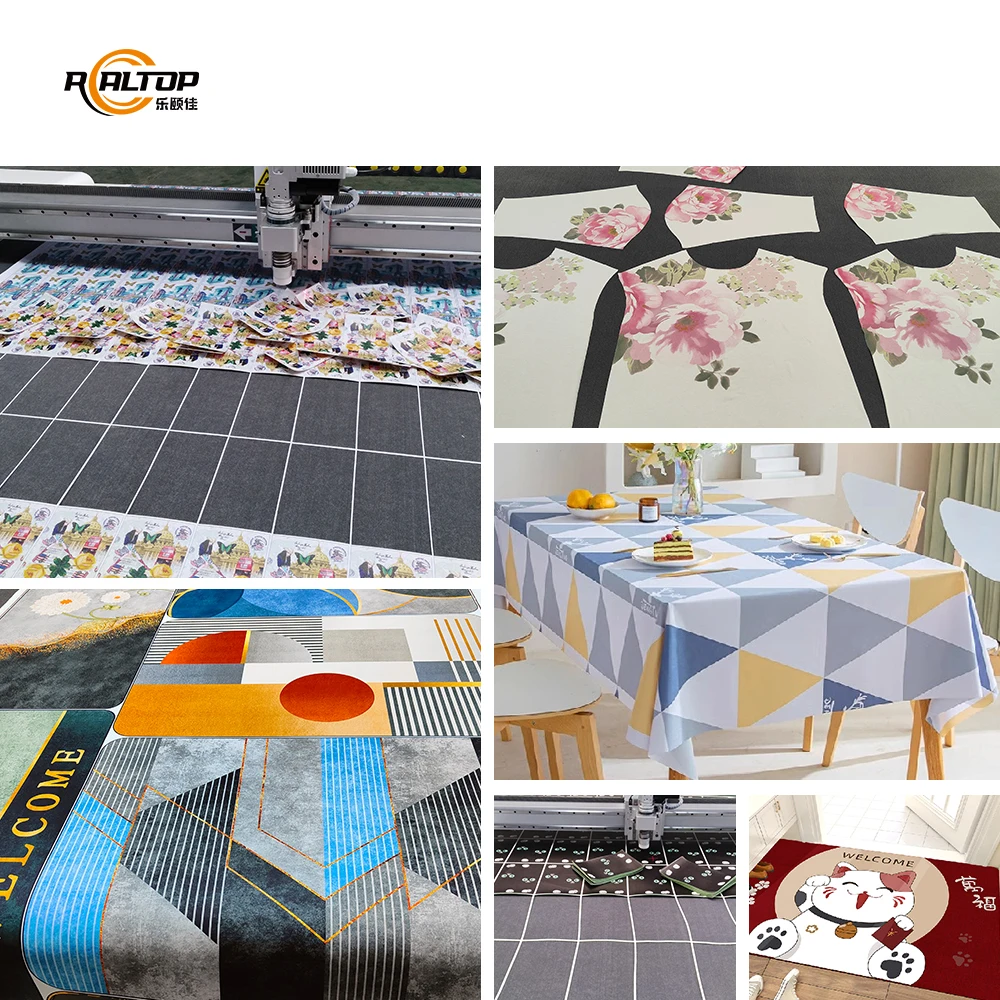
| Apparel manufacturing | Suits, knitwear, lace, complex patterned fabrics, pattern-matching layouts |
| Automotive interiors | Seat fabrics, carpets, PVC floor mats |
| Home textiles | Sofa fabrics, curtains, rugs, multi-layer fabric cutting |
| Composite processing | Carbon fiber prepreg, aramid, specialty reinforcement materials |
| Gaskets and seals | PTFE, rubber, foam sheet |
Why Working Area Alone Cannot Predict Material Performance
A flatbed specified only by table size often reveals its limits when the first real production sheet hits the bed. The correct tool head, vacuum zoning and cutting speed must all be matched to the specific material thickness and density before the machine is built. Buyers who skip this step frequently discover that a board advertised as "30 mm capable" produces ragged edges on dense foam or fails to kiss-cut vinyl cleanly. I once watched a European buyer open a container only to find the cutter configured for thin cardstock, while their daily work involved multi-layer sofa textiles [NEED_CITE: typical material mismatch complaints in CNC cutting equipment]. A CNC oscillating knife cutting machine manufacturer should confirm your exact material stack before the frame is welded.
Matching Tool Heads to Textile and Composite Work
Fabric cutting is not a single process. Woven suit cloth, stretch knitwear and non-woven carbon fiber prepreg each demand a different blade action. The oscillating knife handles dense multi-layer stacks, while the driven rotary knife suits continuous single-ply runs on lighter textiles. The creasing wheel scores carton without cutting through, and the kiss cutting tool slices vinyl face stock while leaving the backing intact. Selecting the right head at the order stage avoids rework later.
Vacuum Hold-Down and Small Part Stability
A 9 kW pump paired with an aluminum bellows vacuum table generates consistent suction across the full 1600 × 2500 mm bed. This matters most when cutting small gasket pieces or narrow lace panels that tend to lift under knife vibration. Zoned vacuum channels let the operator isolate suction to the area where the material actually sits, keeping offcut sections quiet [NEED_CITE: vacuum table zoning principles for CNC flatbed cutters].
How Core Parameters Shape Daily Output
Cutting speed reaches 2000 mm/s, yet that figure only applies to straight-line travel on thin, single-ply stock. On multi-layer sofa fabric or 20 mm foam, the effective speed drops as the oscillating knife must maintain stroke frequency through greater resistance. Positioning accuracy of ±0.1 mm keeps pattern-matched apparel panels within sewing tolerance, reducing downstream rework. The PLC control accepts DXF, PLT, AI and PDF files directly, so nests prepared in common nesting software transfer without intermediate conversion. Language options on the control panel — English, Russian, Italian, Chinese — mean the operator reads alarms and menus in their own language, cutting commissioning time.
The Hidden Cost of Skipping a Pre-Shipment Sample
Ragged edges on foam, crushed pile on velvet or incomplete kiss-cuts on vinyl rarely show up in a catalog photograph. They appear on the shop floor, days after the machine arrives, when the buyer’s own material behaves differently from the factory sample. Requesting a test cut on your actual roll stock before shipment confirms that the chosen tool head, blade amplitude and vacuum pressure align with your daily work [NEED_CITE: pre-shipment sample testing practices for CNC cutting equipment]. Without that step, you risk weeks of downtime while waiting for a replacement blade holder or a revised vacuum manifold.
Why Buyers Choose This Source for Fabric and Composite Cutting
In-house design covers both oscillating knife and laser technologies, so you select the cutting method that fits your material instead of forcing one method across every job. Tool head and table configuration are specified per material type and production volume, not left as generic defaults. CCD camera positioning is available for printed contour work when your fabric carries registration marks. Software compatibility is confirmed before the order is finalized, matching your existing nesting workflow. Voltage, plug type and control language are verified against your facility standards before the machine leaves the factory. A sample cutting report on your own material accompanies the quotation, giving you a physical reference before commitment.
Documentation & Verification
- Machine specification sheet listing every tool head and vacuum zone assigned to your material
- Electrical schematic with confirmed voltage, frequency and plug type for your facility
- Sample cutting report produced on your own fabric or composite stock
- Factory test record documenting cutting accuracy and edge quality before crating
- Software licence and file format compatibility note matching your nesting workflow
- Spare parts list covering blades, belts and vacuum cups specific to your configuration
Installation, Commissioning & Support
- Level foundation with minimum 3500 × 2300 mm clear floor space around the 3300 × 2100 mm frame
- Dedicated circuit matching confirmed voltage option, 110V, 220V or 380V, with proper breaker rating
- Assembled frame and table arrive as one unit; gantry and tool head require on-site mounting
- First-run parameter tuning includes vacuum pressure calibration for your specific material thickness
- Operator training covers PLC menu navigation in your selected display language
- Wear items — oscillating blades, rotary knives, vacuum cups — shipped as initial spare set
What to Share Before Requesting a Quotation
Send the material type, thickness range and standard roll or sheet dimensions you run each day. Note the local voltage, frequency and plug standard at the installation site. Confirm the display language your operators need and the nesting software currently in use so file compatibility is verified early.
Frequently Asked Questions
Q: Oscillating knife or laser — which suits my fabric cutting line?
A: Oscillating knives cut multi-layer natural and woven textiles without melting edges, keeping fibers intact for sewing. Lasers seal synthetic edges, preventing fraying on polyester or nylon. Share your material mix and edge-quality requirements so the cutting method is matched before the order.
Q: How do I choose the right working area for my production volume?
A: The 1600 × 2500 mm bed accommodates most standard fabric rolls and sheet goods. Match the table length to your longest panel plus nesting clearance, and consider whether a conveyor system is needed for continuous roll feeding and higher daily throughput.
Q: Which tool head handles thick foam without crushing it?
A: The oscillating knife with adjustable stroke amplitude cuts foam up to 30 mm thick while maintaining cell structure. The pneumatic knife is an alternative for very soft foams. A sample cut on your foam grade confirms edge quality before commitment.
Q: What voltage and language details must I confirm before shipment?
A: Provide your facility voltage, phase, frequency and plug type so the electrical cabinet is built to match. Specify the control panel language your operators need — options include English, Russian, Italian and Chinese, with further customization available.
Q: Will the software accept my existing DXF or AI nesting files?
A: The PLC accepts PLT, DXF, AI and PDF profiles. Share a sample file before the order so compatibility is tested and any nesting workflow adjustments are identified before the machine ships, avoiding delays on your production floor.










商品评价
There are no reviews yet.