


Fast Delivery
Quick, reliable shipping to any location.

Free & easy returns
Return this item by mail or in store within 90 days for a full refund.
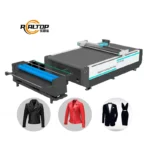
Match cutting method to material — in-house design covers oscillating knife, rotary knife and laser so the 1625 configuration is built around your textile type, not a single forced technology.
Technical Specifications
| Parameter | Value |
|---|---|
| Product Type | CNC Oscillating Knife Cutting Machine |
| Model | 1625 |
| Working Area | 1600×2500 mm |
| Tool Head Options | Oscillating knife, Driven rotary knife, Creasing wheel, Kiss cutting tool, Pneumatic knife, Milling tool, V groove knife |
| Applicable Materials | Fabric, Cardboard, Carton, Mats, PVC, EVA, Leather, Acrylic, Foam, PTFE, Rubber |
| Cutting Speed | 0–2000 mm/s |
| Cutting Thickness | ≤30 mm (basis not stated in source) |
| Positioning Accuracy | ±0.1 mm |
| Vacuum Pump | 9 kW |
| Voltage Options | 110V, 220V, 380V |
| Supported File Formats | PLT, DXF, AI, PDF |
| Safety Devices | Infrared sensor, Emergency stop |
| Machine Dimensions (L×W×H) | 3300×2100×1350 mm |
| Control System | PLC with multi-language display |
| Machine Frame | Heavy-duty with precision-ground surface |
| Vacuum Table | Aluminum bellows vacuum table |
| Servo Drive Options | Panasonic, Delta, Dorna (source value — verify against manufacturer catalog) |
| Software | Dedicated packaging box structure design software, Intelligent nesting with defect avoidance |
Application Suitability
| Application | Material or Output |
|---|---|
| Apparel manufacturing | Suits, knitwear, lace, complex pattern-matching fabrics |
| Automotive interiors | Seat fabrics, carpets, PVC mats |
| Home textiles | Sofa fabrics, curtains, rugs requiring multi-layer cutting |
| Composite material processing | Carbon fiber prepreg, aramid, specialty materials |
Why Cutting Thickness Matters More Than Table Size When Specifying a CNC Oscillating Knife Cutting Machine manufacturer
Specifying a flatbed cutter on working area alone is the most common reason a machine arrives and fails to handle the buyer’s actual material stack.
I have watched production managers measure their floor space, order a machine that fits the footprint, and then discover on day one that the knife cannot penetrate the ply count they run daily. The working area defines the sheet size the table can accept, but the cutting depth, knife stroke and vacuum holding force determine whether the material stays flat and cuts cleanly at production speed [NEED_CITE: flatbed digital cutting table selection criteria for textile ply count]. A 1600×2500 mm table is meaningless if the oscillating knife stalls at fifteen plies of denim when your line runs forty.
Oscillating Knife Versus Rotary Knife for Textile Plies
The 1625 platform supports both oscillating and driven rotary knife heads, and choosing between them changes how the machine handles woven versus knit fabric. Oscillating knives cut with a rapid up-and-down stroke that cleanly separates layered materials without pulling the top ply out of alignment, which suits high-ply stacks of woven suiting or technical textiles. Driven rotary knives use a continuously spinning circular blade that glides through lighter knit and stretch fabrics with less edge distortion. A CNC Oscillating Knife Cutting Machine manufacturer that offers both heads on one gantry lets a garment factory switch from cutting sixty plies of cotton poplin in the morning to single-ply lace panels in the afternoon without re-tooling the entire system.
Aluminum Bellows Vacuum Table and Small Part Retention
The aluminum bellows vacuum table on the 1625 provides full-surface adsorption across the 1600×2500 mm bed, which matters most when cutting small pattern pieces that tend to lift under knife drag [NEED_CITE: vacuum hold-down requirements for small textile cut parts]. Bellows-style zoning allows the operator to activate only the table sections under the current cutting zone, concentrating suction where the material is actually being processed. This prevents thin synthetics and stretch fabrics from shifting mid-cut, a problem that shows up as dimensional drift on collar and cuff pieces where a two-millimeter offset ruins the assembly downstream.
Reading the Specifications Against Your Material Stack
The 0–2000 mm/s cutting speed range is a travel speed envelope; actual throughput depends on ply count, fabric density and the complexity of the nesting layout. Positioning accuracy at ±0.1 mm keeps pattern-matched plaids and stripes aligned across consecutive pieces, which is critical for suit fronts and skirt panels where a visible mismatch reaches the customer. The 9 kW vacuum pump supports the adsorption demand of dense multi-layer lay-ups, but the real question is whether your daily material stack falls within the knife stroke and downward pressure the tool head can deliver [NEED_CITE: oscillating knife cutting depth versus material density for technical textiles]. The intelligent nesting system with automatic defect avoidance reduces fabric waste by routing cut paths around flaws detected in the spread, a measurable advantage when running expensive coating fabrics or printed materials where defect rates in the roll run high.
What Happens When the Tool Head Does Not Match the Fabric
Choosing the wrong knife type for a textile produces visible edge damage that reaches the sewing line. An oscillating knife forced through high-ply fleece at excessive speed crushes the bottom layers, producing a ragged edge that the operator must trim by hand before assembly. A rotary knife dragged through stiff coated fabric pulls the top ply sideways, shifting the entire stack and introducing dimensional error that accumulates across a marker. These failures are not machine defects — they are specification errors that happen when the tool head is selected from a catalogue without cutting the buyer’s actual material first [NEED_CITE: textile cutting edge quality versus knife type and ply count].
Why the Full Catalogue Matters for Buyers Surveying Options
This machine sits within a range that spans knife and laser cutting technologies, built by a manufacturer that designs and produces both in-house. That matters because some materials cut better with a laser edge that seals synthetics and prevents fraying, while others require a knife that produces no heat-affected zone. A distributor evaluating the 1625 for garment factory clients can compare it against CO2 laser alternatives in the same catalogue, matching the technology to each buyer’s fabric type rather than forcing one method across every application. The PLC control with multi-language display and file format support for PLT, DXF, AI and PDF reduces the integration gap when the buyer’s existing pattern software exports in a specific format. Voltage options across 110V, 220V and 380V confirm electrical compatibility before the machine enters production, avoiding the rewiring delays that occur when a 380V unit arrives at a workshop running 220V single-phase.
Documentation & Verification
- Machine specification sheet listing all seven tool head options and their material suitability
- Electrical schematic with voltage and frequency confirmed for destination country before production
- Tool head and vacuum table configuration record matched to your fabric type and ply count
- Sample cutting report executed on your own textile roll before order commitment
- Software licence and file format compatibility note covering PLT, DXF, AI, PDF workflows
- Factory test record documenting positioning accuracy and edge quality on your material
Installation, Commissioning & Support
- Floor space requirement of 3300×2100 mm machine footprint plus material loading clearance on three sides
- Dedicated electrical circuit matching confirmed 110V, 220V or 380V supply with correct frequency
- Heavy-duty frame arrives assembled; gantry and tool head calibrated at factory and re-verified on site
- PLC multi-language interface configured to operator language before commissioning begins
- Vacuum pump 9 kW circuit and exhaust routing planned to prevent heat buildup in enclosed cutting rooms
- Oscillating knife blade and rotary knife blade spare inventory specified to your daily cutting volume
What to Include When Requesting a Configuration
Send your material type, typical ply count and the largest single pattern piece dimension so the tool head and vacuum zone can be matched before quotation. Specify your workshop voltage and frequency, preferred control language, and whether your existing nesting software exports in PLT, DXF, AI or PDF format. If you run pattern-matched fabrics such as plaids or stripes, note the repeat distance so CCD positioning requirements can be confirmed. Request a sample cut on your own material roll before final commitment.
Frequently Asked Questions
Q: How do I decide between oscillating knife and rotary knife for my textile line?
A: Oscillating knives suit high-ply woven and technical fabrics where clean layer separation matters. Driven rotary knives work better on single or low-ply knit and stretch fabrics where edge distortion from knife drag must be avoided. The 1625 accepts both heads, so the decision is confirmed by a sample cut on your actual material before the machine is configured.
Q: Can the 1625 cut materials beyond fabric?
A: Yes. The tool head options extend to cardboard, carton, PVC, EVA, leather, acrylic, foam, PTFE and rubber. Each material requires a specific knife type and vacuum configuration, which is documented in the tool head and table configuration list provided before order. Cutting thickness capacity should be confirmed against your specific material density.
Q: What file formats does the nesting software accept?
A: The system supports PLT, DXF, AI and PDF imports, covering most pattern design and CAD outputs used in garment and textile production. File format compatibility is confirmed in writing before order, and the software licence is included with delivery. If your workflow uses a proprietary format, share a sample file for verification during the inquiry stage.
Q: How is voltage compatibility handled for export markets?
A: The 1625 is available in 110V, 220V and 380V configurations. Voltage, plug type and frequency are confirmed against your workshop supply before the machine enters production, and the electrical schematic is included in the documentation package. This prevents the rewiring and commissioning delays that occur when voltage assumptions are made after shipment.










商品评价
There are no reviews yet.