

Fast Delivery
Quick, reliable shipping to any location.

Free & easy returns
Return this item by mail or in store within 90 days for a full refund.
Complete cutting method range — In-house design and production covering both knife and laser technologies, so a buyer can match the cutting method to the material rather than force one method.
Technical Specifications
| Parameter | Value |
|---|---|
| Model | RTT4060 / RTT4060 Pro |
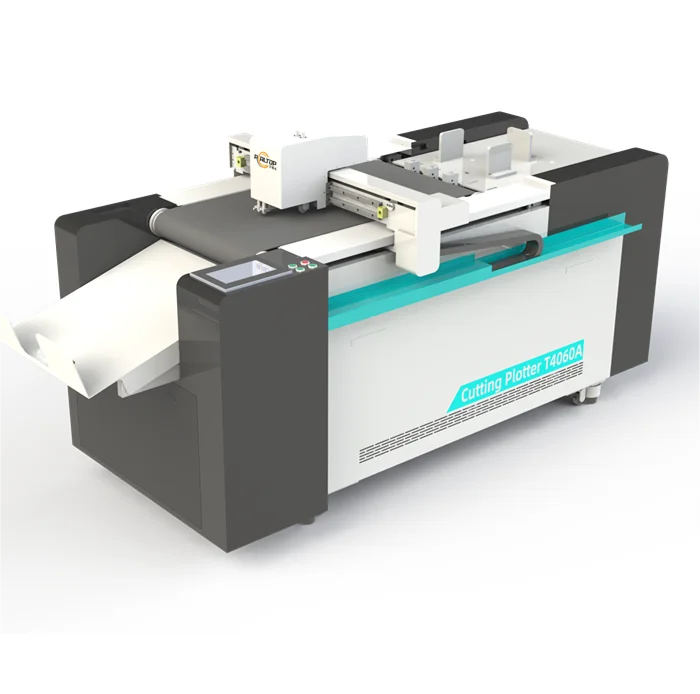
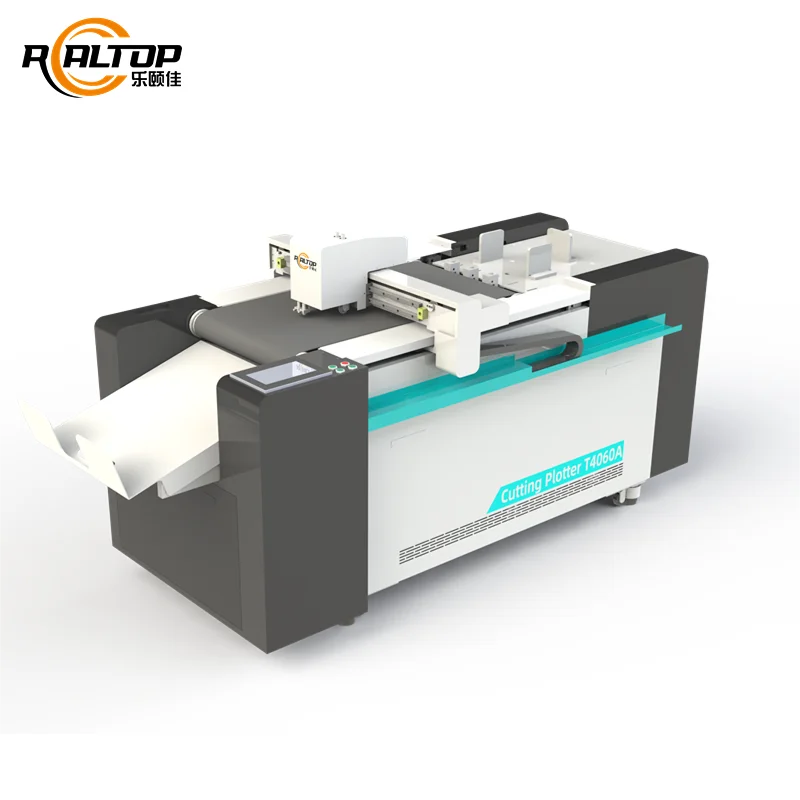
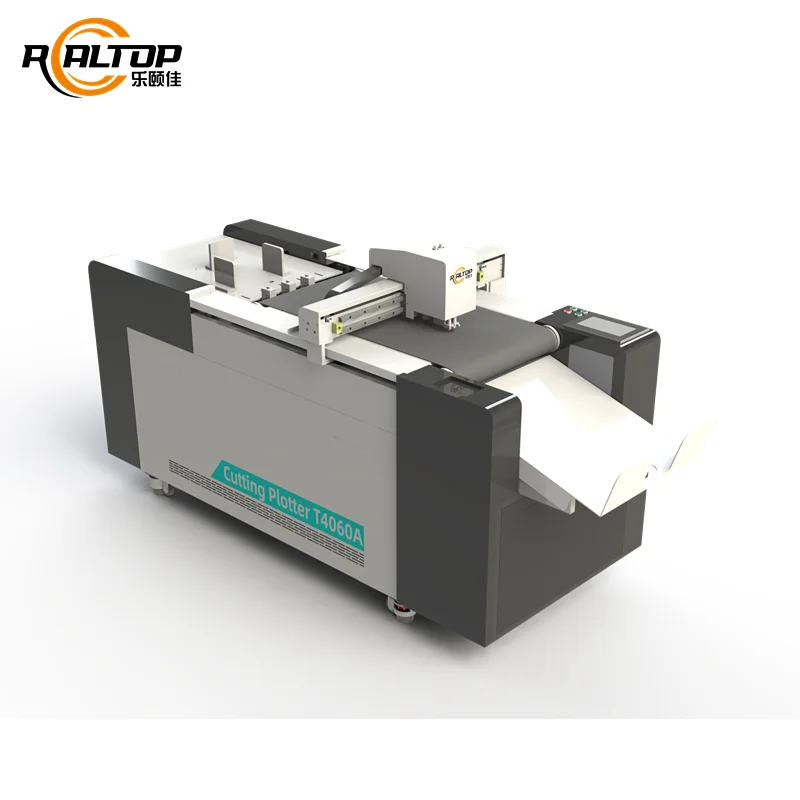
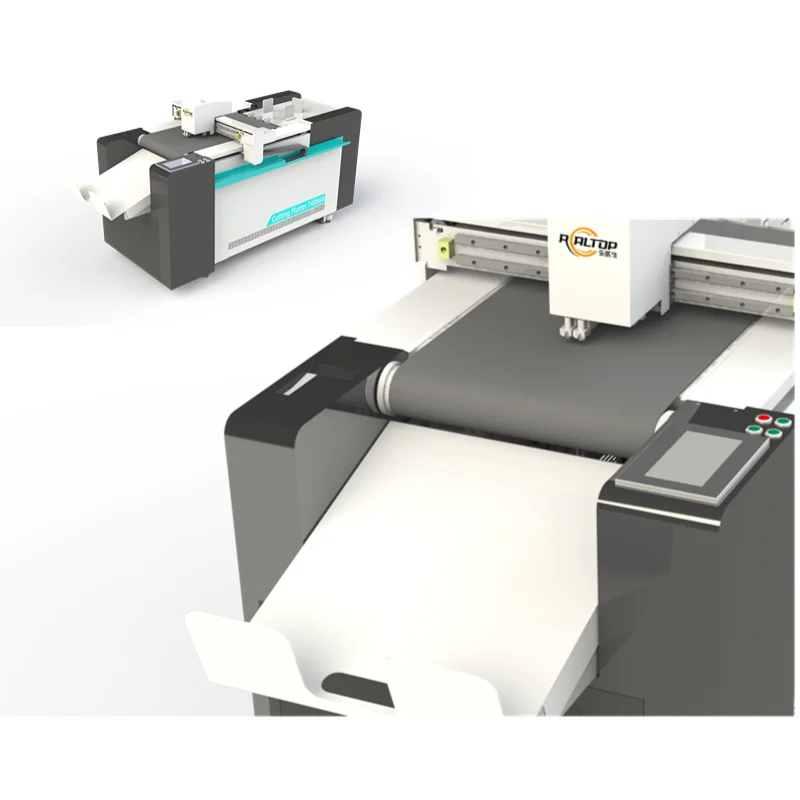
| Product Type | CNC Digital Cutter Plotter |
| Max Working Area | 400mm × 600mm |
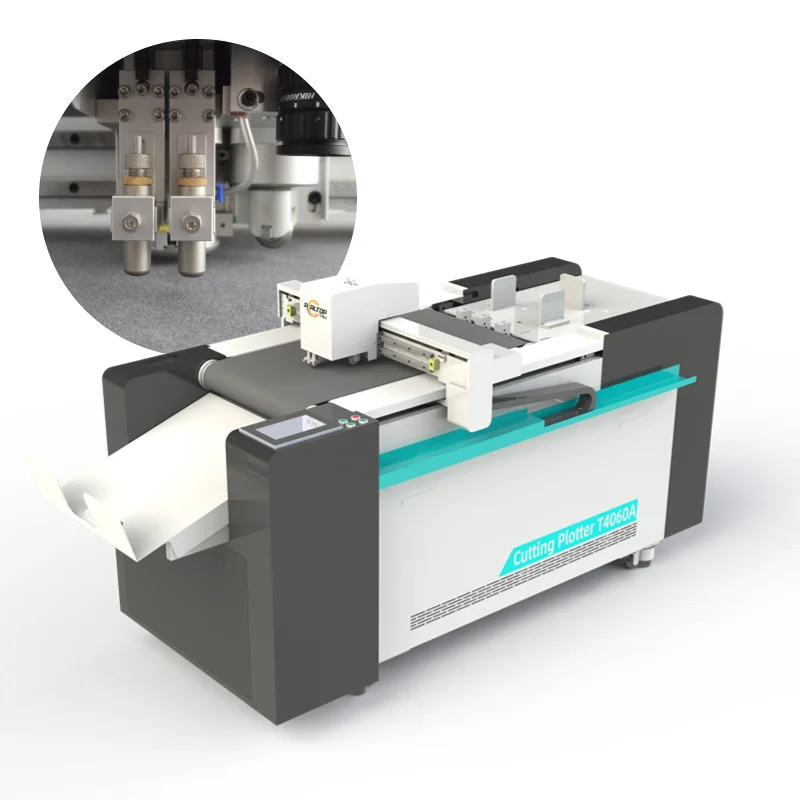
| Tools Group | Cutting tool, kiss cutting tool, creasing tool, CCD camera; high speed oscillating knife (Pro model) |
| Max Cutting Speed | 1500 mm/s (according to the material) |
| Cutting Thickness | ≤2mm (RTT4060) / ≤5mm (RTT4060 Pro) |
| Positioning Accuracy | 0.05mm |
| File Format Compatibility | DXF, PLT, PDF, AI |
| Transfer Method | Ethernet port |
| Rated Power | 2.5KW |
| Voltage & Frequency | 220V/380V, 50Hz |
| Control System | CNC (controller brand and interface language to be confirmed) |
| Safety Standards | CE declaration where applicable |
Application Suitability
| Application | Material or Output |
|---|---|
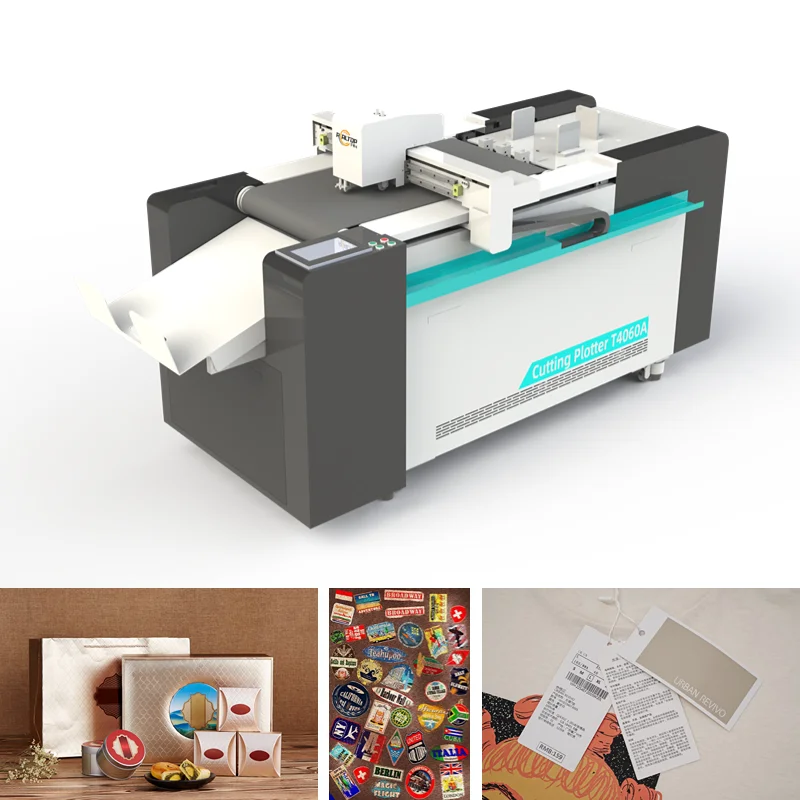
| Home business and small workshop production | Lightweight fabric, leather, PVC, foam and composite material components |
| Signage and vinyl board cutting | Adhesive films, rigid board, and lettering materials |
| Packaging and carton sample making | Short-run box prototypes and packaging concepts |
| Gasket and technical material processing | Compressed non-metal materials and sealing profiles |
Why Material Thickness Determines Your Configuration
Matching the tool head to the material density is the only way to ensure a clean edge and accurate throughput on a CNC digital cutter plotter for sale.
Many buyers purchase a compact digital table based solely on the working area, only to discover that their specific material thickness exceeds the machine’s capacity. When cutting multi-layer fabrics or dense foam gaskets, the cutting depth is the limiting factor. I have seen situations where operators pushed a standard drag knife through 4mm foam, resulting in crushed edges and a ruined batch. The RTT4060 series addresses this by offering two distinct configurations: a standard model for thin substrates and a Pro model equipped with a high-speed oscillating knife for thicker stacks. Choosing the wrong setup forces the operator to slow down or compromise on the cut quality [NEED_CITE: material density versus cutting force in digital finishing].
Tool Head Versatility and Edge Quality
A major advantage of this compact system is the ability to switch between tool heads. The standard model uses a cutting and kiss-cutting setup, which is ideal for vinyl and thin board. The Pro model includes a high-speed oscillating knife, which is necessary for cutting through fibrous materials like fabric or foam without fraying. By selecting the correct CNC digital cutter plotter for your specific workflow, you ensure the edge finish meets the final product’s requirements.
CCD Camera Precision for Print and Cut
For those working with pre-printed materials, the integrated CCD camera allows for contour recognition. This system tracks registration marks to adjust the cut path, compensating for any distortion that occurred during the printing process. This is essential for signage producers or packaging sample makers who need to cut around complex graphics [NEED_CITE: digital camera registration for print-to-cut accuracy].
Understanding the Core Specifications
The 0.05mm positioning accuracy ensures that intricate carton creasing or small fabric patterns remain consistent across the entire 400×600mm working area. The Ethernet port allows for rapid transfer of DXF and AI files, which is a significant improvement over older USB-only transfer methods in a workshop environment. Additionally, the 2.5KW rated power provides sufficient energy for the vacuum table and the oscillating motor simultaneously. The voltage is configurable to either 220V or 380V, which is a critical consideration for international buyers needing to match local industrial power standards [NEED_CITE: industrial voltage variations for export machinery].
The Hidden Cost of Incorrect Table Zoning
If a vacuum table is not zoned correctly for small parts, those pieces will lift during the cutting process, leading to a mis-cut and material waste. This is particularly problematic for gasket and composite fabricators who cut many small pieces from a single sheet. Ensuring the vacuum configuration matches your typical nesting layout is vital for maintaining production yield [NEED_CITE: vacuum hold-down principles for small part digital cutting].
Manufacturing Reliability and Testing
Realtop’s in-house design team develops both the knife and laser technologies, meaning the mechanical frame is engineered to handle the specific vibrations of the tool heads. Every machine undergoes a factory test using the buyer’s own material to verify the cutting depth and edge quality. We provide a detailed sample cutting report and confirm the control system language before the machine is crated. This prevents the common issue of receiving a machine with a user interface the operator cannot read.
Documentation & Verification
- Machine specification sheet confirming the selected tool head and voltage before shipping.
- Sample cutting report on the buyer’s specific material to validate edge quality.
- Electrical schematic and wiring diagram for local maintenance and troubleshooting.
- Software licence and file format compatibility note for your existing design workflow.
- CE declaration documentation for customs and local safety compliance.
Installation, Commissioning & Support
- Requires a stable, level floor area to maintain the 0.05mm positioning accuracy across the 400×600mm bed.
- Dedicated electrical circuit for the 2.5KW load to prevent voltage drops during oscillation.
- Full assembly and calibration of the CCD camera performed by our technicians upon arrival.
- Training on nesting software and Ethernet transfer for your specific DXF and AI files.
- List of recommended spare blades and consumable parts for the oscillating and creasing tools.
Starting the Selection Process
To receive a precise recommendation for your production, please provide the type of material you intend to cut, its maximum thickness, and your target daily volume. We also need to know your local voltage and frequency, as well as your preferred language for the CNC control interface. Finally, let us know if you require a sample test on your own material before making a commitment.
Frequently Asked Questions
Q: How do I verify the cutting thickness capacity for my material?
A: We perform a sample cutting test using a piece of your actual material. This confirms whether the standard RTT4060 (≤2mm) or the Pro model (≤5mm) is better suited for your application and ensures the edge quality meets your standards.
Q: Which tool head is best for fabric and foam?
A: For fibrous materials like fabric or foam, the high-speed oscillating knife on the RTT4060 Pro is required. A standard drag knife would drag or crush the fibers, resulting in a poor edge finish and inconsistent dimensions.
Q: Can the machine handle my local industrial voltage?
A: Yes, the system is available in both 220V and 380V configurations at 50Hz. We must confirm your local voltage and plug type before production to ensure the electrical cabinet is built to your regional standards.
Q: Is the software compatible with my existing design files?
A: The CNC system supports common formats including DXF, PLT, PDF, and AI. We verify file compatibility during the sample stage to ensure your current workflow can transfer to the machine without requiring new design software.
Complete cutting method range — In-house design and production covering both knife and laser technologies, so a buyer can match the cutting method to the material rather than force one method.
Technical Specifications
| Parameter | Value |
|---|---|
| Model | RTT4060 / RTT4060 Pro |
| Product Type | CNC Digital Cutter Plotter |
| Max Working Area | 400mm × 600mm |
| Tools Group | Cutting tool, kiss cutting tool, creasing tool, CCD camera; high speed oscillating knife (Pro model) |
| Max Cutting Speed | 1500 mm/s (according to the material) |
| Cutting Thickness | ≤2mm (RTT4060) / ≤5mm (RTT4060 Pro) |
| Positioning Accuracy | 0.05mm |
| File Format Compatibility | DXF, PLT, PDF, AI |
| Transfer Method | Ethernet port |
| Rated Power | 2.5KW |
| Voltage & Frequency | 220V/380V, 50Hz |
| Control System | CNC (controller brand and interface language to be confirmed) |
| Safety Standards | CE declaration where applicable |
Application Suitability
| Application | Material or Output |
|---|---|
| Home business and small workshop production | Lightweight fabric, leather, PVC, foam and composite material components |
| Signage and vinyl board cutting | Adhesive films, rigid board, and lettering materials |
| Packaging and carton sample making | Short-run box prototypes and packaging concepts |
| Gasket and technical material processing | Compressed non-metal materials and sealing profiles |
Why Material Thickness Determines Your Configuration
Matching the tool head to the material density is the only way to ensure a clean edge and accurate throughput on a CNC digital cutter plotter for sale.
Many buyers purchase a compact digital table based solely on the working area, only to discover that their specific material thickness exceeds the machine’s capacity. When cutting multi-layer fabrics or dense foam gaskets, the cutting depth is the limiting factor. I have seen situations where operators pushed a standard drag knife through 4mm foam, resulting in crushed edges and a ruined batch. The RTT4060 series addresses this by offering two distinct configurations: a standard model for thin substrates and a Pro model equipped with a high-speed oscillating knife for thicker stacks. Choosing the wrong setup forces the operator to slow down or compromise on the cut quality [NEED_CITE: material density versus cutting force in digital finishing].
Tool Head Versatility and Edge Quality
A major advantage of this compact system is the ability to switch between tool heads. The standard model uses a cutting and kiss-cutting setup, which is ideal for vinyl and thin board. The Pro model includes a high-speed oscillating knife, which is necessary for cutting through fibrous materials like fabric or foam without fraying. By selecting the correct CNC digital cutter plotter for your specific workflow, you ensure the edge finish meets the final product’s requirements.
CCD Camera Precision for Print and Cut
For those working with pre-printed materials, the integrated CCD camera allows for contour recognition. This system tracks registration marks to adjust the cut path, compensating for any distortion that occurred during the printing process. This is essential for signage producers or packaging sample makers who need to cut around complex graphics [NEED_CITE: digital camera registration for print-to-cut accuracy].
Understanding the Core Specifications
The 0.05mm positioning accuracy ensures that intricate carton creasing or small fabric patterns remain consistent across the entire 400×600mm working area. The Ethernet port allows for rapid transfer of DXF and AI files, which is a significant improvement over older USB-only transfer methods in a workshop environment. Additionally, the 2.5KW rated power provides sufficient energy for the vacuum table and the oscillating motor simultaneously. The voltage is configurable to either 220V or 380V, which is a critical consideration for international buyers needing to match local industrial power standards [NEED_CITE: industrial voltage variations for export machinery].
The Hidden Cost of Incorrect Table Zoning
If a vacuum table is not zoned correctly for small parts, those pieces will lift during the cutting process, leading to a mis-cut and material waste. This is particularly problematic for gasket and composite fabricators who cut many small pieces from a single sheet. Ensuring the vacuum configuration matches your typical nesting layout is vital for maintaining production yield [NEED_CITE: vacuum hold-down principles for small part digital cutting].
Manufacturing Reliability and Testing
Realtop’s in-house design team develops both the knife and laser technologies, meaning the mechanical frame is engineered to handle the specific vibrations of the tool heads. Every machine undergoes a factory test using the buyer’s own material to verify the cutting depth and edge quality. We provide a detailed sample cutting report and confirm the control system language before the machine is crated. This prevents the common issue of receiving a machine with a user interface the operator cannot read.
Documentation & Verification
- Machine specification sheet confirming the selected tool head and voltage before shipping.
- Sample cutting report on the buyer’s specific material to validate edge quality.
- Electrical schematic and wiring diagram for local maintenance and troubleshooting.
- Software licence and file format compatibility note for your existing design workflow.
- CE declaration documentation for customs and local safety compliance.
Installation, Commissioning & Support
- Requires a stable, level floor area to maintain the 0.05mm positioning accuracy across the 400×600mm bed.
- Dedicated electrical circuit for the 2.5KW load to prevent voltage drops during oscillation.
- Full assembly and calibration of the CCD camera performed by our technicians upon arrival.
- Training on nesting software and Ethernet transfer for your specific DXF and AI files.
- List of recommended spare blades and consumable parts for the oscillating and creasing tools.
Starting the Selection Process
To receive a precise recommendation for your production, please provide the type of material you intend to cut, its maximum thickness, and your target daily volume. We also need to know your local voltage and frequency, as well as your preferred language for the CNC control interface. Finally, let us know if you require a sample test on your own material before making a commitment.
Frequently Asked Questions
Q: How do I verify the cutting thickness capacity for my material?
A: We perform a sample cutting test using a piece of your actual material. This confirms whether the standard RTT4060 (≤2mm) or the Pro model (≤5mm) is better suited for your application and ensures the edge quality meets your standards.
Q: Which tool head is best for fabric and foam?
A: For fibrous materials like fabric or foam, the high-speed oscillating knife on the RTT4060 Pro is required. A standard drag knife would drag or crush the fibers, resulting in a poor edge finish and inconsistent dimensions.
Q: Can the machine handle my local industrial voltage?
A: Yes, the system is available in both 220V and 380V configurations at 50Hz. We must confirm your local voltage and plug type before production to ensure the electrical cabinet is built to your regional standards.
Q: Is the software compatible with my existing design files?
A: The CNC system supports common formats including DXF, PLT, PDF, and AI. We verify file compatibility during the sample stage to ensure your current workflow can transfer to the machine without requiring new design software.










商品评价
There are no reviews yet.